Tay-Sachs Disease: What It Is, Inheritance, and Family Testing

Tay-Sachs disease is an inherited disorder caused by changes in the HEXA gene. It is passed on in an autosomal recessive pattern, meaning both parents usually carry one altered gene copy.
Key Takeaways
- Tay-Sachs disease is an inherited disorder caused by changes in the HEXA gene.
- It is passed on in an autosomal recessive pattern, meaning both parents usually carry one altered gene copy.
- Carrier screening and genetic counseling can help people understand their chance of having an affected child.
- Symptoms most often begin in infancy, but juvenile and adult-onset forms can also occur.
- There is no cure at present, but supportive treatment can help manage symptoms and improve quality of life.
Tay-Sachs disease is a rare inherited condition that damages nerve cells because the body cannot properly break down certain fatty substances. Understanding how it is passed through families and when genetic testing may help can support informed family planning and care.
Overview of Tay-Sachs Disease
Tay-Sachs disease is a rare genetic disorder that affects the brain and nervous system. It happens when the body lacks enough of an enzyme called beta-hexosaminidase A. Without this enzyme, a fatty substance called GM2 ganglioside builds up inside nerve cells, gradually damaging them.
The condition belongs to a group of disorders known as lysosomal storage diseases. In Tay-Sachs disease, the buildup mainly harms nerve cells in the brain and spinal cord, so symptoms often involve development, movement, muscle control, hearing, or vision. The most recognized form begins in infancy, but less common juvenile and adult-onset forms also exist.
Tay-Sachs disease is inherited, which means it is passed through families. A person is usually affected only when they inherit two altered copies of the HEXA gene, one from each parent. People with one altered copy are called carriers; they do not usually have symptoms, but they can pass the gene change to their children.
Symptoms and Types

The infantile form is the most severe and most common type. Babies often seem well at birth and develop normally for the first few months. Symptoms may then appear, including loss of previously learned skills, an exaggerated startle response, muscle weakness, trouble rolling or sitting, and reduced attention to surroundings.
As infantile Tay-Sachs disease progresses, children may develop seizures, swallowing difficulties, vision or hearing loss, stiffness or floppiness, and breathing complications. Eye examination may show a distinctive cherry-red spot in the retina, which can help support the diagnosis, although it is not unique to Tay-Sachs disease.
Juvenile Tay-Sachs disease begins later in childhood and may cause speech problems, clumsiness, learning difficulties, weakness, and seizures. Adult-onset Tay-Sachs is rarer and may progress more slowly. Adults can experience balance problems, muscle weakness, tremor, speech changes, and sometimes mental health or cognitive symptoms. The exact course can vary from person to person.
Causes and Inheritance
Tay-Sachs disease is caused by pathogenic changes in the HEXA gene. This gene provides instructions for making part of the beta-hexosaminidase A enzyme. When both copies of the gene do not work properly, the enzyme activity is greatly reduced or absent, leading to the harmful buildup of GM2 ganglioside in nerve cells.
The condition follows an autosomal recessive inheritance pattern. This means a child must inherit two altered HEXA gene copies to have the disease. If both parents are carriers, each pregnancy has a 25% chance of an affected child, a 50% chance of a carrier child, and a 25% chance of a child who is neither affected nor a carrier.
Tay-Sachs disease can occur in any ethnic group, but carrier frequency is higher in some populations. These include people of Ashkenazi Jewish ancestry and certain French Canadian, Cajun, or Old Order Amish communities. Even so, it is important to remember that anyone can be a carrier, so family history and appropriate testing matter.
Families may also hear Tay-Sachs discussed alongside other inherited metabolic or neurological disorders. Doctors sometimes consider related conditions such as Gaucher disease or muscular dystrophy when symptoms overlap, although the causes and treatments are different.
How Tay-Sachs Disease Is Diagnosed
Diagnosis usually begins with a medical history, family history, and physical and neurological examination. In infants, doctors may look for developmental regression, changes in muscle tone, abnormal startle response, or feeding and swallowing problems. Eye examination can provide helpful clues.
Laboratory testing is central to diagnosis. Enzyme testing can measure the activity of beta-hexosaminidase A in blood or other samples. Very low or absent enzyme activity strongly suggests Tay-Sachs disease, especially when symptoms fit the condition.
Genetic testing can confirm changes in the HEXA gene and help clarify the exact diagnosis. This may be done after an abnormal enzyme test or when there is a known family history. Genetic testing can also help identify carriers in relatives and support reproductive planning.
Depending on the symptoms, the care team may use additional tests to understand the child or adult’s overall neurological health. In some cases, doctors may arrange MRI scanning or other assessments to evaluate the brain and exclude other causes of neurological decline.
Carrier Screening, Prenatal Testing, and Family Testing
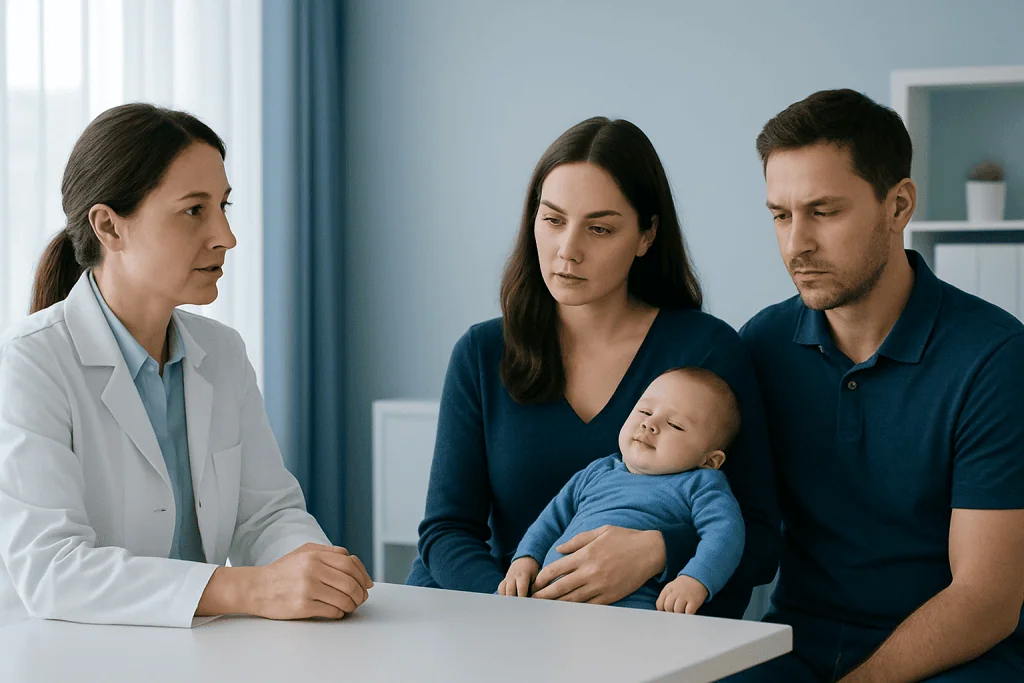
Because Tay-Sachs disease is inherited, carrier screening plays an important role for families. Carrier screening is a test offered to people who do not have symptoms but want to know whether they carry an altered HEXA gene. It may be especially helpful before pregnancy or early in pregnancy, particularly when there is a family history or ancestry linked with a higher carrier rate.
If one partner is found to be a carrier, the other partner is usually offered testing as well. When both partners are carriers, genetic counseling can explain the chances in each pregnancy and discuss available options in a clear, supportive way. These options may include prenatal testing during pregnancy or embryo testing in the setting of IVF.
Prenatal testing may be done through procedures such as chorionic villus sampling or amniocentesis, which can test the fetus for the known family gene changes. Some families may also consider IVF treatment with preimplantation genetic testing to reduce the chance of having an affected child. Decisions about testing are personal and may be influenced by medical, emotional, cultural, or religious factors.
Family testing can also be important after a diagnosis is made in one child or adult. Brothers, sisters, and extended relatives may choose carrier testing to better understand their own reproductive risks. Working with specialists in medical genetics and genetic counseling can help families interpret results accurately and plan next steps with confidence.
Treatment and Supportive Care
There is currently no cure that can reverse the underlying nerve cell damage in Tay-Sachs disease. Treatment focuses on supportive care, symptom relief, and maintaining comfort and quality of life as much as possible. The exact care plan depends on the person’s age, symptoms, and disease type.
Supportive treatment may include seizure management, nutritional support, feeding assistance, physical therapy, occupational therapy, speech and language therapy, respiratory care, and measures to prevent complications such as aspiration. A multidisciplinary team often includes pediatricians, neurologists, genetic specialists, rehabilitation professionals, and palliative care experts.
Families may benefit from regular follow-up to monitor swallowing, breathing, mobility, posture, and communication needs. In some cases, assistive devices or home care support can make daily life safer and more comfortable. Emotional support for caregivers is also an essential part of care.
For international patients seeking assessment or coordinated care, Acibadem International’s multidisciplinary specialists and JCI-accredited hospitals diagnose and treat complex genetic and neurological conditions with individualized planning.
Living With Tay-Sachs Disease and Self-Care for Families
Living with Tay-Sachs disease can be physically and emotionally demanding for both the affected person and the family. Many families find it helpful to build a care network that includes doctors, therapists, nurses, social workers, school support teams, and trusted relatives or friends. Clear communication with the care team can make it easier to adapt as needs change.
At home, daily care often focuses on comfort, nutrition, safe positioning, airway support, and protecting mobility as much as possible. Parents and caregivers may need guidance on feeding techniques, managing seizures, recognizing breathing concerns, and using supportive equipment safely. Written care plans can be useful, especially during emergencies or travel.
Genetic counseling can continue to be helpful even after diagnosis. It can support discussions about future pregnancies, testing for relatives, and understanding how the condition affects the wider family. Emotional and psychological support, including support groups, may help reduce isolation and support coping over time.
- Keep regular follow-up appointments with the care team.
- Ask about speech, feeding, and physical therapy support.
- Discuss vaccinations, respiratory care, and infection prevention with a doctor.
- Seek genetic counseling if other family members want testing.
When to See a Doctor
Parents should seek medical advice if a baby loses previously gained skills, has unusual stiffness or floppiness, feeding difficulties, repeated choking, seizures, or a strong startle response that seems abnormal. These symptoms do not always mean Tay-Sachs disease, but they do need prompt medical assessment.
Older children or adults should see a doctor if they develop unexplained weakness, balance problems, speech changes, tremor, or progressive neurological symptoms. A family history of Tay-Sachs disease or known carrier status is also a reason to discuss testing with a healthcare professional.
People planning a pregnancy may wish to ask about carrier screening even if they feel healthy. Early discussion with a doctor or genetic counselor can help clarify whether testing is appropriate and what the results may mean for the family.
Frequently asked questions
What is Tay-Sachs disease?
Tay-Sachs disease is a rare inherited disorder that damages nerve cells in the brain and spinal cord. It happens because the body lacks enough of an enzyme needed to break down a fatty substance called GM2 ganglioside.
How is Tay-Sachs disease inherited?
It is inherited in an autosomal recessive pattern. This means a child must inherit one altered HEXA gene from each parent to be affected, while carriers usually have no symptoms.
Who should consider carrier screening for Tay-Sachs disease?
Carrier screening may be considered by people with a family history of Tay-Sachs disease, people from higher-risk ancestry groups, and couples planning a pregnancy. It can also be appropriate for others who want information about reproductive risk.
Can Tay-Sachs disease be detected during pregnancy?
Yes. If there is a known family risk or both parents are carriers, prenatal testing may be possible during pregnancy. A genetic counselor or specialist can explain which tests may be suitable and what the results can and cannot show.
Is there a cure for Tay-Sachs disease?
There is no cure at present that stops or reverses the condition. Treatment focuses on supportive care, symptom control, and maintaining comfort and quality of life.
Do carriers of Tay-Sachs disease have symptoms?
Most carriers do not have symptoms because they still have one working copy of the HEXA gene. Carrier testing is important because a person can carry the altered gene without knowing it.
References
- National Institutes of Health
- MedlinePlus
- National Organization for Rare Disorders
- Genetics Home Reference
- Centers for Disease Control and Prevention
This article is for general information only and is not a substitute for professional medical advice. Please consult a qualified doctor about your individual situation.
Joint and spine care in Turkey — expert assessment & treatment
JCI-accredited · board-certified surgeons · reply within 24h
Add us as a Preferred Source to see more of our trusted health content across Google Search, AI Overviews and Discover.