

At Acibadem, What Technology Supports Diagnosis, Surgery, and Treatment Planning

At Acibadem, technology supports diagnosis, surgery, and treatment planning with advanced imaging, digital planning, and coordinated care in Turkey.
If you are comparing hospitals, it is natural to ask what technology is actually used behind the scenes. At Acibadem, advanced imaging, digital planning tools, precision surgery platforms, and integrated care systems work together to help your team diagnose clearly, plan carefully, and coordinate your treatment journey.
At a glance
- Best for: Patients who want a practical overview of how hospital technology supports care decisions
- Covers: Diagnosis, surgery support, radiotherapy, digital planning, and patient coordination
- Helpful to know: Technology supports your doctors; it does not replace clinical judgment or individualized care
- International support: Interpreter, travel coordination, and treatment planning assistance may be arranged
- Hospital standards: Acibadem International includes JCI-accredited hospitals and multidisciplinary care pathways
What this means for you as a patient
When you ask what technology supports diagnosis, surgery, and treatment planning, you are really asking a practical question: how will the hospital help your team see your condition clearly, choose the safest approach, and organize your care without unnecessary delays. That matters whether you are coming for a check-up, a second opinion, a planned procedure, or complex treatment that involves more than one specialist.
At Acibadem International, technology is used as part of a wider care system rather than as a standalone feature. In practical terms, that means imaging, laboratory data, surgical planning tools, and hospital information systems are intended to help different specialists review the same information, discuss your case, and align on a treatment plan that is understandable and realistic for you.
For international patients, this can also make logistics smoother. When test results, scans, and specialist opinions are coordinated efficiently, your itinerary in Turkey may be easier to plan, with fewer repeat appointments and a clearer sense of what can happen before you travel, what must happen after arrival, and how follow-up may be arranged once you return home.
Technology that supports diagnosis
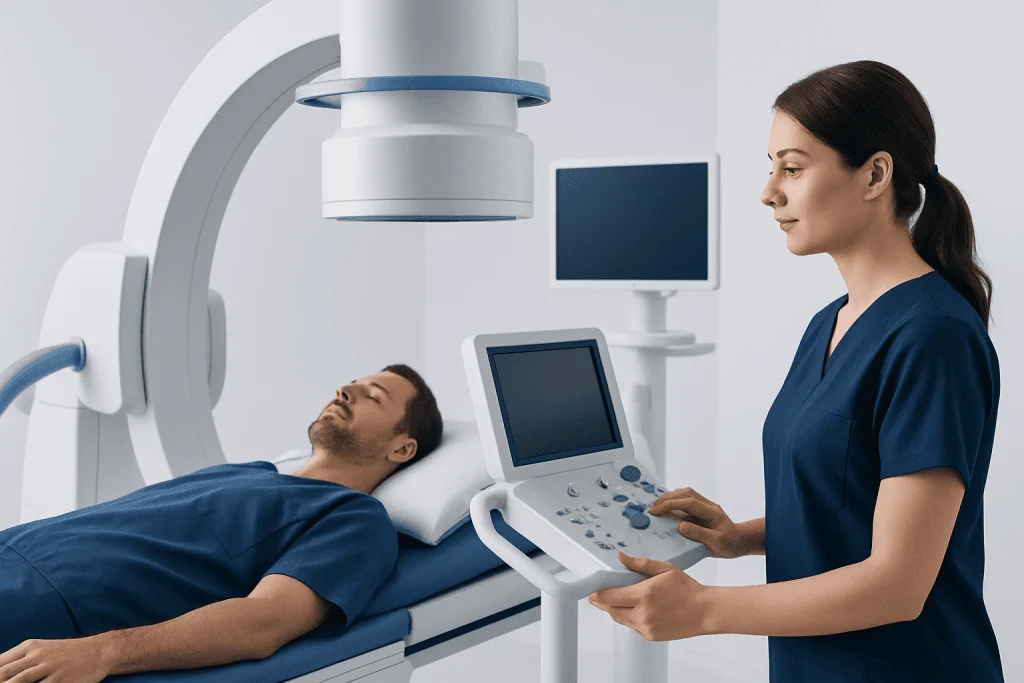
Diagnosis often begins with information gathering: your symptoms, medical history, earlier reports, blood work, and imaging. Hospitals in the Acibadem network use advanced diagnostic tools such as imaging systems and laboratory technologies to help clinicians assess organs, tissues, blood flow, and structural changes with more detail. The exact tests depend on your medical need, but the goal is the same: to build as complete a picture as possible before treatment decisions are made.
This may include radiology-based imaging such as MRI, CT, ultrasound, mammography, PET/CT, or other scans where clinically appropriate. These tools can help your doctors look at different aspects of the body in different ways, from soft tissue detail to metabolic activity to vascular structures. In many cases, combining several kinds of information is more useful than relying on a single scan.
Diagnostic technology is most helpful when it is interpreted in context. Your images and test results are usually reviewed alongside your symptoms, examination findings, and any outside records you bring. If you are traveling to Istanbul or another city in Turkey for care, it is often helpful to send previous reports and image files in advance, because that may help the medical team decide what can be accepted as-is and what may need to be repeated for quality, timing, or technical reasons.
- Bring prior scan reports and, if possible, the image files on CD, USB, or secure link.
- Ask whether your older tests are recent enough for treatment planning.
- Keep a list of medications, allergies, implants, and previous surgeries ready before imaging.
How surgery is planned and supported
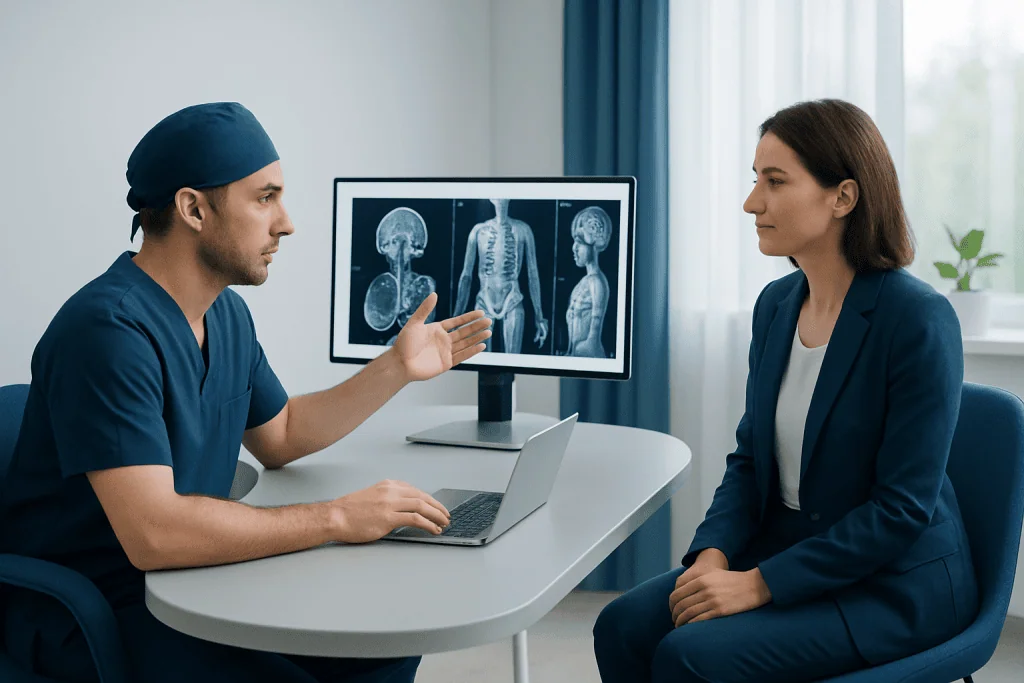
When surgery is being considered, technology can help before, during, and after the procedure. Before surgery, your team may use imaging-based planning, digital measurements, and anesthesia assessment tools to understand anatomy, estimate the surgical pathway, and prepare for special considerations such as previous operations, implants, or complex tumor location.
During surgery, the exact technologies depend on your case and hospital site, but may include minimally invasive or robotic-assisted systems, intraoperative imaging, navigation tools, and precision monitoring. For you, the practical benefit is not that a machine takes over; it is that your surgical team may have better visualization, more controlled access, and more data to support careful decision-making in real time.
At Acibadem International, a key part of this process is multidisciplinary planning. Surgeons, radiologists, anesthesiologists, pathologists, medical oncologists, radiation oncologists, and other specialists may contribute where relevant. If your case is complex, ask whether your treatment plan will be reviewed in a multidisciplinary meeting and whether the hospital expects all major steps to happen during one trip or over several visits.
Technology used in treatment planning beyond surgery
Not every treatment plan involves an operation. Technology also plays a major role in oncology, cardiology, orthopedics, neurology, fertility care, and many other fields where timing and sequencing matter. For example, radiotherapy planning often uses detailed imaging and computerized dose mapping to help target the intended area while aiming to protect surrounding tissues as much as possible.
In cancer care especially, treatment planning may bring together pathology findings, molecular or genetic information where clinically indicated, imaging results, and specialist opinions. This does not just shape one procedure; it can influence the order of care, such as whether medication, surgery, and radiotherapy should happen sequentially or whether one step should be postponed until more information is available.
Digital treatment planning can also help with practical scheduling. If you are an international patient, your coordinator may use the clinical plan to map out consultations, tests, treatment days, expected recovery time, and follow-up needs. That can be especially useful if you are trying to understand how long you may need to stay in Turkey, whether you can travel alone, or when it may be reasonable to fly home after treatment.
How digital systems help coordinate your care
Hospital technology is not limited to scanners or operating rooms. Digital records and care coordination systems can be just as important for your experience. They help different departments work from the same up-to-date information, reducing the chance that a key report, allergy note, or medication detail is missed when you move between consultation, testing, admission, surgery, and discharge.
For you, this often translates into a more organized journey. You may receive support with appointment scheduling, document collection, interpreter services, and practical planning around admission and discharge. Acibadem International teams often assist overseas patients with these coordination steps so the focus stays on what you need medically and what you need logistically.
It is still wise to stay actively involved. Keep copies of your passport, prior records, medication list, insurance documents if relevant, and contact details for your home doctor. Even in well-coordinated systems, patients who keep their information accessible tend to move through the process with fewer avoidable delays.
What to ask before you travel for technology-based care
If a hospital mentions advanced technology, ask what that means for your own case rather than treating it as a general promise. The most useful questions are practical: Which tests are likely after I arrive? Which existing scans can you review before travel? Will my case need input from multiple specialists? Is the hospital expecting a same-week decision, a surgery date after further testing, or a longer planning period?
You should also ask what support exists around the technology. For example, if imaging or surgery requires preparation, sedation, fasting, or implant safety checks, when will you be told? If pathology review or treatment planning takes several days, should you plan flexible accommodation? If you need translation, ask whether interpreters can help during consultations where scan results and options are being discussed.
Acibadem International can be a useful point of contact for these logistics because the questions are not only medical. They often involve timing, travel, family support, document transfer, and post-treatment planning. The more specific your questions, the easier it is for a coordinator to guide you toward a realistic itinerary.
- Ask whether your records can be pre-reviewed before travel.
- Confirm whether you should arrive with image files, pathology slides, or medication packaging.
- Clarify expected stay length for testing, planning, treatment, and recovery.
- Check how and when follow-up results will be shared after you return home.
A balanced way to think about medical technology
Advanced technology can be reassuring, but it is best understood as one part of high-quality care. Good outcomes also depend on the experience of the clinical team, the appropriateness of the chosen treatment, nursing care, infection prevention, rehabilitation, and how well your follow-up is organized. The most helpful question is not simply whether a hospital has sophisticated equipment, but how that equipment is integrated into patient care.
That is why many patients look not only at devices or platforms, but also at accreditation, multidisciplinary teamwork, and international patient support. Acibadem International includes JCI-accredited hospitals, which many international patients find useful as part of their broader assessment of standards, processes, and safety culture.
If you are deciding whether to travel, focus on fit. The right hospital for you is one that can explain clearly what technologies are relevant to your case, what they can and cannot tell your doctors, what decisions still depend on clinical review, and how your treatment pathway will be organized from first contact to follow-up.
Step by step
- Share your records before you travel. Send your previous reports, scan summaries, pathology results, medication list, and a short medical history as early as possible. This helps the hospital decide which information can be reviewed remotely and which tests may need to be repeated after you arrive.
- Ask what technology is relevant to your case. Rather than asking for a list of machines, ask which imaging, planning, or surgical support systems may matter for your diagnosis and why. This gives you a more realistic picture of what the hospital expects to do and how long planning may take.
- Confirm whether your case needs multidisciplinary review. Complex cases often benefit from input across specialties, especially in oncology, neurosurgery, cardiac care, and advanced orthopedics. Ask whether your plan will be discussed by a team and when you can expect a final recommendation.
- Plan your stay around testing and decision points. Some decisions can be made quickly, while others depend on additional scans, pathology review, or anesthesia assessment. Build flexibility into your travel schedule so you are not forced to leave before essential planning is complete.
- Prepare for practical requirements around scans or procedures. Certain tests may require fasting, contrast safety checks, or review of implants and allergies. Ask for written preparation instructions in advance so you arrive ready and avoid preventable delays.
- Use international patient support services. If you need help with language, airport-to-hospital logistics, accommodation planning, or document coordination, ask early. Acibadem International teams can help you understand the sequence of appointments and what support may be available during your stay.
- Clarify your follow-up plan before discharge. Before you leave the hospital or return home, ask how results, reports, and future recommendations will be shared. A clear discharge and follow-up plan is especially important when treatment planning began in Turkey but ongoing care will continue in your home country.
Your checklist
- Passport and travel documents
- Previous medical reports and image files
- Medication list with dosages
- Allergy history and implant information
- Insurance or payment documents if applicable
- Questions about expected tests after arrival
- Planned length of stay with some flexibility
- Contact details for your home doctor or referring physician
Key takeaways
- At Acibadem, technology supports diagnosis, surgery, and treatment planning through imaging, digital planning, monitoring, and coordinated records.
- For patients, the main benefits are clearer decision-making, better coordination between specialists, and a more organized treatment journey.
- Advanced systems are most valuable when combined with multidisciplinary clinical review and practical international patient support.
- Sending your records early and asking case-specific questions can help reduce repeat testing and travel uncertainty.
- Technology does not replace doctor judgment; it helps your team plan and deliver care more precisely and efficiently.
Frequently asked questions
Does advanced technology mean I will not need repeat tests after I arrive?
Not always. Even if you already have scans or reports, your team may still recommend repeating some tests because of timing, image quality, technical format, or because the treatment plan requires a specific protocol. Sending records in advance can help reduce unnecessary duplication, but it cannot guarantee that no repeat testing will be needed.
Is robotic or minimally invasive surgery used for every operation?
No. These approaches are suitable for some patients and some procedures, but not all. Your surgeon will consider your diagnosis, anatomy, prior surgeries, overall health, and treatment goals before deciding whether a robotic-assisted, minimally invasive, or open approach is most appropriate.
How does technology help if I have a complex condition?
In complex cases, technology often helps by combining detailed imaging, pathology data, planning software, and specialist review into one treatment pathway. The key advantage is coordination: different experts can look at the same information and shape a plan together rather than in isolation.
Can I get a treatment plan before traveling to Turkey?
You may be able to receive a preliminary opinion based on the records you share, but a final plan often depends on in-person assessment, image review, physical examination, or additional tests. It is best to think of pre-travel planning as an important first step rather than a guaranteed final decision.
What support is available for international patients at Acibadem?
International patient services may help with appointment organization, document flow, interpreter arrangements, and practical travel or accommodation coordination. This support can be especially helpful when your care involves multiple tests and specialist consultations over a short period.
How should I prepare if my treatment depends on imaging or digital planning?
Bring all prior reports, image files if available, and a clear medication and allergy list. Also ask in advance whether you need fasting, whether contrast may be used, and whether implants, pacemakers, or previous surgeries could affect the test or planning process.
Does hospital technology tell me what outcome to expect?
Technology can improve the quality of information used for diagnosis and planning, but it does not predict individual outcomes with certainty. Your doctors will explain what the findings mean, what options are reasonable, and what risks or limitations still apply in your specific situation.
Add us as a Preferred Source to see more of our trusted health content across Google Search, AI Overviews and Discover.
More Patient Guides

At Acibadem, How We Explain Expected Clinical Outcomes and Treatment Success Information
Expected clinical outcomes at Acibadem are explained in clear, realistic terms so you understand likely benefits, limits, risks, and next steps in…
9 min read
At Acibadem, How Families and Companions Are Supported During Treatment Travel
At Acibadem, family support during treatment travel in Turkey includes interpreters, planning help, visitor guidance, and practical support for companions.
9 min read
At Acibadem, What Happens If Your In-Person Evaluation Changes the Initial Plan
In-person evaluation plan changes at Acibadem can happen if new findings appear in Turkey. Your team explains why, what changes, and your…
9 min read