

Testicular Cancer in One Testicle: Symptoms to Know

Testicular cancer most often affects one testicle rather than both. A painless lump or swelling is a common early symptom.
Key Takeaways
- Testicular cancer most often affects one testicle rather than both.
- A painless lump or swelling is a common early symptom.
- Ultrasound, blood tests, and specialist evaluation help confirm the diagnosis.
- Many cases are highly treatable, especially when found early.
- Monthly self-awareness and prompt medical review of changes are important.
Testicular cancer in one testicle usually starts as a painless lump, swelling, or feeling of heaviness on one side. Although many testicular changes are not cancer, any new or unusual symptom should be assessed promptly because early diagnosis often improves treatment options.
Overview
Testicular cancer in one testicle means a malignant tumor has developed in a single testis. This is the most typical pattern, as testicular cancer usually begins on one side rather than in both testicles at the same time. It most often starts in the germ cells, which are the cells that produce sperm.
Many people first notice a small lump, swelling, or a difference in size between the two testicles. In some cases, there is no pain at all, which is one reason symptoms can be overlooked. Not every lump or swelling is cancer, but any new change in a testicle deserves medical attention.
Testicular cancer is considered one of the more treatable cancers, especially when found early. Modern care may include surgery and, when needed, treatments such as chemotherapy or radiation therapy. A calm, timely evaluation helps doctors identify the cause and plan the most suitable treatment.
Symptoms to Know
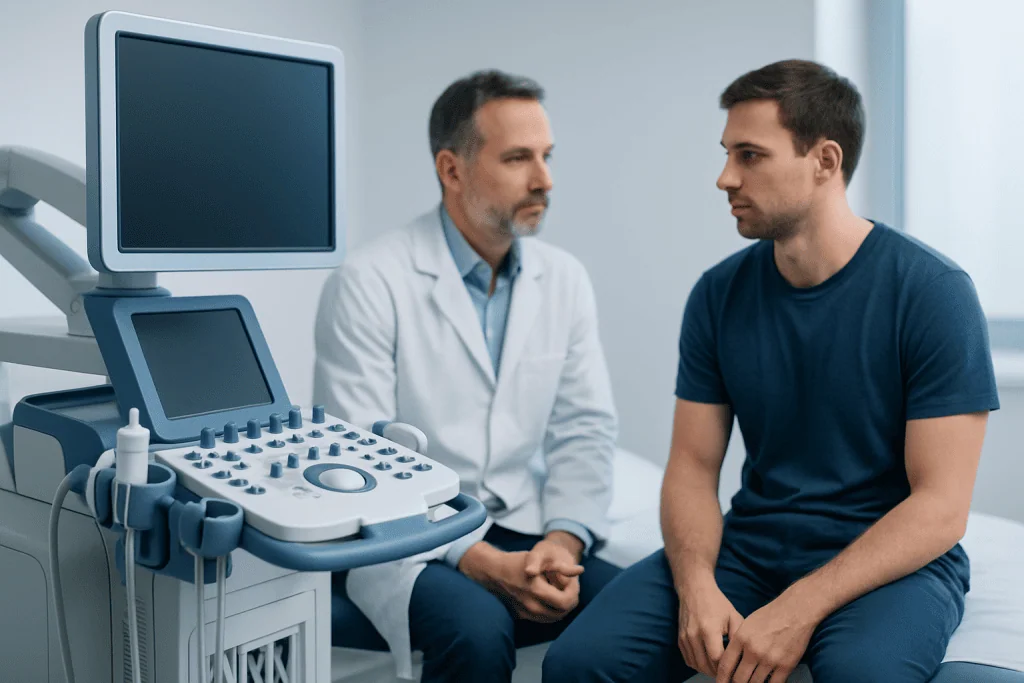
The most common symptom of testicular cancer in one testicle is a painless lump or firm area in the testicle. Some people describe the testicle as feeling different, harder, or heavier than usual. Others notice that one testicle has become larger or more swollen than the other.
Symptoms can vary from person to person. Some men feel a dull ache in the lower abdomen, groin, or scrotum. Others notice a dragging sensation or heaviness in the scrotum. Pain is possible, but many early cases are not painful.
Less common symptoms may happen if the disease has spread beyond the testicle. These can include persistent back pain, cough, shortness of breath, or unexplained fatigue. Rarely, hormonal effects may cause breast tenderness or enlargement.
- Painless lump in one testicle
- Swelling or enlargement on one side
- Feeling of heaviness in the scrotum
- Dull ache in the groin or lower abdomen
- Firmness or change in texture of a testicle
- Sudden fluid collection in the scrotum in some cases
Causes and Risk Factors
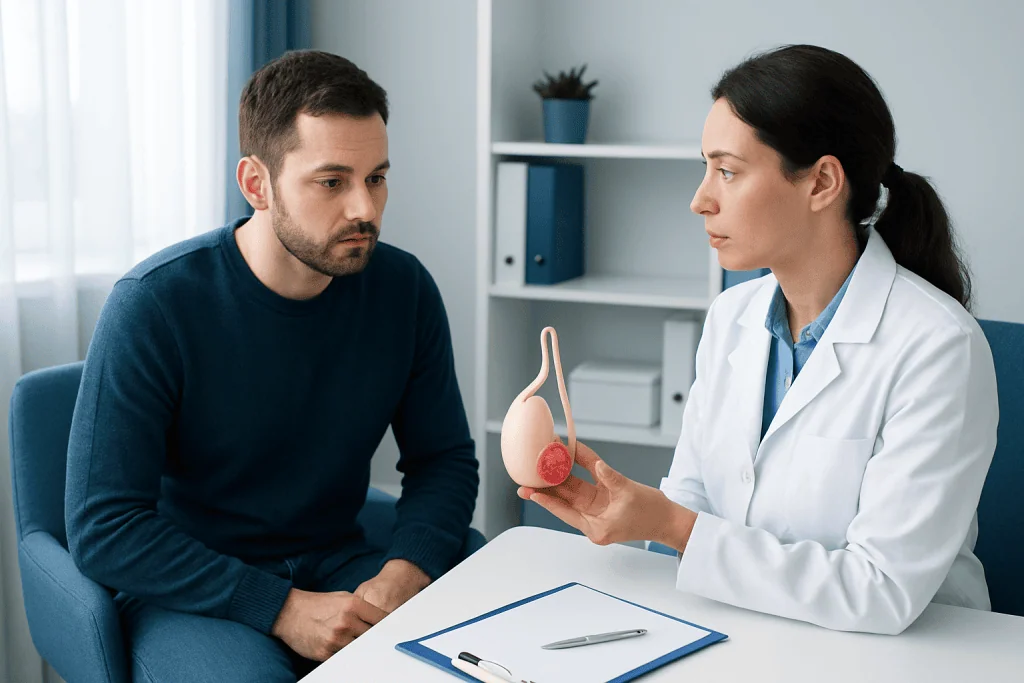
The exact cause of testicular cancer is not always clear. It begins when cells in the testicle grow in an abnormal and uncontrolled way. Most testicular cancers arise from germ cells, and these tumors are broadly grouped into seminomas and non-seminomas. Doctors may also discuss related conditions such as testicular cancer when explaining the diagnosis and treatment plan.
Several factors can increase risk, although many people diagnosed have no obvious risk factors. A history of an undescended testicle is one of the best known. Family history, previous testicular cancer in the other testicle, and certain inherited conditions may also play a role.
Age is another factor, as testicular cancer often affects younger and middle-aged men, though it can occur at other ages as well. Having a risk factor does not mean someone will definitely develop cancer, and having no risk factors does not rule it out. That is why symptoms and physical changes are so important to check.
How It Is Diagnosed
Diagnosis usually begins with a medical history and physical examination. A doctor will ask about symptoms, when the change was first noticed, and whether there is pain, swelling, or a feeling of heaviness. Examination helps identify whether the lump seems to come from the testicle itself or from nearby structures.
The main imaging test is a scrotal ultrasound. This simple, noninvasive test helps show whether a lump is solid or fluid-filled and whether it is located inside the testicle. Blood tests may also be ordered to measure tumor markers, which can support diagnosis and help guide treatment.
If testicular cancer is strongly suspected, the usual next step is surgery to remove the affected testicle rather than taking a needle biopsy through the scrotum. After surgery, the tissue is examined in the laboratory to confirm the exact type of cancer. Additional imaging may be used to see whether the cancer has spread and to determine its stage.
Staging is important because it helps doctors choose the most appropriate treatment. It shows whether the cancer is limited to the testicle or has involved lymph nodes or other organs. A specialist team, often including urologists, oncologists, and radiologists, usually guides this process.
Treatment Options
The first treatment for most people with testicular cancer in one testicle is surgery to remove the affected testicle, a procedure called radical inguinal orchiectomy. This operation helps confirm the diagnosis and is also the main treatment for many early-stage cases. Removing one testicle does not always affect sexual function or fertility, but these issues should be discussed before treatment.
Further treatment depends on the cancer type, stage, tumor markers, and overall health. Some people may only need careful follow-up, known as active surveillance, after surgery. Others may benefit from additional care such as specialist uro-oncology treatment, chemotherapy, radiation therapy, or surgery to remove affected lymph nodes.
Fertility preservation may be discussed before treatment, especially for younger men or those who hope to have children in the future. Sperm banking can be an important option before surgery or cancer treatment. Emotional support also matters, as a cancer diagnosis can affect body image, anxiety, and relationships.
Care is often tailored by a multidisciplinary team. Near the end of the care journey or during second-opinion planning, some international patients may choose centers such as Acibadem International, where multidisciplinary specialists in JCI-accredited hospitals diagnose and treat testicular cancers with coordinated care.
Prevention and Self-Care
There is no guaranteed way to prevent testicular cancer, because its exact cause is often unknown. However, becoming familiar with how the testicles normally look and feel can help a person notice changes early. Self-awareness is more helpful than fear; the goal is simply to recognize anything new and unusual.
Many doctors suggest checking the testicles regularly, such as once a month, especially after a warm shower or bath when the scrotal skin is relaxed. Each testicle can be gently rolled between the fingers and thumb to notice lumps, hardness, or changes in size. The epididymis, a soft cord-like structure behind the testicle, is normal and should not be mistaken for a lump.
General healthy habits support overall well-being during prevention and recovery. These include not smoking, maintaining routine medical checkups, and seeking advice promptly if symptoms appear. If someone has a history of an undescended testicle or previous testicular problems, regular follow-up with a doctor may be recommended.
When to See a Doctor
A doctor should be consulted promptly for any new lump, swelling, firmness, or change in one testicle. Even if there is no pain, the change should not be ignored. Most testicular changes are not emergencies, but they do need timely assessment.
Medical attention is also important for ongoing scrotal heaviness, a dull ache in the groin, or one testicle that suddenly seems larger than before. These symptoms can be caused by many conditions, including infection, fluid buildup, or benign cysts, but only an examination and ultrasound can clarify the cause.
Urgent assessment is especially important if symptoms are accompanied by severe pain, sudden swelling, fever, or signs of spreading disease such as persistent back pain or breathing symptoms. A quick check can bring reassurance or allow early treatment if needed. If another urologic condition is suspected, doctors may also evaluate for related problems such as other cancers of the genitourinary system when clinically appropriate.
Frequently asked questions
Does testicular cancer usually affect only one testicle?
Yes, testicular cancer most often starts in one testicle. It is much less common for both testicles to be affected at the same time.
Is testicular cancer always painful?
No, many people with testicular cancer have no pain at first. A painless lump, swelling, or heaviness is often the earliest sign.
Can a lump in one testicle be something other than cancer?
Yes, not every lump is cancer. Infections, cysts, fluid buildup, and other noncancerous conditions can also cause testicular changes, which is why an ultrasound and doctor evaluation are important.
How is testicular cancer confirmed?
Doctors usually begin with a physical exam, scrotal ultrasound, and blood tests for tumor markers. If cancer is suspected, the affected testicle is usually removed surgically and examined to confirm the diagnosis.
Can someone live normally with one testicle?
Many people live normal, healthy lives with one testicle. In many cases, one healthy testicle can still produce enough testosterone and sperm, although fertility discussions before treatment are important.
When should a person seek medical care for testicular symptoms?
A doctor should be seen promptly for any new lump, swelling, hardness, or lasting change in one testicle. It is best not to wait for pain to appear before getting checked.
References
- World Health Organization
- National Cancer Institute
- American Cancer Society
- European Association of Urology
- National Health Service
This article is for general information only and is not a substitute for professional medical advice. Please consult a qualified doctor about your individual situation.
Testicular Cancer in Turkey — costs, top hospitals & a free quote
JCI-accredited · board-certified surgeons · reply within 24h
Add us as a Preferred Source to see more of our trusted health content across Google Search, AI Overviews and Discover.

More from the Health Library



Related Specialists

Dt. Alara Naz Kenir
Oral & Dental Health
Assoc. Prof. Dr. Tonguç Utku Yilmaz
General Surgery
Dr. Levent Karaman
Inpatient Clinic Physicians Clinical Service
Dilara Çitoğlu
Physical Medicine & Rehabilitation