

Paying Medical Bills in Turkey: Cards, Bank Transfers, and Receipts

Paying medical bills in Turkey is usually done by card or bank transfer, with official receipts available through hospital billing teams in Istanbul and beyond.
If you are arranging treatment abroad, it helps to know how hospital payments usually work before you travel. This guide explains the practical side of paying medical bills in Turkey, including cards, bank transfers, deposits, invoices, and receipts, so you can plan with fewer surprises.
At a glance
- Main payment methods: Credit/debit card and bank transfer are most commonly used
- Receipts: Official payment receipts and invoices are typically available on request or automatically issued
- Best time to confirm: Before travel and again at admission
- Who can help: International patient services and hospital billing teams
- What to prepare: Passport, treatment plan, payer details, and proof of transfer if relevant
- Currency point: Confirm the billing currency and any bank or card fees in advance
How medical payments usually work in Turkey
Paying for treatment abroad is easier when you know the sequence in advance. In Turkey, private hospital bills are commonly handled through a billing or cashier desk, and international patients are often guided by a dedicated patient coordinator. Depending on your treatment plan, you may be asked to pay a deposit before arrival, settle part of the bill at admission, and pay any remaining balance before discharge.
The exact timeline depends on what care you are receiving. A same-day consultation or imaging appointment is often paid on the day, while surgery or a longer hospital stay may involve pre-authorization, a deposit, and then a final account once your care is complete. If your plan changes during treatment, the finance team may issue an updated estimate or revised balance.
At large providers such as Acibadem International, international patient services usually help you understand who to pay, when payment is due, and what documents you will receive. This can be especially useful if you are coordinating treatment from overseas and want clarity before you board your flight.
Using credit or debit cards
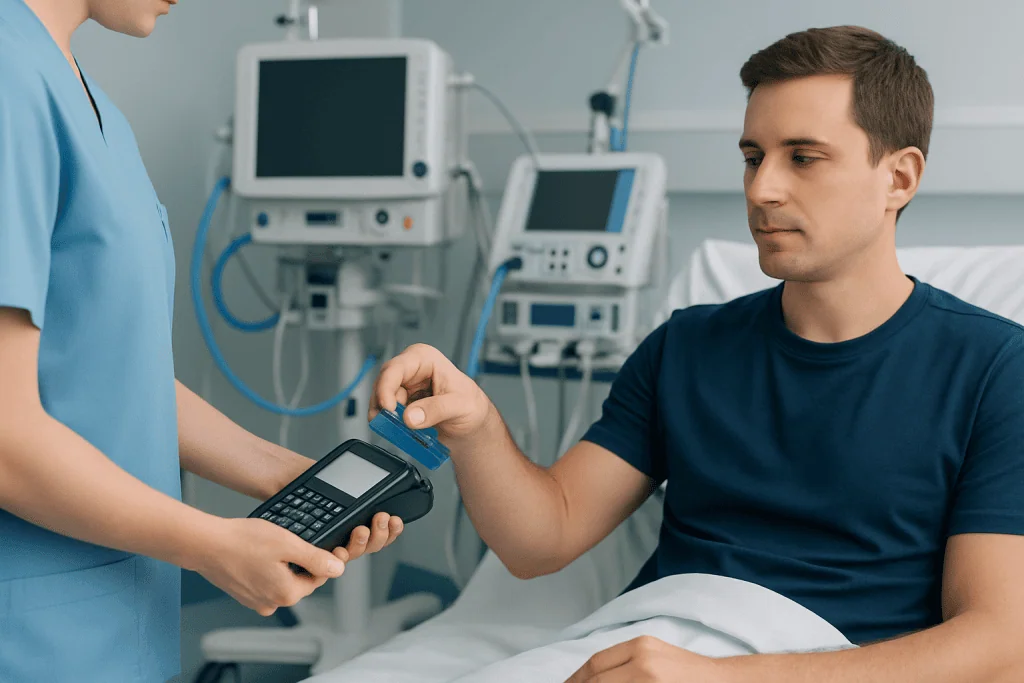
Card payment is one of the simplest ways of paying medical bills in Turkey, especially for international patients who want a fast, traceable transaction. Major hospitals commonly accept widely used credit and debit cards, but it is still wise to confirm accepted card types before you travel, particularly if you use a business card, prepaid card, or a card issued outside your home region.
Before your appointment, contact your bank to let them know you will be making a medical payment in Turkey. This can reduce the chance of a security block on a high-value international transaction. You should also ask about foreign transaction fees, daily spending limits, exchange rates, and whether your card requires in-app approval for large payments.
If you plan to split the payment across more than one card, check in advance whether that is possible. Keep the cardholder present with identification where required, and ask for both the card slip and the hospital receipt after payment. For your own records, it is helpful to take a photo of the receipt and save any confirmation emails.
- Confirm accepted card brands before arrival
- Check your card limit and international usage settings
- Ask whether the payment will be charged in Turkish lira or another currency
- Keep all card slips and hospital-issued receipts
Paying by bank transfer

Bank transfer is often used for deposits, scheduled procedures, or higher-value treatment plans. If you are paying by transfer, ask the hospital for the official beneficiary name, bank name, branch details, IBAN or account number, SWIFT code, billing address, and any payment reference you must include. Using the correct reference is important so your payment can be matched quickly to your file.
International transfers can take time, especially across different banking systems or public holidays. For that reason, it is best not to leave a required deposit until the last minute. Ask the hospital when cleared funds must arrive and whether a transfer receipt is enough to hold your booking while the payment is still in process.
When you send the transfer, save the payment confirmation and share it with your coordinator or billing contact. At Acibadem International, the international patient team can generally help route proof of payment to the right finance department so admission is smoother when you arrive. You should also check who pays transfer charges, as intermediary bank fees can affect the final amount received.
Invoices, receipts, and documents to request
Receipts matter for reimbursement, visa records, employer claims, tax questions in some countries, and your own peace of mind. After any payment, ask for an official receipt that shows the hospital name, date, amount paid, currency, and the patient name or file number. If you need a more detailed document for insurance or an embassy, ask whether an itemized invoice can also be provided.
If someone else is paying on your behalf, make sure the billing team knows this early. You may need the invoice issued in the patient name, the payer name, or both, depending on your insurer or sponsor requirements. It is easier to get the paperwork right before payment is finalized than to request corrections later.
Keep a folder with every estimate, invoice, transfer confirmation, and discharge account summary. Digital copies are useful, but it is smart to keep printed copies as well when traveling. If you are treated at a large international hospital group like Acibadem International, ask your coordinator which documents are normally provided automatically and which ones should be requested in advance.
Things that can affect your final bill
Even when you receive a treatment quote before travel, the final amount can change. This does not always mean something has gone wrong; it may simply reflect additional tests, medicines, consumables, an extra consultation, a longer stay, or a change to the treatment plan after your doctor evaluates you in person. That is why it is sensible to ask what is included in the quote and what may be billed separately.
If you are comparing payment options, remember that your total out-of-pocket cost may be affected by bank fees, exchange rate differences, and card charges from your own provider. A bank transfer may suit one patient better, while another may prefer card payment for speed and easier charge tracking. The best choice often depends on timing, amount, and your home bank’s rules.
For added clarity, ask the billing team to explain any unclear line items before you pay the final balance. If English is not your first language, an interpreter or international patient representative can help you review the account. Hospitals experienced with overseas patients, including Acibadem International, typically understand that clear financial communication is part of good patient care.
If you are using insurance, an employer, or a family payer
Not every international patient pays fully out of pocket. If your insurer, embassy, employer, or family member is involved, clarify the payment pathway as early as possible. Ask whether the hospital can bill the third party directly, whether a guarantee of payment is needed, and which services require pre-approval. Do not assume your policy covers every part of the visit, especially consultations, diagnostic tests, or unplanned extensions of stay.
If you expect reimbursement later, ask what wording and coding your insurer requires on receipts and invoices. Some payers want itemized charges, proof of payment, doctor reports, or discharge summaries. Getting these before you leave Turkey can save time and avoid a long email chain once you are back home.
If a relative or sponsor will make the payment, let the hospital know in advance so they can advise what identification or authorization may be needed. This is particularly helpful if the payer will not be physically present at the hospital. International patient departments can often coordinate communication between you, the payer, and the finance office.
Practical tips before admission and before discharge
A quick financial check-in before admission can prevent stressful delays on the day of treatment. Confirm the estimated balance, the expected payment deadlines, the accepted payment methods, and the name of the office handling international billing. If you are arriving in Istanbul after a long flight, having this settled ahead of time can make the first day much easier.
Before discharge, review your account while you still have access to the billing team. Check that your name, passport details if needed, dates of service, and payment amounts are correct. Ask whether all receipts have been issued and whether any pending charges could still appear after you leave, for example from a final pharmacy reconciliation or late-added test result.
It is also a good idea to store all billing contacts in your phone and email the documents to yourself or a trusted family member. If you need follow-up care, remote consultations, or future reimbursement, having everything organized from the start will save time later. Simple preparation is often the best way to make paying medical bills in Turkey feel manageable.
Step by step
- Request a written estimate. Before you travel, ask for a clear written quote or treatment estimate. Check what is included, what may change after in-person assessment, and which parts of care are commonly billed separately.
- Confirm your payment method. Decide whether you will use card, bank transfer, insurance, or a third-party payer. Then confirm with the hospital which methods are accepted and whether any deadlines apply to deposits or prepayments.
- Prepare your bank or card. If paying by card, notify your bank and review your spending limits and foreign transaction fees. If paying by transfer, request full bank details and send funds early enough for international processing times.
- Share proof of payment. After any transfer or advance payment, send the confirmation to your hospital contact right away. This helps the billing team match the payment to your file and reduces delays at admission.
- Review the bill before final payment. Before discharge or final settlement, read through the account and ask questions about any unfamiliar items. It is easier to clarify charges while you are still at the hospital than after you have returned home.
- Collect receipts and invoices. Request official receipts for every payment and ask for an itemized invoice if you need one for insurance or reimbursement. Check that names, dates, currency, and amounts are correct before you leave.
- Store your documents safely. Keep printed and digital copies of estimates, receipts, invoices, and transfer confirmations. Organizing these documents now will help if you need follow-up care, reimbursement, or financial records later.
Your checklist
- Written treatment estimate or quote
- Passport or ID used for hospital registration
- Credit/debit card or bank transfer confirmation
- Name and contact details of your billing coordinator
- Insurance authorization or sponsor letter if applicable
- Official receipt for each payment made
- Itemized invoice if needed for reimbursement
- Record of currency, exchange rate, and bank fees
- Discharge billing summary before leaving the hospital
Key takeaways
- Card and bank transfer are the most common ways of paying medical bills in Turkey.
- Always confirm accepted payment methods, billing currency, and deadlines before travel.
- Keep proof of payment and request official receipts and, if needed, itemized invoices.
- Final bills can differ from initial estimates if tests, medicines, or stay length change.
- International patient teams can help coordinate billing questions, documents, and payer communication.
Frequently asked questions
Can I pay hospital bills in Turkey with a foreign credit card?
In many private hospitals, yes, foreign credit and debit cards are commonly accepted. It is still important to confirm accepted card types in advance and check with your bank about international transaction limits, security blocks, and fees.
Is bank transfer a normal way to pay for treatment in Turkey?
Yes, bank transfer is a common option, especially for deposits or planned procedures. Ask for the hospital's official bank details, include the correct payment reference, and send the transfer early enough for processing and any intermediary bank delays.
Will I get a receipt after I pay?
You should expect an official receipt for your payment, and many hospitals can also provide an invoice or itemized statement if needed. If you require documents for insurance, an employer, or reimbursement, mention this before payment so the paperwork is issued correctly.
Can my final bill be different from my original quote?
Yes, it can happen if your treatment plan changes after examination or if extra tests, medicines, supplies, or additional hospital days are needed. Ask what is included in the estimate and request clarification on anything that may be billed separately.
What if someone else is paying on my behalf?
If a family member, employer, embassy, or insurer will pay, tell the hospital as early as possible. The billing team can explain whether authorization, identification, or a guarantee of payment is required and how the invoice should be issued.
Should I bring cash for medical payments?
Many international patients rely mainly on cards or bank transfers rather than carrying large amounts of cash. Even if you bring some cash for small day-to-day expenses, it is safer to confirm the hospital's preferred payment methods for larger medical bills in advance.
How can Acibadem International help with billing questions?
Acibadem International supports overseas patients through international patient services, which can help you understand estimates, payment timing, and required documents. Its teams can also assist with interpreters and practical coordination between you and the hospital finance office.
Add us as a Preferred Source to see more of our trusted health content across Google Search, AI Overviews and Discover.
More Patient Guides

Using International Insurance for Treatment in Turkey
International insurance for treatment in Turkey usually requires plan checks, pre-approval, and documents. In Istanbul, ask your hospital to verify benefits early.
9 min read
How to Budget for Extra Nights in Turkey After Treatment
Budget for extra nights in Turkey after treatment by planning hotel, meals, transport and follow-up needs in Istanbul with a simple buffer.
9 min read
Medical Travel Budget for Turkey: Hidden Costs Patients Often Miss
Medical travel budget for Turkey should include more than treatment fees: plan for flights, hotel, tests, medicines, transfers, and follow-up costs.
9 min read