

Paying for Treatment in Turkey from Abroad: Cards, Bank Transfers, and Timing

Paying for treatment in Turkey from abroad usually involves cards or bank transfers; confirm timing, currency, and receipts before you travel.
If you are arranging care from another country, the easiest way to reduce stress is to understand how payment works before you fly. This guide walks you through cards, bank transfers, timing, currency questions, and the practical steps that help your admission go smoothly.
At a glance
- Best time to confirm payment: Before travel and again 24-72 hours before admission
- Common payment methods: Credit/debit cards and international bank transfers
- What to check first: Currency, transfer lead time, card limits, and invoice details
- Useful documents: Passport, quote, transfer receipt, and billing contact details
- Why timing matters: International transfers can take several business days to clear
What paying from abroad usually looks like
Paying for treatment in Turkey from abroad is usually straightforward, but it works best when you treat payment as part of your travel planning, not as a last-minute task. In most cases, you will receive a treatment plan or quote, confirm the accepted payment methods, and then arrange either a card payment or a bank transfer within the timeline given by the hospital.
The most important point is that the payment process can involve more than one step. You may need to pay a deposit, settle the expected treatment amount before admission, or pay for additional tests or changes if your medical plan is updated after evaluation. That does not necessarily mean something is wrong; it simply reflects how real treatment plans can evolve once your care team sees you in person.
If you are coming to Istanbul or another city in Turkey for care, keep all payment communication in one place: your quote, any proforma invoice, bank details, receipts, and the name of your international patient coordinator. At Acibadem International, international patient services can help you understand which documents to bring and when billing confirmation is needed so your arrival is easier.
Cards or bank transfer: how to choose
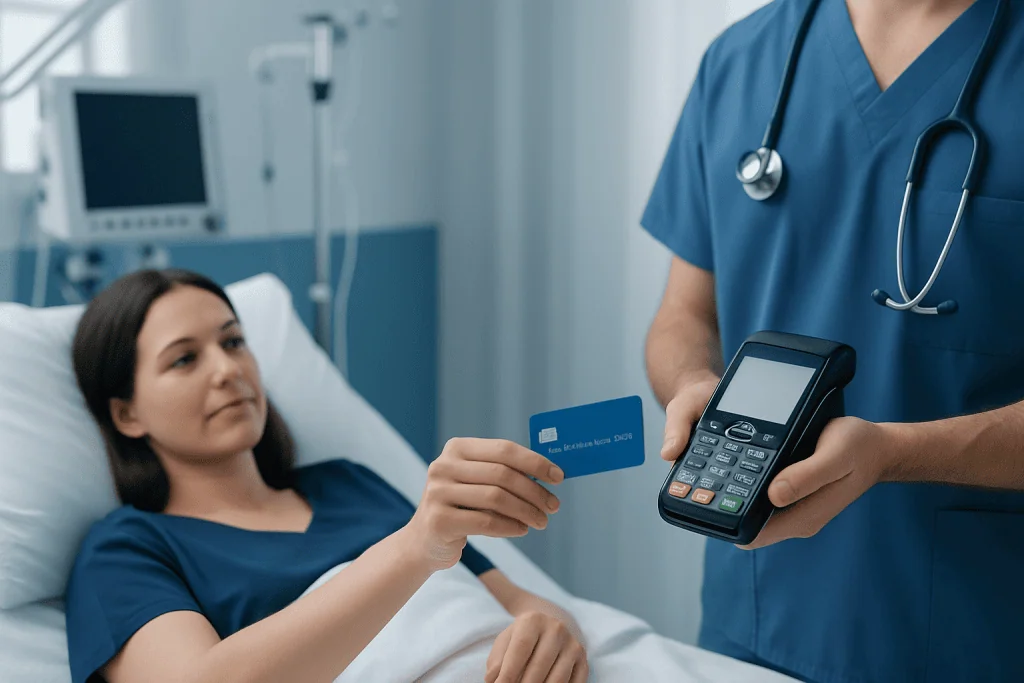
Cards are often the simplest option if you want speed and immediate confirmation. A successful card payment is usually visible quickly, which can be helpful if your admission date is close. Before relying on a card, however, check your daily purchase limit, whether your bank blocks high-value overseas healthcare payments, and whether your card requires app approval or one-time passcodes that may be difficult to receive while traveling.
Bank transfers are common for larger amounts and for patients who prefer to pay directly from their bank account. The advantage is that a transfer can feel more predictable for major planned expenses, but the practical downside is timing. International transfers may take several business days, and intermediary banks can sometimes add delays or fees, so you should never assume a transfer sent today will be credited today.
Many patients decide based on timing and control. If your admission is soon, a card may be easier if accepted. If you are planning well in advance, a bank transfer may suit you, provided you send it early and keep the receipt. Whichever method you use, ask the hospital billing team to confirm exactly how to reference the payment so it can be matched to your file without confusion.
- Ask which cards are accepted and whether card-present payment is required.
- Confirm the official beneficiary name and bank details before any transfer.
- Check whether your bank charges outward transfer fees or exchange fees.
- Keep screenshots, receipts, and transaction reference numbers.
Currency, exchange rates, and hidden delays

One of the most common questions is whether you should pay in your home currency or in the currency requested by the provider. The safest approach is to follow the hospital’s official billing instructions exactly and ask in advance which currency applies to your quote. This helps you compare amounts properly and reduces the risk of shortfall if exchange rates move between the day you send payment and the day it is received.
Exchange rates can affect the final amount you see leaving your account, especially with card payments or transfers converted by your bank. In addition, banks and card issuers may apply their own foreign transaction or currency conversion charges. These costs are not always shown clearly at the start, so it is worth checking with your bank before you pay.
Timing matters here too. A transfer may leave your account immediately but arrive later, and the credited amount can be affected by correspondent bank deductions depending on the route it takes. If your hospital requires a full amount to clear before admission, even a small difference can slow down check-in until the balance is settled. Asking early how any transfer charges should be handled can prevent unnecessary stress on arrival.
When to pay and what to confirm before you travel
The right time to pay depends on the type of treatment, how soon you are traveling, and the provider’s policy. As a general rule, it is wise to confirm your payment timeline as soon as your treatment date starts to become real. If you are booking flights and accommodation, you should already know whether a deposit or advance payment is expected and when proof of payment must be shared.
A good practical habit is to reconfirm everything 24 to 72 hours before departure or admission. By then, you want to know that your payment has been received, matched to your patient file, and recorded correctly under your full name or patient number. If you are using a transfer, do not rely only on the fact that your bank says it was sent; ask the hospital whether it has actually arrived and cleared.
Acibadem International’s international patient teams often assist patients with these practical checkpoints, including billing communication, interpreter support, and general travel coordination. That kind of support is especially useful when you are traveling with family, arriving late, or managing several moving parts at once. The goal is simple: fewer surprises at registration.
- Confirm the latest payment deadline.
- Ask whether treatment can proceed if funds are still in transit.
- Check if additional tests may change the expected amount.
- Verify who to contact outside standard office hours if you travel on a weekend.
Documents and proof to keep with you
Even if everything has been paid correctly, you should still travel with your payment paperwork. Keep both digital and printed copies if possible, especially if you are changing airports, crossing time zones, or expecting to arrive when finance offices may be less easy to reach. A simple folder on your phone plus a printed backup can save a lot of time.
The most useful documents are usually your quote or treatment estimate, invoice or payment request, transfer receipt or card confirmation, passport, and the contact details of your international patient coordinator. If your payment included a medical package, it also helps to know what is included and what may be billed separately, such as extra imaging, consultations, medications, extended stay, or companion-related costs.
If you are traveling to a JCI-accredited hospital within the Acibadem International network, bring any correspondence that links your payment to your hospital visit. This can help the admissions and international patient services teams resolve questions quickly if your transfer is pending or if the payment reference needs to be cross-checked. Keeping organized records is one of the simplest ways to make your first day smoother.
How to avoid common payment problems
Most payment issues are practical rather than serious. The most common ones are late transfers, card declines, mismatched names, missing references, and confusion about what the quote includes. These can often be avoided by checking details early and not assuming that healthcare payments work exactly like ordinary online shopping or hotel bookings.
If you plan to pay by card in person, tell your bank before you travel so the transaction is less likely to be flagged for fraud. If you plan to transfer money, copy the beneficiary details carefully and confirm them only through official hospital communication channels. Never rely on bank details sent through an unverified message, and if anything looks different from earlier correspondence, pause and recheck before sending funds.
Finally, leave room in your budget for normal variations. Treatment plans can sometimes change after consultation, and exchange rates or bank charges can affect the final amount you pay. That does not mean your original planning was wrong; it means you are wisely allowing for real-world logistics. A reputable provider will explain billing steps clearly and give you a direct contact for questions before and during your stay.
Step by step
- Review your quote carefully. Read the quote or estimate line by line and make sure you understand what is included, what may be added later, and which currency applies. If anything is unclear, ask before you arrange payment rather than trying to resolve it after travel.
- Confirm the accepted payment method. Ask whether you can pay by credit card, debit card, or international bank transfer, and whether any method is preferred for your timeline. Also confirm whether payment must be completed before admission or can be finalized at check-in.
- Check your bank or card limits. Before you send money, contact your bank to ask about overseas payment limits, fraud blocks, foreign transaction fees, and transfer cut-off times. This is especially important for larger healthcare payments that may not fit your normal spending pattern.
- Send payment early enough. If you are using a bank transfer, allow several business days and remember that weekends and holidays can slow processing. If your travel date is close, ask whether a faster payment method is available.
- Share proof of payment promptly. Once you have paid, send the receipt or transfer confirmation to your hospital contact using the official channel they provide. Include your full name, patient number if available, and treatment date so the finance team can match it quickly.
- Reconfirm before departure. A day or two before you leave, ask whether the payment has been received and cleared. This final check can prevent stressful delays at admission, especially if you are landing late or arriving on a weekend.
- Bring your records with you. Keep digital and printed copies of your quote, invoice, passport, and payment receipt in your hand luggage. If any question comes up at registration, you will be able to resolve it faster.
Your checklist
- Confirm the exact payment amount and currency
- Check whether a deposit or advance payment is required
- Verify official bank details through a trusted hospital contact
- Ask your bank about transfer times and card limits
- Save the payment receipt and transaction reference number
- Email proof of payment to your international patient coordinator
- Reconfirm receipt of funds before you travel
- Bring printed and digital copies of all payment documents
Key takeaways
- Cards are usually faster; bank transfers often need more lead time.
- Always confirm currency, payment deadlines, and official bank details before sending money.
- International transfers can be delayed by weekends, holidays, or intermediary banks.
- Keep receipts, references, and billing contacts with you during travel.
- Reconfirm that funds have been received before your admission date.
Frequently asked questions
Can I pay for treatment in Turkey with a credit or debit card?
Often yes, but accepted card types and payment rules can vary by hospital and by the stage of care. It is best to confirm in advance whether card payment is accepted remotely, in person, or both, and to check your bank's overseas spending limits before you rely on this option.
How long does an international bank transfer usually take?
It can take several business days, and sometimes longer if intermediary banks are involved or if the transfer is sent close to a weekend or public holiday. Your own bank may show the payment as sent before the receiving hospital can confirm that the funds have arrived and cleared.
Should I pay before I travel or when I arrive?
That depends on the provider's policy and your treatment plan, but many patients find it safer to settle required payments before travel when possible. Paying early gives more time to resolve transfer delays, card issues, or questions about the quote before your admission date.
What documents should I bring as proof of payment?
Bring your quote or estimate, invoice or payment request, payment receipt, transaction reference number, passport, and the contact details of your patient coordinator. Keep both digital copies on your phone and printed copies in case you need them quickly at registration.
What if the final treatment plan changes after I arrive?
Sometimes additional tests, consultations, or changes in the treatment plan can affect billing. If that happens, ask for a clear explanation of what has changed, what is included, and how any extra payment would be handled before you agree.
Can someone else pay on my behalf from another country?
In many cases yes, but the payment should be clearly linked to your full name and patient details so the finance team can match it correctly. If a family member or company is paying, tell the hospital in advance and ask what reference information should be included.
How can Acibadem International help with payment logistics?
Acibadem International supports patients with practical coordination around their visit, including communication with international patient services, interpreter assistance, and general guidance on what documents and confirmations to prepare. If you are attending one of its JCI-accredited hospitals, that coordination can make admission and billing communication much easier.
Add us as a Preferred Source to see more of our trusted health content across Google Search, AI Overviews and Discover.
More Patient Guides

Travel Insurance for Treatment in Turkey: What Is Covered and What Is Not
Travel insurance for treatment in Turkey may cover medical emergencies and trip disruption, but planned treatment is often excluded. Check policy wording…
9 min read
Questions to Ask Before Accepting a Treatment Quote in Turkey
Treatment quote in Turkey: ask what is included, excluded, payable, and changeable before you travel to Istanbul or elsewhere in Turkey.
9 min read
How to Compare Surgery Packages in Turkey Without Missing Hidden Extras
Surgery packages in Turkey can vary widely. Compare what is included, hidden extras, aftercare, and travel support before you book in Turkey…
9 min read