Bowel cancer stool photos: Common Causes, Warning Signs, and When to See a Doctor

Photos of stool can help describe what is being seen, but they cannot confirm or rule out bowel cancer. Warning signs include blood in or on the stool, black tarry stool, persistent change in bowel habits, and unexplained weight loss.
Key Takeaways
- Photos of stool can help describe what is being seen, but they cannot confirm or rule out bowel cancer.
- Warning signs include blood in or on the stool, black tarry stool, persistent change in bowel habits, and unexplained weight loss.
- Many non-cancer causes of abnormal stool are common, including hemorrhoids, constipation, infections, and inflammatory bowel conditions.
- A doctor may use stool tests, blood tests, colonoscopy, and imaging to find the cause.
- Urgent medical attention is needed for heavy bleeding, fainting, severe abdominal pain, or black stool with weakness or dizziness.
Bowel cancer stool photos may show blood, black or tarry stool, mucus, or unusually narrow stool, but pictures alone cannot diagnose cancer. Many common conditions, including hemorrhoids, anal fissures, infections, and inflammatory bowel disease, can cause similar changes, so persistent or unexplained symptoms should be assessed by a doctor.
Overview: what bowel cancer stool photos may show
People searching for bowel cancer stool photos are usually trying to understand whether a visible change in stool could be a warning sign. In general, stool linked with bowel cancer may appear streaked with red blood, very dark or tarry, mixed with mucus, or narrower than usual for a persistent period. However, these appearances are not specific to cancer, and a photograph cannot safely distinguish bowel cancer from more common causes.
Doctors focus not only on what the stool looks like, but also on the full pattern of symptoms. A single unusual bowel movement may happen with diet changes, dehydration, minor irritation, or infection. More concern arises when changes continue for days to weeks, keep returning, or occur with symptoms such as abdominal pain, fatigue, anemia, unintended weight loss, or a lasting change in bowel habits.
It is also important to remember that bowel cancer does not always cause obvious stool changes, especially in early stages. Some people have subtle symptoms or no symptoms at all until screening detects a problem. That is why age-appropriate screening and medical evaluation of persistent bowel symptoms remain more reliable than comparing stool to online images.
What stool changes can be warning signs
Several stool changes can prompt medical review. Bright red blood may appear on the toilet paper, on the surface of the stool, or in the toilet bowl. Dark red or maroon stool can suggest bleeding from higher in the lower digestive tract, while black, sticky, tar-like stool may indicate bleeding from the upper digestive tract and should be assessed promptly.
Another commonly discussed change is stool becoming persistently narrow or pencil-thin. This can happen for reasons other than cancer, including muscle spasm or constipation, but when it is new and lasts over time, especially with bleeding or abdominal discomfort, it is worth discussing with a doctor. Some people also notice mucus in the stool or a sensation of not fully emptying the bowel.
A stool pattern can be just as important as appearance. Warning signs include:
- Ongoing diarrhea or constipation without a clear short-term cause
- Alternating diarrhea and constipation
- New urgency to open the bowels
- A feeling of incomplete emptying after a bowel movement
- Blood mixed with stool rather than only on the paper
- Stool changes together with weakness, iron deficiency, or weight loss
These signs do not mean bowel cancer is present, but they do justify proper assessment. If there is any doubt, keeping a short symptom diary and, if comfortable, taking a photo to show a clinician can sometimes help describe what has been happening.
Common non-cancer causes that can look similar

Many conditions can cause stool changes that resemble those seen in bowel cancer stool photos. Hemorrhoids are a very common cause of bright red blood, especially when blood appears on toilet paper or after straining. Anal fissures can also cause small amounts of fresh bleeding and pain during bowel movements. Constipation may lead to hard stool, mucus, straining, and temporary narrowing of stool.
Infections can change stool color and consistency and may cause diarrhea, mucus, abdominal cramping, or blood. Inflammatory bowel conditions such as ulcerative colitis and Crohn’s disease can also cause bleeding, urgency, diarrhea, and weight loss. These conditions need medical care, but they are not the same as cancer. Some symptoms may overlap with colon cancer, which is why testing rather than visual comparison is important.
Diet and medicines can also alter stool. Iron supplements and bismuth-containing medicines may darken stool. Foods such as beets can produce red discoloration that may be mistaken for blood. Very dark foods, dehydration, or sudden changes in fiber intake can also temporarily affect bowel movements.
Although most bowel changes have a non-cancer explanation, persistent or unexplained symptoms should not be ignored. A doctor can decide whether the pattern suggests a minor anorectal cause, inflammation, infection, or a need for tests to exclude colorectal cancer.
Other symptoms that matter alongside stool appearance
Stool appearance is only one part of the picture. Doctors usually ask about bowel habits, pain, energy levels, appetite, and weight. When bowel cancer is present, stool changes may come with cramping, bloating, a feeling of fullness, or a change in how often a person needs to use the toilet.
Fatigue can be an important clue, especially if bleeding is slow and not always obvious. Ongoing blood loss may lead to iron-deficiency anemia, which can cause tiredness, reduced exercise tolerance, pale skin, dizziness, or shortness of breath. In some cases, anemia is found on a blood test before bowel symptoms become obvious.
Unintended weight loss, loss of appetite, and worsening abdominal discomfort should also be taken seriously, particularly in middle age or later life, or in someone with a personal or family history of bowel polyps, bowel cancer, or inflammatory bowel disease. Symptoms can overlap with Crohn's disease and other digestive disorders, so an accurate diagnosis depends on clinical evaluation.
How doctors diagnose the cause
Diagnosis begins with a conversation about symptoms, timing, family history, medicines, and any changes in weight or appetite. A doctor may ask whether blood is bright red or dark, whether stool is loose or hard, and whether there is pain, urgency, or a sense of incomplete emptying. A physical examination may include a gentle abdominal exam and, when appropriate, a rectal examination.
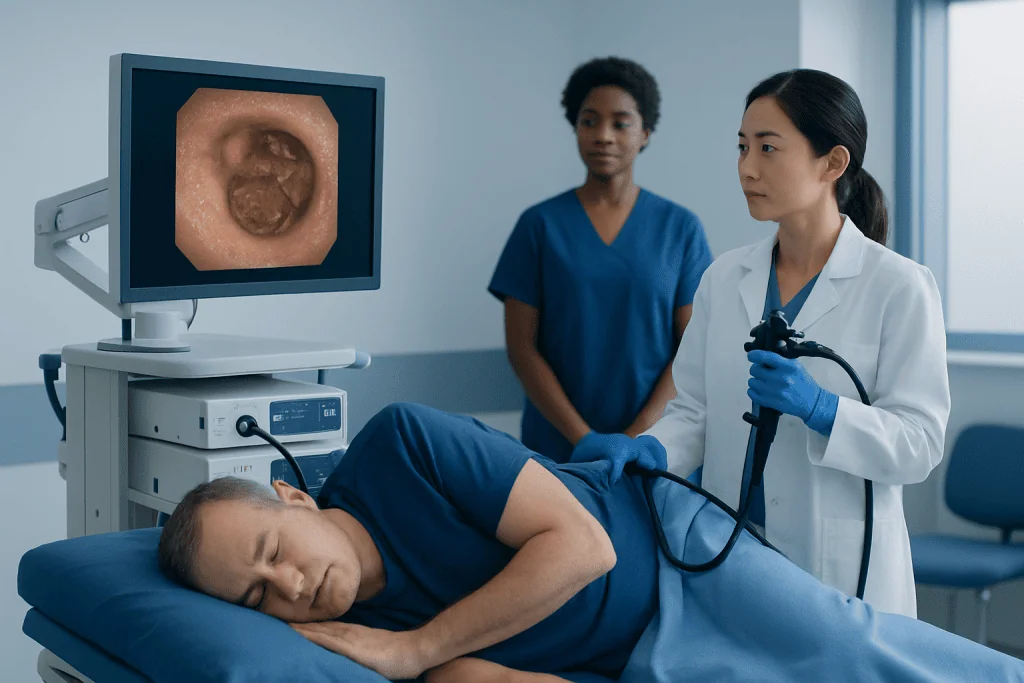
Tests depend on the person and the symptoms. Blood tests may check for anemia or signs of inflammation. A stool test may look for hidden blood that cannot be seen with the eye. If bleeding or persistent bowel changes are present, a colonoscopy is often the most useful test because it allows the inside of the colon and rectum to be examined directly and biopsies to be taken if needed.
Some people may also need imaging or additional endoscopic tests. If a suspicious area is found, tissue samples are examined in the laboratory to determine the exact cause. In patients diagnosed with bowel cancer, imaging helps define the extent of disease and guide treatment planning.
The key point is that diagnosis is based on evidence, not on photos alone. Images may help document a symptom, but formal assessment is the safest way to identify whether the cause is hemorrhoids, infection, inflammation, polyps, or cancer.
Treatment options depend on the cause
Treatment is guided by the underlying diagnosis. Benign anorectal causes such as hemorrhoids or fissures may improve with hydration, fiber, stool-softening strategies, and local treatments recommended by a clinician. Infections may need supportive care or, in selected cases, targeted medication. Inflammatory bowel disease usually requires specialist follow-up and long-term management.
If tests find polyps, they can often be removed during colonoscopy before they develop further. When bowel cancer is diagnosed, treatment may involve surgery, chemotherapy, radiotherapy, or a combination of these approaches depending on where the cancer is located and how advanced it is. Some patients may need colon cancer surgery, while others may benefit from medical oncology treatment as part of a broader care plan.
Care is usually individualized and may involve gastroenterologists, colorectal surgeons, medical oncologists, radiologists, and pathologists. Near the end of the treatment pathway, some international patients choose centers such as Acibadem International, where multidisciplinary specialists in JCI-accredited hospitals diagnose and treat digestive diseases and bowel cancers.
When to seek medical care
Medical review is advisable if blood in the stool happens more than once, if bowel habits have changed for more than a couple of weeks, or if stool repeatedly becomes black, maroon, or unusually narrow without a clear reason. It is also sensible to book an appointment if there is ongoing abdominal discomfort, unexplained fatigue, weight loss, or a family history of bowel cancer or polyps.
Urgent care is needed for heavy rectal bleeding, black tarry stool together with dizziness or weakness, fainting, severe abdominal pain, vomiting, or symptoms of bowel obstruction such as a swollen abdomen and inability to pass stool or gas. These symptoms may not mean cancer, but they do need prompt assessment.
People should not feel embarrassed about discussing stool changes. Early assessment often finds a treatable non-cancer cause, and when a serious condition is present, earlier diagnosis can make treatment planning more straightforward and effective.
Frequently asked questions
Can bowel cancer be diagnosed from stool photos?
No. Stool photos may help describe a symptom, but they cannot confirm or exclude bowel cancer. Many common conditions, including hemorrhoids, fissures, infections, and inflammatory bowel disease, can look similar.
What does blood in the stool from bowel cancer look like?
It may appear as bright red streaks, darker red blood mixed with stool, or black tarry stool depending on where bleeding occurs. Still, the color and pattern of blood are not specific, so any persistent or unexplained bleeding should be assessed by a doctor.
Is pencil-thin stool always a sign of bowel cancer?
No. Narrow stool can happen with constipation, pelvic floor problems, or temporary bowel spasm. If it is new, persistent, or occurs with bleeding, pain, anemia, or weight loss, medical evaluation is appropriate.
What non-cancer conditions can mimic bowel cancer stool changes?
Common examples include hemorrhoids, anal fissures, gastroenteritis, constipation, diverticular disease, and inflammatory bowel disease. Diet and some medicines can also change stool color, including causing red or black stool-like appearances.
When should someone worry about black stool?
Black, tarry, sticky stool can suggest bleeding in the digestive tract and should not be ignored, especially if it comes with dizziness, weakness, or abdominal pain. Some medicines and iron supplements can also darken stool, but a doctor should help tell the difference.
What tests are usually done for concerning stool changes?
Doctors may use blood tests, stool tests, and a colonoscopy, depending on the symptoms and age of the patient. Imaging and biopsy may also be needed if an abnormal area is found.
References
- National Cancer Institute
- American Cancer Society
- National Health Service
- Mayo Clinic
- World Health Organization
This article is for general information only and is not a substitute for professional medical advice. Please consult a qualified doctor about your individual situation.
Persistent digestive symptoms? Get evaluated in Turkey
JCI-accredited · board-certified surgeons · reply within 24h
Add us as a Preferred Source to see more of our trusted health content across Google Search, AI Overviews and Discover.