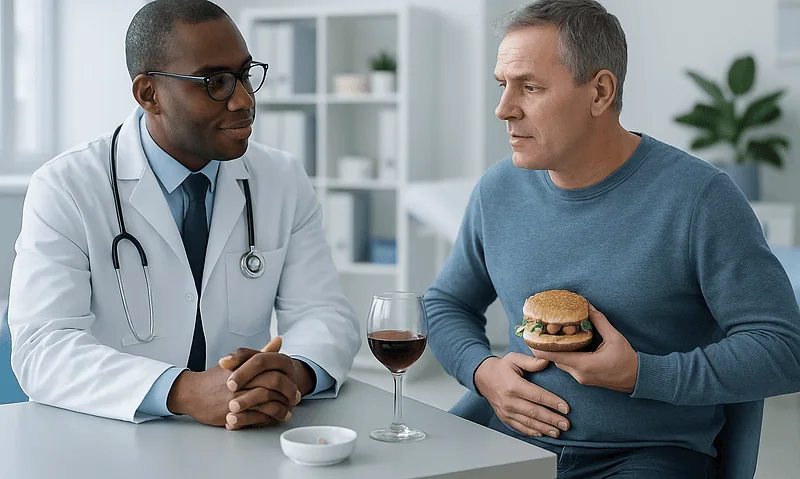
Living With Chronic Liver Disease: Weight, Alcohol, Sleep and the Check-Ups That Matter
Living with chronic liver disease usually means protecting the working tissue you still have: avoiding alcohol if your team advises it, aiming for gradual…
Articles on digestive health: reflux, bloating, bowel habits, food intolerance and what endoscopy involves. Blood in the stool, unexplained weight loss or trouble swallowing always need a medical check.
Living with chronic liver disease usually means protecting the working tissue you still have: avoiding alcohol if your team advises it, aiming for gradual…
Most hiatal hernias never need surgery; they are managed with lifestyle changes and acid-reducing medicines. Surgery is usually discussed when reflux persists or complications…
A liver disease second opinion is a fresh review of your diagnosis and treatment plan by another liver specialist, usually a hepatologist. Bring your…
Current CDC guidance recommends that every adult aged 18 and older be tested for hepatitis C at least once, that pregnant people be tested…
A PEG tube is placed during a short endoscopic procedure, usually under moderate sedation with a local anesthetic in the abdominal wall. A thin…
A peptic ulcer diet and lifestyle plan supports medical treatment but does not replace it. Ulcers heal mainly through acid-suppressing medicine and, when present,…
A suspected ulcer usually needs an upper endoscopy when any of three things is true: the person is older than the age threshold set…
Most food poisoning does not need lab tests. Clinicians usually diagnose it from your symptoms, their timing, and what you ate, then focus on…
At-home microbiome tests sequence bacterial DNA in a stool sample and report which microbes are present and in what proportions. They can describe your…
Gastroenteritis in older adults and people with diabetes is watched closely because the fluid and salt losses from vomiting and diarrhea are less forgiving…
A CT scan is usually the first imaging test for suspected diverticulitis because it confirms inflammation in the colon wall and, just as importantly,…
Cirrhosis usually prompts a transplant evaluation at the first sign of decompensation: fluid in the abdomen (ascites), bleeding from swollen veins in the esophagus,…
Life after hepatitis C treatment starts with an HCV RNA test at least 12 weeks after the course ends to confirm the virus is…
Laparoscopic cholecystectomy for cholecystitis is keyhole surgery that removes an inflamed gallbladder through three or four small abdominal incisions. Under general anesthesia the surgeon…
Diet can ease Crohn's disease symptoms and correct nutritional shortfalls, but it does not replace medical treatment. Current evidence supports using food alongside prescribed…
There is no single safe date for flying after gallbladder surgery; the wait depends on the type of operation and how recovery is going.…
The gut brain axis is the two-way communication network linking your digestive tract, its trillions of microbes and your brain through the vagus nerve,…
Pain that builds rather than fades in the hours after ERCP, especially pain spreading to the back with nausea or vomiting, can signal pancreatitis…
Choose which cookies you allow. Essential cookies are always on because the site cannot work without them.