

Adding a Dental Spa Visit to a Trip: How to Fit Hygiene Care Into a Short Stay
Key Takeaways
- A dental spa is a dental practice with comfort extras; the licensing, screening and infection-control rules are exactly the same as in any other dental office.
- Routine cleaning, an exam and fluoride finish when you stand up, which makes them the services best suited to a two- or three-day stay.
- Deep cleaning for periodontitis often needs local anesthetic and more than one visit, according to the NIH's dental institute, so it rarely suits a short trip.
- Whitening commonly causes temporary cold sensitivity and comes with dietary restrictions, and the NHS advises it only be done by a registered dental professional after a health check.
- After oral or intravenous sedation you need a companion and should not drive or travel alone until the clinician who sedated you confirms recovery.
- There is no recognized clinical '50-40-30 rule'; the evidence supports two minutes of brushing twice daily with fluoride toothpaste, daily interdental cleaning and check-ups at the interval your dentist sets.
A dental spa visit during a trip can fit a short stay if you keep it to preventive hygiene care: a professional cleaning, an exam, and possibly a fluoride application. Whitening, deep cleaning under local anesthetic, and any sedation need more time and follow-up, so many clinicians suggest deferring them. Bring your dental history, expect mild soreness for a day or two, and know which warning signs mean you should call a dentist.
The itinerary is already full. Two nights in a city you have wanted to see for years, a conference badge in your bag, and a stubborn feeling that your teeth have not been professionally cleaned in a long time. Then the hotel concierge mentions a dental spa two blocks away: warm towels, a massage chair, a cleaning that fits between breakfast and the afternoon session.
It is a tempting idea, and not a foolish one. Preventive hygiene care is genuinely valuable, and there is no rule that says it has to happen in your home town. The question is not whether a dental spa during a trip is allowed. It is which services make sense when you will be on a plane in 48 hours, and which ones deserve a longer runway.
This explainer walks through what actually happens in the chair, who is usually a good fit, what the evidence says about the popular add-ons, and the small set of warning signs that should send you to a dentist rather than the airport lounge.
What does a dental spa do, and how is it different from a regular dental office?
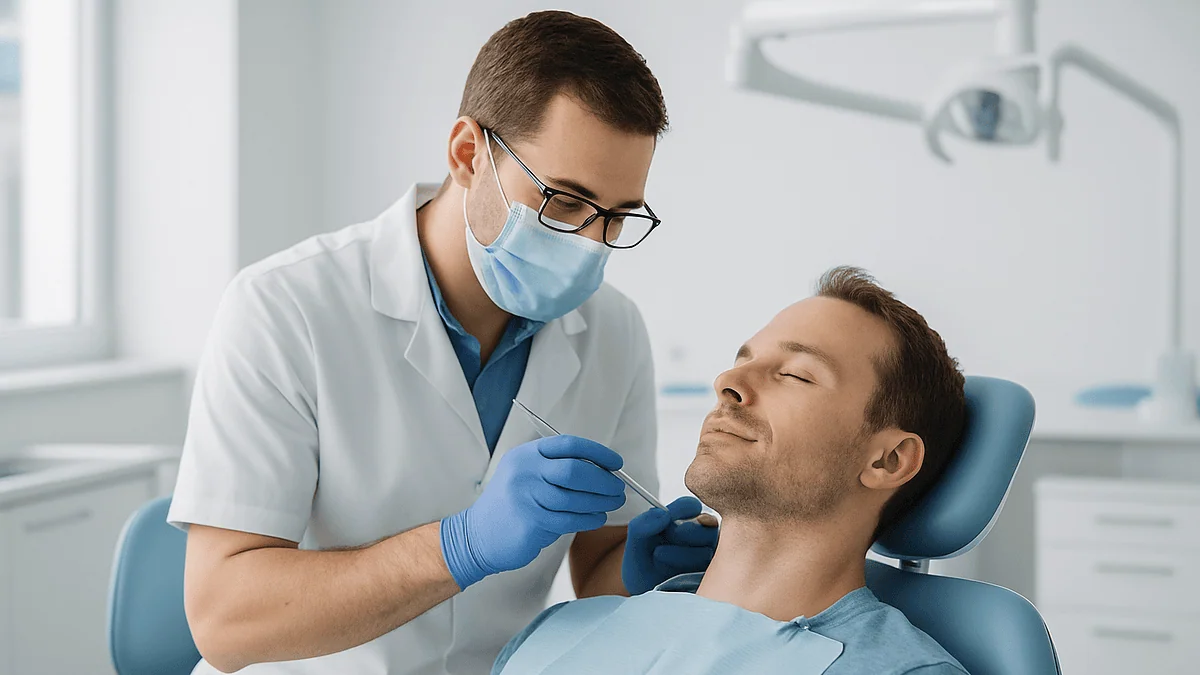
Strip away the eucalyptus scent and the noise-cancelling headphones and a dental spa is a dental practice. The clinical work, when it is done properly, is the same work you would receive anywhere: an examination by a licensed dentist, cleaning by a dental hygienist, and preventive treatments such as fluoride. The spa element is the setting and the pacing. Longer appointment slots, comfort amenities, and a menu that often bundles cosmetic services alongside hygiene care.
That framing matters because the word “spa” can quietly shift how people think about the visit. A massage is optional. A cleaning that removes hardened plaque (called calculus or tartar) from below the gumline is a medical procedure with medical consequences, including bleeding, temporary sensitivity, and, occasionally, the discovery of a problem that needs treatment you cannot complete before your flight.
Regulation of who can do what does not change because a practice markets itself as a spa. In the United States, cleaning below the gumline, diagnosing gum disease, and prescribing anything are tasks reserved for licensed dental professionals. The same is true in most countries, although the exact scope varies. A reasonable first question at any facility is simply: who will be examining me, and what are they licensed to do?
Where a spa setting can add real value is in reducing dental anxiety. Fear of the dentist is common, and the NHS notes that avoiding check-ups tends to let small problems grow into larger ones. If a calmer environment gets a nervous person into the chair for a cleaning they would otherwise skip, that is a legitimate benefit. It is just not a substitute for the clinical basics.
What actually happens during a hygiene appointment
A routine hygiene visit follows a fairly predictable sequence, whether the room smells of lavender or latex. It begins with a health history, which is why the appointment can be shorter if you arrive with a current list of your medicines, allergies, and any heart or bleeding conditions. The hygienist or dentist then looks at your teeth, gums, tongue, and the soft tissues of the mouth. In many practices this includes measuring the small pocket between each tooth and the gum with a thin probe; deeper pockets are one of the signs of gum disease that the NIH’s dental institute describes.
Scaling comes next. Using hand instruments or an ultrasonic tool that vibrates and sprays water, the clinician removes plaque and calculus from the tooth surfaces and just under the gumline. Calculus is plaque that has hardened with minerals from saliva, and no toothbrush removes it once it forms. Polishing with a gritty paste follows, then flossing between the teeth.
Fluoride, a mineral that strengthens enamel and slows early decay, may be applied as a varnish or gel at the end. Whether it is offered depends on your decay risk and the practice’s protocol.
Expect some bleeding if your gums are inflamed. That is a sign of gingivitis, the early and reversible stage of gum disease, and the NHS notes that bleeding usually improves once plaque is kept under control. X-rays may or may not be taken; if you have recent images from your home dentist, sending them ahead saves time and radiation exposure.
The whole visit for a healthy mouth often fits inside an hour, though the practice, not a blog, should confirm how long they book.
Who a short-stay dental spa visit is usually for, and who is usually asked to wait
The ideal candidate is someone with a healthy mouth who is simply overdue. No active toothache, no loose or broken teeth, no history of advanced gum disease, and no complex medical picture. For that person, a cleaning on the road is low risk and the main challenge is logistics.
Several groups are commonly asked to wait, or at least to talk with their regular dentist first.
- People with a current toothache, swelling, or a cracked tooth. These need diagnosis and often treatment that will not be finished in one visit, and starting it far from home fragments your care.
- People with diagnosed periodontitis, the advanced form of gum disease in which bone around the teeth has been lost. Their cleanings are typically planned as deep cleaning, sometimes over more than one appointment, according to the NIH’s dental institute.
- People taking blood thinners or with bleeding disorders. Cleaning is usually still possible, but the team may want to coordinate with the prescribing clinician, and a rushed appointment leaves no room for that.
- People with certain heart conditions or recent joint replacements who have been told they need antibiotic cover before dental work. Whether that still applies is a decision for their cardiologist or surgeon, not the front desk of a spa.
- Anyone considering sedation or whitening with a flight within the next day.
Pregnancy is not a reason to skip a cleaning; routine hygiene care is considered safe and is encouraged because pregnancy hormones can worsen gum inflammation. It is a reason to mention the pregnancy and to expect the team to postpone elective X-rays and cosmetic extras.
Children can certainly be cleaned on holiday, but a first-ever dental visit in a strange city is a lot to ask of a small person. Familiarity helps.
Booking a dental spa during a trip: how to fit it into a two- or three-day stay
Timing is the whole game. The single most useful move is to schedule the appointment early in the trip, ideally the first full day, rather than the last. That gives you a buffer if the hygienist finds something, if you feel sore afterward, or if the practice runs late and you would otherwise be watching the clock with a suction tube in your mouth.
Before you leave home, ask your regular dental office to send you a copy of your most recent examination notes and X-rays. Most will email a secure file. Having images from the past year or so often means the visiting practice does not need to repeat them, and it lets the clinician compare rather than guess.
Write down, or photograph, your current medicine list, including supplements. Bring the name and contact details of your regular dentist. If you have a heart condition, an artificial joint, a bleeding disorder, or you are pregnant, say so when you book, not when you sit down.
Choose the menu conservatively. A cleaning, an exam, and fluoride are the core. Cosmetic services and anything requiring numbing or sedation are best left for a stay with more days after the appointment than before it.
Eat beforehand. Cleanings are easier on an unhungry person, and if fluoride varnish is applied you may be asked to avoid eating or brushing for a short period afterward, which the team will spell out.
Finally, block more time than the practice quotes. A visit that should take an hour can drift, and the point of a dental spa during a trip is to leave calmer, not sprinting for a taxi.
Common dental spa services compared: evidence, time and travel cautions
Menus vary widely, but the same handful of services appear almost everywhere. The table summarizes what mainstream guidance says about each and how well it suits a short stay.
| Service | What it is | What the evidence supports | Fit for a short trip |
|---|---|---|---|
| Routine cleaning (scaling and polishing) | Removal of plaque and calculus above and just below the gumline | Core preventive care; the NHS recommends check-up intervals set by your dentist based on risk | Good, if scheduled early in the stay |
| Fluoride varnish or gel | Topical mineral application to strengthen enamel | Well established for reducing decay, especially in higher-risk people | Good |
| Deep cleaning (scaling and root planing) | Cleaning of root surfaces in deeper gum pockets, usually with local anesthetic | Standard first-line treatment for periodontitis per the NIH’s dental institute; may need more than one visit | Poor; needs follow-up |
| In-office whitening | Peroxide-based gel applied by a professional, sometimes with a light | Lightens teeth; sensitivity is a common, usually temporary side effect | Fair to poor; sensitivity and diet limits collide with travel |
| Sedation (inhaled, oral or intravenous) | Medicines to reduce anxiety or awareness during treatment | Appropriate for selected anxious patients under monitoring | Poor; requires an escort and no driving or flying decisions made alone |
| Sleep apnea appliance | Custom mouthpiece holding the jaw forward during sleep | An option for some people with diagnosed obstructive sleep apnea, after physician assessment | Not a walk-in service; needs diagnosis and fitting visits |
The pattern is clear. Services that finish when you stand up travel well. Services that begin a process, whether healing, a course of visits, or a sedative wearing off, travel badly.
Whitening and cosmetic add-ons on the road: what the evidence actually shows
Whitening is the headline item on most dental spa menus, and it is where holiday optimism most often collides with dental reality. Professional whitening uses a peroxide-based gel, sometimes activated by a light, to break down stain molecules inside the enamel. It works for many people with surface and age-related discoloration. It does not lighten crowns, veneers, or fillings, and it does little for grey discoloration caused by certain medicines or trauma.
The side effect that matters for travelers is sensitivity. A sharp, short-lived twinge to cold air or drinks is common after whitening and is typically temporary, but temporary can mean the rest of your trip. Gum irritation from gel contact is also possible. Most practices advise avoiding staining foods and drinks for a period afterward, which sits awkwardly with a holiday built around coffee, red wine, and tomato sauce.
The NHS also cautions that whitening should only be carried out by a registered dental professional after checking that your teeth and gums are healthy. Whitening over untreated decay or inflamed gums can be painful and can mask a problem that needed attention.
There is another practical issue. If a shade does not settle the way you hoped, or sensitivity lingers, the person who did the work is now a time zone away. Your home dentist can help, but they did not see your starting point.
None of this makes whitening on a trip wrong. It makes it a poorer fit for a short stay than a cleaning. If you do proceed, ask the team what sensitivity to expect, what to avoid afterward, and how to reach them if something feels off after you leave. A cleaning alone often brightens teeth noticeably by removing surface stain, which may be all you wanted.
Sedation dentistry in a spa setting: what it is and why timing matters
Some dental spas advertise sedation as part of the relaxation package. It is worth separating the marketing from the pharmacology. Sedation dentistry uses medicines to reduce anxiety or awareness during treatment. It sits on a spectrum: inhaled nitrous oxide, which wears off within minutes once the mask is removed; oral sedatives, usually from the benzodiazepine class, which cause drowsiness for hours; and intravenous sedation, which produces deeper relaxation and requires continuous monitoring by trained staff.
Sedation has a real place. For someone whose fear has kept them away from care for years, it can be the difference between treatment and no treatment. Whether it is appropriate for you depends on your health history, your airway, your other medicines, and the procedure planned. That decision belongs to the treating clinician after an assessment, not to a checkbox on a booking form.
For travelers, the timing consequences are the issue. After oral or intravenous sedation you cannot drive, should not sign important documents, and need a responsible adult to accompany you home and stay with you. Balance and judgement can be affected for the rest of the day. Boarding a flight alone that evening is not a plan any sedation provider would endorse. Nitrous oxide is shorter acting, but the practice will still want to confirm you have recovered before you leave.
Sedation is also typically paired with procedures that need it, such as deep cleaning or fillings, rather than a routine polish. If you are anxious about a simple cleaning, tell the hygienist. Most can slow down, explain each step, and agree a hand signal to pause. That costs nothing in recovery time and is often enough.
What the following days usually look like after a cleaning on vacation
For a healthy mouth, the aftermath of a routine cleaning is undramatic. Teeth feel smooth, sometimes almost slippery, because calculus that had been sitting between them is gone. Gums may feel tender, particularly if they bled during the appointment, and you may notice brief sensitivity to cold as freshly exposed tooth surfaces adjust. These sensations are expected and are not a sign the hygienist was rough.
If you had a lot of calculus removed, the gaps it filled can feel oddly open for a while, and food may catch there until the gums firm up. Gentle brushing and daily interdental cleaning, exactly as the NHS recommends for everyone, are what help the tissue recover. There is no need for special rinses unless your clinician suggested one for a specific reason.
Bleeding when you brush in the first day or two is common in inflamed gums and typically eases as inflammation settles. Gingivitis, the NHS notes, can be reversed with consistent plaque control; the cleaning is the reset, and your toothbrush does the rest.
If fluoride varnish was applied, you may have been asked to avoid hot drinks, hard foods, or brushing for a short window that the team will have specified. Follow their instructions rather than a general rule, because protocols differ.
What should not happen: worsening pain over several days, a swelling that grows, a fever, or a tooth that suddenly feels loose. Those are covered in the red-flag section later, and they are reasons to seek care wherever you are rather than waiting to get home.
By the time your flight boards, most people have forgotten the appointment happened, which is roughly the goal.
Flying and traveling after dental work: neutral safety basics
A routine cleaning imposes no restriction on flying. Cabin pressure changes can occasionally provoke tooth pain if there is an untreated cavity or a recent filling with trapped air, a phenomenon dentists call barodontalgia, but a polished, intact tooth has nowhere for pressure to hide. If the exam did find a cavity, it is reasonable to ask whether it could become uncomfortable at altitude and what to do if it does.
Deep cleaning under local anesthetic, extractions, and other procedures that involve wounds are different. Many clinicians prefer that patients stay nearby for at least a day or two so that bleeding, swelling, or infection can be checked in person. Exact waiting periods depend on the procedure and are set by the treating team, which is another reason such work suits a longer stay.
After any sedation, the rules already described apply: no driving, a companion, and no solo travel until the medicine has fully worn off, as judged by the clinician who gave it.
Clot prevention deserves a mention because long journeys themselves carry a small risk of deep vein thrombosis, a clot in a leg vein. The NHS advice is the same regardless of whether you have visited a dentist: move around when you can, do calf exercises in your seat, drink water, and avoid alcohol and sleeping pills that keep you immobile. Dental hygiene care does not raise that risk, but a trip that combines a long flight with dehydration and a day of lying still might.
Arrange follow-up before you leave. Ask for a written summary of what was done and found, and forward it to your regular dentist. Continuity is the part of travel dentistry that most often gets lost.
Is dental tourism a good idea? A neutral look at the trade-offs
Fitting a cleaning into a trip you were already taking is one thing. Traveling specifically to receive dental treatment is another, and it raises questions that a hygiene visit does not. This section does not recommend for or against it, and it certainly does not recommend any destination. It simply lays out what mainstream guidance suggests you weigh.
Continuity of care is the largest issue. Complex work such as crowns, implants, or root canal treatment unfolds over weeks or months and can develop complications well after the last appointment. If the treating team is in another country, follow-up becomes difficult, and a home dentist asked to fix a problem they did not create may reasonably want to start from scratch.
Regulation and standards vary between jurisdictions. That does not mean care abroad is worse; it means you cannot assume the same infection control rules, licensing checks, or complaint mechanisms you are used to. Asking how instruments are sterilized and who is accountable if something goes wrong is fair anywhere.
Compressed timelines are a clinical risk in their own right. Procedures that would normally be staged to let tissue heal can be squeezed into a fortnight, and that compression, rather than the location, is what tends to cause trouble.
Communication matters too. Consent is only meaningful if you fully understand the plan, the alternatives, and the risks in a language you are comfortable in.
For preventive hygiene care, most of these concerns shrink because there is little to follow up. For anything beyond that, the decision sits with you and a dentist who will still be reachable when the trip ends.
Is a dental spa visit covered by insurance?
Coverage depends on the plan, not the decor. Most dental insurance in the United States treats preventive care, meaning examinations, routine cleanings, and often fluoride for children, as a covered benefit, frequently at a defined number of visits per year. A cleaning performed at a practice that calls itself a spa is still a cleaning for billing purposes, provided it is performed by a licensed provider and coded as such.
Three complications tend to arise. First, network status. If the practice is not in your insurer’s network, your plan may pay less or nothing toward the visit, and the practice may expect payment up front and leave you to claim reimbursement. Second, location. Some plans limit or exclude care received outside your home country, and travel insurance policies usually cover only emergency dental treatment, not routine hygiene. Third, the extras. Whitening, aromatherapy, massage, and most cosmetic services are almost never covered because they are not considered medically necessary.
Frequency limits can also catch people out. If you had a cleaning at home a few months ago, a second one on holiday may fall outside what the plan allows.
The practical steps are unglamorous but effective. Call your insurer before you book and ask whether the specific practice is in network, whether care in that location is covered, and how claims from a non-network provider are handled. Ask the practice for an itemized statement using standard procedure codes so any claim is straightforward.
None of this should be read as advice about what to spend. It is about avoiding the surprise of assuming that “a cleaning is covered” applies everywhere, when the fine print says otherwise.
What people often get wrong about dental spas and travel hygiene care
A few misconceptions come up repeatedly, and some of them can cause real harm.
“There is a 50-40-30 rule I should follow.” There is no clinical guideline by this name in mainstream dentistry. Phrases like it circulate on social media and in practice marketing, but they are not part of NHS, CDC, or NIH guidance. What the evidence actually supports is simpler: brush for about two minutes twice a day with a fluoride toothpaste, clean between the teeth daily, limit sugary foods and drinks, and attend check-ups at the interval your dentist sets, which the NHS says can range from three months to two years depending on your risk.
“A professional cleaning fixes gum disease.” A cleaning removes the cause. Gingivitis can be reversed, but only if daily plaque control continues afterward. Periodontitis, the advanced form with bone loss, can be managed and stabilized but the lost bone does not regrow on its own, according to the NIH’s dental institute.
“Whitening is harmless because it is cosmetic.” Sensitivity and gum irritation are common, and whitening over untreated decay can be painful. Healthy teeth first, colour second.
“Spa means gentler, so it is fine for anyone.” The amenities change the room. They do not change the medical screening that determines who is a good candidate for sedation, deep cleaning, or elective X-rays.
“Bleeding gums mean the hygienist was too rough.” Bleeding on probing or cleaning is a sign of inflammation that was already there. Healthy gums rarely bleed.
“Once I have had a cleaning abroad, my home dentist does not need to know.” They do. Records, findings, and any treatment started belong in one continuous file.
Questions to ask your care team before a cleaning away from home
A good practice will welcome these questions, and the answers will tell you a lot about how clinical the operation is beneath the candles.
- Who will examine me, and who will perform the cleaning? What licenses do they hold, and can I see them?
- Do you need my recent X-rays and notes, and how should I send them securely?
- Given my medical history and medicines, is there anything you want to check with my physician or dentist before the appointment?
- How long is the appointment booked for, and what happens if you find something that needs treatment I cannot complete here?
- What sensitivity, bleeding, or soreness should I expect afterward, and for roughly how long in your experience?
- If fluoride is applied, what should I avoid and for how long?
- If I were to consider whitening or sedation, what would you need to assess first, and would you recommend doing it on a stay this short?
- How are your instruments sterilized, and how is water in the ultrasonic scaler managed?
- How can I contact you after I leave if something does not feel right?
- Will you give me a written summary of findings and treatment that I can forward to my regular dentist?
Notice what is not on the list: anything about how the massage chair works. Comfort is nice. The questions that protect you are the ones about licensing, records, aftercare, and what the plan is if the visit uncovers a problem. If a practice seems reluctant to answer them, that reluctance is itself an answer.
Bring the list on your phone. In a relaxed room it is easy to forget the question you most wanted to ask.
When to call your doctor: red-flag signs after a dental spa visit
Most cleanings end with nothing more than smooth teeth and slightly tender gums. A small number of symptoms, however, should prompt you to contact a dentist promptly, whether that is the practice you just visited, a local emergency dental service, or, if you are already home, your regular dentist. Do not wait for the trip to finish.
- Pain that worsens over two or three days rather than easing, or pain that wakes you at night.
- Swelling of the gum, face, or jaw, especially if it is growing or feels hot.
- Fever, chills, or a general feeling of being unwell alongside mouth symptoms.
- Bleeding that does not stop with gentle pressure, or bleeding that restarts hours after the appointment, particularly if you take blood thinners.
- A tooth that feels loose, or a filling or crown that has come out.
- Pus, a bad taste that does not clear with brushing, or a pimple-like bump on the gum.
- Numbness or tingling in the lip, tongue, or chin that persists after local anesthetic should have worn off.
- After sedation: excessive drowsiness, confusion, vomiting that will not settle, or breathing difficulty.
Seek emergency medical care immediately, not just a dentist, if swelling makes it hard to swallow, breathe, or open your mouth, or if swelling spreads toward the eye or down the neck. These can be signs of a serious infection.
Travel does not change the threshold for concern; it changes the logistics. Know before you leave the appointment how to reach the practice and where the nearest emergency service is. Any decision about further treatment, antibiotics, or imaging rests with the clinician who examines you, and the sooner that examination happens, the more options they usually have.
Frequently asked questions
What does a dental spa do that a normal dentist does not?
Clinically, nothing different. A dental spa provides the same examinations, cleanings and preventive treatments as any licensed dental practice, delivered in a calmer setting with amenities such as longer appointments, massage chairs or aromatherapy. The cosmetic menu is often larger. The medical screening, sterilization standards and licensing requirements do not change because of the decor, so ask the same questions you would anywhere.
Is teeth cleaning on vacation safe if I am healthy?
For someone with a healthy mouth and no complex medical history, a routine cleaning during travel carries the same low risk as one at home. Schedule it early in the trip, bring your recent records and medicine list, and keep the visit to preventive care. Mild gum tenderness and brief cold sensitivity are common afterward and usually settle with normal brushing and interdental cleaning.
Dental spa vs dentist: which should I choose for a short trip?
Choose based on licensing, availability and the services you need, not the label. Either can perform a cleaning well. If anxiety is what keeps you from care, a spa setting may help you attend. If you have a toothache, gum disease or a complex history, the deciding factor is whether the practice can assess you properly and coordinate with your regular dentist, which any good office should do.
What is the 50-40-30 rule in dentistry?
It is not a recognized clinical guideline. Versions of the phrase appear in marketing and social media, but no NHS, CDC or NIH guidance uses it. Mainstream advice is straightforward: brush for about two minutes twice daily with fluoride toothpaste, clean between your teeth every day, limit sugar, and see your dentist at the interval they set, which the NHS says ranges from three months to two years depending on risk.
Is a dental spa visit covered by insurance?
Often the cleaning and exam are, because most plans treat them as preventive care, but coverage depends on whether the practice is in your network, whether your plan covers care in that location, and whether you have already used your allowed visits. Whitening, massage and other cosmetic extras are almost never covered. Call your insurer before booking to confirm the details for that specific practice.
Is dental tourism a good idea?
It depends on the treatment and your circumstances, and no one should feel pushed either way. Preventive hygiene care travels well because it needs little follow-up. Complex work such as implants or crowns unfolds over months, can develop late complications, and is harder to manage when the treating team is far away. Continuity of care, regulation, communication and compressed timelines are the main issues to weigh with a dentist you can reach afterward.
Can I fly the same day as a dental cleaning while traveling?
After a routine cleaning, yes; there is no medical restriction on flying. Pressure changes can trigger pain only where there is an untreated cavity or a recent filling with trapped air, so ask about any decay found. After deep cleaning, extractions or sedation, the treating clinician sets the waiting period, and after sedation you must not travel alone until they confirm you have recovered.
Will whitening at a dental spa hurt during the rest of my trip?
It might. Short, sharp sensitivity to cold is a common and usually temporary side effect of peroxide-based whitening, and gum irritation can occur. Many practices also ask you to avoid staining foods and drinks for a period afterward. The NHS advises whitening only by a registered dental professional after checking that teeth and gums are healthy, so ask what to expect before agreeing.
What is sedation dentistry and does a spa offer it safely?
Sedation dentistry uses medicines, from inhaled nitrous oxide to oral sedatives or intravenous agents, to reduce anxiety or awareness during treatment. Safety depends on proper assessment, trained staff and monitoring, not on the setting. Any facility offering it should screen your health history and medicines first. You will need a companion afterward and cannot drive; the clinician decides when you are fit to leave.
Can a dental spa fit a sleep apnea appliance during my visit?
Not as a walk-in service. A mandibular advancement device, a custom mouthpiece that holds the lower jaw forward during sleep, is an option for some people with obstructive sleep apnea diagnosed by a physician after a sleep study. It requires impressions, fitting visits and follow-up to check it works and does not shift the bite. That pathway suits home, not a short stay.
References
- NHS: How to keep your teeth clean
- NHS: Gum disease
- NIH National Institute of Dental and Craniofacial Research: Periodontal (Gum) Disease
- MedlinePlus: Dental Health
This article is for general information only and is not a substitute for professional medical advice. Please consult a qualified doctor about your individual situation.

More from the Blog
What Tooth Decay Looks and Feels Like: Early Signs, Stages and When to See a Dentist
Early tooth decay often looks like a dull, chalky white patch on the enamel, usually near the gumline or between teeth, and typically causes…

Eating After a Tooth Extraction: Soft Foods, Straws to Avoid and Getting Back to Normal
After a tooth extraction, most people are asked to stick to cool, soft foods such as yogurt, applesauce or smooth soup for the first…

Questions to Ask Your Surgeon and Orthodontist Before Orthognathic Surgery
Before orthognathic (corrective jaw) surgery, ask your surgeon which jaw or jaws will be moved and why, what the alternatives are, how surgery and…
How Clear Aligner Treatment Unfolds: From Scan to Attachments to Your First Trays
Clear aligner treatment usually unfolds in stages: an orthodontic examination and digital scan of the teeth, a computer-planned sequence of movements the clinician reviews…

How a Jaw Cyst Is Diagnosed: Panoramic X-Ray, CT Imaging and Pathology Review
A jaw cyst is usually diagnosed in three steps. A panoramic dental X-ray first reveals a dark, fluid-filled space in the bone, often by…

Gummy Smile Results: How the Gum Line Settles and What a Balanced Smile Realistically Means
Gummy smile results depend on the cause and the method used. Gum reshaping produces a new gum line that is visible at once but…