

After Cryoablation: Which Urination Changes Are Expected and When Fever Means a Call

Key Takeaways
- Pink or light-red urine in the first days to weeks after prostate or kidney cryoablation reflects healing tissue at the edge of the urinary tract and typically fades, while bright red urine with persistent clots is a call.
- A mild temperature in the first day or two can be post-ablation syndrome, the body's inflammatory response to clearing dead tissue, and it should drift down rather than climb.
- A temperature of 38°C (100.4°F) or higher, shaking chills, cloudy or foul-smelling urine, or new flank pain point toward infection and warrant same-day contact with your care team.
- The urethra runs straight through the prostate, which is why prostate cryoablation produces more urinary symptoms than kidney cryoablation and almost always involves a temporary catheter.
- Burning usually settles first, then frequency and urgency, then stream strength, because each depends on a different part of the healing process finishing.
- The National Cancer Institute states that the long-term effectiveness of cryosurgery compared with standard treatments is still being studied, so follow-up imaging or PSA testing continues after the procedure.
After prostate or kidney cryoablation, pink or slightly bloody urine, a burning sting, urgency, frequent small voids, and a weak stream in the first days to weeks are expected as frozen tissue heals and swelling settles. A mild, short-lived temperature can follow tissue breakdown. A fever of 38°C (100.4°F) or higher, shaking chills, foul or cloudy urine, an inability to pass urine, or heavy clots are reasons to call your care team the same day.
Three days after his prostate procedure, a man stands over the toilet at 4 a.m., phone flashlight in hand, trying to decide whether the water is “rosé” or “red.” His discharge sheet said some blood was normal. It did not say how much, or for how long, or what to do about the sweat on the back of his neck.
That small moment is where most questions about cryoablation side effects actually live. Not in the operating room, where a team watches every degree, but at home in the dark, with a thermometer that reads 37.9 and a bladder that will not settle. The two things people worry about most are what is coming out of them and what their temperature is doing.
Both deserve a straight answer. Some changes are the predictable cost of freezing tissue next to the plumbing that carries urine. Others are signals. This explainer separates the two, with the evidence that exists and honesty about where it thins out.
What actually happens during cryoablation?
Cryoablation is a treatment that destroys abnormal tissue by freezing it. A doctor guides one or more thin, needle-like instruments called cryoprobes into the target, usually through the skin or the perineum (the area between the scrotum and the rectum), using ultrasound, CT or MRI to see where they sit. Pressurized gas flowing through the probe tip drops the temperature far below freezing, and an “ice ball” forms around it. The tissue is frozen, allowed to thaw, then frozen again, because the thaw phase is when ice crystals do much of their damage to cell membranes and small blood vessels (Mayo Clinic; National Cancer Institute).
The freezing itself is fast. The consequences are slow. Dead tissue does not vanish; the body’s immune system has to break it down and clear it over weeks, the way a deep bruise fades in stages. That clean-up is the source of much of what patients notice afterward: swelling, a low-grade inflammatory response, and, in the prostate, small fragments of dead tissue that can pass out through the urethra.
In the prostate, the urethra runs straight through the gland, so surgeons place a warming catheter inside it during the freeze to protect the lining. In the kidney, the target is often a small tumor near the outer edge, and the collecting system that drains urine sits deeper in. Geography explains a lot of the difference in what people experience: prostate cryoablation tends to produce more urinary symptoms, kidney cryoablation more flank soreness and, less often, blood in the urine.
Most people are treated under general or spinal anesthesia and go home the same day or after one night, according to the Mayo Clinic. The procedure is short. Living with the healing is what takes patience.
Why does cryoablation change how you urinate?
Three mechanisms account for nearly every urinary change after cryoablation, and knowing which one is at work makes the symptoms less alarming.

The first is swelling. Frozen tissue swells as it thaws, and a swollen prostate squeezes the urethra it surrounds. The bladder then has to push harder against a narrower outlet, which shows up as a weaker stream, hesitancy, and the sense of not quite emptying. This is why a temporary urinary catheter, a soft tube that drains the bladder, is standard after prostate cryoablation and sometimes after kidney work near the collecting system.
The second is irritation. The bladder wall and the urethral lining are sensitive, and both have just been exposed to cold injury, instrument passage, and a catheter. An irritated bladder fires “empty me” signals at low volumes, so people void small amounts often, feel urgency, and notice a burning sting. Doctors call the burning dysuria; the frequency and urgency together are often described as irritative symptoms.
The third is debris. Dead prostate tissue at the edge of the urethra can slough, meaning it separates and washes out with urine. Patients describe threads, grayish flecks, or a soft plug that briefly slows the stream before passing. In the kidney, the analog is a small amount of blood entering the collecting system, which tints the urine pink.
Together these explain the typical picture the National Cancer Institute lists for prostate cryosurgery: temporary urinary changes, and in a minority, longer-lasting incontinence or urethral injury. None of them mean the treatment is failing. They mean the body is doing the slow work the freeze set in motion.
Who is cryoablation usually for, and who is asked to wait?
Cryoablation sits in a specific niche. The NHS describes it as an option for some kidney cancers, particularly smaller tumors in people who may not be well enough for surgery, and as a treatment considered for localized prostate cancer, often within clinical trials or specialist centers. The National Cancer Institute adds that it is used for some liver, bone, skin and cervical conditions, and that its role in prostate cancer includes situations where the cancer has returned after radiation.
People commonly offered it share a few features: a tumor confined to one organ and visible on imaging, a size the ice ball can fully cover with a margin, and reasons to avoid a bigger operation, such as heart or lung disease, a single functioning kidney, or a strong preference to avoid removing the organ.
Who is usually asked to wait, or steered elsewhere? Someone with an active urinary infection is generally treated for it first, because freezing near infected tissue raises the risk of a serious postoperative infection. People on blood thinners have their medicines reviewed and timed by the prescribing clinician; nothing about that plan should be changed without them. A very large prostate, a tumor too close to the bowel or major vessels, or disease that has already spread beyond the organ can shift the recommendation toward radiation, surgery, systemic therapy, or active surveillance, which means monitoring a low-risk cancer closely rather than treating it immediately.
Alternatives are not a consolation prize. For many prostate and kidney cancers, surgery and radiation have longer follow-up data than cryoablation, and the National Cancer Institute is explicit that the long-term effectiveness of cryosurgery is still being compared with standard treatments. Which path fits a given person is a judgment for the treating team, made with the imaging and pathology in front of them.
Cryoablation side effects in the first 48 hours: what is expected
The first two days are about anesthesia wearing off and the body reacting to a controlled injury. Expect to feel more tired than the length of the procedure seems to justify. Freezing tissue triggers the same inflammatory chemistry as a significant bruise, and fatigue is part of that.
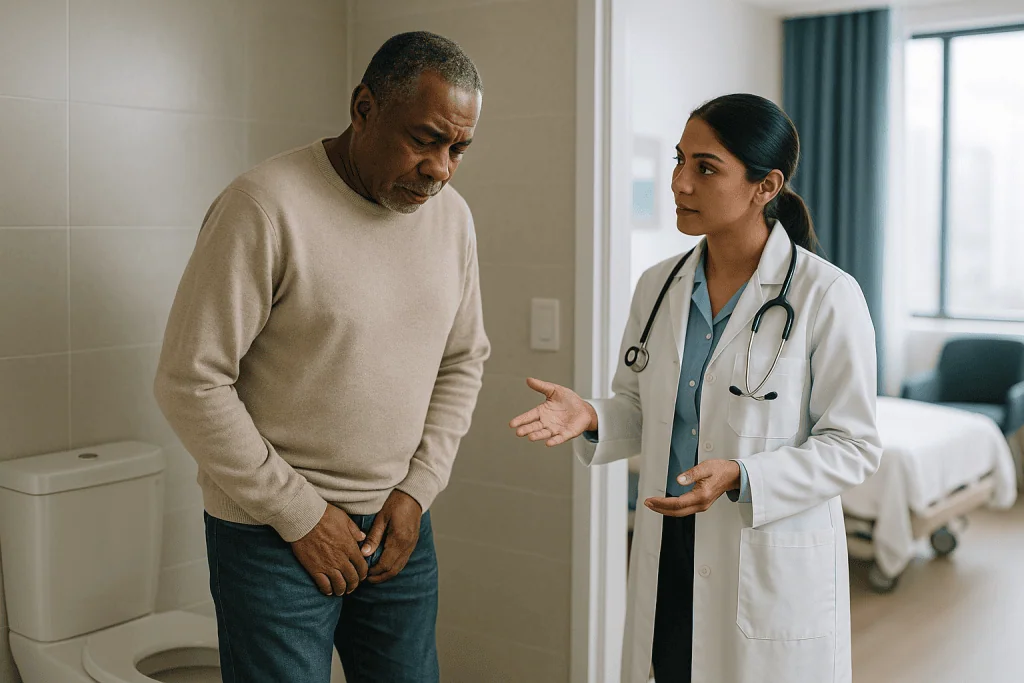
Around the probe entry points there is usually bruising and tenderness. After prostate cryoablation, the perineum can feel like you have been on a bicycle saddle too long; sitting on a soft cushion helps more than most people expect. After kidney cryoablation, the flank aches and may feel stiff with deep breaths. Mayo Clinic notes that pain after cryoablation is typically managed with medicines your team prescribes, and how you take them should follow their instructions.
Urinary changes begin immediately. With a catheter in place, urine in the bag is often pink to rusty for the first day, occasionally with small clots. Without a catheter, the first few voids may sting sharply and come in small volumes. Some men notice discomfort at the tip of the penis from the catheter itself rather than from the prostate.
A modest rise in temperature is common in this window. When a large volume of tissue dies at once, the immune response releases signaling chemicals that reset the body’s thermostat slightly upward. This is sometimes called post-ablation syndrome: low-grade temperature, aches, and a flu-like heaviness without a source of infection. It should be mild and should trend down, not up.
Bowel habits can shift briefly too, from anesthesia, pain medicines, and reduced movement. Constipation matters more than it sounds, because straining pushes on a swollen prostate and can restart bleeding. Drinking fluids as advised and walking short distances around the house are the two most useful things a person can do in these first days.
Is blood in urine after cryoablation normal?
Some is. The medical term is hematuria, which simply means blood in the urine, and after cryoablation it comes from two sources: small vessels along the probe track and the raw surface of frozen tissue at the edge of the urinary channel.
Color is a rough but useful guide. A pink or light-rosé tint means a small amount of blood in a lot of urine, and it usually comes and goes over the first days to a couple of weeks, often reappearing after activity or a bowel movement. Darker tea-colored urine after a day of low fluid intake is concentration, not more bleeding. Bright red urine with visible clots is a different category and is worth a phone call, especially if it keeps coming with each void.
Two patterns are expected and often unsettling if no one warns you. The first is intermittent blood after the catheter comes out, because the catheter tip was resting against healing tissue. The second, weeks later in men, is a late trickle of blood or dark flecks as sloughed prostate tissue separates. The National Cancer Institute lists blood in the urine among the recognized after-effects of cryosurgery in this area.
What turns pink into a problem is not the color alone but the company it keeps. Blood plus an inability to pass urine suggests a clot blocking the outlet. Blood plus fever and cloudy, foul-smelling urine points toward infection rather than healing. Blood that steadily darkens over hours instead of fading, or that leaves you lightheaded, needs assessment the same day.
Fluids help. Drinking steadily keeps urine dilute and flushes small clots before they organize, which is why nearly every discharge sheet says to drink more than feels necessary. Your team will tell you if a heart or kidney condition changes that advice.
What to expect from the catheter after prostate cryoablation
A urinary catheter is a soft tube placed through the urethra, or sometimes through the lower abdomen directly into the bladder, to drain urine while the prostate is too swollen to let it pass freely. After prostate cryoablation it is the rule rather than the exception, and how long it stays is one of the questions people most want answered.
The honest answer is that it varies with how much tissue was frozen, how large the prostate was to begin with, and whether the person had trouble emptying before treatment. Teams typically remove it when a trial without it shows that the bladder empties well, often within the first couple of weeks, but your own timeline comes from your team, not from a general article.
Living with it has a learning curve. The bag is emptied when it is about two-thirds full, kept below bladder level so gravity works with you, and never pulled on. The skin where the tube exits should be washed daily with soap and water. Bladder spasms, which feel like a sudden cramping urge to void even though the bladder is draining, are common with a catheter and usually ease as the lining calms. Leakage around the tube can happen during a spasm and does not mean the catheter has failed.
Watch for urine that stops flowing into the bag. Kinked tubing is the usual culprit; a clot or debris blocking the catheter is the concern. Lower abdominal fullness with no drainage is a same-day call.
Removal is quick and mildly uncomfortable rather than painful. The first voids afterward often sting, come frequently, and may carry a little blood. Being unable to pass urine at all in the hours after removal, with a bladder that feels tight and painful, means the swelling has not settled enough, and the team needs to know promptly.
Urgency, burning and a weak stream: how long do they last?
Once the catheter is out, most men enter what could be called the irritable bladder phase. Urine comes in small amounts and often. There is a sting at the start or the end of the stream. The urge arrives abruptly and does not politely wait. At night, this can mean two or three trips instead of none.
Mechanically, this is a bladder that spent days draining passively through a tube and now has to work again, against an outlet that is still swollen. The lining of the urethra is also raw from freezing and from the catheter. Both settle, but not on the same schedule. Burning usually fades first, over days to a couple of weeks. Frequency and urgency can linger longer, gradually loosening as swelling recedes over the following weeks. Stream strength tends to improve last, because it depends on the prostate’s bulk returning toward baseline.
Timelines here are described in general terms in the National Cancer Institute and Mayo Clinic patient material rather than pinned to precise weeks, because the range is wide. A man with a small prostate treated for a single focal area may feel nearly normal quickly; someone with a large gland treated fully can take months to reach a new steady state.
A few everyday measures make the phase more tolerable. Caffeine, alcohol and carbonated drinks irritate a healing bladder and are worth pausing. Timed voiding, going by the clock rather than waiting for a desperate urge, retrains the bladder’s sense of fullness. Sitting to urinate lets the pelvic floor relax and can improve the stream while tissue is swollen.
Medicines exist for these symptoms. Alpha-blockers relax the muscle in the prostate and bladder neck; anticholinergic and related drugs quiet an overactive bladder. Whether any of them fits your situation is a decision for your prescribing clinician, who knows your other conditions and medicines.
Will I leak urine after cryoablation?
Leaking, or urinary incontinence, is the side effect people fear most and one of the few where the published patient sources are direct. The National Cancer Institute lists incontinence among the possible side effects of prostate cryosurgery, alongside erectile dysfunction and injury to the urethra or rectum. The NHS makes the same point in its prostate cancer treatment overview: any treatment that affects the prostate can affect bladder control.
Two kinds of leakage matter here. Urge incontinence is leaking when the bladder spasms before you reach the toilet; it belongs to the irritable phase described above and tends to fade as the bladder settles. Stress incontinence is leaking with a cough, laugh or lift, and it reflects the sphincter, the ring of muscle below the prostate that holds urine in. Freezing close to that muscle, or a very swollen gland pressing on it, can weaken it temporarily. Whether it recovers fully depends on how much was treated and how close to the sphincter the ice ball reached.
Neither the NCI nor the NHS pages give a single percentage, and this article will not invent one. Focal treatment of one area generally carries less risk than treating the whole gland, and repeat cryoablation after prior radiation carries more, because irradiated tissue heals poorly. Your team can tell you which category you fall into.
Pelvic floor exercises, sometimes called Kegels, strengthen the muscles that support the sphincter and are widely recommended before and after prostate treatments. A continence physiotherapist can check that you are contracting the right muscles; many people bear down when they mean to lift.
After kidney cryoablation, incontinence is not an expected effect, since nothing near the sphincter is touched. New leakage in that setting deserves a conversation with your team about other causes.
Fever after cryoablation: two different stories
A raised temperature after cryoablation can mean two very different things, and the distinction is the single most useful piece of knowledge to carry home.
The first story is post-ablation syndrome. When a volume of tissue is destroyed, the body clears the debris with an inflammatory response, and the chemical messengers involved nudge the thermostat upward. The result is a low-grade temperature, muscle aches, tiredness, and a general “flu without the cough” feeling. It typically appears within the first day or two, stays mild, and fades as the days pass. It does not come with a source: no cloudy urine, no wound redness, no cough. This is a known and expected pattern after ablative treatments of the kidney, liver and prostate.
The second story is infection. The urinary tract was instrumented, a catheter may still be in place, and dead tissue is an excellent culture medium. A urinary infection announces itself with cloudy or foul-smelling urine, a worsening sting, pain low in the abdomen or in the flank, and a temperature that climbs rather than drifts down. MedlinePlus describes these as the hallmark features of a urinary tract infection in adults, and adds that fever and back or side pain suggest the infection has reached the kidney.
Where the two stories diverge is trajectory and company. Post-ablation temperature is mild, early, and improving. Infective fever is often higher, may arrive later once the catheter has been in for days, and travels with other symptoms. Shaking chills, a fast heartbeat, confusion or feeling faint move the conversation into the territory of sepsis, the body’s dangerous overreaction to infection, which the NHS and CDC both describe as a medical emergency.
The practical rule most teams give is a threshold: 38°C (100.4°F) or higher, or any fever with chills or a change in urine, gets a call. Below that, with no other symptoms and a downward trend, watching is usually reasonable. Your discharge instructions override this article.
Cryoablation side effects: expected versus concerning, side by side
Symptoms rarely arrive labeled. The table below puts the common after-effects of prostate and kidney cryoablation next to the versions that warrant a call, so a person can compare what they are seeing with what the evidence describes. The “expected” column draws on Mayo Clinic and National Cancer Institute patient material; the “call” column reflects MedlinePlus guidance on urinary infection and NHS guidance on sepsis.
| What you notice | Usually expected | Call your care team |
|---|---|---|
| Urine color | Pink to light red for days, fading; brief return after activity | Bright red with clots that persist, or steadily darkening over hours |
| Passing urine | Weak stream, small frequent voids, sting that eases | Unable to pass urine with a full, painful bladder; catheter stops draining |
| Temperature | Mild rise in the first day or two, drifting down, no other symptoms | 38°C (100.4°F) or higher, rising, or any fever with chills |
| Urine character | Small flecks or threads of tissue (prostate), clear otherwise | Cloudy, foul-smelling urine with burning that worsens |
| Pain | Perineal or flank soreness eased by prescribed medicines | Severe or escalating pain, new flank pain with fever |
| General state | Tired, achy, improving day by day | Confusion, faintness, racing heart, breathlessness |
| Bowel | Mild constipation from medicines and rest | Blood or urine from the rectum, or urine that smells of stool |
One row deserves emphasis. Urine leaking from the rectum, or stool in the urine, can indicate a fistula, an abnormal connection between the urethra or bladder and the bowel. It is uncommon, the National Cancer Institute lists rectal injury as a recognized but infrequent risk, and it needs prompt specialist review rather than watchful waiting.
Cryoablation recovery time: what the days and weeks usually look like
People searching for cryoablation recovery time usually want a single number. The truer picture is a sequence of overlapping phases, each with its own dominant symptom.
The first few days are about fatigue, entry-site soreness, and the catheter if there is one. Mayo Clinic describes cryoablation as a procedure many people leave hospital from the same day or the next, and most can move around the house, shower with wound protection as advised, and eat normally. Heavy lifting and straining are the things to avoid, because both raise pressure on healing tissue and can restart bleeding.
The following one to two weeks are the irritable phase. Catheter removal usually falls somewhere in this window for prostate patients. Burning and frequency dominate, energy returns unevenly, and many people are back to desk work or light routines by the end of it. Kidney patients often notice the flank ache resolving and the urine clearing during this period.
Over the next several weeks, swelling recedes and the stream strengthens. Sloughed tissue may still appear intermittently in men. Sexual function, if the prostate was treated, is typically assessed at this stage rather than earlier, since nerves near the gland recover slowly and the NCI lists erectile changes as a possible side effect.
The first follow-up scan or PSA blood test usually sits a few months out, because imaging done too soon shows the expected zone of dead tissue and cannot yet distinguish healing from residual disease. Your team sets that schedule.
Every phase can run shorter or longer. Age, prostate size, prior radiation, diabetes and smoking all slow tissue healing. The point of knowing the sequence is not to hold yourself to it but to recognize when a symptom belongs to the wrong phase, which is often the earliest clue that something needs attention.
What people often get wrong about cryoablation
Because cryoablation is less invasive than surgery, it tends to attract assumptions that do not hold up.
“No incision means no recovery.” The skin entry point is small, but the injury inside is deliberate and substantial. The body treats a volume of frozen tissue as it would any significant wound, and the fatigue and urinary symptoms that follow are proportionate to what was frozen, not to the size of the puncture.
“Any blood in the urine means something went wrong.” Pink urine is one of the most common and least worrying findings in the first weeks. What matters is trend and company, as the earlier sections describe.
“A normal temperature means no infection.” Some people, particularly older adults or those on medicines that blunt fever, develop urinary infections with little or no temperature rise. Cloudy, foul urine, new confusion, or a worsening sting deserve a call even with a cool forehead, a point MedlinePlus makes in its description of infection in older adults.
“It works as well as surgery, or it doesn’t work at all.” Both extremes overstate the evidence. The National Cancer Institute states that cryosurgery can control some localized cancers and that its long-term effectiveness compared with standard treatments is still being studied. That is the accurate position: a genuine option with shorter follow-up data than the alternatives.
“Once it’s done, it’s done.” Cryoablation does not end monitoring. Follow-up imaging or PSA testing continues, and repeat treatment is sometimes possible if disease persists, which is one of the features that draws teams to it. Nothing about the procedure removes the need for the scheduled checks.
“I should stop my blood thinner so I bleed less.” Never on your own. The timing of any medicine around a procedure belongs to the prescribing clinician, who is balancing bleeding against the reason the medicine was started.
Questions to ask your care team
The best time to understand cryoablation side effects is before the procedure, when there is space to think. These questions are phrased to draw out specifics rather than reassurance.
- How much of the prostate or kidney will be treated, and how close to the urethra, sphincter or collecting system will the ice ball reach?
- Will I have a catheter, what type, and what is the plan for deciding when it comes out?
- What color of urine should I expect, and at what point would you want to hear from me?
- What temperature threshold do you use, and who do I call at night or on a weekend?
- Should I keep taking each of my regular medicines, and who decides about blood thinners?
- What is the chance of longer-term incontinence or erectile change in someone with my prostate size and history?
- If I had radiation before, how does that alter healing and risk?
- What activities should I avoid, and for how long?
- When is the first follow-up scan or PSA, and what would prompt an earlier one?
- If disease persists, what are the options, and is repeat cryoablation among them?
- Is there a continence physiotherapist I can see before treatment?
Write the answers down. Discharge conversations happen when anesthesia is still fading, and the details about thresholds and phone numbers are the ones that matter at 4 a.m. Ask for the after-hours number to be written on the discharge sheet itself, and ask which symptoms your team classifies as “call today” versus “go to the emergency department.” Teams differ slightly in those cutoffs, and theirs is the one that applies to you.
If a question gets a vague answer, ask it again in a different form. “What would make you worried?” often yields more than “Is this normal?”
When to call your doctor
Healing after cryoablation is noisy, and most of the noise is harmless. A short list of signals is not. Contact your care team the same day, or go to an emergency department if you cannot reach them, for any of the following.
- A temperature of 38°C (100.4°F) or higher, a fever that is rising, or any fever with shaking chills.
- Cloudy or foul-smelling urine, worsening burning, or new pain in the flank or lower back, which MedlinePlus lists as signs of a urinary infection that may involve the kidney.
- Being unable to pass urine with a full, painful bladder, or a catheter that has stopped draining despite untangling the tubing.
- Bright red urine with clots that persist over several voids, or urine that steadily darkens over hours.
- Lightheadedness, fainting, a racing heart, breathlessness, or new confusion. The NHS and CDC describe these as possible signs of sepsis, which needs immediate emergency care.
- Severe or escalating pain not eased by your prescribed medicines.
- Redness, swelling, warmth or discharge spreading from a probe entry site.
- Urine leaking from the rectum, stool in the urine, or urine that smells of stool.
- A swollen, painful calf or sudden chest pain, which can indicate a blood clot after any procedure with reduced mobility.
Less urgent, but worth a call within a day or two: leakage that is not improving after the irritable phase, persistent nighttime frequency that is disrupting sleep, or new erectile difficulty you want assessed. These are not emergencies, but they are the kind of thing teams can help with earlier rather than later.
None of this is meant to replace the specific instructions you were given. If your discharge sheet sets a different threshold, follow the sheet. If you are unsure whether a symptom counts, call; teams would far rather hear about a pink toilet bowl that turns out to be nothing than miss a fever that turns out to be something.
Frequently asked questions
What is the recovery time for cryoablation?
Most people leave hospital the same day or after one night and return to light routines within days to a couple of weeks, according to the Mayo Clinic, though urinary symptoms after prostate treatment can take longer to settle. Fatigue and entry-site soreness dominate the first days, irritative bladder symptoms the following weeks, and stream strength recovers last. Your own timeline depends on how much tissue was treated and your general health, and your team is the right source for it.
Is fever after cryoablation normal?
A mild, short-lived temperature in the first day or two can be expected as the body clears frozen tissue, a pattern called post-ablation syndrome. A temperature of 38°C (100.4°F) or higher, a fever that rises, or any fever with chills, cloudy urine or flank pain suggests infection and should prompt a same-day call to your care team. Confusion, faintness or a racing heart with fever are emergency signs described by the NHS and CDC.
How long does blood in urine after cryoablation last?
Pink-tinged urine commonly comes and goes over the first days to a couple of weeks, often reappearing briefly after activity, a bowel movement or catheter removal. In men, small flecks or a late trickle can recur weeks later as dead prostate tissue sloughs. Persistent bright red urine with clots, urine that darkens over hours, or blood with fever or an inability to void are the patterns that need assessment, not the color alone.
How long is the catheter after prostate cryoablation kept in?
It varies with the volume of prostate frozen, the size of the gland, and how well you emptied before treatment. Teams usually remove it once swelling has settled enough for a trial of voiding to succeed, often within the first couple of weeks, but the decision is individual. Expect stinging, frequency and a little blood in the first voids after removal. Being unable to pass urine at all afterward is a same-day call.
How effective is cryoablation for cancer?
Cryoablation can destroy localized tumors in the kidney, prostate and some other sites, and the National Cancer Institute describes it as effective for certain early-stage cancers, particularly where surgery is not suitable. The same source states that its long-term results compared with standard treatments such as surgery and radiation are still being studied. Effectiveness for an individual depends on tumor size, location and type, which is why the treating team weighs it against alternatives case by case.
How many years does a cryoablation last?
There is no fixed lifespan for the treatment; the question is whether the tumor was fully destroyed, which follow-up imaging or PSA testing assesses over months and years. Cryoablation has shorter long-term follow-up data than surgery or radiation, as the National Cancer Institute notes. If disease persists or returns, repeat cryoablation or another treatment is sometimes possible. Ongoing monitoring on your team’s schedule is what determines the answer for you.
What can I do to lower the chance of cancer returning after treatment?
Attend every scheduled follow-up, because early detection of residual or recurrent disease is what allows further treatment while options remain. Beyond that, the evidence-supported basics apply to most cancers: not smoking, keeping physically active, limiting alcohol, and maintaining a healthy weight, which the NHS and WHO both link to lower cancer risk generally. No supplement or diet has been shown to prevent recurrence after cryoablation, and your team should know about anything you plan to take.
Why do I feel a constant urge to urinate after cryoablation?
The bladder lining and urethra are irritated by freezing, instrumentation and the catheter, and an irritated bladder signals fullness at small volumes, producing urgency and frequent small voids. Swelling of the prostate narrows the outlet, so the bladder also works harder and empties incompletely. Both ease as tissue heals, usually over weeks. Avoiding caffeine, alcohol and carbonated drinks, and voiding by the clock, can make the phase more tolerable while it lasts.
Can cryoablation cause permanent incontinence?
It can, though the National Cancer Institute lists it as a possible rather than expected side effect of prostate cryosurgery. Risk rises when the whole gland is treated, when the ice ball reaches close to the sphincter, or when the prostate was previously irradiated. Urge-type leakage during the irritable phase usually resolves; stress-type leakage reflects the sphincter and may take longer or persist. Pelvic floor training, ideally guided by a physiotherapist, supports recovery.
What are the most common cryoablation side effects overall?
Fatigue, bruising and soreness at the probe sites, temporary urinary changes such as pink urine, burning, frequency and a weak stream, and a mild short-lived temperature are the most common, according to Mayo Clinic and National Cancer Institute patient material. Less common but recognized risks include urinary infection, longer-lasting incontinence, erectile changes after prostate treatment, bleeding, and rare injury to the urethra or rectum. Kidney cryoablation more often causes flank pain than urinary symptoms.
References
- NHS: Prostate cancer: Treatment
- NHS: Kidney cancer: Treatment
- MedlinePlus: Urinary tract infection – adults
- NHS: Sepsis
This article is for general information only and is not a substitute for professional medical advice. Please consult a qualified doctor about your individual situation.

More from the Blog

Neck Laxity Surgery: Real Options for a Sagging Neck, From Lifts to Non-Surgical Care
Surgery for a sagging "turkey neck" usually means a neck lift (lower rhytidectomy), often combined with platysmaplasty to tighten the paired neck muscles, or…
Why Skin Grafts Sometimes Fail: Pressure, Infection, Smoking and the Signs Your Team Watches
Skin grafts fail most often because something separates the graft from the wound bed before new blood vessels can grow into it: a pocket…
Caring for the Skin After Cryotherapy: Dressings, Showering and Leaving the Crust Alone
After cryotherapy, keep the treated spot clean, let any blister flatten on its own, and leave the crust in place until it separates by…

Questions to Ask Before Your First Botulinum Toxin (Botox) Treatment: Goals and Repeat Timing
Before a first botulinum toxin (Botox) treatment, ask what result is realistic for your face, who will perform the injections and their medical qualifications,…

Reconstructive Surgery Recovery: Drains, Dressings and the Weeks of Swelling Explained
Recovery after reconstructive surgery moves in stages: drains usually come out within the first one to three weeks once output falls, dressings are reduced…
Dermabrasion Risks Explained: Pigment Changes, Scarring and Infection Signs to Report
Dermabrasion risks include temporary redness and swelling, changes in skin color that can be lasting in deeper skin tones, scarring when treatment goes deep,…