

Caring for the Skin After Cryotherapy: Dressings, Showering and Leaving the Crust Alone
Key Takeaways
- A blister after cryotherapy is the intended response to freezing, not a complication, and its intact roof is the best dressing the site will ever have.
- Healing typically runs one to three weeks according to Cleveland Clinic, with faces fastest and feet slowest, so a stranger's forum timeline says little about yours.
- Gentle daily showering is fine; soaking, swimming and hot tubs are the ones to hold until the crust has fallen and the skin beneath has closed.
- Petroleum jelly works by keeping the crust slightly moist and flexible, which is why a thin layer beats an antibiotic ointment that may trigger contact allergy.
- Picking a crust off early tears away the new skin forming beneath it and is the most common cause of a mark that would otherwise not have happened.
- Pain, redness and swelling should peak by about day two; anything worsening after that, or spreading redness with fever, is a reason to call the same day.
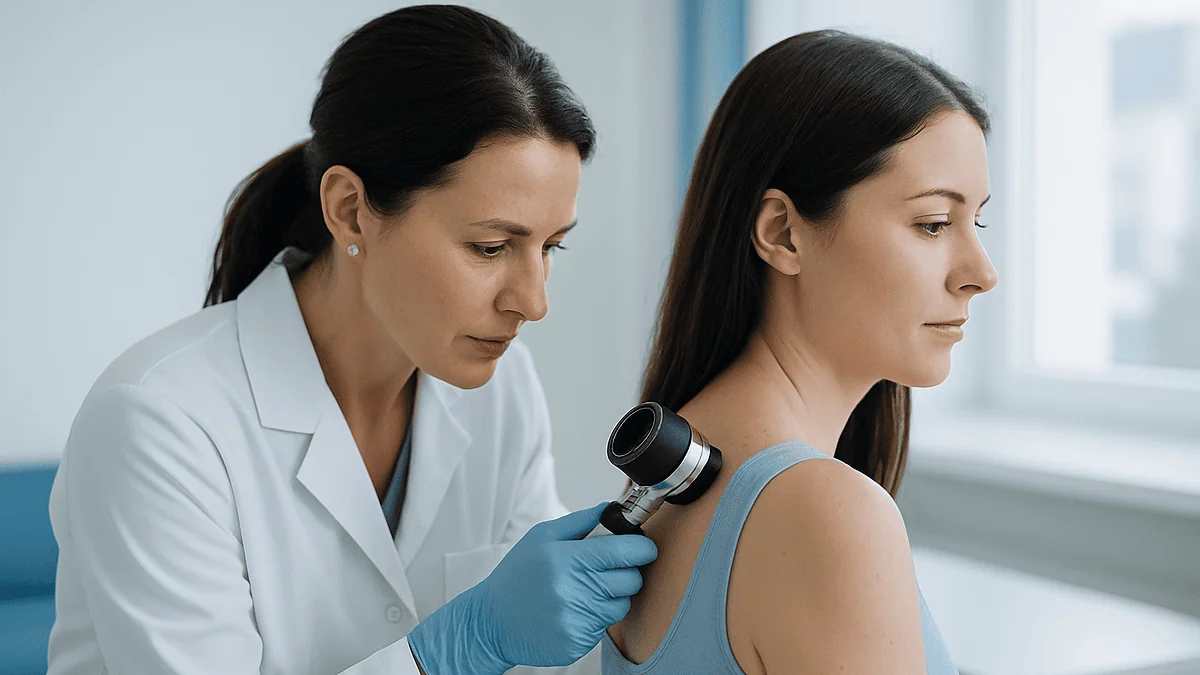
After cryotherapy, keep the treated spot clean, let any blister flatten on its own, and leave the crust in place until it separates by itself, which usually takes about one to three weeks. Gentle daily washing is fine; a light layer of petroleum jelly and a simple dressing help only if the area weeps or rubs on clothing. Contact your care team if pain, redness or swelling worsens after day two.
The freezing itself takes about ten seconds. The questions start in the parking lot. Someone glances at the small white circle on the back of their hand, watches it turn pink, then angry red, and wonders: do I cover this? Can I shower tonight? What if it blisters? Nobody said much beyond a quick line about a scab.
That gap is the reason so many forum threads exist. People compare their blisters, swap photos of crusts, and argue about ointments, all while trying to answer a plain question: what does sensible wound care after cryotherapy actually look like? The answer is quieter than the forums suggest. Most of the work is done by the skin, and most mistakes come from people trying to help it too much.
This explainer walks through what freezing does to tissue, what the following weeks usually look like, and the handful of habits that genuinely matter, with the evidence for each.
What actually happens to skin when it is frozen
Cryotherapy is the deliberate freezing of a small patch of skin to destroy unwanted tissue. Most clinics use liquid nitrogen, a liquid so cold it boils at room temperature, sprayed or dabbed onto a wart, a rough sun-damaged patch called an actinic keratosis, a skin tag or a similar benign growth. Cleveland Clinic describes the process as freezing the cells so thoroughly that they die and are gradually shed.
The damage works in two waves. During the freeze, water inside and between cells turns to ice crystals, tearing membranes apart. As the tissue thaws, tiny blood vessels that supplied the area clot and collapse, so the frozen patch loses its blood supply over the next day or two. That second wave is why the spot often looks worse the morning after than it did in the clinic.
Your body then treats the frozen patch exactly as it would treat a burn, because from the skin’s point of view it is one. Fluid leaks from damaged vessels and lifts the top layer of skin into a blister. The dead tissue dries into a crust, and beneath that crust new skin cells migrate in from the healthy edges. When the repair is complete, the crust has nothing left to hold onto and falls away.
Understanding this sequence explains almost every aftercare rule. A blister is a cushion, not a complication. A crust is a biological bandage, not debris to be cleaned off. Freezing was the treatment; what follows is ordinary healing, and it runs on its own timetable whether or not anyone interferes.
Wound care after cryotherapy: the first 24 hours
The first day is mostly about comfort and restraint. Expect the area to sting, throb or itch for a few hours; Mayo Clinic notes that cryotherapy can be painful during treatment and for a short time afterward, and that redness and swelling are the usual immediate effects. A cool, clean compress held nearby, not pressed onto the spot, can take the edge off. A pharmacist or the treating clinician can advise on simple pain relief if it is needed; that decision, like all medicine decisions, belongs with them.
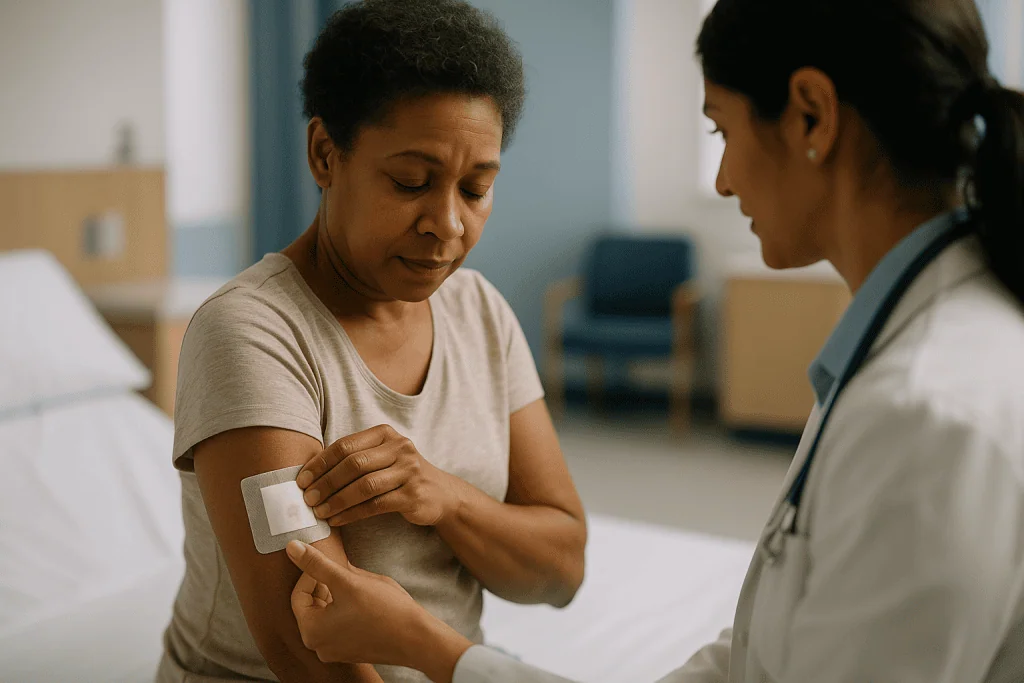
Wash your hands before touching the area. Leave the spot open to the air on day one unless it is somewhere that will rub, such as a knuckle, a waistband line or the sole of a foot. Skip cosmetics, sunscreen and fragranced lotions directly on the frozen patch for now; each adds irritation to skin that has just been injured.
Over the first evening the color usually deepens from pink to dark red, and the patch may look slightly raised and glassy. That is the fluid gathering that will become a blister. It is normal for a treated wart to look larger than it did before treatment because of this swelling.
Two things are worth avoiding entirely on day one: soaking the area for long periods, which softens the damaged skin and invites tearing, and picking at any loose edge. If a treated verruca sits on a weight-bearing part of the foot, a soft pad with a hole cut in the center, placed around the spot rather than over it, can make walking more comfortable without pressing on the blister.
Do you need a dressing after cryotherapy?
Usually not, and this surprises people. A closed blister is a sterile, fluid-filled cushion sealed by your own skin, and an intact crust is a natural barrier. MedlinePlus guidance on caring for wounds that heal from the inside out emphasizes keeping the area clean and protected, which for most cryotherapy sites means simply leaving it undisturbed.
A dressing earns its place in a few situations:
- The blister has burst or been rubbed open and is weeping, so a light non-stick pad keeps the raw surface clean.
- The site is on a hand, foot or another spot in constant contact with surfaces, shoes or door handles.
- The person treated is a child, or someone who picks at skin without noticing, and a cover removes temptation.
- Work involves dirt, chemicals or water, such as cooking, gardening or manual trades.
When a dressing is used, choose a non-adherent pad or a plain plaster with a soft center, and change it daily or whenever it becomes wet. Tape should sit on healthy skin, not across the blister roof, and should be peeled off slowly toward the wound rather than away from it, so the crust is not lifted with the adhesive.
Airtight, occlusive coverings kept on for days are a different matter. They trap moisture, macerate the surrounding skin so it turns white and soggy, and make it more likely the crust will slide off early. The goal is protection with airflow, not a seal. If in doubt, a few hours covered while out and about, then uncovered at home and overnight, is a reasonable compromise that your care team can adjust.
Can you shower after cryotherapy?
Yes. There is no evidence that ordinary showering harms a cryotherapy site, and general wound guidance from MedlinePlus supports gentle daily washing of healing skin with plain water and mild soap. Clean skin around a wound lowers the bacterial load at its edges, which is where infection would start.
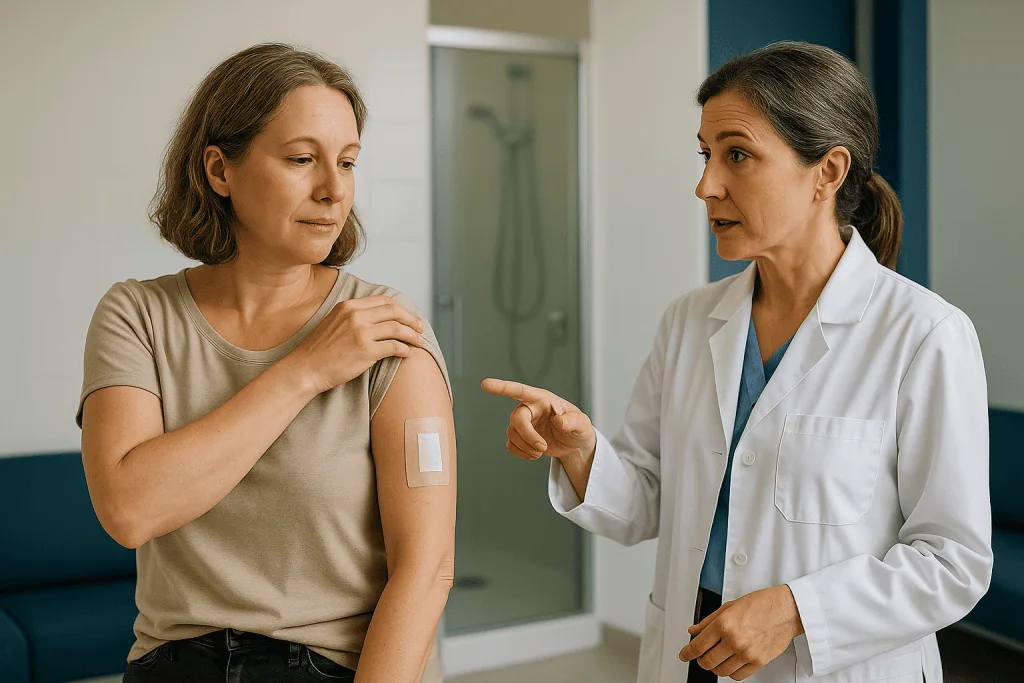
The technique matters more than the timing. Let water run over the spot rather than aiming a strong jet at it. Do not scrub, and do not use a loofah, exfoliating glove or gritty wash on or near the area. Pat dry with a clean towel, or let it air dry; rubbing is how blisters get torn and how half-formed crusts get pulled away. If the area is covered, remove the dressing before the shower, wash, dry, and apply a fresh one afterward.
Baths and long soaks are the exception. Twenty minutes in warm water softens a crust until it lifts at the edges, and softened blister roofs tear easily. Swimming pools add chlorine irritation and shared water, while hot tubs sit at temperatures that encourage bacterial growth. Most clinicians suggest holding off on soaking and swimming until the crust has fallen off and the skin beneath has closed, typically one to three weeks according to Cleveland Clinic’s description of healing after cryotherapy. Ask your own care team for the timeline that fits your site.
Shampoo, conditioner and body wash running down over a treated spot on the face or neck are fine as long as they are rinsed off promptly. Shaving over or right next to the crust is not; a razor edge is one of the most efficient ways to remove a scab before its time.
Why petroleum jelly after cryotherapy, and not antibiotic cream?
The petroleum jelly habit comes from a well-established principle in wound care: moist wound healing. When a shallow wound is kept slightly moist rather than allowed to dry into a hard, cracked plate, new skin cells migrate across the surface more easily, and the result tends to be smoother. Petroleum jelly is bland, does not soak in, contains no fragrance or preservative, and rarely provokes allergy. It simply sits on the surface and slows evaporation.
For a cryotherapy site, that translates into a few specific uses. A thin smear around, not on top of, an intact blister keeps the surrounding skin supple. Once the blister has flattened and a crust is forming, a light layer once or twice a day stops the crust from cracking, which is what causes those sharp stinging moments when the skin flexes. It also acts as a slippery barrier so clothing glides rather than snags.
The Google question about antibiotic ointment deserves a plain answer. Over-the-counter antibiotic creams are not needed for a clean, closed cryotherapy wound, and dermatology guidance increasingly notes that some ingredients in them are common triggers of contact allergy, producing an itchy, weepy red rash that is easily mistaken for infection. Using an antibiotic where no infection exists also contributes to resistance, a concern the CDC raises across all antibiotic use. If your clinician wants an antimicrobial applied, they will say so and explain why. Otherwise, bland is better.
Apply with a clean fingertip or a fresh cotton swab, use less than you think you need, and never dig it under a lifting crust.
Cryotherapy blister care: should you pop it?
No, unless your care team specifically tells you to. A blister after cryotherapy is expected, and Mayo Clinic lists blistering as a routine effect of freezing warts and actinic keratoses rather than a complication. The roof of an intact blister is the best dressing available: sterile, perfectly fitted, and painless. The fluid beneath it cushions the raw base and contains the cells and proteins that drive repair.
Some blisters are clear and some are dark purple or black. A dark one is called a hemorrhagic blister, meaning blood from damaged capillaries has mixed with the fluid. It looks alarming and is generally harmless; it will dry into a darker crust and follow the same timeline.
Most blisters flatten on their own within a few days as the fluid is reabsorbed or slowly leaks out through a tiny crack. If one becomes so tense that walking or gripping is impossible, a clinician can release the fluid with a sterile needle while leaving the roof in place. Doing this at home with a sewing needle or pin trades a temporary pressure problem for a real infection risk.
If a blister bursts on its own:
- Wash gently with mild soap and water and pat dry.
- Leave any loose skin where it lies; do not trim it off.
- Cover with a non-stick pad if the site will rub, changing it daily.
- Watch for spreading redness or thick yellow discharge, which are not part of normal healing.
Itching as a blister dries is common and is not a sign of infection. Cool compresses beside the spot help more than scratching ever will.
Wound care after cryotherapy once the crust forms: leave it alone
If one message in this article deserves to be printed on the aftercare sheet in bold, it is this: the crust is the treatment finishing its job. Picking it off early is the single most common way people turn a clean cryotherapy site into a slow-healing, pigmented or scarred one.
A crust, or scab, is dried blood, plasma and dead tissue that forms a hard shell over the wound. Beneath it, new skin grows in from the edges toward the center. When that sheet of new cells is complete, the crust loses its anchor and drops off, revealing pink skin that is already sealed. Lift the crust a week early and you tear away that fragile sheet, exposing a raw base that has to start again, with more inflammation and a higher chance of a lasting mark. Cleveland Clinic and Mayo Clinic both list scarring and changes in skin color among the risks of cryotherapy, and disturbed healing is one of the ways those risks are realized.
Leaving it alone is harder than it sounds because a crust becomes itchy as it dries and loose at the edges as new skin forms beneath. A few practical habits help:
- Keep nails short and hands busy; most picking is unconscious.
- Use a thin layer of petroleum jelly so the edges stay flexible and less tempting.
- Cover the spot during sleep if you wake to find you have scratched it.
- Trim nothing, even the flap that looks ready to fall.
When a crust finally lifts on its own, it often takes a fleck of the wart or lesion with it. That is expected. Whether any of the original growth remains is a judgment for the clinician at follow-up, not something to assess by scratching.
How long after cryotherapy does the scab fall off? A typical timeline
The honest answer is a range, not a date, and the range shifts with body site, the depth of the freeze and the person’s age and circulation. Cleveland Clinic describes healing over roughly one to three weeks after cryotherapy; Mayo Clinic notes that after a wart is frozen, the dead tissue sloughs off within a week or so. Faces heal fastest because blood flow is rich. Lower legs and feet heal slowest, especially in older adults or people with diabetes.
| Stage | Typical window | What you usually see | What helps |
|---|---|---|---|
| Freeze and thaw | Minutes | White patch, then deepening redness and sting | Cool compress nearby, no pressure |
| Swelling and blister | Hours to about 3 days | Raised, glassy blister, clear or dark | Leave intact, cover only if rubbing |
| Blister flattens, crust forms | Roughly days 3–10 | Dry, darkening scab, itch | Gentle washing, light petroleum jelly |
| Crust separates | About 1–3 weeks | Scab lifts on its own, pink skin beneath | Hands off; sun protection begins |
| Color settles | Weeks to months | Pink fades; lighter or darker patch may persist | Daily sunscreen, patience |
Warts and verrucas often need more than one session. NHS guidance on warts and verrucas notes that cryotherapy may need to be repeated every few weeks, with each cycle passing through this same sequence. A thick verruca on the heel behaves very differently from a flat actinic keratosis on the temple; comparing your timeline with a stranger’s online is rarely informative.
If a crust is still firmly attached at four weeks, or if the area under a fallen crust is open and weeping rather than pink and sealed, that is a reason to check in rather than wait.
Who cryotherapy is usually for, and who is usually asked to wait
Cryotherapy suits small, well-defined, benign or precancerous skin lesions where a clinician is confident of the diagnosis by looking. Mayo Clinic lists it as the most common treatment for actinic keratoses and as a standard option for common warts when home treatments have not worked. Skin tags, seborrheic keratoses (harmless waxy brown growths) and some early superficial skin cancers may also be treated this way after specialist assessment.
It is fast, needs no needles or stitches, and heals without the linear scar of an excision. Those advantages are exactly why it is offered so widely, and why aftercare advice sometimes gets compressed into a single sentence.
Some people are usually asked to wait, or offered a different approach:
- Anyone whose lesion has not been diagnosed with confidence, since freezing destroys the tissue that would otherwise be examined under a microscope.
- People with poor circulation in the treated limb, uncontrolled diabetes or a history of slow-healing leg ulcers, because a frozen patch on a foot or shin can become a chronic wound.
- Those with cold-triggered conditions such as cold urticaria or Raynaud’s phenomenon, where freezing can provoke a wider reaction.
- People with deeply pigmented skin considering treatment on a highly visible site, because pigment cells are especially cold-sensitive and lasting lightening is more likely; this is a discussion, not a prohibition.
- Young children, for whom the sting is often harder to tolerate than the wart is to live with; Mayo Clinic notes this consideration for wart treatment.
Alternatives include topical treatments applied over weeks, curettage (scraping the lesion away), light-based therapies and simple watchful waiting, since many warts resolve on their own. Which route is right depends on the lesion, the site and the person, and the treating clinician weighs all three.
Does the body site change the aftercare? Face, hands and feet
The biology is the same everywhere, but friction, blood flow and sun exposure vary enormously, and aftercare should bend to fit.
On the face, healing is quick and the risk is cosmetic. Skip makeup over the crust; foundation and powder both work their way under lifting edges and are removed with rubbing. Cleansing should be a splash-and-pat affair. Once the crust has gone, the pink patch is highly sun-sensitive, and both Mayo Clinic and Cleveland Clinic note pigment change as a risk of cryotherapy. Daily broad-spectrum sunscreen on the new skin for several months is the one aftercare step that meaningfully influences how the spot looks a year later. Around the eyes, expect noticeably more swelling because the tissue is loose; it settles in a few days.
Hands take constant knocks. A treated knuckle will crack if the crust dries hard, so this is where petroleum jelly and a daytime plaster do the most work. Wear gloves for washing up and gardening until the skin has closed.
Feet are the slowest and most frustrating. A verruca on the sole is pressed into the ground with every step, blisters here can be large and painful, and the crust is often thick. A ring-shaped pad around the site spreads pressure, well-fitting socks changed daily keep the area dry, and treatment is frequently repeated because thick skin blunts the freeze. Anyone with diabetes or numb feet should have foot cryotherapy sites checked by a clinician rather than self-monitoring, because they may not feel the warning signs of infection.
Skin tags and lesions in folds such as the neck or underarm stay damp and rub against themselves; a light dusting of plain talc-free powder nearby, not on the wound, and loose clothing help.
How to speed up healing after cryotherapy: the honest answer
You cannot rush it much, and the products promising to are selling hope rather than evidence. Healing time is set mainly by the depth of the freeze and by blood supply to the site, neither of which a cream can change. What you can do is remove the obstacles that slow it down, which in practice makes a real difference.
The evidence-supported list is short. Keep the crust intact and slightly moist so new cells can migrate underneath without interruption. Wash gently every day to keep bacteria at the edges low. Protect the spot from friction. Do not smoke; nicotine narrows blood vessels and is consistently associated with slower wound healing across surgical studies. Keep blood sugar controlled if you have diabetes, and eat normally, since protein and vitamin C are both raw materials for new tissue. Sleep and hydration are not magic, but a body under strain heals more slowly.
Things that do not help, and can harm: hydrogen peroxide and rubbing alcohol, which damage the new cells you are trying to grow; repeated antiseptic soaks; essential oils, which are frequent causes of contact dermatitis; and vitamin E oil, for which the evidence on scar appearance is mixed at best and which irritates a meaningful minority of people. Tea tree oil and apple cider vinegar appear constantly in forum threads and have no reliable evidence for wound healing after cryotherapy; vinegar in particular can cause chemical burns on broken skin.
Silicone gel sheets have some evidence for softening raised scars once a wound has fully closed, and may be discussed for larger sites, but they have no role while a crust is present. If the pace worries you, the useful step is a photograph every few days and a message to your care team, not a new bottle.
What people often get wrong
Forum wisdom around cryotherapy is a mix of good sense and confident error. The most common misunderstandings deserve a direct correction.
A blister means the freeze was too strong. No. Blistering is the intended response and a sign that the freeze reached the depth needed. A treatment that produces no blister may have been too light, though a clinician judges that, not the blister size.
A black blister is infected. A dark blister is blood mixing with the fluid, described earlier as hemorrhagic. Infection announces itself with spreading redness, heat, increasing pain after the first two days and thick discharge, not with a dark color inside an intact blister.
Scabs should be kept dry and airy. Dry wounds heal more slowly and crack more. A lightly moist, protected crust is the aim.
If the wart is still there after the scab falls, treatment failed. NHS guidance notes that warts often need several sessions spaced weeks apart. Some visible tissue after one round is common and does not predict the final result.
Peroxide keeps it clean. It also kills the cells rebuilding the wound. Plain water and mild soap are enough.
You can help the crust off once it is loose. Loose at the edge does not mean finished underneath. The final fleck often releases a few days after it starts to lift.
A white mark means something went wrong. Lightening is a recognized effect of freezing pigment cells, listed by both Mayo Clinic and Cleveland Clinic. It often fades over months, sometimes does not, and is worth discussing before treatment on visible skin rather than after.
Cryotherapy hurts less than the wart, so kids are fine. Many children find the sting harder than adults expect; Mayo Clinic flags this specifically.
Questions to ask your care team
A five-minute conversation before or right after the freeze saves weeks of second-guessing. These are the questions that produce the most useful answers, phrased so they can be asked as written.
- What exactly was frozen, and was there any doubt about the diagnosis that means I should watch the spot after it heals?
- How deep a freeze did you use, and roughly how large a blister should I expect on this site?
- Do you want this covered, and if so with what and for how long each day?
- Is there anything you would like me to apply, or is plain petroleum jelly and nothing else the plan?
- When can I swim, soak, shave or wear makeup over the area?
- What is the earliest sign of a problem you would want to hear about, and how do I reach the team quickly?
- Will this need repeat sessions, and how do you decide?
- Given my skin tone, what is the realistic chance of a lighter or darker mark, and how long does that usually take to settle?
- I have diabetes, poor circulation or a cold-sensitive condition; does that change how I should look after this?
- Should I photograph the area, and would you like to see the pictures at follow-up?
- If the crust has not come off by a certain point, when should I check in?
Write the answers down or ask for them on the aftercare sheet. Different clinicians make slightly different choices, particularly about dressings and ointments, and the right advice is the one that fits your specific site and the freeze you actually received. General guidance, including everything in this article, gives way to their instructions.
When to call your doctor
Most cryotherapy sites heal without any contact with the clinic. The pattern to watch for is a wound that gets worse after it should have started getting better. Pain, redness and swelling normally peak within the first two days and then ease. A reversal of that trend is the clearest signal.
Contact your care team promptly if you notice:
- Redness spreading outward beyond the treated area, or a red streak running toward the body, which can indicate cellulitis, a bacterial infection of the deeper skin.
- Increasing pain, heat or swelling after day two, rather than steady improvement.
- Thick yellow or green discharge, or a foul smell from the wound.
- Fever, chills or feeling generally unwell.
- A blister that is so tense you cannot walk or use the hand, or one that keeps refilling after it has drained.
- Bleeding that does not stop with ten minutes of gentle pressure.
- Numbness, tingling or weakness beyond the treated spot that persists after the first day, especially near a finger, the side of the knee or the front of the ear where nerves run close to the surface.
- A crust still firmly attached after about four weeks, or raw, open skin remaining once the crust has fallen.
- Any regrowth, change in color or shape, or a new lump in the healed area in the following months, particularly if the original lesion was a precancerous or uncertain spot.
Seek urgent care the same day for rapidly spreading redness with fever, or if you have diabetes or reduced sensation in the treated limb and see any sign of infection, since these wounds can deteriorate quickly and quietly.
None of these signs is a verdict. Most turn out to be irritation or an allergic reaction to something applied, and all are far easier to manage early. When in doubt, a phone call and a photograph cost nothing but a few minutes, and the decision about what happens next belongs with the team who treated you.
Frequently asked questions
What should you not do after cryotherapy?
Do not pop the blister, pick or trim the crust, soak or swim until the skin has closed, scrub the area, or apply peroxide, alcohol, essential oils or vinegar. Avoid shaving or makeup over the spot, and keep it out of direct sun once the crust falls. Leaving the site alone, washed gently once a day, is the whole strategy for most people.
Why do people put petroleum jelly on after cryotherapy?
Petroleum jelly slows evaporation so the crust stays slightly moist and flexible instead of drying into a hard shell that cracks. Moist wound healing lets new skin cells migrate across the base more easily and tends to leave a smoother result. It is bland, rarely causes allergy and does not soak in, which is why many clinicians prefer it to medicated creams.
How long after cryotherapy does the scab fall off?
Usually within about one to three weeks, according to Cleveland Clinic, with Mayo Clinic noting that frozen wart tissue often sloughs within a week or so. Faces heal fastest, feet and lower legs slowest, and thick verrucas may take longer or need repeat sessions. A crust still firmly attached at four weeks is worth mentioning to your care team.
Can you shower after cryotherapy?
Yes, a normal shower is fine from the first day. Let water run over the area without aiming a strong jet at it, avoid scrubbing, and pat dry with a clean towel. Remove any dressing before washing and replace it afterward. Long baths, swimming and hot tubs are different; they soften the crust and are usually deferred until the skin has closed.
How can I speed up healing after cryotherapy?
Realistically, you remove obstacles rather than add speed. Keep the crust intact and lightly moist, wash gently daily, protect the site from friction, do not smoke, and keep blood sugar controlled if you have diabetes. No cream, oil or supplement has reliable evidence for shortening the timeline, and several popular ones, such as peroxide or essential oils, slow it down.
Is it normal for the blister to be black after cryotherapy?
Yes. A dark purple or black blister is a hemorrhagic blister, meaning blood from damaged capillaries has mixed with the fluid. It looks dramatic but is a recognized, usually harmless result of freezing. It will dry into a darker crust and follow the ordinary timeline. Infection looks different: spreading redness, heat, worsening pain after day two and thick discharge.
What does good cryotherapy aftercare look like on the face?
Splash-and-pat cleansing, no makeup over the crust, and a thin layer of petroleum jelly to keep it from cracking. Expect more swelling near the eyes. Once the crust falls, the pink skin is very sun-sensitive; daily broad-spectrum sunscreen for several months is the step most likely to influence how the spot looks a year later, since pigment change is a known risk.
How long does cryotherapy take to heal completely?
The crust typically separates within one to three weeks, but full settling takes longer. The new skin is pink at first and fades over weeks to months, and any lighter or darker patch can take many months to settle, sometimes persisting. Warts often need several sessions spaced weeks apart, so the overall course can run considerably longer than a single site’s healing.
Should I cover a cryotherapy wound or leave it open?
Leave it open when you can. A closed blister or intact crust is its own barrier. Use a non-stick pad or soft-centered plaster only if the blister has burst, the site rubs on shoes or clothing, or your work involves dirt or water. Change it daily, tape onto healthy skin, and avoid airtight coverings left on for days, which soften the skin.
Will cryotherapy leave a scar or white mark?
It can. Both Mayo Clinic and Cleveland Clinic list scarring and changes in skin color among the risks, because pigment cells are especially cold-sensitive. Lightening is more visible on darker skin and often fades over months, though not always. Leaving the crust undisturbed and protecting the new skin from sun reduce the chances; the final appearance cannot be promised in advance.
References
- Cleveland Clinic: Cryotherapy
- NHS: Warts and verrucas
- MedlinePlus: Surgical wound care, open
- MedlinePlus: Warts
This article is for general information only and is not a substitute for professional medical advice. Please consult a qualified doctor about your individual situation.

More from the Blog
Why Skin Grafts Sometimes Fail: Pressure, Infection, Smoking and the Signs Your Team Watches
Skin grafts fail most often because something separates the graft from the wound bed before new blood vessels can grow into it: a pocket…

Questions to Ask Before Your First Botulinum Toxin (Botox) Treatment: Goals and Repeat Timing
Before a first botulinum toxin (Botox) treatment, ask what result is realistic for your face, who will perform the injections and their medical qualifications,…

Reconstructive Surgery Recovery: Drains, Dressings and the Weeks of Swelling Explained
Recovery after reconstructive surgery moves in stages: drains usually come out within the first one to three weeks once output falls, dressings are reduced…
Dermabrasion Risks Explained: Pigment Changes, Scarring and Infection Signs to Report
Dermabrasion risks include temporary redness and swelling, changes in skin color that can be lasting in deeper skin tones, scarring when treatment goes deep,…
Facial Reconstruction After Trauma: How Bone, Nerve and Soft-Tissue Repairs Are Sequenced
Facial trauma reconstruction surgery is sequenced by priority, not by appearance. Life-threatening problems come first: the airway, bleeding, the brain and the neck. Sight-threatening…

Ablative vs Non-Ablative Laser Resurfacing: Depth, Downtime and Results Compared
Ablative laser resurfacing removes the skin's outer layer and heats the layer beneath, giving larger changes in wrinkles, scars and texture in exchange for…