

Baby Botox and “Prejuvenation”: What Preventive Botox Does, and Whether Starting in Your 20s Makes Sense

Key Takeaways
- Baby Botox is the same botulinum toxin type A as standard treatment, injected in smaller amounts, so every contraindication and label warning still applies.
- Randomized trials firmly establish that botulinum toxin softens existing frown, forehead and crow's feet lines; the claim that starting early prevents future lines rests chiefly on one identical-twin case report and expert opinion.
- Lower-amount treatment typically wears off in roughly two to three months, compared with three to four for a conventional amount, meaning more frequent visits for anyone using it as maintenance.
- Botulinum toxin acts only on lines caused by muscle contraction; it does nothing for sun damage, volume loss or skin thinning, which drive much of visible aging.
- Daily sunscreen and topical retinoids have stronger trial evidence for slowing facial aging than early botulinum toxin, and they address the mechanisms the injection cannot.
- Difficulty swallowing, speaking or breathing, spreading weakness or double vision after any botulinum toxin injection are emergency signs, however small the amount used.
Baby Botox is the informal name for botulinum toxin injections given in smaller amounts than a standard cosmetic treatment, aiming to soften expression lines while keeping natural movement. Randomized trials show botulinum toxin reliably relaxes existing frown, forehead and crow's feet lines. Evidence that starting in your 20s prevents future wrinkles is far weaker, resting mostly on small observational reports and expert opinion.
The video has been viewed tens of millions of times: a 24-year-old sitting in a treatment chair, telling the camera she is “getting ahead of it.” No wrinkles yet. That, she explains, is the point. Scroll further and the term arrives on cueprejuvenationfollowed by a flood of comments asking which age is too early and whether baby Botox counts as skincare.
As of May 2025, searches for baby Botox and preventative botulinum toxin are climbing faster than searches for almost any other cosmetic procedure, pushed along by a run of new product approvals for botulinum toxin over the past two years, an expanded label for Botox Cosmetic that now reaches the neck, and a steady stream of creators in their twenties documenting their first appointments. Clinics report the same shift: a younger, line-free patient asking not to fix something, but to stop something.
That request deserves a careful answer. The drug itself is one of the most studied in cosmetic medicine. The idea of using it early, before lines exist, is not.
What is baby Botox, exactly?
Strip away the nickname and baby Botox is not a separate product, a different formula or a new technique. It is the same botulinum toxin type A used in conventional cosmetic treatment, injected in smaller quantities and often spread across more, lighter placements. The word “baby” refers to the amount, not the age of the person receiving it, although the two have become tangled in popular usage.
Botulinum toxin is a purified protein made by the bacterium Clostridium botulinum that temporarily blocks the nerve signal telling a muscle to contract. In cosmetic medicine it is placed into specific facial muscles: the ones that pull the brows together, lift the forehead or crinkle the outer eyes, so those muscles relax and the skin above them stops folding as sharply.
Standard treatment aims for noticeable smoothing. Baby Botox, sometimes called micro-Botox or “sprinkle” treatment by injectors, aims for something quieter: expression that still reads as expression, with a slightly softer landing. The Cleveland Clinic describes the goal as subtle results that avoid a stiff or immobile look, at the acknowledged cost of shorter-lasting effects.
Several brand-name products fall under the umbrella. Botox Cosmetic (onabotulinumtoxinA) is the original and most studied; Dysport (abobotulinumtoxinA), Xeomin (incobotulinumtoxinA), Jeuveau (prabotulinumtoxinA), Daxxify (daxibotulinumtoxinA) and Letybo (letibotulinumtoxinA) are also approved in the United States for frown lines between the brows. A lower-amount approach can be applied with any of them. Which product, how much and where are clinical decisions made by the injecting practitioner during a consultation, not choices to be made from a menu.
One more definition matters here, because it shapes everything that follows. Dermatologists distinguish dynamic lines, which appear only when a muscle contracts and vanish at rest, from static lines, which have etched into the skin and remain visible even when the face is relaxed. Botulinum toxin acts on the first kind directly. Its effect on the second is indirect and slower. Baby Botox marketing leans heavily on the promise that treating dynamic lines early keeps them from ever becoming static ones: a claim we will weigh carefully below.
What changed recently: approvals, age rules and the social-media surge
Botulinum toxin has been a cosmetic mainstay for more than two decades, so it is fair to ask why the conversation feels new. Three developments explain the timing.
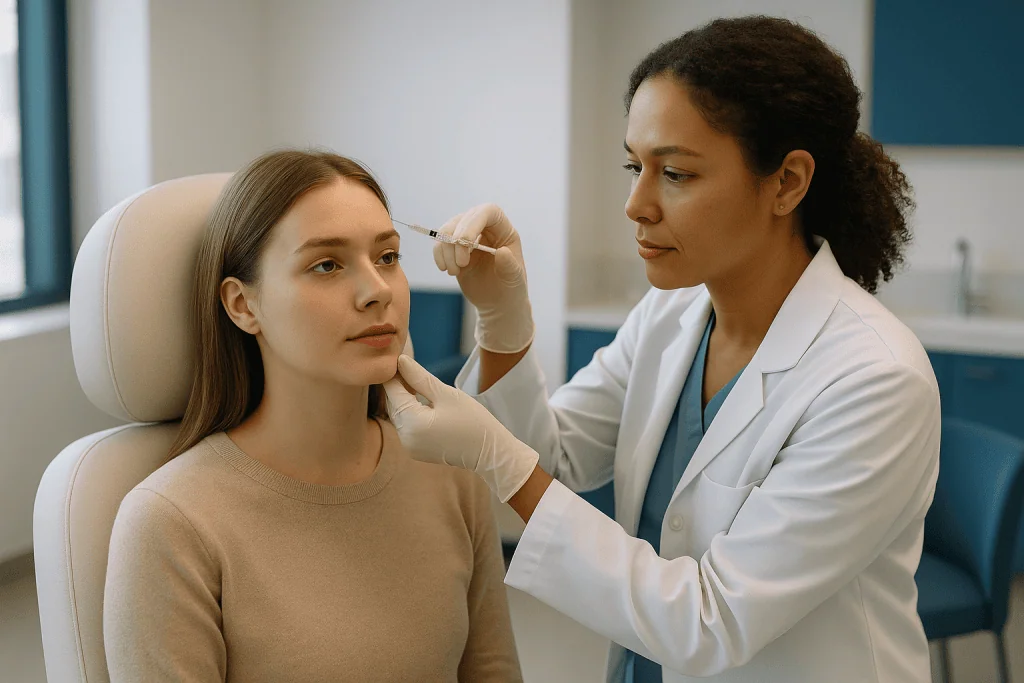
First, the regulatory map has broadened. Botox Cosmetic gained its original US approval for frown lines between the brows in 2002, followed by crow’s feet in 2013 and horizontal forehead lines in 2017. In late 2024 the label expanded again, to vertical neck bands caused by the platysma muscle: the first new cosmetic indication in seven years. Two additional botulinum toxin products, Daxxify in 2022 and Letybo in 2024, entered the US market for frown lines, and each arrival brought a wave of coverage that kept the drug class in the news. More products competing for attention means more marketing, and “start early” is a message that widens the customer base.
Second, regulators elsewhere have drawn firmer lines around age. In England and Wales, a 2021 law made it illegal to give botulinum toxin or dermal filler injections for cosmetic purposes to anyone under 18, even with parental consent: a rule the NHS highlights on its patient guidance. No equivalent federal age law exists in the United States, where cosmetic botulinum toxin is approved for adults 18 and older, leaving decisions about very young patients to individual clinicians and state medical boards.
Third, and most powerfully, the platform economy has changed who talks about cosmetic procedures. A decade ago the typical botulinum toxin patient was in her forties or fifties and rarely discussed it. Today short-form video has normalized the appointment as content, and the creators most likely to post are in their twenties. The term prejuvenation, coined in dermatology circles around 2016, escaped the specialty journals and became a hashtag.
None of these changes altered the underlying evidence about prevention. What they changed is the volume of the question. Clinicians quoted by Mayo Clinic and Cleveland Clinic describe the same pattern: patients arriving younger, often with no visible static lines, asking about baby Botox as a maintenance habit rather than a correction. That is a shift in demand, not in data.
How botulinum toxin works on a wrinkle
Picture a sheet of paper folded along the same crease a few thousand times. Eventually the crease stays even when the paper lies flat. Facial skin behaves in a broadly similar way: every frown, squint and raised brow folds the skin over the same underlying muscle, and over years the fold becomes a permanent line.
Botulinum toxin interrupts that cycle at the nerve-muscle junction. When a nerve wants a muscle to contract, it releases a chemical messenger called acetylcholine. The toxin blocks the machinery the nerve uses to release it. The muscle still exists and still has its blood supply; it simply stops receiving the instruction to tighten. According to Mayo Clinic, effects begin within a few days, peak at roughly two weeks and gradually fade as the nerve endings grow new connections over the following months.
This is why the drug is so effective for dynamic lines. Take the frowning muscle away and the vertical “elevens” between the brows cannot form while the effect lasts. For static lines the story is slower. Skin that is no longer being folded may gradually remodel, some studies show modest improvement in etched lines after repeated treatment cycles, but the drug does not fill, plump or resurface anything. It only stops the folding.
Two consequences follow for anyone considering preventative botox in their twenties.
Because the effect is on muscle rather than skin, botulinum toxin does nothing about the other drivers of facial aging: loss of collagen and elastin, thinning of the fat pads that give a young face its contour, ultraviolet damage, and the slow changes in underlying bone. Sun exposure alone is estimated to account for the large majority of visible skin aging on the face, a mechanism botulinum toxin cannot touch.
And because muscle relaxation is temporary, prevention would require indefinite repetition. A person starting at 25 who wants to “keep” whatever protection exists would be committing to treatments several times a year for decades. That is not a criticism, simply the arithmetic. Any honest discussion of baby Botox as prevention has to reckon with a lifetime of appointments rather than a one-time decision.
Baby Botox vs. regular Botox: what actually differs
People searching for the difference between Botox and baby Botox often expect a different drug. The distinction is one of degree, and the trade-offs run in predictable directions.
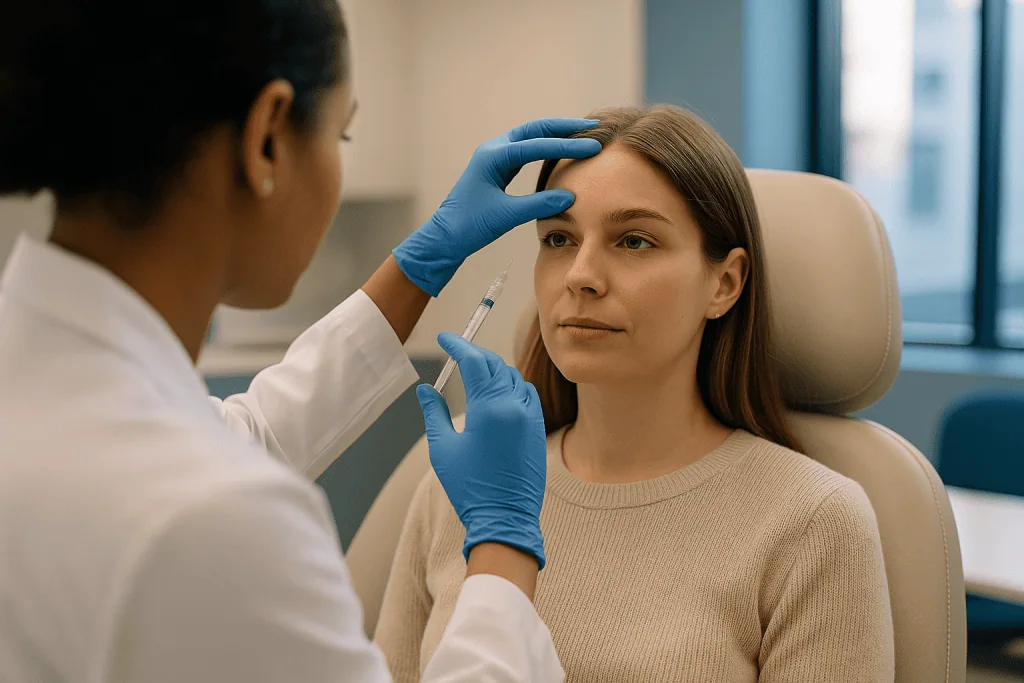
| Feature | Standard cosmetic treatment | Baby Botox (lower-amount approach) |
|---|---|---|
| Drug used | Botulinum toxin type A | Same drug, same products |
| Amount injected | Conventional therapeutic amount for the area | Smaller amount, often more widely distributed |
| Visible effect | Noticeable smoothing; strong reduction in movement | Subtle softening; movement largely preserved |
| Typical duration | About 3 to 4 months | Often shorter, roughly 2 to 3 months |
| Best-studied use | Existing frown, forehead, crow’s feet lines | Same areas; no dedicated trials of the low-amount strategy |
| Typical patient in practice | Adults with established dynamic or early static lines | Adults with faint dynamic lines, or those wanting a natural look |
| Evidence for wrinkle correction | Strong, multiple randomized trials | Extrapolated from standard-dose trials |
| Evidence for prevention | Weak, observational and expert opinion | Weak, same limitations |
Two rows deserve emphasis. The duration gap is real: less drug means the nerve endings recover sooner, so baby Botox patients typically return more often. The Cleveland Clinic notes that this is the primary trade-off for a natural result, and it matters for anyone budgeting time and exposure over years.
The evidence row is where the marketing and the science part ways. Every large trial that established botulinum toxin’s safety and effectiveness used conventional amounts on people who already had lines. There is no randomized trial testing whether a lower amount, given to people without lines, delays wrinkle formation. The lower-amount approach borrows its credibility from the standard-amount data, which is a reasonable clinical extrapolation for correction but a genuine gap when the goal is prevention.
Neither column is “better.” A person in their late thirties with a visible frown line at rest may be under-treated by a baby Botox approach. A person with mild dynamic lines who values expressive eyebrows may find the standard approach heavier than they want. The right column is a conversation with a qualified clinician, not a viral trend.
What does prejuvenation mean, and is it a real medical concept?
Prejuvenation is a portmanteau of “prevent” and “rejuvenation.” It describes using cosmetic interventions, most often botulinum toxin, but also sunscreen, retinoids, lasers and fillers, before visible signs of aging appear, with the aim of delaying or reducing them. The word surfaced in dermatology publications around 2016 and has since been adopted, sometimes uncritically, by clinics and content creators.
Is it real medicine? Parts of it are ancient and well-proven. Daily sun protection is the single most evidence-backed anti-aging intervention that exists, supported by a randomized trial in which regular sunscreen users showed measurably less skin aging over four and a half years than discretionary users. Topical retinoids, vitamin A derivatives that increase collagen production and speed skin cell turnover, have decades of trial data behind them for fine lines. Not smoking matters enormously. These are prejuvenation in the truest sense, and no dermatologist disputes them.
The botulinum toxin piece is where the concept becomes speculative. The logic is biologically plausible: if repeated folding creates the crease, reducing the folding should slow the crease. Plausible is not the same as demonstrated. A review of the prejuvenation literature published in a dermatology journal concluded that the evidence base for preventive neuromodulator use consists mainly of case reports, small observational series and expert consensus, with no controlled trials designed to test prevention as an outcome.
There is also a definitional problem that clinicians raise quietly. “Preventing aging” is not a measurable endpoint. Trials of botulinum toxin measure the severity of a specific line on a validated scale at a specific time point. A trial of prevention would need to follow untreated and treated people for ten or twenty years and compare how many lines they developed: a study nobody has run, and one that would be very hard to run given how many other variables (sun, smoking, genetics, weight change) shape a face over two decades.
So the honest position is this: prejuvenation as a philosophy of early, gentle care is sound. Prejuvenation as a specific promise that botulinum toxin in your twenties buys you a smoother face at fifty is a hypothesis, and it should be presented to patients as one.
Does preventative Botox actually stop wrinkles from forming?
The most frequently cited piece of evidence for preventative botox is a single pair of identical twins. Beginning in their mid-twenties, one twin received regular botulinum toxin treatments to the forehead and frown area for thirteen years; the other received it only twice. When examined in their late thirties, the regularly treated twin had no visible static lines in the treated areas at rest, while the untreated twin had developed them. Untreated areas of the face, around the mouth, for instance, aged similarly in both.
It is a striking observation, and it appears in almost every article defending early treatment. It is also one case report involving two people. In the hierarchy of medical evidence, a case report sits at the bottom, useful for generating hypotheses but incapable of proving them. The twins shared genetics but not necessarily sun exposure, sleep, stress or skincare habits over thirteen years.
Beyond the twins, the supporting evidence is largely indirect. Several studies have followed patients receiving repeated conventional treatment for years and observed that static lines softened over time and that treatment intervals sometimes lengthened, consistent with muscles weakening from disuse. These findings tell us that sustained relaxation changes the skin over the muscle. They do not tell us what happens when you start in a face that has no lines yet.
Mechanistically, the argument has merit for one specific type of aging and no others. Botulinum toxin can plausibly slow the formation of lines caused by repeated muscle contraction, frown lines, forehead lines, crow’s feet. It cannot slow the loss of volume, the drift of fat pads, skin thinning, sun spots or the changes in skin texture that come from UV damage. Many of the features people associate with “looking older” in their forties fall in the second category.
There is a further wrinkle, so to speak. Some clinicians voice concern that long-term weakening of forehead muscles in a young person could contribute to brow heaviness or compensatory patterns in other muscles. This too is expert opinion rather than trial evidence, but it illustrates that “prevention” is not automatically a one-way benefit.
The fairest summary: preventative use is biologically reasonable, unproven in controlled studies, and unlikely to address most of what aging does to a face.
What the evidence actually says, graded by strength
Medical evidence comes in tiers, and the botulinum toxin story spans all of them. Sorting the claims by tier is the clearest way to see what is known.
Strong evidence, multiple randomized controlled trials. Botulinum toxin type A reduces the severity of frown lines between the brows, horizontal forehead lines and crow’s feet in adults who already have them. The pivotal trials for each approved indication enrolled hundreds of participants, compared active drug against placebo injection, and used blinded investigators rating line severity on validated scales. Response rates at the one-month mark were substantially higher than placebo across every product tested. The safety profile in these trials, mostly headache, injection-site bruising and occasional eyelid or brow drooping, has been consistent for over twenty years and across millions of treatments. This is as solid as cosmetic medicine gets.
Moderate evidence, observational cohorts and open-label extensions. Repeated treatment over several years appears to be well tolerated in adults, with no accumulating pattern of serious harm in long-term follow-up studies. Static lines may gradually soften with repeated cycles. Some patients report longer intervals between treatments over time. These studies lack placebo controls and can be affected by who chooses to continue treatment, so conclusions are suggestive rather than definitive.
Weak evidence, case reports, small series, expert consensus. Starting treatment early delays the formation of static lines. The identical twin report is the anchor here, supplemented by clinician experience. This tier is where the entire prejuvenation-with-botulinum-toxin argument lives.
No direct evidence. Whether a lower-amount “baby” approach offers any different long-term outcome than a standard approach, and whether decades of treatment beginning in the twenties carries risks or benefits distinct from decades beginning in the forties. Nobody has studied a cohort long enough to know.
Guideline bodies reflect this gradient. Consumer guidance from Mayo Clinic, the Cleveland Clinic and the NHS describes botulinum toxin as an effective treatment for existing dynamic lines and outlines its known side effects; none endorses it as a preventive measure for young adults without lines. Absence of endorsement is not condemnation. It is simply the honest state of the literature, and a young person considering treatment deserves to hear it stated that plainly.
Is Botox in your 20s a good idea? What experienced clinicians weigh
Ask a dozen dermatologists about botox in your 20s and you will hear the same qualifier a dozen times: it depends on the face, not the birthday.
The clinically meaningful signal is not age but the presence of early dynamic lines that are beginning to linger. A 26-year-old with strong frowning muscles and faint vertical lines that take a moment to fade after the expression ends is, in many clinicians’ view, a reasonable candidate for a conservative treatment. A 26-year-old with a smooth resting face and no persistent lines is being asked to treat something that does not yet exist, on the strength of a hypothesis.
Several factors tilt the judgment.
Genetics and expression habits. Some people frown or squint far more than others, and family history offers a hint about where lines will form. Clinicians often look at a patient’s parents’ faces, figuratively or literally, before recommending anything.
Sun history. A patient with significant UV exposure will age primarily through skin damage, which botulinum toxin does not address. Sunscreen and retinoids will do more for that person than any injection.
Psychological context. This one gets less attention than it deserves. The NHS and Mayo Clinic both encourage a frank conversation about motivation before any cosmetic procedure. A young adult who arrives anxious about lines nobody else can see, or who feels pressured by social-media comparison, may be better served by a conversation than a needle. Body dysmorphic disordera condition in which perceived flaws cause distress out of proportion to their visibility, is more common among people seeking cosmetic procedures than in the general population, and reputable clinicians screen for it.
Commitment. Whatever benefit early treatment offers evaporates when treatment stops. A 25-year-old should understand they are considering a multi-decade habit, not a one-off.
The most defensible position, and the one most senior clinicians take, is that treatment in the twenties is reasonable when there is something specific to treat and the patient has realistic expectations. Treatment purely because of age, or purely to prevent lines that have not appeared, sits on much thinner evidentiary ground. Either way, the decision belongs in a consultation with a licensed medical professional trained in facial anatomy, who can examine the actual face in question.
How long will baby Botox last?
Shorter than you might hope, and shorter than the standard treatment it is derived from. That is the core trade-off, and it follows directly from how the drug wears off.
After botulinum toxin blocks a nerve ending, the nerve responds by sprouting new connections to the muscle over weeks and months. The original ending eventually recovers too. Once enough functional connections are restored, the muscle contracts normally again. With a conventional amount of drug, Mayo Clinic puts the typical duration at three to four months, sometimes longer in the frown area. With a smaller amount, fewer nerve endings are affected and recovery to full function happens sooner: the Cleveland Clinic describes baby Botox effects fading in roughly two to three months for many people.
Several variables shift those numbers in either direction.
Muscle strength matters. A person with a powerful frowning muscle metabolizes the visual effect faster than someone with a naturally light expression, because even partial recovery produces a visible contraction. Men, on average, have larger facial muscles and often notice shorter duration.
Metabolism and activity may play a role. Frequent, intense exercise is sometimes associated with shorter duration in clinical experience, although the research on this is thin and inconsistent.
Treatment history matters too. Some long-term patients find the interval between treatments lengthens over years, plausibly because muscles that are repeatedly relaxed become smaller and weaker. This is an observational finding and does not happen for everyone.
The area treated matters. Crow’s feet tend to return to movement a little sooner than frown lines in many patients, in part because the muscle around the eye is thin and highly active.
Product matters somewhat. One newer formulation, Daxxify, was approved on trial data showing a longer median duration than earlier products at conventional amounts; whether that advantage persists at lower amounts has not been established in published trials.
Practically, someone using a baby Botox approach as ongoing maintenance should expect more frequent visits than a standard-treatment patient: a reality worth weighing against the appeal of subtler results. Chasing a perpetually “fresh” effect by returning very frequently is not recommended; the manufacturers’ labeling and clinical guidance set minimum intervals between treatments, and the injecting clinician sets the schedule.
Side effects and risks of low-dose botulinum toxin
Because baby Botox uses less drug, it is often marketed as lower-risk. That is partly true, the amount injected is one determinant of side effects, but every risk that applies to conventional treatment applies to the lower-amount version as well, just with somewhat altered odds.
Common and minor. Bruising, redness or tenderness at the injection points, a mild headache in the first day or two, and occasionally a brief flu-like feeling. MedlinePlus lists these as the most frequently reported reactions, and they typically resolve without treatment within days.
Less common and cosmetic. Eyelid drooping (ptosis), a heavy or lowered brow, asymmetry between the two sides, or an unnatural brow shape when drug spreads to a neighboring muscle. These occur in a small percentage of treatments and are more likely with imprecise placement. They wear off as the drug does, which can mean several weeks of living with the result. Lower amounts probably reduce the intensity of these effects but do not eliminate them.
Rare and serious. Very rarely, botulinum toxin can spread beyond the injection area and produce symptoms of botulism: muscle weakness away from the treated site, difficulty swallowing, difficulty speaking or breathing, vision changes or loss of bladder control. This risk is highlighted in a boxed warning on every botulinum toxin product. It is far more associated with the much larger amounts used for medical conditions such as spasticity than with cosmetic treatment, but it can occur at any dose in susceptible people and must be treated as an emergency.
Allergic reaction. Itching, rash, wheezing or swelling of the face or throat after injection are uncommon but require urgent care.
Two long-term uncertainties deserve mention. Repeated treatment over many years can occasionally lead to reduced responsiveness, possibly because the immune system develops antibodies against the toxin protein; modern formulations have made this less common, but it is a reason clinicians avoid unnecessarily frequent treatment. And, as noted earlier, the effect of thirty or forty years of continuous forehead relaxation on muscle bulk, brow position and compensatory expression has simply not been studied, because no cohort has yet been treated that long from that young an age.
None of this makes botulinum toxin dangerous for the typical healthy adult. The trial and post-marketing record is reassuring. It does mean “baby” is a description of the amount, not a promise of safety.
Who should not get baby Botox?
The list of people for whom botulinum toxin is inappropriate does not shrink because the amount does. Mayo Clinic, MedlinePlus and NHS guidance converge on the following groups, and a responsible injector will screen for every one of them before agreeing to treat.
Anyone under 18. Cosmetic botulinum toxin is approved for adults only. In England and Wales it is illegal to provide it to minors for cosmetic reasons regardless of consent.
People who are pregnant, planning pregnancy, or breastfeeding. There is no evidence of harm, but there is also no adequate safety data, and both Mayo Clinic and the NHS advise against cosmetic treatment during these periods. A young adult who may become pregnant should raise this with the clinician.
People with neuromuscular conditions. Myasthenia gravis, Lambert-Eaton syndrome, amyotrophic lateral sclerosis and related disorders affect the same nerve-muscle junction the drug acts on. Even small amounts can produce exaggerated weakness or breathing and swallowing problems. Botulinum toxin is generally avoided in these patients.
People with a prior allergic reaction to any botulinum toxin product or to an ingredient in it, such as human albumin, which is used as a stabilizer in several formulations.
People with an active skin infection at or near the intended injection site. Treatment is postponed until it clears.
People taking certain medicines. Some antibiotics, muscle relaxants and other drugs that affect nerve-muscle signaling can intensify the toxin’s effect. Blood thinners, including some over-the-counter pain relievers and supplements, increase bruising. This is why a full medication and supplement list matters at consultation, and why no one should stop or adjust a prescribed medicine to prepare for a cosmetic procedure without their prescriber’s agreement.
People with unrealistic expectations or a possible body image disorder. Not a medical contraindication in the strict sense, but an ethical one that experienced clinicians take seriously. Treatment is unlikely to resolve distress that is not really about the line in question.
People with significant static lines or volume loss who expect botulinum toxin to fix them. Here the issue is not danger but mismatch: the drug does not fill or lift, and a lower-amount approach will disappoint further.
If you belong to any of these groups, the conversation to have is with a physician, not an aesthetician. And if you are unsure, that uncertainty itself is a reason to ask before booking.
Common myths about baby Botox, corrected
The viral version of this topic contains a handful of claims that circulate widely and hold up poorly. Each deserves a direct correction.
Myth: Baby Botox is a different, gentler product. It is the same botulinum toxin type A. The only difference is the amount injected and how it is distributed. Any product approved for cosmetic use can be given in a lower amount.
Myth: Starting in your twenties is proven to prevent wrinkles. The supporting evidence is a single identical-twin case report plus expert opinion. There are no controlled trials showing that early treatment reduces lines decades later. The mechanism is plausible; the outcome is unproven.
Myth: If you start early you will need less later. Some long-term patients do find their intervals lengthen, an observational finding likely related to muscle weakening. Others do not. And stopping treatment allows muscles to recover fully, so any “credit” built up does not persist indefinitely. Treatment is not an investment that compounds.
Myth: Baby Botox never looks frozen. Lower amounts reduce the likelihood of a rigid appearance, but placement matters as much as quantity. An imprecisely placed small amount can still drop a brow or flatten an expression. Skill is the variable, not just volume.
Myth: It is safe because it is such a small amount. Side effects are less likely and generally milder, but every risk listed on the product label, including the rare spread of toxin, remains possible. Contraindications do not disappear at low amounts.
Myth: Everyone in their twenties who takes care of their skin is doing this. Survey data on cosmetic procedures show that the large majority of neuromodulator patients remain in their thirties and above. The visibility of young creators online reflects who posts, not who is treated.
Myth: Botulinum toxin is a skincare step, like serum. It is a prescription drug injected into muscle, with a boxed safety warning. Framing it as skincare minimizes both what it does and the judgment required to use it well.
Myth: Once your lines are gone, you can stop. Lines return as the muscle recovers, typically within a few months. Any preventive benefit, if it exists, depends on continuing.
Skepticism about these claims is not skepticism about the drug. Botulinum toxin is genuinely effective for what it is proven to do. The myths arise from stretching that proof to cover a promise it does not yet support.
How to choose an injector and what a good consultation looks like
For a procedure that lives or dies on anatomical precision, who holds the syringe matters more than which brand is in it. This is doubly true for a lower-amount approach, where small errors in placement are not masked by an overwhelming effect.
In the United States, botulinum toxin is a prescription drug that must be administered by, or under the supervision of, a licensed medical professional. State rules vary on which professionals may inject. Dermatologists and plastic surgeons train extensively in facial anatomy; physician assistants and nurse practitioners can be excellent injectors when properly trained and supervised. The Cleveland Clinic and Mayo Clinic both advise seeking a provider with specific training and experience in facial botulinum toxin, and asking directly about it.
The NHS offers a useful checklist that translates well across borders: confirm the practitioner is licensed and registered with the relevant professional body, ask what product will be used and how it will be sourced, ask what happens if something goes wrong, and be wary of anyone offering treatment in a non-clinical setting such as a home, salon or party. Counterfeit and improperly stored botulinum toxin products have been linked to serious harm; a legitimate clinical setting is a basic safeguard.
A well-run consultation for a young adult asking about baby Botox should feel less like a sale and more like an assessment. Expect the clinician to watch you make expressions, ask you to frown, raise your brows and smile, and look at your face at rest. Expect questions about your goals, your medical history, your medications and supplements, whether you might be pregnant, and what has prompted you to come in now. Expect an honest answer if the clinician does not think you have anything worth treating yet, and treat that answer as a mark of quality rather than a rejection.
Warning signs run in the opposite direction: pressure to book immediately, treatment offered without an examination, promises about how you will look in twenty years, or discount-driven urgency. The decision about whether, where and how much to treat is a medical one, and it should be made by a clinician who has examined you, in a setting equipped to manage the rare complication.
Prevention strategies with stronger evidence than early botulinum toxin
If the goal is genuinely to slow visible facial aging starting in your twenties, the interventions with the strongest evidence are less glamorous than an injection and considerably better studied.
Daily broad-spectrum sunscreen. Ultraviolet radiation is the dominant environmental cause of skin aging, driving collagen breakdown, pigmentation changes and fine lines. A randomized trial in Australia found that adults assigned to daily sunscreen use showed no detectable increase in skin aging over four and a half years, compared with measurable aging in the discretionary-use group. This is prevention with trial-level support, and it addresses the type of aging botulinum toxin cannot.
Topical retinoids. Vitamin A derivatives, available both over the counter (retinol) and by prescription (tretinoin), stimulate collagen production and normalize skin cell turnover. Decades of controlled trials show reductions in fine lines and improved skin texture with consistent use over months. Prescription strengths require medical supervision and are not suitable during pregnancy; a dermatologist can advise which form fits an individual.
Not smoking, and avoiding smoke. Smoking accelerates skin aging through reduced blood flow and direct collagen damage, and the effect is visible in twin studies where one twin smoked. This is arguably the single most consequential lifestyle choice for a young face.
Sleep, alcohol moderation and nutrition. The evidence here is more observational, but chronic sleep deprivation, heavy alcohol use and diets low in fruits and vegetables are consistently associated with poorer skin appearance in population studies.
Sunglasses and a hat. Squinting is a major driver of crow’s feet. Reducing squinting through sun protection is a mechanically direct way to reduce the folding that botulinum toxin is meant to interrupt, at no medical risk.
Where does baby Botox fit? For a young adult already doing all of the above and still developing persistent dynamic lines, a conservative treatment may be a reasonable addition after a proper consultation. For a young adult doing none of the above, an injection addresses the smallest slice of the problem while ignoring the largest. Dermatologists sometimes put it bluntly: sunscreen first, retinoid second, everything else a distant third.
When to see a doctor
Two kinds of medical conversation belong in this topic: the one before treatment, and the one that may be needed after.
Before treatment, see a physician, ideally a board-certified dermatologist or plastic surgeon, rather than relying on a social-media trend if:
- You are under 18, pregnant, planning pregnancy or breastfeeding.
- You have a neuromuscular condition, a history of allergic reaction to any injectable, or take medications that affect nerve-muscle signaling or bleeding.
- You are unsure whether what you see in the mirror is a line worth treating, or you feel significant distress about your appearance. A frank conversation about motivation is part of good care, and a clinician who declines to treat is often acting in your interest.
- You want to understand the actual evidence for prevention in your specific case before committing to a long-term habit.
After treatment, contact the injecting clinician or your doctor promptly if you notice:
- A drooping eyelid or brow, marked asymmetry, or an expression that looks or feels wrong. These are not emergencies but should be assessed; sometimes they can be partially offset while the drug wears off.
- A rash, itching, swelling of the face or lips, or wheezing, which may indicate an allergic reaction.
Seek emergency care immediately if you develop any of the following, even days or weeks after injection:
- Difficulty swallowing, speaking or breathing.
- Muscle weakness spreading beyond the treated area, or generalized weakness.
- Double vision, blurred vision or drooping affecting both eyes.
- Loss of bladder control.
These are the recognized signs of botulinum toxin spreading beyond the injection site. They are rare with cosmetic amounts but are described in the boxed warning on every product and can be life-threatening if breathing muscles are affected.
Finally, never stop, start or adjust any prescribed medicine in preparation for a cosmetic procedure without speaking to the prescriber. Every decision about whether to treat, which product to use, how much and how often rests with the licensed clinician who has examined you, not with an article, a creator or a trend.
Frequently asked questions
What is the difference between Botox and baby Botox?
There is no difference in the drug, both use botulinum toxin type A. Baby Botox simply means a smaller amount, often spread across more light placements, to soften lines while preserving natural movement. Standard treatment uses a conventional amount for more noticeable smoothing. The lower-amount approach produces subtler results that fade sooner, and it has not been separately tested in trials; its safety and effectiveness are extrapolated from studies of standard treatment.
How long will baby Botox last?
Typically two to three months, somewhat shorter than the three to four months associated with a conventional amount. Duration depends on how much is used, the strength of the treated muscle, the area injected and the individual. Some long-term patients find intervals lengthen over years as muscles weaken, but this is not universal. Frequent re-treatment to chase a constant effect is not recommended; the injecting clinician sets an appropriate schedule.
How much does baby Botox cost?
We do not publish price figures, and cost is a poor basis for this decision. What matters is the qualifications of the injector, the clinical setting, the legitimacy of the product’s sourcing and whether treatment is appropriate for your face at all. Discount-driven offers, treatments in non-clinical settings and pressure to book quickly are warning signs. Discuss cost directly with a licensed clinician after a proper consultation, not before one.
Who should not get baby Botox?
Anyone under 18; people who are pregnant, planning pregnancy or breastfeeding; those with neuromuscular disorders such as myasthenia gravis or ALS; anyone with a prior allergic reaction to a botulinum toxin product; and people with an active skin infection at the site. Certain medicines that affect nerve-muscle signaling or bleeding also require caution. A clinician should also assess motivation and expectations before treating a young adult with no visible lines.
Does preventative botox really stop wrinkles from forming?
It is biologically plausible but unproven. Botulinum toxin reduces the muscle folding that creates dynamic lines, so sustained treatment could theoretically slow their conversion to permanent lines. The main supporting evidence is a single identical-twin case report over thirteen years. No randomized trial has tested prevention as an outcome, and the drug does nothing for sun damage, volume loss or skin thinning, which cause much of visible aging.
Is Botox in your 20s a good idea?
It depends on the face, not the age. Clinicians consider treatment reasonable for a young adult with early dynamic lines that are beginning to linger at rest and who has realistic expectations. Treatment purely because of age, or to prevent lines that have not appeared, rests on weak evidence and commits you to a long-term habit. A consultation with a dermatologist or plastic surgeon, including a frank discussion of motivation, is the right starting point.
What does prejuvenation actually mean?
Prejuvenation blends “prevent” and “rejuvenation” and describes using cosmetic interventions before visible aging appears. Parts of the concept are strongly supported, daily sunscreen, topical retinoids and not smoking have decades of evidence. The botulinum toxin component is the speculative part: plausible in mechanism, backed mainly by case reports and expert opinion, and never tested in a long-term controlled trial. It is best understood as a hypothesis rather than a proven strategy.
Can baby Botox make you look frozen?
It is less likely than with a conventional amount, but not impossible. A frozen or heavy appearance results from too much drug or imprecise placement affecting muscles that should keep moving. Lower amounts reduce the first risk; only skilled placement addresses the second. Brow heaviness, asymmetry and eyelid drooping can occur with any amount when drug diffuses into a neighboring muscle. Choosing an experienced, licensed injector matters more than the label “baby.”
Are there long-term risks of starting botulinum toxin young?
The honest answer is that no cohort has been followed from their twenties through decades of continuous treatment, so long-term effects are not well characterized. Observational data in adults treated for many years are reassuring for safety. Theoretical concerns include muscle thinning, brow position changes and, rarely, reduced responsiveness from antibody formation with very frequent treatment. These uncertainties are a reason for conservative use and clinician-set intervals rather than a reason for alarm.
What are the emergency warning signs after a botulinum toxin injection?
Difficulty swallowing, speaking or breathing; muscle weakness spreading beyond the treated area; double or blurred vision; drooping affecting both eyes; or loss of bladder control. These can indicate the toxin has spread and require immediate emergency care, even if they appear days or weeks later. Signs of allergic reaction, rash, itching, facial or throat swelling, wheezing, also need urgent attention. Milder issues like a drooping brow should be reported to the injecting clinician promptly.
References
This article is for general information only and is not a substitute for professional medical advice. Please consult a qualified doctor about your individual situation.

More from the Blog

Scar Treatment Results: What Realistic Improvement Looks Like and Why Sessions Repeat
Realistic scar treatment results mean a scar that is flatter, softer, paler and less noticeable, not a scar that vanishes. Scar tissue is permanent,…

Neck Lift Recovery Time: Healing Stages, Scars and Results That Settle
Most people look socially presentable about two to three weeks after a neck lift, once visible bruising fades and swelling starts to settle. Full…

How to Prepare for Microneedling: Sun, Retinoids and the Two Weeks Before Your Session
Preparing for microneedling usually means keeping the skin out of strong sun and free of sunburn or tan for the two weeks beforehand, pausing…
IPL Photorejuvenation Results: Why Spots Darken Before They Fade and How Sessions Build
IPL photorejuvenation results usually appear gradually. Treated brown spots often turn darker and coffee-ground-like for several days before flaking away over one to two…

Surface Reconstruction Recovery: Early Supervised Walking, Physical Therapy and Milestones
Surface reconstruction recovery after ocular surface surgery usually unfolds in stages: the corneal surface layer re-covers over days, comfort and light sensitivity settle over…

Before Aesthetic Filling: Blood Thinners, Alcohol and Supplements Your Doctor Will Review
Before dermal fillers, clinicians typically review anything that increases bruising or bleeding: prescribed anticoagulants and antiplatelet drugs, over-the-counter anti-inflammatory painkillers, supplements such as fish…