Amyotrophic Lateral Sclerosis
Amyotrophic Lateral Sclerosis is a progressive motor neuron disease. Learn ALS symptoms, causes, diagnosis, treatment and care options.

Quick answer
Amyotrophic lateral sclerosis (ALS) is a progressive disease that damages the nerve cells controlling voluntary muscle movement, leading to weakness, muscle wasting, and increasing difficulty with speaking, swallowing, and breathing. At Acibadem in Turkey, ALS care focuses on confirming the diagnosis and managing symptoms with coordinated neurology, rehabilitation, respiratory, and nutritional support tailored to the patient’s needs.
What is amyotrophic lateral sclerosis?
Amyotrophic lateral sclerosis, often shortened to ALS, is a progressive disease of the nervous system that affects the nerve cells responsible for controlling voluntary muscle movement. These nerve cells are called motor neurons. Motor neurons carry signals from the brain and spinal cord to the muscles that allow us to walk, speak, swallow, and breathe. In amyotrophic lateral sclerosis, these motor neurons gradually break down and die. When the muscles no longer receive signals from the nerves, they weaken, shrink (a process doctors call atrophy), and eventually stop working.
The name of the disease describes what happens in the body. “Amyotrophic” comes from Greek words meaning “no muscle nourishment,” referring to the muscle wasting that occurs. “Lateral” refers to the areas in the spinal cord where the affected nerve cells are located, and “sclerosis” means scarring or hardening, which describes the changes seen in those areas as the disease progresses. ALS is sometimes called Lou Gehrig’s disease, after the American baseball player who was diagnosed with it, or motor neuron disease, which is the broader term used in many countries.
For many people searching for “what is amyotrophic lateral sclerosis,” the most important points to understand are these: it is a neurological (nerve-related) condition, it worsens over time, and it primarily affects movement rather than the senses. In most cases, the ability to see, hear, smell, taste, and feel touch remains intact. Thinking and memory are preserved in many people, although some develop changes in behavior or thinking, and a portion develop a related condition called frontotemporal dementia.
ALS most often appears in adults between their mid-50s and early 70s, although it can occur earlier or later. It affects men slightly more often than women, especially at younger ages. The condition is uncommon, but it occurs worldwide and in all ethnic groups. Because it is a complex neurological condition, it is generally managed by specialists in a neurology department, often working alongside respiratory, nutrition, rehabilitation, and palliative care teams.
Symptoms of amyotrophic lateral sclerosis
Amyotrophic lateral sclerosis symptoms usually begin gradually and can be easy to overlook at first. Early signs are often subtle, such as tripping more often, dropping objects, or noticing that speech sounds slightly slurred after a long day. Because the disease affects motor neurons, the symptoms center on muscle weakness and loss of muscle control.
Common symptoms include:
- Muscle weakness, often starting in one hand, arm, leg, or foot, and typically on one side of the body first
- Muscle twitching (called fasciculations), which may feel like small ripples or flickers under the skin
- Muscle cramps and stiffness
- Tripping, stumbling, or foot drop (difficulty lifting the front of the foot when walking)
- Difficulty with fine hand movements, such as buttoning a shirt, writing, or turning a key
- Slurred or slowed speech (called dysarthria)
- Difficulty swallowing (called dysphagia), which can lead to coughing or choking during meals
- Unintended weight loss, often related to swallowing problems and muscle loss
- Shortness of breath, especially when lying flat, as breathing muscles weaken in later stages
- Episodes of uncontrolled laughing or crying that do not match how the person feels, known as pseudobulbar affect
Doctors often describe ALS by where the symptoms begin. In limb-onset ALS, the most common form, weakness starts in an arm or leg. In bulbar-onset ALS, symptoms begin with speech and swallowing difficulties, because the disease first affects the motor neurons that control the muscles of the mouth and throat. Bulbar-onset disease tends to be somewhat more common in older adults and in women, and it often progresses differently than limb-onset disease.
Symptoms also change as the disease moves through its stages. In the early stage, weakness may be limited to one region of the body and many daily activities remain possible. In the middle stage, weakness typically spreads to other regions, and walking, dressing, or speaking may become harder; some muscles may become stiff and others may become limp. In later stages, most voluntary muscles are severely weakened, and the muscles used for breathing are affected, which is why respiratory support becomes a central part of care. Importantly, bladder and bowel control and eye movements are usually spared until very late in the disease, if at all.
Causes and risk factors
The exact amyotrophic lateral sclerosis causes are not fully understood. Researchers believe the disease results from a combination of genetic and environmental factors that lead to the gradual breakdown of motor neurons. Several biological processes are thought to play a role, including abnormal clumping of proteins inside nerve cells, problems with how cells handle waste, inflammation, and damage from unstable molecules known as free radicals.
ALS is usually divided into two broad categories:
- Sporadic ALS accounts for the large majority of cases. It occurs without a clear family history, and the cause in any individual person often cannot be identified.
- Familial (inherited) ALS accounts for a smaller portion of cases. In these families, changes (mutations) in certain genes are passed from parent to child. Several genes have been linked to ALS, including genes known as C9orf72 and SOD1, among others. Gene changes can also be found in some people without a known family history.
Recognized or suspected risk factors include:
- Agerisk increases with age, with most diagnoses made between the mid-50s and early 70s
- Sexmen are affected somewhat more often than women, particularly before older age, when the difference narrows
- Family history and geneticshaving a close relative with ALS or carrying certain gene changes increases risk
- Smokingconsidered a likely environmental risk factor in many studies
- Military servicesome research has observed a higher rate of ALS among veterans, though the reasons are unclear
- Possible environmental exposuresexposure to certain toxins or heavy metals has been studied as a potential contributor, but no single exposure has been proven to cause ALS
It is important to understand that ALS is not contagious, and in most cases it is not caused by anything the person did or failed to do. Having a risk factor does not mean a person will develop the disease, and many people with ALS have no identifiable risk factors at all.
Diagnosis
There is no single test that confirms amyotrophic lateral sclerosis. Instead, amyotrophic lateral sclerosis diagnosis is made by a neurologist (a doctor who specializes in diseases of the nervous system) based on the pattern of symptoms, a detailed physical examination, and a series of tests that both support the diagnosis and rule out other conditions that can look similar. Because early symptoms overlap with many other disorders, reaching a confident diagnosis can take time, sometimes many months.
The diagnostic process typically includes:
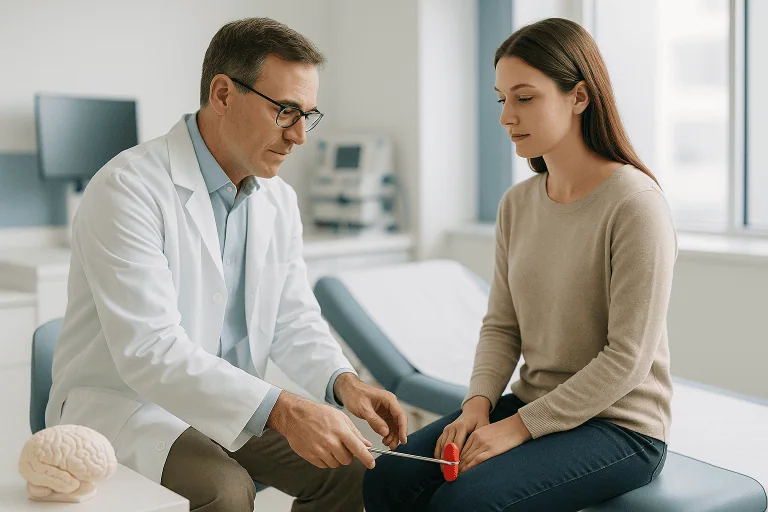
- Medical history and neurological examination. The doctor asks about symptoms, how they began, and how they have changed, and examines muscle strength, reflexes, muscle tone, coordination, and speech. ALS characteristically shows signs of damage to both upper motor neurons (nerve cells in the brain, causing stiffness and overactive reflexes) and lower motor neurons (nerve cells in the spinal cord and brainstem, causing weakness, wasting, and twitching).
- Electromyography (EMG). This test uses a thin needle electrode inserted into muscles to record their electrical activity. It is one of the most important tests for ALS, because it can detect signs of nerve damage in muscles, sometimes even in areas that do not yet feel weak.
- Nerve conduction studies. Small electrical pulses are applied to nerves to measure how well they carry signals. These studies help distinguish ALS from other nerve conditions that can be treated differently.
- Magnetic resonance imaging (MRI). An MRI scan of the brain and spinal cord does not show ALS itself, but it helps rule out other causes of similar symptoms, such as a spinal cord tumor, a herniated disc pressing on nerves, or multiple sclerosis.
- Blood and urine tests. These are used to exclude other conditions, such as thyroid disease, vitamin deficiencies, infections, or immune-related nerve disorders.
- Genetic testing. In people with a family history of ALS, or in some other situations, testing for known ALS-related gene changes may be offered, usually together with genetic counseling.
- Occasionally, additional tests such as a lumbar puncture (spinal tap, in which a small sample of the fluid around the spinal cord is taken) or a muscle biopsy (removal of a tiny piece of muscle tissue) may be performed if the picture is unclear.
Neurologists often use internationally recognized diagnostic criteria, which require evidence of progressive damage to both upper and lower motor neurons in multiple regions of the body, with other explanations excluded. Because the diagnosis carries serious implications, many people seek a second neurological opinion, and doctors generally consider this reasonable.
Treatment options for amyotrophic lateral sclerosis
At present, there is no cure for ALS, and no treatment can reverse the damage to motor neurons. However, amyotrophic lateral sclerosis treatment can slow the progression of the disease in some cases, relieve symptoms, prevent complications, and help people maintain independence and comfort for as long as possible. Care is usually coordinated by a multidisciplinary team, which may include neurologists, pulmonologists (lung specialists), physical and occupational therapists, speech and language therapists, dietitians, psychologists, and palliative care specialists. In hospital groups such as Acibadem, this coordinated care is typically organized through the neurology department.
Medications
A small number of medications have been approved in various countries to modify the course of ALS. Riluzole, taken as a tablet or liquid, is thought to reduce damage to motor neurons and may modestly extend survival. Edaravone, given by intravenous infusion or in oral form where available, may slow the decline in daily functioning in some people. Availability of these and newer medicines varies by country, and your doctor can explain which options apply in your situation. In addition, many medications are used to manage individual symptoms, such as muscle cramps, stiffness (spasticity), excess saliva, pain, sleep problems, anxiety, depression, and pseudobulbar affect.
Breathing support
Because ALS weakens the breathing muscles over time, respiratory care is a central part of treatment. Doctors monitor breathing function regularly. Non-invasive ventilationa machine that supports breathing through a mask, often used at night at first, can improve sleep, energy, and quality of life, and in many cases is associated with longer survival. In later stages, some people consider invasive ventilation through a tracheostomy, a surgical opening in the windpipe. This is a deeply personal decision that doctors discuss carefully with patients and families, ideally well in advance.
Nutrition and swallowing support
When swallowing becomes difficult, dietitians and speech therapists can suggest changes in food texture and eating techniques. If eating by mouth becomes unsafe or insufficient, a feeding tube (often a percutaneous endoscopic gastrostomy, or PEG tube, placed through the skin into the stomach in a minor procedure) can help maintain nutrition and hydration and reduce the risk of food entering the lungs.
Rehabilitation and supportive therapies
Physical therapy helps maintain flexibility, manage cramps and stiffness, and preserve mobility for as long as possible. Occupational therapy focuses on tools and adaptations, such as braces, wheelchairs, and home modifications, that support daily activities. Speech therapy helps with communication; when speech becomes difficult, communication devices, including eye-tracking technology, can allow people to continue expressing themselves. Psychological support and counseling are important for both patients and caregivers.
What treatment cannot do
It is honest to say that no current medication, supplement, procedure, or surgery can cure ALS or restore lost muscle function. Watchful waiting alone is generally not recommended once ALS is diagnosed, because early supportive care, particularly breathing and nutrition support, can meaningfully affect comfort and, in many cases, survival. Patients should be cautious about unproven remedies promoted as cures. Participation in properly regulated clinical trials, where available, is a legitimate option that your neurologist can discuss with you.
Living with amyotrophic lateral sclerosis and outlook
ALS is a life-shortening disease, and it is natural to want clear answers about the future. The honest answer is that the course of the disease varies considerably from person to person. Many people live for several years after diagnosis, some live considerably longer, and a smaller number experience slower progression over a decade or more. Factors such as age at onset, where symptoms begin, breathing function, nutrition, and access to multidisciplinary care can all influence the course, but no doctor can predict an individual’s timeline with certainty.
Living well with ALS usually means planning ahead while focusing on what remains possible. Practical steps that many care teams recommend include attending a specialized multidisciplinary clinic regularly, addressing breathing and nutrition proactively rather than waiting for a crisis, arranging home adaptations early, and discussing preferences for future care, including decisions about ventilation and feeding tubes, while communication is still easy. Emotional support matters greatly: depression and anxiety are common and treatable, and caregivers also need support, respite, and information. Patient organizations in many countries offer equipment loans, peer support, and guidance for families.
Research into ALS is active worldwide, including work on genetics, new medications, and gene-targeted therapies for specific inherited forms. While no one can promise when these efforts will change outcomes, treatment options today are broader than they were in the past, and supportive care has measurably improved quality of life for many people.
Frequently asked questions
What is amyotrophic lateral sclerosis in simple terms?
Amyotrophic lateral sclerosis is a disease in which the nerve cells that control voluntary muscles gradually stop working and die. Without nerve signals, the muscles weaken and waste away over time, affecting movement, speech, swallowing, and eventually breathing. It is also known as ALS, motor neuron disease, or Lou Gehrig’s disease.
Can amyotrophic lateral sclerosis be cured or reversed?
No cure currently exists, and lost nerve and muscle function cannot be restored with today’s treatments. However, approved medications may slow progression in some people, and supportive care, including breathing support, nutrition support, and rehabilitation, can relieve symptoms and improve quality of life. Anyone promising a cure for ALS should be treated with great caution.
What are the first symptoms of amyotrophic lateral sclerosis?
Early amyotrophic lateral sclerosis symptoms are often subtle: weakness in one hand or foot, frequent tripping, dropping objects, muscle twitching, cramps, or slightly slurred speech. Because these signs can also be caused by many less serious conditions, a careful neurological evaluation is needed before any conclusions are drawn.
How serious is ALS, and how long do people live with it?
ALS is a serious, progressive, life-shortening condition. Survival varies widely: many people live several years after diagnosis, and some live much longer, particularly with proactive breathing and nutrition care. Doctors avoid giving exact predictions because the disease behaves differently in each person.
Is amyotrophic lateral sclerosis hereditary?
Most cases are sporadic, meaning they occur without a family history. A smaller portion of cases are familial, caused by inherited gene changes. If ALS runs in your family, a neurologist or genetic counselor can discuss whether genetic testing is appropriate and what the results would mean for you and your relatives.
How is amyotrophic lateral sclerosis diagnosed?
There is no single confirmatory test. Diagnosis relies on a neurological examination showing progressive damage to the motor neurons, supported by electromyography (a needle test of muscle electrical activity), nerve conduction studies, MRI scans, and blood tests to rule out other conditions. The process can take time, and a second opinion is often reasonable.
Does ALS affect thinking, memory, or the senses?
In most people, the senses, sight, hearing, touch, taste, and smell, remain intact, and bladder and bowel control are usually preserved. Thinking is unaffected in many people, but some develop changes in behavior, language, or judgment, and a portion develop frontotemporal dementia, a related brain condition. Care teams monitor for these changes and can help families manage them.
When to see a doctor
You should arrange a medical evaluation if you notice persistent, unexplained muscle weakness, frequent tripping or falling, ongoing muscle twitching combined with weakness, slurred speech, or increasing difficulty swallowing. These symptoms have many possible causes, most of which are not ALS, but they deserve prompt assessment by a doctor, ideally a neurologist.
Seek urgent medical attention if you or a person with ALS experiences any of the following red-flag warning signs:
- Sudden or worsening shortness of breath, especially when lying flat, or waking at night gasping for air
- Repeated choking during meals, or coughing and wetness in the voice after eating or drinking
- Signs of a chest infection, such as fever, increased mucus, or new difficulty breathing, pneumonia can develop quickly when swallowing and breathing muscles are weak
- Rapid, unexplained weight loss or signs of dehydration, such as dizziness and reduced urination
- A fall with injury, or a sudden loss of the ability to move safely at home
- Severe morning headaches, excessive daytime sleepiness, or confusion, which can signal that breathing during sleep is inadequate
- New or worsening depression, hopelessness, or thoughts of self-harmemotional distress is treatable and should never be faced alone
People already diagnosed with amyotrophic lateral sclerosis should keep regular follow-up appointments with their neurology team, since timely adjustments to breathing support, nutrition, and symptom management can prevent complications and preserve quality of life.
Medically reviewed by the Acıbadem International Medical Board September 3, 2026
See our medical review board →
Update history
- PublishedJune 8, 2026
- Medical review approvedSeptember 3, 2026
- Last content updateSeptember 2, 2026