

Bobath Neurodevelopmental Treatment Between Sessions: The Daily Home Program and Positioning

Key Takeaways
- The AHA/ASA stroke rehabilitation guideline found no evidence that Bobath (NDT) outperforms other active approaches, so a home program should be judged by its practice content, not its label.
- A 2020 systematic review of cerebral palsy interventions rated goal-directed, task-specific training above traditional NDT for motor outcomes, which is why play-based practice in real tasks matters more than drills.
- The weak shoulder after stroke is prone to painful partial dislocation, and the AHA guideline specifically advises against overhead pulley exercises and against pulling on the arm during transfers.
- Lying on the weaker side, with the shoulder blade eased forward, is a core Bobath position because body weight gives the brain pressure and touch information from the side it may be ignoring.
- Learned non-use, the habit of relying on the stronger hand, compounds the original injury; embedding the weaker side into tasks that must be done anyway interrupts it several times a day.
- NHS guidance notes the fastest stroke recovery tends to occur in the first months, with slower gains continuing afterward, so a plateau is a signal to review the program, not to stop it.
A Bobath home program is the between-session part of neurodevelopmental treatment: positioning, handling and short bouts of task practice that a therapist designs for a specific person after a stroke, brain injury or cerebral palsy. Research suggests the amount and relevance of daily practice drives motor gains more than any single technique, so the home program is where much of the work happens, always under the treating team's guidance.
The therapist’s car pulls away and the house goes quiet. On the dining table sits a folded sheet of stick-figure drawings: how to lie her husband on his weaker side, how to prop the arm he no longer feels, which chair to use at breakfast. Forty-five minutes of skilled, hands-on treatment have just ended. The next 167 hours of the week belong to the family.
That gap is exactly what a bobath home program is designed to fill. Bobath, also called neurodevelopmental treatment or NDT, is a hands-on rehabilitation approach for people whose movement has changed after damage to the brain. Its founders argued that treatment could not be confined to a session; how a person sits, lies, reaches and is helped across the whole day shapes what the nervous system learns.
The idea sounds obvious. Doing it well, and knowing what the evidence actually supports, is harder than the drawings make it look.
What a Bobath home program actually is and how it is supposed to work
Bobath, or neurodevelopmental treatment (NDT), is a problem-solving approach to movement after brain injury, built around hands-on guidance and careful positioning rather than a fixed set of exercises. A therapist assesses how a person’s trunk, limbs and balance behave, then uses touch, alignment and task set-ups to make more efficient movement possible. The home program is the written and demonstrated version of that plan for the hours between visits.
Two concepts sit underneath it. The first is tone, meaning the resting tension in a muscle. After a stroke or in cerebral palsy, tone can be too high (spasticity, a velocity-dependent stiffness) or too low, and often both in different body parts. The second is alignment: where the pelvis, ribcage, shoulder blade and head sit relative to each other. Bobath practitioners hold that poor alignment feeds abnormal tone and that good alignment gives weaker muscles a fair chance to switch on.
In practice, a home program usually has three strands. Positioning covers how the person lies, sits and is transferred. Handling covers how a caregiver supports a limb or trunk during everyday tasks. Practice covers short, repeated attempts at meaningful movements, such as reaching for a cup with the weaker hand or shifting weight onto the affected leg before standing.
What the plan is not: a generic list downloaded from the internet. Every element is chosen for one person’s pattern of weakness and stiffness. A positioning rule that protects one shoulder can strain another. That specificity is the reason the program should come only from the treating therapist, and why this article describes the approach rather than prescribing moves.
Why the hours between sessions decide more than the session itself
Here is the uncomfortable part, and the most useful. Large reviews have not found that Bobath techniques themselves outperform other active rehabilitation. The American Heart Association and American Stroke Association’s adult stroke rehabilitation guideline concluded that NDT has not been shown to be superior to other approaches and should not be favored over them. A 2020 systematic review of cerebral palsy interventions by Novak and colleagues reached a similar verdict, rating traditional NDT below goal-directed, task-specific training for motor outcomes and recommending those alternatives.
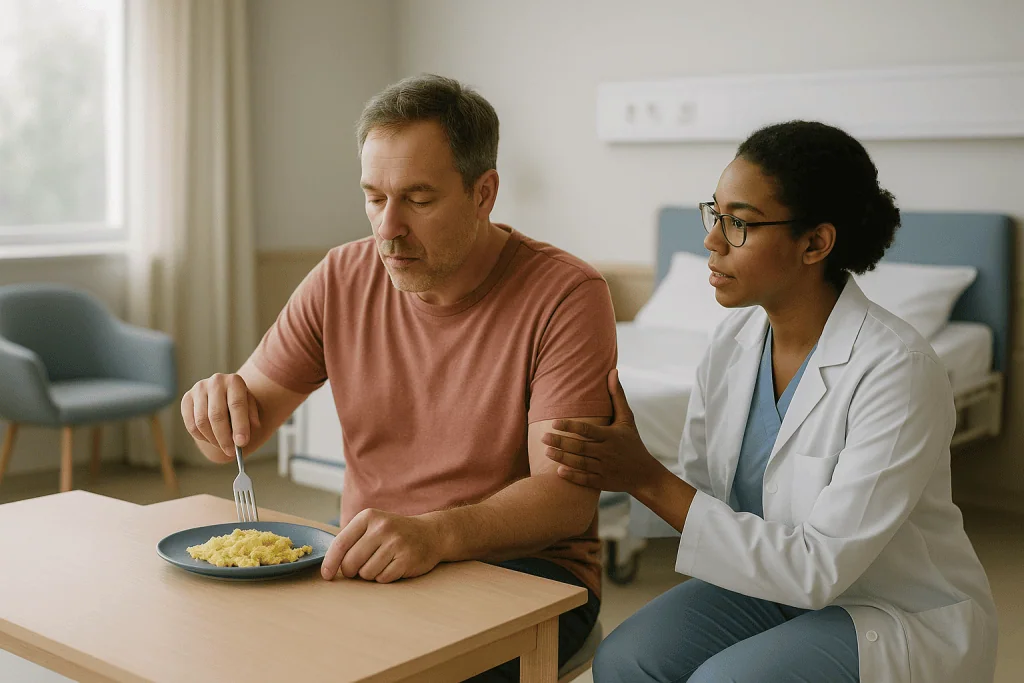
What the same literature does support, strongly, is dose and relevance. Motor recovery after brain injury depends on repetition of movements that matter to the person, practiced in realistic contexts, in volumes no weekly clinic visit can supply. The AHA guideline recommends that rehabilitation be intensive, task-specific and continued into the community, with family training as a core component.
That reframes the home program. If the technique in the clinic is not the magic ingredient, the hours at home are not a supplement; they are the main course. A well-designed bobath home program borrows what is sensible from the approach, especially positioning and caregiver handling, and marries it to the thing the evidence endorses: lots of meaningful, graded practice.
Many contemporary Bobath-trained therapists already work this way, and the label on the plan matters less than its contents. A reasonable test when reading your own sheet: does each item ask the person to attempt a real task, in a position that makes success possible, many times? If it does, the plan reflects current evidence whatever its name.
Who a home program is usually for, and who is asked to wait
Home programs of this kind are most often written for three groups. Adults recovering from stroke, particularly those with hemiparesis (weakness down one side of the body). Adults and children after traumatic or other acquired brain injury. And children with cerebral palsy, the umbrella term for permanent movement disorders caused by injury to the developing brain, where the NHS lists physiotherapy among the core long-term treatments.
What they share is a nervous system that can still change its connections in response to practice, paired with a body that will stiffen and weaken without it. A caregiver who can be taught safely is the third ingredient; without one, the plan has to be redesigned around what the person can do alone.
Some people are asked to wait, or to start with positioning only. Typical reasons include:
- medical instability in the days after a stroke or surgery, before the team has cleared sitting out of bed or weight bearing
- a recent fracture, joint dislocation or unhealed surgical wound on the limb concerned
- new or poorly controlled seizures
- a pressure injury or fragile skin over a bony area the program would load
- acute pain, fever or an infection that has not been assessed
- in children, a recent change to a shunt, feeding tube or orthopedic hardware
Being asked to wait is not a verdict on potential. It usually means the team wants a safe baseline first. In those situations the positioning strand of the program often continues because protecting joints and skin matters at every stage, while active practice resumes when the clinician gives the go-ahead.
Bobath positioning for stroke: lying and sitting through the day
Positioning after stroke has two aims that sometimes compete: protect vulnerable structures, and give the weaker side sensory input so the brain does not quietly abandon it. The second aim explains a Bobath habit that surprises families, encouraging time lying on the affected side.
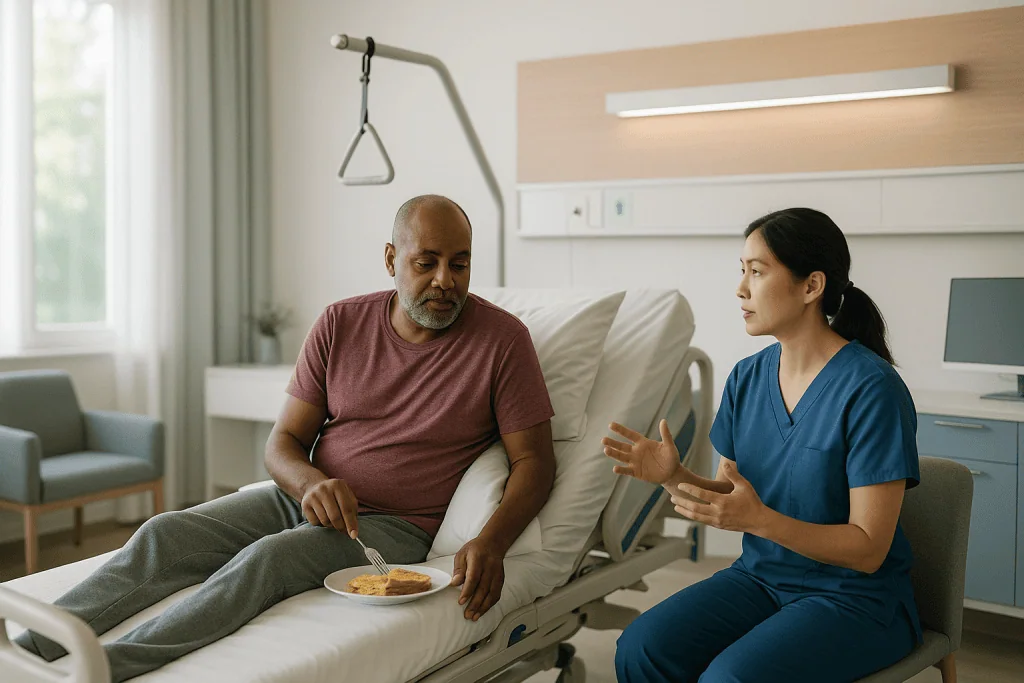
Lying on the weaker side, when the therapist has shown how, lets body weight press through that shoulder and hip, feeding touch and pressure information to a brain that may be ignoring the limb. The shoulder blade is drawn gently forward first so the arm is not trapped underneath. Lying on the stronger side, the weaker arm rests on a pillow in front of the chest and the weaker leg on a pillow, bent, so the pelvis does not roll backward. Lying flat on the back tends to be the least favored position because it encourages the head to fall away from the weaker side and the arm to drop.
Sitting is where most of the day happens, and a slumped posture undoes an hour of therapy in an afternoon. The hips go to the back of the chair, feet flat, weight shared between both buttocks. The weaker forearm rests on a table or pillow at a height that keeps the shoulder from hanging.
The shoulder deserves special caution. After stroke the muscles that hold the upper arm bone in its socket may be too weak to do so, and traction on the arm can cause pain and partial dislocation. The AHA stroke rehabilitation guideline specifically advises against overhead pulley exercises for the affected shoulder and favors positioning and support. The practical rule for families: never pull on the weaker arm to move the person. Hold around the trunk or under the shoulder blade instead, as taught.
A positioning summary table for caregivers
Written instructions are easier to follow when they live on a single page by the bed. The table below summarizes the positions most home programs cover for an adult with one-sided weakness. It is a prompt for conversation with the therapist, not a replacement for being shown in person, because pillow placement changes with the shape of the body, the mattress and the chair.
| Position | What is usually supported | What caregivers watch for |
|---|---|---|
| Lying on the weaker side | Shoulder blade eased forward, arm out in front, top leg on a pillow | Arm trapped under the body; complaints of shoulder pain |
| Lying on the stronger side | Weaker arm on a pillow at chest height, weaker leg bent on a pillow | Pelvis rolling back; arm slipping off the pillow |
| Lying on the back | Pillow under weaker shoulder blade and arm, small roll under weaker hip | Head turned away from weaker side for long periods |
| Sitting in a chair | Hips back, feet flat, forearm on table or pillow | Sliding forward; shoulder hanging; sitting too long without a break |
| Sitting in bed | Upright with pillows behind the trunk, not the head alone | Slumping; pressure on the tailbone |
Two principles run through every row. First, change position regularly; the therapist or nurse will set the interval, since skin tolerance varies and the stroke rehabilitation guideline treats pressure injury prevention as a standing priority. Second, the weaker side should be the side the world comes from. Place the bedside table, the television and the visitor’s chair so the person looks and reaches toward the affected side. In Bobath terms this counters neglect of that side; in plain terms it keeps half the body in the conversation.
Positioning for a child with cerebral palsy: the 24-hour approach
For children, therapists often talk about 24-hour postural management, meaning that every position across a day and night is planned, not just the therapy half hour. A growing skeleton responds to the forces placed on it. A child who spends years sitting with the pelvis tilted and one hip pulled inward can develop hip displacement and spinal curvature, and the NHS notes that physiotherapy in cerebral palsy aims partly to prevent muscles from shortening and losing their range.
The home strand usually includes several elements. Floor time in varied positions: on the tummy over a small roll, side-lying with a support behind the back, supported sitting with the pelvis level. Equipment prescribed by the team, which may include a corner seat, a standing frame or night-time sleep positioning, each introduced for a specific purpose and reviewed as the child grows. And handling during routines: how to lift, how to carry so the child’s legs are apart rather than scissored, how to position for feeding so the head is in midline and the chin slightly down.
Play is the practice. A Bobath therapist is less interested in a child doing a drill than in a child reaching across the midline for a toy while weight-bearing through a propped arm, because that single act works trunk rotation, shoulder stability and hand opening at once. Parents are shown how to place toys so the movement the child needs is the movement that gets the reward.
Standing frames and orthoses (braces that hold a joint in alignment) are prescribed items with individual schedules, and families should follow the team’s instructions rather than general advice. Comfort is the safety signal; a child who protests consistently in a device needs a review, not persistence.
Bobath exercises at home: what a daily program usually includes
Families searching for bobath exercises at home often expect a workout sheet. What a good program contains is closer to a set of problems to solve, each tied to a goal the person has named. The categories below recur across adult and pediatric plans; the specifics belong to the therapist.
Weight bearing through the affected limbs. Standing at a counter with weight shifted onto the weaker leg, or sitting with the weaker hand propped on the bed and leaning onto it, gives the nervous system joint and pressure information and asks stabilizing muscles to work. Trunk control. Sitting on the edge of a firm bed and reaching to the side, forward and down, without using the stronger hand for support, trains the core that every other movement rests on. Sit-to-stand. Rising from a chair with both feet planted and weight shared is one of the most practiced tasks in rehabilitation because it is used dozens of times a day and recruits the whole body. Reaching and grasping with the weaker hand. Objects chosen for size and weight, placed where the shoulder blade has to move, repeated.
Repetition counts, but so does the set-up. A Bobath therapist will often have the caregiver stabilize one part, perhaps the shoulder blade or the pelvis, so the person can practice the moving part successfully. The aim is not to do the task for them. It is to remove the one obstacle that would otherwise force a compensation, such as hitching the whole shoulder to lift the arm.
Programs are short on purpose. Several bursts of focused practice spread through the day are easier to sustain and are consistent with the task-specific, higher-dose approach the stroke rehabilitation guideline recommends.
Neurodevelopmental treatment at home: weaving practice into ordinary routines
The most durable home programs barely look like therapy. Brushing teeth becomes standing practice at the sink with weight on the weaker leg. Folding laundry becomes bilateral reaching. Setting the table becomes a dozen grasps and releases with the hand that would otherwise stay in a lap. This is the version of neurodevelopmental treatment at home that survives contact with real life, because it does not ask a tired family to find an extra hour.
There is a mechanism behind the habit, not just convenience. After a stroke, people quickly learn that the stronger hand is faster and more reliable, and the weaker one gets used less and less. Rehabilitation researchers call this learned non-use, and it compounds the original damage. Building the weaker side into tasks that must be done anyway interrupts the pattern several times a day.
A few practical patterns therapists commonly suggest:
- Decide in advance which daily tasks will involve the weaker side, and keep the list short enough to actually happen.
- Set the environment so the right movement is the easy one: the cup on the weaker side, the light switch reached with the weaker hand.
- Allow extra time. Slow, aligned movement teaches more than fast, compensated movement.
- Stop a task before quality collapses into struggle; a repeated bad pattern is also practice.
For children, the same logic applies to play, dressing and mealtimes. A child who is helped to pull a sock over a foot while sitting with a level pelvis is working on balance, hip control and hand use, and does not need to know it. The therapist’s job at each visit is to adjust these routines as abilities change, which is why reporting what actually happened at home, including what did not get done, is more useful than reporting what the sheet said.
Handling: what caregivers are taught to do, and what to avoid
Handling is the hands-on part of Bobath, and it is where families feel most anxious. The underlying principle is simple: your hands should make the person’s own movement easier, not do the movement for them, and they should never produce pain.
Caregivers are usually taught a small number of key points, places on the body where a steady hand changes how the whole limb behaves. The shoulder blade is one; guiding it to glide forward and up as the arm reaches can free a shoulder that otherwise jams. The pelvis is another; a hand that keeps the hips level while someone stands can prevent the trunk from collapsing sideways. The therapist demonstrates, the caregiver copies with the therapist’s hands over theirs, and only then does it enter the home plan.
Equally important is what to avoid. Pulling on a weak arm during a transfer, as discussed, risks shoulder injury. Lifting under the armpits is another common error because it drags the shoulder joint upward. Forcing a stiff limb through a stretch until it gives way can tear tissue and provoke more spasticity. The AHA stroke rehabilitation guideline is cautious about aggressive stretching of spastic muscles and emphasizes positioning and functional practice instead.
Caregivers need protecting too. Back injury among family carers is common, and a plan that requires lifting beyond what one person can safely do needs equipment, a hoist or a second helper, not heroics. If a transfer feels frightening, say so; the therapist can change the method.
Finally, handling is scaffolding, meant to be removed. A good program includes a plan for withdrawing hands as control improves. If the same amount of support is still needed months later, that is worth raising at the next review rather than accepting as permanent.
What the first weeks of a home program usually look like
The opening weeks are often messier than families expect. Positions that look simple on paper take several attempts to get right. Pillows migrate. The person with the stroke may be irritated at being turned, or a child may cry at a new standing frame. Fatigue is real; brain injury raises the energy cost of every movement, and even short practice can leave someone needing a nap.
Mild muscle soreness after new practice is common and not alarming. Sharp joint pain, especially in the shoulder, is not expected and should be reported. Skin should be checked at each position change for redness that does not fade within a short time after pressure is relieved, which is an early pressure injury sign.
On timing, the NHS stroke recovery guidance notes that the fastest improvement tends to occur in the first months after a stroke, while recovery can continue, more slowly, for a long time afterward, and that rehabilitation is a long-term process rather than a short course. Families often find the early weeks encouraging and the later plateau discouraging; both are typical patterns, and neither predicts an individual’s ceiling.
For children with cerebral palsy, the timeline is measured in growth rather than recovery. Positioning and equipment are reviewed as the child gets taller and heavier, and goals shift from head control to sitting to transfers and school tasks over years. The NHS describes treatment as ongoing and adjusted to the child’s changing needs.
Expect the program to change. If the sheet from the first visit is still the sheet six weeks later, ask why. Static programs usually mean either the person has stopped progressing, which warrants review, or the team has not been told what is happening at home.
Spasticity, pain and skin: what to watch for between visits
Spasticity, the velocity-dependent stiffness that often develops in the weeks after a stroke or is present from early childhood in some forms of cerebral palsy, is the complication most likely to reshape a home program. It tends to pull the elbow, wrist and fingers into flexion and the ankle into pointing, and over time can lead to contracture, a permanent shortening of muscle and connective tissue.
Positioning is the first line against contracture, which is why therapists are so insistent about it. Keeping a joint through its range during everyday tasks, and resting it in a lengthened rather than curled position, maintains tissue length. Splints and orthoses may be prescribed for specific joints with individual wearing schedules; they are not a universal remedy, and the stroke rehabilitation guideline does not support routine resting hand splints for everyone.
Medicines sit alongside, not instead of, the home program. Oral antispasticity agents act on the spinal cord or muscle to reduce the reflex drive behind stiffness, with a trade-off of drowsiness or weakness in some people. Botulinum toxin injections temporarily block the signal between nerve and muscle in selected muscles, with effects that build over days and fade over months, which is why they are usually paired with a window of intensive practice and positioning. Whether, when and which of these are appropriate is a decision for the prescribing clinician, informed by what the family reports about function at home.
Pain changes everything about participation. A painful shoulder, a sore hip in a child, a pressure area on the sacrum: each will make the person resist positioning, and resistance looks like spasticity. Report pain early. It is far easier to adjust a program than to rebuild trust after weeks of forcing it.
What people often get wrong about Bobath and home programs
Myth: more stretching means less stiffness. Prolonged forceful stretching of a spastic muscle has little evidence behind it and can cause pain; positioning, functional use and, where appropriate, medical management of spasticity are better supported. Myth: the weaker side should be protected by resting it. Resting a limb teaches the brain to ignore it. Protection means supporting it well, then using it.
Myth: Bobath is the proven gold standard. It is not, and that honesty matters. Both the AHA stroke rehabilitation guideline and the 2020 cerebral palsy systematic review concluded that traditional NDT is not superior to, and in the pediatric review was outperformed by, goal-directed and task-specific training. The useful response is not to abandon a therapist you trust but to make sure the home plan is built around meaningful practice rather than hands-on correction alone.
Myth: if the exercise is not done exactly as drawn, it does not count. Imperfect practice embedded in daily life beats perfect practice that never happens. Myth: a child who is not walking by a particular age has missed the window. Development in cerebral palsy follows its own trajectory, and goals around sitting, communication and independence in self-care are legitimate outcomes in their own right.
Myth: online videos can substitute for the therapist’s plan. A technique that is right for one shoulder is wrong for another, and the people in videos cannot see your family member. Myth: the caregiver’s job is to be a second therapist. The caregiver’s job is to make the home a place where good movement is the easy choice, to report what happens, and to stay well enough to keep going.
Questions to ask your care team about the home program
A home program works best when the family understands the reasoning, not just the instructions. These questions tend to produce the most useful answers at a therapy review or follow-up appointment.
- Which two or three goals is this program built around, in the person’s own words, and how will we know if we are moving toward them?
- Which parts are positioning for protection, and which are active practice? If time is short, which should we never skip?
- How often should positions be changed, and how do we check skin at each change?
- What should the shoulder (or hip, in a child) feel like during each task, and what sensation means stop?
- Which transfers can one person do safely, and which need two people or equipment?
- How will the program change as ability improves, and when is the next review?
- Is spasticity being assessed, and who decides whether medical treatment for it should be considered alongside the program?
- For a child: how will equipment be reviewed as they grow, and what should we do if they consistently refuse a device?
- What should we record between visits so you can adjust the plan: practice done, pain, falls, skin changes, mood?
- Who do we call for a non-urgent question, and who for an urgent one?
Write the answers on the same sheet as the drawings. The plan that lives on one page, in the kitchen, in language the whole household understands, is the plan that gets done.
When to call your doctor: red-flag signs during a home program
Most problems in a home program are matters for the therapist at the next visit: a position that is not working, a task that has become too easy or too hard. Some are not. Contact the care team promptly, or seek emergency care, for the following.
Seek emergency help immediately for signs of a new stroke or neurological event: sudden facial drooping, new weakness or numbness in a limb, sudden confusion or difficulty speaking, sudden severe headache, or a seizure in someone not known to have them. Also seek urgent care for a hot, swollen, painful calf or sudden breathlessness and chest pain, which can signal a blood clot in the leg or lung; people with reduced mobility after stroke are at raised risk, and the stroke rehabilitation guideline treats clot prevention as a priority.
Contact the doctor or team the same day for:
- a fall, even without obvious injury, especially with a head strike or new pain
- a shoulder, hip or other joint that is suddenly painful, deformed or will not move
- skin redness over a bony area that does not fade, or any open area or blister
- new or sharply worsening spasticity, which can signal pain, infection, constipation or another trigger
- fever, a wound that looks infected, or new pain around a tube, shunt or orthopedic hardware in a child
- a child who is persistently inconsolable in positioning equipment or has stopped tolerating positions they previously accepted
- new low mood, withdrawal or refusal to participate, in adult or child, which deserves attention rather than persuasion
Every decision about continuing, pausing or changing the program sits with the treating team. The family’s role is to notice early and say so.
Frequently asked questions
What is a Bobath home program?
A Bobath home program is the between-visit part of neurodevelopmental treatment: a therapist-designed plan of positioning, caregiver handling and short practice tasks for someone with movement changes after stroke, brain injury or cerebral palsy. It is written for one individual’s pattern of weakness and stiffness, demonstrated in person, and adjusted at each review. It should never be assembled from generic online exercises.
Is an NDT home exercise program effective?
The honest answer is that the techniques unique to NDT have not been shown to beat other active approaches in major reviews, including the AHA stroke rehabilitation guideline and a 2020 cerebral palsy systematic review. What does carry evidence is a high volume of meaningful, task-specific practice. A home program built around that, whatever its name, reflects current evidence; one built only on hands-on correction does not.
How should I position someone after a stroke at home?
Follow the positions your therapist demonstrated, usually time on both sides and well-supported sitting with the weaker forearm resting on a surface. Never pull on the weaker arm or lift under the armpits. Change position regularly on the schedule the team sets, and check skin over bony areas each time. Arrange the room so the person looks and reaches toward the weaker side.
Can I do Bobath exercises at home without a therapist?
Positioning and practice tasks should come from a therapist who has assessed the person, because the right technique for one shoulder or hip can harm another. Once taught, families carry out the plan independently between visits; that is the point of it. Keep notes on what was done, any pain and anything that felt unsafe, and bring them to the next session so the plan can be adjusted.
How many times a day should the home program be done?
There is no universal number; the treating therapist sets frequency based on the person’s fatigue, goals and medical status. Guidelines favor more total practice spread through the day over a single long session, so several short bursts woven into routines such as meals, dressing and play are a common pattern. Positioning, by contrast, applies all day and night and is scheduled around skin tolerance.
Why does the therapist want my husband to lie on his weak side?
Lying on the affected side lets body weight press through that shoulder and hip, sending pressure and touch information to a brain that may be neglecting the limb. It also gently lengthens muscles that tend to tighten and keeps the weaker side part of the person’s awareness. The shoulder blade is eased forward first so the arm is not trapped; if it causes pain, stop and report it.
What is 24-hour postural management for a child with cerebral palsy?
It is the planning of every position a child spends time in across a full day and night, including floor play, seating, standing frames and sleep positioning, so that the growing skeleton is loaded in alignment. The aim is to maintain muscle length and reduce the risk of hip displacement and spinal curvature. Equipment is prescribed individually and reviewed as the child grows.
Should we stretch stiff muscles every day?
Gentle movement through available range during everyday tasks is part of most programs, but prolonged, forceful stretching of a spastic muscle is not well supported and can cause pain or increase stiffness. Positioning that rests joints in a lengthened rather than curled position, functional use of the limb and, where the prescribing clinician judges appropriate, medical treatment of spasticity are better-supported strategies. Ask your therapist which applies.
What does Bobath positioning for stroke do for the shoulder?
After stroke the muscles that hold the upper arm bone in its socket may be too weak to do so, and gravity or traction can pull the joint partly out, causing pain. Positioning supports the arm on a pillow or table so the shoulder does not hang, keeps the shoulder blade mobile, and avoids any pulling. The AHA guideline advises against overhead pulleys for this reason.
When should we stop and call the doctor during home practice?
Stop and seek emergency care for sudden new weakness, facial droop, speech difficulty, severe headache or a seizure, and for a hot swollen calf or sudden breathlessness. Contact the team the same day after any fall, a suddenly painful or deformed joint, skin redness that does not fade, a sharp rise in spasticity, fever, or a child who no longer tolerates positions they previously accepted.
References
This article is for general information only and is not a substitute for professional medical advice. Please consult a qualified doctor about your individual situation.

More from the Blog

What Is Physiotherapy? What Physiotherapists Actually Do, Session by Session
Physiotherapy (called physical therapy in the United States) is a regulated health profession that restores movement, strength, and everyday function after injury, surgery, or…

When Does a Sports Injury Need Supervised Rehabilitation Rather Than Rest Alone?
A sports injury usually needs supervised rehabilitation rather than rest alone when pain, swelling or weakness has not clearly improved after about two weeks…

Gait Training and Gait Analysis: Relearning to Walk, Properly
Gait training is supervised, task-specific physical therapy that rebuilds a safe, efficient walking pattern after injury, surgery, stroke, or a neurological condition. Gait analysis…

What to Bring to Your First Therapeutic Exercise Session: Reports, Restrictions and Shoes
For a first therapeutic exercise session, bring any imaging or surgical reports, a written list of your current medicines and health conditions, and any…

Dry Needling: What It Is, What It Helps, What the Evidence Says
Dry needling is a technique in which a trained clinician inserts thin, solid filament needles into tight, tender bands of muscle called trigger points,…

What a Rehabilitation Robot Actually Does: Guided Repetition for Legs, Arms and Balance
A rehabilitation robot is a motorized, sensor-equipped device that supports a person's leg, arm or trunk while they practice walking, reaching or balancing. It…