

Can a Beard Transplant Cover Scars or Burned Skin? How Surgeons Test the Area Before Grafting
Key Takeaways
- Scar tissue contains no hair follicles of its own, so any hair that appears in a scar after a beard transplant is transplanted hair surviving on the scar's limited blood supply.
- Surgeons judge a scar's readiness with simple hands-on tests: how quickly colour returns after pressing (blanching), whether the skin lifts and glides (pinch and mobility), and how much depth exists to seat a follicle.
- Full-thickness burns destroy follicles permanently, and very thin split-thickness skin grafts may be too shallow to hold a graft, which is why burned skin is treated with the most caution.
- Transplanted hairs usually shed around 2–6 weeks after surgery before regrowing, so a test patch in scar tissue cannot be read until several months have passed.
- Keloids, which grow beyond the original wound and can be provoked by surgical cuts, are generally regarded as a reason not to graft and a reason to review the whole plan.
- Softening a scar's edge requires far fewer surviving grafts than hiding it completely, and surgeons often plan staged sessions at lower density rather than full cover in one visit.
A beard transplant over scars or burned skin is sometimes possible, but graft survival depends on blood supply, scar thickness and skin movement, all of which are reduced in scar tissue. Surgeons usually assess the area first, often by testing how the skin blanches, stretches and pinches, and many place a small test graft and wait several months before committing to a full session.
He keeps his chin tilted a little to the left in photos. A cycling accident at nineteen left a pale, hairless strip along his jaw, and the beard he grew to hide it does the opposite: the gap sits inside it like a path through a field. Now in his thirties, he has one question for the surgeon he has booked to see, and it is not about cost or timing. It is whether anything will grow there at all.
People asking about a beard transplant over scars tend to have lived with the mark for years, long enough to have tried concealers, pencils and a dozen styles. The honest answer is more interesting than a plain yes or no. Scar tissue is not simply skin that looks different; it behaves differently, and the surgeon’s job before any graft is placed is to find out exactly how.
That assessment, more than any technique, decides what happens next.
What a beard transplant over scars actually involves
A beard transplant moves living hair follicles from one part of the body, usually the back or sides of the scalp, into the face. A follicle is the small pocket of skin and cells that produces a single hair. In the most common modern technique, follicular unit extraction (FUE), each follicle or small group of follicles is removed individually with a fine punch, kept cool and moist, then placed into tiny incisions made at the angle a beard hair would naturally grow. The older strip method (FUT) removes a narrow band of scalp skin and divides it under magnification into the same small units.
When the destination is healthy facial skin, the transplanted follicle lands in tissue with a dense network of capillaries, the smallest blood vessels, which reconnect to the graft within days. The follicle is then nourished the way it was on the scalp. Over scar tissue, that same follicle is being asked to survive in ground that has already been injured once and healed by laying down collagen rather than by regrowing its original architecture.
So the procedure itself is not different in its mechanics; what changes is the preparation. According to Mayo Clinic, a hair transplant moves hair the patient already has to fill an area that has thin or no hair, and the operation can take several hours for larger areas. On scarred skin, surgeons usually work at lower density, spread the sessions out, and spend far more time deciding whether the surface can support grafts at all. The question in the title is really two questions stacked together: can hair live in this scar, and how would anyone know before trying.
Why scar tissue is a harder surface than normal skin
Picture the skin on an unmarked cheek as a well-irrigated garden bed. Below the surface, the dermis holds a loose weave of collagen, elastic fibres, sweat glands, nerves and, crucially, a dense mesh of small blood vessels feeding every follicle. A scar replaces that weave with tightly packed collagen laid down in parallel bundles. MedlinePlus describes a scar as the fibrous tissue that forms when the body repairs a wound, and notes that scar tissue lacks the hair follicles, sweat glands and pigment cells of the skin it replaced.
Three consequences follow for anyone considering grafting into it. First, blood supply is thinner and less evenly spread, so a graft placed in one spot may thrive while its neighbour a few millimetres away starves. Second, the tissue is stiffer; it does not give when a tiny incision is made, which makes the surgeon’s slit either too tight (crushing the graft) or prone to tearing. Third, the scar may be anchored to the muscle or bone beneath it, so the skin does not glide. Jaw movement then tugs on fresh grafts every time the person speaks or chews.
The thickness of the scar matters too. A thin, flat, mature scar often sits closer to normal skin in its behaviour. A raised, firm one has more collagen and fewer vessels per cubic millimetre. A sunken scar may have so little dermis left that there is nowhere to seat a follicle at the right depth. None of these are absolute barriers, but each one is a reason the surgeon will spend the first appointment examining the surface with their fingertips rather than discussing graft numbers.
Can a beard transplant cover scars? What the evidence actually shows
The honest position is that mainstream patient-facing sources cover hair transplantation into scalp baldness in detail, while transplantation into facial scars sits in a thinner body of surgical case series rather than large controlled trials. Mayo Clinic’s overview confirms that hair transplants are used for hair loss from injury and burns as well as pattern baldness, which establishes that the concept is accepted practice. What it does not do, and what no reputable source does, is offer a survival percentage that applies to every scar on every face.
That is because the outcome is driven by the variables described above. A clean surgical scar from a childhood stitch, flat and pale and long settled, tends to be treated in surgical literature as reasonably receptive ground. A wide burn scar with a skin graft on top is a different proposition. Reports in the published literature describe lower and less predictable graft take in heavily scarred and grafted skin, and surgeons commonly plan for a second or third session to build density gradually rather than aiming for full cover in one go.
It helps to separate two goals. Covering a scar means growing enough hair through it that the mark disappears into the surrounding beard. Breaking up a scar means softening the edge so the eye no longer catches on a sharp hairless line. The second goal needs far fewer surviving grafts and is realistic for a much wider range of scars. A good surgeon will ask which outcome the patient is actually after, because that determines whether the scar is a candidate at all and how many sessions a sensible plan contains. Promising full cover before the skin has been tested would be guessing.
Beard transplant on burn scar tissue and skin grafts: the hardest cases
Burned skin asks the most of a graft. MedlinePlus explains that burns are graded by depth: superficial burns affect the outer layer, partial-thickness burns reach into the dermis, and full-thickness burns destroy all layers of the skin, including the structures within it. Hair follicles sit in the deep dermis, so a full-thickness burn removes them entirely, which is why the area is permanently hairless. Any hair that returns must be brought in from elsewhere.
Deep burns on the face are often treated with a skin graft, meaning a thin sheet of skin taken from another part of the body and laid over the burned area to close it. Two kinds exist. A split-thickness graft is very thin and heals with a smooth, shiny, often slightly translucent surface; it has very little dermis of its own. A full-thickness graft is thicker and behaves more like normal skin. For a beard transplant, this distinction is central: a split-thickness graft may simply be too shallow to hold a follicle at the correct depth, and its blood supply arrives from the bed beneath it rather than from within.
Contracture is the other hallmark of burn scarring. As the healing tissue tightens over months, it can pull the lip, the eyelid or the jawline out of alignment. Surgeons generally want contracture to be fully stable, and sometimes surgically released, before any follicles are placed, because a graft bed that is still shifting will not hold new hair reliably. Some teams prepare very thin burn-grafted skin with staged procedures to thicken the bed before considering hair; these are case-by-case decisions and not routine steps, and the evidence for each is at the level of surgical series rather than trials.
How surgeons test the area before grafting
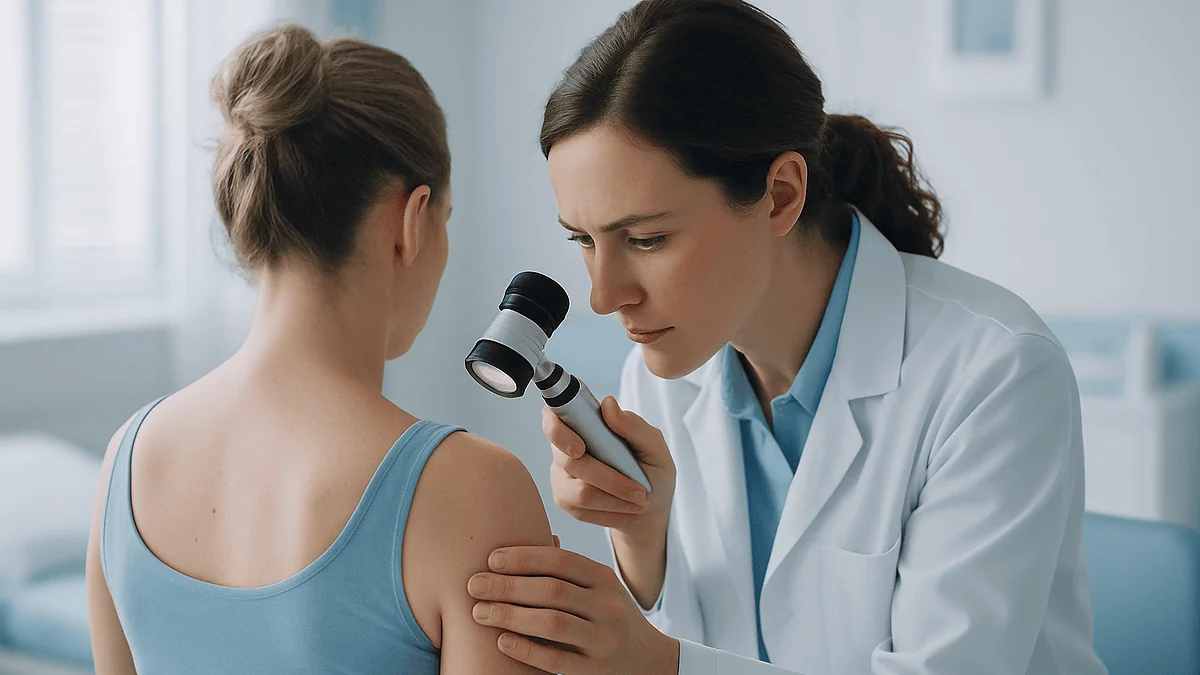
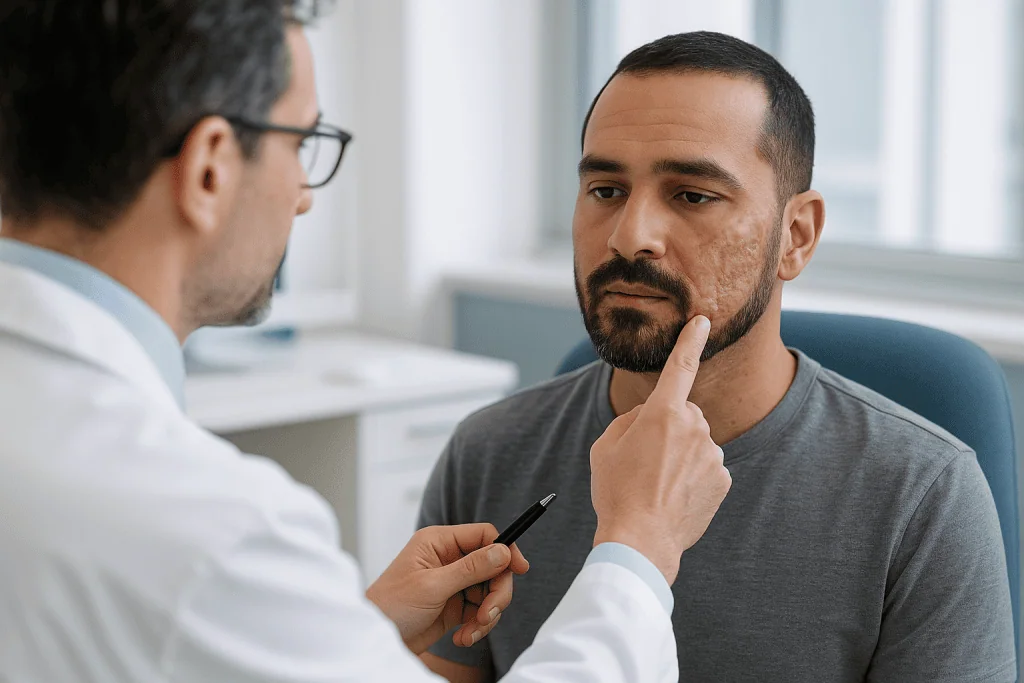
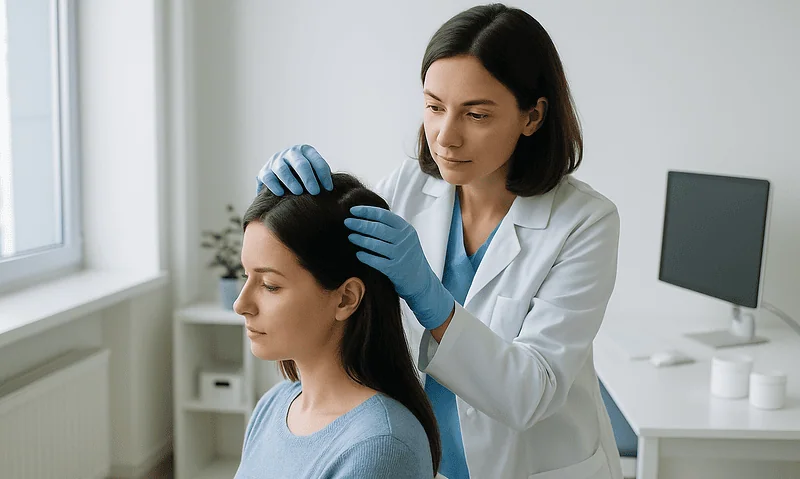
The pre-grafting assessment is low-technology and highly tactile. Most surgeons begin by simply looking, in good light, at the scar’s colour. A scar that is still pink or red is still remodelling and is usually asked to wait. A pale, flat scar that matches the surrounding skin tone has finished changing, which is the state surgeons prefer to work with.
Next comes the blanch test. The surgeon presses a fingertip or a glass slide firmly on the scar for a few seconds, releases, and watches how quickly the colour returns. In well-perfused skin the pink flush comes back almost at once; in a poorly supplied scar it lags, or the surface stays pale. This is a crude but useful proxy for the capillary network a graft would depend on.
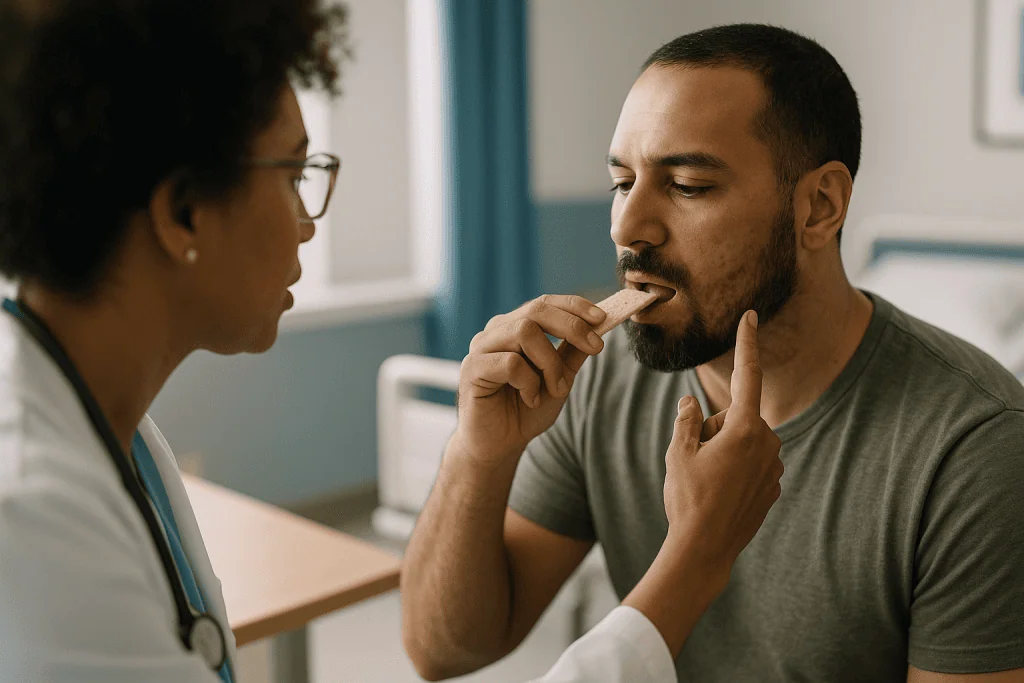
The pinch test follows. Normal facial skin can be lifted gently between finger and thumb into a soft fold that glides over the tissue beneath. Scar that is tethered to muscle or bone will not lift, or lifts as a rigid plate. Mobility matters both for seating the graft and for how much the area will be pulled around during healing. Thickness is judged at the same time: the surgeon rolls the scar between the fingers to estimate how much dermis is present and whether a follicle, which needs several millimetres of depth, has somewhere to sit.
Some surgeons add a handheld Doppler, a small ultrasound probe that detects blood flow as sound, to map where the scar is best supplied. Photographs under standardised lighting record the baseline. Only after these steps does a surgeon usually talk about numbers, and in many practices the first number discussed is the size of a trial patch rather than a full session.
The test graft: why many surgeons start with a small patch
A test graft is exactly what it sounds like. Rather than filling the whole scar, the surgeon places a modest cluster of follicles, often a few dozen, into the part of the scar that assessed best, and then everyone waits. The purpose is to let the scar answer the question directly: can this tissue keep a follicle alive and let it cycle back into growth?
The waiting is unavoidable because of how transplanted hair behaves. According to NHS guidance on hair transplants, the transplanted hairs typically fall out in the first weeks after surgery, roughly 2–6 weeks, before new hair begins to emerge from the surviving follicles some months later. A graft that sheds its hair at week three has not failed; it is doing what grafts do. Judgement is only possible once new shafts have broken the surface and grown long enough to count. Mayo Clinic notes that most people see a meaningful proportion of new growth, around 60%, by 6–9 months after a scalp transplant, and surgeons tend to apply a similar horizon when reading a test patch in scar tissue.
What the surgeon counts at that review is not just how many hairs appeared but where. If the grafts near the scar’s centre failed while those at the edges grew, the map of blood supply becomes clear and the main session is planned around it. If almost nothing grew, the conversation moves to alternatives before more donor hair is spent. Donor follicles are finite; each one used in a scar that cannot support it is one fewer available for the rest of the beard. The test patch protects that reserve, which is why a surgeon who proposes it is being careful rather than cautious to a fault.
Which scars tend to accept grafts, and which usually wait
No two scars are identical, but they fall into recognisable groups, and surgeons tend to approach each group with a different level of caution. The table below summarises how the features discussed so far translate into typical planning. It is a guide to the conversation, not a verdict on any individual scar.
| Scar type | Typical features | What the surgeon usually checks | Common approach |
|---|---|---|---|
| Flat surgical or traumatic scar, mature | Pale, soft, mobile, normal thickness | Blanch and pinch tests, depth | Often treated as receptive; test patch still common |
| Atrophic (sunken) scar, e.g. after acne or chickenpox | Thin dermis, depressed surface | Whether there is enough depth to seat a follicle | May need bed preparation first; low-density grafting |
| Hypertrophic (raised but within wound borders) | Firm, raised, may still be pink | Maturity, thickness, tethering | Usually asked to wait until flat and pale |
| Keloid (grows beyond the original wound) | Thick, often itchy, continues enlarging | History of keloids elsewhere | Generally avoided; surgery can provoke growth |
| Burn with split-thickness skin graft | Thin, shiny, limited own blood supply | Graft thickness, contracture stability | Highest caution; staged or alternative options discussed |
| Burn with full-thickness graft or healed partial-thickness burn | Closer to normal skin behaviour | Perfusion, mobility | Test patch, then staged sessions |
Two points deserve emphasis. Maturity is a gatekeeper for almost every type: a scar still changing colour or texture is still remodelling, and grafts placed into moving ground are at a disadvantage. And the presence of keloid scarring anywhere on the body changes the calculus for the whole face, not just the scar in question, because the donor and recipient incisions are themselves small wounds that could heal the same way.
Who a beard transplant over scars is usually for, and who is asked to wait
The typical candidate has a mature, stable scar on the beard area, a healthy donor supply at the back of the scalp with hair of a texture and colour that would blend into the face, and realistic goals. Realistic in this context means being content with softening the scar’s edge, accepting that density inside the scar may remain lower than the surrounding beard, and understanding that more than one session is common. General good health matters as it does for any minor surgery: the NHS lists hair transplantation as a procedure performed under local anaesthetic, usually over the course of a day, which assumes a patient fit enough for a long procedure in a chair.
Several groups are commonly asked to wait or to reconsider. Anyone whose scar is less than fully mature is asked to come back once it has stopped changing. People with active skin disease in the area, such as uncontrolled acne, dermatitis or an infection, are usually treated for that first. Anyone with a history of keloid formation is counselled with particular care, since Mayo Clinic notes that keloids can be triggered by surgical cuts and that people who have formed one are prone to forming others. Smokers are often advised to stop well ahead of surgery because nicotine narrows small blood vessels, exactly the vessels a graft in scar tissue depends on.
A separate group is asked to pause for reasons of expectation rather than anatomy. Someone hoping that a single session will make a wide burn scar vanish beneath a full, uniform beard is being set up for disappointment, and an ethical surgeon will say so. Age by itself is rarely the deciding factor; the state of the skin and the goals of the person in the chair matter more. Every one of these calls belongs to the treating team, who can see and feel the scar in question.
Keloid scars and hair transplant into scar tissue: a special caution
Keloids earn their own section because they break the usual logic. Most scars are the end point of healing; a keloid is healing that never received the signal to stop. Mayo Clinic describes a keloid as a thick, raised scar that grows beyond the boundary of the original wound, can appear months after the injury and may continue enlarging for a long time. They are more common in people with brown or Black skin and tend to run in families, and the face, especially the jawline and earlobes, is one of the sites where they often form.
Here is the problem for a beard transplant. Every graft placed requires a tiny incision in the recipient skin, and every follicle harvested leaves a tiny wound in the donor area. In most people these heal to invisible dots. In someone prone to keloids, hundreds of small wounds are hundreds of opportunities for the same overgrowth to begin. The result could be a face that looks worse than before the procedure, with a scalp donor area that also scars abnormally. For that reason, an active keloid is generally regarded as a reason not to graft, and a history of keloids elsewhere is a reason for a very frank conversation.
Some patients confuse a hypertrophic scar with a keloid. The distinction is practical: a hypertrophic scar is raised but stays within the original wound’s edges and tends to flatten over time, while a keloid spills beyond those edges and does not regress on its own. A dermatologist or surgeon can usually tell the two apart by examination and history. If a keloid is the concern, treatment of the keloid itself, which may involve injections, pressure or other approaches chosen by the treating clinician, usually comes before any discussion of hair, and in many cases replaces it altogether.
What happens on the day of the procedure
Assuming the assessment and any test patch have gone well, the day itself follows a familiar shape. The donor area at the back of the scalp is trimmed short and numbed with local anaesthetic, an injection that blocks pain in a limited area while the patient stays awake. The NHS describes hair transplantation as typically done under local anaesthetic with a sedative if needed, and lasting most of a day for larger sessions. Scar work in the beard is often smaller than a full scalp session, but it is slower per graft, because each placement into stiff tissue takes more care.
With FUE, the surgeon or technician extracts follicles one by one using a fine circular punch, often less than a millimetre across. The grafts are checked under magnification, trimmed of excess tissue and stored in chilled solution. Meanwhile the recipient scar is numbed and the surgeon makes the receiving incisions. On scar tissue this step is where expertise shows: incisions must be deep enough to seat the follicle in whatever dermis exists, angled to match the direction of neighbouring beard hairs, and spaced according to the blood-supply map from the test patch rather than at the uniform density a healthy cheek would allow.
Placement follows, graft by graft, with fine forceps. Breaks are usual; the patient can eat, stretch and move. At the end, the donor area is dressed or left open with an antiseptic, and the face is generally left uncovered because dressings can dislodge fresh grafts. Written aftercare instructions are given, and most patients go home the same day. Pain is usually described as mild and is managed on the advice of the treating team.
The days and weeks after a beard transplant over scars
The first few days are about protecting the grafts while they take root. Tiny crusts form around each one and the area may be pink and swollen; swelling sometimes drifts down into the neck or up toward the eyes before settling. The NHS notes that many people feel able to return to work around 3 days after a hair transplant, though anyone whose job involves heavy exertion, dust or heat is usually advised to wait longer. Sleeping slightly propped up and avoiding anything that rubs the face are standard instructions. Washing is reintroduced gently, usually with the technique the team demonstrates, because scar skin can be more fragile and slower to shed crusts than normal skin.
Then comes the part that unsettles almost everyone who has not been warned. Between roughly the second and sixth week, the transplanted hairs fall out. The NHS describes this shedding as a normal step: the follicle survives beneath the surface but drops its hair shaft and enters a resting phase before cycling back into growth. The scar may look exactly as it did before surgery during this period, which is a test of patience rather than a sign of failure.
New hairs begin to appear over the following months. Mayo Clinic’s figure for scalp transplants, roughly 60% of new growth visible by 6–9 months, is a reasonable landmark, and the NHS suggests final results can take 12–18 months. In scar tissue the early hairs are often fine and lighter in colour, thickening with successive growth cycles. Donor-site healing is usually quicker, with small dots that fade as surrounding hair regrows over them. Review appointments at intervals set by the team are where the question of a second session is decided.
Risks and complications when grafting into scarred skin
Every hair transplant carries general surgical risks: bleeding, infection, swelling, numbness or tingling that is usually temporary, small bumps or cysts where a graft was buried too deep, and visible donor-site scarring if many follicles were taken from one area. The NHS and Mayo Clinic both describe these, along with the possibility that the result looks unnatural if hairs are placed at the wrong angle or density. Any surgery also carries a small risk of a reaction to the local anaesthetic.
Scar tissue adds its own list. The most obvious is poor graft survival, which is why the test patch exists. A patch of grafts that fails leaves the scar unchanged but the donor supply reduced. Poorer blood supply also raises the risk of delayed healing and infection at the recipient site, and infection in a scar can thicken it. Scars that have been grafted into may occasionally become more pigmented or, less often, lose pigment, so colour can shift in either direction. In people prone to hypertrophic or keloid scarring, the recipient incisions themselves may heal poorly and worsen the scar’s appearance.
There is also the subtler risk of mismatch. Hair taken from the scalp has its own calibre, curl and growth rate, and when placed in a small island surrounded by native beard the differences can show, particularly if the surrounding beard is coarse and the scalp hair is fine. Experienced surgeons choose donor zones to minimise this, but it cannot always be eliminated. A frank preoperative conversation about these possibilities, with the surgeon describing what the specific scar is likely to do rather than what scars do in general, is the best protection against surprise. The decision to proceed rests with the patient and the treating team together.
Alternatives to grafting hair into a facial scar
A beard transplant is one option among several, and for some scars it is not the most sensible first step. Scar revision is a surgical procedure that removes the old scar and closes the skin again in a way that leaves a finer, better-oriented line, sometimes within a natural crease. For a wide scar in a bearded area, revision can shrink the hairless zone so that fewer grafts are needed, or so that the beard can be grown over it without grafts at all.
Laser and light-based treatments, delivered by a dermatologist, can soften redness and texture in a maturing scar. They do not grow hair, but a flatter, paler scar is both less visible and a better bed for grafting later. Pressure therapy and silicone products are standard parts of burn and hypertrophic scar care and belong in the same category of preparation rather than cover.
Scalp micropigmentation is a cosmetic tattoo technique that places tiny dots of pigment to imitate the shadow of close-cropped hair. On the face it can disguise a scar within a short beard, though it suits a stubble look rather than a long beard and the pigment fades and may need refreshing. It uses no donor hair, which makes it attractive for people whose scar is unlikely to support grafts.
Simplest of all is beard styling: a slightly fuller beard around a small scar often conceals it, and a barber who knows about the scar can shape around it. For keloid-prone skin, these non-surgical routes are often the only ones advised. Each has its own evidence base and limits, and a dermatologist or plastic surgeon can lay them side by side with grafting for the scar in question.
What people often get wrong about beard transplants on scars
The first misconception is that hair simply cannot grow on scar tissue. It can, when a follicle is brought in from elsewhere and the scar has enough blood supply and depth to sustain it. What is true is that the scar will not generate its own follicles; MedlinePlus is explicit that scar tissue lacks them. The hair in a successful case is transplanted hair, living in scar tissue, not scar tissue that has started producing hair.
The second is the reverse: that any scar can be filled to match the surrounding beard in one session. Density achievable in scar tissue is often lower, and surgeons usually build it gradually to avoid overcrowding a limited blood supply. Expecting the first session to be the last leads to disappointment that the result itself does not deserve.
Third, people often read the shedding at weeks two to six as failure. The NHS describes this fall-out as part of the normal cycle; the follicle is alive beneath the surface. Judging the result before the six-month mark, or before the review interval the team has set, is judging too early.
Fourth, there is a belief that a fresh scar is better treated quickly, before it “sets”. The opposite holds. Surgeons prefer a mature scar that has stopped changing, because grafts placed into remodelling tissue are placed into a moving target.
Finally, some assume a red, raised scar is just a scar that needs more time. It may be, or it may be a keloid, which is a different problem with different management. The distinction cannot be made from a photograph on a forum; it needs a clinician’s hands and the history of how the scar has behaved.
Questions to ask your care team before agreeing to grafts
A good consultation leaves the patient knowing not just whether grafting is possible but what the surgeon saw and felt that led to that view. These questions tend to draw out that reasoning.
- What did you find when you tested the scar’s blood supply and mobility, and which parts of it concern you most?
- Is this scar fully mature in your judgement, and if not, how will we know when it is?
- Would you recommend a test patch first, and how many months would you want to wait before reading it?
- How many sessions do you anticipate, and what density inside the scar do you think is realistic compared with the surrounding beard?
- Which donor area will you use, and how well does that hair match the texture and colour of my beard?
- Do I have any features that suggest a tendency toward hypertrophic or keloid scarring, and how would that change the plan?
- What would you do differently because this is burned or grafted skin rather than a simple surgical scar?
- What are the alternatives, including scar revision or no surgery, and why do you favour grafting here?
- What does the aftercare look like for scar skin specifically, and what signs should prompt me to contact you?
- If the grafts do not take, what is the fallback, and how much donor hair would remain for other uses?
The answers are more telling than any single number. A surgeon who describes the scar in specific terms, proposes staged work and explains the fallback is giving the kind of guidance that evidence supports. One who promises full cover from a single session without examining the skin is not.
When to call your doctor after a beard transplant over scars
Mild swelling, pinkness, small crusts and an itch that comes and goes are expected in the first week or two. A short list of signs should not be waited out.
Contact the treating team promptly if the recipient or donor area becomes increasingly red, hot or swollen after the first couple of days rather than settling; if there is thick, cloudy or foul-smelling discharge; if pain worsens instead of easing; or if a fever develops. These can signal infection, which is both more likely and more consequential in scar tissue because of its limited blood supply. Bleeding that soaks through dressings or does not stop with gentle pressure needs same-day advice. A graft area that turns dusky, grey or black suggests the tissue is not being perfused and needs urgent review. Seek emergency care for signs of a serious allergic reaction, such as swelling of the lips or tongue, difficulty breathing or faintness, in the hours after the procedure.
Over the following weeks, call if the scar itself begins to thicken, rise or spread beyond its original edges, or if small bumps form that are enlarging rather than resolving, since these may indicate hypertrophic or keloid change. Persistent numbness beyond the timeframe the team described, or new numbness, also warrants a conversation. None of these signs mean the result is lost, but each one is a decision point that belongs with the treating team rather than with a search engine. Keep the team’s contact details to hand and use them; surgeons who work on scarred skin expect these calls and would rather hear early.
Frequently asked questions
Does hair grow on scar tissue after a transplant?
Transplanted hair can grow in scar tissue if the scar has enough blood supply and depth to keep the follicle alive. The scar itself will never produce new follicles, since scar tissue lacks them, so the result depends entirely on grafts brought from elsewhere. Survival tends to be lower and less uniform than in healthy skin, which is why surgeons assess the area first and often place a small test patch before a full session.
Can a beard transplant be done on a burn scar?
Sometimes, but burned skin is the most demanding surface. Deep burns destroy follicles entirely, and the thin skin grafts used to close them may offer little depth or blood supply for a new follicle. Surgeons usually want any contracture fully stable, assess perfusion and thickness carefully, and may suggest preparatory procedures or alternatives. A staged plan with a trial area first is common, and the treating team decides whether grafting is sensible for a particular burn.
How long after a scar forms can you have a beard transplant over it?
Surgeons generally prefer a mature scar, meaning one that has turned pale, softened and stopped changing in texture or size. The time this takes varies with the injury and the person, and burn scars and raised scars often take longer than simple surgical ones. Grafting into a scar that is still pink and remodelling places follicles into shifting tissue, so the team will usually advise waiting until the scar has settled before planning anything.
What is a beard transplant scar test graft and why wait?
A test graft is a small cluster of follicles placed into the best-supplied part of the scar to see whether the tissue can sustain them. Waiting is necessary because transplanted hairs normally shed within the first weeks and regrow over months; the NHS describes this shedding as a routine stage. Only once new hair has emerged can the surgeon count what survived, map where it grew, and plan the main session around the scar’s real blood supply.
Why do surgeons press on the scar during the consultation?
Pressing and releasing the scar is a blanch test. The surgeon watches how quickly colour returns, which gives a rough measure of the small blood vessels a graft would rely on. Pinching the scar checks whether it lifts and glides or is tethered to deeper tissue, and rolling it between the fingers estimates thickness. These low-technology checks, sometimes supplemented by a handheld Doppler, guide whether and where grafts can be placed.
Can hair transplant into scar tissue make the scar worse?
It can in certain people. Each graft requires a tiny incision, and in someone prone to hypertrophic or keloid scarring those incisions may heal thickly, enlarging or raising the scar. Infection, which is more likely in poorly supplied scar tissue, can also thicken a scar. Pigment can shift in either direction. For these reasons a history of abnormal scarring anywhere on the body is discussed carefully before grafting, and an active keloid is generally regarded as a reason not to proceed.
Will the transplanted beard hair match my existing beard?
Usually it comes close, though not always perfectly. Donor hair is taken from the scalp, and scalp hair can differ from beard hair in thickness, curl and colour. Surgeons choose donor zones, often lower on the back of the head, where hair most resembles beard hair, and place grafts at the angle of neighbouring beard growth. Early hairs in scar tissue are often finer and lighter, thickening over successive growth cycles.
How many sessions does a beard transplant over scars usually take?
More than one is common, though the exact number depends on the scar’s size, blood supply and the goal. Scar tissue often cannot support the density a healthy cheek would, so surgeons tend to place grafts more sparsely and add density in later sessions once the first grafts have proved the bed can sustain them. Many plans begin with a small test patch, followed by one or two fuller sessions spaced months apart.
What are the alternatives if my scar cannot support grafts?
Options include surgical scar revision to narrow or reposition the scar, laser or light treatment to soften its colour and texture, silicone or pressure therapy for raised scars, and scalp micropigmentation, a cosmetic tattoo that mimics short stubble. Beard styling that shapes fuller growth around a small scar is often the simplest route. A dermatologist or plastic surgeon can compare these with grafting for the specific scar in question.
When should I worry after a beard transplant into a scar?
Contact the treating team if redness, heat or swelling increases after the first few days, if there is cloudy or foul-smelling discharge, worsening pain, fever, bleeding that does not stop with gentle pressure, or a graft area turning grey or dark. Over following weeks, a scar that thickens, rises or spreads beyond its edges also needs review. Swelling of the lips or tongue or difficulty breathing after the procedure is an emergency.
References
This article is for general information only and is not a substitute for professional medical advice. Please consult a qualified doctor about your individual situation.

More from the Blog
5,000+ Graft Sessions: What Mega-Sessions Can Do, and Their Safe Limits
A 5,000-graft hair transplant is a large "mega-session" that can cover extensive balding, roughly the front, mid-scalp, and part of the crown in advanced…
Long Hair (Unshaven) Transplants: Who Qualifies and What to Expect
Long hair (unshaven) transplants are follicular unit procedures done without buzzing the recipient area, and sometimes without trimming the donor zone at all. Good…
Unshaven (U-FUE) Hair Transplant Recovery: Hiding Redness, Washing Long Hair and Work Return
Unshaven FUE recovery follows the same biology as any follicular unit extraction, but the surrounding long hair changes the practical details. Grafts typically anchor…
What Robotic Hair Surgery Results Depend On: The Robot, the Team and Time
Robotic hair surgery results depend far more on the donor hair supply, the surgical team's planning and graft handling, and the pattern of underlying…
Eyebrow Transplant Results Over the First Year: Shedding, Regrowth and When the Shape Settles
Eyebrow transplant results change markedly across the first year. Most transplanted hairs shed within roughly two to eight weeks, then regrow from about month…
How Many Days in Turkey for a Hair Transplant? The Realistic Itinerary
Plan for five to seven days in Turkey for a hair transplant. The procedure itself usually takes one day (about four to eight hours),…