

Can Gallstones Be Flushed or Dissolved? Gallstone Myths Corrected by Gastroenterologists
Key Takeaways
- Chemical analysis published in The Lancet found that the green "stones" passed after an olive-oil flush contained fatty acids and no cholesterol, bilirubin or calcium, the components of every real gallstone.
- A flush can cause harm: the fat load triggers a forceful gallbladder contraction that may push a stone into the bile duct, and the Epsom salt laxative can dehydrate and upset electrolytes.
- The only evidence-based way to dissolve gallstones is prescription bile-acid therapy, which the NHS notes may take up to two years, works only on small cholesterol stones, and often sees stones return after stopping.
- Roughly 10 to 15 percent of US adults have gallstones according to the NIDDK, and most are silent, for which guidelines recommend watchful waiting rather than any treatment.
- Rapid weight loss, long gaps between meals and obesity are documented triggers for new stones, while drinking extra water is not listed as a preventive measure by major medical sources.
- After keyhole gallbladder removal, the NHS describes most people going home within a day and resuming normal activities in about two weeks; bile then flows directly from the liver to the intestine.
No. Gallstones cannot be flushed out with olive oil, lemon juice, Epsom salt, apple cider vinegar or magnesium. The soft green "stones" people pass after a flush are soap-like lumps formed from the oil itself. The only evidence-based way to dissolve stones is a prescription bile-acid medicine that suits a minority of patients and takes months to years; most symptomatic gallstones are treated by removing the gallbladder.
The ultrasound report is still folded in her bag when she opens her phone and types a single hopeful question. Within seconds she is reading about olive oil, lemon juice and a night of Epsom salts, and scrolling past photos of a toilet bowl filled with green pebbles. One video promises she will “pass hundreds of stones by morning.” Another calls the whole thing a hoax. She has surgery on her calendar and a decision she does not feel ready for.
This is where the gallstone flush myth does its quiet damage: not in a lab, but in that gap between a diagnosis and a treatment plan. Gastroenterologists hear the same questions every week. Can the stones be dissolved? Does the flush work? What were those green things, if not stones?
The honest answers are more interesting than either the sales pitch or the dismissal. They come from chemistry, from a handful of published analyses, and from decades of guideline-level experience with the few treatments that actually change outcomes.
What is a gallstone, and why can't it simply be washed out?
Picture a small, pear-shaped pouch tucked under the liver. That is the gallbladder, and its only job is to store bile, the greenish fluid the liver makes to break down dietary fat. After a meal, the pouch squeezes and sends bile down a narrow tube, the cystic duct, into the common bile duct and on to the small intestine.
A gallstone is a hardened deposit that forms inside that pouch when the chemistry of bile tips out of balance. Most are cholesterol stones, formed when bile carries more cholesterol than it can keep dissolved and crystals slowly grow around each other. A smaller share are pigment stones, dark and brittle, built from excess bilirubin, the yellow pigment left over when red blood cells break down. Stones range from a grain of sand to a golf ball, and a person may carry one or dozens, according to the Mayo Clinic.
They are also common. The NIH’s National Institute of Diabetes and Digestive and Kidney Diseases estimates that roughly 10 to 15 percent of adults in the United States have gallstones, and most of those people never know it.
So why can’t a stone be rinsed out like grit from a shoe? Two reasons. First, geometry: the cystic duct is only a few millimeters wide. A stone small enough to slip through it is small enough to lodge further along and block the common bile duct, which is exactly the complication doctors work to prevent. Second, chemistry: a crystallized cholesterol stone is a solid, not a clump of sludge. Oil poured into the stomach never touches it, and even if it did, oil does not dissolve a cholesterol crystal any more than it dissolves a pebble.
The gallstone flush myth: what actually happens when you drink oil and juice
Flush protocols vary in their details but share a skeleton. A person drinks apple juice for several days, fasts for part of a day, swallows Epsom salt dissolved in water, then drinks a large quantity of olive oil mixed with lemon or grapefruit juice before lying down. By morning, the promise goes, the gallbladder has emptied its stones into the toilet.

Each step does something real, just not what the protocol claims. Epsom salt is magnesium sulfate, a salt that pulls water into the bowel and acts as a powerful laxative. The olive oil, once it reaches the first part of the small intestine, triggers release of cholecystokinin, a hormone that tells the gallbladder to contract hard. Citrus juice adds acidity and potassium, which matters for the chemistry that follows.
Here is the sequence a gastroenterologist would describe. The laxative empties the colon. The fat load makes the gallbladder squeeze forcefully, which in a person with real stones can bring on biliary colic, the cramping upper-right or central abdominal pain that happens when the gallbladder contracts against a blocked outlet. Meanwhile, in the gut, the oil’s fatty acids react with potassium and other minerals in the juice and digestive fluids. That reaction, saponification, is the same one that turns fat and alkali into soap.
By morning, the person passes soft, waxy, green-to-tan lumps. They float. They can be squashed between two fingers. They melt at room temperature if left out. None of those properties belong to a gallstone, which sinks, resists crushing and does not melt. What the flush manufactures is homemade soap, delivered through the bowel, with a laxative to make sure it arrives on schedule.
Why the green "stones" in the toilet are not gallstones
Doctors did not take this on faith. In a case published in The Lancet, a patient who had completed a flush brought the passed material to her clinicians, who sent it for chemical analysis. The lumps contained no cholesterol, no bilirubin and no calcium, the three building blocks of every type of gallstone. What they did contain was fatty acids, consistent with saponified olive oil. The authors then mixed oleic acid with lemon juice and a potassium salt in the laboratory and produced identical soft green globules, as recorded on PubMed.
That one experiment explains almost every flush photograph online. The size of the “stones” tracks the amount of oil consumed, not the number of stones a person has. People without gallbladders pass them. People whose ultrasounds show no stones at all pass them. And when patients with documented gallstones undergo a repeat ultrasound after a flush, the stones sit exactly where they were.
A few details reinforce the point. Real gallstones are typically pale yellow, mottled brown or jet black, depending on their composition. They are often faceted where neighboring stones ground against each other inside the gallbladder. Many contain enough calcium to show up on a plain X-ray. Flush pebbles are uniform, smooth and radiolucent, because they are fat.
None of this makes a flush harmless. A strong contraction against a stone can push a small one into the common bile duct, where it can obstruct bile flow and, if it blocks the pancreatic duct nearby, trigger pancreatitis, an inflammation of the pancreas that often requires hospital care. The laxative can cause dehydration and electrolyte shifts, a particular concern for older adults and anyone with kidney or heart disease. The flush, in other words, carries real risks for an imaginary benefit.
How to dissolve gallstones without surgery: what medicine can and cannot do
There is a legitimate way to dissolve some gallstones, and it is the one the flush industry borrows credibility from. Ursodeoxycholic acid is a bile acid, a naturally occurring component of bile, available as a prescription medicine. It works by reducing the amount of cholesterol the liver secretes into bile and by gradually shifting the balance so that cholesterol already crystallized in a stone slowly dissolves back into solution.
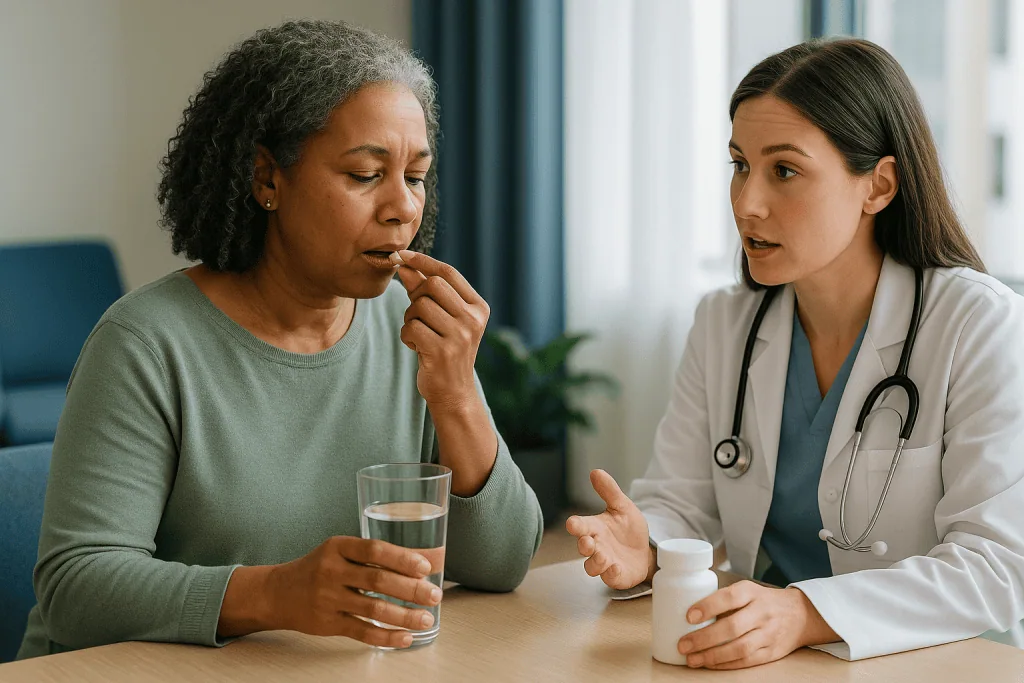
Notice what that mechanism requires. The stone must be made of cholesterol; pigment stones do not respond. It must be small and free of calcium, because a calcified shell blocks the chemistry. The gallbladder must still be able to fill and empty, so that the modified bile actually bathes the stone. And the process is slow. The NHS notes that treatment may need to continue for up to two years, and the Mayo Clinic describes dissolution taking months or years, with stones often returning once the medicine is stopped.
That recurrence is the central limitation. Dissolving a stone does not change the bile chemistry that formed it. Remove the medicine, and the same supersaturated bile begins the same slow crystallization. For that reason, gastroenterology guidelines treat bile-acid therapy as an option for a specific minority of patients rather than a first-line answer.
The medicine is also not a flush. It does not produce visible stones in the toilet. Progress is tracked with repeat ultrasound scans, typically at intervals of several months, so the person taking it may feel nothing at all while the stone shrinks. Whether it is appropriate, how long to continue and when to reassess are decisions for the prescribing gastroenterologist, weighed against symptoms, stone characteristics and the person’s overall health.
Who is usually offered dissolving medicine, and who is usually asked to wait
Gastroenterologists think about gallstones in three groups, and the flush myth collapses all of them into one.
The first group, and by far the largest, has silent stones found by chance on a scan done for another reason. For these people the usual advice is to do nothing beyond knowing the warning signs. The Mayo Clinic and the NHS both describe this watchful waiting approach: stones that cause no symptoms generally do not need treatment, because the risk of a procedure outweighs the risk of leaving them alone. Being asked to wait is not neglect. It is the evidence-based choice.
The second group has symptoms, most often episodes of biliary colic. For most of them, the standard recommendation is cholecystectomy, surgical removal of the gallbladder, because it removes both the stones and the organ that keeps making them.
Bile-acid dissolution tends to be considered for a narrower set within that second group. Candidates typically have small cholesterol stones without calcium on imaging, a gallbladder that still functions on scans, and either a medical reason that makes surgery riskier or a strong personal preference to avoid an operation, having understood that stones often come back. Anyone with large stones, pigment stones, a non-functioning gallbladder or frequent severe attacks is generally steered away from medicine, because it is unlikely to work quickly enough or at all.
The third group has complications: a stone lodged in the bile duct, an inflamed gallbladder, pancreatitis. These people are usually treated urgently, often with an endoscopic procedure to clear the duct and surgery once the inflammation settles. Dissolving medicine plays no role here, and a flush would be dangerous. Which group a person belongs to, and what follows from that, is a judgment the treating team makes from imaging, blood tests and the person’s history.
Can magnesium dissolve gallstones?
Magnesium shows up in gallstone folklore for two separate reasons, and untangling them helps.
The first is Epsom salt. Flush protocols include it not because magnesium dissolves anything but because magnesium sulfate is a saline laxative: it draws water into the bowel and produces watery stools within hours. Its role in a flush is purely logistical, making sure the soap globules formed from the oil appear in the toilet by morning. The magnesium itself never reaches the gallbladder in a form that could affect a stone, and bile is not a place where a dissolved salt would break up a cholesterol crystal.
The second reason is more respectable. Large observational studies have asked whether people who eat more magnesium-rich foods, such as leafy greens, nuts, legumes and whole grains, develop fewer symptomatic gallstones over time, and some have found a modest association. An association of that kind cannot prove cause. People who eat those foods tend to eat more fiber, less refined sugar and maintain healthier weights, each of which is independently linked to lower gallstone risk. No randomized trial has shown that a magnesium supplement prevents stones, and none has shown that it dissolves an existing one. The NIH Office of Dietary Supplements fact sheet on magnesium lists no gallstone indication.
There is also a safety side. Magnesium-based laxatives taken in large or repeated amounts can cause dehydration and, in people with reduced kidney function, dangerously high blood magnesium levels. Anyone considering a supplement for any reason, particularly those with kidney disease or on heart or blood-pressure medicines, should discuss it with their clinician rather than follow an internet protocol. The short version: a diet rich in magnesium-containing whole foods is sensible for many reasons; magnesium as a stone solvent is not one of them.
Does water prevent gallstones? Sorting diet facts from wishful thinking
Drinking plenty of water is one of the gentlest pieces of advice on the internet, and it is reasonable for general health. As gallstone prevention, though, it has thin support. Gallstones form because of the ratio of cholesterol to bile salts and lecithin within bile, and because of how often and how completely the gallbladder empties. Drinking more water increases urine output; it does not meaningfully dilute bile, which the liver concentrates and the gallbladder concentrates further. Neither the NIDDK nor the Mayo Clinic lists hydration among the evidence-based measures to lower risk.
What those sources do list is instructive, because each item maps onto a mechanism.
- Avoid skipping meals. Each meal empties the gallbladder; long gaps let bile sit and concentrate, giving cholesterol time to crystallize.
- Lose weight slowly if you need to. Rapid weight loss, including after very-low-calorie diets or bariatric surgery, floods bile with cholesterol released from fat stores and is one of the strongest known triggers for new stones.
- Favor fiber and healthy fats. Whole grains, fruit, vegetables, nuts and olive oil used in ordinary cooking amounts are associated with lower risk; a small amount of dietary fat at each meal also keeps the gallbladder emptying regularly.
- Maintain a healthy weight. Obesity raises cholesterol secretion into bile and reduces gallbladder emptying.
The irony is hard to miss. The one food the flush uses as a weapon, olive oil, is protective only when eaten modestly and regularly, and the flush’s own fasting phase mimics the meal-skipping pattern that encourages stones. Prevention, in the evidence, looks like a boring, steady eating routine, not a dramatic one-night event.
Apple cider vinegar and gallbladder sludge: is there anything to it?
Gallbladder sludge is a thickened mixture of cholesterol crystals, calcium bilirubinate granules and mucus that shows up on ultrasound as a layer settling at the bottom of the gallbladder. Think of it as a stone’s early draft. Sludge can disappear on its own, persist unchanged for years, or progress to stones. It is common during pregnancy, after rapid weight loss, during prolonged fasting or intravenous feeding, and with certain medicines, and it can cause the same colicky pain as stones if it blocks the outlet.
Apple cider vinegar is often marketed as a way to “thin” sludge or “break down” stones, usually with a vague reference to its acidity. The chemistry does not survive scrutiny. Vinegar is dilute acetic acid. In the stomach it meets hydrochloric acid that is already far stronger. Beyond the stomach it is neutralized by pancreatic bicarbonate, and bile itself is alkaline. No acidic vinegar reaches the gallbladder. Even if it did, cholesterol crystals are not dissolved by weak acids; they are dissolved, slowly, by bile acids that change the solubility of cholesterol, which is how the prescription medicine described earlier works.
Searches of the medical literature turn up no clinical trials of apple cider vinegar for sludge or gallstones. What does appear in the literature are reports of tooth enamel erosion from frequent undiluted vinegar, throat irritation, and interactions with some diuretics and diabetes medicines through effects on potassium and blood sugar.
If sludge has been found on your scan, the useful conversation with your gastroenterologist is about why it formed, whether it is causing symptoms, and whether a repeat ultrasound is warranted. Sludge linked to a temporary cause, such as pregnancy, often resolves once that cause passes. Vinegar does not change that timeline.
Flush claims versus medical evidence: a side-by-side table
Laid out together, the gap between what the flush promises and what the evidence shows becomes easy to see. Each row below reflects positions described by the NHS, the Cleveland Clinic, the NIDDK and the published chemical analysis of flush material.
| Claim | What actually happens | Strength of evidence |
|---|---|---|
| Olive oil and lemon juice flush stones out overnight | Oil saponifies in the gut into soft green soap globules; real stones stay in the gallbladder on repeat ultrasound | Laboratory analysis of passed material found fatty acids, no cholesterol, bilirubin or calcium |
| Epsom salt opens the bile ducts | Magnesium sulfate is a laxative; it empties the colon and does not act on the ducts | Well-established pharmacology |
| Apple cider vinegar thins sludge | Vinegar is neutralized before the bile system; bile is alkaline | No clinical trials; mechanism implausible |
| Magnesium supplements dissolve stones | No dissolving action; dietary magnesium shows only an observational association with lower risk | Observational data only; no trials of supplements |
| Drinking lots of water prevents stones | Water affects urine, not bile concentration | Not listed as a preventive measure by major sources |
| Prescription bile acid dissolves stones | Reduces cholesterol in bile and slowly dissolves small cholesterol stones over months to years; recurrence common after stopping | Guideline-recognized for selected patients |
| Gallbladder removal is the only option for symptoms | Removal is standard for most symptomatic patients; medicine or watchful waiting fits some | Guideline-level consensus |
Two patterns stand out. Every “natural” method relies on a step that produces a visible effect, usually diarrhea or soft lumps, which the person then interprets as proof. The medical approaches, by contrast, produce nothing visible at home; their effects appear on imaging, which is less satisfying but considerably more honest.
What evidence-based gallstone treatment actually involves
Once a gastroenterologist has confirmed stones and worked out which of the three groups a person falls into, the realistic options are few and well understood.
Watchful waiting means no treatment, with clear instructions on which symptoms warrant a call. It applies to most people with silent stones.
Laparoscopic cholecystectomy is keyhole surgery to remove the whole gallbladder through several small incisions, using a camera and thin instruments. The NHS describes it as the usual operation for symptomatic stones. Because the gallbladder is a storage organ rather than a producer of bile, the body manages without it: bile simply flows from the liver straight into the intestine. Risks, which the surgical team will discuss, include bleeding, infection, injury to the bile duct and a small chance of needing to convert to open surgery through a larger incision.
Open cholecystectomy uses a single larger incision and is chosen when keyhole surgery is unsuitable, for example because of scarring from earlier operations or severe inflammation.
ERCP, short for endoscopic retrograde cholangiopancreatography, is a procedure in which a flexible scope is passed through the mouth to the opening of the bile duct, where stones lodged in the duct can be retrieved. It treats duct stones, not stones in the gallbladder itself, and is often followed by cholecystectomy.
Bile-acid medicine, discussed above, is the one non-procedural option and is reserved for selected patients with small cholesterol stones.
Older techniques such as shock-wave lithotripsy, which uses focused sound waves to fragment stones, are rarely used today because fragments can block ducts and stones recur. Which path fits a given person depends on stone type, symptoms, imaging, other health conditions and the person’s own priorities. That weighing-up is the treating team’s job, done with the patient rather than for them.
What the days and weeks after gallbladder treatment usually look like
People who have spent weeks reading about overnight flushes are often surprised by how undramatic the real timeline is.
After laparoscopic cholecystectomy, most people go home the same day or the following day, according to the NHS. Shoulder-tip discomfort from the gas used to inflate the abdomen is common for a day or two. Light walking is encouraged from the first day because it reduces the risk of blood clots in the legs. Most people return to ordinary activities within about two weeks, with heavier lifting and strenuous exercise usually delayed until the surgical team confirms the incisions have healed. After open surgery, the NHS gives a longer typical recovery of six to eight weeks.
Digestion adjusts rather than collapses. Without a reservoir, bile trickles continuously into the intestine instead of arriving in a bolus with meals. Some people notice looser or more frequent stools in the early weeks, particularly after fatty meals; for most this settles, and a minority find smaller, more frequent meals helpful over the longer term. The Cleveland Clinic notes that most people need no special diet after recovery.
After ERCP, a short period of observation follows, since the procedure carries a small risk of pancreatitis. Patients are usually told to watch for abdominal pain or fever in the first day or two.
For those on bile-acid medicine, the weeks look like nothing at all. There are no visible stones, no cleansing episodes; the only markers of progress are ultrasound scans, typically spaced months apart, and the absence of further attacks. Each of these timelines is a typical range, not a guarantee, and the team looking after you will adjust them to your situation.
What people often get wrong about the gallstone flush myth and gallstones in general
Correcting the flush is only part of the job. Several related beliefs travel with it, and each steers people away from sensible care.
“The pain during the flush proves the stones are moving.” Pain after a large fat load is the gallbladder contracting against a blocked outlet, the classic biliary colic that a stone causes when it stays put. Pain is evidence that stones are present, not that they are leaving.
“A flush cleanses the liver.” The liver filters and processes substances continuously as a function of its own cell biology. It does not accumulate debris that a laxative and a jug of oil can rinse out. No mainstream medical source describes a liver that needs cleansing.
“Gallstones mean you ate too much fat.” Risk is driven far more by genetics, female sex, age over 40, pregnancy, rapid weight loss, obesity and diabetes, as the Mayo Clinic lists. Blaming yourself for your diet is both unkind and inaccurate.
“If you have stones, you need them out.” Most stones are silent and most silent stones are left alone. Surgery is for people with symptoms or complications.
“Sludge is just stones you can still catch early with a cleanse.” Sludge often resolves without any intervention when the trigger passes. It is not a window of opportunity for home remedies.
“You cannot digest fat without a gallbladder.” The liver still produces bile; only the storage tank is gone. Most people eat normally after recovery.
“Doctors hide the flush because surgery pays.” Gastroenterologists prescribe dissolving medicine when it fits, recommend waiting when that fits, and reach for surgery when the evidence supports it. The flush is absent from guidelines because its passed “stones” have been chemically shown to be soap, not because of a conspiracy.
Questions to ask your care team
A consultation goes better when you arrive with the questions that actually change decisions. These are the ones gastroenterologists say they wish more patients asked, followed by why each matters.
- Are my stones causing my symptoms, or could something else explain them? Gallstones are common enough to be an innocent bystander; indigestion, reflux and irritable bowel can mimic colic.
- What type and size are my stones, and does my gallbladder still function on imaging? These three facts determine whether dissolving medicine is even plausible.
- Which group am I in: watchful waiting, elective treatment or urgent care? Knowing this reframes the whole conversation.
- If I wait, what exactly should prompt me to call, and how quickly? Watchful waiting only works with clear thresholds.
- If medicine is an option for me, how will we know it is working, how long might it take, and what happens if stones return afterward? Expect answers in months and years, with ultrasound as the yardstick.
- If surgery is recommended, what are the specific risks in my case, and what would recovery look like for someone with my health and job?
- I have read about flushes and supplements. Is there anything in them that could interfere with my condition or my other medicines? Raising this openly lets the team address laxative use, magnesium and vinegar without judgment.
- Should anything about my diet or weight-loss plans change now? Rapid weight loss in particular is worth discussing before, not after, you start.
Write the answers down. The person who leaves with a clear picture of their stone type, their group and their warning signs is far less likely to be tempted by a video promising a bowl of green pebbles by morning.
When to call your doctor: red-flag signs with gallstones
Most gallstone episodes are uncomfortable rather than dangerous, but a few patterns signal a stone has moved somewhere it should not be, or that the gallbladder itself has become inflamed or infected. Both the Mayo Clinic and the NHS advise urgent assessment for the following.
- Abdominal pain so intense you cannot sit still or find a comfortable position, or pain that does not ease within a few hours. Typical biliary colic builds, plateaus and fades; pain that keeps climbing or lasts suggests obstruction or inflammation.
- Yellowing of the skin or the whites of the eyes, dark urine or pale, clay-colored stools. These point to a stone blocking the common bile duct.
- High fever with shaking chills, especially alongside abdominal pain. This combination can indicate infection in the gallbladder or bile ducts, which can escalate quickly.
- Persistent vomiting that prevents you from keeping fluids down.
- Severe pain spreading to the back with nausea, which can accompany pancreatitis.
- After any procedure: worsening pain, fever, redness or discharge at incisions, or new jaundice.
If you have recently attempted a flush and develop any of these, say so when you seek care. The laxative component can affect fluid and electrolyte balance, and a strong gallbladder contraction can shift a stone into the duct; the team needs that history to interpret your symptoms correctly.
Call emergency services or go to an emergency department for severe pain with fever or jaundice, or for signs of dehydration such as dizziness, confusion or very little urine. For milder, recurring episodes of pain after meals, book a prompt appointment with your doctor so that imaging and a plan can be arranged. Whatever the picture, the next step belongs to the clinicians examining you, not to a protocol on a screen.
Frequently asked questions
Can magnesium help dissolve gallstones?
No. Magnesium has no dissolving action on cholesterol or pigment stones. In flush protocols, Epsom salt (magnesium sulfate) works only as a laxative that empties the colon. Some observational studies link magnesium-rich diets to lower gallstone risk, but that association cannot prove cause, and no trial shows supplements prevent or dissolve stones. Magnesium laxatives can also cause dehydration and are risky for people with kidney disease.
Can drinking a lot of water prevent gallstones?
There is no good evidence that extra water prevents gallstones. Stones form because bile becomes supersaturated with cholesterol or bilirubin and because the gallbladder empties incompletely; water intake changes urine, not bile concentration. Measures that are supported include eating regular meals, avoiding rapid weight loss, choosing fiber-rich foods and healthy fats, staying active and maintaining a healthy weight. Hydration is sensible for general health, just not a gallstone strategy.
Can apple cider vinegar help with gallbladder sludge?
No evidence supports it. Vinegar is a weak acid that is neutralized long before it reaches the bile system, and bile itself is alkaline, so it cannot thin sludge or dissolve crystals. No clinical trials have tested vinegar for sludge or stones. Sludge often clears on its own once its trigger, such as pregnancy or fasting, passes. Frequent undiluted vinegar can erode tooth enamel and interact with some medicines.
How do you dissolve gallbladder stones without surgery?
The only recognized method is prescription ursodeoxycholic acid, a bile acid that lowers cholesterol in bile and slowly dissolves small, non-calcified cholesterol stones in a gallbladder that still functions. It can take months to two years, progress is tracked by ultrasound, and stones often return after treatment stops. It suits a minority of patients, and whether it is appropriate is a decision for your gastroenterologist.
What are the green stones people pass after a gallstone flush?
They are soap. When large amounts of olive oil meet potassium and other minerals from citrus juice and digestive fluids, the fatty acids saponify into soft, waxy, floating lumps that melt at room temperature. Laboratory analysis of such material found no cholesterol, bilirubin or calcium. Real gallstones sink, resist crushing and remain visible on ultrasound after a flush.
Is a liver and gallbladder flush dangerous?
It can be. The fat load makes the gallbladder contract hard, which may bring on biliary colic or push a small stone into the common bile duct, risking obstruction or pancreatitis. The Epsom salt laxative can cause dehydration and electrolyte disturbances, a particular concern for older adults and people with kidney or heart conditions. If you develop severe pain, fever or jaundice after a flush, seek urgent care.
Do all gallstones need to be removed?
No. Most gallstones are silent and are found by chance; for these, guidelines recommend watchful waiting with clear instructions on warning signs, because treatment risks outweigh the risk of leaving them. Removal of the gallbladder is usually recommended for people with symptoms such as recurring biliary colic, or with complications such as inflammation, duct blockage or pancreatitis. Your treating team decides based on imaging, symptoms and overall health.
Can you live normally without a gallbladder?
Yes, for most people. The gallbladder stores bile but does not make it; after removal, the liver’s bile flows directly into the intestine. Some people notice looser stools in the early weeks, especially after fatty meals, and a minority find smaller, more frequent meals helpful longer term. Major medical sources note that most people need no special diet once they have recovered.
How long does recovery take after gallbladder removal?
After keyhole (laparoscopic) surgery, the NHS describes most people going home the same or next day and returning to normal activities in about two weeks, with strenuous exercise and heavy lifting delayed until the surgical team agrees. Open surgery through a larger incision typically means six to eight weeks. These are typical ranges, and your own timeline depends on your health and the team’s advice.
Does eating fat cause gallstones?
Not directly. The strongest risk factors are genetics, female sex, age over 40, pregnancy, obesity, diabetes and rapid weight loss. Very-low-fat crash diets and long gaps between meals can actually increase risk, because the gallbladder empties less often and bile sits and concentrates. Moderate healthy fats eaten regularly, as part of a fiber-rich diet, are associated with lower risk.
References
This article is for general information only and is not a substitute for professional medical advice. Please consult a qualified doctor about your individual situation.

More from the Blog

What Hospital Treatment for Pancreatitis Involves: Fasting, IV Fluids and Pain Control
Hospital treatment for acute pancreatitis is mostly supportive: intravenous fluids to protect circulation and the pancreas, medicines to control pain and nausea, a short…
The Low-Fat Diet After Pancreatitis: How Eating Changes While the Pancreas Recovers
After a hospital stay for pancreatitis, most people are asked to eat a low-fat, moderate-protein diet in small, frequent meals, drink plenty of fluids,…

What Hiatal Hernia Surgery Can Improve: Reflux, Chest Discomfort and Swallowing Explained
Hiatal hernia surgery pulls the stomach back below the diaphragm, narrows the opening it slipped through and usually reinforces the valve at the top…

Does a Peptic Ulcer Need a Follow-Up Test? Confirming Healing and a Cleared Infection
Often, yes. A stomach (gastric) ulcer is usually rechecked with a repeat endoscopy after several weeks of treatment to confirm it has healed and…

How Hepatitis A Is Managed: Supportive Care While the Liver Recovers on Its Own
Hepatitis A has no specific antiviral medicine; it is managed with supportive care while the liver clears the virus on its own. That usually…

When Ongoing Bowel Symptoms Need a Gastroenterologist Rather Than More Self-Care
See a gastroenterologist for IBS when symptoms persist despite months of guideline-based self-care, when the diagnosis is uncertain, or when any red-flag feature appears:…