

Can Ulcerative Colitis Stay in Remission? What Long-Term Control Realistically Involves

Key Takeaways
- Remission in ulcerative colitis has layers, and a lining that has healed at colonoscopy predicts staying well far better than feeling well alone.
- Cleveland Clinic describes remissions lasting months or even years, but no current treatment makes the underlying condition go away permanently.
- NHS guidance notes that thiopurine immunosuppressants take around 2 to 3 months to work, so early weeks on them often feel uneventful.
- Stopping maintenance medicine while feeling well is one of the most common avoidable triggers of relapse.
- Long-standing colitis raises bowel cancer risk, and the NHS advises surveillance colonoscopy from about 10 years after symptoms began, then every 1 to 5 years.
- No specific diet has been shown to keep ulcerative colitis in remission, though non-steroidal anti-inflammatory painkillers are listed by Mayo Clinic as something that can worsen symptoms.
Ulcerative colitis can stay in remission for months or years, and many people have long stretches with few or no symptoms, but it is a lifelong relapsing condition and no current treatment makes it go away permanently. Long-term control usually means continuing maintenance medicine, keeping regular checks such as stool inflammation tests and colonoscopy surveillance, and adjusting treatment early, with the care team, when inflammation returns.
The clinic visit that surprises people most is the good one. Bloods normal. Stool test quiet. The gastroenterologist scrolls through the last colonoscopy pictures, nods, and says the lining looks calm. Then comes the question that has been waiting in the back of the mind for months: “So, am I done?”
The honest answer is more interesting than yes or no. Ulcerative colitis remission expectations sit somewhere between the two extremes people arrive with. Some expect a short course of treatment and a clean break. Others assume a life ruled by bathroom maps and cancelled plans. Neither picture matches what the evidence describes.
What follows is a plain account of what remission means in this condition, how deep it can go, how long it tends to last, what tends to break it, and what keeping it usually asks of you. Every figure is tied to a mainstream source, and every decision about your treatment stays with the team that knows your colon.
What does remission actually mean in ulcerative colitis?
Ulcerative colitis is a long-term condition in which the lining of the large bowel (the colon and rectum) becomes inflamed and develops small ulcers. Remission is the stretch of time when that inflammation goes quiet. The catch is that “quiet” can be measured at several depths, and the layers do not always agree.
A person can feel entirely well while a camera examination still shows a red, fragile lining. The reverse happens too: the lining has healed, yet bowel habits stay unpredictable because the gut is still relearning its rhythm. Gastroenterology has therefore split remission into levels, each captured by a different kind of test.
| Type of remission | What is measured | What it tells you |
|---|---|---|
| Clinical | Stool frequency, bleeding, urgency, how you feel | Daily life has improved; inflammation may or may not be gone |
| Biochemical | Blood markers and fecal calprotectin, a stool protein released by inflamed gut | A low-effort signal that inflammation is settling or returning |
| Endoscopic | Appearance of the lining at colonoscopy or sigmoidoscopy | Often called mucosal healing; a stronger predictor of staying well |
| Histologic | Tissue samples under the microscope | The deepest layer; still being studied as a treatment target |
| Steroid-free | Any of the above, without needing corticosteroids to hold it | The practical goal most teams work toward |
Why should someone who simply wants to feel normal care about these distinctions? Because inflammation you cannot feel is one of the stronger predictors of the next flare and of longer-term complications. Mayo Clinic frames treatment as reducing inflammation and then keeping it controlled, not only settling symptoms. When your team talks about “healing,” they usually mean the endoscopic layer, and that can lag behind how you feel by months.
How ulcerative colitis works, and why it keeps coming back
Picture the colon lining as a living wallpaper, one cell thick in places, constantly renewed and constantly negotiating with trillions of bacteria on the other side. In ulcerative colitis, the immune system stops treating that negotiation as routine. It sends inflammatory cells into the lining as though fighting an infection that is not there, and the tissue swells, bleeds and ulcerates.
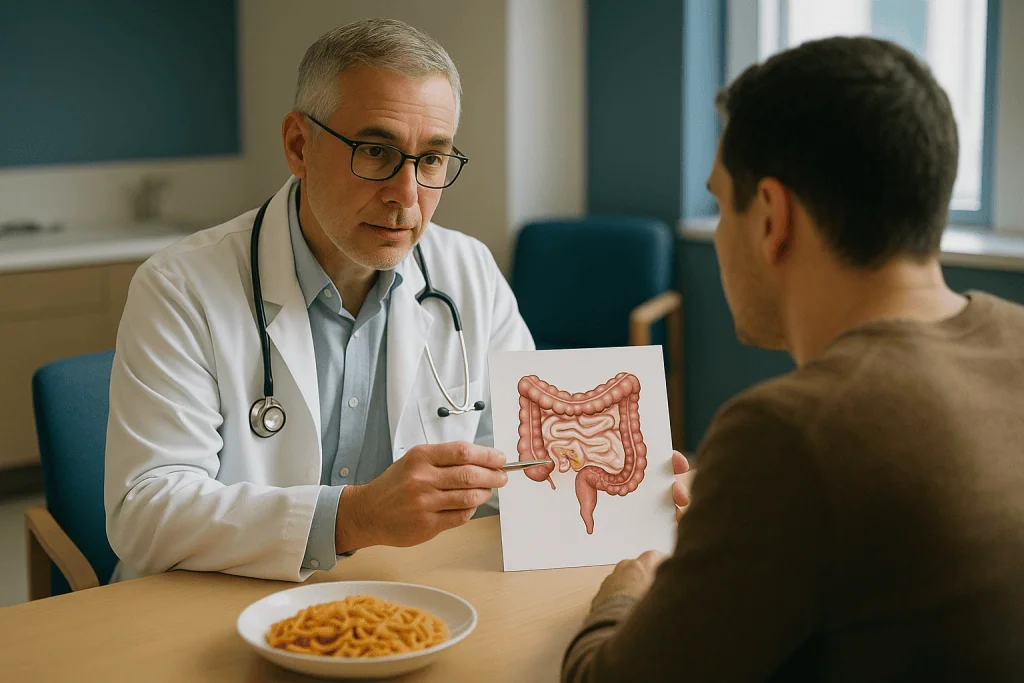
Nobody has a single cause to point at. The National Institute of Diabetes and Digestive and Kidney Diseases describes a mix of inherited susceptibility, an overactive immune response and environmental factors that researchers are still mapping. What is clear is the pattern: inflammation starts in the rectum and spreads upward in a continuous band, staying within the inner lining rather than burrowing through the bowel wall as Crohn’s disease can. Doctors describe extent with three broad labels: proctitis (rectum only), left-sided colitis (up to the bend near the spleen) and extensive colitis (most or all of the colon).
Relapse happens because the underlying tendency never leaves. Treatment dampens the immune signals or blocks the traffic of inflammatory cells into the gut, but the wiring that produced the first flare remains. Remove the brake and the process can restart. Certain events also act as sparks: an intestinal infection, a course of non-steroidal anti-inflammatory painkillers, stopping maintenance medicine, and sometimes nothing anyone can identify.
That is the frame for everything else in this article. Remission is not the absence of disease; it is the disease held in check. The difference sounds like semantics until the day treatment is skipped for a few weeks and the bleeding returns.
Realistic ulcerative colitis remission expectations: can it stay away forever?
Two things are true at once. Ulcerative colitis is a lifelong condition with no treatment that makes it disappear permanently. And a good many people live for years at a time without a flare, working, travelling, raising children and rarely thinking about their colon.
Cleveland Clinic puts the range plainly: periods of remission can last months or even years, alternating with periods when symptoms return. The word “forever” does not appear in any guideline, and for good reason. Long-term studies follow people for decades, not lifetimes, and the honest summary is that most people relapse at some point, while a minority stay quiet for very long stretches on maintenance treatment.
Three factors shape where an individual lands. The depth of remission matters most: people whose lining has healed at colonoscopy tend to stay well longer than people who only feel well. Consistency matters next: maintenance medicine taken steadily is associated with fewer flares than medicine taken only when symptoms bite. Extent matters too, since disease limited to the rectum generally behaves more gently than inflammation across the whole colon.
There is one situation where the colon itself is no longer the issue. When the large bowel is surgically removed, colitis cannot recur in a colon that is not there. That is not the same as the condition vanishing, because people with an internal pouch can develop pouch inflammation, and the immune tendency remains. Surgery is a route some people and their teams choose after careful discussion, not a shortcut past the disease.
So the fair expectation is this: long, good remissions are common and worth working for; a guarantee is not on offer.
How long does it take for ulcerative colitis to heal after a flare?
Healing happens in stages, and the stages run on different clocks. Bleeding and urgency usually ease first. Bowel frequency settles next. The lining itself heals last, and that stage can quietly continue for months after a person already feels recovered.
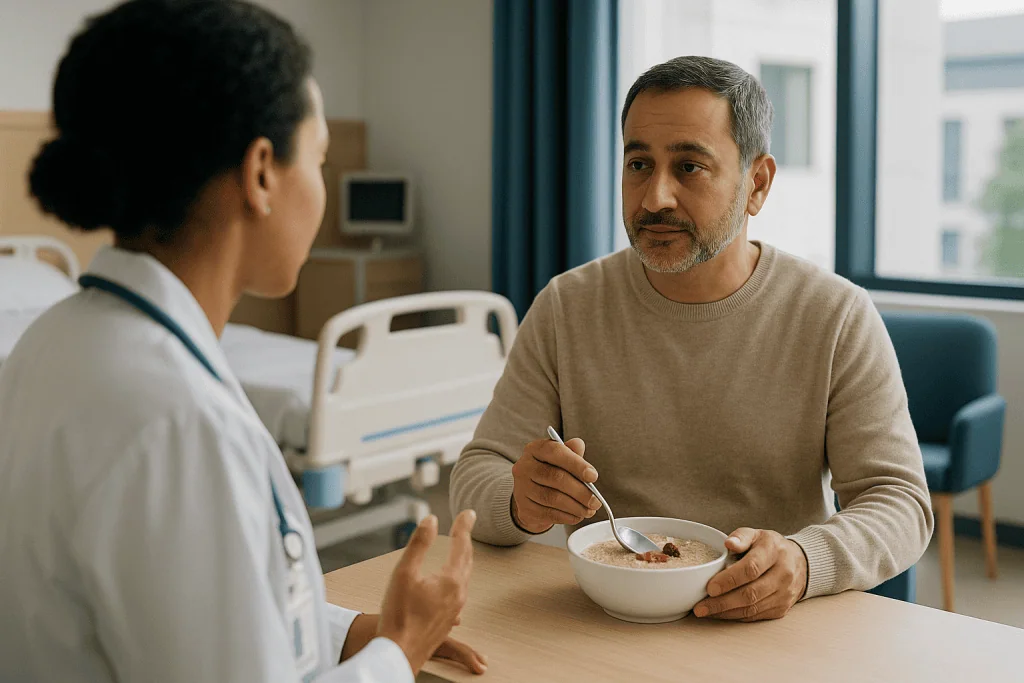
The speed depends heavily on which treatment is doing the work. Corticosteroids, medicines that broadly suppress the immune response, are used in short courses for moderate to severe flares because they act relatively quickly and because prolonged use carries well-known harms to bone, blood sugar, mood and infection risk; the NHS is explicit that they are not a long-term option. Aminosalicylates, anti-inflammatory medicines that act directly on the bowel lining, are typically the first step for mild to moderate flares and tend to work more gradually. Immunosuppressants such as the thiopurines take longer still; NHS guidance notes they usually need around 2 to 3 months to take effect, which is why they are started for the long game rather than the emergency.
Biologic medicines, which are laboratory-made antibodies that block specific inflammatory signals or stop immune cells entering the gut, generally show their effect over several weeks, with teams reassessing after an induction period before deciding whether to continue.
What none of this offers is a date on which you will be “healed.” A reasonable expectation is that symptoms improve within weeks of the right treatment, that your team will check inflammation markers over the following months, and that a follow-up scope may be timed to see whether the lining has caught up with how you feel. If symptoms are not shifting on the expected clock, that itself is information the team wants.
How long does ulcerative colitis remission last, and what predicts the next flare?
Ask ten people with ulcerative colitis how long their remissions last and you will hear ten different answers, from a few months to more than a decade. Cleveland Clinic’s description of remission lasting months or years is about as precise as honest medicine can be, because the variation between individuals is genuinely wide.
The more useful question is what tips a quiet colon back toward inflammation. Several signals carry real weight.
- Residual inflammation. A lining that still looks inflamed at scope, or a fecal calprotectin level that is drifting upward, predicts relapse better than any symptom diary. Calprotectin is a protein shed by white blood cells in the gut; a simple stool sample measures it.
- Stopping or thinning out maintenance medicine. This is the most common avoidable trigger clinicians see, often in people who feel so well that treatment seems pointless.
- Non-steroidal anti-inflammatory painkillers. Mayo Clinic lists these among factors that can worsen symptoms; many teams suggest discussing alternatives before taking them.
- Gut infections. A bout of gastroenteritis can look like a flare and can also set one off; stool testing helps tell the two apart.
- Stress and poor sleep. The evidence here is weaker and mostly observational. Stress does not cause ulcerative colitis, but many people report that hard periods precede flares, and it is reasonable to treat it as a possible contributor rather than a proven cause.
Surveillance turns these predictors into action. A rising calprotectin caught at a routine check can prompt a treatment adjustment before the bleeding starts. That is the quiet advantage of monitoring during remission: it shifts the conversation from reacting to flares toward preventing them.
Is ulcerative colitis progressive? What actually changes over time
“Progressive” is a frightening word, and it fits ulcerative colitis only partially. The condition is chronic and relapsing, which means it recurs. Whether it worsens depends on how much uncontrolled inflammation the colon endures over the years.
Extent can change. Disease that began in the rectum sometimes spreads upward over time, and inflammation that reaches most of the colon tends to be harder to control. Repeated severe flares can also leave the bowel less elastic and, rarely, narrowed. The bowel wall damage that defines Crohn’s disease, with fistulas and deep scarring, is not typical of ulcerative colitis, which is one reason the two conditions carry different long-term outlooks.
The complication that most shapes long-term care is bowel cancer risk. NHS guidance explains that long-standing inflammation of the colon raises that risk, that the risk grows with how long you have had the condition and how much of the colon is involved, and that people are usually offered a surveillance colonoscopy around 10 years after symptoms began, then every 1 to 5 years depending on their individual risk. Effective control of inflammation is thought to be part of lowering that risk, which is another argument for treating the lining and not just the symptoms.
Outside the gut, some people develop joint pain, skin problems, eye inflammation or liver conditions linked to the same immune activity. These do not always track with bowel symptoms, and they are worth mentioning to your team even when the colon feels calm.
The fairer word than “progressive,” then, is “cumulative.” The colon keeps a tally of inflammation. Keeping that tally low is what long-term control is really about.
Which treatments keep ulcerative colitis in remission, and how they work
Maintenance therapy is chosen by the treating team according to how severe and extensive the disease is, how it responded before, and what other conditions and preferences you bring. The classes below are described by mechanism only; none is a recommendation, and no one should start, stop or alter any of them without their prescriber.
- Aminosalicylates. These anti-inflammatory medicines act on the bowel lining itself and, per NHS guidance, are usually the first treatment for mild to moderate disease. Many people remain on them long term to help prevent flares. They come in forms taken by mouth and forms applied directly to the rectum, which matters when inflammation is limited to the lower bowel.
- Corticosteroids. Powerful, fast, and deliberately short-lived. Their role is to calm a flare, after which the aim is to step down and hold remission with something else. Needing repeated courses is a signal the team reads as under-treatment, not bad luck.
- Thiopurine immunosuppressants. These dampen the immune system more broadly and take around 2 to 3 months to work, according to the NHS. They require regular blood monitoring because they can affect blood counts and the liver.
- Biologics. Antibodies engineered to block a specific inflammatory messenger (such as tumour necrosis factor or certain interleukins) or to prevent immune cells from migrating into the gut. They are given by injection or infusion and are typically reserved for moderate to severe disease or when other options have not held.
- Small-molecule medicines. Tablets that interrupt inflammatory signalling inside immune cells, a newer group with its own monitoring needs.
Mayo Clinic notes that no single medicine works for everyone and that finding the right approach can take time. Expect adjustments. A change in treatment during remission is often maintenance, not failure.
Who is usually offered escalation, who is asked to wait, and where surgery fits
Escalation means stepping up to a stronger or different maintenance treatment. Teams tend to raise it when the pattern points to inflammation that current therapy is not holding: two or more flares a year, difficulty coming off corticosteroids without symptoms returning, a persistently raised fecal calprotectin, or a follow-up scope that still shows active disease despite a calm symptom diary. Extensive colitis and a severe first attack also tilt the conversation earlier.
Other people are reasonably asked to wait and watch. Someone with disease limited to the rectum, a single mild flare that settled promptly on first-line treatment, normal stool markers and a healed lining has little to gain from a more intensive medicine with a heavier monitoring burden. Waiting here is not neglect; it is matching the strength of the tool to the size of the problem, with a plan for what triggers a rethink.
A third group has a different question. When flares keep breaking through, when medicines cause intolerable side effects, when precancerous changes appear at surveillance, or when a severe attack does not respond in hospital, surgery to remove the colon enters the discussion. The two common operations are removal of the colon and rectum with creation of an internal pouch from small bowel, and removal with a permanent stoma. Each carries its own risks, recovery period and adjustments, and each removes the site of colitis without removing the underlying immune tendency. Mayo Clinic describes surgery as an option when other treatments do not help or when complications develop.
None of these paths is chosen from a chart. They are chosen in a room, by you and your treating team, with your history and priorities on the table.
What the first weeks after a treatment change usually look like
A new maintenance medicine rarely announces itself. The first weeks are quieter than most people expect, which can feel unsettling when you were hoping for a clear sign that something is working.
Early on, the practical rhythm is set by safety checks rather than symptoms. Immunosuppressants and biologics usually come with baseline blood tests, screening for latent infections such as tuberculosis and hepatitis, and a review of vaccinations, because these medicines lower the body’s defences. Repeat blood tests follow at intervals your team will specify, more frequent at the start and spacing out once results are stable.
Symptoms tend to shift gradually. With a thiopurine, the NHS timeline of around 2 to 3 months means the honest expectation for the first month is “not much yet.” With a biologic, some people notice less urgency and bleeding within the first few weeks; others need the full induction period before the picture becomes clear. Many teams ask for a symptom diary and a repeat calprotectin during this window so that the decision to continue rests on more than a feeling.
Side effects, when they occur, are usually mild and early: nausea, headaches, injection-site soreness, tiredness. Anything that feels wrong is worth reporting promptly rather than saving for the next appointment, partly because some reactions need attention and partly because unreported side effects are a common reason people quietly stop treatment.
The end of this phase is a reassessment visit. The question on the table will be whether the medicine is holding inflammation down well enough to justify continuing, and the answer will come from the combination of how you feel, what your bloods and stool show, and sometimes what a scope reveals.
How does ulcerative colitis affect quality of life, even in remission?
Remission fixes the colon on paper before it fixes life. People often describe a lag of months between the scope looking normal and trusting their body enough to sit in the middle of a row at the cinema.
Several threads run through that experience. Fatigue is the one most often overlooked by everyone except the person living with it. Anaemia from earlier bleeding, disrupted sleep during flares, the medicines themselves and the sheer effort of managing a chronic illness can all contribute, and fatigue frequently outlasts the other symptoms. Urgency leaves a memory too: even after bowel habit settles, the habit of scanning every room for the nearest toilet takes time to fade.
Mental health deserves direct attention. Living with an unpredictable condition is associated with higher rates of anxiety and low mood, and these in turn affect sleep, appetite and the energy to keep up with monitoring. Cleveland Clinic and Mayo Clinic both point toward support groups, counselling and open conversation with the care team as part of managing the condition, not an optional extra.
Work, travel and intimacy each carry practical questions: how to explain absences, how to handle injections abroad, how to talk about a stoma or urgency with a partner. None has a single answer, and all are easier with a team that treats them as legitimate clinical topics.
The encouraging part is that quality of life tracks with control. As inflammation stays down and remission lengthens, most people report that the condition shrinks from the centre of their life toward its edges. That shrinking is one of the truest markers of a remission that is doing its job.
Everyday habits in remission: what the evidence supports and what it does not
The internet is generous with rules for people in remission. Medical evidence is stingier, and the gap between the two is where a lot of unnecessary guilt lives.
Diet first, because it is what people ask about most. No specific eating pattern has been shown to keep ulcerative colitis in remission, and Mayo Clinic notes that there is no firm evidence that any particular food causes the condition. What the evidence does support is pragmatic: keeping a varied, adequate diet during remission, identifying personal trigger foods through observation rather than blanket elimination, and paying attention to iron, vitamin D and overall nutrition, especially after flares. Restrictive diets adopted out of fear can create deficiencies without buying any protection.
Painkillers matter more than most people realise. Non-steroidal anti-inflammatory medicines are listed by Mayo Clinic among things that may worsen symptoms; it is worth asking your team which alternatives suit you before you need one at short notice.
Vaccinations are part of maintenance for anyone on immune-suppressing treatment, since infections both threaten health directly and can trigger flares. Your team can advise which are appropriate and which live vaccines to avoid.
Exercise, sleep and stress management have modest evidence for wellbeing and no evidence of harm, which makes them sensible even though nobody should feel that a missed workout caused a flare. Smoking cessation is recommended for general health regardless of the observed quirks in how smoking interacts with this particular condition.
Probiotics and herbal remedies are widely marketed and thinly proven. If you want to try one, tell your team so it can be considered alongside your medicines rather than instead of them.
What people often get wrong about ulcerative colitis remission expectations
Certain misunderstandings recur so reliably in clinic that they deserve a direct correction.
“Feeling well means the inflammation is gone.” Not necessarily. Symptoms and lining can diverge for months, and a quiet-feeling colon that is still inflamed underneath is the classic setup for a relapse. This is why calprotectin tests and scopes continue during remission.
“Once I am in remission I can stop the medicine.” Stopping maintenance treatment is one of the most common triggers for relapse. Some people do come off certain medicines after long, deep remission, but that is a planned decision made with the prescriber, with a monitoring plan attached, never a solo experiment.
“Steroids are my remission medicine.” Corticosteroids calm flares; they are not designed to hold remission, and needing them repeatedly is a sign the maintenance plan needs revisiting.
“A flare means the treatment has failed and I am back to the start.” A flare is information. Many are settled with a short adjustment while the underlying maintenance continues, and a single relapse does not erase the years of quiet before it.
“Ulcerative colitis inevitably becomes Crohn’s disease or bowel cancer.” They are distinct conditions, and while long-standing colitis does raise cancer risk, the NHS surveillance programme exists precisely to catch changes early; controlled inflammation is thought to lower that risk further.
“Diet caused this and diet can end it.” There is no evidence for either claim. Food can affect how you feel day to day, which is real and worth managing, but it is not the disease’s engine.
“Surgery means the disease was managed badly.” Surgery is a legitimate treatment path, chosen by many people for good reasons. It is a decision, not a verdict.
Questions to ask your care team about staying in remission
Appointments are short and the questions that matter tend to arrive in the car park afterward. Writing a few down beforehand changes the conversation. These are the ones that tend to unlock the most useful answers about long-term control.
- What kind of remission am I in right now: symptoms only, stool markers, or has the lining healed on a scope?
- What is my maintenance plan, and what result or symptom would make you want to change it?
- How often will I have blood tests and stool calprotectin tests, and who contacts me if something is off?
- When is my next colonoscopy due, and how often will surveillance continue given how long I have had the condition and how much of my colon is involved?
- Which painkillers are reasonable for me, and which should I avoid?
- What vaccinations should I have on this treatment, and are there any I should not have?
- If I get gastroenteritis or a flare, what should I do first, and how do I reach the team quickly?
- Are there any of my medicines we might consider reducing or stopping in the future, and what would need to be true first?
- What signs would make you think about surgery, and what would that involve for someone like me?
- Is there anything about fatigue, mood, work or family planning we should be discussing alongside the bowel itself?
Bring a symptom diary if you keep one, a list of every medicine and supplement you take, and any questions a partner or family member has raised. Teams generally welcome the detail; it makes their decisions better, and it keeps those decisions where they belong, with the people who know your full history.
When to call your doctor: red-flag signs during remission or a flare
Most changes during remission can wait for a scheduled review or a phone call in office hours. Some cannot. Knowing the difference is part of living safely with the condition.
Contact your care team promptly, the same day where possible, if you notice a return of blood in the stool, a clear rise in bowel frequency or urgency lasting more than a few days, new or worsening abdominal pain, unexplained weight loss, fever without an obvious cause, or new joint pain, eye redness or painful skin lesions, which can signal immune activity outside the gut. Persistent tiredness that does not fit your usual pattern is also worth reporting rather than absorbing, since it may point to anaemia or a low-grade flare.
Seek urgent or emergency care without waiting for a callback if you develop severe abdominal pain with a swollen or rigid belly, are passing large amounts of blood, are opening your bowels many times a day with a high fever or a racing heart, cannot keep fluids down, or feel faint, confused or unusually breathless. These can indicate a severe flare, serious infection or, rarely, a dangerously dilated colon, all of which need hospital assessment.
Anyone on immune-suppressing treatment should also treat a high fever, a severe sore throat, shingles-like rash or unusual bruising as reasons to call, because these medicines can mask or worsen infections and affect blood counts.
Whatever the symptom, the same principle applies: your team would rather hear about a false alarm than miss an early flare. Reporting early is one of the few levers entirely in your hands, and it is one of the most effective.
Frequently asked questions
How long does it take for ulcerative colitis to heal?
Symptoms often improve within weeks of the right treatment, but the bowel lining heals more slowly and can keep recovering for months after you feel well. The pace depends on the medicine: corticosteroids act quickly but are short-term, aminosalicylates work more gradually, and NHS guidance notes immunosuppressants take around 2 to 3 months. Your team confirms healing with stool markers and, sometimes, a follow-up scope.
Can ulcerative colitis stay in remission forever?
There is no guarantee of permanent remission because the underlying immune tendency remains, but long remissions lasting years are common, particularly when the lining has healed and maintenance medicine is taken consistently. Cleveland Clinic describes remission periods that can last months or even years. The realistic aim is a long, deep, steroid-free remission with monitoring that catches any return early.
How does ulcerative colitis affect quality of life?
During flares it can dominate daily life through urgency, pain, bleeding and exhaustion. In remission the effect usually shrinks, though fatigue, anxiety about urgency and the routine of monitoring can linger for months. Quality of life tends to track with control of inflammation, and support for mood, sleep and work concerns is considered part of managing the condition, not an extra.
Is ulcerative colitis progressive?
It is chronic and relapsing rather than inevitably progressive. Disease can extend further along the colon over time, and years of uncontrolled inflammation raise the risk of complications, including bowel cancer, which is why the NHS recommends surveillance colonoscopy. Keeping inflammation low over the long term is thought to limit that cumulative damage, so control matters even when symptoms are absent.
How long does ulcerative colitis remission last on average?
There is no reliable average because individuals vary so widely, from a few months to more than a decade. Cleveland Clinic describes remissions lasting months or years. The strongest predictors of a longer remission are a healed lining at colonoscopy, a normal fecal calprotectin, and steady maintenance treatment. A rising calprotectin at a routine check often gives warning before symptoms return.
What causes an ulcerative colitis flare after remission?
Common triggers include stopping or thinning out maintenance medicine, a gut infection, non-steroidal anti-inflammatory painkillers, and inflammation that never fully cleared even though symptoms did. Stress and poor sleep are reported by many people but have weaker evidence. Often no trigger is found. Stool testing helps distinguish an infection from a true flare, which changes how the team responds.
Can I stop my ulcerative colitis medicine once I feel well?
Not on your own. Stopping maintenance treatment while feeling well is one of the most frequent reasons people relapse, because feeling well does not mean the inflammation has gone. In some cases of long, deep remission a prescriber may plan a supervised reduction with monitoring attached. That is a decision for you and your treating team together, never a solo experiment.
Does diet keep ulcerative colitis in remission?
No specific diet has been shown to maintain remission, and Mayo Clinic notes there is no firm evidence that particular foods cause the condition. Diet does affect how you feel day to day, so noticing personal triggers and keeping nutrition adequate, including iron and vitamin D, is sensible. Restrictive diets adopted out of fear risk deficiencies without adding protection.
What is deep remission in ulcerative colitis?
Deep remission usually means symptoms have settled and the bowel lining looks healed at colonoscopy, sometimes with tissue samples also showing little inflammation under the microscope. It is a more demanding target than feeling well, and people who reach it tend to stay in remission longer. Many teams now aim for steroid-free remission with a healed lining as the practical goal of long-term treatment.
Do I still need colonoscopies if my ulcerative colitis is in remission?
Yes. Long-standing colitis raises bowel cancer risk, and NHS guidance advises a surveillance colonoscopy around 10 years after symptoms began, then every 1 to 5 years depending on disease extent and other risk factors. Scopes are also used to confirm that the lining has actually healed, since symptoms alone cannot tell you that. Your team sets the interval for your situation.
References
- NHS: Ulcerative colitis, treatment
- NHS: Ulcerative colitis, complications
- NIH NIDDK: Ulcerative colitis
- Cleveland Clinic: Ulcerative colitis
This article is for general information only and is not a substitute for professional medical advice. Please consult a qualified doctor about your individual situation.

More from the Blog

Reading Your Autoimmune Hepatitis Treatment Plan: Questions Worth Asking a Specialist
A second opinion for autoimmune hepatitis is usually considered when the diagnosis rests on borderline results, when liver blood tests do not settle after…

After Variceal Banding: Soft Foods, Chest Discomfort and the First Days of Recovery
Recovery after variceal banding is usually measured in days. Most people go home the same day, drink clear liquids first, then eat soft foods…
Pancreatitis Complications Explained: Fluid Collections, Infection and When to Return
Most acute pancreatitis settles within about a week, but pancreatitis complications warning signs include pain that returns or worsens after improving, fever or chills,…

Lactose Intolerance vs Milk Allergy: Why the Distinction Changes Testing and Treatment
Lactose intolerance is a digestive problem: the gut lacks enough lactase enzyme to break down milk sugar, causing bloating, gas and loose stools but…

Liver Detox and Milk Thistle: What the Liver Does on Its Own and What the Evidence Says
A liver detox is not something a cleanse, juice or supplement can perform; the liver already neutralizes and clears waste continuously, and no randomized…

Is It a Flare? Changes That Autoimmune Hepatitis Patients Report Between Visits
Autoimmune hepatitis flare warning signs that patients commonly report between visits include deepening fatigue, dull discomfort under the right ribs, nausea or loss of…