

Caring for Zirconium Teeth: Brushing, Flossing Around Crowns and Habits to Avoid Long Term
Key Takeaways
- Zirconia cannot decay, but the natural tooth at the crown margin can, and recurrent decay at that hairline of cement is one of the most common reasons a crown has to be remade.
- The NHS standard of brushing twice a day for about two minutes with fluoride toothpaste, then spitting without rinsing, protects the enamel and root beside the crown rather than the ceramic itself.
- Daily cleaning between teeth with floss, interdental brushes or a threader under bridges is the single most protective habit, because a toothbrush cannot reach the contact or the margin beneath it.
- Ceramics fail from sudden point loads such as ice, pits and nail biting, and from untreated grinding, which the Mayo Clinic lists as a cause of damage to crowns and restorations.
- Bleeding around an implant crown is an early sign of peri-implant mucositis, which is reversible when caught, whereas bone lost to peri-implantitis does not regrow.
- The Cleveland Clinic puts a typical crown lifespan at about 5 to 15 years, and the NHS advises check-up intervals of three months to two years depending on individual risk.
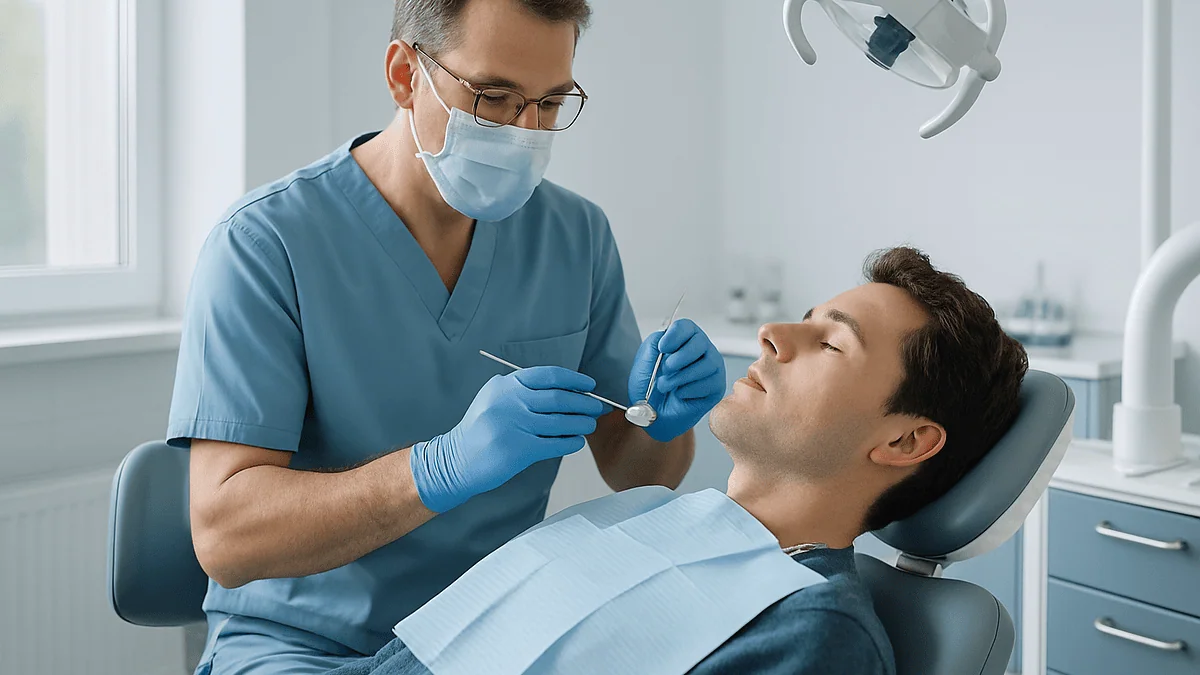
Zirconium teeth aftercare means treating a zirconia crown, bridge or implant crown like a natural tooth that needs extra attention at its edges. Brush twice a day with a soft brush and fluoride toothpaste, clean between teeth daily with floss, threaders or interdental brushes, avoid grinding, chewing ice and using teeth as tools, keep regular check-ups, and report pain, swelling, looseness or persistent bleeding to your dentist.
The dentist hands over the mirror, you tilt your head, and there it is: a tooth that looks more like your teeth than your teeth do. On the drive home your tongue keeps returning to it, testing the edge, wondering whether this smooth white ceramic wants to be babied like a wine glass or treated like any other molar.
Most people leave the appointment with a leaflet and one sentence of advice, usually some version of keep it clean. That is true and almost useless. Zirconium teeth aftercare is not really about protecting the ceramic, which shrugs off toothbrushes and coffee alike. It is about the thin seam where the crown meets living tissue, and about the jaw habits you barely notice.
What follows is the longer conversation: how to brush, how to get floss around a crown or under a bridge, which daily habits quietly shorten the life of the work, and which signs mean you should stop guessing and pick up the phone.
What are zirconium teeth, and what does zirconium teeth aftercare actually involve?
The phrase is a little misleading. Nobody has metal zirconium in their mouth. The material dentists use is zirconia, or zirconium dioxide, a dense white ceramic that starts as a soft block, is milled to the shape of a tooth, then fired until it becomes one of the hardest materials in restorative dentistry. It shows up in three main forms.
- A crown, which is a cap covering a natural tooth that has been trimmed down after a large filling, a fracture or a root canal.
- A bridge, which is two or more joined crowns spanning a gap, resting on neighboring teeth or on implants.
- An implant crown, which sits on an abutment, the connector attached to a titanium post that has fused with the jawbone.
Aftercare for all three follows the same logic. The ceramic itself is close to inert: it does not decay, it does not absorb stains the way enamel can, and it tolerates normal chewing. Everything that can go wrong happens at the borders. There is the margin, the fine line where the crown ends and tooth or gum begins. There is the gum collar around an implant, thinner and less richly supplied with blood than the gum around a natural tooth. And there is the opposing jaw, which delivers every bite force.
The Cleveland Clinic puts the typical life of a crown at roughly 5 to 15 years, with oral hygiene and habits such as grinding among the factors that move a person toward one end of that range or the other. That is the real job of zirconium teeth aftercare: not polishing a ceramic, but keeping bacteria and brute force away from the places where the work is vulnerable.
Why a zirconia crown cannot decay but the tooth and gum around it still can
Plaque is a sticky film of bacteria that forms on every surface in the mouth within hours of brushing. Feed it sugar and it produces acid; the acid dissolves the mineral in natural tooth. Zirconia has no mineral to dissolve, which is why patients are sometimes told, half correctly, that their new tooth cannot get a cavity.
Look closer at a crowned natural tooth. Under the ceramic there is still dentin and root, and at the margin there is a hairline of cement joining the two. That line usually sits at or just under the gum, exactly where plaque collects and where a toothbrush is least likely to reach. Decay that starts at a crown margin, often called recurrent decay, is one of the common reasons a crown has to be remade. It advances quietly, because the ceramic hides the tooth from view and often from sensation.
An implant crown swaps one problem for another. There is no tooth to decay, but the gum around the implant can become inflamed, a condition called peri-implant mucositis. If inflammation spreads into the bone holding the implant, it is called peri-implantitis, and lost bone does not regrow on its own. An implant also lacks the periodontal ligament, the tiny shock-absorbing sling around a natural root that sends pressure signals to the brain, so early trouble may produce fewer warning sensations.
The background risk is not small. According to the CDC, about 46 percent of adults aged 30 and older show signs of gum disease. A crown or implant placed into a mouth with that going on inherits the risk. Cleaning the crown is easy; cleaning the living border around it is the actual work.
Who zirconium teeth aftercare is for, and who is usually asked to wait
The full routine in this article is meant for anyone with a permanent zirconia crown, bridge or implant crown that the dental team has declared finished and cemented or screwed into place. From that point the tooth is expected to be brushed and flossed like any other, with the extra attention to margins described below.
Several groups are usually asked to hold off, or to follow a modified version for a while.
- People wearing a temporary crown. These are made of acrylic or resin and held with weak cement so they can be removed later. Dentists typically ask patients to slide floss out sideways rather than lifting it through the contact, and to avoid sticky or very hard foods until the final crown is fitted.
- People in the healing phase after implant surgery. The Mayo Clinic describes osseointegration, the process by which jawbone grows onto the implant surface, as taking several months. During that time the surgical site is cleaned according to the surgeon’s specific instructions, which may differ from ordinary brushing.
- People with active gum disease. A crown placed over an inflamed gum has a shorter expected life; many teams treat the gums first and adjust the aftercare plan afterward.
- People who grind or clench. They may be asked to have a bite assessment or a night guard fitted before heavy chewing resumes on the new ceramic.
None of this is one-size-fits-all. If your instructions differ from what you read here, the instructions win, because they reflect your mouth rather than an average one. The treating team decides when normal cleaning begins and how it should be adapted.
How to brush zirconia crowns without wearing down the gum line
Start with the standard everyone should meet. The NHS advises brushing twice a day for about two minutes with a fluoride toothpaste, once last thing at night and once at another time of day. Fluoride still matters with a ceramic tooth, because it protects the enamel and root surface right next to the margin.

The details that matter more with a crown are pressure and angle. Hold a soft-bristled brush so the bristles meet the gum line at roughly a 45-degree angle, then use small circular or short back-and-forth movements, a few teeth at a time. The aim is to sweep plaque out of the crevice where the crown meets the gum, not to scrub the ceramic. Zirconia does not mind hard brushing; your gum does. Aggressive scrubbing over years contributes to gum recession, which uncovers the margin and the softer root beneath it, and a recessed gum is very difficult to coax back.
Electric or manual? The NHS position is that either works as long as you brush properly, though some people find a powered brush easier to use for the full two minutes. If you choose an electric model, let the head do the moving and simply guide it slowly along the gum line. Pressure sensors, where present, are a useful nudge.
One habit worth adopting from the NHS guidance: spit out the toothpaste afterward but do not rinse with water, so the fluoride stays in contact with the teeth. Replace the brush or head when the bristles splay, since splayed bristles clean margins poorly and irritate tissue. A light pass over the tongue finishes the job and reduces the bacterial load that resettles on every surface, ceramic included.
Flossing around dental crowns: the margin is the whole game
Ask a hygienist where crowns fail and they will point to the space between teeth. A toothbrush cannot reach the contact where two teeth touch, nor the sliver of margin just below it. The NHS recommends cleaning between the teeth daily with floss or interdental brushes, and with a crown that daily habit is the single most protective thing you do.
Technique around a permanent crown is close to normal flossing with two adjustments. Guide the floss through the contact with a gentle sawing motion rather than snapping it down, because a snap bruises the gum collar. Once through, wrap the floss into a C shape against the side of the crown and slide it a millimeter or two below the gum line, then up and down a few times. Repeat against the neighboring tooth. On the way out you can usually lift the floss back through the contact; if a margin feels rough or catches, pull the floss out sideways instead.
Interdental brushes, the small bottle-brush picks that come in graded sizes, are often easier than string floss around crowns and are what many clinicians favor where the gap allows. The right size fills the space snugly without forcing. Pass it through once or twice, wipe, move on. Some people use both: floss where teeth touch tightly, brushes where there is room.
Pay attention to what the floss tells you. Shredding or catching at the same spot on a crown, every time, suggests a rough edge or an open margin where cement has washed out, and that belongs on the list for your next visit rather than something to floss around. Bleeding when a flossing habit is new usually settles as inflammation calms; bleeding that continues or returns is a signal, not a normal feature.
How to clean zirconia crowns on implants and under bridges
A single crown on a natural tooth has open sides you can floss. A bridge does not. Its false tooth, called a pontic, is fused to the crowns on either side, so floss cannot drop between the units from above. The space under the pontic, where it meets the gum ridge, is a favorite hiding place for plaque and trapped food.
Two tools solve it. A floss threader is a stiff plastic loop that carries ordinary floss under the bridge from the cheek side; you then draw the floss along the underside of the pontic and against the supporting crowns. Spongy floss with a stiff end threads itself. Either way, the motion is a gentle shoe-shine along the gum, not a saw.
Implant crowns need a slightly different mindset. The gum around an implant forms a cuff rather than a true attachment, and the tissue is easier to bruise. Interdental brushes sized to the gap are widely used here, as is floss wrapped around the crown just below the gum line. Water flossers, devices that pulse a fine jet of water between teeth, are popular with implant patients, and trials suggest they can reduce gum bleeding around implants when added to brushing. The evidence does not support them as a replacement for mechanical cleaning, so treat the jet as a rinse for areas the brush and floss have already loosened.
Professional cleaning matters more with implants, not less. Hygienists typically choose instruments and polishing pastes designed to avoid scratching the titanium abutment or the ceramic surface, since a roughened surface holds plaque more readily. Your team can also show you, with a hand mirror, exactly which angle gets under your particular bridge. That five-minute demonstration is worth more than any general article, this one included.
Do zirconia crowns stain, and does toothpaste choice matter?
Zirconia does not stain the way enamel does. Coffee, tea and red wine discolor natural teeth by soaking into microscopic pores; a glazed ceramic has almost none. What can happen is staining of plaque sitting on the crown, and staining or wear of the natural teeth beside it, so a crown that matched perfectly at fitting can look different years later because the neighbors changed, not the crown.
That leads to a common disappointment. Whitening toothpastes and professional whitening lighten natural enamel; they do nothing to ceramic. If you plan to whiten, most dentists suggest doing it before final shade selection, or accepting that the crown will not follow the rest of the smile.
On abrasion, the evidence is reassuring in one direction and cautious in another. Zirconia is harder than enamel and than the polishing particles in ordinary toothpaste, so daily brushing does not wear the body of the crown. Highly abrasive products, including some charcoal and heavy whitening pastes, can dull the surface glaze over time and, more importantly, wear the natural root surfaces exposed by recession. A standard fluoride toothpaste with low to moderate abrasivity is the sensible default; the fluoride is there for the tooth beneath the crown, not for the ceramic.
Mouthwash is optional and no substitute for brushing or interdental cleaning. The NHS suggests using a fluoride mouthwash at a different time from brushing, since rinsing straight after brushing washes away the concentrated fluoride from the toothpaste. Alcohol-free formulations are gentler on the tissue around implants. Antibacterial rinses containing chlorhexidine are sometimes prescribed for a short period after surgery; they can stain teeth and crown margins with prolonged use, so follow the prescribing clinician’s timeline rather than continuing them on your own.
What the first days and weeks after a zirconia crown is fitted usually look like
Day one is mostly about the anesthetic wearing off and the strange sense of a new shape in a familiar place. Chewing on the other side for the first meal is common advice while the cement completes its set, and most teams ask patients to skip very sticky or hard foods for a short period they will specify.
Over the first days a crowned natural tooth may be sensitive to hot and cold. The Cleveland Clinic lists this among the expected after-effects of a new crown, and it usually eases as the tooth settles. Gums that were retracted during cementation can feel tender and may bleed a little when flossing begins. That is a reason to be gentle, not a reason to skip the floss.
The bite deserves a specific check. If the new crown feels high, so that it touches before the other teeth when you close, call the office. A high spot concentrates the entire force of the jaw on one small ceramic surface; it is a quick adjustment, and leaving it is how chips and sore jaws begin.
Implant timelines run longer. The Mayo Clinic describes the whole implant process as taking many months, because the bone must grow onto the post before the final crown is attached. Once the zirconia crown sits on a healed implant, soreness in the gum cuff for a few days is typical, and interdental cleaning usually starts as soon as the team says the tissue is ready.
By the second or third week most people stop noticing the crown at all. That is also when vigilance fades. Persistent pain on biting, a crown that rocks, a bad taste around the margin, or sensitivity getting worse rather than better all warrant a call rather than patience.
Habits to avoid long term: grinding, ice, fingernails and using teeth as tools
Zirconia is chosen for back teeth precisely because it tolerates chewing forces well. Its weakness is not slow wear but sudden point loading, the sharp, focused force of biting an unexpected olive pit or an ice cube. Ceramics are strong in compression and poor at absorbing shock, so they tend to chip or crack in a single event rather than thin gradually.
The habits that generate those events are ordinary ones. Chewing ice. Cracking hard candy or unpopped popcorn kernels. Biting into bones or shellfish. Opening packaging with the teeth, holding pins between them, chewing pen caps. Nail biting is a small force repeated thousands of times, aimed at the front edges where crowns are thinnest. None of these are dramatic; all of them are how a crown that should have lasted many years turns up chipped in year two.
Bruxism, the medical term for grinding or clenching teeth, often during sleep, deserves its own paragraph. The Mayo Clinic lists damage to teeth, restorations and crowns among its complications, alongside jaw pain, headaches and worn enamel. Many people do not know they grind until a partner mentions the noise or a dentist points to flattened edges. If you have a zirconia crown and any of those clues, ask about a bite assessment. A custom night guard, a molded plastic tray worn over the teeth, spreads grinding forces across the arch; it is a protective device, not a treatment for the underlying cause, and whether it suits you is a decision for your dentist.
Two last notes. If you play contact sports, a fitted sports guard protects ceramic and natural teeth alike. And oral piercings that click against the teeth are a recognized cause of chips in both enamel and restorations; if you have one, mention it so your team can plan around it.
Zirconium teeth aftercare at a glance: single crown, bridge or implant
The right routine depends on what is holding the ceramic in your mouth. The table below summarizes where each type is vulnerable and which cleaning tool tends to suit it. It is a starting point; your team may adjust it for the spacing and gum shape you actually have.
| Type of zirconia work | Main biological risk | Between-teeth tool that usually fits | Extra watchpoint |
|---|---|---|---|
| Crown on a natural tooth | Decay at the cement margin; recession exposing root | Floss in a C shape, or an interdental brush where there is room | Floss that shreds or catches at the same spot |
| Bridge on natural teeth | Plaque and food under the pontic; decay on supporting teeth | Floss threader or stiff-ended floss under the false tooth | Supporting teeth carry extra load |
| Single implant crown | Peri-implant mucositis progressing to bone loss | Interdental brush sized to the gap; floss around the collar | Bleeding without pain; few early sensations |
| Implant-supported bridge | Plaque trapped under several connected units | Threaders, stiff-ended floss, water flosser as an adjunct | Abutment areas need professional checks |
Two patterns cut across every row. First, the brush handles the flat surfaces and the gum line, while interdental tools handle the margins and undersides that actually fail; a routine that skips the second half protects the part of the work that was never at risk. Second, mechanical loading matters as much as hygiene. Bridges concentrate force on their supports, and implants lack the shock absorption of a natural root, so grinding and hard foods hit them harder than they would a single crowned molar.
If you carry more than one type, as many people do, the strictest routine wins. Cleaning an implant bridge properly happens to clean everything else well too.
Smoking, sugar and dry mouth: the slow risks to crowns and implants
The threats in this section do not chip anything. They shift the odds over years.
Smoking sits at the top. Tobacco narrows the small blood vessels in gum tissue, which slows healing after implant surgery and blunts the redness and bleeding that would otherwise warn of early gum disease. The CDC identifies smoking as a major risk factor for gum disease in adults, and the gum around an implant is no exception. Surgical teams often ask people who smoke to stop or reduce around the time of implant placement; whatever your situation, the team should know the honest picture so they can monitor more closely.
Sugar matters less for the ceramic than for the margin and the neighbors. What drives decay is frequency more than quantity: sipping a sweetened drink across an afternoon bathes the cement line in acid repeatedly, while the same amount at one sitting is buffered by saliva soon after. Keeping sugary or acidic drinks to mealtimes, and finishing with water, is a small change with a large effect on the natural tooth under the crown.
Dry mouth is the risk people overlook. Saliva rinses, buffers acid and carries minerals back to enamel; when flow drops, decay at crown margins can accelerate sharply. Many common medicines reduce saliva as a side effect, as do some medical conditions and treatments. If your mouth feels persistently dry, mention it both to your dentist and to whoever prescribes your medicines. Do not stop or change a prescription on your own; the prescriber may have alternatives or may advise more frequent dental checks and fluoride support.
Alcohol dries the mouth as well and, in heavy use, is associated with gum disease. Moderate intake, water alongside, and a normal brushing routine before bed cover most of the ground.
How often should you see the dentist when you have zirconia crowns?
There is no universal interval. The NHS advises that the gap between check-ups should be based on how healthy your teeth and gums are and your risk of future problems, and that it can range from three months to two years. People with restorations and implants tend to land toward the shorter end, at least for the first year or two, because the tissue around new work is being watched for changes that are easier to reverse early.
A routine visit does three things a home routine cannot. The dentist checks each margin with a fine probe for roughness, gaps or softened tooth; probes the gum around implants for bleeding or increasing depth, an early sign of peri-implant disease; and looks at the bite for new wear facets that suggest grinding. Periodic X-rays show the bone level around an implant and the tooth under a crown, both invisible to the eye.
Professional cleaning removes calculus, the hardened plaque a brush cannot shift, using instruments chosen for the surfaces present. Around implants, many hygienists use plastic, titanium or ultrasonic tips designed not to score the abutment, and polishing pastes that will not roughen the ceramic glaze.
Between visits, keep notes. Tell the team about bleeding that has appeared, a spot where floss now catches, a change in how the bite feels, any new medicine, and whether you have started grinding or have been told you snore, since sleep-related clenching sometimes travels with it. Small observations delivered on time are what let a team repair a margin instead of replacing a crown, or manage early inflammation instead of lost bone.
What people often get wrong about zirconia crown care
The myths around ceramic teeth are mostly reasonable ideas stretched one step too far.
- The crown cannot get a cavity, so flossing matters less. The ceramic cannot decay; the tooth at the margin can, and recurrent decay there is a common cause of crown failure. Flossing matters more, not less.
- Whitening will bring the crown up to match. Whitening agents work on enamel and do nothing to zirconia, so a mismatch after whitening is the natural teeth moving, not the crown.
- Zirconia is unbreakable. It resists wear better than most dental ceramics, and it still chips under sudden point loads such as ice or pits, and under years of unprotected grinding.
- A little bleeding around an implant is normal. Bleeding on gentle brushing or flossing around an implant is an early sign of peri-implant mucositis, which is reversible when caught; it is a prompt to get checked, not a quirk to live with.
- Electric toothbrushes damage crowns. The NHS position is that manual and electric brushes both work when used properly; the ceramic is far harder than any bristle.
- Mouthwash can stand in for flossing. Rinses reach surfaces; they do not remove the plaque film from margins and contacts. They are an adjunct at best.
- Crowns last forever. The Cleveland Clinic puts a typical range at 5 to 15 years, with hygiene and habits as major variables, and implants need lifelong monitoring even when the crown itself is fine.
The thread running through these is that people protect the ceramic and neglect the biology, when the ceramic was never the vulnerable part. The gum, the bone, the natural tooth beneath the margin and the muscles of the jaw decide whether a zirconia tooth is still there in a decade.
Questions to ask your care team about zirconium teeth aftercare
A few minutes at the fitting appointment, or the first review, can shape years of home care. Bring a short list and write the answers down, because the details fade fast once the tooth stops feeling new.
- Where exactly is the margin on this crown, and is any of it below the gum line? Ask to be shown with a mirror.
- Which between-teeth tool fits my gaps: floss, an interdental brush and if so which size, or a threader for the bridge?
- Is there anything about my gum tissue around the implant that I should clean differently from my natural teeth?
- Do you see any signs that I grind or clench, and is a bite assessment or a night guard worth discussing?
- How often do you want to see me for the first two years, and when will you take X-rays to check the bone or the tooth under the crown?
- What toothpaste abrasivity and what type of mouthwash, if any, do you suggest for my situation?
- Are any of my current medicines likely to dry my mouth, and should my prescriber and you talk?
- What are the specific signs, for my crown or implant, that mean I should call before my next scheduled visit?
- If the crown chips or comes off, what do you want me to do in the first hours?
Notice what is not on the list: nothing about brands of brushes or paste, and nothing about how long the crown is guaranteed to last. Both invite answers that sound precise and are not. The useful questions are the ones about your mouth, your gaps and your habits, because a routine tuned to those is the only kind that gets followed at eleven at night when the day has been long.
When to call your doctor or dentist: red-flag signs around a zirconia crown or implant
Most of what a zirconia tooth does in its lifetime is quiet. A short list of signs deserves a prompt call rather than a wait for the next check-up, and a few deserve same-day or emergency attention.
Call the dental office promptly if you notice any of the following:
- Pain on biting or chewing that persists beyond the first days after fitting, or that appears months later.
- A crown or implant crown that feels loose, rocks, or has come off. Keep the crown in a clean container, do not try to glue it, and avoid chewing on that side.
- Gum around the crown or implant that bleeds regularly on brushing or flossing, looks red or puffy, or has begun to pull back and expose the margin.
- A persistent bad taste or odor from one area, or a visible dark line or gap at the edge of the crown.
- Hot or cold sensitivity that is getting worse over time rather than settling.
- A visible chip or crack in the ceramic, even if it does not hurt, since sharp edges injure the tongue and cheek and a crack can spread.
Seek same-day care, or emergency care if the office is closed, for facial swelling, pus draining from the gum, a fever with dental pain, an implant that has become visibly mobile, or bleeding that does not stop with gentle pressure. Swelling that spreads toward the eye or under the jaw, or any difficulty swallowing or breathing, is a medical emergency and belongs in an emergency department, not a dental appointment.
None of these signs tells you what is wrong; they tell you that someone with a probe and an X-ray machine should look. Infection around an implant and decay beneath a crown are far easier to manage early, and the treating team is the right place for every decision about what happens next.
Frequently asked questions
Can you floss normally around a zirconia crown?
Yes, a permanent zirconia crown is designed to be flossed like a natural tooth. Guide the floss through the contact with a gentle sawing motion, wrap it in a C shape against the crown, and slide it just below the gum line. If the margin feels rough or catches, pull the floss out sideways and mention the spot at your next visit, since repeated catching can indicate an open margin.
How do I clean zirconia crowns that sit on implants?
Brush the crown and gum line twice daily with a soft brush, then clean around the collar with an interdental brush sized to the gap or with floss wrapped below the gum line. Water flossers can be added, and trials suggest they reduce bleeding around implants, but they do not replace mechanical cleaning. Ask your hygienist to demonstrate the angle that works for your implant.
Do zirconia crowns stain from coffee or tea?
Glazed zirconia has almost no pores, so it does not absorb coffee, tea or wine the way natural enamel does. What can happen is stained plaque resting on the crown, which cleaning removes, and gradual discoloration of the neighboring natural teeth, which makes the crown look mismatched. Whitening the natural teeth will not change the crown’s shade, so plan any whitening before shade selection.
Can a cavity form under a zirconia crown?
Yes. The ceramic cannot decay, but the natural tooth beneath it can, most often at the margin where cement meets tooth near the gum. Plaque collects there, and acid from frequent sugar softens the tooth under the edge of the crown. This recurrent decay is a common reason crowns are replaced, which is why daily flossing and fluoride toothpaste matter as much with a crown as without one.
Is a water flosser enough to keep an implant crown clean?
On its own, no. Water flossers help rinse loosened debris and some trials show reduced gum bleeding around implants when they are added to brushing, but the evidence does not support them as a substitute for interdental brushes or floss. Think of the jet as a finishing step. The plaque film at the implant collar still has to be physically wiped away every day.
What are the most useful zirconia crown care tips for the first month?
Chew on the other side for the first meal and avoid sticky or very hard foods for the period your dentist specifies. Expect some hot and cold sensitivity on a crowned natural tooth, which the Cleveland Clinic lists as a common after-effect. Call if the bite feels high, because one high spot concentrates the whole jaw force on the ceramic. Begin gentle flossing as soon as the team clears it.
Can I use whitening toothpaste on zirconium teeth?
You can, but it will not lighten the crown, because whitening agents act on enamel rather than ceramic. The more relevant question is abrasivity. Zirconia is harder than toothpaste particles, but very abrasive pastes can dull the glaze over time and wear exposed root surfaces beside the crown. A standard fluoride toothpaste with low to moderate abrasivity is the usual default; ask your dentist what suits your mouth.
Why does my gum bleed around my implant crown?
Bleeding on gentle brushing or flossing around an implant usually means the gum cuff is inflamed, a condition called peri-implant mucositis. It is often reversible with improved cleaning and a professional review, but if it progresses into the bone it becomes peri-implantitis, and bone lost that way does not regrow. Treat bleeding as a prompt to book a check rather than a normal feature of an implant.
What should I do if my zirconia crown falls off?
Keep the crown in a clean container, do not attempt to glue it back, avoid chewing on that side, and call the dental office the same day. The exposed tooth may be sensitive, and a loose or missing crown lets bacteria reach the prepared tooth or abutment. Your dentist can assess whether the crown can be re-cemented or needs remaking; that decision depends on why it came off.
How long do zirconia crowns last with good aftercare?
There is no guaranteed figure. The Cleveland Clinic gives a typical crown lifespan of about 5 to 15 years, with oral hygiene, grinding habits and the health of the underlying tooth or implant among the main variables. Daily interdental cleaning, avoiding hard point loads, managing bruxism and keeping regular check-ups all push toward the longer end, but no routine can promise a specific outcome.
References
This article is for general information only and is not a substitute for professional medical advice. Please consult a qualified doctor about your individual situation.

More from the Blog
Are Zirconium Teeth Right for You? Bite Force, Smile Goals and When Another Ceramic Fits Better
A good zirconium teeth candidate usually needs a strong restoration for a back tooth, an implant crown, or a bridge, especially with a heavy…

All-on-4 vs All-on-6: When Two More Implants Make Sense
All-on-4 and All-on-6 both anchor a full arch of fixed replacement teeth; the difference is how many implants carry the load. Four implants suit…
What to Ask Before a Dental Crown: Material, Margin Placement and What Happens to the Nerve
Before agreeing to a dental crown, ask what the crown is for, which material is proposed and why, where the edge of the crown…
Dental Implants After Gum Disease: When They Are Possible, and What Comes First
Yes, people with periodontal disease can often get dental implants, but not while the disease is active. Infection and inflammation must be treated first,…

How Long Do All-on-4 Implants Last? Longevity, Care and What Can Go Wrong
With diligent daily cleaning and regular professional maintenance, the four titanium implants supporting an All-on-4 restoration commonly last 20 years or longer, and long-term…

When Removable Dentures Stop Fitting: Relining, Rebasing and When a Remake Is Needed
Removable dentures usually stop fitting because the jawbone and gum underneath slowly shrink, not because the denture itself changes much. Dentists first assess the…