

Why an ENT Check May Come Before a Sinus Lift When You Have Chronic Sinusitis or Allergies
Key Takeaways
- A sinus lift graft sits directly under the Schneiderian membrane, so the health of that lining, not the jawbone alone, decides how cleanly the surgery goes.
- Mayo Clinic defines chronic sinusitis as symptoms lasting 12 weeks or more despite treatment, and that threshold is what the ENT uses to classify your history.
- Cleveland Clinic gives a typical range of 4 to 12 months for graft maturation before implants, a window during which an inflamed sinus has many chances to cause trouble.
- CDC guidance is that most sinus infections are viral, so pre-surgical sinus treatment is matched to the cause rather than defaulting to antibiotics.
- An infected upper tooth draining into the sinus is a frequent reason a scan looks worse than nasal symptoms suggest, and it is treated in the dental chair first.
- Shorter, tilted or zygomatic implants and conventional bridges remain options when a lift is not advisable, so an ENT delay rarely means giving up on replacing the teeth.
An ENT (ear, nose and throat) check often comes before a sinus lift because the graft is placed directly beneath the maxillary sinus lining, and chronic sinusitis or untreated allergies can leave that lining swollen, infected or blocked. Clearing or stabilizing the sinus first lowers the chance of membrane tears, graft infection and post-operative sinusitis; the final timing decision rests with the dental and ENT teams.
She had already pictured the finished smile. Two missing molars on the upper right, a consultation booked, and a plan that sounded simple: build up the bone, place the implants, done. Then the oral surgeon looked at the scan, asked a few questions about her spring hay fever and the headaches that come every winter, and said something she did not expect. “I would like an ENT colleague to see you first.”
That pause is common, and it is not a detour for its own sake. A sinus lift with chronic sinusitis in the background is a different proposition from a sinus lift in a quiet, healthy sinus, because the graft sits a membrane’s thickness away from a space that is already inflamed.
This explainer walks through why the sinus matters so much to an upper-jaw implant, what the ENT visit actually looks for, and how the two teams usually decide when to go ahead.
Why the maxillary sinus matters so much for upper-jaw implants
Behind each cheekbone sits the maxillary sinus, an air-filled cavity roughly the size of a walnut that drains into the nose through a small opening called the ostium. Its floor is also the roof of the back of the upper jaw. When upper molars and premolars are lost, two things happen at once: the jawbone that held the teeth slowly shrinks, and the sinus floor tends to sag downward into the space the roots once occupied. The result is often a thin shelf of bone, sometimes only a few millimeters, between mouth and sinus.
A dental implant is a titanium post that needs solid bone around its full length to fuse with the jaw, a process called osseointegration. Mayo Clinic describes that fusion as taking several months before a crown can be attached. Where the shelf is too thin, the implant would either poke into the sinus or have nothing to grip.
That is the problem a sinus lift solves. The procedure, also called sinus augmentation, raises the sinus membrane and packs bone graft material into the gap so the floor becomes thick enough to hold an implant. Cleveland Clinic notes that graft material usually needs about 4 to 12 months to mature before implants are placed, although some cases allow implants at the same visit.
Here is the point that shapes everything else in this article: the only thing separating the fresh graft from the sinus cavity is a thin lining known as the Schneiderian membrane. If that membrane is healthy, it tents up cleanly and seals the graft. If it is thickened, scarred or infected from chronic sinus disease, it tears more easily and the graft is exposed to whatever is living in the sinus.
What actually happens during a sinus lift
Most sinus lifts are done under local anesthetic, sometimes with sedation, in an outpatient setting. The surgeon makes an incision in the gum above the back upper teeth and exposes the bony wall of the sinus. From there, two main approaches exist.

In the lateral window technique, a small oval of bone on the side wall is carefully loosened or removed, like opening a tiny hatch. The surgeon then uses blunt instruments to peel the sinus membrane upward away from the floor without puncturing it. Graft material is placed into the new pocket, the hatch is closed, sometimes with a collagen membrane, and the gum is stitched.
In the crestal, or transalveolar, technique, the surgeon works through the implant site itself, gently tapping or pushing the sinus floor upward from below and adding graft through the same channel. This suits cases where only a modest lift is needed.
Graft materials vary: the patient’s own bone from the jaw or hip, processed donor bone, animal-derived bone mineral, or synthetic substitutes. Cleveland Clinic’s overview explains that each has trade-offs in handling and healing, and the choice sits with the surgeon.
The whole thing typically takes around an hour. Patients are generally told to avoid blowing the nose forcefully, sneezing with the mouth closed, drinking through straws, or anything that raises pressure in the sinus for a period after surgery, because pressure can push graft into the cavity or tear the membrane.
Notice how often the membrane comes up. A lift is, at heart, a membrane-handling operation. Which is exactly why the condition of that membrane before surgery matters more than almost anything else.
How chronic sinusitis changes a sinus lift
Sinusitis means inflammation of the sinus lining. Mayo Clinic defines chronic sinusitis as symptoms lasting 12 weeks or more despite treatment, as opposed to the acute version that usually settles within about 4 weeks. In chronic disease, the lining stays swollen, mucus drains poorly, and the ostium can narrow or block. Some people also develop nasal polyps, soft, painless, noncancerous growths that hang down from the inflamed lining.
Place a graft under that environment and several problems follow. A thickened, friable membrane is harder to lift intact; small tears during surgery are a recognized complication even in healthy sinuses, and inflamed tissue raises the odds. A blocked ostium means that any post-operative swelling or bleeding has nowhere to drain, so pressure builds right against the graft. And a sinus already harboring bacteria or fungal material can seed infection into bone graft, which has no blood supply of its own in the early weeks and little ability to fight back.
The reverse also happens. A sinus lift with chronic sinusitis already present can tip a simmering, manageable problem into a flare, because the surgery itself briefly inflames the floor of the sinus and adds foreign material next to it.
This is why many oral surgeons treat chronic sinusitis as a reason to stop and assess rather than a footnote. The question is not whether the surgery can technically be done; it often can. The question is whether the sinus is in a state where the graft has a fair chance of healing undisturbed, and whether a short course of ENT care first would change the answer.
Do allergies really affect dental implants with sinus problems?
Allergic rhinitis, the medical name for hay fever, is an immune reaction to airborne triggers such as pollen, dust mites, pet dander or mold. Mayo Clinic lists congestion, a runny nose, sneezing and sinus pressure among its hallmarks. On its own, hay fever is not a sinus infection. The link is mechanical: swollen nasal lining narrows the drainage pathways, mucus pools, and the sinuses become a more hospitable place for infection to take hold. Mayo Clinic names allergies among the factors that raise the risk of chronic sinusitis.

For someone considering dental implants with sinus problems, allergies matter in three ways.
First, timing. A surgeon may prefer to operate outside a patient’s worst allergy season, so that the weeks of graft healing do not coincide with weeks of nasal swelling and sneezing. Sneezing with a closed mouth can spike sinus pressure, which is one of the behaviors patients are asked to avoid after a lift.
Second, baseline control. If allergy symptoms are poorly controlled, an ENT may suggest getting them stable before surgery, using the approaches discussed later in this article. Stable means fewer flares during healing.
Third, diagnosis. Allergy symptoms and chronic sinusitis overlap heavily, and people often label years of facial pressure as “just my allergies” when imaging shows real sinus disease. The ENT visit sorts this out.
None of this means allergic patients cannot have implants. Most can. It means the sinus is treated as part of the surgical field, not a separate department, and that a season or two of planning can make the difference between a straightforward graft and a complicated one.
Sinus lift with chronic sinusitis: who is usually cleared, and who is asked to wait
Decisions here are individual, but patterns are consistent across dental and ENT practice.
People usually cleared to proceed include those with a history of sinus trouble that is now quiet, confirmed by a clear scan; those with mild, well-controlled allergies and open drainage pathways; and those whose imaging shows only minor, uniform membrane thickening without blockage of the ostium. In these cases the ENT often signs off with practical advice about managing symptoms around surgery.
People usually asked to wait, or to have sinus treatment first, include those with an active infection at the time of assessment; those with nasal polyps blocking drainage; those whose scan shows the sinus partly or fully filled with fluid or soft tissue; those with a mucocele, which is a mucus-filled cyst that can expand and erode bone; and those with a sinus opening too narrow to drain after surgery. A history of previous sinus surgery is not a barrier in itself, but it changes the anatomy and the surgeon wants to know about it.
A smaller group is steered toward alternatives altogether, usually because of severe, recurrent disease or other health factors that make grafting unwise.
The phrase to hold onto is “asked to wait,” not “refused.” Chronic sinusitis is treatable, and NHS guidance describes a range of medical and surgical options for people whose symptoms persist. Many patients who begin as a wait case become a proceed case within months. The sequence, sinus first and graft second, is a way of protecting the investment of time and bone healing that an implant represents.
What an ENT evaluation before a sinus lift actually involves
Patients sometimes expect an ENT evaluation before a sinus lift to be a formality. In practice it is a structured assessment with a specific question: is this sinus fit to have a graft placed beneath it?
It usually begins with history. How long have symptoms lasted, and do they fit the 12-week threshold Mayo Clinic uses for chronic sinusitis? Is there facial pressure, reduced smell, discolored discharge, post-nasal drip? Which seasons are worst? What has been tried? Smoking, asthma, aspirin sensitivity and prior nasal surgery all come up, because each shapes sinus behavior.
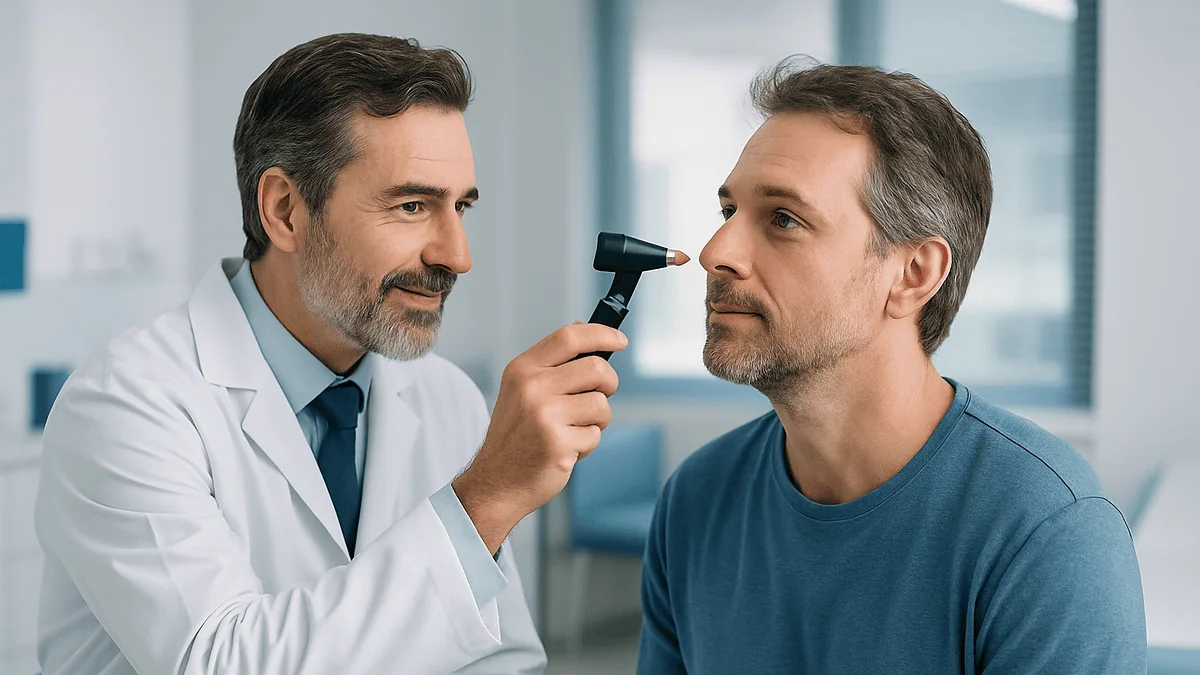
Next comes examination, often including nasal endoscopy, in which a thin camera on a flexible or rigid tube is passed into the nose after a numbing spray. This lets the specialist see swelling, polyps, pus and the drainage openings directly. It takes a few minutes and is uncomfortable rather than painful for most people.
Imaging is the third pillar, and it is where the two disciplines meet. The oral surgeon may already have a cone-beam CT, a low-dose three-dimensional scan of the jaws. The ENT reads the same images with a different eye, looking at the whole sinus, the thickness and pattern of lining, the patency of the ostium, and anything unusual such as a cyst, retained root or foreign body.
The outcome is a written opinion: clear to proceed, proceed after a defined course of treatment, or address the sinus surgically first. Sometimes the ENT recommends allergy testing to pin down triggers. The letter goes back to the dental team, who set the surgical date.
What the scan findings usually mean for timing
Imaging drives most of the decision, so it helps to see how common findings map onto typical next steps. The table below reflects general dental and ENT practice rather than a fixed rule, and the surgeon and ENT weigh each case together.
| Finding on CT or endoscopy | What it suggests | Usual next step |
|---|---|---|
| Clear sinus, thin healthy lining | Low surgical risk from the sinus | Proceed with the lift |
| Mild, even membrane thickening, ostium open | Past or low-grade inflammation | Usually proceed; surgeon takes extra care with the membrane |
| Marked thickening or fluid level | Active sinusitis | ENT treatment first, then re-image |
| Nasal polyps blocking drainage | Chronic sinusitis with obstruction | Medical treatment, sometimes sinus surgery, before grafting |
| Blocked or very narrow ostium | Poor drainage after surgery | ENT may open the pathway first |
| Mucocele or unusual mass | Needs its own diagnosis | Address before any graft |
| Infection of dental origin at the sinus floor | Tooth-related sinusitis | Treat the tooth source, let the sinus settle, then lift |
Two patterns deserve a sentence each. Dental-origin sinusitis, where an infected upper tooth or failed root canal drains upward into the sinus, is a frequent reason a sinus looks worse than the patient’s nasal symptoms suggest, and the fix starts in the dental chair. And a single fluid level on one side, with the other side clear, often points to a local cause rather than a general allergic one.
Re-imaging after treatment is the usual way of confirming that a wait case has become a proceed case.
How chronic sinusitis is usually managed before grafting
When the ENT recommends treatment first, the goal is a calm, draining sinus, not a perfect one. The approaches are the same ones described by the NHS and Mayo Clinic for chronic sinusitis generally.
Saline irrigation, rinsing the nose with a sterile salt-water solution, physically clears mucus and allergens and is often the first suggestion because it is simple and low-risk. The NHS specifically advises using cooled boiled or sterile water rather than tap water.
Intranasal corticosteroid sprays work by dampening inflammation in the lining over days to weeks rather than minutes, which is why clinicians usually ask for consistent use over a period before judging the effect. Antihistamines block the chemical that drives sneezing and itching in allergic patients. For confirmed allergies, immunotherapy, which gradually trains the immune system against specific triggers, is an option that works over months to years.
Antibiotics have a narrower role than many people expect. CDC guidance notes that most sinus infections are viral and clear without them; they are reserved for bacterial infection, often judged by duration, severity or worsening after initial improvement.
Where medicines do not open the sinus, functional endoscopic sinus surgery, or FESS, widens the drainage pathways and removes polyps through the nostrils with no external incision. Some patients have FESS and the sinus lift planned in sequence, with a healing gap in between.
Which of these applies, and for how long, is a decision for the prescribing clinician based on the individual sinus. Nothing here should be read as a reason to start, stop or change a treatment you already use.
Sinus lift complications: what goes wrong, and how sinusitis raises the stakes
Sinus lift complications are uncommon in experienced hands, but patients deserve the real list rather than a reassurance.
Membrane perforation is the most frequent intra-operative event. A small tear is usually patched with a collagen membrane and the procedure continues; a large tear may mean abandoning the graft that day and returning after healing. Thickened or infected lining tears more readily, which is the single clearest reason an inflamed sinus is treated first.
Graft infection shows up as persistent pain, swelling, bad taste or discharge days to weeks after surgery. Cleveland Clinic lists infection among the recognized risks of the procedure. Because graft material has no blood supply early on, infection can mean losing part or all of the graft.
Post-operative sinusitis, new or flaring, can follow when swelling blocks drainage. Patients with a narrow ostium beforehand are the ones most exposed.
Graft displacement into the sinus can happen if the membrane tears or if pressure from sneezing or nose-blowing pushes material through; it may need removal if it causes blockage.
An oroantral communication, an opening between mouth and sinus that fails to close, is rare but can allow air and fluid to pass between the two and usually needs surgical repair.
Bleeding, bruising and temporary numbness of the cheek or upper lip occur as with any oral surgery. Mayo Clinic’s dental implant overview also lists sinus problems among the complications when upper implants protrude into the cavity.
Every item on this list is either more likely or harder to resolve when the sinus is already inflamed. That is the whole argument for the ENT visit in one sentence.
Sinus lift recovery time and what the first weeks look like
People asking about sinus lift recovery time are often really asking two questions: when will I feel normal, and when can the implant go in? The answers differ by months.
The first week brings swelling of the cheek, some bruising and mild to moderate discomfort that usually eases day by day. A small amount of bleeding from the nose on the operated side in the first day or two is common because the sinus lining was handled. Soft foods, head elevation when resting and cold compresses are the standard comfort measures. Stitches are typically removed or dissolve within about a week to ten days.
The precautions matter more than the pain. Surgeons routinely ask patients to avoid blowing the nose, to sneeze with the mouth open, to skip straws and vigorous rinsing, and to avoid flying, diving or heavy lifting for a stated period, because all of these change pressure across the healing membrane. Anyone with allergies is usually asked to keep symptoms under control through this window so that sneezing fits do not become a daily event.
By two to three weeks most people are back to normal routines with a sense of fullness in the cheek that fades gradually.
Underneath, the slow work continues. Cleveland Clinic gives a typical range of 4 to 12 months for the graft to mature enough for implant placement, depending on the material used and how much bone was needed. After the implant goes in, Mayo Clinic describes a further period of several months for osseointegration before the final crown. The full journey from lift to finished tooth often spans a year or more, which is another reason to get the sinus right at the start.
Alternatives when a sinus lift is not the right choice
A sinus lift is one route to an upper-jaw implant, not the only one, and an ENT finding that delays or rules it out does not close the door on replacing the teeth.
Shorter implants are designed to sit within the bone that remains without approaching the sinus floor. They avoid grafting altogether, at the cost of a smaller surface area in bone, and the surgeon judges whether the available height is enough.
Tilted or angled implants are placed at a slant so that the post runs through solid bone in front of or behind the sinus rather than beneath it. They are common in full-arch replacements where several implants support a complete row of teeth.
Zygomatic implants are much longer posts anchored in the cheekbone rather than the jaw. They bypass the sinus region entirely but require a specialist surgical team and are usually reserved for severe bone loss.
A conventional bridge supported by neighboring natural teeth, or a removable partial denture, remain options that involve no surgery near the sinus at all. They have their own trade-offs in longevity and in the load placed on adjacent teeth.
Finally, staged care is itself an alternative: treat the sinus, let it settle, re-image, and revisit the lift. For many patients with chronic sinusitis this is the path that ends with the implant they first wanted.
Which option fits depends on bone volume, sinus health, the number of teeth being replaced and overall health. The dental team lays out the choices; the decision is shared, and no single route is right for everyone.
What people often get wrong about sinus lifts and sinusitis
“A sinus lift goes into the sinus.” It does not. The graft sits beneath the sinus lining, in the space between the old floor and the lifted membrane. The sinus cavity itself is meant to stay sealed. The confusion is understandable, but it explains why membrane integrity is the whole game.
“My allergies are mild, so they cannot matter.” Mild hay fever rarely cancels surgery. What matters is whether the drainage pathway is open and whether sneezing and congestion will be at their worst during graft healing. Timing around a season is a planning question, not a verdict.
“If I feel fine, my sinus is fine.” Chronic sinusitis can be quiet. Scans regularly show thickened lining or a fluid level in people with few symptoms, and infected upper teeth can inflame the sinus without any nasal complaint. This is why the surgeon reads the scan rather than relying on how you feel.
“Antibiotics beforehand will clear it either way.” CDC guidance is that most sinus inflammation is not bacterial, and antibiotics do nothing for a blocked ostium or a polyp. Treatment is matched to the cause.
“Sinus surgery means I can never have implants.” The opposite is more often true. Opening drainage with FESS can turn a poor candidate into a reasonable one, and many surgeons have placed grafts in previously operated sinuses.
“The ENT visit is a way of saying no.” In most cases it is a way of saying not yet, with a plan attached. The aim is a graft that heals once, rather than one that has to be rescued.
Questions to ask your care team before a sinus lift
Walking into both the dental and ENT consultations with a short list keeps the conversation concrete. These are the questions that tend to change plans.
- What does my scan show about the sinus lining and the drainage opening, and is anything on it related to a tooth rather than my nose?
- Do I meet the definition of chronic sinusitis, or is this allergic rhinitis, or both?
- If treatment comes first, how will you decide the sinus is ready, and will I be re-imaged?
- Which technique do you plan, lateral window or crestal, and why for my anatomy?
- What graft material would you use, and what are the trade-offs?
- Would you place the implant at the same time or after the graft matures, and roughly how long is that wait in my case?
- If the membrane tears during surgery, what happens next?
- Which of my current medicines, including nasal sprays and allergy treatments, should continue through surgery and healing, and who decides?
- What are the signs that the graft is in trouble, and whom do I call, dentist or ENT?
- Is there a season or time of year you would prefer to avoid for my surgery?
- What are my alternatives if the lift is not advisable, and how do they compare for my situation?
- How do you and the ENT share information so I am not relaying messages between you?
Write down the answers. The two teams will coordinate, but you are the person who sees both, and a clear record of what each said is useful when the plan stretches over months.
When to call your doctor
Most discomfort after a sinus lift fades steadily over the first week, and allergy symptoms around surgery are usually manageable. Some signs, though, mean the dental team or ENT should hear from you promptly rather than at the next scheduled visit.
Call the same day if you notice increasing rather than decreasing pain or swelling after the first few days; fever or chills; foul-tasting or discolored discharge in the mouth or from the nose on the operated side; air or fluid passing between your mouth and nose when you drink or breathe; small granules of graft material appearing in nasal discharge; bleeding that does not settle with gentle pressure; or a sudden worsening of sinus pressure, headache or facial pain.
Seek urgent care, by calling emergency services if necessary, for swelling that spreads toward the eye or makes it hard to open the eyelid, changes in vision or double vision, severe headache with a stiff neck or confusion, difficulty breathing or swallowing, or heavy bleeding that will not stop. Mayo Clinic lists eye swelling, vision changes, severe headache and confusion among the signs that sinus infection may be spreading beyond the sinus, which is rare but serious.
Before surgery, let the team know if you develop a cold, a sinus flare or a tooth abscess in the days leading up to the date; postponing is routine and far better than operating through an infection.
Whatever the symptom, the people who planned your care are the right first call. They know your anatomy, your scan and your plan, and they would rather hear about a false alarm than miss an early infection.
Frequently asked questions
Can I have a sinus lift with chronic sinusitis?
Often yes, but usually after the sinus has been assessed and, if needed, treated. Surgeons prefer a calm lining and an open drainage pathway before placing graft beneath the membrane. Active infection, polyps or a blocked sinus opening are the common reasons to treat first and re-scan before scheduling the lift.
What does an ENT evaluation before a sinus lift look for?
It looks for anything that would make the sinus a poor neighbor to a fresh graft: active inflammation, polyps, fluid, a narrow or blocked drainage opening, cysts, or infection of dental origin. The visit usually includes a symptom history, a nasal endoscopy and a review of your CT scan, ending with a written recommendation to the dental team.
Will my hay fever stop me getting dental implants with sinus problems?
Rarely on its own. Well-controlled allergic rhinitis is usually compatible with a sinus lift. The team may time surgery outside your worst season, ask you to keep symptoms stable during healing, and check that congestion has not caused real sinus disease. Severe, uncontrolled allergies may prompt a short period of treatment first.
What are the most common sinus lift complications?
Tearing of the sinus membrane during surgery is the most frequent event, followed by graft infection, post-operative sinusitis, displacement of graft material and, rarely, a persistent opening between mouth and sinus. Bruising, swelling and temporary numbness are expected short-term effects. An inflamed sinus raises the likelihood of most items on this list.
What is the typical sinus lift recovery time?
Day-to-day recovery usually takes one to two weeks, with swelling easing over that period. Graft maturation is far longer: Cleveland Clinic gives a typical range of 4 to 12 months before an implant is placed, and Mayo Clinic describes several more months for the implant to fuse with bone before the final crown.
Why can't I blow my nose after a sinus lift?
Forceful nose-blowing, closed-mouth sneezing and straws all raise pressure across the healing sinus membrane. That pressure can tear the lining or push graft material into the sinus cavity. Surgeons ask patients to avoid these for a stated period, which is also why allergy control around surgery is taken seriously.
Do I need antibiotics before a sinus lift if I have sinusitis?
Not automatically. CDC guidance notes that most sinus infections are viral and resolve without antibiotics, which are reserved for confirmed or likely bacterial infection. Treatment before a lift is matched to what the scan and endoscopy show, and the prescribing clinician decides what, if anything, is appropriate for you.
Could my sinus problem actually be coming from a tooth?
Yes, and it is a common finding. An infected upper molar or a failed root canal can drain upward into the sinus and inflame the floor without causing typical nasal symptoms. When the scan shows one-sided disease close to a tooth root, the dental source is usually treated and the sinus allowed to settle before any graft.
If I need sinus surgery first, how long before the sinus lift?
There is no fixed interval; the ENT and oral surgeon agree on a gap that allows the sinus lining to heal and drainage to be confirmed, often with repeat imaging. Many patients proceed to the lift within months of functional endoscopic sinus surgery, but the exact timing is set by the two teams for the individual case.
What are the alternatives if a sinus lift is not advisable?
Shorter implants that stay within existing bone, tilted implants that avoid the sinus, zygomatic implants anchored in the cheekbone, a tooth-supported bridge or a removable partial denture are the usual options. Each has trade-offs in surgery, durability and cost of adjacent teeth, and the dental team can outline which fit your bone and sinus.
References
This article is for general information only and is not a substitute for professional medical advice. Please consult a qualified doctor about your individual situation.

More from the Blog
The Dental Implant Process: Every Stage From First Scan to Final Crown
The dental implant process typically unfolds over three to nine months. It begins with a 3D scan and treatment planning, followed by any needed…

Sinus Lift Healing Timeline: From Graft Placement to the Day Your Implants Can Be Planned
A sinus lift usually needs several months to heal before implants can be planned. Cleveland Clinic and Mayo Clinic describe bone graft maturation as…
Who Needs Full Mouth Reconstruction? Worn, Eroded and Missing Teeth That Add Up to a Rebuild
Full mouth reconstruction is usually considered when several problems overlap in one mouth: teeth worn flat by grinding, enamel dissolved by acid, multiple missing…

Full Mouth Reconstruction Stages: Bite Stabilization, Tooth Rebuilding and the Final Fit
Full mouth reconstruction usually moves through three stages. First, the bite is stabilized and gum disease, decay, grinding and jaw-joint problems are treated. Second,…

How to Clean Around Zygomatic Implants and a Fixed Bridge: Water Flossers and Recall Visits
Cleaning zygomatic implants and the fixed bridge they support means brushing twice daily with a soft brush, cleaning under the bridge with interdental brushes,…

E-Max Crown Problems: Chipping, Debonding and Sensitivity and How Each Is Handled
E-Max crowns are made of lithium disilicate glass ceramic, and their most common problems are small edge chips, loss of the bond to the…