Sinusitis Treatment
Sinusitis treatment relieves inflammation or infection of the sinus cavities using ENT evaluation, medication, allergy management and, for chronic blocked sinuses, minimally invasive endoscopic surgery.
Quick answer
Sinusitis is inflammation of the air-filled cavities around the nose, cheeks, forehead and eyes, triggered by infection, allergy or blocked drainage. Treatment usually starts with saline rinses, nasal corticosteroid sprays and, when bacterial infection is likely, targeted antibiotics. If chronic sinusitis persists despite medication, endoscopic sinus surgery can open blocked drainage pathways through the nostrils, without external incisions.
Sinus Infection Symptoms and What They Usually Mean
Sinusitis is inflammation of the paranasal sinuses: the air-filled cavities in the bones around your nose, cheeks, forehead and eyes. Sinusitis treatment is not one single procedure. It is a structured medical approach that first works out why the sinus lining is inflamed, then restores healthy ventilation and drainage: through medication, allergy evaluation, nasal endoscopy, imaging, lifestyle adjustment and, when appropriate, minimally invasive endoscopic sinus surgery. It is intended for people whose symptoms are severe, persistent, recurrent or difficult to explain, not for every blocked nose.
Sinus infection symptoms usually begin like an ordinary cold: nasal congestion, facial pressure, thick drainage, headache, a dulled sense of smell, or a cough that worsens at night. For many people, these settle within days. For others, the inflammation lingers, returns repeatedly, or becomes disruptive enough to affect sleep, work, travel, exercise and overall wellbeing.
Many people seek specialist care when they feel trapped in a cycle of antibiotics, nasal sprays, temporary improvement and relapse. Some worry that a hidden infection, a structural blockage, allergy, asthma, nasal polyps or another condition is being missed. That worry is reasonable: sinus infection symptoms overlap with several unrelated problems, which is why an accurate diagnosis matters more than any individual medicine. The aim of treatment is straightforward, reduce symptoms, treat infection or inflammation, prevent recurrences, and improve breathing and quality of life.
A little anatomy explains most of what follows. You have four paired sinuses: the maxillary sinuses in the cheeks, the ethmoid sinuses between the eyes, the frontal sinuses in the forehead and the sphenoid sinuses deep behind the nose. Each produces a thin film of mucus that microscopic hairs, called cilia, sweep through small openings into the nasal cavity. Most of these openings converge on a narrow region at the side of the nose. When the lining swells, because of a virus, allergy or irritation, the openings close, mucus stagnates, pressure builds and bacteria can multiply in the trapped fluid. Almost everything in sinusitis treatment, from a saline rinse to surgery, comes back to reopening that drainage.
What is sinusitis?
Sinusitis is swelling or inflammation of the tissue lining the sinuses, whatever the cause, viral, bacterial, fungal, allergic or structural. Doctors describe it by duration. Acute sinusitis develops suddenly and usually lasts a short time, often after a viral upper respiratory infection. Recurrent acute sinusitis means repeated acute episodes with symptom-free intervals in between. Chronic sinusitis, also called chronic rhinosinusitis, means the inflammation persists for an extended period, generally twelve weeks or more, and may be associated with nasal polyps, allergy, asthma, structural narrowing, immune factors or ongoing irritation. The distinction matters because each pattern points to different causes and different treatment.
What is a sinus infection?
A sinus infection is sinusitis caused by a virus, bacteria or, less commonly, a fungus, rather than by allergy or anatomy alone. Most begin as viral inflammation, part of a cold, and improve on their own. A bacterial infection becomes more likely when symptoms last well beyond a typical cold, when they are unusually severe with fever and marked facial pain, or when they improve and then clearly worsen again: a pattern clinicians call double worsening. This is why antibiotics are not the automatic answer to every blocked, painful nose: they help genuine bacterial infection, but do nothing for viral inflammation, allergy or structural blockage.
Are sinus infections contagious?
The trigger can be contagious; the sinusitis itself is not passed from person to person. Most sinus infections start with cold viruses, which do spread through droplets and contact, so someone with a viral sinus infection can pass on the cold that started it. The bacterial infection that sometimes follows develops inside a blocked sinus and is not generally considered contagious in ordinary contact. Sinusitis caused by allergy, polyps or anatomy is not contagious at all. Sensible hygiene, hand washing, covering coughs and sneezes, reduces the spread of the viruses that begin the whole process.
Sinusitis Symptoms: Acute, Recurrent and Chronic Patterns
Sinusitis symptoms commonly include nasal blockage, facial pressure or pain, thick yellow or green drainage, postnasal drip, cough, reduced smell or taste, ear pressure, fatigue, pressure in the upper teeth, headache and disturbed sleep. Symptoms often flare during flights, seasonal allergy periods, respiratory infections, or exposure to smoke and other irritants. No single symptom confirms the diagnosis; it is the combination and the timeline that count.
The pattern tells you as much as the individual complaints. Acute episodes tend to be dramatic: sudden congestion, coloured drainage, facial pain, sometimes fever, following a cold. Chronic sinusitis is quieter and more wearing, persistent blockage, drainage down the back of the throat, a fading sense of smell, heaviness around the cheeks or forehead, and a fatigue that builds over months. Recurrent acute sinusitis sits between the two: distinct infections that clear, then return several times a year, often pointing to an underlying anatomical, allergic, immune or environmental factor that deserves investigation.
Not everything that feels like sinus trouble is sinusitis. Migraine is a common imitator of sinus headache and facial pressure. Dental infection in the upper jaw, temporomandibular joint problems and neuralgic pain can all be mistaken for sinus disease. A persistent cough may reflect postnasal drip, reflux, asthma, or a lower airway problem such as a lung infection, rather than the sinuses at all. Because these symptoms are shared with so many other conditions, treating them repeatedly without a firm diagnosis wastes time and medication.
Some people have few obvious nasal complaints and instead notice persistent throat clearing, a nagging cough, loss of smell, or a sense of facial heaviness. Others gradually adapt to poor nasal breathing and chronic drainage, and only recognise how much energy, concentration and sleep were being lost once the problem is properly treated. Long-standing symptoms are worth taking seriously even when they have become familiar.
How Sinusitis Is Diagnosed and Who Needs Assessment
Diagnosis begins with a detailed history. The ENT physician asks about symptom duration, previous infections, antibiotic courses, allergy history, asthma, prior nasal surgery, smoking or irritant exposure, dental procedures, immune disorders, and travel or occupational factors. The purpose is to establish the pattern, acute, recurrent or chronic, and to weigh the alternatives, because viral colds, migraine, allergic rhinitis, dental infection and certain neurological conditions can all mimic sinus disease.
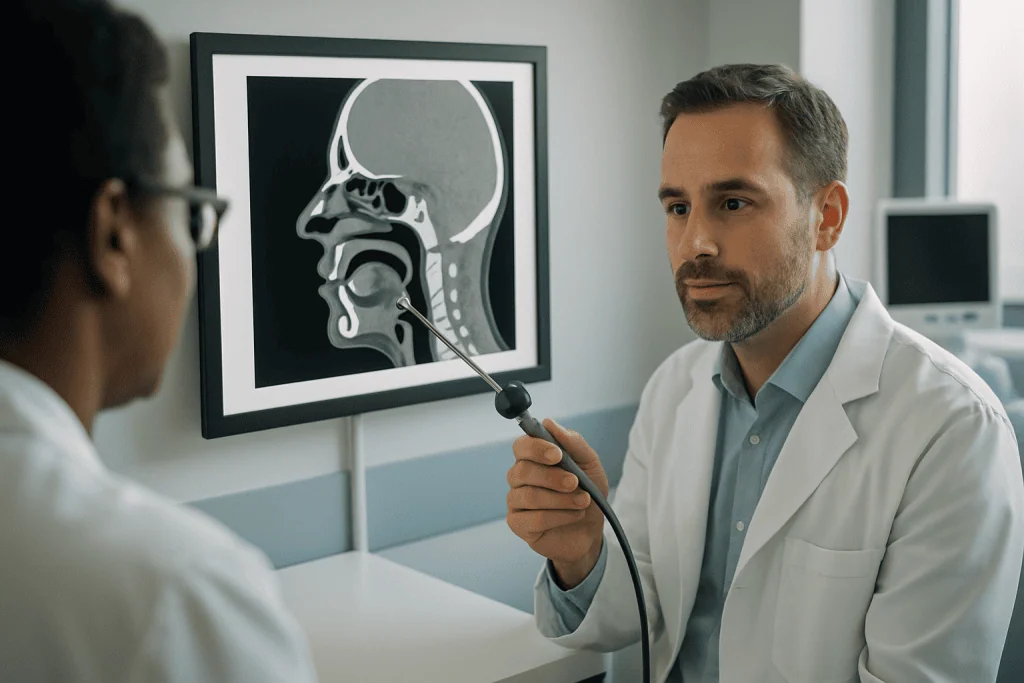
The examination usually includes nasal endoscopy: a slim flexible or rigid camera passed into the nasal passages to inspect the sinus drainage areas directly. It shows swelling, drainage, polyps, structural narrowing, septal deviation, crusting and signs of infection that cannot be seen from the front of the nose. It is typically done in the clinic, with a topical medication applied first to reduce discomfort.
When chronic sinusitis, recurrent infection or surgery is under consideration, a computed tomography (CT) scan of the sinuses is commonly used. CT shows the bony anatomy, the areas of blockage, the extent of inflammation, and the relationship of the sinuses to the eyes and skull base, information that matters both for diagnosis and for planning any procedure safely.
In selected situations, further tests refine the picture. A mucus culture can identify the organism when infection is persistent, resistant or keeps returning, allowing antibiotics to be chosen rather than guessed. Allergy testing identifies triggers that keep the nasal lining swollen. Blood tests may assess immune function. A dental evaluation is important when an upper tooth, implant or root canal complication could be feeding a maxillary sinus problem.
Specialist treatment is worth considering when sinus infection symptoms persist despite appropriate medication, return several times a year, or interfere meaningfully with daily life. Certain features change the picture entirely: swelling around the eye, vision changes, severe or unusual headache, high fever, stiff neck, confusion or neurological symptoms can indicate infection spreading beyond the sinus, and clinicians treat these as emergencies rather than routine sinusitis.
Conditions and Indications Sinusitis Treatment Addresses
Sinusitis treatment covers a family of related conditions. The plan depends on whether the dominant problem is infection, chronic inflammation, allergy, structural blockage, or, most often, some combination.
- Acute bacterial sinusitis: an infection that may follow a viral illness and causes worsening or persistent symptoms, often with thick drainage, facial pressure, fever, or symptoms that improve and then deteriorate again.
- Chronic rhinosinusitis: long-lasting inflammation of the nasal and sinus lining, typically causing congestion, drainage, facial pressure, smell loss and fatigue.
- Chronic sinusitis with nasal polyps: soft inflammatory growths that block airflow and drainage, often linked with asthma, allergy or aspirin-exacerbated respiratory disease.
- Recurrent acute sinusitis: repeated infections with clear intervals in between, sometimes driven by anatomy, allergy, immune issues or environmental triggers.
- Sinus blockage due to anatomy: narrow drainage pathways, a deviated nasal septum, enlarged turbinates, concha bullosa or other variations that impair ventilation.
- Allergic rhinitis with sinus symptoms: nasal allergy causes swelling and drainage problems that imitate or aggravate sinusitis.
- Fungal sinus disease: certain fungal-related sinus conditions require specialised medical or surgical management.
- Odontogenic sinusitis: sinus inflammation arising from dental infection, dental implants, root canal complications or upper jaw disease.
- Sinus complications: rare but serious spread of infection towards the eye, bone, brain or surrounding tissues, requiring urgent, coordinated care.
These conditions overlap, and the overlap is exactly where misdiagnosis happens. A patient with facial pain may have migraine rather than sinusitis; a patient treated repeatedly with antibiotics may actually have uncontrolled allergy or growing polyps. A precise evaluation avoids unnecessary medication and supports a plan that lasts.
Sinus Infection Treatment: How Care Is Planned and Performed
Sinus infection treatment moves in stages, starting with the simplest effective option and progressing towards surgery only when the diagnosis and the response to medication genuinely justify it. The sequence below reflects how most ENT teams work through a persistent sinus problem.
Initial evaluation and preparation
The first step is a complete ENT consultation. The physician reviews symptoms, previous treatments, medical history, current medications, allergies, travel plans and any prior imaging. Previous CT scans, endoscopy reports, medication lists, allergy results and surgical records are all useful at this stage, because they show what has already been tried and whether the working diagnosis should be reconsidered before anything new is prescribed.
Nasal endoscopy is usually performed at this visit to assess the drainage pathways. If imaging is needed, CT provides the anatomical detail. In some cases a mucus culture guides antibiotic selection, particularly when infection has persisted, resisted treatment or recurred repeatedly.
Preparation depends on the plan. For medical therapy, it can be as simple, and as important, as learning the correct technique for saline irrigation and nasal sprays; many people use sprays incorrectly, aiming at the septum or sniffing hard, which sharply reduces the benefit. For surgery, preparation includes blood tests when indicated, an anaesthesia assessment, a review of medications that may affect bleeding, and instructions about fasting and postoperative care. Stopping smoking is strongly advised, because smoke irritates the nasal lining and can impair healing.
Medical treatment
Most sinusitis care begins with medication, not procedures. For viral sinus inflammation, treatment centres on symptom relief: hydration, saline rinses, fever control and time. Antibiotics are not always needed; they are most useful when the symptom pattern, severity or examination findings make a bacterial infection likely.
For chronic sinusitis, treatment commonly combines saline irrigation with intranasal corticosteroid sprays to reduce inflammation at its source. Short courses of oral corticosteroids may be considered for selected patients, especially those with polyps or severe swelling, but they are used carefully because of potential side effects. Depending on the disease pattern, antihistamines, allergy immunotherapy, leukotriene modifiers, asthma treatment or biologic medications may have a role. All of these decisions belong to the treating doctor, tailored to the individual diagnosis.
Where infection is suspected, antibiotics are chosen on clinical grounds and, when necessary, on culture results, targeted therapy rather than repeated broad courses. Patients with dental-related sinusitis often need coordinated dental or maxillofacial treatment, because the sinus will not settle while the dental source remains.
How to relieve sinus pressure
Sinus pressure eases when the swollen lining shrinks and mucus starts moving again, and several simple measures support that. Saline nasal irrigation rinses away thick mucus and crusts and is the single most useful self-care habit in sinus disease. Steam inhalation or a warm shower can loosen secretions temporarily. A warm compress over the cheeks or forehead soothes facial pressure. Staying well hydrated keeps mucus thinner, and sleeping with the head slightly raised reduces overnight congestion. Avoiding smoke and known allergy triggers removes a constant source of swelling.
Medications can also reduce pressure, but they come with caveats a pharmacist or doctor should walk you through, for example, clinicians generally limit decongestant sprays to a few days, because prolonged use causes rebound congestion that is worse than the original problem. The honest limitation of all self-care is this: it relieves pressure, but it does not fix a blocked drainage pathway, growing polyps or an untreated allergy. When pressure keeps returning despite these measures, the cause needs to be found, not just soothed.
Allergy and contributing factor management
Allergy is one of the most common contributors to chronic nasal and sinus symptoms. Treating it reduces swelling in the nasal passages and improves drainage. Evaluation may be history-based or involve formal testing; treatment can include environmental control measures, nasal corticosteroids, antihistamine sprays or tablets, saline irrigation and, in selected cases, immunotherapy.
Other contributors deserve attention too: asthma, reflux, occupational irritants, immune system problems, medication effects and sleep-disordered breathing. Sinusitis is often part of a broader airway condition rather than an isolated nose problem. In patients with asthma and nasal polyps, for instance, controlling sinus inflammation frequently supports better respiratory control overall, one reason a comprehensive approach outperforms symptom-by-symptom prescribing.
Endoscopic sinus surgery
When symptoms persist despite appropriate medical therapy, or when imaging shows persistently blocked drainage pathways, polyps, fungal disease or complications, the ENT specialist may recommend functional endoscopic sinus surgery. The operation is performed through the nostrils, so external incisions are usually not required. A small endoscope gives a magnified view, and fine instruments open the natural drainage pathways of the sinuses, removing diseased tissue, polyps, thick mucus or obstructing bone as needed. The philosophy is conservative: preserve healthy tissue, restore ventilation, and create access so that rinses and sprays can reach the sinus lining effectively afterwards.
In practical terms, the surgical pathway usually looks like this:
- Step 1: Mapping: preoperative CT imaging maps the individual anatomy and identifies areas close to the eye socket, skull base, optic nerve and major blood vessels.
- Step 2: Anaesthesia: the procedure is planned with the anaesthesia team, taking general health and current medications into account.
- Step 3: Endoscopic access: the surgeon works through the nostrils under high-resolution endoscopic visualisation, without external cuts.
- Step 4: Opening the pathways: the maxillary, ethmoid, frontal or sphenoid sinuses are opened as the diagnosis requires; powered instruments, micro-instruments and controlled suction remove tissue carefully.
- Step 5: Correcting contributing anatomy: if a deviated septum or enlarged turbinates contribute to obstruction, septoplasty or turbinate reduction may be performed at the same time.
Technology supports precision throughout. In complex or revision cases, image-guidance systems can help the surgeon confirm instrument position against the patient’s own CT anatomy. The specific tools are chosen to fit the diagnosis, the anatomy and the surgical goal, not the other way round.
The duration varies. Limited procedures can be relatively short; extensive chronic disease, nasal polyps, revision surgery, fungal disease, or combined septum and turbinate work takes longer. Many patients go home the same day or after a short hospital stay, depending on the extent of surgery, anaesthesia considerations and overall health.
Recovery after treatment
Recovery after medical treatment depends on the cause. Acute infections may improve over days, while chronic inflammation usually needs ongoing care over weeks or months. After endoscopic sinus surgery, nasal congestion, mild bleeding, crusting, fatigue and pressure are common in the first days. Discomfort is usually manageable with the medication the team prescribes or recommends, though the experience varies from person to person.
Postoperative care is a large part of the result. Patients are usually instructed to use saline rinses to keep the nasal passages clean and support healing. Follow-up visits let the surgeon examine the healing sinus openings, remove crusting where needed, adjust medications and catch early scarring or inflammation before it undoes the operation. Most people return to light activities within several days, while strenuous exercise, heavy lifting, nose blowing and some travel plans are restricted for a period. The sinus lining takes considerably longer to heal than the first weeks suggest, and ongoing topical therapy is often needed, particularly with chronic inflammatory disease or polyps.
Air travel after surgery needs to be timed carefully, and the care team advises individually based on the operation and healing progress. Patients travelling internationally for treatment should also plan for the basics of staying well en route; the guide to preventing infection during medical travel covers sensible precautions before, during and after a treatment trip.
Why Acting Early Matters and the Risks of Delay
Many sinus symptoms are not dangerous and resolve with time. But delaying specialist evaluation can prolong discomfort and allow inflammation to become harder to control. Repeated infections mean frequent antibiotic courses, missed work, poor sleep, persistent fatigue, fading smell and a steady erosion of quality of life that people often only recognise in retrospect.
In chronic sinusitis, ongoing swelling narrows the drainage pathways further, creating a self-reinforcing cycle of obstruction and inflammation. Nasal polyps can enlarge over time, blocking airflow and smell progressively. Patients adapt, breathing through the mouth, clearing the throat, sleeping badly, without realising how much the condition is costing them until it is treated properly.
Delay also blurs the diagnosis. Facial pressure gets attributed to sinusitis when migraine, dental disease, jaw joint problems or neuralgic pain is actually responsible; persistent blockage gets treated as allergy when structural obstruction or polyps are the real cause. Each round of the wrong treatment makes the true pattern harder to see. An accurate diagnosis, made early, prevents unnecessary medication and points care at the underlying problem.
Although uncommon, sinus infections can spread to nearby structures, including the eye socket, bone and intracranial spaces. This is rare, but it is the reason clinicians take unusual severity seriously, and it is especially relevant for people with immune suppression, diabetes, prior sinus surgery or complex infections, whose sinusitis warrants earlier specialist assessment rather than watchful waiting.
Benefits of Sinusitis Treatment
What treatment can realistically deliver depends on the cause and the plan, but these are the improvements patients most commonly seek, and the honest terms in which to expect them.
| Benefit | What It Means for You |
|---|---|
| Improved nasal breathing | Reducing inflammation or opening blocked pathways may make it easier to breathe through the nose, particularly during sleep and physical activity. |
| Less facial pressure and congestion | Better sinus ventilation and drainage can reduce the heavy, blocked sensation many patients feel around the cheeks, forehead or eyes. |
| Fewer recurrent infections | When underlying causes are addressed, some patients experience fewer episodes and less need for repeated medication. |
| Better smell and taste | Treating swelling, polyps and obstruction may help restore smell function, although recovery varies with disease severity and duration. |
| More targeted medication use | A clear diagnosis helps physicians choose appropriate treatment and avoid unnecessary or repeated antibiotics when they are unlikely to help. |
| Improved access for topical therapy | After endoscopic surgery, rinses and sprays may reach inflamed sinus areas more effectively, supporting long-term control in chronic disease. |
Recovery Timeline
Recovery depends on whether treatment is medical or surgical, how extensive the inflammation is, and your general health. This is the typical shape of it.
| Time Period | What Patients Can Expect |
|---|---|
| Day 1 | After medical treatment begins, symptoms may still be present. After surgery, congestion, mild bleeding, pressure and fatigue are common, and patients receive instructions on rinsing, medications and activity limits. |
| First week | Congestion and drainage often continue. Many surgical patients resume light daily activities while avoiding strenuous exercise, heavy lifting and nose blowing, as advised. |
| First month | Breathing may gradually improve as swelling and crusting settle. Follow-up endoscopic care after surgery monitors healing and allows medication adjustments. |
| Longer term | Chronic sinusitis often requires maintenance, saline irrigation, nasal sprays, allergy care or periodic ENT follow-up. Patients with polyps or inflammatory disease may need long-term monitoring to reduce recurrence risk. |
Factors That Influence Outcomes and a Good Result
Outcomes are shaped by the diagnosis, disease severity, individual anatomy, the pattern of inflammation, and how consistently follow-up care is maintained. A straightforward acute bacterial sinusitis often responds well to appropriate medical therapy. Chronic sinusitis with nasal polyps, asthma, allergy, immune disorders or previous surgery usually needs a more layered, longer-term approach, and knowing which of these you are dealing with is half the outcome.
A good result begins with accurate diagnosis. CT imaging and nasal endoscopy distinguish genuine sinus inflammation from the conditions that resemble it. Culture-directed treatment sharpens decisions when infection is persistent or resistant. Allergy assessment identifies triggers that keep the lining inflamed. Dental evaluation can be essential when upper tooth disease is driving a maxillary sinus problem, no amount of sinus medication resolves an untreated dental source.
Surgical outcomes depend heavily on patient selection. Endoscopic sinus surgery is generally considered when symptoms and objective findings support chronic or recurrent disease, and when appropriate medical treatment has not delivered enough relief. It is worth stating the limit plainly: surgery improves drainage and access for medication, but it does not remove the underlying tendency towards inflammation in conditions such as allergy, asthma or polyps. Long-term management remains part of the plan even after a technically excellent operation.
Your own role is significant. Correct saline and spray technique, attending follow-up visits, avoiding smoking, managing allergies and following postoperative instructions all affect healing. Patients who travel internationally for treatment should allow enough time for evaluation and early follow-up, especially if surgery is performed; the care team advises when flying is reasonable and what to watch for after returning home.
General health matters as well. Diabetes, immune suppression, bleeding disorders, blood-thinning medication and certain respiratory conditions can influence treatment choices and recovery, which is why the ENT team may coordinate with anaesthesiology, internal medicine, pulmonology, allergy, infectious diseases, radiology or dental specialists when a case requires it.
Finally, expectations should be realistic. Many patients improve meaningfully with appropriate treatment, but the degree and pace vary. Smell recovery is especially unpredictable when loss has been long-standing or associated with extensive polyps or viral injury. Chronic sinusitis is often controlled rather than permanently eliminated, and some patients need ongoing medication or further procedures over time. A treatment plan that acknowledges this openly serves you better than one that oversells.
How Acibadem Approaches Sinusitis Care
At Acibadem, patients with persistent or complex sinus problems are evaluated by ear, nose and throat specialists managing the full spectrum of nasal and sinus disease, from chronic inflammation and allergy-related symptoms to revision cases and conditions requiring surgical treatment. The diagnostic pathway can include nasal endoscopy, high-resolution sinus imaging, allergy assessment and laboratory testing, with the emphasis on establishing why the sinuses are not recovering before deciding how to treat them.
Multidisciplinary input matters most when sinusitis is not an isolated problem. Patients with asthma, nasal polyps, allergic disease, immune concerns, recurrent infections, sleep-related breathing problems or dental sources of sinusitis benefit from specialist discussion that aligns diagnosis, medical treatment, surgical planning, anaesthesia considerations and follow-up recommendations into one coherent plan rather than parallel prescriptions.
Technology supports both diagnosis and treatment: endoscopic visualisation for detailed examination, CT imaging to map obstruction and inflammation, and, in selected surgical cases, navigation support to help the surgeon work precisely in narrow spaces near the eye and skull base. These are tools within a larger clinical process of careful selection, careful technique and structured aftercare, not substitutes for it.
Treatment planning is personalised. Some patients do not need surgery at all and do best with optimised medication, allergy management or, simply, a corrected diagnosis. Others have chronically blocked sinuses, polyps or recurrent infections that a well-selected endoscopic procedure addresses more durably. Second opinions have a legitimate place here: reviewing prior CT scans, endoscopy findings and treatment history can clarify whether surgery is appropriate, whether further medical therapy deserves a proper trial, or whether another diagnosis should be considered, particularly in revision surgery, persistent symptoms after previous procedures, suspected fungal disease, or sinusitis linked to dental treatment.
A Careful Path Forward
Sinusitis is frustrating because it sits at the junction of infection, inflammation, allergy, anatomy and broader airway health. Effective treatment starts by identifying which of these is actually driving your symptoms. With the right diagnosis, most patients can move away from repeated short-term fixes and towards a plan built for lasting control, whether that means better-targeted medication, allergy management, or an endoscopic procedure with structured follow-up.
For anyone living with persistent congestion, facial pressure, drainage, smell loss or recurrent infections, a thorough ENT evaluation is the step that changes the trajectory. Previous scans, endoscopy reports and treatment records are worth gathering before any consultation, wherever it takes place: they let the physician see the full history at once, avoid repeating tests unnecessarily, and reach a working diagnosis faster.
The pattern of sinus infection symptoms, how they start, how long they last, what makes them better and worse, is the most valuable information you can bring. Paying attention to it, rather than to any single bad week, is what turns a cycle of temporary relief into a treatment plan that actually holds.
Preparation
- An ENT specialist reviews symptoms, medical history, allergy history and previous treatments. Nasal endoscopy or imaging may be requested for chronic or recurrent sinusitis. Patients should inform the doctor about current medicines, asthma, allergies and any prior sinus surgery.
Aftercare
- Use prescribed medications, nasal sprays or saline rinses exactly as directed. Drink fluids, avoid smoke and irritants, and attend follow-up visits if symptoms persist. Seek urgent care for high fever, facial swelling, vision changes or severe headache.
Frequently Asked Questions
What affects the cost of sinusitis treatment?
The final cost depends on the type of sinusitis, required tests, medication, allergy assessment, imaging, need for surgery, anaesthesia, hospital services and follow-up plan.
How can I get a personalised quote?
You can request a free consultation and share your symptoms, previous test results, imaging if available and medical history. The ENT team can then advise on the likely treatment pathway and prepare a personalised quote.
Is surgery always needed for sinusitis?
No. Many patients are managed with medication, nasal care and allergy treatment. Endoscopic surgery is considered when symptoms are chronic or recurrent and do not improve sufficiently with medical treatment, or when there is a structural blockage.
What is usually included in an international patient package?
Package content varies, but it may include ENT consultation, selected diagnostics, hospital services, procedure-related care and coordination support. Travel, accommodation, additional tests and extended follow-up should be confirmed in advance.
Is this information medical or financial advice?
No. This is general educational information. Treatment suitability and cost can only be confirmed after specialist evaluation, so a free consultation is recommended for personalised guidance.
Medically reviewed by the Acıbadem International Medical Board September 13, 2026
See our medical review board →
Update history
- PublishedJune 8, 2026
- Medical review approvedSeptember 13, 2026
- Last content updateSeptember 12, 2026
Trusted care for international patients
From the Acibadem Blog

When Does Sinusitis Need an ENT Specialist Instead of a Wait-and-See Approach?
Most sinus infections are viral and settle within two to three weeks, so waiting is usually appropriate at first. An ENT specialist is usually…

Can Sinusitis Cause Dizziness? Why It Happens, What Helps and When to See a Doctor
Yes, sinusitis can cause dizziness, though usually the light-headed, foggy, slightly-off-balance kind rather than a true spinning sensation. Swollen sinus and nasal linings can…

Is Sinusitis Contagious? How It Spreads, Viral vs Bacterial and How to Protect Others
Sinusitis itself is not contagious. What passes from person to person is the cold or flu virus that usually sets it off; whether that…