

Colonoscopy Surveillance After Colon Cancer: Why Follow-Up Continues After Treatment Ends
Key Takeaways
- For a typical colon cancer, guideline surveillance means a colonoscopy at about one year after surgery, another three years later, then every five years if findings stay normal, not an annual exam for life.
- The first-year colonoscopy finds the most because lesions hidden by the original tumor and early regrowth at the surgical join both tend to appear in that window.
- If the tumor blocked the scope before surgery, a clearing colonoscopy within three to six months after the operation, or a CT colonography beforehand, takes the place of waiting a year.
- Rectal cancer and inherited conditions such as Lynch syndrome use shorter intervals and additional rectal checks because local regrowth and new cancers occur more often in those groups.
- Surveillance is stopped on the basis of life expectancy and ability to tolerate the procedure, broadly when fewer than ten years of expected lifespan remain, rather than at a fixed age.
- Stool-based tests and CEA blood tests answer different questions and are not substitutes for the colonoscopy, which is the only test that directly inspects the anastomosis and remaining colon.
Colonoscopy surveillance after colon cancer continues because the remaining colon can grow new polyps or a second cancer, and the surgical join can occasionally harbor regrowth. The US Multi-Society Task Force advises a colonoscopy about one year after surgery, another three years later, then every five years if findings are normal, with shorter intervals for polyps or inherited syndromes and every decision individualized by the treating team.
The last chemotherapy session gets a small celebration: a nurse’s hug, a photo, maybe a ribbon cut from a hospital gown. Then, a few weeks later, a letter arrives. It is an appointment for a colonoscopy, the test that found the cancer in the first place. For many people that envelope lands with a thud. Wasn’t the whole point that this was finished?
Colonoscopy surveillance after colon cancer is one of the least explained parts of recovery. Surgeons talk about margins, oncologists about cycles, but the long tail of checkups is often handed over in a sentence at the final visit. Patients fill the silence with assumptions: that the scope means something was missed, that it will go on forever, that it is simply a formality.
None of those is quite right. The schedule has a clear logic, a surprisingly thin timetable, and an end point. This article walks through all three.
Why does colonoscopy surveillance after colon cancer continue once treatment is over?
Surgery removes the segment of bowel that held the tumor, usually with a margin of healthy tissue on either side. What it cannot remove is the biology that produced the tumor. The colon that remains, often more than a meter of it, is lined by the same cells, carries the same genetic tendencies, and has lived through the same decades of diet and inflammation. It can grow new polyps, the small mushroom-like growths that most colon cancers start from, and some of those polyps can turn into a second, separate cancer.
Doctors call that second cancer a metachronous cancer, which simply means a new tumor arising later at a different site rather than the old one coming back. The US Multi-Society Task Force on Colorectal Cancer, in its guidance on colonoscopy after cancer resection, describes this as the main reason surveillance exists. The risk is highest in the first few years, partly because small lesions present at the time of the original diagnosis may have been overlooked while attention was fixed on the cancer itself.
A second concern is the anastomosis, the surgical join where the two cut ends of bowel were stitched or stapled together. Regrowth at that join is uncommon for colon cancer; the task force puts it in the low single digits as a percentage of cases, higher for rectal cancer treated without modern techniques. Uncommon is not zero, and a colonoscopy is the only test that looks directly at the join.
So the scope after treatment is not a vote of no confidence in the surgery. It is a recognition that the organ left behind is still at risk, and that early findings are far easier to deal with than late ones.
What actually happens during a surveillance colonoscopy
Mechanically, a surveillance colonoscopy is the same procedure as the one that led to diagnosis. A flexible tube about as thick as a finger, with a light and camera at its tip, is passed through the rectum and guided around the colon while air or carbon dioxide gently inflates the bowel so the lining can be seen. MedlinePlus describes a typical examination lasting about 30 to 60 minutes, though the time in the unit is longer because of preparation and recovery.
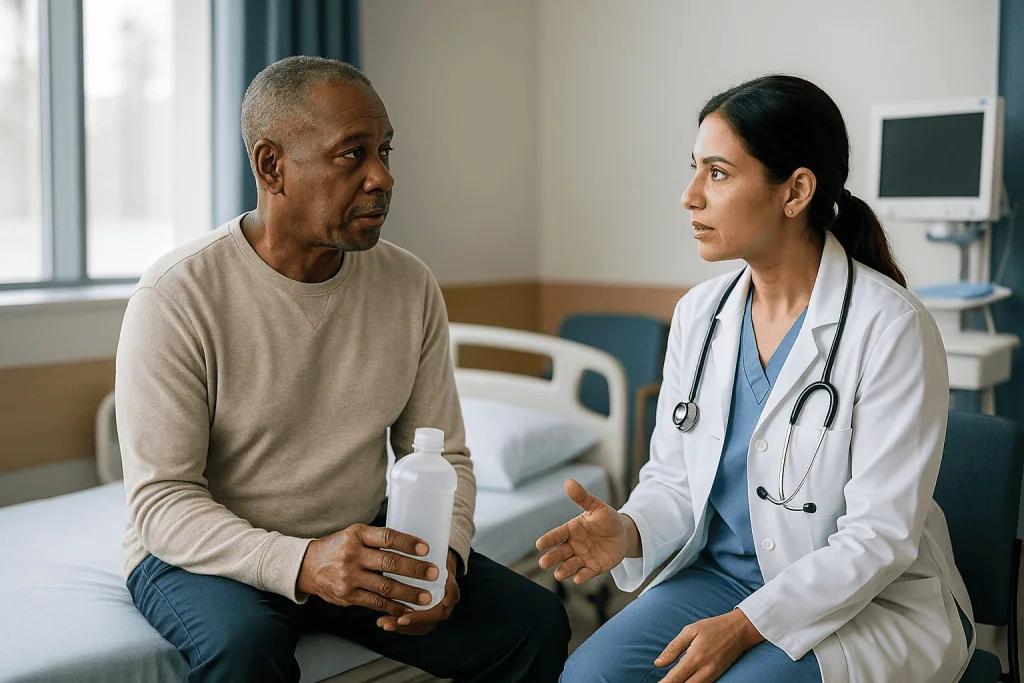
Most people receive sedation, medicine given through a vein that makes you drowsy or lightly asleep. Some centers offer deeper anesthesia; some patients choose minimal or no sedation. The choice is made with the endoscopy team based on your health, your previous experience and local practice.
Two things make the post-cancer version different. First, the endoscopist is looking for specific landmarks: the anastomosis, which appears as a ring of scar or a line of staples, and the cecum, the pouch at the far end of the colon that proves the whole organ has been examined. If the right side of the colon was removed, the “end” is now a join between small bowel and colon, and the operator will confirm reaching it.
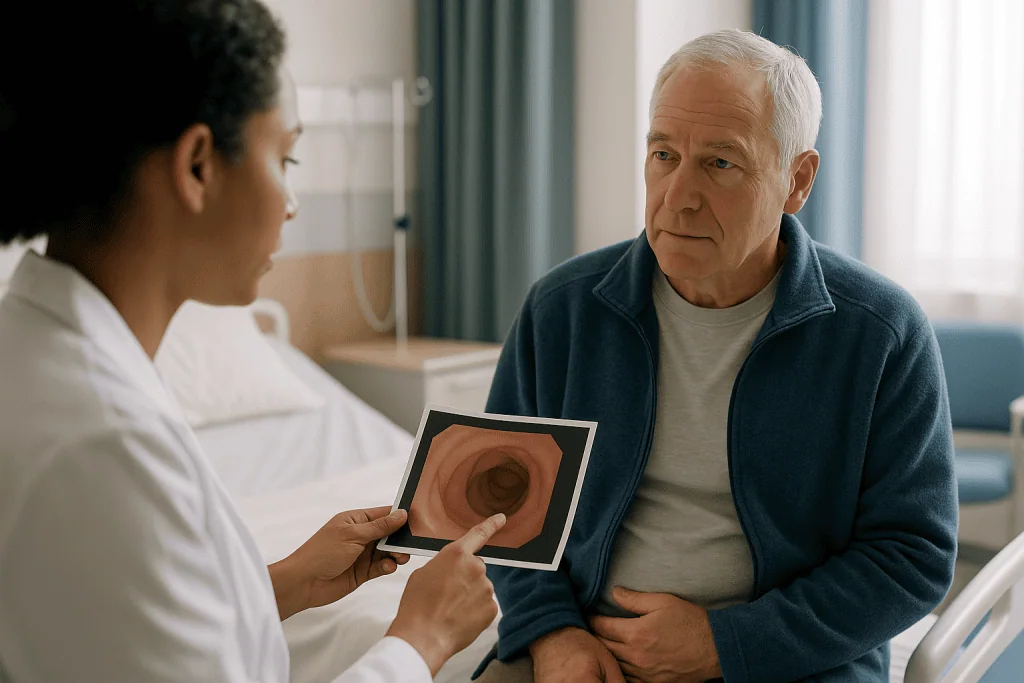
Second, the threshold for action is lower. Any polyp found is usually removed on the spot with a wire snare and sent to a pathologist, the specialist who examines tissue under a microscope. Suspicious tissue at the join may be biopsied even if it looks like ordinary scar. You will usually hear what was seen before you go home, with the pathology report following in one to two weeks.
How often do you have a colonoscopy after colon cancer? The standard schedule
People expect a lifetime of yearly scopes. The actual timetable, set out by the US Multi-Society Task Force and echoed by cancer centers such as Mayo Clinic, is far lighter. For a person whose entire colon was examined before surgery and who had no high-risk features, the sequence is three appointments across roughly a decade.
| When | What usually happens | Why then |
|---|---|---|
| About 1 year after surgery | Full colonoscopy to the cecum, close look at the anastomosis | Peak period for finding lesions missed at diagnosis and for early regrowth at the join |
| About 3 years later (year 4) | Full colonoscopy if the first was normal | Catches polyps that have had time to grow to a detectable size |
| Every 5 years afterward | Full colonoscopy if findings stay normal | Matches the interval used for people at raised but stable risk |
| Within 3–6 months after surgery | Extra “clearing” colonoscopy | Only if the tumor blocked the scope before surgery, so the rest of the colon was never seen |
Each finding resets the clock. A polyp with worrying features under the microscope, several polyps at once, or a large one typically brings the next exam forward, following the same polyp-surveillance rules used for people who never had cancer. A clean exam allows the interval to stretch.
None of these dates is a promise or a rule carved in stone. They are the default a treating team starts from and then adjusts for your anatomy, your pathology and your general health. If your letter says a different interval, that is worth a question, not alarm.
Colonoscopy after colon resection: why the one-year exam matters most
If you remember only one appointment, make it the first. The task force places the initial colonoscopy about a year after resection, the surgical term for removing a section of bowel, because this is when the odds of finding something treatable are highest and the stakes of skipping are largest.
Part of that is simple arithmetic. A cancer large enough to need surgery can hide smaller lesions nearby or stop the scope from passing altogether. Studies summarized by the task force found that a meaningful share of “new” lesions seen at the first surveillance exam were almost certainly present, unseen, at diagnosis. The one-year scope is effectively a second chance at the examination that the tumor interfered with.
Timing also reflects healing. In the first months after surgery the anastomosis is swollen, the bowel is adjusting to its new length, and chemotherapy, where used, often runs for about six months. Scoping during that window risks confusing inflammation with disease and adds a procedure to an already crowded calendar. Waiting a year lets the tissue settle while still staying ahead of the period when metachronous cancers tend to declare themselves.
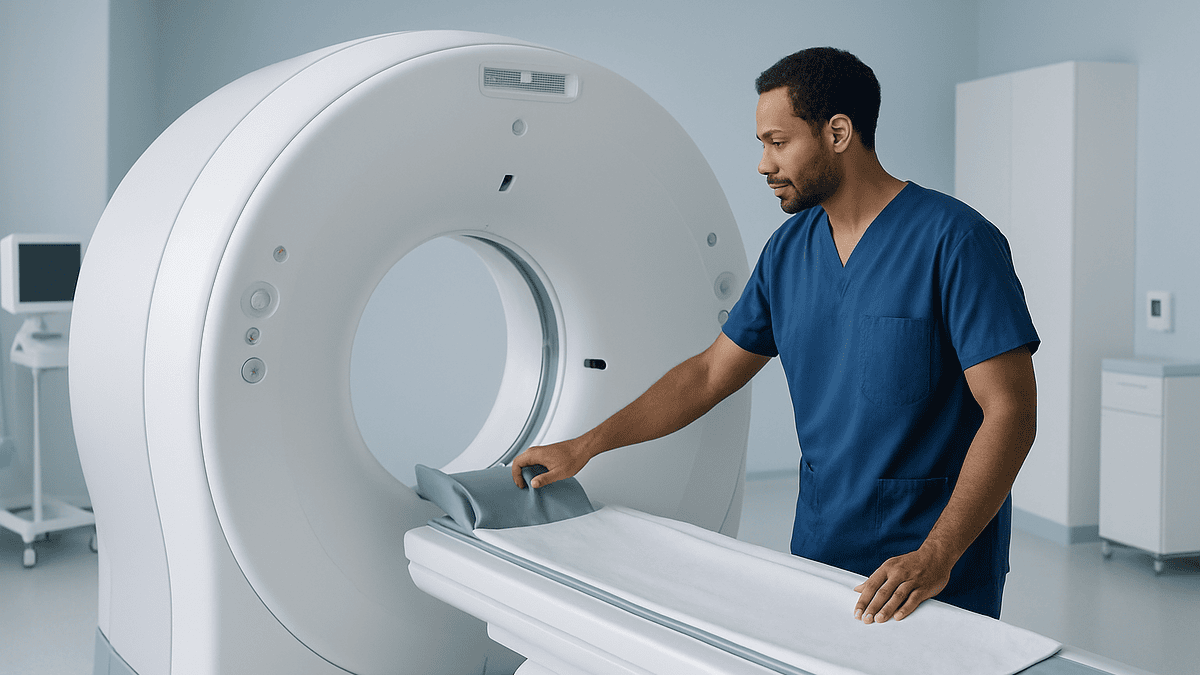
For some people the clock starts earlier. If the original tumor blocked the colonoscope so the rest of the colon was never seen, the task force recommends a clearing exam within three to six months of surgery rather than waiting a year. The alternative is a CT colonography before surgery, a scan that builds a three-dimensional picture of the colon from X-ray images. Either way, the goal is identical: make sure the whole remaining colon has been viewed at least once soon after diagnosis.
The rest of the colon cancer follow-up schedule: blood tests, scans and clinic visits
The colonoscopy looks at the inside of the bowel. It cannot see the liver, the lungs or the lymph nodes, which is where colon cancer most often spreads. That is why the colonoscopy sits inside a wider colon cancer follow-up schedule rather than standing alone.
The blood test most people encounter is CEA, short for carcinoembryonic antigen, a protein that some colon cancers release into the bloodstream. It is a trend test, not a verdict: a single mildly raised value can come from smoking, liver conditions or a stomach bug, which is why teams compare results over time rather than reacting to one number. Mayo Clinic lists blood tests, imaging and colonoscopy together as the standard components of post-treatment follow-up, with the exact spacing set by the oncology team according to the stage of the original cancer.
Imaging usually means a CT scan of the chest, abdomen and pelvis, repeated at intervals during the first years when recurrence elsewhere in the body is most likely, then stopped. People treated for very early-stage disease may have little or no scanning; those treated for more advanced disease generally have more.
Clinic visits tie the threads together. A physical examination, a review of symptoms, a look at weight and energy, and a conversation about bowel function or stoma care are as much a part of surveillance as any test. Over time these visits often move from the surgeon or oncologist to a primary care clinician or a survivorship clinic. The handover should come with a written summary of what has been done and what is still planned, so nothing falls between the gaps.
Who follows the standard schedule, and who is asked to come back sooner or wait
The one-year, three-year, five-year rhythm is designed for the typical person: a colon cancer removed with clear margins, a complete colonoscopy before or soon after surgery, and no inherited syndrome. Several groups are deliberately steered away from it.
People with rectal cancer are the largest. The rectum is the final section of bowel, and local regrowth there is more common than in the colon, especially when surgery was done without the modern technique of removing the surrounding fatty envelope or without radiation beforehand. For those patients the task force suggests additional checks of the rectum with a short flexible scope or rectal ultrasound every three to six months for the first two to three years, on top of the standard colonoscopies.
Inherited conditions shorten the interval sharply. Lynch syndrome, a genetic change that raises the lifetime risk of colon and other cancers, is usually followed with colonoscopy every one to two years for life, because new cancers can develop quickly between exams. Familial polyposis conditions have their own schedules.
Findings at any exam also move people out of the default group. Advanced polyps, multiple polyps or an incomplete examination all bring the next appointment forward.
Who is asked to wait, or to pause altogether? Someone still recovering from a complicated operation, someone in the middle of chemotherapy, or someone with a serious heart or lung condition may have the scope deferred until the risk of the procedure falls. And for people whose other illnesses mean a slow-growing polyp is unlikely to affect their lifespan, teams may reasonably decide that further colonoscopies offer more burden than benefit. That conversation belongs with the treating team, not a calendar.
When to stop surveillance colonoscopy: is there an age limit?
There is no birthday at which surveillance automatically ends, and that frustrates people who want a clear finish line. The guidelines frame the decision around life expectancy and the ability to tolerate the procedure rather than a fixed age.
For the general population, the CDC describes routine screening between ages 45 and 75, with decisions for people aged 76 to 85 made individually and screening generally not recommended beyond 85. The task force applies similar reasoning to cancer survivors: when a person’s estimated remaining lifespan is shorter than the time it would take a newly found polyp to become a dangerous cancer, typically a decade or more, the balance tips against continuing. Colonoscopy carries small but real risks that rise with age and frailty, and sedation, bowel preparation and a day of fasting are harder on an older body.
Life expectancy here is not a crystal ball. It is a clinical judgment that weighs age alongside heart disease, kidney function, dementia, mobility and the person’s own priorities. An active, healthy 80-year-old might reasonably continue; a 70-year-old with severe heart failure might reasonably stop.
Stopping also tends to be a tapering rather than a switch. Someone who has had two or three normal surveillance exams has already shown that their remaining colon is not producing trouble quickly, and the five-year intervals naturally carry them toward the age where discontinuation makes sense.
If you are told it is time to stop, you are entitled to ask what that judgment rests on. If you would prefer to stop earlier than suggested, that preference is a legitimate part of the discussion. Either way, the decision sits with you and your care team together.
Bowel preparation after colon surgery: what is different
Nobody enjoys bowel preparation, the process of emptying the colon so the lining can be seen. After cancer surgery it can feel different, and knowing why helps.
A shorter colon moves contents faster. People who have lost the right side of the colon, where most water is absorbed, often find the prep works more quickly and more forcefully than before, and that they are already loose before the laxative begins. The NHS colonoscopy guidance describes the general pattern: a low-fiber diet for a day or two, then clear fluids, then a prescribed laxative solution taken in one or two portions before the exam. Your unit will give you exact instructions; follow those, not a general article, and ask if your surgery means any step should be adjusted.
Hydration matters more, not less. The prep pulls fluid through the bowel, and someone with less colon has less capacity to reclaim it. Sipping clear fluids steadily, rather than in big gulps, keeps dizziness and headaches at bay. People with a stoma, a surgically created opening where bowel empties into a bag on the abdomen, need a larger supply of bags and should check with their stoma nurse about output.
Medicines deserve a conversation ahead of time. Blood thinners, diabetes medicines and iron supplements are commonly adjusted around a colonoscopy, but exactly how depends on your individual prescription and risk. Never change a dose on your own; the endoscopy unit or prescribing clinician will tell you what to do.
A few quiet reassurances: the prep does not harm a healed anastomosis, it does not dislodge staples, and discomfort during it is not a sign of anything wrong in the colon.
What the days after a surveillance colonoscopy usually look like
The first hour is spent in a recovery area while sedation wears off. Cleveland Clinic advises that you will need someone to take you home and that you should not drive, operate machinery, sign legal documents or drink alcohol for the rest of the day, because sedative medicines affect judgment and reaction time long after you feel awake.
Bloating and cramping are almost universal in the first few hours. The gas pumped in to inflate the colon has to come out, and walking around the room helps more than lying still. Units that use carbon dioxide instead of air tend to produce less of this because the gas is absorbed faster. A small amount of blood on the paper is expected if polyps were removed or biopsies taken, and many people pass a little pink-tinged fluid that evening.
Eating can usually resume within a couple of hours, starting light. By the next morning most people feel ordinary, and the day after the procedure is typically a normal working day unless you were told otherwise.
Results arrive in two parts. What the endoscopist saw is usually explained before discharge, sometimes with photographs. What the pathologist found in any removed tissue follows later, and this report determines the date of your next scope. If the first exam was clean, that date may be years away; if a significant polyp was removed, it may be sooner.
For a short while after the exam a few symptoms are worth watching rather than ignoring; those are listed in the final section. Outside of them, the main task of the following week is simply to make sure the pathology result reaches you and your next interval is written down somewhere you can find it.
What are the possible side effects of colon cancer surgery, and how do they affect surveillance?
Surveillance visits are often where surgery’s longer-term effects finally get discussed, so it helps to know what is common.
Changes in bowel habit top the list. Removing part of the colon shortens the path for stool and reduces the surface that absorbs water, so looser, more frequent or more urgent stools are frequent in the first months and may persist in a milder form. People who have had surgery low in the rectum may develop a cluster of symptoms called low anterior resection syndrome, which combines urgency, frequency, incomplete emptying and occasional leakage. The NHS lists these effects among the recognized consequences of bowel cancer surgery and notes that they often improve over the first year.
A temporary or permanent stoma affects daily life and also changes surveillance. If the rectum remains in place but is disconnected, it still needs periodic examination because it can still grow polyps. If the rectum was removed, the scope enters through the stoma instead.
Internal scar tissue, called adhesions, forms after almost all abdominal surgery and can make the colon more fixed and angulated. This is why a post-surgical colonoscopy sometimes takes longer or occasionally cannot be completed, and why experienced endoscopists check the operation note beforehand.
Fatigue, a weakened abdominal wall that can develop into an incisional hernia, and numbness around the scar are other commonly reported effects. Nerve injury during pelvic surgery can affect bladder and sexual function. None of these symptoms should be dismissed as “the price of treatment”; many have specific management options, and the surveillance visit is the right place to raise them. Severe, worsening or new symptoms belong in the red-flag list below, not in the waiting room queue.
Risks of surveillance colonoscopy and the alternatives when a scope cannot be completed
Colonoscopy is a safe procedure, but “safe” in medicine means the risks are small and understood, not absent. MedlinePlus and Cleveland Clinic describe the main ones: bleeding, most often after a polyp has been removed and sometimes delayed by several days; perforation, a tear in the bowel wall that can require surgery; and reactions to sedation, including breathing or heart-rhythm problems in people with existing conditions. Serious complications are rare, and the chance rises with age, with the number and size of polyps removed, and with a colon made rigid by prior surgery.
Those risks are the reason the schedule is not annual and the reason it eventually stops. Every scope has to earn its place by finding enough to justify its small hazard.
When a colonoscopy cannot reach the cecum, usually because of adhesions or a tight bend, the team has alternatives. CT colonography, the scan that reconstructs the colon in three dimensions, can examine the portions the scope missed and is the task force’s preferred fallback. It involves bowel preparation and a small tube to inflate the colon but no sedation, and it also gives a glimpse of organs outside the bowel. Its weakness is that anything it finds still needs a colonoscopy to remove.
Stool tests that look for hidden blood or abnormal DNA are designed for screening people without a cancer history. The task force does not recommend them as a substitute for colonoscopy in survivors, because they cannot inspect the anastomosis and miss smaller polyps. Capsule endoscopy, a swallowed camera pill, is used in some settings but has limited evidence in this group.
Which route is right for you depends on your anatomy and your other conditions, and your team will explain their reasoning if a change is proposed.
What people often get wrong about colonoscopy surveillance after colon cancer
“Needing a scope means the surgery failed.” The opposite is closer to the truth. Surveillance is planned for everyone before the operation even happens. It reflects the risk of the remaining colon, not doubt about the operation.
“It will be every year for the rest of my life.” The default is three exams over about ten years, then every five years, and it stops when the benefit no longer outweighs the risk. Yearly scopes are reserved for specific situations such as Lynch syndrome.
“A normal CEA means I don’t need the colonoscopy.” CEA tracks cancer that may have spread; it says almost nothing about polyps growing quietly in the bowel lining, which is exactly what the scope is for. The two tests answer different questions.
“If I feel well, I can skip it.” Polyps and small anastomotic recurrences produce no symptoms. Feeling well is the expected state during the years when surveillance finds the most.
“Stool-based tests are a gentler substitute.” They were validated in people without a cancer history and are not recommended as a replacement for survivors by the task force.
“Insurance treats it like a routine screening.” Often it does not. Because a cancer history changes the test from screening to surveillance, it may be coded and covered differently from the preventive scope offered to healthy adults. Coverage rules vary by plan and country; checking with your insurer or the unit’s billing office before the appointment avoids surprises. No figures are given here because they differ too widely to be useful.
“Once I’m past five years, I’m done.” Five years marks the point where recurrence of the original cancer becomes unlikely. New polyps do not read that calendar, which is why the colon itself keeps being checked at longer intervals.
Questions to ask your care team
Bring a written list to the discharge visit or the first survivorship appointment; the answers shape the next decade.
- Was my entire colon examined before or shortly after surgery, and if not, when will the clearing colonoscopy be?
- What exactly was removed, and where is my anastomosis? Can I have a copy of the operation note and pathology report for future endoscopists?
- Am I on the standard schedule of one year, then three years, then every five years, or has something in my case changed that?
- Did my tumor have features, or did my family history suggest anything, that would prompt genetic testing for Lynch syndrome or a similar condition?
- If I had rectal cancer, will I need additional rectal checks between colonoscopies, and for how long?
- Which blood tests and scans are planned, how often, and who is responsible for ordering them?
- Who do I contact if my results are late, if I develop new symptoms, or if I move house or change clinicians?
- How should my regular medicines be handled around the colonoscopy, and who gives me those instructions?
- What bowel, bladder, sexual or stoma symptoms should I expect to improve, and which ones should be referred to a specialist?
- At what point, and on what basis, would you expect my surveillance to stop?
Two habits make the answers stick. Ask for a written survivorship care plan, a single document that records your diagnosis, treatment and future appointments; most cancer services can provide one. And keep your own copy of each colonoscopy report, because surveillance spans years and clinicians change. The person holding the scope in year nine may never have met your surgeon, and your paperwork will be their map.
When to call your doctor
Surveillance appointments are scheduled for people who feel well. Symptoms in between are a reason to call, not to wait for the next date on the letter. Most will turn out to have ordinary causes, but a few need prompt attention.
Within the first day or two after a colonoscopy, contact the endoscopy unit or seek urgent care for severe or worsening abdominal pain, a hard or swollen belly, fever or chills, passing more than a small amount of blood, black tarry stools, dizziness or fainting, or vomiting. These can signal perforation, significant bleeding or a sedation reaction, and they are treatable when caught early.
At any time during the years of follow-up, let your care team know about bleeding from the rectum or in the stool that is new or persistent; a change in bowel habit lasting more than a few weeks that is not explained by diet or medicine; unexplained weight loss; new or deepening fatigue; persistent abdominal or pelvic pain; a lump in the abdomen; or, for people with a stoma, a sudden change in output, bleeding from the stoma or signs the opening is narrowing. These are the kinds of signs a surveillance program exists to pick up, and reporting them early lets your team decide whether a scan, a blood test or an earlier scope is needed.
Seek emergency care immediately for chest pain, breathlessness, a swollen painful leg, confusion, or an inability to pass stool or gas with a distended abdomen.
Having a cancer history can make every twinge feel ominous, and that anxiety is itself worth mentioning to your team. The purpose of the list is not to keep you alert around the clock; it is to give you a short set of signs that justify picking up the phone, and permission to use it.
Frequently asked questions
How often do you have a colonoscopy after having colon cancer?
The standard pattern is a colonoscopy about one year after surgery, another three years after that, and then every five years as long as results stay normal. Any polyp with concerning features, several polyps, or an incomplete exam brings the next appointment forward. Your treating team adjusts the dates to your anatomy, pathology and overall health, so your letter may differ from the default.
Why do I need a colonoscopy after colon resection if the surgeon removed the cancer?
Because the colon that remains can still grow polyps and, less often, a new cancer, and the surgical join can occasionally harbor regrowth. The colonoscopy inspects both. It is planned before surgery for everyone and does not reflect any doubt about how the operation went.
At what age should I stop getting surveillance colonoscopies?
There is no fixed age. Guidelines base the decision on life expectancy and how well a person can tolerate the procedure, broadly suggesting discontinuation when fewer than about ten years of expected lifespan remain, since a new polyp usually takes that long to become dangerous. General screening advice stops routinely after 75 and individualizes decisions to 85. Your team weighs your health, not just your birth year.
What are the possible side effects of colon cancer surgery?
Looser, more frequent or more urgent stools are the most common long-term effect because a shorter colon absorbs less water. Low rectal surgery can cause urgency, incomplete emptying or leakage. Other recognized effects include fatigue, a stoma, internal scar tissue, incisional hernia, numbness around the scar and, after pelvic surgery, bladder or sexual changes. Many improve over the first year and most have management options worth raising at follow-up.
Does insurance pay for surveillance colonoscopy after cancer?
Coverage varies by plan and country. A cancer history changes the exam from a preventive screening to a surveillance or diagnostic procedure, which may be coded and covered differently from the routine scope offered to healthy adults. Checking with your insurer or the unit’s billing office before the appointment is the surest way to avoid an unexpected bill.
What is the colon cancer follow-up schedule besides the colonoscopy?
It usually includes periodic CEA blood tests, which track a protein some colon cancers release; CT scans of the chest, abdomen and pelvis during the first years when spread elsewhere is most likely; and clinic visits for examination and symptom review. The spacing depends on the stage of the original cancer and is set by your oncology team.
Is the bowel prep different after colon surgery?
The steps are the same, but a shorter colon often empties faster and more forcefully, and people who lost the right side of the colon may feel dehydrated more easily. Sip clear fluids steadily, follow your unit’s written instructions rather than general advice, and ask in advance how your regular medicines should be handled. People with a stoma should plan for extra bags.
When to stop surveillance colonoscopy if I keep having normal results?
Repeated normal exams are reassuring and allow the interval to stay at five years, but they do not end surveillance by themselves. Stopping is decided when age, other illnesses or frailty mean the small risks of the procedure outweigh the chance of finding a polyp that would affect your lifespan. That judgment is made with your care team and can reflect your own preferences.
Can a stool test or CEA replace the colonoscopy after colon cancer?
No. Stool tests were validated for screening people without a cancer history and cannot examine the surgical join or detect smaller polyps, so guidelines do not recommend them as a substitute for survivors. CEA tracks possible spread outside the bowel and says little about the bowel lining. If a colonoscopy cannot be completed, CT colonography is the usual alternative.
What happens if the surveillance colonoscopy finds a polyp?
It is almost always removed during the same procedure and sent for microscopic examination. The pathology result decides what comes next: a small, low-risk polyp may not change your schedule, while a large or advanced one typically shortens the interval to the next exam, following the same polyp-surveillance rules used for people without a cancer history. Your team will explain the reasoning behind any new date.
References
- Colonoscopy, MedlinePlus Medical Encyclopedia
- Colonoscopy, Cleveland Clinic
- Screening for Colorectal Cancer, CDC
- Colonoscopy, NHS
This article is for general information only and is not a substitute for professional medical advice. Please consult a qualified doctor about your individual situation.

More from the Blog
Eating After Colon Cancer Surgery: How Diet Is Rebuilt With Your Care Team’s Guidance
Diet after colon cancer surgery is rebuilt in stages guided by your surgical team and dietitian: clear liquids in the first day or two,…
Facial Weakness or Numbness After Parotidectomy: What Is Expected and When to Call
Some facial weakness or numbness after parotidectomy is common and, in most people, temporary. Weakness comes from the facial nerve being stretched or bruised…
What Follow-Up After Lung Cancer Treatment Involves: Scans, Visits and Side-Effect Care
Follow-up after lung cancer treatment usually combines scheduled clinic visits, a chest CT scan at set intervals, and ongoing care for side effects such…
How Does a Child Recover After Wilms Tumor Surgery? Comfort, Wound Healing and Next Steps
After Wilms tumor surgery, a child usually spends several days in hospital while pain is controlled, the bowel starts working again and the incision…

Can You Have Lung Cancer Surgery? What Lung Function and Heart Tests Help Decide
Yes, many people with early-stage lung cancer can have surgery, but the decision rests on tests rather than age alone. Surgeons measure breathing capacity…

Melanoma Staging: What Biopsy Review, PET-CT and Blood Tests Reveal Before Treatment
Melanoma staging tests establish how far the cancer has spread before any treatment plan is made. The pathologist's review of the biopsy, which measures…