

Cramps After Your Period Ends: Why Cramping Happens Without Bleeding and When to Get Checked

Key Takeaways
- Typical period pain lasts 48 to 72 hours from the start of bleeding (NHS), so a faint echo of cramping for a day or two after the flow ends is within the normal range.
- Ovulation pain arrives about 14 days before the next period and lasts from minutes to a day or two (MedlinePlus), which in a short cycle can fall within a week of bleeding stopping.
- Endometriosis affects roughly 10 percent of women and girls of reproductive age worldwide, about 190 million people (WHO), and its hallmark is pain that starts before a period and continues after it.
- Most functional ovarian cysts disappear within a few months without treatment (NHS), but sudden severe one-sided pain with vomiting can mean a twisted ovary and needs emergency care.
- Pelvic inflammatory disease can follow any period because the cervix opens slightly during bleeding, and delayed treatment raises the risk of scarred tubes and ectopic pregnancy (NHS).
- A normal pelvic ultrasound rules out cysts and most fibroids but frequently misses endometriosis, so persistent cyclical pain after a normal scan still deserves follow-up.
Cramps after your period ends are usually harmless: the uterus can keep contracting for a day or two after bleeding stops, and ovulation causes a brief one-sided ache in the middle of the cycle. Pain that is severe, lasts more than a few days, recurs every cycle, or comes with fever, unusual discharge or a positive pregnancy test needs a review. Severe sudden pelvic pain with fainting or shoulder-tip pain is an emergency.
The bleeding stopped on Tuesday. By Thursday the heating pad is back in the cupboard, and yet there it is again: that low, dragging squeeze across the pelvis that feels exactly like day one. No blood, just the ache. Cramping with nothing to show for it is a strange experience, and it sends a lot of people to a search bar late at night.
Cramps after your period are common enough that most clinicians hear about them every week. Most of the time the explanation is a cycle doing its ordinary work: a uterus still winding down, or an ovary getting ready to release an egg. Sometimes the timing is a clue to something that deserves a proper look.
This guide walks through both kinds of cause, how a clinician tells them apart, and the signs that should move you from waiting to booking.
Why am I cramping after my period? The short answer
The two most frequent answers are boring in the best way. First, the uterus does not stop contracting the moment the last spotting ends. The hormone-like chemicals that drive period pain, called prostaglandins, can linger for a day or two, so a mild echo of cramping right after a period is expected. Second, if your cycle is on the shorter side, the days after bleeding overlap with ovulation, the release of an egg from the ovary, which can cause a one-sided twinge about 14 days before your next period, according to MedlinePlus.
Pain that behaves differently is the part worth noticing. Cramps that are severe, that last longer than a few days, that return at the same point every cycle, or that come with fever, unusual discharge, pain during sex or a positive pregnancy test can point to endometriosis, adenomyosis, fibroids, an ovarian cyst, pelvic infection or an early pregnancy problem. None of these can be told apart by symptoms alone; that is what the examination and a scan are for.
In plain words: go to an emergency department or call emergency services if you have sudden severe pelvic pain, pain with fainting or feeling faint, pain in the tip of the shoulder, bleeding that soaks a pad an hour, or a positive pregnancy test with one-sided pain. Those combinations can signal an ectopic pregnancy or a twisted ovary, and both need same-day care.
Ovulation pain: the most common harmless reason for cramps after period
Ovulation pain has a formal name, mittelschmerz, German for middle pain, because it lands in the middle of the cycle. The ovary swells slightly as a follicle, the tiny fluid sac holding the egg, grows and then ruptures to release it. The fluid and a little blood that escape irritate the lining of the abdomen, which registers as a cramp or a sharp pinch.
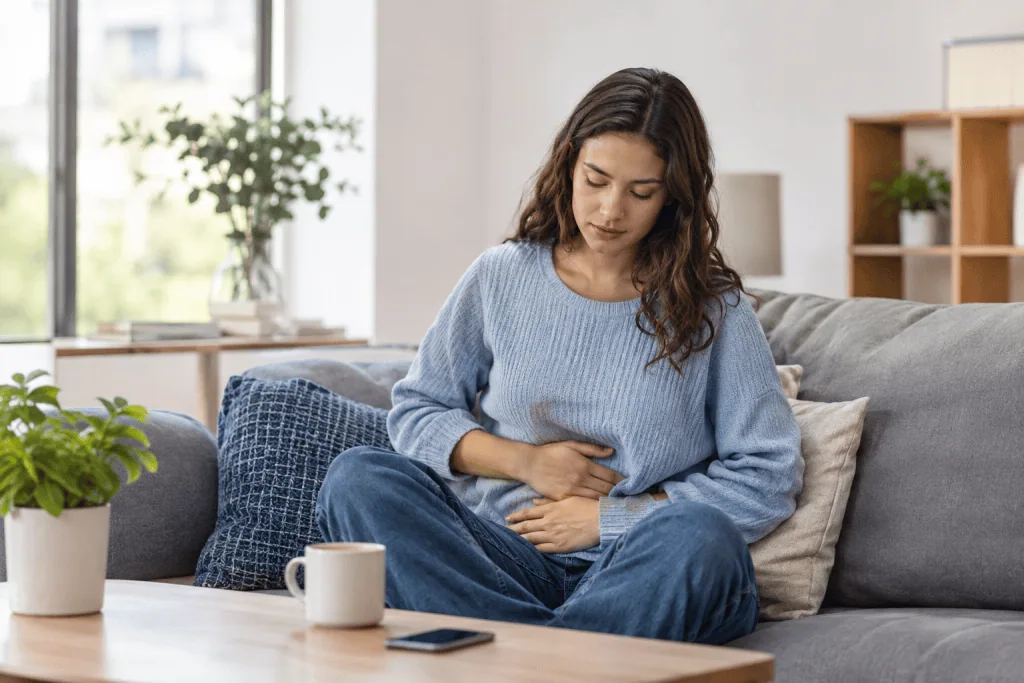
A few features make it recognizable:
- It is usually one-sided and may switch sides from cycle to cycle, because the ovaries often take turns.
- It arrives about two weeks before the next period, so in a 24- to 26-day cycle it can start within a week of bleeding ending.
- It lasts anywhere from a few minutes to a day or two (MedlinePlus), with no fever and no unusual discharge, though some people notice clear, stretchy cervical mucus or light spotting.
A symptom diary over two or three cycles often settles the question without any test. If the ache always sits at mid-cycle and fades on its own, clinicians rarely investigate further. If it is severe, lasts beyond two days, or comes with vomiting, the same timing can instead point to a cyst, and an ultrasound becomes reasonable.
Why the uterus can keep cramping once the bleeding stops
Period pain is chemistry before it is anatomy. As the lining of the womb breaks down, it releases prostaglandins, which make the muscular wall of the uterus contract to push the lining out. Those contractions briefly squeeze the blood vessels in the wall, starving the muscle of oxygen for seconds at a time; that is the cramp. The NHS notes that typical period pain starts when bleeding begins and lasts 48 to 72 hours, but the clearing-out process does not switch off like a tap. A low-level ache for a day or two after the flow ends is simply the tail of that process.
This also explains why some periods are worse than others. Prostaglandin output rises with the thickness of the lining, which depends on that cycle’s hormone pattern. A cycle without ovulation, common in the first years after periods start and again in the years before menopause, can build a thicker lining, a heavier bleed and more cramping afterwards. Stress, poor sleep and a copper intrauterine device can each make cramping more noticeable (NHS).
The reassuring pattern is mild, central, improving each day, and gone within about 2–3 days of the bleeding stopping. The pattern that earns a check is pain that is worsening month on month, or that now lasts most of the cycle.
Endometriosis, adenomyosis and fibroids: when the pain outlasts the bleeding
Three conditions involve womb-lining tissue in the wrong place or the wrong amount, and all three can cramp long after a period is over.
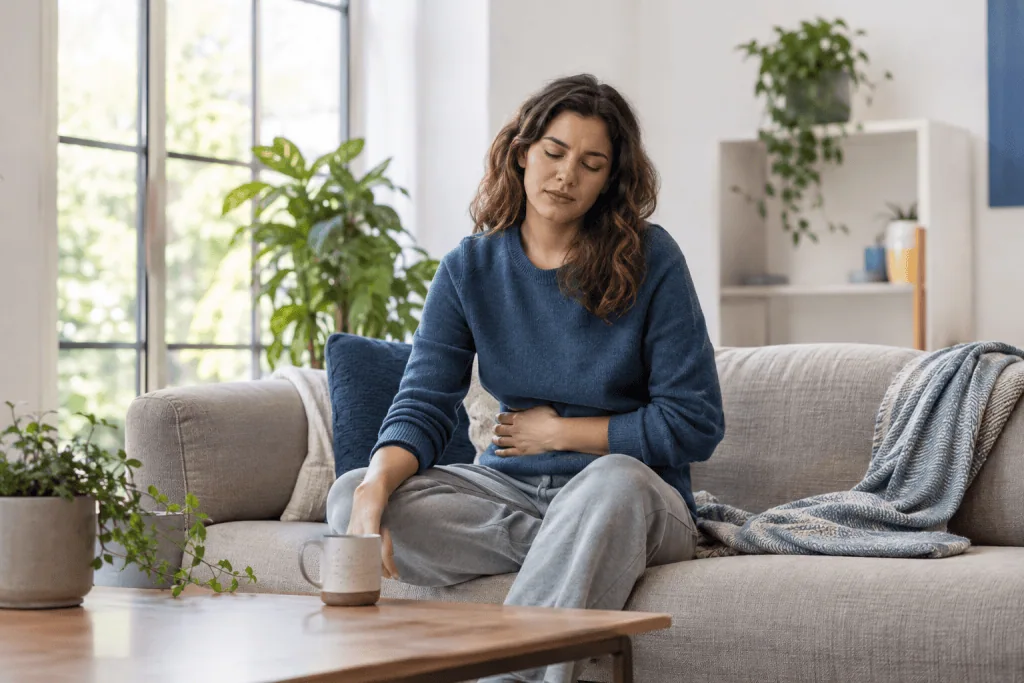
Endometriosis means tissue similar to the womb lining growing outside the womb: on the ovaries, the ligaments that support the pelvis, the bowel or the bladder. Each cycle this tissue thickens and bleeds with nowhere to drain, causing inflammation and scarring. WHO, drawing on Global Burden of Disease estimates in its fact sheet, puts the figure at roughly 10 percent of women and girls of reproductive age worldwide, about 190 million people. Typical clues are pain that starts days before a period and continues after it, deep pain during or after sex, painful bowel movements or urination around the period, and difficulty conceiving (NHS). The NHS is candid that diagnosis often takes years because the symptoms overlap with so much else.
Adenomyosis is the same kind of tissue growing into the muscular wall of the uterus itself. The womb becomes enlarged and tender, periods heavier, and cramping can stretch well beyond the bleeding days.
Fibroids are non-cancerous growths of muscle in the uterine wall. Many cause nothing at all. Larger ones produce pelvic pressure, heavy periods, backache and cramping that ignores the bleeding calendar.
A clinician separates these with a pelvic examination and a transvaginal ultrasound; endometriosis outside the ovaries may need an MRI or keyhole surgery to confirm.
Ovarian cysts and pelvic inflammatory disease
Most ovarian cysts are functional, meaning they are part of a normal cycle: a follicle that did not release its egg, or the corpus luteum, the structure left behind after ovulation, that filled with fluid. The NHS notes most of these disappear within a few months without treatment. They can still ache, usually on one side, and a cyst that leaks or bleeds can cause a sudden sharp pain that settles over a day or two.
The rare but serious version is ovarian torsion, when a cyst makes the ovary heavy enough to twist on its own blood supply. The pain is abrupt, severe, usually one-sided and often paired with vomiting; urgent surgery is needed to save the ovary.
Pelvic inflammatory disease (PID) is infection of the womb, fallopian tubes and ovaries, most often from bacteria that travel up from the vagina, including the sexually transmitted infections chlamydia and gonorrhea. It can follow any period, because the cervix opens slightly during bleeding. The NHS lists its usual signs as lower abdominal pain, pain during sex or when passing urine, bleeding between periods or after sex, unusual discharge and sometimes fever. Prompt antibiotic treatment matters because delay raises the risk of scarred tubes, ectopic pregnancy and long-term pelvic pain. PID is a common infection that anyone with a uterus can acquire; it says nothing about a person’s character.
Could cramps after period mean pregnancy?
Possibly, though the timeline needs a closer look. True menstruation is the shedding of a lining that was not needed for a pregnancy, so cramps the day after a normal period are very unlikely to be pregnancy-related. The catch is that not all bleeding is a period. Light bleeding around the time a fertilized egg embeds in the lining, roughly 10 to 14 days after ovulation, can be mistaken for a short, light period. Mild cramping afterwards is then early pregnancy, not post-period pain.
Two situations change the urgency. An ectopic pregnancy, where the embryo implants outside the womb, usually in a fallopian tube, can present as one-sided pelvic pain with light bleeding, pain in the tip of the shoulder, dizziness or fainting. A miscarriage can present as cramping with bleeding heavier than usual. Both need same-day assessment.
The sensible step is simple. If there is any chance of pregnancy and the last bleed was lighter, shorter or earlier than usual, take a home pregnancy test. A positive test with pelvic pain is a reason to be seen that day, not next week. A negative test taken too early can be falsely reassuring, so repeat it after a week if the cramps or the irregular bleeding continue.
Bowel and bladder causes that get mistaken for period cramps
The pelvis is a crowded room. The uterus sits with the bladder in front and the rectum behind, and all three share nerves that feed into the same segments of the spinal cord. The brain often cannot tell which organ is complaining, so a bowel spasm or a bladder irritation can feel identical to a menstrual cramp, especially in someone used to pelvic pain arriving on a schedule.
Clues that point away from the uterus:
- Cramping that eases after passing wind or opening the bowels, with bloating or a change in stool pattern, is typical of irritable bowel syndrome, which many people find flares around their period because prostaglandins also act on the gut.
- Pain that worsens as the bladder fills, with urgency, frequency or burning, suggests a urinary tract infection.
- Constipation after a period is common and produces a dull left-sided or central ache.
- Pain that starts near the navel and moves to the lower right, with nausea and loss of appetite, raises the question of appendicitis, an emergency at any point in the cycle.
A clinician asks about bowel habit, urine symptoms and food triggers for exactly this reason. A urine dipstick takes minutes and rules the bladder in or out before anything more involved is considered.
Cramps after period: causes, typical features and usual next step
The table below is the mental checklist a clinician runs through. It is a guide to the conversation, not a tool for self-diagnosis; several causes can coexist, and only an examination and the right test can confirm which applies to you.
| Cause | Typical features | Usual next step |
|---|---|---|
| Ovulation pain | One-sided, mid-cycle, minutes to two days, no fever | Symptom diary; no test if pattern is consistent |
| Lingering prostaglandins | Mild, central, fades within 2–3 days of bleeding ending | Heat, movement; review if worsening |
| Endometriosis | Pain before, during and after periods; painful sex, bowels or urination | Pelvic exam, ultrasound, possibly MRI or laparoscopy |
| Adenomyosis or fibroids | Heavy periods, pelvic pressure, enlarged tender womb | Transvaginal ultrasound |
| Functional ovarian cyst | One-sided ache; sudden sharp pain if it leaks | Ultrasound; repeat scan after a few months |
| Pelvic inflammatory disease | Pain with fever, discharge, bleeding between periods | Swabs, urgent antibiotics |
| Early or ectopic pregnancy | Light, early bleed; one-sided pain; shoulder-tip pain | Pregnancy test; same-day scan if positive |
| Bowel or bladder | Linked to stool, wind or urination | Urine dipstick; bowel history |
Notice how much of the sorting rests on timing and company: when in the cycle the pain comes, and what travels with it. That is why a few weeks of notes often does more than a single appointment without them.
What is reasonable to do at home, including lower back ache
For mild cramps that fit the harmless patterns above, the NHS supports a short list of simple measures. Heat has the longest track record: a hot water bottle or heat pad on the lower abdomen or the small of the back relaxes the uterine muscle and improves blood flow, and a warm bath does the same. Gentle movement helps more than lying still; walking, swimming or stretching releases natural pain-dampening chemicals and stops the pelvic muscles from guarding.
Lower back ache during and after a period is referred pain: the nerves supplying the uterus share spinal segments with those supplying the lower back. Heat on the back, a few minutes of knee-to-chest stretching and avoiding long spells of sitting usually ease it. Back pain that is one-sided, that runs with fever, or that comes with urinary symptoms points to the kidney rather than the uterus and needs a check.
Over-the-counter anti-inflammatory painkillers work by reducing prostaglandin production, which is why they tend to suit period-type cramps better than other painkillers; a pharmacist or clinician can advise whether they are suitable for you, since they are not right for everyone. Gentle abdominal self-massage and cutting back on caffeine around the period are low-risk and worth trying. What home care should not do is paper over pain that is getting worse month after month.
What the examination and tests involve
The appointment usually begins with questions, and they do most of the work. Expect to be asked when in the cycle the pain comes, how long it lasts, whether it is one-sided, what it does to sex, bowels and bladder, your contraception, and whether pregnancy is possible. A symptom diary covering two or three cycles, even a few notes on a phone, shortens this conversation considerably.
The examination involves pressing on the abdomen and, with your consent, an internal pelvic examination to check the size and tenderness of the uterus and ovaries. You can ask for a chaperone or to pause at any point.
Tests are chosen to fit the story:
- A urine pregnancy test and a urine dipstick, both done in the room.
- Swabs for chlamydia and gonorrhea if infection is possible; results take a few days.
- A transvaginal ultrasound, which uses a slim probe to image the uterus and ovaries and is the main test for cysts, fibroids and adenomyosis.
- Blood tests for infection markers or, occasionally, ovarian tumor markers if a cyst looks unusual.
- MRI or laparoscopy, keyhole surgery under general anesthetic, if endometriosis is suspected and the scan is normal, since ultrasound often misses it.
A normal ultrasound does not mean the pain is imaginary. It narrows the list, and the clinician who ordered it will explain what remains on it.
What people often get wrong
If the scan is normal, nothing is wrong. Ultrasound reliably shows cysts and fibroids but often misses endometriosis on the pelvic lining. A normal scan with persistent cyclical pain is a reason to keep asking, not to stop.
Cramps without bleeding mean pregnancy. Usually not. Ovulation pain and the tail end of prostaglandin activity explain most cases. The useful question is whether the last bleed was a real period; if it was lighter or earlier than usual, test.
Bad period pain is something to put up with. The NHS and WHO both describe pain that interferes with work, school or relationships as a reason for assessment. Painful periods are common; disabling ones are not something to normalize.
Only people with many partners get PID. Pelvic infection can follow a single exposure, a procedure or a recent birth, and chlamydia frequently causes no symptoms in the person who passes it on. Testing is a health check, not a verdict.
Cramping after menopause is just the body adjusting. Once periods have stopped for 12 months, new pelvic cramping or any bleeding is not expected and should be assessed. The likely causes shift toward fibroids, pelvic floor problems and, less commonly, cancers of the womb or ovary, which are most treatable when found early.
When to see a doctor
Book a routine appointment if cramps after a period:
- last longer than a few days, or now occur during most of the month;
- return at the same point in every cycle and are getting worse;
- come with deep pain during sex, or painful bowel movements or urination around the period;
- come with bleeding between periods, after sex, or periods heavier than before;
- are affecting work, sleep, exercise or mood;
- appear for the first time after menopause.
Seek same-day care if you have pelvic pain with fever, chills or unusual discharge; pain with a positive pregnancy test; or new pain alongside an intrauterine device.
Call emergency services or go to the nearest emergency department if pain is sudden and severe, if you faint or feel close to fainting, if you have pain in the tip of the shoulder, if you are vomiting and cannot keep fluids down, if bleeding soaks through a pad an hour, or if pain settles in the lower right abdomen with nausea. These patterns can mean an ectopic pregnancy, a twisted ovary or appendicitis, all of which are time-critical.
For teenagers who have recently started periods, cramping that keeps them out of school, or any pelvic pain before periods have begun, warrants a review. The pathway is the same history and an examination tailored to age, with ultrasound through the abdomen and no internal examination unless it is clearly needed and agreed.
Frequently asked questions
Why am I cramping after my period?
Most often because the uterus is still contracting under the influence of prostaglandins for a day or two after bleeding stops, or because ovulation is approaching and the ovary is swelling before releasing an egg. Both settle on their own. Cramping that is severe, lasts beyond a few days or arrives with fever, discharge or a positive pregnancy test needs a clinical review.
Is it normal to have cramps a week after your period?
It can be. In a cycle of around 24 to 26 days, ovulation falls roughly a week after bleeding ends, and ovulation pain is a recognized, usually one-sided ache lasting minutes to two days (MedlinePlus). Cramps a week after a period that are central, severe or accompanied by other symptoms are less typical and worth discussing with a clinician.
I have really bad period cramps but no bleeding. What could be causing this?
Cramping after a period with no bleeding is most often ovulation pain or lingering uterine contractions, but severe pain points toward a leaking ovarian cyst, endometriosis, pelvic infection or an early pregnancy problem. Severity is the clue: pain bad enough to stop normal activity, or paired with fever, vomiting or faintness, should be assessed the same day.
Can cramps after your period mean pregnancy?
Rarely after a true period, but light bleeding around the time a fertilized egg implants can be mistaken for a short period, and mild cramping afterwards may be early pregnancy. If the last bleed was lighter or earlier than usual and pregnancy is possible, take a home test. A positive test with one-sided pain or shoulder-tip pain needs same-day care.
How can I stop period cramps that carry on after the bleeding?
Mainstream guidance supports heat on the lower abdomen or back, a warm bath, gentle exercise such as walking or stretching, and light abdominal massage (NHS). Anti-inflammatory painkillers reduce the prostaglandins behind the cramping; a pharmacist or clinician can advise whether they suit you. Cramps that resist these measures or worsen each month need a review rather than stronger home remedies.
Why are some periods worse than others?
Prostaglandin output rises with the thickness of the womb lining, which changes with each cycle’s hormone pattern. Cycles without ovulation, common in the teenage years and before menopause, can build a thicker lining and a heavier, more painful period. Stress, poor sleep and a copper intrauterine device can also amplify cramping (NHS). A steady trend toward worse periods deserves assessment.
How can I relieve back pain during my period?
Period-related back pain is referred from the uterus through shared spinal nerves. Heat applied to the lower back, gentle knee-to-chest stretches, short walks and avoiding long spells of sitting usually ease it. Back pain that is one-sided, accompanied by fever or urinary symptoms, or that persists outside the period points to the kidney or spine and should be checked.
Could cramping after my period be endometriosis?
It is one possibility, especially when pain starts days before bleeding, continues after it, and travels with deep pain during sex, painful bowel movements or difficulty conceiving (NHS). Endometriosis affects roughly 1 in 10 women of reproductive age (WHO). Confirming it may require ultrasound, MRI or keyhole surgery, because scans often miss it; persistent cyclical pain merits that conversation.
What causes cramps like a period after menopause?
Once periods have stopped for 12 months, cramping is not part of a cycle and needs a cause found. Fibroids, pelvic floor problems, bowel or bladder conditions and, less commonly, cancer of the womb or ovary are the main candidates. Any bleeding after menopause, with or without cramps, should be assessed promptly, as early assessment makes treatment more straightforward.
When are cramps after a period an emergency?
Treat them as an emergency if pain is sudden and severe, if you faint or feel faint, if you have pain in the tip of the shoulder, if bleeding soaks a pad an hour, if you cannot keep fluids down, or if pain settles in the lower right abdomen with nausea. These can signal ectopic pregnancy, a twisted ovary or appendicitis.
References
- NHS: Period pain
- MedlinePlus: Period Pain
- MedlinePlus Medical Encyclopedia: Mittelschmerz
- NHS: Endometriosis
This article is for general information only and is not a substitute for professional medical advice. Please consult a qualified doctor about your individual situation.
Add us as a Preferred Source to see more of our trusted health content across Google Search, AI Overviews and Discover.

More from the Blog
Groin Pain in Women: Muscle, Hernia, Hip and Gynecologic Causes and When to Get Checked
Groin pain in women most often comes from a strained adductor muscle or tendon, the hip joint, or a pelvic cause such as an…

Breakthrough Bleeding: Why It Happens on Birth Control, How Long It Lasts and When to Call
Breakthrough bleeding is unscheduled spotting or bleeding while using hormonal birth control, most often because the hormone-thinned womb lining is fragile or hormone levels…
Breast Pain When Pressed: Hormonal, Muscular and Other Causes and When to Arrange an Exam
Breast pain when pressed is usually benign and most often comes from hormonal swelling of breast tissue, a tender rib or chest-wall muscle beneath…
PCOS in Teenagers: Why Diagnosis Is Cautious and How Early Care Is Planned
PCOS in teenagers is diagnosed cautiously because irregular periods, acne, and mild hair changes are common in the first years after a first period…

Brown, Dark or Black Period Blood: Why the Color Changes and When It Is Worth a Check
Period blood usually turns brown or black because it left the uterus slowly and had time to react with oxygen, which darkens the iron…
Vaginal and Vulvar Itching: Infections, Irritation, Itching After a Period and When to Get Checked
Vaginal itching most often comes from a yeast infection, irritation from soaps, pads, washing or friction, or hormone-related dryness, and less often from skin…