

Dengue Vaccine: Who Can Have It, Why Prior Infection Matters and What Travelers Should Know

Key Takeaways
- Dengue is four related viruses, and a second infection with a different serotype is more likely to be severe than the first, which is why prior infection status governs every vaccine rule.
- Dengvaxia is restricted by the CDC to children aged 9 to 16 with a positive blood test for past dengue who live in endemic U.S. territories, and its manufacturer has discontinued production with supply expected to end in 2026.
- Qdenga is licensed from age 4 in the EU, UK and many endemic countries, but WHO recommends it specifically for children aged 6 to 16 in high-transmission settings and takes no position on travelers.
- In the pivotal trial, Qdenga cut symptomatic dengue by about 80 percent in the first year and about 61 percent over four and a half years, while protection against hospitalization stayed above 80 percent.
- Protection against DENV-3 and DENV-4 in people who have never had dengue remains unproven for Qdenga, and no data exist on efficacy in adults or short-term travelers from randomized trials.
- No dengue vaccine is currently available to U.S. travelers, and Aedes mosquitoes bite in daylight, so EPA-registered repellent, screens and air conditioning remain the primary defense for most Americans.
Two licensed dengue vaccines exist, and eligibility depends on age, where you live and whether you have had dengue before. Dengvaxia is limited to children aged 9 to 16 with laboratory-confirmed prior infection living in endemic areas. Qdenga is licensed from age 4 in many countries and recommended by WHO mainly for children in high-transmission settings. No dengue vaccine is currently approved for U.S. travelers; ask a travel clinician.
A father in a travel-clinic waiting room scrolls his phone, then looks up and asks the question the nurse has heard a dozen times this month: “Is there a shot for dengue yet, and can my kids have it before we fly?” The honest answer takes longer than he expects, because for this disease the word “yet” hides two vaccines, three continents of different rules and one hard-won lesson about who should not be vaccinated.
The question is trending for real reasons. As of late 2025, the world is still absorbing the worst dengue years on record, the World Health Organization has put its stamp on a second-generation dengue vaccine, and the first-generation product is being phased out by its manufacturer. Health advisories about dengue reached U.S. clinicians in 2024 and again in 2025, and the hashtags followed.
What has not changed is the biology. Dengue is the rare infection where having had it once genuinely changes what a vaccine can safely do for you. That single fact explains almost every rule you will read below.
Why is the dengue vaccine trending right now?
Search interest tends to follow case counts, and dengue’s case counts have been historic. The World Health Organization logged more than 14 million reported cases and over 10,000 deaths in 2024, the highest annual total ever recorded, with the Americas carrying the heaviest load. Warmer, wetter conditions have widened the range of Aedes mosquitoes, the daytime-biting species that carries the virus, and dengue has turned up in places that once saw it only in returning travelers.
Three regulatory moments then stacked on top of that epidemiology. In 2024 the WHO prequalified Qdenga, a step that lets United Nations agencies and lower-income countries procure it and that signals the agency considers its quality, safety and efficacy data acceptable. The same year, the manufacturer of Dengvaxia, the older vaccine, announced it was discontinuing production worldwide for commercial reasons, and the U.S. Centers for Disease Control and Prevention (CDC) began telling clinicians that remaining supply would be used up by 2026. Meanwhile Brazil’s Butantan Institute published phase 3 results for a single-dose candidate, feeding headlines about a “one-shot dengue vaccine.”
Put those together and you get a public that has heard a vaccine exists, a vaccine is disappearing and a new vaccine is coming, all at once. Confusion is a reasonable reaction.
This piece is the map. It explains what dengue does inside the body, why prior infection is the hinge on which every recommendation turns, exactly who each vaccine is licensed and recommended for according to the CDC, WHO and NHS, how strong the evidence is behind each claim, and what a traveler headed to Thailand or Brazil next spring can realistically expect. Where the science is unsettled, it says so. Where a decision belongs to a clinician who knows your history, it says that too.
What changed recently with dengue vaccines
Here is the recent timeline, anchored to public guidance rather than press releases.
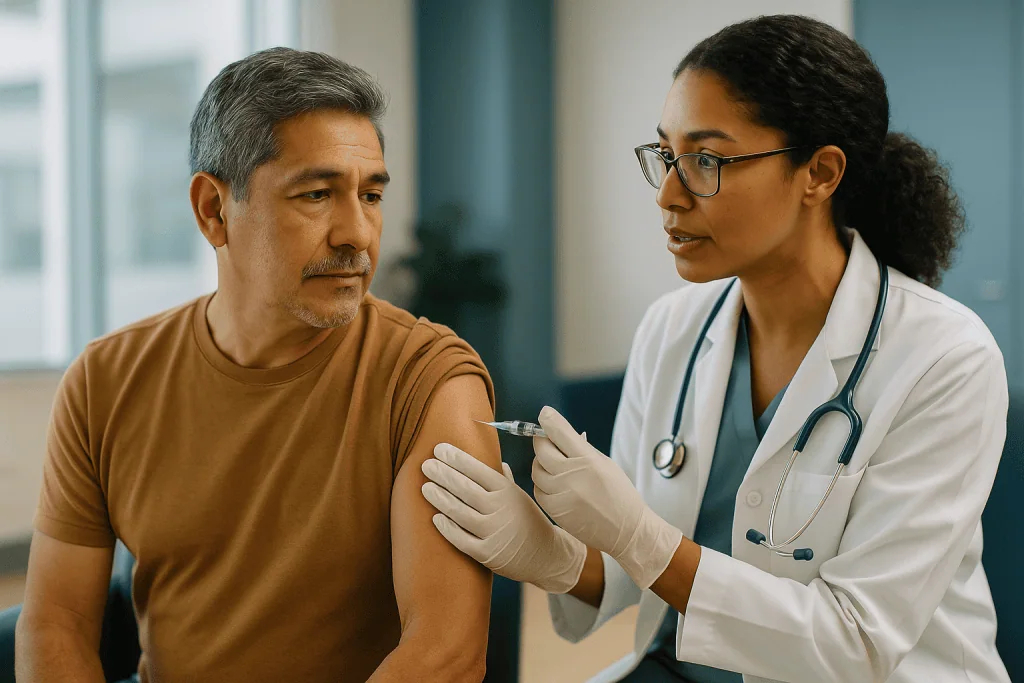
- May 2019: The U.S. Food and Drug Administration approved Dengvaxia, but only for children aged 9 to 16 with laboratory-confirmed previous dengue infection who live in areas where dengue is endemic. It has never been approved for U.S. travelers.
- June 2021: The CDC’s Advisory Committee on Immunization Practices recommended Dengvaxia for that same group, with a requirement that prior infection be proven by a blood test before vaccination.
- December 2022 to January 2023: The European Medicines Agency and then the UK regulator licensed Qdenga for people aged 4 and older, regardless of whether they had dengue before. Indonesia had licensed it a few months earlier; Brazil, Argentina and Thailand followed.
- 2023: Qdenga’s manufacturer withdrew its U.S. application after the FDA requested additional data, so the vaccine remains unavailable in the United States.
- May 2024: WHO published a position paper recommending Qdenga for children aged 6 to 16 in settings with high dengue burden and high transmission intensity, and prequalified the vaccine.
- 2024: Dengvaxia’s manufacturer announced global discontinuation. The CDC states that doses will remain available in U.S. territories only until existing stock is exhausted, expected in 2026.
- June 2024, updated 2025: The CDC issued health advisories alerting U.S. clinicians to increased dengue risk, including local transmission in Puerto Rico, Florida, Texas and California.
Two threads run through that list. First, the newest guidance treats dengue vaccination as primarily a public-health tool for children in places where the virus circulates constantly, not as a travel shot. Second, the United States is, for now, a country with dengue transmission and no vaccine available to most of its residents. Both facts shape the advice a travel clinician will give.
What dengue does to the body, and why one vaccine has to fight four viruses
Dengue is not one virus but four closely related ones, called serotypes and numbered DENV-1 through DENV-4. A serotype is a version of a virus distinct enough that antibodies against one do not reliably neutralize the others. Recovering from DENV-2 leaves you protected against DENV-2 for life, and against the other three for only a few months.
Most infections are mild or silent. Roughly three in four people who are infected never know it. Those who do get sick typically face a sudden high fever, a pounding headache behind the eyes, joint and muscle pain severe enough to earn the old nickname “breakbone fever,” nausea and a rash. The fever usually breaks within a week.
The danger comes in a narrow window. As the fever falls, roughly 24 to 48 hours into the recovery phase, a minority of patients develop severe dengue: blood vessels leak plasma, the platelet count drops, and bleeding or shock can follow. There is no antiviral for dengue. Survival depends on recognizing the warning signs early and replacing fluids carefully in hospital, which is why the case fatality rate for severe dengue is under 1 percent with good care and far higher without it.
Here is the twist that has bedeviled vaccine science for decades. A second infection with a different serotype is more likely to be severe than the first. The leading explanation is antibody-dependent enhancement: leftover antibodies from the first infection bind the new serotype but cannot neutralize it, and instead help the virus enter immune cells, where it multiplies more efficiently. Not every scientist agrees on every detail, but the pattern in population data is consistent.
A vaccine, therefore, cannot afford to protect against only some serotypes. Partial immunity could mimic a first infection and prime the body for a worse second one. That is the design problem every dengue vaccine has tried to solve, and it is where the two licensed products differ most.
Why prior infection matters so much for the dengue vaccine
In vaccine research, serostatus means whether your blood already contains antibodies from a past infection. Seropositive people have had dengue; seronegative people have not. For most vaccines the distinction is trivial. For dengue it is everything.
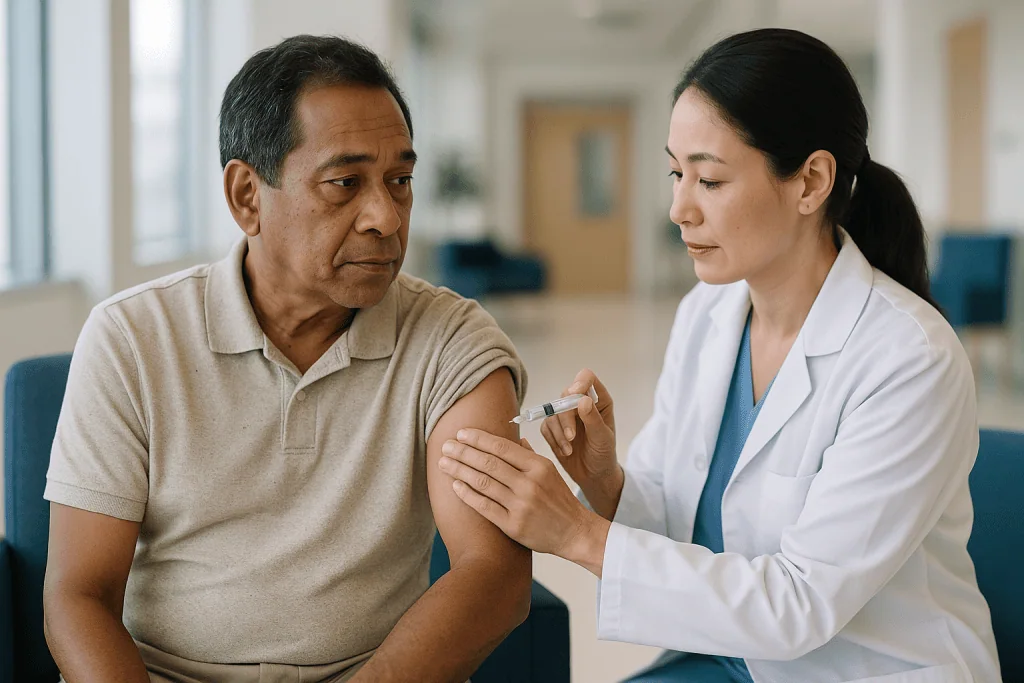
The evidence arrived in 2018, when the manufacturer of Dengvaxia re-analyzed blood samples from its trials using a new test that could tell prior dengue from vaccine-induced antibodies. Among children who were seropositive before vaccination, the vaccine did what everyone hoped: fewer symptomatic infections and fewer hospitalizations over five years. Among children who were seronegative, the pattern reversed. Their risk of being hospitalized with dengue, and of severe dengue specifically, was higher in the vaccinated group than in the placebo group, with the excess appearing from about the third year onward.
The interpretation that most experts accepted is that, in a seronegative child, Dengvaxia behaved like a mild first infection. It produced antibodies that were not fully protective against every serotype, and when a real infection came along, the body responded as if to a dangerous second exposure.
Every eligibility rule you will meet flows from that finding. The CDC requires a positive blood test for previous dengue before Dengvaxia. WHO recommends deploying Qdenga in populations where most children have already been infected by the age vaccination begins. The NHS says the vaccine is recommended mainly for travelers who have had dengue before.
Qdenga’s trial data look more reassuring for seronegative recipients than Dengvaxia’s did, and that is the reason it is licensed without a prior-infection requirement in Europe and elsewhere. But “more reassuring” is not “settled.” Protection in seronegative people is weaker against some serotypes, and for DENV-3 and DENV-4 the numbers are too small to draw firm conclusions. Regulators have accepted that uncertainty with ongoing monitoring; a clinician weighing your individual case has to accept it too.
Dengvaxia: exactly who can have it under CDC guidance
Dengvaxia is a live attenuated vaccine, meaning it contains weakened viruses that reproduce briefly without causing disease. It is built on a yellow fever vaccine backbone with dengue surface proteins from each of the four serotypes swapped in, which is why it is sometimes called a chimeric vaccine.
In the United States, CDC eligibility is narrow and specific. A child may receive it only if all of the following are true:
- They are aged 9 through 16 years.
- They have laboratory-confirmed evidence of a previous dengue infection, documented by a positive test result.
- They live in an area where dengue is endemic, which in U.S. terms means Puerto Rico, the U.S. Virgin Islands, American Samoa, Guam, the Federated States of Micronesia, the Marshall Islands and Palau.
Travelers do not qualify. Adults do not qualify. A child with a vivid memory of a fever on a family trip does not qualify unless a blood test confirms it was dengue. The CDC is explicit that vaccinating a seronegative child carries a risk of more severe illness later, so pre-vaccination screening is a requirement, not a suggestion.
In seropositive children of this age, the CDC cites trial efficacy of about 82 percent against symptomatic, laboratory-confirmed dengue and roughly 79 percent against hospitalization. Those are randomized-trial figures, the strongest kind of evidence, though they come from a re-analysis stratified by serostatus rather than from a trial designed around it.
Like other live vaccines, Dengvaxia is not given to people who are pregnant or who have significantly weakened immune systems. Other countries licensed it for wider age ranges, generally 9 to 45, again with prior infection as the gate.
The practical footnote matters. Because the manufacturer has discontinued production, the CDC expects remaining U.S. supply to run out during 2026. Families in eligible territories who are considering it should discuss timing with their pediatrician, who can check what is available locally and whether the child’s test history supports vaccination.
Qdenga: who is eligible according to WHO, EMA and the NHS
Qdenga, also known by its research name TAK-003, is also live attenuated but built differently. Its backbone is a weakened DENV-2 virus, with genes from DENV-1, DENV-3 and DENV-4 grafted on. That structure helps explain its results: protection is strongest against DENV-2 and less certain against the serotypes that are only represented by borrowed surface proteins.
Licensing and recommendation are not the same thing, and Qdenga illustrates the gap.
Licensing. The European Medicines Agency approved Qdenga for anyone aged 4 and older, with no requirement for prior infection. The UK, Indonesia, Brazil, Argentina, Thailand and a growing list of other countries have done the same or similar. The United States has not licensed it.
WHO recommendation. The WHO position paper of May 2024 is narrower than the label. It recommends Qdenga for children aged 6 to 16 living in settings with high dengue burden and high transmission intensity, ideally where at least 60 percent of children have already been infected by age 9. That threshold is deliberate: in such places most recipients are seropositive, the group in whom the vaccine performs best and the safety question is least uncertain. WHO does not currently make a recommendation for or against use in travelers, adults in low-transmission settings or seronegative individuals, citing insufficient evidence.
NHS guidance. The NHS notes that a dengue vaccine is available in the UK and that it is recommended mainly for people who have had dengue before and are traveling to an area where dengue is common. People without a history of dengue may still discuss it with a travel clinician, who will weigh the destination, trip length and the weaker evidence in seronegative recipients.
Because Qdenga is live, it is not given during pregnancy or breastfeeding, to people with significantly compromised immunity, or to those with a history of severe allergic reaction to a previous dose or a component. Whether a particular child or adult fits inside these guardrails is a decision for the clinician who holds their record.
Dengue vaccine comparison: Dengvaxia vs Qdenga vs Butantan-DV
The table below summarizes where each product stands. Efficacy figures come from randomized controlled trials, the strongest evidence category, but note the different follow-up periods and populations; they are not directly comparable head to head.
| Feature | Dengvaxia (CYD-TDV) | Qdenga (TAK-003) | Butantan-DV |
|---|---|---|---|
| Type | Live attenuated, yellow fever backbone | Live attenuated, DENV-2 backbone | Live attenuated, single-dose design |
| U.S. status | FDA approved 2019 for narrow group; production discontinued, supply ending 2026 | Not licensed; application withdrawn 2023 | Not licensed; investigational |
| Elsewhere | Licensed in some countries for ages 9 to 45 with prior infection | Licensed in EU, UK and many endemic countries from age 4 | Developed in Brazil; regulatory review there, not for use elsewhere |
| Prior infection required? | Yes, laboratory-confirmed | No on label; WHO recommends use where most are seropositive | Not required in trial |
| Efficacy vs symptomatic dengue | About 82% in seropositive 9 to 16 year olds | About 80% at 12 months; about 61% over 4.5 years | About 80% over 2 years in phase 3 |
| Efficacy vs hospitalization | About 79% in seropositive group | About 90% at 18 months; about 84% over 4.5 years | Too few events to estimate reliably |
| Main caveat | Increased severe dengue risk in seronegative recipients | Weaker, uncertain protection vs DENV-3 and DENV-4 in seronegative recipients | Limited DENV-3 and DENV-4 circulation during trial |
Read the last row twice. All three products share a version of the same limitation: the serotypes least represented in the vaccine, or least circulating during the trial, are the ones about which we know least. Dengue vaccine science has advanced enormously since 2016, but it has not escaped the four-virus problem.
Butantan-DV deserves one plain statement. It is an investigational product outside its home country, is not on sale anywhere for individual use, and the trial results, while encouraging, cover two years of follow-up. Anyone offered a “Brazilian one-shot dengue vaccine” by an online seller should treat that as a red flag, not an opportunity.
What the evidence actually says, graded by strength
Medical evidence comes in tiers. Randomized controlled trials, where volunteers are assigned by chance to vaccine or placebo, sit at the top. Observational studies that follow real-world populations come next. Expert consensus fills the gaps. Here is where each major claim about dengue vaccines falls.
Strong evidence (randomized trials). Qdenga reduces symptomatic dengue and hospitalization in children aged 4 to 16 living in endemic countries. The TIDES trial enrolled about 20,000 children across Asia and Latin America and found roughly 80 percent efficacy against confirmed dengue at one year and about 61 percent over four and a half years, with protection against hospitalization holding up at around 84 percent. Dengvaxia reduces symptomatic and severe dengue in children aged 9 and older who were already seropositive. These findings are as solid as vaccine evidence gets.
Strong evidence with a warning. Dengvaxia increases the risk of hospitalized and severe dengue in seronegative recipients. This came from randomized-trial participants, analyzed after the fact by serostatus. It is strong enough that regulators worldwide changed the label.
Moderate evidence. Qdenga protects seronegative recipients against DENV-1 and DENV-2. The signal is clear for those two serotypes but rests on smaller numbers than the overall result.
Weak or insufficient evidence. Qdenga’s protection against DENV-3 in seronegative recipients was not demonstrated, and a small excess of DENV-3 hospitalizations in that subgroup could not be ruled in or out. DENV-4 barely circulated during the trial. Efficacy in adults, in travelers making brief visits, and in people over 60 has not been tested in randomized trials at all; the adult label rests on immune-response data, which shows antibodies form but does not by itself prove protection.
Expert opinion. Whether a seronegative traveler should be vaccinated before a two-week trip is currently a judgment call. WHO has declined to recommend for or against. National bodies differ. When a clinician tells you the answer is “it depends,” that is not evasion; it is an accurate description of the literature.
How long does the dengue vaccine last?
The honest answer is that nobody has watched long enough to know the ceiling, but the data so far give a reasonable floor.
For Qdenga, the pivotal trial followed children for four and a half years after their series. Protection against symptomatic dengue fell from about 80 percent in the first year to roughly 61 percent averaged across the whole period, which tells you efficacy wanes somewhat over time. Protection against hospitalization held up better, staying above 80 percent through the end of follow-up. A separate study of antibody levels in adults from non-endemic regions found detectable neutralizing antibodies against all four serotypes at three years. Antibodies are a proxy for protection, not a guarantee of it, so that finding supports durability without proving it.
For Dengvaxia, the extended follow-up ran about six years in the original trials. Among seropositive recipients, benefit persisted throughout. Among seronegative recipients, the excess risk of severe disease emerged after year two and did not disappear, which is a durability story of the wrong kind.
No regulator currently recommends a routine booster for either vaccine, because there is no trial evidence to say when or whether one helps. The manufacturer of Qdenga is studying booster responses, and WHO has asked for long-term data as a condition of its recommendation.
Two practical consequences follow. First, a traveler vaccinated for a trip this year should not assume lifelong coverage; if they return to a high-transmission area in a decade, the question should be reopened with a clinician. Second, waning immunity in a population that is partially protected is exactly the scenario dengue scientists watch most closely, given the second-infection problem described earlier. Post-licensure surveillance in Brazil, Indonesia and Europe is under way for this reason, and its results will refine the answer to this section’s question over the next several years.
Why did the dengue vaccine fail? The Philippines lesson explained
When people search “why did the dengue vaccine fail,” they usually mean what happened in the Philippines between 2016 and 2019. The episode is worth understanding precisely, because it is the origin of most of today’s caution.
In April 2016 the Philippines launched a school-based program with Dengvaxia, the first country to roll out a dengue vaccine at scale. More than 800,000 children aged 9 and older received at least one dose. At the time, the vaccine was licensed for children in that age group regardless of prior infection, and trial data showed an overall benefit in endemic populations where most children were seropositive.
In November 2017 the manufacturer released the serostatus re-analysis described earlier, showing that seronegative recipients faced a higher long-term risk of severe dengue. The program was suspended the following month. Over the next two years, reports of child deaths after vaccination were investigated; the reviews found that most were not attributable to the vaccine, but the public reaction was severe. Confidence in vaccines generally dropped in the country, and measles cases surged in the years after.
Did the vaccine “fail”? Scientifically, it did what its trials showed: it protected seropositive children and it was not safe enough for seronegative ones. The failure was one of knowledge and sequencing. The test that could distinguish prior infection from vaccine-induced antibodies did not exist when the program started. Once it did, the label changed within months.
The lessons became policy. WHO now requires evidence of safety in seronegative recipients before recommending any dengue vaccine for broad use, and asks for population seroprevalence data before national rollouts. The CDC built a screening test into its Dengvaxia recommendation. Qdenga’s trial was designed from the outset to report results by serostatus, which is why its seronegative data exist at all. Progress in vaccine safety often looks like this: a hard episode, a specific fix, and stricter rules for whatever comes next.
Why is the dengue vaccine not recommended for everyone?
People notice the gap between a vaccine that is licensed from age 4 in Europe and a WHO recommendation that stops at children in high-transmission countries. The gap is not bureaucratic hesitancy; it reflects who was studied and what was found.
Children in endemic countries were the trial population for both vaccines. Their benefit is proven, and in high-transmission areas most are seropositive by school age, which is where the vaccines are most effective and the safety picture is clearest. That is the group WHO and the CDC name.
Seronegative people are the central uncertainty. With Dengvaxia the risk is established and the vaccine is simply not given to them. With Qdenga the data are better but incomplete: protection against DENV-1 and DENV-2, unproven protection against DENV-3, unknown for DENV-4. Regulators in Europe judged that acceptable for licensing; WHO judged it insufficient for a global recommendation. Both positions are defensible readings of the same numbers.
Adults were not included in efficacy trials for Qdenga. The adult indication rests on immune-response studies. Adults in endemic countries are mostly seropositive and likely to benefit; adults from Europe or North America are mostly seronegative, and their risk-benefit balance is the least studied of all.
Short-term travelers have a lower absolute risk than residents. Dengue is a real threat to travelers, but a two-week trip carries a fraction of the exposure of a childhood in an endemic city. For a modest risk, even small uncertainties in vaccine safety weigh more heavily.
Pregnant people and those with weakened immune systems are excluded because both vaccines are live, and live vaccines are not given in those circumstances as a general rule.
None of this is a verdict that the vaccines are bad. It is a statement about the edges of the evidence. A clinician’s job is to place you inside or outside those edges based on your age, history, destination and health; a magazine cannot do that for you.
Dengue vaccine for travelers: should I get it before Thailand or Brazil?
Thailand is one of the most searched destinations in this context, and for good reason: all four serotypes circulate there, transmission peaks in the rainy season from roughly May to October, and the country has licensed Qdenga for its own residents. Brazil, Indonesia, the Philippines, Vietnam, India, Mexico and much of the Caribbean pose similar questions.
The answer depends first on where you live. For travelers from the United States, the CDC states plainly that no dengue vaccine is available or recommended for travel; Dengvaxia is restricted to residents of endemic U.S. territories, and Qdenga is not licensed. For travelers from the UK and the European Union, Qdenga is licensed, and guidance centers on prior infection: the NHS frames the vaccine as recommended mainly for people who have had dengue before and are heading somewhere it is common. Travelers without that history can discuss it, and a travel-medicine clinician will weigh trip length, season, whether you will be in urban areas where Aedes thrives, and how you feel about the weaker evidence in seronegative recipients.
Timing matters more than most people expect. Qdenga is given as a course rather than a single visit, and the full course takes months to complete, so a decision made the week before departure will not yield full protection in time. Travel clinics generally want to see people six months or more ahead for this reason.
Two more points deserve a plain statement. First, a vaccine, where available and appropriate, is a supplement to mosquito avoidance, not a replacement; even 80 percent efficacy leaves one infection in five. Second, the vaccine cannot be obtained safely outside licensed channels, and this article will not tell you how to get it. If your country has not licensed it, the right question for your clinician is what other precautions matter most, not how to work around the regulator.
For expatriates and long-term residents in endemic regions, the calculus shifts toward vaccination, and the local guidance of the host country becomes relevant. That conversation belongs with a clinician who knows both your history and the local epidemiology.
Dengue vaccine side effects: what trials and surveillance show
Both licensed dengue vaccines cause the ordinary reactions you would expect from a live vaccine, and both have one serious safety question that has been discussed at length above. Separating the routine from the specific keeps the picture honest.
Common, mild reactions reported in randomized trials of Qdenga include pain at the injection site, headache, muscle aches, general malaise, weakness and low-grade fever. Most begin within a couple of days and resolve within a few. In children, fever and irritability were somewhat more frequent than in adults. Dengvaxia’s profile is similar: injection-site soreness, headache, tiredness and muscle pain lead the list.
Uncommon reactions include a temporary rash and, as with any injectable, fainting in the minutes afterward, which is why clinics ask people to sit for a short while.
Rare but serious. Severe allergic reactions to a component are possible with any vaccine and are the reason clinics keep emergency treatment on hand. No consistent signal of other serious adverse events emerged in Qdenga’s trials of about 20,000 children, and post-licensure monitoring in Europe, Brazil and Indonesia has not identified a new safety concern to date.
The disease-specific concern. The risk that a dengue vaccine could, in a seronegative person, increase the severity of a later natural infection is established for Dengvaxia and unresolved for Qdenga for DENV-3 and DENV-4. This is not a side effect in the usual sense; it does not appear in the days after vaccination. It shows up, if at all, years later as a more severe case of dengue than the person might otherwise have had. That delay is precisely why long-term surveillance is a condition of WHO’s recommendation.
If you have been vaccinated and later develop a fever in or after visiting a dengue area, tell the clinician about the vaccine. It does not change how dengue is treated, but it helps them interpret blood tests, and it feeds the surveillance systems that will answer the remaining questions.
Common myths about the dengue vaccine, corrected
Viral claims about dengue vaccines cluster around a few themes. Each is checked here against the published evidence.
“There is no dengue vaccine.” There are two licensed vaccines and one advanced candidate. What is true is that no vaccine is available to most U.S. residents, and that WHO’s recommendation is limited to children in high-transmission areas. Absence in your pharmacy is not absence in the world.
“The vaccine gives you dengue.” Both vaccines contain weakened viruses that can cause mild, short-lived fever or aches, but they do not cause dengue disease. The genuine concern is different and subtler: in someone who has never had dengue, the older vaccine can make a later natural infection more severe.
“The dengue vaccine was banned because it killed children.” Investigations in the Philippines did not establish that the vaccine caused the deaths reported. The program was stopped because of the seronegative risk finding, and one national regulator revoked the license. Elsewhere the vaccine remained licensed with a narrower label until the manufacturer chose to discontinue it in 2024.
“If you have had dengue once, you are immune and do not need a vaccine.” Prior infection protects against that one serotype, not the other three, and a second infection carries higher risk. People with confirmed prior dengue are, in fact, the group most guidance considers best suited to vaccination.
“One shot and you are covered for life.” No licensed dengue vaccine is a single dose, and duration of protection beyond about five years is unknown. The single-dose candidate remains investigational.
“The vaccine works against all mosquito diseases.” Dengue vaccines do nothing against Zika, chikungunya or malaria, which are carried by the same or related mosquitoes. Repellent and bite avoidance protect against all of them; a dengue vaccine protects against one.
“You can buy it online.” Anything sold that way is unregulated, unverified and potentially dangerous. Live vaccines require cold storage and clinical screening. This is one product category where the grey market cannot be trusted.
Preventing dengue without a vaccine: what actually works
For most readers, especially in North America, mosquito avoidance is the whole prevention plan, and it is a good one. Aedes aegypti and Aedes albopictus bite mainly in daylight, with peaks in the early morning and the hours before dusk, which upends the malaria-era habit of worrying only at night.
Repellent is the cornerstone. The CDC recommends products registered with the Environmental Protection Agency containing DEET, picaridin, IR3535 or oil of lemon eucalyptus, applied to exposed skin and reapplied as the label directs. Higher concentrations last longer; they do not work better in the moment. Loose, long clothing adds a physical barrier, and garments treated with permethrin, an insecticide bonded to fabric, extend protection through washes.
Where you sleep and sit matters. Air conditioning and intact window screens sharply reduce indoor bites, because Aedes mosquitoes are house-loving and rarely travel more than a few hundred meters from where they hatched. That short range is also the logic behind emptying standing water: a bottle cap of rainwater in a plant saucer is a nursery. Travelers can check their own balcony and room; residents of endemic areas can make a weekly habit of tipping out containers.
Timing helps too. Dengue transmission tracks rainfall, so trips scheduled in a destination’s dry season carry lower risk, though never zero.
Public-health tools are evolving alongside vaccines. Releases of mosquitoes carrying Wolbachia, a bacterium that blocks dengue virus replication inside the insect, have cut dengue incidence substantially in a randomized trial in Yogyakarta, Indonesia, and are being rolled out in several cities in Brazil and Colombia. Those are community measures, not something an individual buys, but they are part of why long-term optimism about dengue control is reasonable.
One last practical point for anyone who does get sick: prevent onward spread. Someone with dengue can infect mosquitoes that bite them during the fever, so staying under a net or in screened rooms while ill protects the household.
When to see a doctor about dengue or the dengue vaccine
Two situations call for a clinician’s judgment, and one calls for an emergency department.
Before deciding on vaccination. See a travel-medicine or primary-care clinician if you or your child may be a candidate: a resident of an endemic area, a traveler with a history of dengue, a long-term expatriate, or a parent in a country that has licensed Qdenga for children. The clinician will confirm eligibility against local guidance, review for pregnancy, breastfeeding, immune conditions or allergies that rule out a live vaccine, and decide whether a blood test for prior infection is needed. Never stop, start or adjust any prescribed medicine on the strength of an article; medicines that suppress the immune system in particular change what vaccines are safe.
After vaccination. Mild soreness, headache or low fever for a few days is expected. Contact a clinician if fever persists beyond about three days, if a rash spreads widely, or if anything feels unusual to you. Seek immediate care for signs of a severe allergic reaction: swelling of the face or throat, difficulty breathing, hives spreading rapidly, or feeling faint within an hour of the injection.
If you develop fever during or within two weeks after travel to a dengue area, see a clinician promptly and mention where you have been and whether you were vaccinated. Most dengue is managed with rest, fluids and careful monitoring, but the warning signs of severe dengue require hospital assessment without delay. According to WHO and the CDC, these red flags, which typically appear as the fever falls, include:
- Severe or persistent abdominal pain
- Vomiting that will not stop, or vomiting blood
- Bleeding from the nose or gums, blood in stool, or unusual bruising
- Rapid or difficult breathing
- Cold, clammy or pale skin
- Extreme tiredness, restlessness or irritability
- Passing very little urine
Do not self-treat with anti-inflammatory painkillers during a suspected dengue illness; some common ones increase bleeding risk. Ask the treating clinician or a pharmacist which fever reducer is appropriate, and follow their instructions on fluids and follow-up. Every decision about vaccination, testing and treatment belongs with the clinician who can examine you.
Frequently asked questions
How long does the dengue vaccine last?
Trial data show Qdenga’s protection lasts at least four and a half years, though efficacy against symptomatic dengue declines from about 80 percent in year one to roughly 61 percent averaged over that period, while protection against hospitalization stays above 80 percent. Antibody studies suggest immunity persists beyond three years in adults. No booster is currently recommended because no trial has tested one, and longer-term surveillance is ongoing.
Why did the dengue vaccine fail in the Philippines?
It did not fail in the sense of not working; it protected children who had already had dengue. The problem was that in children who had never been infected, Dengvaxia increased the risk of severe dengue years later, a finding published in 2017 after more than 800,000 children had been vaccinated. The program was suspended, the label was narrowed worldwide, and every later dengue vaccine has been required to show results by prior infection status.
Should I get the dengue vaccine before traveling to Thailand?
It depends on where you live and whether you have had dengue. U.S. travelers currently have no licensed option. Travelers from the UK or EU can discuss Qdenga with a travel clinician, and guidance favors those with confirmed prior infection. Because the course takes months, the conversation needs to happen well ahead of departure. Whatever the decision, daytime mosquito avoidance remains essential in Thailand.
Why is the dengue fever vaccine not recommended for adults?
Randomized efficacy trials for both licensed vaccines enrolled children and adolescents, not adults. Qdenga’s adult license rests on immune-response data, which shows antibodies form but does not by itself prove protection. Adults from non-endemic countries are also mostly seronegative, the group with the least certain safety and efficacy data. WHO has therefore not recommended routine adult vaccination, and clinicians assess adults individually.
Is the dengue vaccine available in the United States?
Only in a very limited way. Dengvaxia is FDA approved solely for children aged 9 to 16 with laboratory-confirmed past dengue who live in endemic U.S. territories such as Puerto Rico, and the manufacturer has discontinued it, with supply expected to run out in 2026. Qdenga is not licensed in the U.S. after its application was withdrawn in 2023. The CDC states no dengue vaccine is available for U.S. travelers.
Can you get the dengue vaccine if you have never had dengue?
Not Dengvaxia, which is contraindicated in people without proven prior infection because of increased severe dengue risk. Qdenga is licensed without that requirement in Europe and elsewhere, and trial data show it protects seronegative people against DENV-1 and DENV-2. Its protection against DENV-3 and DENV-4 in that group is unproven, which is why WHO focuses its recommendation on high-transmission areas where most children are already seropositive.
What are the most common dengue vaccine side effects?
Injection-site pain, headache, muscle aches, tiredness, general malaise and low-grade fever are the most frequent reactions in trials of both vaccines, usually beginning within two days and resolving within a few. Fever is somewhat more common in young children. Serious allergic reactions are rare, as with all vaccines. The distinct long-term concern about worse natural dengue in seronegative recipients applies to Dengvaxia and remains under study for Qdenga.
Do I need a blood test before the dengue vaccine?
For Dengvaxia, yes. The CDC requires a laboratory test confirming past dengue infection before vaccination, because the vaccine is unsafe in people who have never had dengue. For Qdenga, testing is not required on the label, but some clinicians use it to inform the discussion, particularly for travelers, since evidence of benefit is strongest in people who are already seropositive. Your clinician decides whether testing is useful in your case.
Is there a single-dose dengue vaccine?
Not one that is licensed for general use. Butantan-DV, developed in Brazil, is designed as a single dose and reported about 80 percent efficacy over two years in a phase 3 trial published in 2024. It is under regulatory review in Brazil and remains investigational elsewhere. It is not for sale to individuals, and products marketed online as single-shot dengue vaccines should be treated as unsafe and unverified.
Does the dengue vaccine protect against Zika or chikungunya?
No. Dengue vaccines target only the four dengue serotypes. Zika and chikungunya are different viruses spread by the same Aedes mosquitoes, and no dengue vaccine offers cross-protection. Repellent, screens, long clothing and avoiding daytime bites protect against all three, which is one reason clinicians emphasize mosquito avoidance even for people who have been vaccinated against dengue.
References
This article is for general information only and is not a substitute for professional medical advice. Please consult a qualified doctor about your individual situation.

More from the Blog

Vitamin D Test: What Level Is Actually Deficient and Who Needs Testing
A vitamin D test measures 25-hydroxyvitamin D in blood. Most US laboratories and the NIH call a level below 12 ng/mL (30 nmol/L) deficient…
Preventive Care Checklist: The Screenings and Vaccines Recommended by Age
Preventive care is the set of screenings, vaccines and counseling that find or prevent disease before symptoms appear. For most adults that means blood…

Whole Genome Sequencing and Polygenic Risk Scores: What Consumer Genomics Can Predict
Whole genome sequencing reads nearly all 3 billion letters of a person's DNA and can reliably identify rare single-gene variants linked to conditions such…

Protein in Urine: What a Urinalysis Finding Means for Your Kidneys
Protein in urine, called proteinuria, means the kidneys' filters are letting protein such as albumin leak through. A single positive result on a urinalysis…
Lynch Syndrome: The Inherited Cancer Risk Worth Knowing About
Lynch syndrome is an inherited condition, caused by a change in one of the DNA mismatch repair genes, that raises lifetime risk of colorectal,…

Genetic Testing: What It Can Detect and How Long Results Take
Genetic testing can detect single-gene conditions such as cystic fibrosis, sickle cell disease and Huntington disease, chromosome differences such as Down syndrome, inherited cancer…