

Dermaplaning: What It Does, What It Does Not and Who Should Skip It
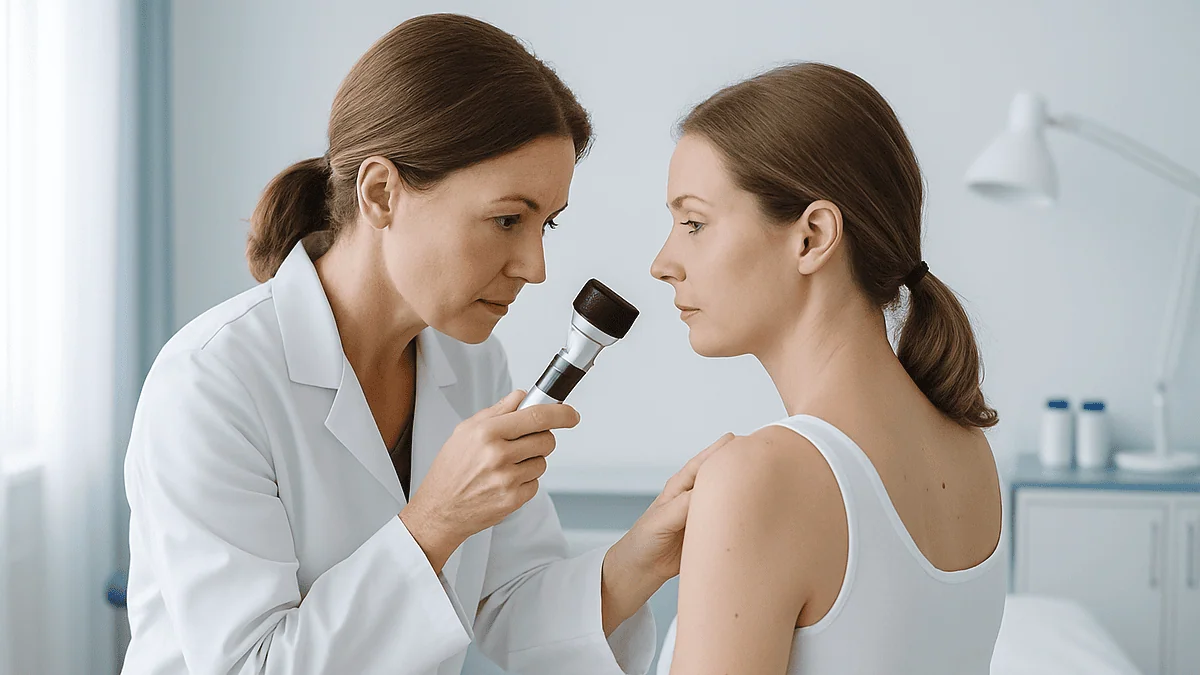
Key Takeaways
- Dermaplaning removes only the stratum corneum and vellus hair, so its effects last roughly one skin-renewal cycle of about four weeks.
- Hair cannot grow back thicker after dermaplaning because thickness and color are set by the follicle, which the blade never touches.
- No randomized controlled trial supports dermaplaning for acne, scars, wrinkles or pigmentation; the best available evidence is a 2011 systematic review of small, uncontrolled reports.
- Active acne, rosacea flares, eczema, open wounds and keloid-prone skin are consistent reasons mainstream sources give for postponing or avoiding dermaplaning.
- Oral isotretinoin and topical retinoids thin the skin and slow healing, and any timing around dermaplaning must be set by the prescribing clinician, never a salon.
- Freshly dermaplaned skin burns and pigments more easily, so broad-spectrum sunscreen and a bland routine for 48 hours are the two aftercare steps that matter most.
Dermaplaning is a cosmetic exfoliation in which a sterile blade skims the face to remove dead surface cells and fine vellus hair. It leaves skin smoother and lets makeup sit more evenly for a few weeks, but there is no controlled evidence that it treats acne, scars, wrinkles or pigmentation. People with active acne, rosacea flares, open wounds, keloid-prone skin or on certain acne medicines should usually skip it.
Scroll through any beauty feed this summer and you will find the same scene on repeat: someone at a bathroom mirror, a small guarded razor in hand, gliding it down one cheek while a caption promises glass skin by morning. Dermaplaning has been a quiet staple of treatment rooms for decades. As of mid-2025 it is a viral at-home ritual, and the comment sections are a standoff between people who swear by it and people who swear their peach fuzz came back as stubble.
Both camps are half right, which is why the topic deserves a calmer look than a 30-second clip allows. The procedure is simple, the real benefits are modest, and the list of people who should not try it is longer than the videos suggest.
What follows is a guide built on mechanism and evidence: what the blade physically does, where the research stops, what dermatologists are seeing in clinic, and how to tell a smooth result from a skin barrier that needs a week off.
What is dermaplaning, exactly?
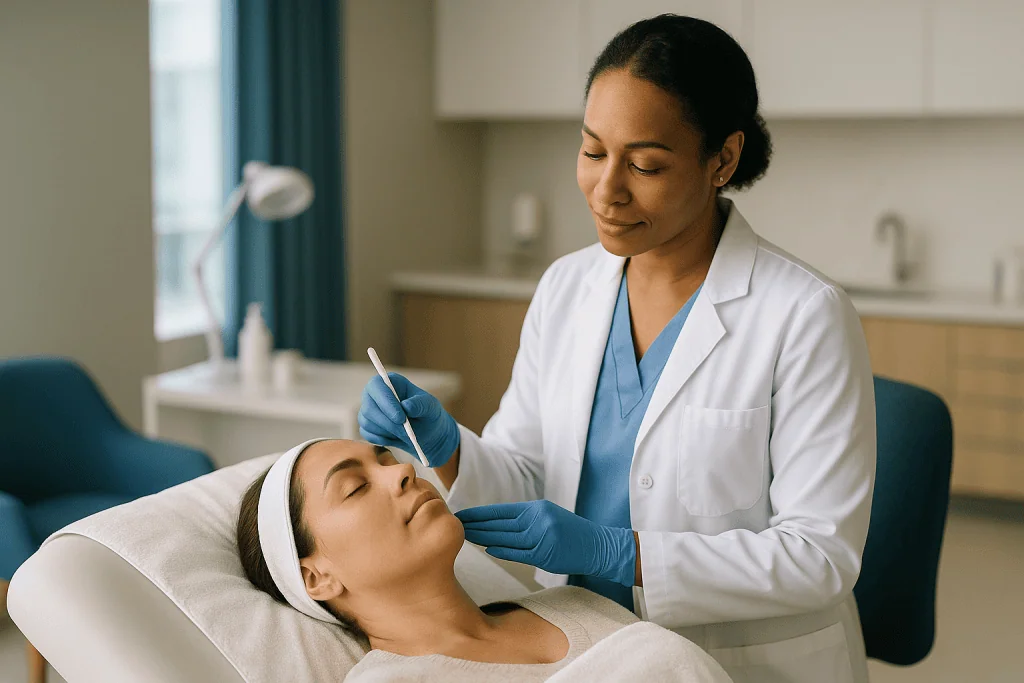
Strip away the social media gloss and dermaplaning is a simple mechanical procedure. A practitioner holds a sterile, single-use surgical blade at a shallow angle and feathers it across taut skin in short strokes. Two things come away on the blade: dead cells from the stratum corneum, the outermost layer of the epidermis made of flattened cells that have already finished their job, and vellus hair, the fine, pale hair that covers most of the face and is usually called peach fuzz.
That is the whole mechanism. No heat, no acid, no suction, no needles. The blade never enters living tissue; it skates over the surface the way a bread knife skims a crust without reaching the crumb. MedlinePlus describes the epidermis as the thin outer layer that constantly sheds and renews itself, roughly monthly, which is why any smoothing effect is temporary by design.
Dermaplaning is classed as cosmetic rather than medical. In the United States it is usually performed by licensed estheticians, nurses or dermatology staff, and who may legally hold the blade varies by state. A session takes about 20 to 30 minutes, is typically painless and leaves the face a little pink for an hour or two.
This plain mechanism matters, because nearly every exaggerated claim about dermaplaning starts by implying it does something deeper than it physically can. A blade that stays on the surface cannot remodel collagen, unclog a pore from below or alter how a follicle grows hair. It removes what is already on top. Everything else in this article follows from that one fact.
What changed recently with dermaplaning
Nothing has changed about the blade. What has changed is who is holding it. Over the past two years, inexpensive handheld dermaplaning razors have moved from salon back rooms to supermarket shelves and viral shopping videos, and search interest in at-home dermaplaning has climbed alongside them. As of mid-2025, the most-shared clips are not demonstrations by trained practitioners but close-ups of people shaving their own faces at a bathroom mirror, often with a cheap tool and no sense of blade angle.
Mainstream health systems have responded with plain-language patient guides. Cleveland Clinic’s dermaplaning page, written for the public and reviewed in 2022, frames the procedure as a cosmetic exfoliation with modest, short-lived benefits and lists the groups who should avoid it. It is notable for what it does not promise: no acne treatment, no scar removal, no permanent change.
Research has not kept pace with marketing. The most-cited academic look at dermaplaning remains a 2011 systematic review in the plastic surgery literature, which found only small, uncontrolled reports and could not draw firm conclusions about benefit. To our knowledge no large randomized controlled trial has been published since; a PubMed search in 2025 still returns a handful of case series and expert commentaries rather than comparative trials.
One more shift deserves mention. Dermatologists on consumer platforms have increasingly described a pattern they see in clinic: irritation, small cuts and patchy dark marks in people who dermaplaned at home while using prescription retinoids or during an acne flare. That is clinic-level observation, not study data, but it is exactly the kind of signal that calls for an evidence-first explainer.
What dermaplaning does well
Credit where it is due. Dermaplaning does three things reliably, and anyone who has had it done will recognize all three within minutes.
The first is texture. Removing loose, dead outer cells leaves skin that feels noticeably smoother to the touch, much as a sanded board feels different from a rough one even though it is the same wood. The second is hair. Vellus hair is nearly invisible from across a room, but it catches light and traps foundation, so taking it off gives a flatter, more even canvas; many people say makeup glides on and photographs better for the following two to three weeks. The third is a small, temporary boost in how well leave-on products spread. Cleveland Clinic notes that skin-care products may be absorbed slightly more easily after exfoliation, because less dead debris sits between the product and the living epidermis.
Two further points deserve an honest mention. Dermaplaning is one of the few exfoliation methods that uses no chemical, which makes it a reasonable option for people who react badly to acids, fragrances or scrubs. It also appeals to people who are pregnant or breastfeeding and want to avoid certain topical ingredients, although that decision belongs with their own clinician rather than an esthetician.
The ceiling, though, is low and short. These benefits are cosmetic, surface-level and last roughly one skin-renewal cycle, which MedlinePlus puts at about four weeks. If a smoother feel and a cleaner makeup finish for a few weeks is what you want, dermaplaning delivers it with a good safety record in trained hands. If you want anything more, the next section is where the viral claims part ways with the evidence.
What dermaplaning does not do
Here is the list that sells fewer razors. Dermaplaning does not treat acne. Active pimples are inflamed follicles below the surface; dragging a blade across them can open them, spread bacteria across the face and leave marks that outlast the pimple by months. Cleveland Clinic lists active acne as a reason to postpone the procedure, not a reason to book it.

It does not remove or soften acne scars. Pitted scars sit in the dermis, the thicker living layer beneath the epidermis, and a surface blade cannot reach them. The same logic applies to wrinkles. Fine lines are a collagen story, and exfoliating the surface above them changes how light reflects for a few days, not how deep the line is.
Melasma and other patchy pigmentation are untouched, because that pigment sits deep in the epidermis or dermis. In people whose skin tends to darken after irritation, an aggressive session can make pigmentation worse rather than better.
Dermaplaning is not permanent hair removal. The blade cuts vellus hair at the surface; the follicle beneath carries on exactly as before, so the hair returns on its normal schedule, usually within a few weeks. Nor does it shrink pores. Pore size is largely set by genetics and oil production; clearing surface debris can make pores look cleaner for a day or two, which is not the same thing.
Above all, dermaplaning is not a substitute for anything a dermatologist would prescribe. Nobody should swap a prescribed acne, rosacea or pigmentation treatment for a monthly blade session, and nobody should pause or change a prescription on an esthetician’s advice. If a clinician has given you a plan, the plan comes first, and dermaplaning either fits around it or waits.
What the evidence actually says
Grading the evidence for dermaplaning is quick, because there is not much of it. Using the standard ladder, randomized controlled trials at the top, observational studies in the middle and expert opinion at the bottom, here is where each claim lands.
Smoother texture and removal of vellus hair: strong on mechanism, weak on formal study. The effect is physically self-evident and consistently reported, but rarely measured in a controlled way. Grade: expert consensus plus direct observation.
Better product penetration: biologically plausible, small studies only. Exfoliation in general has been shown in laboratory and small clinical settings to increase how much of some topical ingredients reach the living epidermis; data specific to dermaplaning are sparse. Grade: low-quality evidence with a plausible mechanism.
Improvement in acne, scars, wrinkles or pigmentation: no controlled evidence. The 2011 systematic review could find only small, uncontrolled reports, most of which combined dermaplaning with chemical peels or photodynamic therapy, making it impossible to say what the blade itself contributed. Grade: insufficient evidence.
Safety in trained hands: reassuring but observational. Reported complications are mostly minor, including transient redness, superficial nicks and occasional whiteheads, and serious outcomes are rare in a literature dominated by professional settings. Grade: moderate observational reassurance, with the caveat that home use is barely studied.
Hair growing back thicker: contradicted by hair biology. Thickness, color and growth rate are set by the follicle, and cutting the shaft does not reach it. This is established physiology, not opinion.
The honest summary is that dermaplaning is a low-risk cosmetic procedure with good face validity for its two core effects and essentially no trial evidence for anything beyond them. That is not a criticism of the procedure. It is a reason to ignore anyone who promises more.
Dermaplaning vs shaving: is there really a difference?
A fair question: if dermaplaning is a blade on the face, how is it different from the razor already in the shower? The honest answer is “somewhat.” The intent, the blade and the depth of exfoliation differ a little; the biology of the hair is identical.
| Method | What it removes | How deep | Effect on hair | Typical downtime |
|---|---|---|---|---|
| Dermaplaning | Dead surface cells plus vellus hair | Outer stratum corneum only | Cut at surface; regrows unchanged in 2–4 weeks | Hours of mild pinkness |
| Standard face shaving | Vellus hair, minimal dead cells | Surface; lubrication limits exfoliation | Identical to dermaplaning | None |
| Chemical exfoliant (acids) | Dead cells, some pore debris | Outer epidermis, can act inside pore lining | None | None to a few days of flaking |
| Microdermabrasion | Dead surface cells | Outer epidermis via abrasion and suction | None | Hours to a day of redness |
The column that matters most is the one about hair. Neither blade method changes the follicle, so neither changes what grows back. Where they genuinely differ is control. A single-edge surgical blade held at a shallow angle on dry skin removes a thin, even layer of dead cells; a multi-blade cartridge on wet, lathered skin is designed to minimize exfoliation, not deliver it. That is why dermaplaning leaves skin feeling smoother than a shave, and also why it carries a slightly higher chance of a nick when done without training.
Against the other methods, dermaplaning is the gentlest in the sense of using no chemical and needing no downtime, and the most limited in reach. Acids can work within the pore lining; microdermabrasion applies controlled abrasion and suction; neither happens with a blade. The right comparison is not “which is best” but “which does the thing I actually want.”
Who should skip dermaplaning?
Some people get a smooth, uneventful result from dermaplaning. Others would be better off booking almost anything else. Cleveland Clinic and other mainstream sources are consistent about who falls into the second group, and the list rewards slow reading.
- Anyone with active acne, especially inflamed or cystic lesions; the blade can open them and spread bacteria.
- People with rosacea during a flare. The NHS describes rosacea as a long-term condition causing facial flushing, visible blood vessels and sometimes spots, and friction is a recognized trigger.
- Anyone with eczema, psoriasis or dermatitis on the face, or any open wound, cold sore or sunburn.
- People with a history of keloid or hypertrophic scarring. The NHS notes that keloids can form after even minor skin injury in susceptible people, and a nick is a minor skin injury.
- Those with a bleeding disorder or on medicines that increase bleeding, who should ask their prescribing clinician first.
Two further groups deserve a more nuanced conversation. People with deeper skin tones are more prone to post-inflammatory hyperpigmentation, the dark patching that can follow any irritation; dermaplaning is not off-limits for them, but it should be gentle, infrequent and performed by someone who understands that risk. People with thicker or darker facial hair, sometimes linked to the hormonal patterns Mayo Clinic describes under hirsutism, often find that a blade leaves a blunt-tipped stubble feel more noticeable than the original hair, which is a reason to discuss other options with a clinician.
If you recognize yourself in any line above, skipping dermaplaning is not missing out. It is simply choosing the exfoliation your skin can tolerate.
Skin conditions and medicines that change the answer
Medicines are where the at-home trend collides hardest with dermatology. Several common treatments make the skin’s outer layer thinner, drier or slower to heal, and a blade does not know that.
Prescription retinoids such as tretinoin, and over-the-counter retinol products, speed up cell turnover and leave the surface more fragile. Dermaplaning on top of that often means raw patches, stinging and a higher chance of dark marks afterward. Most practitioners ask clients to pause retinoid use for a few days around a session, but that instruction must come from, or be cleared by, the clinician who prescribed it. Nobody should stop a prescription because an esthetician said so.
Oral isotretinoin, an acne medicine taken by mouth, is the firmest line. It thins the skin and impairs wound healing during the course and for a period afterward; practitioners generally decline to dermaplane anyone currently taking it or recently finished, and the appropriate waiting period is a decision for the prescribing dermatologist, not a salon policy.
Recent procedures matter too. Skin that has had a chemical peel, laser treatment, microneedling or a sunburn in the preceding weeks is already in a repair cycle and should not be exfoliated mechanically until a clinician confirms it has recovered. Similar caution applies to blood-thinning medicines and some supplements that affect clotting, because even a superficial nick may bleed more than expected.
Then there are the conditions that mimic each other. What looks like “peach fuzz and a few bumps” in a mirror may be rosacea, perioral dermatitis or folliculitis to a dermatologist, and each responds badly to a blade. If you have facial redness, bumps or flaking that has never been assessed, getting a diagnosis first is the single most useful step before any cosmetic treatment, dermaplaning included.
Dermaplaning at home: why dermatologists hesitate
The at-home version of dermaplaning is where most of the current anxiety, and most of the current injuries, are concentrated. The tools look harmless, a small plastic handle with a guarded blade, and the videos make it look as easy as swiping a card. Dermatologists are less relaxed, for four practical reasons.
First, angle and tension. Professional dermaplaning works because the skin is held taut and the blade stays at a consistent, shallow angle. In a bathroom mirror, with one hand on the skin and the other on the blade, that angle drifts, and a drifting blade digs rather than skims. Second, the tool. Consumer razors are not the sterile, single-use surgical blades used in clinics; they dull quickly, and a dull blade drags, producing more irritation and a patchier result. Third, judgment. A trained practitioner declines to work over a pimple, a flaking patch or a spot they do not recognize; at home, people tend to shave straight through them. Fourth, aftercare. Clinics finish with soothing products and sun protection and give clear instructions, while at home a session is often followed by the very acids or retinoids that should have been paused.
None of this is a judgment on people who dermaplane at home. The tools are legal, widely sold and, used carefully on healthy skin, usually fine. The point is that the gap between “usually fine” and “a week of raw patches” is narrower at home than in a treatment room, and the people most likely to be harmed are precisely those with acne, rosacea or sensitive skin who hoped the blade would help. If that describes you, see a clinician before, not after, you try it.
What is the best way to dermaplane my face?
Suppose you have healthy skin, no active breakouts, no history of keloids and no prescription topicals in play, and you still want to try dermaplaning at home. The goal then is harm reduction rather than perfection. These basics come from professional technique and from Mayo Clinic’s general advice on gentle skin care, not from a trial.
Begin with clean, completely dry skin, free of oil or product. Hold a small section taut with one hand. With the other, keep the blade at a shallow angle and use short, light strokes in the direction of hair growth. Let the blade do the work; pressure is the enemy. Cover one small area at a time, wipe the blade often, and never pass over the same spot twice in one session.
Some zones are off-limits at home: the eyelids and the skin immediately around the eyes, the lips, the nostrils and any area with a visible blemish, scab, mole or raised spot. Moles in particular should never be shaved; a mole that is changing is a reason to see a doctor, not to exfoliate around it.
Open a fresh blade every time. A used blade is both duller and less clean, and both raise the risk of irritation and infection. Finish with a bland, fragrance-free moisturizer and, in daytime, a broad-spectrum sunscreen, because freshly exfoliated skin burns more easily. Mayo Clinic recommends an SPF of at least 15 for everyday use, and higher is reasonable after exfoliation.
Frequency matters as much as technique. Once every three to four weeks tracks the skin’s natural renewal cycle; weekly sessions, which some videos encourage, give the surface no time to recover. If a session leaves you stinging, red beyond a day or marked, your skin is telling you the method is not for it.
Aftercare: the 48 hours that matter most
The session itself is the easy part. What happens in the next 48 hours decides whether dermaplaning leaves you glowing or blotchy, because you have just removed the skin’s outermost protective layer and asked it to cope without it for a day or two.
Sun is the biggest variable. Freshly exfoliated skin has less dead-cell cover to scatter ultraviolet light, so it burns faster and pigments more readily. Daily broad-spectrum sunscreen is standard Mayo Clinic advice for everyone; after dermaplaning it is non-negotiable, and seeking shade for the first couple of days is sensible. This counts double for people who tan or darken easily, since sunburn on freshly dermaplaned skin is a common route to the patchy marks that take months to fade.
Products are the second variable. For a few days, keep the routine boring: a gentle cleanser, a plain moisturizer, sunscreen. Hold off on exfoliating acids, retinoids, vitamin C serums, scrubs and anything fragranced. A frequent mistake is layering on strong actives immediately because products “absorb better” after dermaplaning. They do, and that is exactly why strong ingredients sting and irritate more in this window.
Heat, sweat and friction round out the list. Hot showers, saunas, intense workouts and heavy makeup within the first day can all provoke redness and small whiteheads. Clean pillowcases and clean hands help, since the usual barrier against everyday bacteria is temporarily thinner.
Normal recovery looks like mild pinkness that settles within hours and skin that feels tight but comfortable. Anything beyond that, including stinging into the next day, swelling, crusting or spreading redness, belongs in the “When to see a doctor” section and should not be waited out at home.
Common myths about dermaplaning
Viral claims about dermaplaning cluster around a handful of ideas. Here is each one, and what the biology says.
“Peach fuzz grows back thicker and darker.” It does not. Thickness, color and growth rate are controlled by the follicle beneath the skin, and a blade never reaches it. What people notice is the blunt, cut tip of regrowing hair, which feels coarser under a fingertip than the naturally tapered tip did; within a couple of weeks the difference disappears. Cleveland Clinic states plainly that dermaplaning does not make hair grow back thicker.
“It is the best exfoliant for any skin.” There is no single best exfoliant. Dermaplaning suits people who want hair removal and dislike chemicals; acids suit people who need something that works inside the pore; many people need neither. “Best” is marketing, not evidence.
“Dermaplaning treats acne.” Active acne is a reason to postpone it. The blade can open inflamed spots and spread bacteria across the face.
“Products absorb ten times better afterward.” Absorption can rise modestly after any exfoliation, and no reputable source quotes a tenfold figure for dermaplaning. The more useful point is that increased penetration also means increased irritation from strong ingredients.
“Every month, forever, with no downside.” Monthly sessions on healthy skin are generally well tolerated, but the published safety data come from professional settings with short follow-up. Weekly home sessions have no safety data at all.
“It is safe for everyone.” It is not safe for active acne, rosacea flares, eczema, open wounds, keloid-prone skin or people on certain acne medicines, and it requires extra care in deeper skin tones. A procedure can be low-risk and still have a list of people who should skip it. Dermaplaning is exactly that.
What a professional dermaplaning session looks like
Knowing what a competent session looks like is the easiest way to spot an incompetent one. It begins with questions, not a blade. A good practitioner asks about current skin conditions, recent procedures, medicines, sun exposure and scarring history, and declines or postpones if anything on the skip list comes up. If nobody asks you about isotretinoin or retinoids, treat that as a warning sign.
Your skin is cleansed and fully dried, because moisture makes the blade slip. The practitioner opens a fresh, sterile surgical blade in front of you, holds the skin taut and works in small sections with short strokes, avoiding the eyelids, lips, nostrils and any blemish or mole. The whole process takes roughly 20 to 30 minutes and should not hurt; a faint scratching sensation is normal, stinging is not.
Afterward comes a soothing, fragrance-free moisturizer and sunscreen, plus clear instructions about what to avoid for the next few days. Some clinics pair dermaplaning with a light chemical peel or a hydrating mask. On robust skin that is reasonable, but combining treatments is also where irritation and pigment problems become more likely, so it should be a deliberate choice rather than an add-on you did not ask for.
On frequency, once every three to four weeks tracks the epidermis’s own renewal cycle and is what most practitioners recommend. More often gives the surface no time to rebuild. Less often is fine; dermaplaning is not a maintenance requirement, and skipping it costs nothing but a little peach fuzz. Anyone with a skin condition, a history of pigmentation changes or a current prescription should have a dermatologist, rather than the treatment room, set the schedule.
When to see a doctor
Most dermaplaning sessions end with nothing more dramatic than a pink face that calms down by dinnertime. A few do not, and because the procedure removes the skin’s outer barrier, problems can escalate faster than they would on intact skin. These signs mean a clinician should look promptly rather than eventually.
- Redness that spreads beyond the treated area, or that is worsening rather than settling after 24 hours.
- Swelling, warmth, pus, yellow crusting or a fever, which suggest a skin infection.
- A cut that will not stop bleeding, or one that reopens repeatedly.
- A cluster of painful blisters, which can signal a reactivated cold sore virus spreading across newly exfoliated skin.
- Raised, thickened or itchy scar tissue forming where a nick was, particularly with a personal or family history of keloids.
- New dark or light patches that persist beyond a couple of weeks, especially in deeper skin tones.
- Any mole that was nicked, or any spot changing in size, shape or color, whether or not you have dermaplaned near it.
Beyond emergencies, there are two unglamorous reasons to see a dermatologist before dermaplaning rather than after. If you have persistent facial redness, bumps or flaking that has never been diagnosed, you may be treating rosacea, dermatitis or folliculitis with a blade, and all three respond badly to it. And if you are on any prescription for your skin, including topical retinoids or oral isotretinoin, the decision about whether and when dermaplaning is appropriate belongs with the clinician who prescribed it. Never pause, stop or change a medicine on the advice of a treatment room. Bring the question to the person who wrote the prescription; that is what they are there for.
Frequently asked questions
Is dermaplaning good for skin?
For healthy skin, dermaplaning is a low-risk way to feel smoother and remove fine facial hair for a few weeks, and that is where its proven benefits end. It does not treat acne, scars, wrinkles or pigmentation, and for people with active breakouts, rosacea, eczema or keloid-prone skin it can do harm. Think of it as a cosmetic finish, not a skin treatment.
Does peach fuzz grow back thicker after dermaplaning?
No. Hair thickness, color and growth rate are determined by the follicle beneath the skin, and dermaplaning cuts only the hair shaft at the surface. Regrowing hair has a blunt tip rather than a naturally tapered one, which can feel coarser for a week or two before the difference fades. Cleveland Clinic and basic hair biology agree: the hair that returns is the same hair.
How much does a dermaplaning facial cost?
We do not quote prices, because they vary widely by region, provider type and whether the session is bundled with other treatments. Dermaplaning is cosmetic, so health insurance does not cover it. A more useful question than price is what is included: a consultation about your skin history and medicines, a fresh sterile blade opened in front of you, and written aftercare. If any of those is missing, the price is beside the point.
What is the best way to dermaplane my face?
On healthy skin with no breakouts, no keloid history and no prescription topicals: clean, fully dry skin, a fresh blade held at a shallow angle, short light strokes in the direction of hair growth, one small section at a time, never twice over the same spot. Avoid the eyelids, lips, nostrils, moles and any blemish, then finish with a plain moisturizer and sunscreen. Once every three to four weeks is plenty.
What are the main dermaplaning benefits and risks?
The benefits are smoother skin texture, removal of vellus hair so makeup sits more evenly, and slightly better spread of leave-on products, all lasting a few weeks. The risks are mild redness, small nicks, whiteheads, irritation, and in susceptible people dark patches or, rarely, keloid scarring and infection. Risks rise sharply with active acne, retinoid use, deeper skin tones treated aggressively, and untrained at-home technique.
How often should you get dermaplaning?
Once every three to four weeks is the interval most practitioners recommend, because it roughly matches the four-week cycle in which the epidermis renews itself. Shorter gaps give the surface no time to rebuild its protective layer and raise the chance of irritation and pigmentation changes. Less often is fine; dermaplaning is optional, and skipping a session has no downside beyond a little returning peach fuzz.
Can you dermaplane with acne?
Not over active acne. Inflamed spots are infected or irritated follicles, and a blade can open them, spread bacteria across the face and leave marks that persist for months. Cleveland Clinic lists active acne as a reason to postpone. If your acne is being treated by a clinician, especially with retinoids or isotretinoin, ask them before booking any exfoliating treatment, and never pause your prescription to fit a salon appointment.
Is dermaplaning safe during pregnancy?
Dermaplaning involves no chemicals or medicines, so many practitioners consider it an option during pregnancy, and some people choose it to avoid certain topical ingredients. There is no trial evidence either way. Pregnancy can also make skin more sensitive and more prone to pigmentation changes such as melasma, so irritation carries a higher cost. Discuss it with your obstetric or dermatology clinician first, and skip it during any flare of redness or acne.
Does dermaplaning hurt or cause breakouts?
In trained hands it should not hurt; a faint scratching sensation is normal and stinging is a sign to stop. Breakouts afterward are usually small whiteheads or irritation from heat, sweat, heavy makeup or strong products applied too soon, rather than true acne. A bland routine, sunscreen and avoiding acids and retinoids for a few days reduce that risk. Stinging that lasts into the next day deserves a clinician’s look.
Can I use retinol after dermaplaning?
Not immediately. Retinoids, both prescription and over-the-counter, thin the outer skin layer and increase irritation, and freshly dermaplaned skin absorbs them more readily. Most practitioners suggest a pause of several days before and after a session. If your retinoid was prescribed, do not stop or change it on a salon’s advice; ask the prescribing clinician how to time it around dermaplaning and follow their instruction rather than a general rule.
References
This article is for general information only and is not a substitute for professional medical advice. Please consult a qualified doctor about your individual situation.

More from the Blog

Fungal Acne: Why It Is Not Acne at All and Why Acne Treatments Make It Worse
Fungal acne is the everyday name for Malassezia folliculitis, an inflammation of hair follicles driven by overgrowth of a yeast that lives on nearly…

Does Psoriasis Affect the Joints? Why Dermatologists Ask About Stiffness and Adjust the Plan
Yes. Psoriasis can affect the joints through a related condition called psoriatic arthritis, which develops in up to about 30 percent of people with…

When Atopic Dermatitis Looks Infected: Weeping, Crusting and Fever That Need a Doctor Soon
Infected atopic dermatitis is eczema that has been invaded by bacteria, most often Staphylococcus aureus, or less commonly by the herpes simplex virus. Suspect…
HydraFacial: What the Treatment Does and What It Cannot Change
A HydraFacial is a non-invasive, device-based facial that cleanses, lightly exfoliates, vacuums debris from pores and infuses hydrating serums in one session. Published evidence…

How Is Shingles Pain Managed? Skin Care, Prescribed Relief and When Nerve Pain Lingers
Shingles pain management usually combines three things: an antiviral medicine started as early as possible, ideally within 72 hours of the rash, to shorten…

Collagen Banking: The Trend Explained: What Stimulates Collagen and What Is Marketing
Collagen banking is a marketing term, not a medical one, for starting collagen-protecting habits early so skin stays firmer for longer. The best-supported steps…