

Diverticulitis Recovery Timeline: From Antibiotics to Feeling Yourself Again
Key Takeaways
- For mild, uncomplicated diverticulitis, the NHS benchmark is noticeable improvement within about 2 to 3 days, with a normal diet and energy usually returning over one to two weeks.
- Complicated episodes involving an abscess, perforation or surgery shift the recovery scale from days to several weeks, and a temporary stoma adds a further learning period.
- Guidelines now support selective rather than automatic antibiotic use in mild cases for otherwise healthy people, a decision that rests with the clinician who has seen your scan.
- Low-fiber eating is a brief bridge during acute inflammation, not a long-term plan; the NHS suggests aiming for around 30 grams of fiber a day once recovered, added gradually.
- Nonsteroidal anti-inflammatory painkillers are linked to a higher risk of diverticulitis complications, which is why acetaminophen is generally suggested during a flare.
- Mayo Clinic states there is no evidence that nuts, seeds or popcorn cause diverticulitis, and Cleveland Clinic puts recurrence at roughly one in five people, meaning most never have a second episode.
Most people with mild, uncomplicated diverticulitis start to feel better within about 2 to 3 days of starting treatment, and many feel close to normal within one to two weeks. Complicated episodes involving an abscess, perforation or surgery usually mean a hospital stay and a recovery measured in several weeks. Fatigue and a cautious appetite often linger longer than the pain itself, and your treating team decides when to widen your diet, return to work and schedule follow-up.
The pain usually announces itself low on the left side, a dull, insistent ache that makes bending to tie a shoe feel like a bad idea. A day later there is a fever, a CT scan, a diagnosis you may never have heard spoken aloud, and a prescription. Then comes the question almost everyone asks in the parking lot on the way home: how long is this going to take?
Diverticulitis recovery time is one of those subjects where the internet offers two unhelpful extremes. Forum posts describe months of misery; glossy summaries suggest a few days of clear broth and you are done. The truth sits between them and depends heavily on one distinction: was the episode uncomplicated, or did it involve an abscess, a perforation or an operation?
This guide walks through what typically happens hour by hour and week by week, what the evidence supports about diet, rest and antibiotics, and which signs mean you should stop waiting and call.
What is actually happening in the colon during diverticulitis?
Diverticula are small pouches that bulge outward through weak spots in the wall of the large intestine, most often in the sigmoid colon, the S-shaped final stretch on the lower left side. Having them is called diverticulosis, and it is remarkably common: the National Institute of Diabetes and Digestive and Kidney Diseases estimates that roughly a third of US adults aged 50 and under and more than half of those over 60 have diverticula, the vast majority without ever knowing it.
Diverticulitis is what happens when one or more of those pouches becomes inflamed. The older explanation blamed a trapped seed or nut plugging the neck of a pouch. Current thinking, summarized by Mayo Clinic and the NIDDK, points to a mix of factors: pressure inside the colon, tiny tears in the thinned wall of the pouch, changes in the gut’s bacterial community and a low-grade inflammatory response that, in some people, tips into a full episode.
Once inflamed, the pouch wall swells and the surrounding fat and tissue react. That is the source of the tenderness when a clinician presses on your lower left abdomen, and of the fever and raised white blood cell count seen on blood tests. Most episodes stay contained; the inflammation flares, the body walls it off and the tissue settles over days. A minority progress to complications: an abscess (a pocket of pus beside the colon), a perforation (a hole in the wall), a fistula (an abnormal tunnel to the bladder or another organ) or a narrowing that obstructs the bowel.
That distinction between uncomplicated and complicated disease, usually settled by a CT scan, is the single biggest factor in how long recovery takes. Everything that follows in this article branches from it.
Diverticulitis recovery time: the honest overview
Ask three people who have had diverticulitis how long recovery took and you may get three very different answers, and all three can be accurate. The condition does not have one timeline; it has several, sorted by severity.
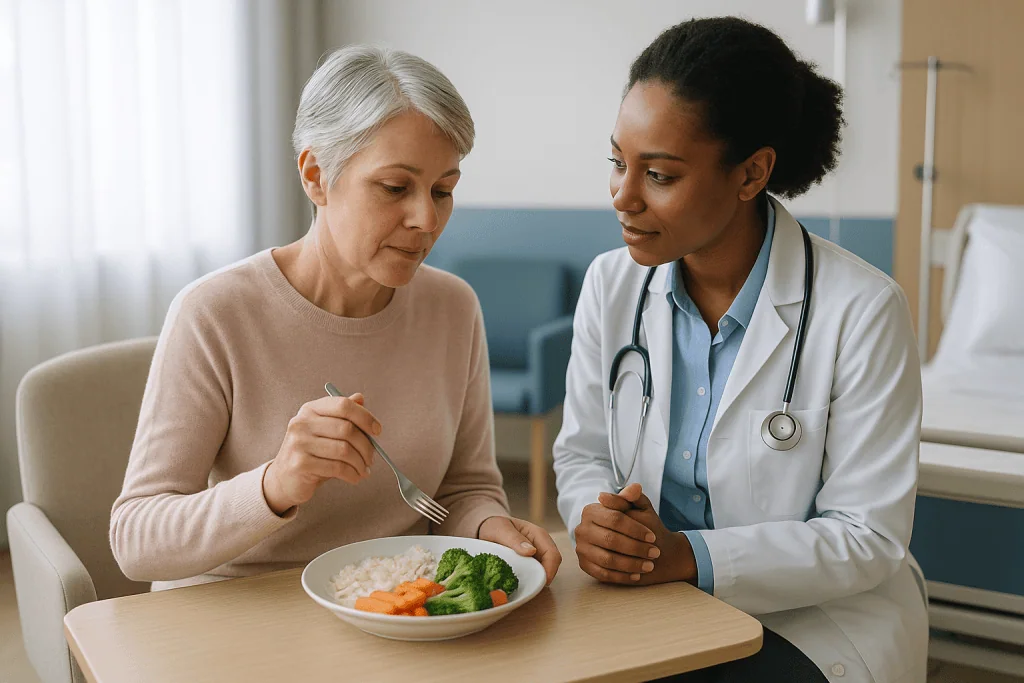
For an uncomplicated episode treated at home, the NHS notes that symptoms usually start improving within 2 to 3 days of treatment. Pain eases first, then fever, then appetite. Feeling fully like yourself, with a normal diet and normal energy, commonly takes another week or two as the inflamed tissue quiets down. Many people are surprised that the tiredness outlasts the pain; fighting off inflammation is metabolically expensive, and the low-calorie liquid diet of the first days does not help.
For a complicated episode, expect a different scale. Hospital admission for intravenous antibiotics and monitoring is typical, according to Mayo Clinic and the NHS. If an abscess is large enough to need a drain placed through the skin under imaging guidance, the drain may stay in for days. If emergency surgery is needed for a perforation or peritonitis (infection spreading through the abdominal lining), recovery is measured in weeks, and sometimes involves a temporary stoma, an opening on the abdomen through which stool is diverted into a bag while the bowel heals.
Between those poles sit the people who start at home, do not improve after a couple of days and are brought in for a rethink. That path is not a failure; it is exactly why clinicians ask you to check in if things are not moving.
The most useful mental model is not a calendar but a set of milestones: pain settling, fever gone, eating solid food, back at usual activities, follow-up complete. The sections below walk through each in the order they usually arrive.
How long does diverticulitis last with antibiotics, and does everyone need them?
Antibiotics are medicines that kill bacteria or stop them multiplying. For decades every diverticulitis diagnosis came with a prescription, on the assumption that infection drove the inflammation. That assumption has softened. Mayo Clinic now notes that in mild, uncomplicated cases antibiotics may not be needed, and several large trials in otherwise healthy people found similar recovery whether or not antibiotics were given. Guidelines in the United States and Europe therefore allow selective use rather than automatic prescribing.
What does that mean for your timeline? In practice, very little in terms of days. Whether the inflammation is settled by antibiotics or by the body’s own containment, the NHS figure of noticeable improvement within about 2 to 3 days is the benchmark clinicians watch for. If you have been prescribed a course, the expectation is that fever and pain trend downward across those first few days; if they do not, that is a reason to be reassessed, not to wait out the bottle.
Who is usually still given antibiotics? People who are older, immunosuppressed, living with significant other illnesses, pregnant, or whose scan shows early signs of complication. The decision rests with the treating clinician, who weighs your scan, your blood results and your overall health. Do not stop a prescribed course early because you feel better, and do not ask to be put on one purely because a friend was; both conversations belong with the prescriber.
One more point of confusion: antibiotics do not shrink the diverticula or repair the colon wall. They address the acute flare. Longer-term protection comes from the fiber, activity and weight strategies covered later, not from repeated courses.
Who recovers at home, and who is usually admitted?
The decision about where you recover is made early, often in an emergency department, and it shapes everything that follows. Mayo Clinic and the NHS describe broadly similar criteria.
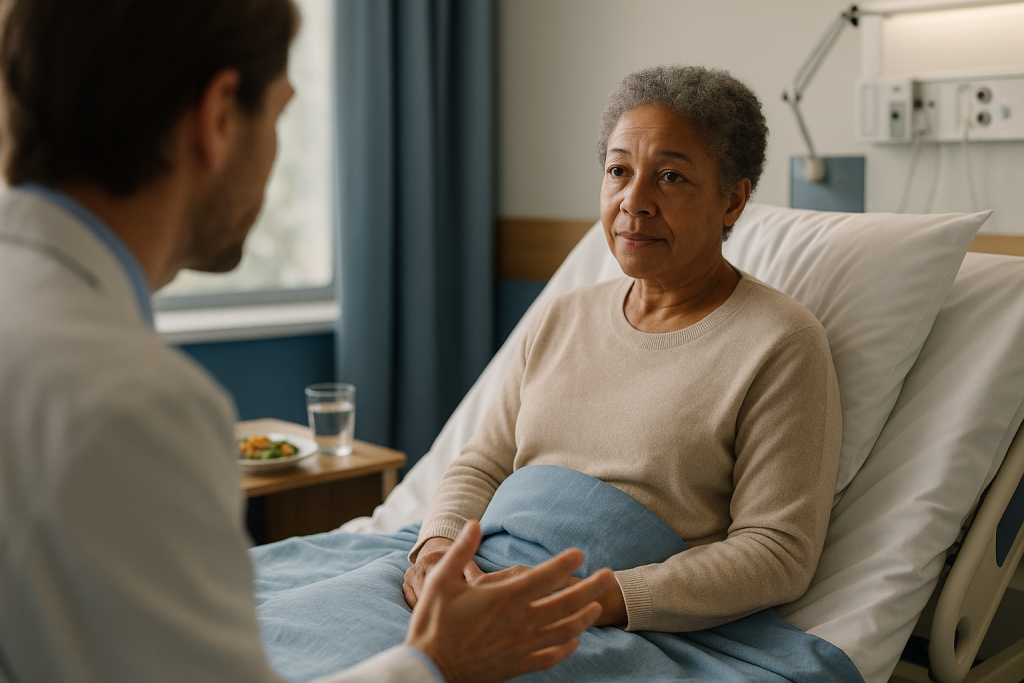
Home recovery is usually offered when the CT scan shows uncomplicated inflammation, you can drink fluids and keep them down, pain is controllable, you have no high fever or signs of sepsis, and someone can check on you. Clinicians also look at the wider picture: a healthy 48-year-old with a first mild episode is a very different proposition from an 80-year-old on medicines that suppress the immune system.
Admission is more likely when:
- The scan shows an abscess, free air suggesting perforation, a fistula or a bowel obstruction.
- You cannot tolerate oral fluids, so intravenous hydration and medicines are needed.
- Fever is high, heart rate is fast or blood pressure is low, which can indicate infection spreading beyond the colon.
- You are immunosuppressed, frail, pregnant or have significant kidney, heart or liver disease.
- A home trial has already been tried and symptoms have not improved after a couple of days.
Being admitted does not automatically mean surgery. The NHS notes that many people admitted with diverticulitis are treated with intravenous antibiotics and fluids and go home once they are eating and their markers have improved. The people typically asked to wait, in the sense of watching rather than intervening, are those with a small abscess that can be managed with antibiotics alone, or those whose symptoms are settling on their own.
Wherever you land, the milestone that unlocks discharge or the widening of a home diet is the same: pain and fever trending down and fluids staying down. Your team will tell you what they are watching for; ask them to be specific.
Diverticulitis recovery timeline at a glance
The table below pulls together the typical ranges described by the NHS, Mayo Clinic and Cleveland Clinic. Treat every figure as a range observed in populations, not a promise for your body. Your own timeline is set by your scan, your other health conditions and your treating team.
| Scenario | Where care usually happens | Pain and fever typically ease | Back to a normal diet | Back to usual activity |
|---|---|---|---|---|
| Mild, uncomplicated episode | Home, with or without oral antibiotics | Within about 2–3 days | Often within 1–2 weeks, reintroduced gradually | Usually within 1–2 weeks as energy returns |
| Uncomplicated but needing admission | Hospital ward, intravenous fluids and antibiotics | Within a few days | Started in hospital, completed at home over 1–2 weeks | Typically 2–3 weeks |
| Abscess drained through the skin | Hospital, imaging-guided drain | Days, once pus is drained | Gradual over 2–4 weeks | Several weeks; drain care limits activity |
| Emergency surgery for perforation | Hospital, operating room, sometimes intensive care | Post-operative pain over 1–2 weeks | Weeks, as the bowel wakes and heals | Roughly 6 weeks or more; longer with a stoma |
| Planned surgery after repeated episodes | Hospital, often keyhole (laparoscopic) | Post-operative pain over 1–2 weeks | 2–4 weeks | Around 4–6 weeks for most routine activity |
Two patterns stand out. First, pain settles far sooner than energy in every row. Second, the gap between rows is measured in weeks, not days, which is why knowing whether your episode was complicated matters more than any general average. If you are unsure which row applies to you, ask; the answer changes what a good week looks like.
The first 72 hours: what actually happens inside and around you
The first three days are the acute phase, and they follow a recognizable arc.
Day one is dominated by pain and, often, fear. The colon wall around the inflamed pouch is swollen and the nerves in the surrounding tissue are irritable, which is why movement, coughing and pressure hurt. Fever reflects the immune response ramping up. If you are at home, clinicians usually suggest a clear liquid diet: water, broth, clear juices without pulp, plain gelatin. The purpose is mechanical rest; less bulk moving through the colon means less stretch and pressure on the inflamed segment. Acetaminophen is the pain reliever generally suggested by Mayo Clinic and the NHS, because nonsteroidal anti-inflammatory drugs (a class that includes ibuprofen) have been associated with a higher risk of complications. Use only what your team has advised.
Day two is when improvement should begin to show. Pain that is a little less sharp, a temperature drifting down, a slightly more settled abdomen. It is subtle. Many people expect a switch to flip and are disappointed; think instead of a dimmer slowly turning.
Day three is the checkpoint. The NHS benchmark of improvement within 2 to 3 days means that by now the trend should be clearly downward. If it is, your team will typically let you begin adding low-fiber solids. If pain is the same or worse, fever persists, or you cannot keep fluids down, that is the moment to call rather than push on. Some people at this point need a repeat scan to check whether an abscess has formed.
Throughout these days, hydration matters more than calories. Fever and a liquid diet both pull fluid out of you, and dehydration makes fatigue and dizziness worse. Small, frequent sips are easier than large glasses on a sore abdomen.
Diverticulitis recovery diet: from clear liquids back to fiber
Food is where most people feel they have some control, and it is also where the most confusion lives. The progression described by Mayo Clinic and the NHS has three phases, each unlocked by symptoms rather than by a fixed number of days.
Phase one is clear liquids, described above, typically for the first day or two while pain is acute. Phase two is low-fiber solids: white bread or toast, white rice, plain pasta, eggs, skinless poultry, fish, well-cooked vegetables without skins or seeds, canned or very soft fruit, yogurt if tolerated. Fiber is the part of plant foods the body cannot digest; it adds bulk and draws water into stool, which is exactly what you want when the colon is healthy and exactly what you want less of while a segment is acutely inflamed. This phase usually lasts several days to a week or so, until you are eating comfortably.
Phase three is the return to a high-fiber diet, and here the direction reverses. The NHS suggests adults aim for about 30 grams of fiber a day once recovered, adding it gradually over days to weeks to avoid bloating and gas. Whole grains, beans, lentils, fruits with skins and vegetables are the long-term staples, alongside plenty of fluid, because fiber without water can worsen constipation.
Common mistakes during this transition:
- Jumping from clear liquids straight to a salad, then blaming the salad for a cramp that is really just a still-irritable colon.
- Staying low-fiber for months out of caution, which increases constipation and pressure in the colon over time.
- Cutting out nuts, seeds and popcorn permanently; Mayo Clinic notes there is no evidence these cause diverticulitis.
If you have diabetes, kidney disease or another condition that shapes your diet, ask for a dietitian referral; the standard progression may need adjusting for you.
Week one to week four: what the following weeks usually look like
Once the acute phase passes, recovery becomes quieter and, for many people, more frustrating. The dramatic symptoms are gone but you do not feel like yourself.
In the second half of week one, most people with an uncomplicated episode are eating low-fiber solids, sleeping better and moving around the house without wincing. The lower left abdomen may still be tender to a firm press; that residual tenderness reflects tissue that is calming rather than active disease. Bowel habits can be erratic, swinging between loose stool from the diet change or antibiotics and sluggishness from low fiber and reduced activity.
Week two is when energy starts returning and the diet widens. Mayo Clinic and the NHS describe this as the window in which many people return to desk-based work and light routine. If you were admitted, discharge often falls somewhere in the first week, with this second week spent finishing recovery at home.
Weeks three and four are about consolidation: fiber back toward the target, exercise resuming, appetite normal. For complicated episodes this is when drains have usually been removed and surgical wounds are healing, but heavy lifting and strenuous exercise are typically still restricted; surgical teams commonly quote around six weeks before abdominal wall tissue has regained enough strength, and your surgeon’s specific instructions override any general figure.
Two things surprise people in this stretch. The first is intermittent twinges in the same spot for weeks afterward, which are common and usually settle, though a new fever or escalating pain is different and warrants a call. The second is anxiety about eating. After a frightening episode, many people become wary of food. Reintroducing variety, slowly and deliberately, is part of recovery too.
Should you rest during a diverticulitis attack?
Yes, at first, and then progressively less. The evidence-based answer to this common question has two halves.
During the acute phase, rest is genuinely useful. Mayo Clinic’s guidance for home treatment pairs a liquid diet with rest while the inflammation settles. Pain and fever are the body’s own instruction to slow down, and pushing through them tends to prolong the phase rather than shorten it. That does not mean lying motionless. Getting up to walk to the kitchen, sitting rather than lying for part of the day and gentle stretching are fine and help prevent stiffness and the sluggish bowel that comes with total inactivity. In hospital, nurses will encourage you to walk the corridor for exactly this reason; movement stimulates gut motility and lowers the risk of blood clots in the legs, a recognized hazard of lying still while unwell.
Once pain and fever have clearly eased, usually after the first few days, gradual movement becomes part of the treatment rather than a threat to it. Short walks, then longer ones, then a return to your usual routine as energy allows. The signal to pull back is an increase in abdominal pain, not general tiredness, which is expected and improves with gentle activity rather than more bed rest.
Work is a separate question. Desk-based jobs are often manageable within a week or two of an uncomplicated episode; physically demanding jobs, especially those involving lifting, need a longer conversation with your clinician, and after surgery a written return-to-work plan is standard. Driving is usually fine once you are off any sedating pain medicine and can brake sharply without pain.
The longer view matters here too. Regular physical activity is one of the factors Mayo Clinic and the NIDDK associate with a lower likelihood of future episodes. Rest gets you through the flare; movement helps keep the next one away.
How to speed up diverticulitis recovery: what actually helps
Nobody can make inflamed tissue heal on command, and anyone selling a way to do so is selling something. But there are evidence-supported ways to avoid slowing recovery down, which in practice amounts to the same thing.
Follow the diet progression as prescribed, in both directions. Rushing to solids too early can aggravate a colon that is still irritable; lingering on liquids or very low fiber for too long deprives you of the calories and protein tissue repair needs and sets up constipation. Ask your team which phase you are in and what would signal moving to the next.
Stay hydrated. Fever, a liquid diet and antibiotics all pull fluid from you, and dehydration amplifies fatigue, headache and dizziness, which people then read as the diverticulitis getting worse.
Take medicines exactly as prescribed. If antibiotics were given, finish the course as directed even when you feel better on day three. If you were told to avoid nonsteroidal anti-inflammatory drugs, avoid them; Mayo Clinic and Cleveland Clinic both note their association with complications in diverticular disease.
Move a little every day once pain allows, for the reasons in the previous section. Sleep as much as your body asks for; immune repair is heavily concentrated in sleep.
Do not smoke. Smoking is associated with a higher risk of complicated diverticulitis in the evidence summarized by the NIDDK, and it impairs wound and tissue healing generally. If you smoke and have just had an episode, this is a reasonable moment to ask about support to stop.
What does not have evidence behind it: probiotic supplements to shorten an acute episode, herbal anti-inflammatories, colon cleanses and restrictive elimination diets. Some are harmless, some are not, and none should replace the plan your treating team has set. If you are curious about any of them, ask before adding them.
What's the worst thing for diverticulitis?
This is one of the most searched questions about the condition, and the answer is not the one most people expect. It is not popcorn.
In the acute phase, the most damaging things are the ones that delay recognition of a complication. Ignoring worsening pain because you assume antibiotics need more time, treating a rising fever with over-the-counter medicines and hoping, or taking anti-inflammatory painkillers because they work better than acetaminophen for you: each of these can mask or worsen a developing abscess or perforation. Nonsteroidal anti-inflammatory drugs deserve a specific mention because so many people keep them in the bathroom cabinet; Mayo Clinic lists them among the factors linked to a higher risk of diverticulitis and its complications, and most clinicians ask patients to avoid them during a flare unless there is a compelling reason otherwise.
Over the long term, the evidence summarized by the NIDDK, Mayo Clinic and Cleveland Clinic points to a cluster of risks rather than a single villain: a low-fiber, high-red-meat diet, physical inactivity, obesity, smoking and regular use of nonsteroidal anti-inflammatory drugs or certain steroid medicines. None of these guarantees an episode, and plenty of people with none of them still develop diverticulitis, but they are the factors most consistently associated with both first episodes and recurrences.
What is conspicuously absent from that list is the folklore. Nuts, seeds, corn and popcorn were forbidden for decades on the theory that fragments lodged in pouches. Mayo Clinic is explicit that there is no evidence these foods cause diverticulitis or its flares, and some studies have found people who eat them regularly have episodes less often, probably because they are a proxy for a higher-fiber diet overall.
So the honest answer: the worst thing for diverticulitis is waiting too long to be reassessed when things are not improving, followed by a long-term pattern of low fiber, low movement and the wrong painkillers.
Diverticulitis flare up recovery after an abscess, perforation or surgery
If your episode was complicated, the general timelines above do not apply and you deserve a more specific picture.
An abscess is a pocket of pus that forms when the body walls off infection beside the colon. Small abscesses are often managed with intravenous antibiotics alone, and Mayo Clinic notes that larger ones may be drained by a radiologist passing a thin tube through the skin under CT or ultrasound guidance. The drain stays until output falls, often several days, and its presence limits bathing and activity. Pain typically improves quickly once pus is released, but the antibiotic course tends to be longer and follow-up imaging is common to confirm the cavity has collapsed.
A perforation is a hole in the colon wall. A tiny, contained perforation may be treated much like an abscess. A free perforation with peritonitis is a surgical emergency. The operation removes the diseased segment of colon and either rejoins the ends or, when tissue is too inflamed to join safely, brings the upstream end out as a temporary stoma. The NHS describes this as a colostomy, and reversal is usually considered months later once you have recovered. Hospital stays after emergency surgery are commonly a week or more; full recovery, including regaining strength, is usually described in terms of six weeks or longer, and a stoma adds a learning curve of its own with the support of specialist nurses.
Planned surgery after repeated episodes is a different experience. It is often done laparoscopically, through small incisions, and Mayo Clinic notes recovery tends to be faster than after open surgery, with most people resuming routine activity over several weeks.
Whatever the operation, the immediate weeks involve a slow return to eating as the bowel wakes, wound care, lifting restrictions and a follow-up appointment where the removed tissue’s pathology report is discussed. Ask your surgical team for their written timeline; it will be more accurate for you than any general figure here.
What people often get wrong about diverticulitis recovery
Some misunderstandings show up so reliably in clinic conversations that they are worth naming.
Feeling better means the inflammation is gone. Symptoms settle before tissue fully quiets. The residual tenderness and twinges over the following weeks are common and do not usually mean the episode is returning; a new fever or escalating pain does.
Every episode needs antibiotics. As covered earlier, guidelines now support selective use in mild uncomplicated cases for otherwise healthy people. Whether you are in that group is your clinician’s call, informed by your scan and blood results.
Low fiber is the safe long-term diet. It is the opposite. The low-fiber phase is a brief bridge during acute inflammation. The NHS and NIDDK both recommend a high-fiber diet once recovered, because it is associated with fewer episodes, not more.
Nuts and seeds caused this. Mayo Clinic states plainly that there is no evidence for this long-held belief.
One episode means many more are coming. Cleveland Clinic’s patient information puts recurrence at roughly one in five people over the following years, which means the majority of people who have a single episode do not have another. Recurrence is more likely after complicated disease and in younger patients, and that is part of what your team weighs when discussing surgery.
Diverticulitis is a form of cancer or leads to it. It is not. The reason a colonoscopy is often recommended some weeks after an episode is that the symptoms and scan appearance of diverticulitis can occasionally resemble other conditions, and clinicians want to look directly at the colon lining once it has settled. It is a check, not a verdict.
Surgery is the only way to end the cycle. For most people surgery is reserved for complications or for repeated episodes that significantly affect quality of life, and the decision is shared, not automatic.
Why follow-up comes weeks later, and lowering the chance of another flare
Recovery does not end when you feel normal. Two pieces of follow-up matter.
The first is a colonoscopy, a camera examination of the colon lining, which Mayo Clinic notes may be recommended after recovery from an episode, particularly if you have not had one recently. It is deliberately scheduled several weeks after the acute phase, commonly in the range of 6 to 8 weeks, because inserting a scope into an actively inflamed colon carries more risk and yields a less reliable view. The purpose is to confirm the diagnosis and exclude other conditions that can look similar on a CT scan. If a recent colonoscopy was clear, your team may reasonably decide it is not needed again.
The second is a conversation about reducing the risk of recurrence. The factors consistently associated with fewer episodes in the evidence summarized by the NIDDK and Mayo Clinic are unglamorous and cumulative:
- A high-fiber diet built from whole grains, legumes, fruit and vegetables, with the NHS target of about 30 grams a day as a reference point.
- Adequate fluid intake alongside that fiber.
- Regular physical activity, which lowers pressure in the colon and reduces constipation.
- Maintaining a healthy weight; obesity is associated with a higher risk of both episodes and complications.
- Not smoking.
- Avoiding regular use of nonsteroidal anti-inflammatory drugs where a safe alternative exists, a decision to make with whoever prescribes your other medicines.
What the evidence does not support: routine long-term antibiotics, mesalazine (an anti-inflammatory used in other bowel conditions), or probiotic supplements to prevent recurrence. Studies have been mixed at best, and major guidelines do not recommend them for this purpose.
For people with repeated episodes, or a complicated first episode, a surgical opinion about planned removal of the affected segment may be offered. That decision weighs frequency, severity, other health conditions and your own priorities, and it belongs in a calm outpatient discussion rather than the emergency department.
Questions to ask your care team about your recovery
The most useful thing you can bring to a follow-up appointment is a short list of specific questions. Clinicians answer specific questions far better than a general “am I okay?”, and the answers give you your own timeline instead of an internet average.
- Was my episode uncomplicated, or did the scan show an abscess, perforation or other complication? Which row of the recovery table am I in?
- If I have been prescribed antibiotics, what improvement should I expect by day three, and what should prompt me to call before then?
- Which diet phase am I in now, and what symptoms tell me it is safe to move to the next?
- When should I begin increasing fiber, and how quickly?
- Which pain relievers are appropriate for me, and which should I avoid, given my other medicines?
- When can I return to work, drive, exercise and lift? For physically demanding jobs, can that be written down?
- Do I need a colonoscopy after this episode, and roughly when?
- Given my age, health and this episode, how likely is another one, and what would change that estimate?
- If this recurs, what should I do first, and who should I contact?
- Is there any reason to discuss surgery, now or in the future?
- Are any of my regular medicines linked to diverticulitis risk, and is a review worthwhile?
- Would a referral to a dietitian help, especially if I have another condition that affects what I can eat?
Write the answers down or ask permission to record them. The days after a frightening diagnosis are not when memory works best, and the difference between “a couple of weeks” and “six weeks, no lifting” is worth getting right.
If anything you read here conflicts with what your team has told you, their advice wins. They have seen your scan; this article has not.
When to call your doctor: red-flag signs during diverticulitis recovery
Most recoveries are uneventful, and the aim of this section is not to make you watch your abdomen with dread. It is to give you a short, clear list so you can stop worrying about everything else.
Contact your treating team the same day if, during recovery:
- Pain is not improving, or is getting worse, after 2 to 3 days of treatment.
- Fever returns or persists beyond the first couple of days.
- You cannot keep fluids down, or you have not passed urine for many hours.
- You develop new constipation with bloating and no wind passing, which can suggest obstruction.
- You notice bleeding from the rectum.
- You pass air or stool in your urine, or have recurrent urinary infections, which can indicate a fistula to the bladder.
- A surgical wound becomes red, hot, swollen or leaks fluid, or a drain stops working or falls out.
Seek emergency care immediately, without waiting for a callback, if you have:
- Sudden, severe pain across the whole abdomen, especially with a rigid, board-like belly.
- A high fever with shaking chills, confusion, a racing heart, rapid breathing or feeling faint. These can indicate sepsis, a life-threatening response to infection.
- Repeated vomiting with a swollen abdomen.
- Heavy rectal bleeding or passing large clots.
Mayo Clinic and the NHS both describe these as signs that need urgent assessment, because perforation, peritonitis and sepsis are time-sensitive. If you are unsure whether something counts, that uncertainty is itself a reason to call. Clinicians would far rather reassure you over the phone than see you two days later than they should have.
Keep the number for your care team or discharge ward where you can find it, and tell whoever is with you what the red flags are, so someone else is watching too.
Frequently asked questions
How long does it take to feel normal after diverticulitis?
Most people with an uncomplicated episode feel close to normal within one to two weeks, with pain and fever easing in the first 2 to 3 days and appetite and energy catching up afterward. Fatigue commonly outlasts pain. After an abscess, perforation or surgery, feeling fully yourself is more often measured in several weeks, and occasional twinges in the same spot can persist for a while without signaling a new flare.
How long does diverticulitis last without antibiotics?
In mild, uncomplicated cases in otherwise healthy people, studies have found recovery over a similar number of days whether or not antibiotics are given, which is why guidelines now allow selective use. The same checkpoint applies: improvement should be evident within about 2 to 3 days. Whether you are a candidate for treatment without antibiotics depends on your scan, blood tests and overall health, and is your clinician’s decision.
What's the worst thing for diverticulitis?
During a flare, the most harmful things are delaying reassessment when symptoms are not improving and taking nonsteroidal anti-inflammatory painkillers, which are associated with a higher risk of complications. Over the long term, low fiber, physical inactivity, obesity, smoking and regular use of those painkillers are the factors most consistently linked to episodes. Nuts, seeds and popcorn are not on the evidence-based list.
How can I speed up my diverticulitis recovery?
You cannot force inflamed tissue to heal faster, but you can avoid slowing it down: follow the diet progression your team set, stay well hydrated, finish any prescribed antibiotics as directed, avoid anti-inflammatory painkillers unless told otherwise, move gently once pain allows, sleep, and do not smoke. Supplements and cleanses marketed for faster recovery lack evidence and should be discussed with your clinician before use.
Should you rest during a diverticulitis attack?
Yes during the acute phase, when pain and fever are active, but rest means reduced activity rather than staying in bed. Short walks around the home help gut motility and lower clot risk. Once pain and fever have clearly eased, usually within the first few days, gradually increasing activity supports recovery. Increased abdominal pain, not tiredness, is the signal to ease off.
What is the best diverticulitis recovery diet?
Clear liquids for the first day or two while pain is acute, then low-fiber solids such as white rice, eggs, fish and well-cooked peeled vegetables until eating is comfortable, then a gradual return to a high-fiber diet. The NHS suggests adults aim for around 30 grams of fiber daily once recovered. Move between phases based on symptoms and your team’s advice, not a fixed calendar.
How long is diverticulitis flare up recovery after surgery?
After surgery, hospital stays commonly last several days to a week or more depending on whether it was planned keyhole surgery or an emergency operation. Most surgical teams describe around six weeks before heavy lifting and strenuous exercise, longer if a temporary stoma was created. Diet is reintroduced gradually as the bowel recovers. Your surgeon’s written plan is more accurate for you than any general range.
Why do I need a colonoscopy weeks after diverticulitis?
A colonoscopy is often recommended after recovery, commonly around 6 to 8 weeks later, to confirm the diagnosis and exclude other conditions that can look similar on a CT scan. It is delayed because examining an actively inflamed colon carries more risk and gives a poorer view. If you have had a recent clear colonoscopy, your team may decide another is unnecessary.
Will diverticulitis come back?
Cleveland Clinic’s patient information puts recurrence at roughly one in five people over the following years, so most people who have one episode do not have another. Recurrence is more likely after a complicated first episode and in younger patients. A high-fiber diet, regular activity, a healthy weight, not smoking and avoiding regular anti-inflammatory painkillers are the factors associated with lower risk.
Can I drink alcohol or coffee while recovering from diverticulitis?
During the acute phase most clinicians advise avoiding alcohol, partly because it interacts with some antibiotics and partly because it irritates the gut and dehydrates you. Coffee is usually reintroduced with solid food if it does not upset your stomach. Neither is on the evidence-based list of causes of diverticulitis, but moderation and your team’s specific guidance apply, especially after surgery.
References
- NHS: Diverticular disease and diverticulitis
- NIDDK (NIH): Diverticular Disease
- Cleveland Clinic: Diverticulitis
- MedlinePlus: Diverticulitis
This article is for general information only and is not a substitute for professional medical advice. Please consult a qualified doctor about your individual situation.

More from the Blog

How Long Does Recovery From Acute Pancreatitis Take? First Weeks, Food and Strength
Recovery from acute pancreatitis usually takes about a week for mild cases, which make up roughly four in five episodes according to the NHS,…
How Is a Hiatal Hernia Repaired Laparoscopically? Keyhole Steps and How Long It Takes
Laparoscopic hiatal hernia repair is keyhole surgery done under general anesthesia through several small abdominal cuts. The surgeon pulls the herniated stomach back below…
Which Blood Tests Confirm Hepatitis A and What Liver Function Results Mean
Hepatitis A is confirmed by a blood test for IgM antibodies to the hepatitis A virus, which appear shortly before symptoms and fade over…

Keeping a Symptom and Food Diary Before Your IBS Appointment: What to Record and Why
An IBS symptom and food diary is a daily record of what you ate and drank, when, and how your gut and body responded…

How Long Does Gastroenteritis Usually Last? What Shapes Recovery From a Stomach Bug
Most gastroenteritis clears on its own within a few days. Vomiting typically settles in one to two days and diarrhea within five to seven…

How Food Poisoning Is Treated in Hospital: IV Fluids, Testing and Antibiotics Only When Needed
Hospitals treat food poisoning mainly by replacing lost fluid and salts, usually with oral rehydration and, when someone cannot keep fluids down or shows…