

How Long Does Recovery From Acute Pancreatitis Take? First Weeks, Food and Strength

Key Takeaways
- Around four in five acute pancreatitis episodes are mild, and the NHS reports most people start to feel better within about a week.
- Severity is graded by whether organ failure occurs and whether it resolves within 48 hours, which predicts recovery time better than how the first scan looks.
- Early eating is now encouraged as soon as nausea and pain allow, replacing the older practice of prolonged fasting to rest the pancreas.
- Pseudocysts, walled fluid sacs around the pancreas, typically form about four weeks after symptoms begin, so new abdominal fullness in that window warrants a call.
- The NHS advises avoiding alcohol for at least six months after any acute pancreatitis episode, and permanently when alcohol was the cause.
- Gallbladder removal is usually recommended after gallstone pancreatitis, timed during the same admission for mild cases or after full recovery for severe ones.
Recovery from acute pancreatitis usually takes about a week for mild cases, which make up roughly four in five episodes according to the NHS, with most people feeling noticeably better within days once pain settles and eating resumes. Moderately severe and severe cases, involving organ stress or fluid collections, commonly need several weeks to months, longer follow-up, and treatment of the underlying cause.
The discharge folder sits on the kitchen counter next to a box of plain crackers. Three days ago the pain was so fierce that sitting still felt impossible; now the only thing that hurts is the bruise from the IV line. And yet the body feels borrowed. Stairs take effort. Coffee smells wrong. Every meal comes with a silent question: is this the bite that brings it back?
That in-between state is where most people first ask about pancreatitis recovery time, and it is where the internet tends to fail them. Some pages talk only about the hospital stay. Others read like warnings. Very few explain what the second week feels like, why the tiredness lingers after the pain has gone, or how to tell an ordinary bad day from a sign that needs a phone call.
This explainer follows the whole arc: what the inflammation actually does, what shapes the timeline, how food and strength come back, and which decisions belong to your care team.
What actually happens inside the pancreas during an acute attack
The pancreas is a soft, tongue-shaped gland tucked behind the stomach. It has two jobs. One set of cells makes digestive enzymes, proteins that break down fat, protein and starch once they reach the small intestine. Another set makes insulin and related hormones that regulate blood sugar.
Acute pancreatitis means sudden inflammation of that gland, developing over hours to days. The central problem is timing. Enzymes that should switch on only after leaving the pancreas become active while still inside it. The gland begins, in effect, to digest its own tissue. Blood vessels leak, the pancreas swells, and inflammatory chemicals spill into the bloodstream. That systemic spill is why a problem in one organ can leave a person breathless, dehydrated and feverish, and why hospital teams watch the kidneys, lungs and heart as closely as the abdomen (Mayo Clinic).
Two triggers account for most cases: a gallstone lodging where the bile and pancreatic ducts meet, and heavy alcohol use. Very high blood triglycerides, certain medicines, abdominal injury and some procedures make up much of the rest, and in a share of cases no cause is found (NHS).
Why does one person bounce back in a week while another spends a month in hospital? The answer lies in how far the injury goes. In most attacks the gland swells but its tissue survives; doctors call this interstitial edematous pancreatitis, meaning swelling with fluid but no dead tissue. In a smaller group, blood supply to parts of the gland fails and tissue dies, known as necrosis. Dead tissue heals slowly and can become infected, which is the single biggest reason recovery timelines diverge so sharply.
How long does pancreatitis last? Pancreatitis recovery time in the first week
Start with the reassuring number. The NHS reports that around four in five people with acute pancreatitis improve quickly without serious further problems, and that most people start to feel better within about a week (NHS). Mayo Clinic describes mild attacks as typically settling within a few days with rest and supportive treatment (Mayo Clinic).
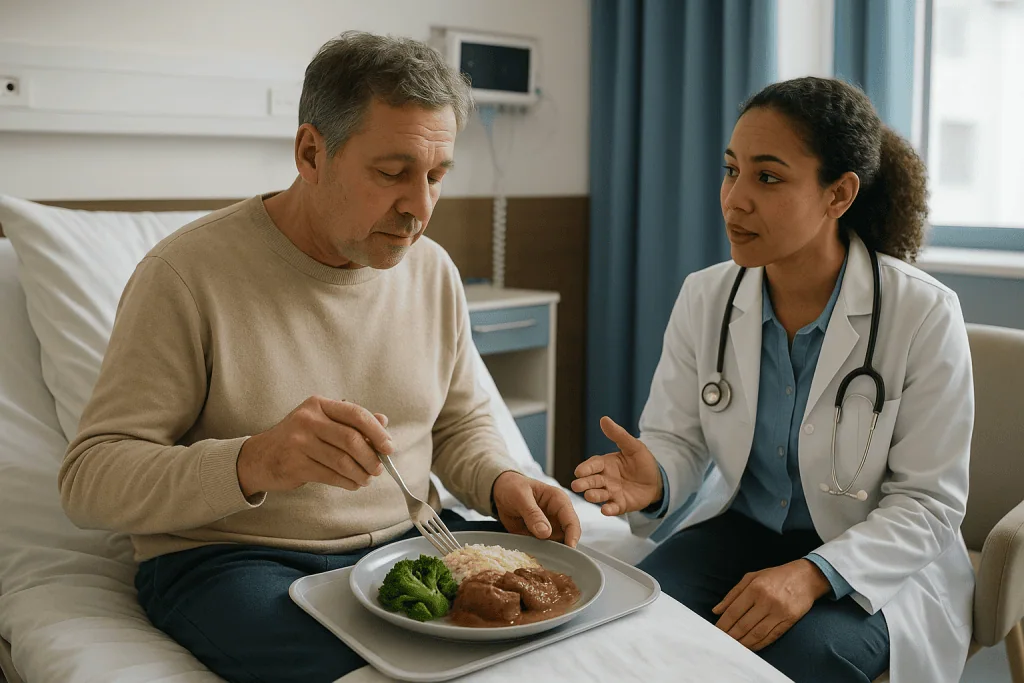
Within that week, the pattern is fairly consistent. Pain is usually worst in the first day or two, then eases as fluids restore circulation and inflammation begins to subside. Nausea often fades before appetite returns. Blood tests for amylase and lipase, the two pancreatic enzymes that leak into the blood during an attack, typically fall over several days, though the speed of that fall says little about how someone will feel.
That last point deserves emphasis, because people fixate on lab numbers. Discharge decisions rest on function, not chemistry: can you eat a light meal without pain returning, is pain controlled with tablets rather than injections, are your pulse, blood pressure and oxygen levels stable, and does the team have a plan for the cause? When those boxes are ticked, home usually follows.
So how long does pancreatitis last once you are home? For the mild majority, the acute illness is over, but the convalescence is not. Fatigue, reduced appetite and a wary relationship with food commonly outlast the pain by a week or two. None of this is a setback. It is the ordinary cost of a systemic inflammatory illness, and it is the phase most articles skip.
Mild, moderately severe, severe: the table that shapes pancreatitis recovery time
Clinicians grade acute pancreatitis using a widely adopted classification with three categories. Organ failure, meaning the kidneys, lungs or circulation stop working properly, is the dividing line, and whether it resolves within 48 hours matters more than how bad the first scan looks.
| Category | What defines it | Typical course | What recovery usually involves |
|---|---|---|---|
| Mild | No organ failure, no local complications | Symptoms usually settle within about a week (NHS) | Return to eating, rest, treating the cause, one follow-up review |
| Moderately severe | Organ failure that resolves within 48 hours, or a local complication such as a fluid collection | Longer hospital stay, repeat imaging | Several weeks of convalescence, monitoring of any collections |
| Severe | Organ failure persisting beyond 48 hours | Often intensive care; the NHS notes recovery can take much longer | Weeks to months, nutrition support, rehabilitation, sometimes procedures for infected tissue |
The categories are not fixed at admission. Someone who arrives looking mild may slide into the moderately severe group on day three, which is why teams re-examine, repeat blood tests and sometimes delay a CT scan. Tissue death often does not show clearly on imaging in the first day or two, so an early scan can be falsely reassuring (Mayo Clinic).
A practical way to read the table: the left column tells you how sick the illness made you; the right column tells you how long the body needs to repair the damage. Recovery time tracks the second, not the first impression.
Who goes home within days, and who is asked to wait longer
Early discharge is usually offered when four things line up: pain manageable with oral medicine, tolerance of food, stable vital signs and blood tests moving in the right direction, and a clear plan for whatever caused the attack. Most people in the mild category meet those criteria within the first week (NHS).
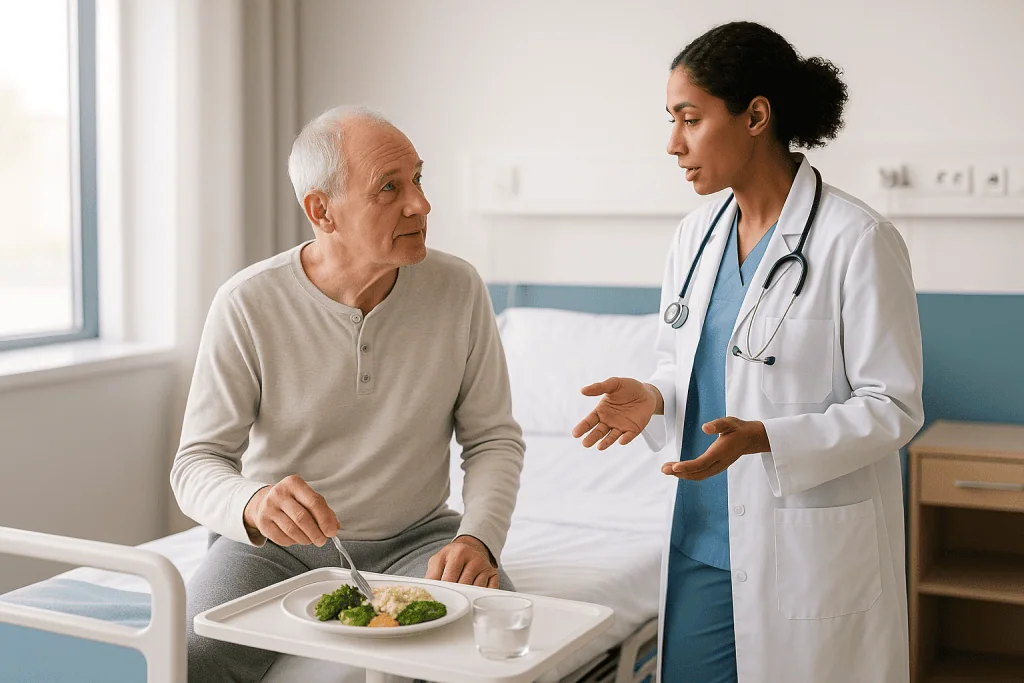
Others are asked to stay, and the reasons are specific rather than arbitrary. Persistently fast heart rate, low blood pressure, falling urine output or a need for oxygen all signal that inflammation is still affecting other organs. A rising temperature after initial improvement raises concern about infection in damaged tissue. Inability to eat without pain returning may prompt tube feeding, delivering liquid nutrition directly into the stomach or small bowel, because the gut heals better when it is used than when it is rested for long periods (NIH NIDDK).
Certain people are watched more cautiously from the outset. Older adults, people living with obesity, those with existing heart, lung or kidney disease, and anyone whose first scan shows fluid around the pancreas tend to be observed longer, not because their outlook is fixed but because deterioration can be quicker and harder to reverse.
Gallstones add a scheduling question. When stones caused the attack, removing the gallbladder is usually recommended to prevent a repeat. For mild cases this may happen during the same admission or soon after; for severe cases surgeons generally wait until the inflammation has fully settled (NHS). The wait is not a delay in care. Operating on an inflamed abdomen carries higher risk, and the timing is a judgment your surgical team makes case by case.
What the first days in hospital usually look like
There is no medicine that switches off pancreatic inflammation. Treatment in the first days is supportive, which sounds passive but is anything but: the aim is to keep every other organ working while the pancreas calms itself.
Intravenous fluids come first. Inflammation makes blood vessels leaky, so fluid seeps out of the circulation into tissues and the abdomen, and people arrive far more dehydrated than they look. Restoring volume protects the kidneys and improves blood flow to the pancreas. Pain relief runs alongside, often starting with strong analgesics given by injection and stepping down to tablets as the attack eases; the type and duration are decided by the treating team based on how pain responds (NHS). Oxygen may be given if breathing is affected.
Food used to be withheld for days on the theory that the pancreas needed rest. Current guidance has shifted. People are generally encouraged to start eating as soon as nausea and pain allow, usually beginning with clear fluids or light, low-fat food, because early nutrition supports the gut lining and lowers the risk of infection (Mayo Clinic).
Tests run in parallel. An ultrasound scan looks for gallstones. Blood tests track enzymes, kidney function, inflammation markers and triglycerides. If a stone is stuck in the shared duct and causing jaundice or infection, a procedure called ERCP, in which a flexible camera is passed through the mouth to the duct opening and the stone removed, may be arranged. Antibiotics are reserved for confirmed or strongly suspected infection rather than given routinely, since they do not prevent complications in sterile inflammation.
Weeks one to four at home: what the recovery timeline usually looks like
The first week home tends to be about reassurance. Pain, if present, is usually a dull awareness rather than the tearing ache of the attack. Appetite returns unevenly, with one good meal followed by a day of grazing. Many people describe a deep, flattening fatigue that no amount of sleep quite fixes. This is the body redirecting energy toward repair after an illness that pushed the whole system into overdrive.
The second and third weeks bring gradual normalization. Meals get larger, walks get longer, concentration returns. Bowel habits may be erratic for a while, partly from the illness, partly from pain medicine and changed eating. Weight lost during the hospital stay begins to come back once intake catches up.
Around the fourth week sits a marker worth knowing about. Fluid that collected around the pancreas during the attack can organize into a walled sac called a pseudocyst. The NHS notes these usually develop about four weeks after symptoms began (NHS). Most cause no symptoms and shrink on their own; some cause bloating, early fullness or renewed pain, which is why new abdominal symptoms in this window deserve a call rather than a wait-and-see.
Follow-up appointments typically fall in this period too. Expect a review of blood tests, a discussion of the cause and, if gallstones were involved, a surgical date. Anyone who spent time in intensive care will generally have a longer, more structured follow-up, including repeat imaging.
Driving and work questions come up constantly. Neither has a universal answer. Strong pain medicine, ongoing fatigue and the physical demands of a job all factor in, and your care team is the right place to settle both.
Acute pancreatitis recovery diet: what to eat and when
Food is the part of recovery people can control, so it attracts the most anxiety and the most folklore. The evidence-based picture is calmer than the internet suggests.
In the first days after discharge, small, frequent meals that are low in fat and easy to digest are commonly advised, because fat is the strongest trigger for the pancreas to release enzymes and because a settling gut copes better with modest portions (NHS). Think porridge, toast, rice, potatoes, lean poultry or fish, cooked vegetables, yogurt, soft fruit. Fluids matter as much as food; dehydration lingers after the drip comes out.
From there the direction is toward normal. Most people who had a mild attack are eventually able to return to an ordinary balanced diet, adding fat back gradually and noting how they feel (NIH NIDDK). A permanent ultra-low-fat regime is not required after uncomplicated acute pancreatitis and can itself cause weight loss and nutrient gaps.
- Prioritize protein at each meal to rebuild muscle lost in hospital.
- Reintroduce fats through whole foods such as olive oil, nuts and oily fish rather than fried or heavily processed items.
- Keep alcohol out entirely during recovery; the NHS advises avoiding it for at least six months after acute pancreatitis, whatever the cause.
- Report oily, pale or floating stools, which may indicate the pancreas is temporarily making too few enzymes.
Where the attack was severe or triglycerides were the cause, a dietitian usually shapes a more specific plan. Enzyme replacement, capsules containing the digestive enzymes the pancreas normally supplies, is sometimes used when tests confirm a shortfall, a decision made by the treating team rather than by trial and error at home.
Rebuilding strength: fatigue, weight loss and getting moving again
Nobody warns you about the legs. A week of lying in a hospital bed while the body burns through protein to fuel inflammation leaves muscles noticeably weaker, and the first flight of stairs at home can feel like a hill. This deconditioning is expected after any significant acute illness and is reversible, but it does not reverse by resting more.
Movement is the treatment. Short, frequent walks in the first week, lengthened as energy allows, do more than any supplement. Regular activity also lowers the risk of blood clots, which rises after hospital stays and periods of immobility. Formal exercise, heavy lifting or return to sport should be discussed with your care team, especially if surgery is planned or a pseudocyst is being monitored, because straining the abdomen too early is a reasonable thing to avoid.
Weight often falls during the attack and the first week home. Regaining it is a sign the gut has recovered its job. If weight keeps dropping despite eating, or if meals consistently produce bloating and greasy stools, the pancreas may be underproducing enzymes, which can be tested and treated (NIH NIDDK).
Sleep is frequently disturbed for a couple of weeks, partly from residual discomfort, partly from the stress of a frightening illness. A predictable routine helps more than lying in. Some people notice low mood or a jumpiness around food; both are common after an acute medical scare and worth mentioning at follow-up rather than carrying alone.
Blood sugar deserves one line. The insulin-producing cells sit within the same gland, and after a severe attack some people develop raised glucose, temporarily or lastingly. Unusual thirst, frequent urination or blurred vision during recovery should be reported.
What helps calm down pancreatitis, and what does not
People searching this question usually want a lever to pull at home. The honest answer is that during an attack the levers are in the hospital: fluids, pain control, oxygen and careful watching. Nothing taken by mouth speeds up the resolution of pancreatic inflammation, and delaying care to try something at home is how mild attacks become dangerous ones.
During recovery, several things genuinely help the gland settle and stay settled. Eating small amounts regularly rather than large meals avoids sudden demands on enzyme production. Staying well hydrated supports blood flow to the pancreas. Sitting upright or leaning slightly forward can ease abdominal discomfort, a position many people find instinctively during an attack (Mayo Clinic). Complete avoidance of alcohol removes the most common ongoing irritant. Stopping smoking matters too; tobacco is an independent risk factor for pancreatic disease.
Then there is the list of things that do not help, or lack evidence. Prolonged fasting to rest the pancreas is outdated and can worsen nutrition and infection risk. Detox teas, pancreatic cleanses, high-dose antioxidant regimens and herbal enzyme blends have no reliable evidence of benefit in acute pancreatitis, and some herbal products have themselves been linked to pancreatic injury. Over-the-counter painkillers should not be layered on top of prescribed ones without checking with the team.
There is one more lever, and it is the most powerful: treating the cause. A gallbladder full of stones will send another one down the duct sooner or later. A drinking pattern that triggered one attack will trigger another. Calming pancreatitis in the long run means closing the door it came through, which is the subject of the next section.
Treating the cause so it does not come back: gallstones, alcohol and triglycerides
A first attack of acute pancreatitis is, in a sense, a warning shot. Repeated attacks scar the gland and raise the risk of chronic pancreatitis, a long-term condition in which the pancreas becomes permanently damaged (NHS). Preventing the second attack is therefore as much a part of recovery as the first week in hospital.
When gallstones are responsible, removing the gallbladder is usually recommended, since the organ is not essential and leaving it means stones can keep forming. Timing depends on severity, as discussed above. For people who cannot have surgery, an ERCP that widens the duct opening is sometimes offered as an alternative to reduce the chance of another stone blocking it.
When alcohol is the trigger, the guidance is unambiguous: stop completely. The NHS advises avoiding alcohol for at least six months after any episode of acute pancreatitis, and permanently when alcohol was the cause (NHS). This can be hard, and saying so is not a moral judgment. Care teams can connect people with support services, and asking for that help is part of the medical plan, not a separate problem.
Very high triglycerides, a type of blood fat, cause a smaller share of cases. Management typically involves dietary change, treatment of related conditions such as diabetes, and sometimes lipid-lowering medicines chosen by the prescribing clinician.
Medication-related pancreatitis is uncommon but recognized. If a medicine is suspected, the prescriber weighs the benefit against the risk and decides whether to switch; stopping anything on your own is not advised. When no cause is found after standard tests, further imaging or specialist review may follow to look for less common explanations.
Can you fully recover from pancreatitis? The honest long-term picture
For most people, yes, in the sense that matters. After a mild attack the pancreas typically returns to normal structure and function, and the NHS states that the majority have no further problems (NHS). No lifelong restrictions, no permanent damage, no reason to think of yourself as a patient a year later.
The picture is more layered after a moderately severe or severe episode, and honesty here serves people better than blanket reassurance. Several long-term consequences are possible, none inevitable.
Pseudocysts, discussed earlier, may need drainage if they grow large, become infected or press on nearby organs. Necrosis, dead pancreatic tissue, can become infected weeks after the attack and may require drainage procedures or, less often, surgery. Because a chunk of gland is lost, some people are left with reduced enzyme output, leading to poor fat absorption, weight loss and greasy stools, which is treatable with enzyme replacement (NIH NIDDK).
Diabetes is the other significant possibility. Loss of insulin-producing cells can leave blood sugar elevated, sometimes appearing months later. Regular glucose checks after a severe attack are a sensible part of follow-up (Mayo Clinic).
The question people are really asking is whether they will be the same person again. Most will. Those with lasting consequences generally find them manageable with treatment and follow-up. What the evidence does not support is a precise percentage for any individual; outcomes depend on severity, cause, age, other health conditions and whether the trigger is removed. Your team can place you within that range far better than any general article.
What people often get wrong about pancreatitis recovery stages
Ask a search engine about pancreatitis recovery stages and you will be offered a tidy four-step ladder. No such official system exists for acute pancreatitis. Clinicians describe two phases, an early phase in the first week driven by systemic inflammation, and a late phase after that when local complications such as fluid collections and necrosis declare themselves, and they grade severity into three categories, not four. Some stage-based lists online are borrowed from chronic pancreatitis or from cancer classifications, which is a different conversation entirely.
Several other misconceptions do quiet harm.
- You can never eat fat again. After uncomplicated acute pancreatitis, a normal balanced diet is the goal, reached gradually.
- The pancreas does not heal. Swollen tissue that has not died recovers fully in most mild cases.
- One drink is fine because my attack was from gallstones. Alcohol irritates a recovering gland regardless of cause, which is why the NHS advises abstaining for at least six months after any episode (NHS).
- Normal enzyme levels mean I am healed. Blood enzymes fall within days; they say nothing about pseudocysts forming at week four or glucose rising at month three.
- Pain gone means follow-up is optional. The most consequential decisions, gallbladder surgery, cause-finding, complication checks, happen after discharge.
- It was a stomach bug that will not recur. Without treating the cause, recurrence is a real possibility, and each attack raises the chance of chronic damage.
The most damaging myth is subtler: that a fast return to feeling normal means the whole episode can be forgotten. Feeling well is the point at which prevention starts, not ends.
Questions to ask your care team before and after discharge
Recovery goes more smoothly when you leave hospital with answers rather than assumptions. Write these down, because the ward is a poor place to remember anything.
- How severe was my attack, and did any scan show fluid collections or tissue damage I should know about?
- What caused it, and if you are not sure, what further tests are planned to find out?
- If gallstones were involved, when is surgery planned and what should I watch for while I wait?
- Which pain medicines am I going home with, how should I step them down, and what should I do if pain returns?
- What should I eat this week, and when can I return to a normal diet?
- How long should I avoid alcohol, and can you connect me with support if stopping is difficult?
- Are there signs of enzyme shortage or raised blood sugar I should look out for?
- When is my follow-up appointment, and will I have repeat blood tests or imaging?
- When can I drive, return to work, exercise or travel?
- Who do I call, day or night, if something feels wrong?
A few questions are worth asking again at follow-up, because the answers change. Whether a pseudocyst seen on an early scan is shrinking, whether glucose is holding steady, whether the cause has been confirmed. If any medicine you took before the attack is suspected of contributing, ask the prescriber directly whether it should continue; do not stop it yourself.
Bring someone with you if you can. Post-hospital fatigue blunts memory, and a second pair of ears catches the detail about the gallbladder date that you would otherwise have to phone about later.
When to call your doctor: red-flag signs during pancreatitis recovery
Most bumps in recovery are ordinary: a tired afternoon, a meal that sat heavily, a twinge after overdoing the stairs. A smaller number are signals that inflammation has flared, a complication is forming or an infection has taken hold. Knowing the difference is the single most useful skill to take home.
Seek emergency care immediately if you develop severe abdominal pain similar to the original attack, especially with vomiting that prevents you keeping fluids down; a high temperature with shaking or chills; rapid breathing, breathlessness or chest pain; confusion, drowsiness or fainting; passing very little urine over many hours; or yellowing of the skin or eyes, which can indicate a blocked bile duct (NHS). Black or bloody stools, or vomiting blood, also need urgent assessment.
Contact your care team the same day, without waiting for the scheduled follow-up, if you notice a new or growing sense of fullness or a swelling in the upper abdomen, particularly around the fourth week when pseudocysts commonly form; persistent nausea or inability to eat for more than a day; ongoing weight loss despite eating; pale, oily or floating stools; unusual thirst and frequent urination; or pain that is steadily worsening rather than easing (Mayo Clinic).
Calf pain, swelling in one leg or sudden breathlessness after a hospital stay can indicate a blood clot and should be assessed promptly.
None of these lists replaces judgment. If something feels wrong and you cannot name it, that instinct is reason enough to phone. Your treating team would far rather hear about a false alarm than miss a complication, and every decision about tests, treatment or readmission rests with them.
Frequently asked questions
Do you ever fully recover from pancreatitis?
Most people who have a mild attack recover completely, with the pancreas returning to normal function and no lasting restrictions. After severe attacks involving tissue death, some people are left with reduced enzyme production or raised blood sugar, both of which can be treated and monitored. The outcome depends on severity, cause and whether the trigger is removed, which your care team can assess for you individually.
What helps calm down pancreatitis?
During an attack, hospital treatment with intravenous fluids, pain relief and monitoring is what allows the pancreas to settle; nothing taken at home speeds this up. During recovery, small regular low-fat meals, good hydration, complete avoidance of alcohol and stopping smoking all reduce demands on the gland. Treating the cause, such as removing gallstones, is the most effective long-term step.
What are the four stages of pancreatitis?
There is no official four-stage system for acute pancreatitis. Clinicians describe two phases, an early phase in the first week dominated by whole-body inflammation and a late phase when local complications may appear, and three severity grades: mild, moderately severe and severe. Four-stage lists found online are usually adapted from chronic pancreatitis or other conditions.
What does a pancreatitis flare feel like?
People typically describe sudden, intense pain in the upper abdomen that may spread to the back, often with nausea, vomiting, a tender swollen belly and sometimes fever and a racing pulse. Leaning forward may ease it slightly; lying flat often makes it worse. Pain of this kind after a previous attack should be assessed urgently rather than managed at home.
How long does pancreatitis last after you leave hospital?
The acute illness is usually over by discharge, but convalescence continues. After a mild attack, fatigue and reduced appetite commonly linger for one to two weeks, with a gradual return to normal activity over the following weeks. After severe attacks, full recovery of strength and weight can take several months and involves structured follow-up with repeat blood tests and imaging.
What is an acute pancreatitis recovery diet?
In the first days it usually means small, frequent meals that are low in fat and easy to digest, such as porridge, rice, lean fish or poultry and cooked vegetables, with plenty of fluids. Fats are then reintroduced gradually through whole foods, and most people return to a normal balanced diet. Alcohol is avoided throughout. A dietitian tailors the plan after severe or triglyceride-related attacks.
Why am I so tired weeks after acute pancreatitis?
Fatigue is one of the most common and least discussed features of recovery. A systemic inflammatory illness consumes energy and muscle, hospital bed rest weakens the legs, and disturbed sleep and appetite delay refuelling. Gentle daily walking, regular protein-containing meals and a steady sleep routine help. Tiredness that worsens rather than improves, or comes with weight loss, should be reported.
When can I drink alcohol again after pancreatitis?
The NHS advises avoiding alcohol for at least six months after any episode of acute pancreatitis, regardless of cause, and stopping permanently when alcohol was the trigger. Alcohol directly irritates the recovering gland and is one of the two leading causes of repeat attacks. If stopping is difficult, your care team can arrange support as part of the treatment plan.
Will acute pancreatitis give me diabetes?
Not usually after a mild attack, because the insulin-producing cells are preserved. After severe pancreatitis with tissue death, some people develop raised blood sugar, either temporarily or lastingly, sometimes months later. Follow-up glucose checks are a sensible part of care after a severe episode, and symptoms such as unusual thirst or frequent urination should be reported to your team.
What is a pancreatic pseudocyst and is it dangerous?
A pseudocyst is a sac of fluid enclosed by a wall of scar tissue that can form around the pancreas after an attack, typically about four weeks after symptoms begin according to the NHS. Many cause no symptoms and shrink without treatment. Larger ones may cause fullness, pain or nausea, and those that become infected or press on nearby organs may need drainage.
References
- NHS: Acute pancreatitis
- NIH NIDDK: Pancreatitis
- NIH NIDDK: Eating, Diet, and Nutrition for Pancreatitis
- MedlinePlus: Acute pancreatitis
This article is for general information only and is not a substitute for professional medical advice. Please consult a qualified doctor about your individual situation.

More from the Blog

The Acid Reflux Diet: Foods That Trigger GERD and the Eating Habits That Calm It
An acid reflux diet is less a fixed menu than a set of habits: smaller meals, finishing dinner at least three hours before lying…

Before Hepatitis Treatment Starts: The Questions Worth Asking Your Liver Specialist
Before hepatitis treatment starts, ask your liver specialist which type of hepatitis you have, how much liver scarring is present, whether treatment is recommended…

When Does a Stomach Bug Need a Doctor? Gastroenteritis Beyond Rest and Fluids
Most stomach bugs settle at home within a few days with fluids and rest. See a doctor for gastroenteritis if you cannot keep fluids…

Crohn’s vs Ulcerative Colitis: How Treatment Plans Differ Even When Symptoms Overlap
Crohn's disease and ulcerative colitis are both forms of inflammatory bowel disease and share many symptoms, but treatment differs because the inflammation sits in…
Diet During Ulcerative Colitis Treatment: Eating in a Flare vs Eating in Remission
During an ulcerative colitis flare, most guidance favors small, frequent meals, plenty of fluids, and softer, lower-fiber foods while medicines calm the inflamed colon.…

Celiac Disease Myths: Is a Little Gluten Fine, and Does Gluten-Free Mean Healthier?
No, a little gluten is not fine for someone with celiac disease: even crumb-sized amounts can restart the immune attack on the small intestine,…