

Over-the-Counter Medicines in Turkey: What Is Safe to Buy

In Turkey, everyday medicines are sold through licensed pharmacies called eczane, not supermarkets. Common painkillers such as paracetamol and ibuprofen, antacids, allergy tablets and saline sprays are available without a prescription. Antibiotics, sedatives, opioid painkillers and injectables are prescription-only by law. Ask the pharmacist for the active ingredient rather than a brand name, mention your current medicines and conditions, and keep every purchase in its original box.
You have a headache, a blocked nose or an unsettled stomach in a city you do not know, and you want to buy something simple for it. In Turkey, the place to do that is a licensed pharmacy: an eczane. Nearly all over-the-counter medicines in Turkey pass through a pharmacist’s hands, which changes how you shop for them compared with picking a box off a supermarket shelf at home.
This guide explains what you can realistically buy without a prescription, what is restricted by law, how Turkish packaging works, and where the sensible limits of pharmacy self-care sit. It is written for visitors and for patients spending time in Turkey around treatment, when the question of what is safe to take becomes more careful than usual.
At a glance
- Where to buy: Licensed pharmacies (eczane), marked with a red “E” sign, not supermarkets, kiosks or informal sellers
- Available without prescription: Common painkillers, antacids, allergy tablets, saline sprays, lozenges, rehydration salts, dressings, sunscreen
- Prescription-only by law: Antibiotics, sedatives, sleeping tablets, opioid painkillers, injectables and most hormone medicines
- Best safety habit: Ask for the active ingredient, not the brand, and show the pharmacist what you already take
- After hours: Every district rotates an on-duty pharmacy, the nöbetçi eczane, for nights, weekends and public holidays
- Emergency number: Turkey’s national emergency number is 112
How buying over-the-counter medicines in Turkey actually works
The Turkish system routes almost all medicine sales through pharmacies. An eczane is easy to spot: look for the red “E” symbol on a lit sign, usually within a short walk in any town or city neighbourhood. Behind the counter is a trained pharmacist who can discuss common symptoms, check ingredients against what you already take, and tell you plainly when a problem is beyond pharmacy self-care.
This is the main practical difference from countries where paracetamol sits next to the chewing gum at a petrol station. In Turkey, even simple pain relievers, cold remedies, eye drops and stomach medicines are handled at the pharmacy counter. It can feel formal the first time, but it builds in a safety checkpoint: a short conversation before you take something new, in a country where the brand names may be unfamiliar.
Opening hours vary by district, and pharmacies generally keep shop hours rather than staying open around the clock. Outside those hours, each area has a rotating on-duty pharmacy called a nöbetçi eczane. Closed pharmacies post a sign in the window listing the nearest one on duty that night, and hotel receptions and hospital information desks keep the current rotation to hand. In larger cities you will rarely be more than a short taxi ride from an open counter, even on a public holiday.
One more point worth knowing early: over-the-counter medicines in Turkey are sold in fixed manufacturer boxes, not counted out into bottles. You buy the pack size the manufacturer makes, with the official leaflet inside. Keep that box and leaflet for as long as you are using the medicine: they identify exactly what you took if a doctor later needs to know.
What you can buy without a prescription

For short-term, mild symptoms, Turkish pharmacies stock a familiar range: pain and fever relief, throat lozenges, saline nasal sprays, oral rehydration products, antacids, anti-diarrhoeal products, antihistamines, lubricating eye drops, antiseptics, plasters and dressings, and sunscreen. Availability varies between pharmacies, and the brand you know at home almost certainly trades under a different name here.
That is why the single most useful habit is asking for the active ingredient rather than a brand. Paracetamol, ibuprofen and aspirin are sold under many Turkish brand names, and combination products may add caffeine, a decongestant or an antihistamine to the same tablet. Naming the ingredient lets the pharmacist match you to an equivalent product and check it against anything else you are taking.
What painkillers can you buy in Turkey?
Paracetamol (often spelt parasetamol on Turkish boxes), ibuprofen and aspirin are available at pharmacies without a prescription, along with some other anti-inflammatory tablets and gels. Anything containing codeine or another opioid is prescription-only in Turkey, even in low-dose combination products that may be sold more freely elsewhere. If your usual painkiller at home contains codeine, expect the pharmacist to offer a non-opioid alternative or to say a prescription is needed.
The table below is a general orientation, not a personal recommendation: the right choice still depends on your health history, which is exactly what the pharmacist will ask about.
| Symptom | Typical pharmacy options | Worth knowing |
|---|---|---|
| Pain or fever | Paracetamol, ibuprofen, aspirin | The pharmacist should know about stomach ulcers, kidney problems, blood thinners, asthma or recent surgery before you choose |
| Sore throat | Lozenges, antiseptic throat sprays | Widely stocked; many contain mild anaesthetic or antiseptic ingredients |
| Cold and blocked nose | Saline sprays, decongestants, combination cold remedies | Combination products often duplicate paracetamol, check before pairing them with a separate painkiller |
| Allergy | Antihistamine tablets, eye drops, nasal sprays | Some antihistamines cause drowsiness; ask which type you are buying |
| Upset stomach | Antacids, oral rehydration salts, anti-diarrhoeal tablets | Rehydration matters most for traveller’s diarrhoea; persistent symptoms belong with a doctor |
| Minor skin problems | Antiseptic creams and solutions, dressings, sunscreen | Pharmacies carry good wound-care ranges; describe or show the problem area if you can |
Nausea deserves a separate word. Some anti-sickness options exist at the pharmacy, but if your nausea follows a procedure or a new treatment, the choice of medicine is part of your clinical plan rather than a counter purchase: our guide to anti-nausea medicines after treatment in Turkey explains the distinction in detail.
Medicines to be especially careful with
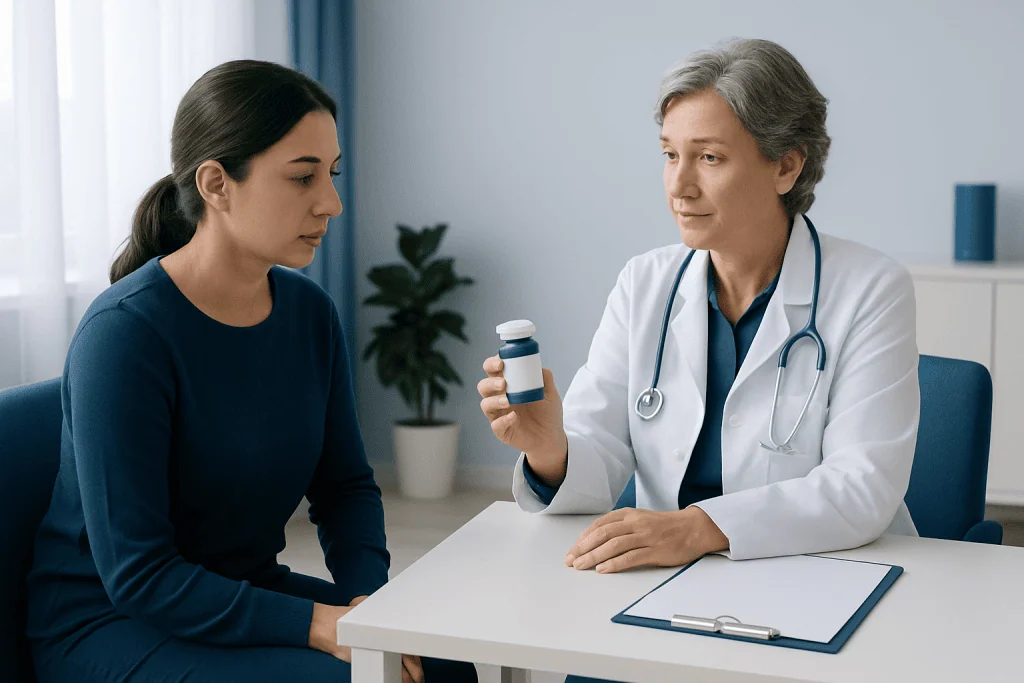
Some medicines should never be treated as casual travel purchases, however familiar they look. Antibiotics, opioid painkillers, sedatives, sleeping tablets, hormone medicines, injectables, anticoagulants, diabetes medicines and heart medicines all carry real risk when taken without assessment and monitoring. In Turkey these are prescription-only, and a licensed pharmacy will not sell them across the counter.
Can you still buy antibiotics over the counter in Turkey?
No. Older travel forums sometimes suggest otherwise, because enforcement was looser in the past, but Turkish regulations now require a prescription for antibiotics, and pharmacies dispense them through an electronic prescription system. This is a good rule, not an obstacle. Antibiotics do nothing for colds, flu-like illness or most sore throats, all of which are usually viral, and taking them without assessment invites side effects, allergic reactions and antibiotic resistance. Whether an infection needs an antibiotic, and which one, is a decision a doctor makes after examining you, sometimes with a simple test.
Supplements and “natural” products
Herbal remedies, bodybuilding supplements, sexual performance products and weight-loss products deserve genuine caution, precisely because they feel harmless. Many interact with anaesthesia, blood thinners, blood pressure medicines, antidepressants or cancer treatments, and “herbal” says nothing about safety. For anyone in Turkey around surgery, fertility care, oncology or cardiology, any supplement, including teas and powders, is something the treating team should know about before it goes anywhere near a treatment plan.
What is restricted or illegal for visitors
Two separate questions get mixed together online: what you can buy in Turkey, and what you can bring into Turkey. Both have clear answers.
Recreational drugs are illegal in Turkey, and penalties for possession are severe: there is no tolerance category for tourists. This extends to some products that are legal or normalised elsewhere: cannabis and cannabis-derived products, for example, are controlled substances here even where a home country permits medical use.
Prescription medicines for personal use are generally allowed into Turkey in reasonable quantities, ideally in original packaging with a copy of the prescription or a doctor’s letter. Controlled medicines, strong painkillers, certain ADHD medicines, sedatives and similar, need particular care: carry documentation showing the medicine is prescribed to you, and keep quantities to what the trip requires. Our guide to travelling to Turkey with regular prescriptions covers the paperwork, packing and airport practicalities step by step.
The same logic applies in reverse when you fly home: destination countries set their own rules on codeine-containing products, sedatives, injectables and large quantities, so a medicine bought legally in a Turkish pharmacy is not automatically fine to carry everywhere.
What to tell the pharmacist before you buy
A two-minute conversation prevents most medication problems. Tell the pharmacist what you are treating, how long it has been going on, and what you have already taken for it. Where possible, show the actual boxes or clear photos of your current medicines rather than relying on memory, brand names translate badly, photographs do not.
Details that genuinely change which product is suitable include allergies, pregnancy or breastfeeding, kidney or liver disease, stomach ulcers, asthma, high blood pressure, heart rhythm problems, diabetes, epilepsy, bleeding disorders and recent surgery. The same goes for regular medicines: blood thinners, insulin, chemotherapy, steroids, antidepressants, immune-suppressing medicines and daily painkillers all narrow the safe options at the counter.
English is widely spoken in city-centre pharmacies and less so elsewhere. If the conversation is difficult, ask the pharmacist to write down the active ingredient, the strength and the basic instructions, most will do this without being asked twice. A translation app handles simple exchanges well; it is not a tool for weighing up interactions, so when the question is complex, treat that as the signal to involve a doctor rather than push through the language barrier.
How to read Turkish packaging and avoid duplicate ingredients
Turkish medicine boxes show the brand name, strength, dosage form and active ingredient. The phrase to look for is etkin madde“active ingredient”, usually printed on the box or at the top of the leaflet. If you cannot find or read it, ask before you take anything.
Accidental duplication is the most common self-inflicted problem with over-the-counter medicines in Turkey, as anywhere. The classic example: taking paracetamol for a fever while also taking a combination cold remedy that already contains paracetamol. Neither purchase is wrong on its own; together they exceed what either box intends. Combination products are convenient, but every extra ingredient is one more thing to check against your existing medicines.
Also ask whether a product causes drowsiness. Certain antihistamines, cough syrups, anti-nausea medicines and night-time cold formulas slow reaction time noticeably. Until you know how a new medicine affects you, it is sensible to avoid alcohol, avoid driving, and avoid signing anything important.
Where pharmacy self-care ends
Over-the-counter medicines suit symptoms that are mild, familiar and short-lived: the headache you recognise, the travel-day stomach, the scratchy throat that comes with a long flight. They are not designed for symptoms that are severe, new in character, steadily worsening, or connected to a recent operation, procedure or diagnosis. Those situations call for a doctor’s assessment, and a good Turkish pharmacist will say exactly that rather than sell you something stronger.
The post-treatment case deserves emphasis because it is where medical travellers most often go wrong. Some everyday medicines affect bleeding, kidney function or blood pressure, which is why the choice of painkiller or stomach remedy after surgery belongs to the treating team and your discharge instructions, not to the pharmacy counter. Your discharge paperwork is the first reference; a new pharmacy purchase should never quietly override it.
Storing medicines and taking them home
Keep everything in its original packaging with the leaflet. Loose tablets in an unmarked container are unidentifiable to a pharmacist, a doctor or an airport officer, and a genuine hazard around children. Heat, humidity and direct sun degrade many medicines, so a cool, dry spot in your room beats a sunlit windowsill or a hot car: our guide to storing medicines safely in your hotel room covers the practical details, and the companion guide on carrying medicines during treatment travel handles transit days. If a product needs refrigeration, the pharmacist will say so; ask exactly how to move it between pharmacy, hotel and airport before you leave the counter.
Before flying, check your home country’s rules for anything containing opioids or sedatives, anything injectable, and large quantities of any medicine, and carry a prescription or medical letter where one applies. Whatever you do not finish, dispose of properly rather than binning it loose or flushing it, see safe disposal of unused medicines and sharps in Turkey for how.
Step by step
- Start with your symptom and its context. Before entering the pharmacy, be clear about what you are treating, how long it has lasted, and whether it connects to a recent procedure or treatment. Mild and familiar suits self-care; severe, unusual or post-procedure symptoms belong with a doctor.
- Choose a licensed eczane. Look for the red “E” sign. Buy only from pharmacies, never from informal sellers, market stalls or unfamiliar websites, where counterfeit and degraded products circulate. After hours, the nöbetçi eczane list in any pharmacy window shows who is on duty.
- Show your current medicines. Bring original boxes, a medication list or clear photos of everything you take, supplements included. This is how the pharmacist catches duplicate ingredients and interactions before they happen.
- Ask for the active ingredient. Brand names change between countries; ingredients do not. Ask the pharmacist to write down the ingredient, strength and basic instructions if any part of the conversation felt uncertain.
- Ask about drowsiness, food and alcohol. Find out whether the product causes sleepiness, whether it should be taken with food, and whether it clashes with alcohol or with driving.
- Use it for the shortest sensible period. Over-the-counter medicines are for bridging short episodes, not managing ongoing problems. Symptoms that persist, return quickly or worsen are a reason to see a doctor, not to buy a second box.
- Keep the evidence. Save the box, leaflet and receipt, and photograph what you bought. If a clinician later needs to know exactly what you took and when, this record answers the question in seconds.
Your checklist
- Buy only from a licensed eczane with the red “E” sign
- Carry a list or photos of every prescription medicine and supplement you take
- Mention allergies, pregnancy, breastfeeding, chronic conditions and recent procedures at the counter
- Ask for the active ingredient (etkin madde), not just a brand name
- Check whether a new product duplicates something you already take, especially with combination cold remedies
- Ask about drowsiness and alcohol before first use
- Treat antibiotics, sedatives, opioid painkillers and injectables as prescription matters, because in Turkey they are
- Keep every medicine in its original box with the leaflet
- Check home-country rules before flying back with codeine-type, sedative or injectable products
Key takeaways
- Over-the-counter medicines in Turkey are sold through licensed pharmacies called eczane, not supermarkets, with an on-duty rotation covering nights and holidays.
- Paracetamol, ibuprofen, aspirin, antacids, antihistamines and similar everyday products are available without a prescription; codeine products are not.
- Antibiotics are prescription-only in Turkey and dispensed through an electronic system: the days of buying them casually are over.
- Always ask for the active ingredient, because Turkish brand names rarely match the ones you know, and combination products can duplicate what you already take.
- Around surgery or ongoing treatment, discharge instructions outrank pharmacy purchases, some common medicines affect bleeding and other clinical risks.
Frequently asked questions
What painkillers can I buy in Turkey?
Paracetamol, ibuprofen and aspirin are available at pharmacies without a prescription, under many local brand names, ask by ingredient. Anything containing codeine or another opioid requires a prescription in Turkey. The pharmacist will ask about stomach ulcers, kidney or liver problems, asthma, blood thinners, pregnancy and recent surgery before recommending one, because these change which option is suitable.
Can you still buy antibiotics over the counter in Turkey?
No. Antibiotics are prescription-only under current Turkish regulations and are dispensed through an electronic prescription system. They are also unsuitable for most colds, flu-like illnesses and sore throats, which are usually viral. Whether an infection needs an antibiotic is a decision a doctor makes after an assessment, not something a pharmacy can settle at the counter.
What drugs are illegal in Turkey for tourists?
All recreational drugs are illegal, with severe penalties and no special treatment for visitors. Cannabis and cannabis-derived products are controlled substances in Turkey even where a home country permits medical use. Prescribed controlled medicines, strong painkillers, certain sedatives and stimulant medicines, should be carried in original packaging with documentation showing they are prescribed to you.
What medications are allowed into Turkey?
Personal-use quantities of your regular prescription medicines are generally allowed, ideally in original boxes with a copy of the prescription or a doctor’s letter, particularly for controlled or injectable medicines. Keep quantities proportionate to your stay and carry medicines in hand luggage where storage conditions allow. Original packaging with the leaflet makes every border and pharmacy conversation easier.
Can I use my usual brand from home if I find it in Turkey?
Do not assume a similar-looking box is identical. Check the active ingredient, strength and dosage form, because formulations of the same brand can differ between countries. For anything that forms part of your regular treatment, confirming the match with a pharmacist or doctor before switching is the safer path than trusting the packaging.
Is it safe to buy vitamins, herbal products or supplements in Turkey?
Many are harmless for many people, but supplements can interact with prescription medicines and with anaesthesia. Caution matters most for anyone taking blood thinners, heart medicines, cancer treatments, antidepressants, immune-suppressing medicines or diabetes medicines, and for anyone around the time of surgery. Treating teams should know about every supplement in use, including herbal teas and powders.
What if I cannot explain my symptoms in Turkish?
Use simple words, show photos or the boxes of your current medicines, and ask the pharmacist to write down the active ingredient and instructions, most will readily do this. Translation apps work well for basic exchanges but are not reliable for weighing interactions or complex decisions; questions at that level are better handled by a doctor than by a translated conversation at the counter.
Can I take Turkish over-the-counter medicines home with me?
Usually yes, in reasonable personal-use quantities, but destination rules vary, especially for products containing codeine-type ingredients, sedatives or anything injectable. Keep items in original packaging with the leaflet, carry prescriptions or medical letters where they apply, and check your home country’s customs guidance and your airline’s rules before flying if you are unsure about a specific product.
Add us as a Preferred Source to see more of our trusted health content across Google Search, AI Overviews and Discover.

Update history
- PublishedJune 16, 2026
- Medical review approvedAugust 30, 2026
- Last content updateAugust 30, 2026
References4
- CDC Travelers' Health: Türkiye (Turkey) Destination Overview wwwnc.cdc.gov
- UK Foreign Travel Advice: Turkey: Health gov.uk
- NHS: Antibiotics nhs.uk
- MedlinePlus: Over-the-Counter Medicines medlineplus.gov
More Patient Guides

Flying With Medication: Airline Rules, Documents and Packing
Every day, travelers hold up security lines worrying about a bag full of tablets that nobody actually wants to confiscate. The rules…

How to Send Your Medical Files Securely Before Treatment in Turkey
Send medical files securely before treatment in Turkey by using approved channels, clear file names and a complete health summary.
Pain Control After Treatment in Turkey: What Patients Should Expect and Ask About
Pain control after treatment in Turkey usually includes a tailored medicine plan, clear warning signs, and follow-up support before you leave Istanbul.

Managing Medicines Across Borders After Treatment in Turkey
Managing medicines across borders after treatment in Turkey means carrying clear documents, checking import rules, and planning refills before you fly.