

Safe Disposal of Unused Medicines and Sharps in Turkey
Do not flush medicines, pour them into sinks, or put loose tablets and needles in hotel or street bins. Keep medicines in their original packaging, seal used sharps in a rigid puncture-resistant container, and hand everything to a healthcare setting: the hospital that treated you is the most reliable route. Sort what you will keep, return, or dispose of at least a day before your flight.
You are packing to fly home and there they are: half a box of tablets, a pre-filled injection pen or two, a patch, some used lancets and pen needles. None of it belongs in the hotel bin. None of it belongs in the toilet or the sink, the recycling container downstairs, or a rubbish bag handed to housekeeping.
This guide explains what counts as medicine waste and sharps waste, why the usual bins are the wrong answer, how the disposal system in Turkey actually works, and how to sort everything in the day or two before departure so nothing dangerous travels loose in your luggage, and nothing dangerous gets left behind for someone else to find.
At a glance
- Never use: toilets, sinks, hotel bins, street bins or recycling containers
- Most reliable route: the hospital or clinic that treated you, ward nurses and hospital pharmacies handle medical waste every day
- Sharps rule: needles, lancets and pen needles go straight into a rigid, puncture-resistant container with a lid
- Keep packaging: original boxes and labels help staff identify what they are taking back
- Timing: sort medicines into keep, return and unsure piles at least one full day before your flight
Why safe disposal of unused medicines and sharps in Turkey needs a plan
When you travel for treatment, you usually end up with more medication than you would at home. You brought your regular prescriptions with you. The hospital added new medicines during your stay. Some of what you brought may have been changed or replaced. Add injection supplies, dressings and glucose lancets, and it is entirely normal to reach your last day in Istanbul with a small pharmacy spread across the hotel desk.
Safe disposal of unused medicines and sharps in Turkey matters for the same reasons it matters anywhere. A tablet that is harmless to you can be dangerous to a child, a pet, or an adult taking other medicines. A loose lancet in a rubbish bag can injure the housekeeper who lifts it. Medicines flushed down a toilet enter wastewater systems, and most water treatment is not designed to remove them. And on top of the safety questions sits a practical one: you are in a country where you may not speak the language, the disposal routes differ from the ones at home, and your flight leaves soon.
The core answer is simple and holds for almost every situation described in this guide: medical waste belongs in a healthcare setting, not in general rubbish. Everything else is detail, which items count, how to keep them secure until you can hand them over, and how to divide what you dispose of from what you carry home. If you are still planning the outbound trip, the packing side of this is covered in Flying to Turkey with Prescription Medicines: What to Pack and Declare.
What counts as unused medicine or sharps
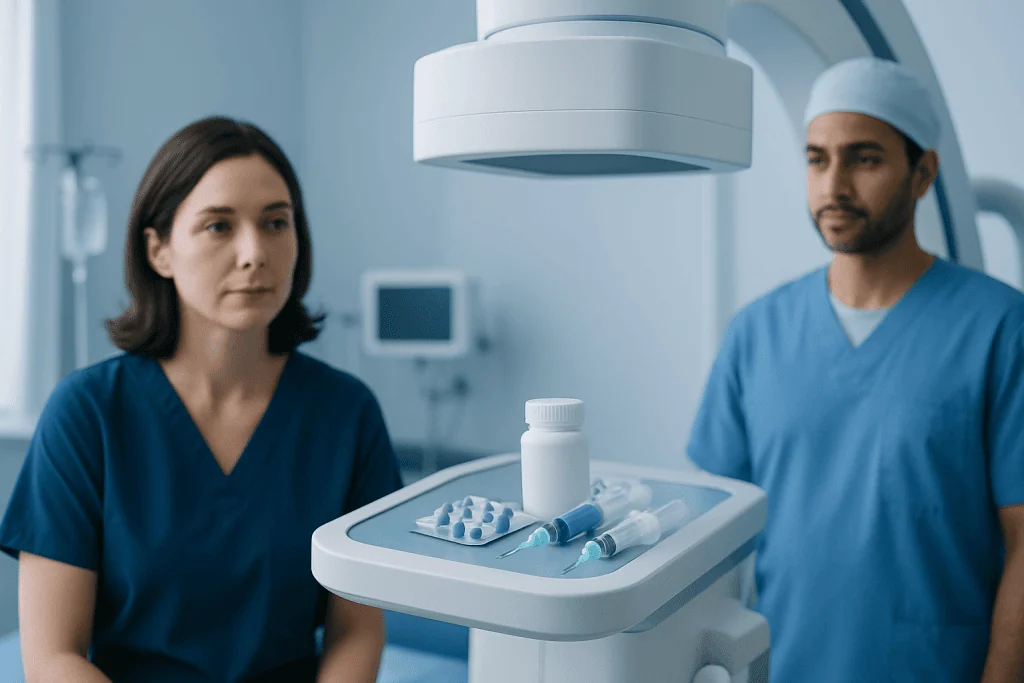
Unused medicine is broader than most people assume. It includes any medication you no longer need, cannot identify, no longer take, or were advised to stop. It covers prescription and non-prescription products alike: tablets, capsules, liquids, inhalers, nasal sprays, creams, gels, eye drops, suppositories, patches and injections. It also includes medicines that are expired, damaged, opened too long ago, stored outside their recommended temperature, or that no longer match your current prescription. Leftover pharmacy purchases count too: a half-used bottle of paracetamol syrup is still medicine waste, a point worth remembering if you stocked up during your stay (see Over-the-Counter Medicines in Turkey: What Is Safe to Buy).
Sharps are anything that can cut or puncture skin. The common ones for travelling patients are syringes, injection needles, insulin pen needles, lancets for glucose testing, and auto-injectors or pre-filled pens with an exposed or retractable needle. Even the smallest lancet can injure someone if it sits loose in a rubbish bag: the person emptying the bin cannot see what is inside it.
Two categories sit in between and cause the most hesitation. Used injection pensinsulin pens, GLP-1 pens such as semaglutide, and similar devices, contain drug residue even when “empty” and should be treated as medicine waste, not ordinary rubbish, with the needle removed into a sharps container first. Packagingcardboard boxes and paper leaflets, can usually go into ordinary recycling, but only if it is not contaminated and does not carry your personal details. Labels showing your name, passport number, hospital number or prescription details should be removed or made unreadable first, unless staff still need them to identify the medicine.
If you genuinely cannot tell which category an item falls into, treat it as potentially unsafe and keep it separate until a nurse or pharmacist can look at it. That is not over-caution; it is how healthcare staff themselves handle ambiguous items.
What not to do with leftover medicines
Do not flush or pour. Toilets and sinks are not a disposal route for tablets, capsules, syrups, drops, creams, injectables or patches unless a healthcare professional has told you to do so for a specific product. Medicines that enter wastewater can pass into rivers and coastal water largely intact.
Do not use general bins. Hotel bins, airport bins and street bins are handled by people, and their contents are not inspected. A blister strip that looks ordinary to you may be a strong painkiller, a sedative or a hormone treatment. Children, pets and adults on other prescriptions are the classic victims of medicines found in household waste.
Do not give medicines away. A leftover prescription is not a gift. Handing it to a companion, driver, hotel employee or friend transfers a medicine prescribed for your body, your dose and your medical history to someone whose situation you do not know. This applies even to medicines that feel routine, such as antibiotics or sleep aids.
Do not consolidate. Resist the tidy instinct to tip everything into one bag or bottle. Original packaging tells the pharmacist what the medicine is, what strength it is, and whether it needs special handling. A mixed bag of anonymous tablets is harder and slower to deal with safely.
Do not leave items behind in the room. Anything left on a shelf or in a drawer becomes housekeeping’s problem, and housekeeping has no safe way to deal with it. While medicines are still in your possession, keep them stored as carefully as you did during treatment: the same principles in Storing Medicines Safely in Your Hotel Room in Turkey apply right up to the moment you hand items over.
How to handle sharps safely before disposal
Sharps need care from the moment they are used, well before disposal is on your mind. Do not recap a needle unless you have been trained to do it for that specific device, most needlestick injuries happen during recapping. Do not bend, break, cut or pull needles off by hand. The safe sequence is short: use the sharp, then place it directly into a rigid, puncture-resistant container with a secure lid.
If you were given an official sharps container, use it exactly as instructed and stop adding items when it reaches the fill line: an overfilled container is a hazard in itself. If you were not given one, do not improvise with a plastic bottle for longer than you must; a proper container can be requested from the hospital or clinic involved in your care. In the meantime, keep sharps upright, sealed, out of reach of children and companions, and separate from ordinary luggage. Never put loose sharps in recycling or soft plastic bags: a needle passes through fabric, paper, a bin liner or a toiletry bag without resistance.
Injection pens: insulin, semaglutide (Ozempic) and similar devices
Pre-filled pens are the item international patients most often ask about, so here is the sequence in full. After an injection, the detachable pen needle goes into the sharps container: the needle, not the pen. The pen body itself, whether it still contains medicine or is finished, is pharmaceutical waste: it should be handed back through a healthcare route, not dropped into a hotel or street bin, because it contains drug residue and, in some devices, a fixed needle. If your pen has a needle that does not detach, the whole device goes into the sharps container. If you will keep injecting during the journey home, carry the pen, spare needles and a small sharps container in your hand luggage using the approach described in How to Store and Carry Your Medicines Safely During Treatment Travel, and ask your treating team whether a device letter for airport security would be useful.
How disposal actually works in Turkey
It helps to understand the system you are standing in. Turkey regulates medical waste at the level of healthcare institutions: hospitals and clinics are required to segregate medical waste, sharps, contaminated materials, pharmaceutical waste, from ordinary rubbish, and licensed handlers collect and process it. That is why the hospital that treated you is the most dependable disposal route: the infrastructure already exists there, the staff use it daily, and a half-used pen or a nearly full sharps container is an entirely routine item for them to receive.
Outside hospital walls, the picture is less uniform. Turkey does not have a single nationwide household take-back scheme of the kind some visitors know from home, where every community pharmacy is a formal collection point. Some pharmacies will accept returned medicines or point you to a local collection route; municipal arrangements vary from city to city. Practices genuinely differ, so the honest advice is to ask before carrying a bag of medicines around Istanbul or Ankara on the assumption that any pharmacy will take it. If language is a barrier, having the question written down in Turkish, or asking through someone who speaks it, avoids a frustrating loop of misunderstandings.
Hierarchy of routes, in order of reliability:
- The hospital or clinic where you were treatednursing staff and the hospital pharmacy can take back hospital-supplied medicines, used sharps and medicines you were advised to stop.
- A pharmacyworth asking, particularly the pharmacy that dispensed the medicine, but acceptance is not universal.
- Municipal collection pointsexist in some areas, vary widely, and are hard to research from abroad.
One more point deserves emphasis: timing. Disposal is usually simple, but it is not a task for the morning of departure. Plan it at least one full day before your flight, and earlier if you hold injectable medicines, a full sharps container, strong pain medicines or refrigerated products. If a medicine that requires refrigeration has spent hours outside its recommended temperature, do not assume it is still usable; that question, and the disposal that may follow the answer, both need daylight hours, not a taxi idling outside.
Sorting your medicines before the flight home
The last practical job before packing is a three-pile sort, done on a clean surface away from children and companions:
- Continue: medicines you must keep taking during travel and afterwards. These go in your hand luggage with prescriptions or discharge documents. Check each one against your written medication list.
- Dispose or return: medicines that were stopped or replaced, anything expired or damaged, used sharps, and finished pens. These stay in original packaging and go back through a healthcare route before you leave Turkey.
- Unsure: anything you cannot confidently place. This pile exists precisely so you do not force a guess; it gets reviewed with a nurse or pharmacist, item by item.
If your medicine plan changed during treatment, written instructions stating what to continue, what was stopped, and when follow-up is due protect you twice over, during the journey, and when your doctor at home takes over your care. Only carry home medicines that are part of ongoing treatment and properly documented; carrying medicines you no longer need creates customs, storage and safety complications for no benefit. The full picture of documentation, customs and continuity is covered in Returning Home with New Medicines After Treatment in Turkey.
Step by step
- Gather everything in one safe place. Unused medicines, patches, drops, injection supplies and sharps containers on one clean surface, in original packaging wherever possible, away from children and companions.
- Separate the medicines you still need. Check name, dose and timing against your discharge instructions or medication list before anything goes into the keep pile.
- Throw nothing away yet. No hotel bins, public bins, toilets, sinks or recycling, especially for needles, lancets, opioid painkillers, sedatives, antibiotics, hormone medicines and injectables.
- Secure sharps in a proper container. Lid closed, not overfilled, kept upright. If the container is nearly full or you never received one, the hospital or clinic can supply and receive one.
- Hand the dispose pile back through a healthcare route. The hospital that treated you is the most reliable option; a pharmacy is worth asking as a second choice. Do this at least a day before departure.
- Protect your personal information. Remove or obscure labels showing your name, passport details, hospital number or prescription information before packaging is discarded, unless staff still need the label to identify the medicine.
- Confirm what travels home. Keep prescription copies, the discharge note or a travel letter with any medicine you continue. If you are unsure a medicine is legal or practical to bring into your home country, check with your airline, embassy or customs authority before travel.
Your checklist
- Original medicine packaging and leaflets, where available
- Current medication list or discharge instructions
- Prescription copies for every medicine you will continue
- Sharps container, or a rigid puncture-resistant container with a lid
- Sealable bag for keeping the “unsure” pile separate
- The question written down in Turkish if you plan to ask at a pharmacy
- Flight date and time, so disposal is done at least a day ahead
- List of medicines that were stopped, changed or replaced during treatment
- A plan for any refrigerated medicines and injection supplies during the journey
Key takeaways
- Never flush medicines, pour them into sinks, or put loose medicines and sharps into ordinary bins or recycling.
- Keep unused medicines in original packaging until they are handed over; a labelled box is far easier to process safely than anonymous tablets.
- Sharps go into a rigid, puncture-resistant container from the moment of use, including pen needles from insulin and semaglutide pens.
- In Turkey, the hospital or clinic that treated you is the most reliable disposal route; pharmacy take-back exists but varies, so ask rather than assume.
- Sort medicines into keep, dispose and unsure piles at least a full day before your flight, and carry home only what is documented and still needed.
Frequently asked questions
Can I throw unused tablets in my hotel room bin in Turkey?
No. Hotel bins are emptied by housekeeping and waste staff, and medicines left in them can be found and taken by someone else. Keep tablets in their original packaging and return them through a healthcare route: the hospital or clinic involved in your treatment is the most reliable option.
Is it illegal to throw away unused medicine?
Rules differ by country and, within Turkey, medical waste regulation applies mainly to healthcare institutions rather than to individuals. But legality is the wrong test. Binning medicines is unsafe regardless of the law: they can harm whoever finds them and can contaminate water and soil. Treat disposal as a safety obligation, not a legal loophole.
How do I dispose of an Ozempic pen after use?
Remove the pen needle after each injection and place the needle in a rigid, puncture-resistant sharps container. The pen body, whether finished or partly used, is pharmaceutical waste and should be handed back through a hospital or pharmacy route, not put in ordinary rubbish, because it contains drug residue. If a pen’s needle does not detach, the whole device goes into the sharps container.
What should I do with insulin needles and lancets?
Place them directly into a sharps container or another approved puncture-resistant container immediately after use, without recapping, bending or breaking them. Never put them loose in a suitcase, bin or recycling bag. If you will keep injecting during the flight home, carry supplies and a small sharps container in hand luggage.
How is medical waste disposal handled in Turkey?
Hospitals and clinics in Turkey are required to segregate medical waste, sharps, contaminated materials and pharmaceutical waste, from ordinary rubbish, with licensed handlers collecting and processing it. There is no single nationwide household take-back scheme, so for individuals the dependable route is a healthcare setting; pharmacy and municipal options exist in some places but vary.
What medications can I not take into Turkey?
Turkey, like most countries, controls narcotic and psychotropic medicines, and travellers carrying them for personal use are generally expected to hold a prescription or doctor’s letter and reasonable quantities. Rules can change, so check with your airline and a Turkish embassy or consulate before flying, and keep all medicines in original labelled packaging with documentation.
Should I take unused medicines back to my home country?
Only if they are part of your ongoing treatment and covered by a prescription or medical documentation. Carrying medicines you no longer need creates customs, storage and safety complications for no benefit. If a prescription was changed during treatment, keep the old medicine separate from the current one and dispose of it in Turkey before departure rather than restarting or sharing it.
Add us as a Preferred Source to see more of our trusted health content across Google Search, AI Overviews and Discover.

Update history
- PublishedJune 16, 2026
- Medical review approvedSeptember 13, 2026
- Last content updateSeptember 12, 2026
References1
More Patient Guides

Flying With Medication: Airline Rules, Documents and Packing
Every day, travelers hold up security lines worrying about a bag full of tablets that nobody actually wants to confiscate. The rules…
How to Send Your Medical Files Securely Before Treatment in Turkey
Send medical files securely before treatment in Turkey by using approved channels, clear file names and a complete health summary.
Pain Control After Treatment in Turkey: What Patients Should Expect and Ask About
Pain control after treatment in Turkey usually includes a tailored medicine plan, clear warning signs, and follow-up support before you leave Istanbul.

Managing Medicines Across Borders After Treatment in Turkey
Managing medicines across borders after treatment in Turkey means carrying clear documents, checking import rules, and planning refills before you fly.