

Do Dental Implants Hurt? Pain Expectations at Every Stage, Honestly
Key Takeaways
- Implant placement is performed under local anesthesia, so the surgery itself typically involves pressure and vibration, not sharp pain.
- Jawbone contains far fewer pain-sensing nerve endings than tooth pulp, which is why implant surgery often feels milder than the toothache that preceded it.
- Soreness and swelling peak around 48 to 72 hours after surgery, then fade within seven to ten days for most single implants.
- Bone grafting or a sinus lift, not the implant placement, is usually the most uncomfortable stage, with a longer and puffier recovery.
- The months of osseointegration should be essentially pain-free; persistent ache during bone fusion is a sign the implant needs evaluation, not patience.
- Pain that worsens after day three or four, or appears in a previously comfortable implant months later, can signal infection or peri-implantitis and warrants a prompt dental visit.
Dental implant placement itself rarely hurts: the area is fully numbed with local anesthesia, so most people feel pressure and vibration rather than pain. Soreness typically peaks in the first 24 to 72 hours and fades within a week to ten days, usually manageable with pain relief a dentist recommends. Pain that worsens after several days, or appears months later, deserves a dental visit.
The night before her implant appointment, a patient I interviewed admitted she had watched four videos of the procedure, read two forums, and slept about three hours. The next afternoon she texted a friend from the parking lot: the numbing injection was the only part she actually felt.
That gap, between the pain people imagine and the pain they report, is one of the widest in dentistry. Search data backs it up: variations of the fear question outrank almost every practical question about implants. And the fear is understandable. A titanium post placed into your jawbone sounds like it should hurt enormously.
So here is the honest, stage-by-stage version, drawn from what mainstream medical sources like the Mayo Clinic and Cleveland Clinic actually document: what you feel in the chair, what days two and three are really like, which part is genuinely the roughest, and when pain stops being normal.
Does getting a dental implant actually hurt?
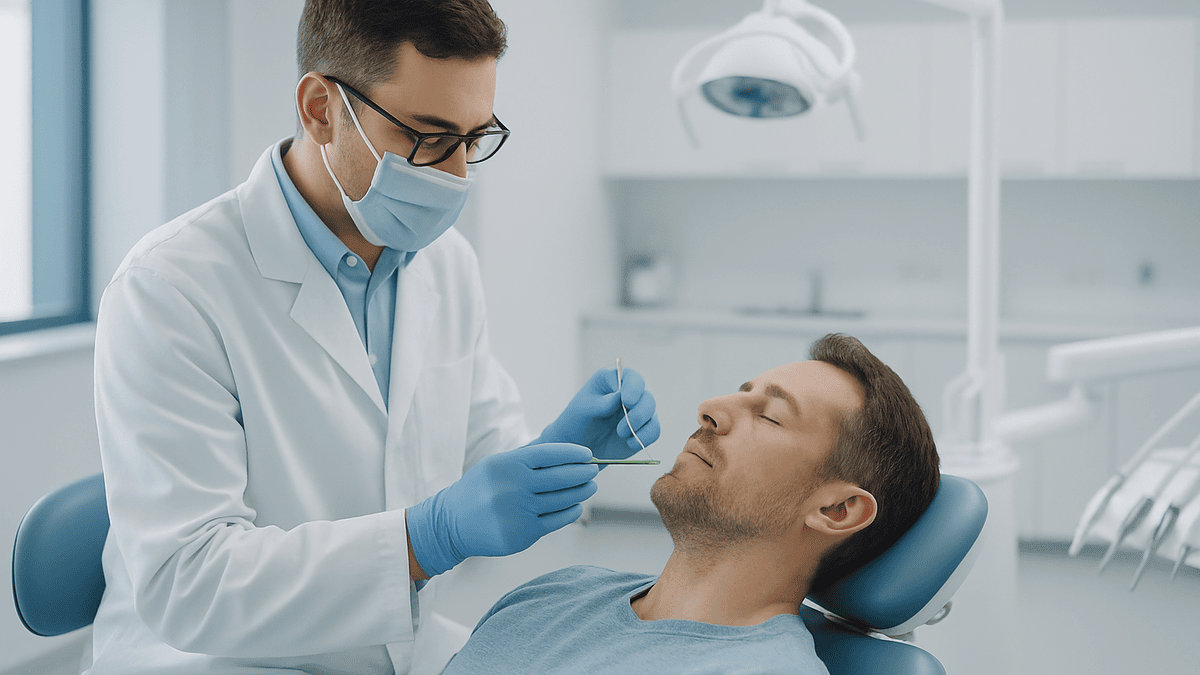
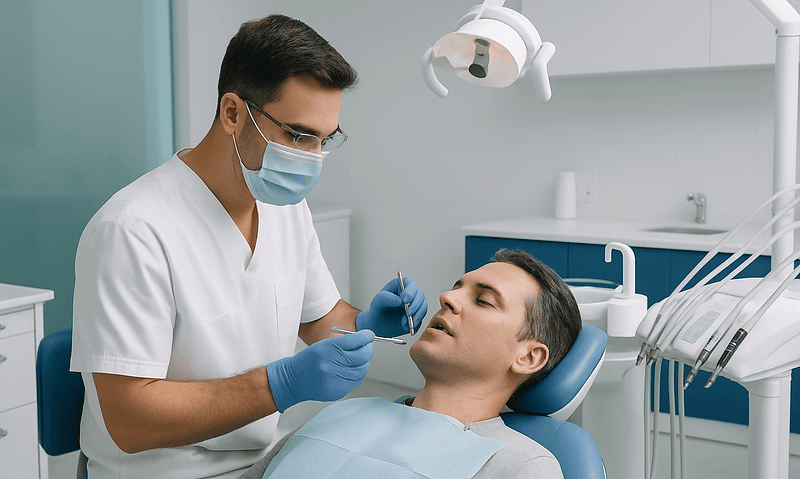
During the surgery itself, no, not in the way people fear. Implant placement is done under local anesthesia, which blocks pain signals from the surgical site entirely. The Mayo Clinic describes the procedure as an outpatient surgery performed in stages, and at every surgical stage the tissue is numbed before anything begins. What patients consistently report feeling is pressure, vibration, and the odd sensation of someone working in their mouth, not sharp pain.
Afterward is a different, though still modest, story. Once the anesthesia wears off, typically within a few hours, most people describe soreness comparable to a bruise or a firm ache at the site, along with some swelling of the gums and face, minor bleeding, and jaw stiffness. The Cleveland Clinic notes that this discomfort generally responds to the pain relief your dentist recommends and settles within days for most people.
The distinction matters because the question “do dental implants hurt” really contains three questions: Will the surgery hurt? (Almost never, thanks to anesthesia.) Will recovery hurt? (Some, briefly, and predictably.) Could something hurt later? (It can, and that’s the part worth understanding, because late pain is a signal, not a normal phase.) The rest of this article walks through each stage honestly, including the parts most marketing-driven articles skip: bone grafts, the day-three swelling peak, and what pain at month four actually means.
Why implant surgery often hurts less than a toothache
Here is the anatomical surprise that reassures most patients: jawbone is far less pain-sensitive than the inside of a tooth. A toothache hurts so intensely because the dental pulp, the nerve-rich tissue sealed inside a rigid chamber, becomes inflamed with nowhere to expand. Pressure builds against unyielding walls, and densely packed nerve fibers fire relentlessly. That mechanism is why an infected tooth can wake you at 3 a.m.
Bone tissue, by contrast, carries relatively few pain-sensing nerve endings in its dense outer layer. Preparing a site in the jaw does not trigger the same neural alarm that an inflamed pulp does. The gum incision is small, and in some techniques the surgeon works through a punch opening rather than a longer cut, which means less soft-tissue trauma, and soft tissue, not bone, is where most post-surgical soreness originates.
There’s a second factor: implants are usually placed in a clean, controlled site, often after any infection has been resolved. Compare that with an extraction of an abscessed tooth, where inflamed, acidic tissue can make numbing harder and recovery more tender. Many implant patients arrive having already lived with a failing tooth for months; more than a few say the implant process was the least painful chapter of the whole saga.
None of this means recovery is sensation-free. It means the source of discomfort, healing gum and mild bone response, is a duller, more manageable kind of ache than the tooth pain that likely brought you here in the first place.
What does implant surgery feel like in the chair?
Honest answer: the sharpest moment of the entire day is usually the numbing injection, and that lasts a few seconds. Many dentists apply a topical numbing gel first, which softens even that.
Once anesthesia takes hold, your dentist will test the area before starting, the sequence typically runs like this. You’ll feel pressure as the gum is opened, then vibration and a firm pushing sensation as the site in the bone is prepared. The sound is often the hardest part psychologically; several patients describe closing their eyes and being surprised how quickly it was over. Placing a single implant commonly takes about an hour, sometimes less.
What you should never feel is sharp, electric, or hot pain. If you do, raise a hand; anesthesia can be topped up in seconds, and dentists expect and welcome that signal.
For people with significant dental anxiety, sedation options exist alongside local anesthesia, ranging from inhaled relaxation methods to deeper sedation, depending on the practice and your health history. The Cleveland Clinic notes sedation is a common add-on for oral surgery, and it’s a reasonable thing to request rather than white-knuckling the appointment. Anxiety genuinely amplifies pain perception: the brain’s threat response turns up the volume on every sensation, so managing the fear is, in a very literal sense, managing the pain.
Most people drive themselves home after local anesthesia alone. With sedation, you’ll need a ride, worth planning before the day arrives.
Dental implant pain timeline: what each stage really feels like
Recovery follows a predictable arc, and knowing the shape of that arc is half the comfort. Discomfort does not decline in a straight line: it typically peaks on day two or three, then falls off quickly. Swelling behaves the same way, often looking worst in the mirror around 48 to 72 hours before receding.
| Stage | Typical sensation | How long it lasts |
|---|---|---|
| During surgery | Pressure and vibration; no sharp pain under anesthesia | About 1 hour per implant |
| Hours 0–6 | Numbness fading; dull ache begins | Same day |
| Days 1–3 | Peak soreness, swelling, possible bruising and jaw stiffness | Peaks around day 2–3 |
| Days 4–10 | Steadily fading tenderness; chewing caution near the site | Most people feel near-normal by day 7–10 |
| Weeks 2–24 (osseointegration) | Little to nothing; occasional gum sensitivity | 3–6 months, per Mayo Clinic |
| Abutment placement | Minor gum tenderness for a few days | Under a week |
| Crown placement | Essentially painless; brief bite-adjustment sensitivity | Days |
Two caveats keep this honest. First, timelines stretch if your procedure included bone grafting, a sinus lift, or multiple implants, expect the sore window to run longer and the swelling to be more noticeable. Second, everyone’s pain perception differs; a minority of people sail through with almost nothing, while others need the full ten days. Both are normal. What is not normal is pain that intensifies after day three or four: that pattern points away from routine healing and toward something a dentist should examine.
What's the worst part of a dental implant?
Ask people who’ve been through it, and the answers cluster around three things, none of them the implant surgery itself.
First: bone grafting, if you need it. When the jaw has thinned after tooth loss or gum disease, surgeons rebuild it with grafting material, sometimes months before the implant goes in. The Mayo Clinic notes grafting is a common preparatory step. Recovery from a graft, especially a sinus lift for upper back teeth, tends to involve more swelling, more facial tenderness, and a longer sore window than implant placement. If any stage earns the word “rough,” it’s this one.
Second: days two and three. Patients often feel fine on surgery day, thanks to lingering anesthesia and the body’s initial response, then wake up on day two puffy and achy and wonder if something went wrong. Nothing did. Inflammation peaks around 48 to 72 hours as part of normal healing, then recedes. Knowing this in advance prevents a lot of unnecessary alarm.
Third, and patients mention this more than any physical symptom: the waiting. Osseointegration, the months-long process where bone fuses to the implant, takes roughly three to six months. During that stretch you may wear a temporary tooth or have a gap. It doesn’t hurt; it just tests patience.
The needle, the drill, the placement itself? Consistently ranked as the least troublesome parts. The fear before the appointment is, for most people, genuinely worse than anything that happens during it.
Which is worse: tooth extraction or implant?
Many patients who have experienced both report that the extraction was the more uncomfortable of the two, particularly if the tooth was infected or the removal was surgical. There are sound reasons for that pattern, though it’s worth saying plainly that head-to-head comparative research is limited, and individual experiences vary.
An extraction leaves an open socket that must clot and heal on its own. That healing can be interrupted by dry socketa painful condition where the protective blood clot dislodges, exposing bone and nerve endings. The Cleveland Clinic describes dry socket pain as intense, often radiating toward the ear, and typically beginning a few days after extraction. Implant surgery carries no equivalent complication; the site is closed around the implant rather than left open.
Infected teeth add another layer. Inflamed tissue is harder to numb completely, and the surrounding area is already tender before the procedure begins. Implants, by contrast, are placed in healthy or healed tissue under controlled conditions.
Where extraction wins on comfort: it’s faster, usually a single short visit, and simple extractions of intact teeth often heal with only a few days of soreness. The implant process, even if each step is mild, unfolds over months and involves multiple appointments.
The practical takeaway: if you’re delaying an implant because the extraction was miserable, that logic probably doesn’t hold. The two procedures create different kinds of healing, and the implant’s is generally the more predictable and less dramatic of the two.
What is the most painful dental procedure?
Implants don’t top anyone’s list, and the procedure that does top the popular list mostly doesn’t deserve it.
Root canals carry dentistry’s worst reputation, but the reputation confuses cause and cure. The blinding pain people associate with root canals is the infected tooth before treatment; the procedure itself is performed under local anesthesia and exists precisely to remove the inflamed nerve tissue causing the agony. Most patients leave a root canal appointment in less pain than they arrived with.
What genuinely tends to involve the toughest recoveries, based on the general pattern in mainstream dental sources:
- Surgical wisdom tooth removal, especially impacted lower teeth, which can mean days of swelling, limited jaw opening, and dry socket risk.
- Dry socket itselftechnically a complication rather than a procedure, but frequently described as the most intense dental pain patients experience.
- Gum grafting and periodontal surgery, because soft-tissue donor sites (often the palate) stay tender while eating and speaking.
- Bone grafts and sinus lifts, the implant-adjacent procedures discussed earlier.
Single implant placement, in most patient accounts, lands well below all of these, closer to a simple extraction in recovery burden, and often milder. The deeper truth underneath the rankings: with modern local anesthesia, almost no dental procedure hurts significantly during treatment. The differences show up in the days afterward, and those differences are driven mostly by how much soft tissue was disturbed and whether infection was present, not by how intimidating the procedure sounds.
Does the healing period (osseointegration) hurt?
This is the quietest stretch of the whole journey, and if it isn’t quiet, that itself is information.
Osseointegration is the process by which your jawbone grows onto and fuses with the implant’s surface, anchoring it the way roots anchor a natural tooth. The Mayo Clinic puts the timeline at several months, commonly cited as three to six depending on bone quality, implant location, and whether grafting was involved. Remarkably, this bone remodeling produces no sensation. You will not feel bone growing, and there’s no ache that signals progress or its absence.
What people occasionally do notice during these months:
- Mild gum sensitivity around the site, especially in the first few weeks.
- Awareness of the healing cap or temporary restoration when chewing nearby.
- Brief tenderness if food gets trapped around the area, solved by gentle cleaning, which your dentist will demonstrate.
What should not happen: throbbing, spontaneous pain, a bad taste, swelling that returns after resolving, or a feeling that the implant moves. Persistent pain during the integration window is one of the signals dentists use to identify an implant that isn’t fusing properly: a fixable situation, but only if it’s evaluated rather than waited out.
So the honest expectation for months two through six is boredom: routine brushing, a few check-in appointments, and eating carefully on that side. In implant recovery, boring is exactly what success feels like.
Does getting the abutment and crown hurt?
Barely, and this surprises people, because it’s technically a second minor surgery.
Once the bone has fused to the implant, the dentist attaches an abutment: the small connector post that will hold your crown. If your gum healed over the implant, this step involves reopening the tissue under local anesthesia to expose the implant top: a brief procedure the Mayo Clinic describes as minor outpatient work. Because only a small area of gum is involved and no bone work is needed, recovery is typically a few days of tenderness at the gumline, considerably milder than the original placement. Some surgeons place the abutment at the initial surgery, skipping this step entirely.
The crown appointment is the anticlimax of the whole process. Impressions or digital scans are taken, and at a later visit the crown is attached to the abutment. No anesthesia is usually needed, since neither the implant nor the crown contains nerve tissue, one of the few genuine perks of a prosthetic tooth is that it cannot get a toothache.
Two small sensations are normal in the first week or two with a new crown: a feeling that the bite is slightly “tall” or unfamiliar, and mild pressure awareness when chewing as surrounding tissues adapt. If the bite feels distinctly off, like the new tooth hits before the others, mention it. A quick adjustment fixes it, and an uncorrected high bite can overload the implant over time. That five-minute polish matters more than it seems.
Why is my dental implant hurting weeks or months later?
Here’s the rule worth memorizing: a healed implant should feel like nothing. New or worsening pain after the initial recovery window is never a normal phase of implant life: it’s a message, and the possible senders fall into a few categories.
- Peri-implantitis. The implant equivalent of gum disease: bacteria inflame the tissue around the implant and, if unchecked, erode the supporting bone. Signs include red or bleeding gums at the site, tenderness, bad taste, and eventually looseness. Early-stage inflammation (peri-implant mucositis) is often reversible with professional cleaning and improved home care.
- Infection at the surgical site. More common in the early weeks; watch for swelling that returns, warmth, pus, or fever.
- Failed osseointegration. A minority of implants never fully fuse. The Cleveland Clinic notes that overall success rates are high, commonly reported above 90 percent over ten years, but failures happen, and persistent ache or mobility during the first months is the classic sign.
- Bite overload. A crown sitting slightly high, or nighttime grinding, concentrates force on the implant and can produce a deep, pressure-like ache when chewing.
- Nerve involvement. Rare, but tingling, numbness, or shooting sensations in the lip, chin, or tongue after lower-jaw implants need prompt evaluation.
- Sinus issues. Upper back implants sit near the sinus floor; congestion-like pressure or pain there warrants a look.
None of these improve by waiting. All of them improve faster the earlier they’re examined, which is exactly why the next section exists.
When to see a dentist or doctor about implant pain
Most implant discomfort resolves on its own schedule. These situations should not be waited out, call your dentist, oral surgeon, or doctor:
- Pain that worsens after day three or four instead of steadily fading. Normal healing pain declines; escalating pain suggests infection or another complication.
- Fever, spreading facial swelling, or difficulty swallowing or breathing. These can indicate a spreading infection. Difficulty breathing or swallowing is an emergency, seek immediate care.
- Numbness or tingling that persists in your lip, chin, or tongue after the anesthesia should have worn off (typically within several hours). Prompt evaluation matters for nerve recovery.
- Bleeding that won’t stop with gentle, steady gauze pressure after the first day.
- An implant that feels loose or moves at any stage, never a wait-and-see situation.
- Pus, a persistent bad taste, or gums that bleed when you brush the implant site weeks or months in: the classic early signs of peri-implant disease.
- New pain in a previously comfortable implant, even years later.
A useful habit: before you leave the surgical appointment, ask two questions. What symptoms should make me call you this week? And what’s the after-hours number? Practices expect these calls; the Mayo Clinic and Cleveland Clinic both emphasize contacting your provider when symptoms deviate from the expected course. An unnecessary phone call costs five minutes. An untreated infection can cost the implant, and occasionally much more than that.
What I wish I knew before dental implants
Interview enough implant patients and the same reflections keep surfacing, almost none of them about pain.
“I wish I’d known how long the whole thing takes.” Start to finish, the process commonly spans three to nine months, sometimes longer with grafting. Each appointment is manageable; the calendar is the real commitment. Ask for your full projected timeline at the consultation, in writing.
“Nobody warned me about day two.” The swelling peak around 48 to 72 hours catches people off guard precisely because surgery day felt easy. Forewarned, it’s a shrug; unwarned, it’s a panicked search at midnight.
“Ask about bone grafting before you commit.” Whether you’ll need a graft changes the timeline, the cost, and the recovery experience more than any other single variable. It’s a consultation question, not a surprise you want mid-process.
“Stock the kitchen first.” A week of soft foods, yogurt, eggs, soups, smoothies eaten with a spoon rather than a straw, makes recovery dramatically smoother. Shopping for them on day two, swollen, is nobody’s favorite errand.
“Clarify the temporary tooth situation.” Will there be a gap? A temporary crown? For front teeth especially, know the plan before surgery day.
“The dread was the worst part.” This one is nearly universal. The gap between imagined pain and actual pain runs so consistently in one direction that the most useful preparation may simply be believing the people who’ve gone before you: the fear is real, but it’s mostly fear of a thing that doesn’t happen.
How to keep implant pain low: a recovery plan that works
Post-surgical comfort isn’t luck: it’s mostly a handful of well-timed habits, each grounded in how tissue actually heals.
- Cold first, and early. A cold compress on the cheek, roughly 15 to 20 minutes on, then a break, during the first 24 hours constricts blood vessels and blunts the swelling before it peaks. After the first day or two, cold matters less; the inflammation has already committed to its course.
- Sleep with your head elevated for the first two nights. An extra pillow reduces overnight fluid pooling in the face, which is what makes day-two mornings puffy.
- Follow your dentist’s pain-relief instructions on schedule, not just when pain spikes. Staying ahead of discomfort takes less relief than chasing it.
- Eat soft and lukewarm for the first several days, very hot foods dilate vessels and can increase throbbing and bleeding.
- No straws, no spitting, no smoking. Suction and smoking both disturb healing tissue, and smoking additionally starves the site of oxygen: it’s one of the best-documented risk factors for implant complications.
- Rinse gently with warm salt water starting the day after surgery, if your dentist approves: it keeps the site clean without disturbing it. Skip vigorous swishing.
- Keep brushing everything else normally. Overall mouth cleanliness protects the surgical site; just steer the brush around the tender area for the first days as instructed.
Then rest, genuinely, for 48 hours. Strenuous exercise raises blood pressure and can restart bleeding and throbbing. The patients with the smoothest recoveries are rarely the toughest ones: they’re the ones who treated the first two days as an appointment with the couch.
Who tends to feel more pain, and why?
Two people can have identical surgeries and report very different recoveries. Some of that variation is biology, some is circumstance, and a surprising amount is psychology.
Procedure factors predict the most. Multiple implants placed at once, bone grafts, sinus lifts, and full-arch work all disturb more tissue, and soreness scales roughly with tissue disturbance. A single implant in a healthy, healed site sits at the gentle end of the spectrum.
Health factors shape healing speed. Smoking impairs blood flow and oxygen delivery to the surgical site, slowing repair and raising complication risk. Poorly controlled diabetes similarly slows wound healing: the Cleveland Clinic flags both as considerations dentists weigh before implant treatment. Neither is an automatic disqualifier, but both are worth discussing candidly at the consultation, because managing them improves comfort as well as outcomes.
Mechanical factors matter after healing: people who grind or clench their teeth load implants harder, which can translate into lingering pressure sensitivity. A night guard is a common, simple safeguard.
And then there’s the mind. Pain research consistently shows that anxiety and anticipated pain intensify experienced pain: the nervous system primes itself to detect threat and duly finds it. This isn’t a character flaw; it’s neurology. It’s also actionable: telling your dentist you’re anxious, agreeing on a hand signal, asking about sedation, even bringing headphones, each measurably changes the experience. The patients who fare best aren’t the ones with the highest pain tolerance. They’re the ones who walked in with accurate expectations, which, if you’ve read this far, now includes you.
Frequently asked questions
What's the worst part of a dental implant?
Patients most often name bone grafting (if needed), the swelling peak on days two and three, and the months-long wait for bone to fuse, not the implant surgery itself. Grafts and sinus lifts involve more tissue disturbance and a longer sore window. The placement procedure, done under local anesthesia, is consistently rated among the easiest parts, and many people say pre-appointment dread was worse than anything they physically felt.
What is the most painful dental procedure?
Surgical removal of impacted wisdom teeth and dry socket, a complication where the healing clot dislodges after an extraction, tend to top patients’ lists, along with gum grafting. Root canals have the worst reputation, but the agony people remember is the infected tooth beforehand; the procedure relieves it. Single dental implants rank well below all of these in reported recovery discomfort.
Which is worse, tooth extraction or implant?
Many people who have had both say the extraction was more uncomfortable, especially if the tooth was infected or surgically removed. Extractions leave an open socket vulnerable to dry socket, a notably painful complication, while implants are placed in clean, closed sites with no equivalent risk. Comparative research is limited and experiences vary, but implant recovery is generally the more predictable of the two.
How long does pain last after a dental implant?
Most people feel sore for three to five days, with discomfort peaking around 48 to 72 hours and fading almost entirely by seven to ten days for a single implant. Bone grafts, sinus lifts, or multiple implants extend that window. Pain that intensifies after day three or four rather than easing is not part of normal healing and should be evaluated by your dentist.
Does the drilling part of implant surgery hurt?
No, under local anesthesia you feel pressure and vibration, not pain. Jawbone also has relatively few pain-sensing nerve endings compared with the pulp inside a tooth, which is why site preparation feels far milder than people expect. The sound is usually the hardest part psychologically. If anything ever feels sharp during the procedure, raise your hand; anesthesia can be supplemented immediately.
Do bone grafts hurt more than the implant itself?
Usually, yes. Grafting rebuilds thinned jawbone and disturbs more tissue than implant placement, so recovery typically involves more swelling, facial tenderness, and a longer sore stretch, sinus lifts for upper back teeth especially. The procedure itself is still done under anesthesia and shouldn’t hurt in the chair. If your treatment plan includes grafting, ask how it changes your timeline and recovery expectations upfront.
Why does my dental implant hurt months after surgery?
A healed implant should feel like nothing, so late pain is a signal worth investigating. Common causes include peri-implantitis (gum and bone inflammation around the implant), infection, a crown sitting slightly high in the bite, nighttime grinding, or, during the first months, an implant that hasn’t fused to the bone properly. All of these are more treatable when caught early, so see your dentist promptly.
Can I be sedated for dental implant surgery?
Yes, sedation options are commonly offered alongside local anesthesia, ranging from mild inhaled relaxation to deeper sedation, depending on the practice and your health history. Local anesthesia alone controls pain fully for most people, but sedation helps those with significant dental anxiety, which itself amplifies pain perception. Discuss options at your consultation, and arrange a ride home if you choose anything beyond local numbing.
Is throbbing normal after a dental implant?
Mild throbbing in the first two to three days is common and reflects normal inflammation, which peaks around 48 to 72 hours. It should respond to the pain relief your dentist recommends and fade steadily afterward. Throbbing that intensifies after day three, returns after resolving, or is accompanied by fever, spreading swelling, pus, or a bad taste suggests infection and warrants a call to your dental office.
What do people wish they knew before getting dental implants?
Three things come up constantly: the full process often spans three to nine months, so the calendar is the real commitment; swelling peaks on day two or three, which alarms people who felt fine on surgery day; and the pain they dreaded largely never materialized. Practical additions: ask early whether you’ll need bone grafting, clarify the temporary-tooth plan, and stock a week of soft foods before surgery.
References
This article is for general information only and is not a substitute for professional medical advice. Please consult a qualified doctor about your individual situation.

More from the Blog

Tooth Extraction Healing Timeline: The Socket From the First Day to the Fourth Week
After a tooth extraction, a blood clot forms in the socket within the first day, soft granulation tissue replaces it over the following week,…
Bringing Old X-Rays and Records to a Dental Anatomy Assessment: Why History Helps Planning
Bringing old X-rays and records to a dental anatomy assessment gives the clinician a timeline rather than a single snapshot. Prior radiographs, periodontal charts,…
How Periodontal Disease Develops Below the Gumline and Why SRP Deep Cleaning Is Planned
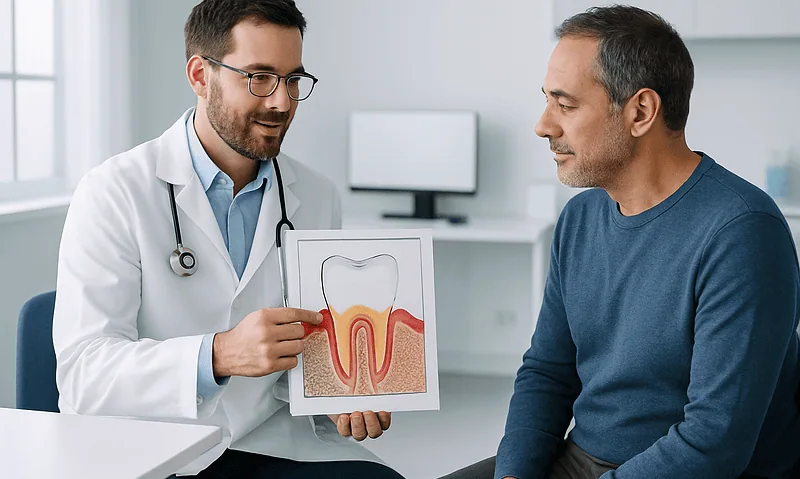
Periodontal disease begins when bacterial plaque collects along the gumline, inflames the gums (gingivitis) and, if it persists, spreads below the gum to destroy…
Before Clear Aligners Start: Digital Scans, Cavities to Treat and the Aligner Plan
Before starting clear aligners, an orthodontist or dentist usually completes a full dental exam, X-rays, photographs and a digital scan of both jaws. Any…

Canker Sore vs Cold Sore: How to Tell Them Apart in Ten Seconds
Location is the fastest clue. Canker sores are shallow, round ulcers with a white or yellow center that form inside the mouth, on the…
Is a Dental Spa Right for Anxious Patients? Comfort Care Without Cutting Corners
A dental spa can suit many anxious patients when the comfort features sit on top of standard clinical care rather than replacing it. Warm…