

Eating After Stomach Cancer Surgery: Small Frequent Meals and the New Digestive Rhythm
Key Takeaways
- The pylorus, the valve that once metered food into the intestine, is usually removed or bypassed in a gastrectomy, which is why sugary food arrives too fast and triggers dumping syndrome.
- Early dumping symptoms begin about 10 to 30 minutes after eating, while late dumping, caused by an insulin overshoot, arrives one to three hours later as sweating and shakiness.
- Drinking at least 30 minutes before or after a meal, rather than with it, frees limited space for food and slows the rush of contents into the intestine.
- After total gastrectomy the body no longer makes intrinsic factor, so vitamin B12 from food cannot be absorbed and replacement is lifelong, with deficiency able to stay hidden for years.
- Iron and calcium are absorbed mainly in the duodenum and depend on stomach acid, so anemia and bone thinning are recognized long-term risks that need blood tests and sometimes bone scans.
- Weight typically declines for the first two to three months and then plateaus; continued or accelerating loss beyond that window is a signal to contact the dietitian and surgical team.
Eating after gastrectomy usually means six to eight small meals a day instead of three large ones, chewing slowly, putting protein first, separating drinks from food by about 30 minutes, and limiting sugary foods that trigger dumping syndrome. Most people progress from liquids to soft foods to a varied diet over weeks to months, guided by their surgical team and a dietitian, with lifelong monitoring of vitamin B12, iron, and bone health.
The first breakfast at home looks wrong. Three spoonfuls of scrambled egg on a saucer, a corner of toast, and a glass of water pushed deliberately to the far side of the table. His daughter has set it out exactly as the dietitian described, and he stares at it with the mild insult of a man who once ate a full plate without thinking. Then he takes a bite, chews for what feels like an absurdly long time, and discovers he is already comfortable. Not full. Comfortable. That distinction becomes the whole education.
Eating after gastrectomy is less a diet than a new rhythm. The stomach was never just a bag; it was a pacing device, a mixing bowl, and a chemistry lab. Remove all or part of it, and the body needs a different tempo of eating to do the same work.
This explainer walks through what actually changes inside, why small frequent meals matter so much, what the early weeks tend to look like, and which warning signs deserve a phone call rather than a wait-and-see.
What actually happens to digestion after a gastrectomy?
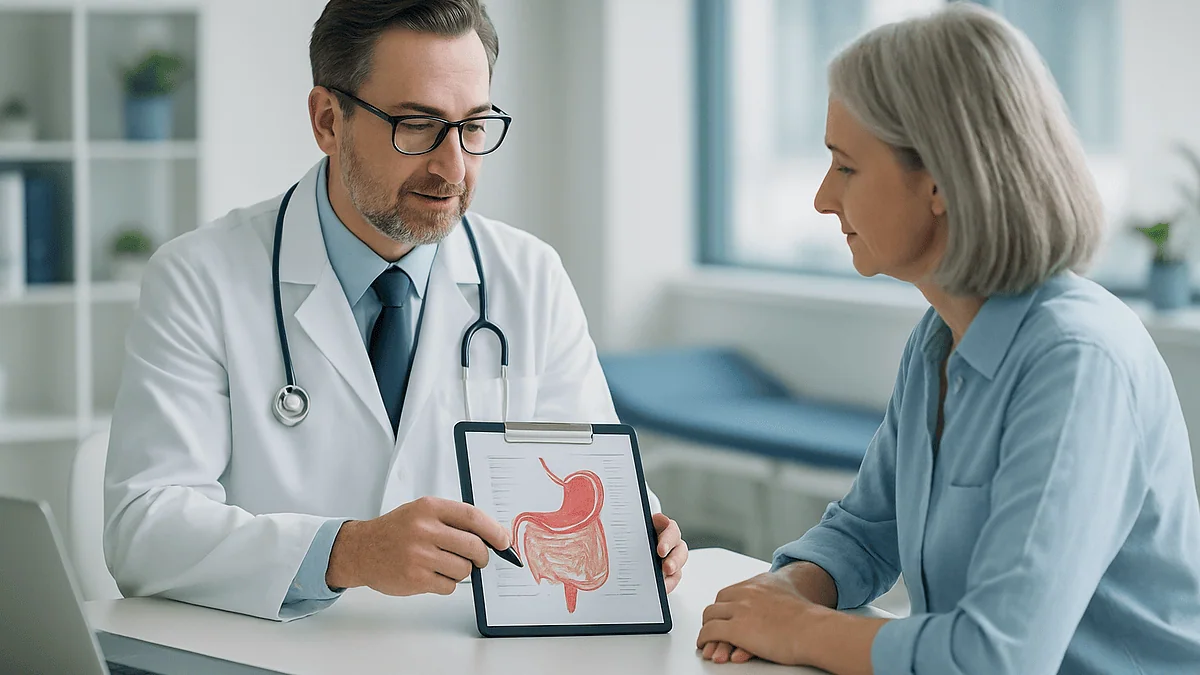
A gastrectomy is an operation that removes part of the stomach (partial or subtotal gastrectomy) or all of it (total gastrectomy), most often to treat stomach cancer. To understand why eating feels different afterward, it helps to know the four jobs the stomach was quietly doing.
First, storage. A healthy stomach stretches to hold a full meal and then releases it in small portions through a muscular valve called the pylorus, the ring of muscle at the stomach’s exit that meters food into the small intestine. Second, mixing. Its muscular walls churn food into a slurry. Third, chemistry. The stomach lining makes acid, an enzyme called pepsin that begins protein digestion, and intrinsic factor, a protein that lets the body absorb vitamin B12 further down the gut. Fourth, signaling. Stretch receptors in the stomach wall tell the brain when enough has arrived.
After a total gastrectomy, the surgeon connects the esophagus, the swallowing tube, directly to a loop of small intestine, a reconstruction often called a Roux-en-Y. After a partial gastrectomy, the remaining stomach pouch is joined to the small intestine. In both cases the pylorus is usually gone or bypassed, which is the single most consequential change for eating.
Without the pylorus, food that would once have trickled out over hours now arrives in the small intestine within minutes. The intestine responds to that sudden load of concentrated, sugary, or salty contents by pulling water into the gut and releasing a surge of hormones. That cascade is the basis of dumping syndrome, discussed below.
Meanwhile, less or no stomach acid means iron is converted to its absorbable form less efficiently, and without intrinsic factor, dietary vitamin B12 largely passes through unused. These are not complications so much as predictable consequences of the anatomy, which is why the eating plan and the vitamin plan are designed together from the start, according to MedlinePlus.
Why small frequent meals matter when eating after gastrectomy
The instruction to eat six to eight times a day can sound like a nuisance. It is, in fact, the closest thing to a mechanical replacement for the organ that was removed.
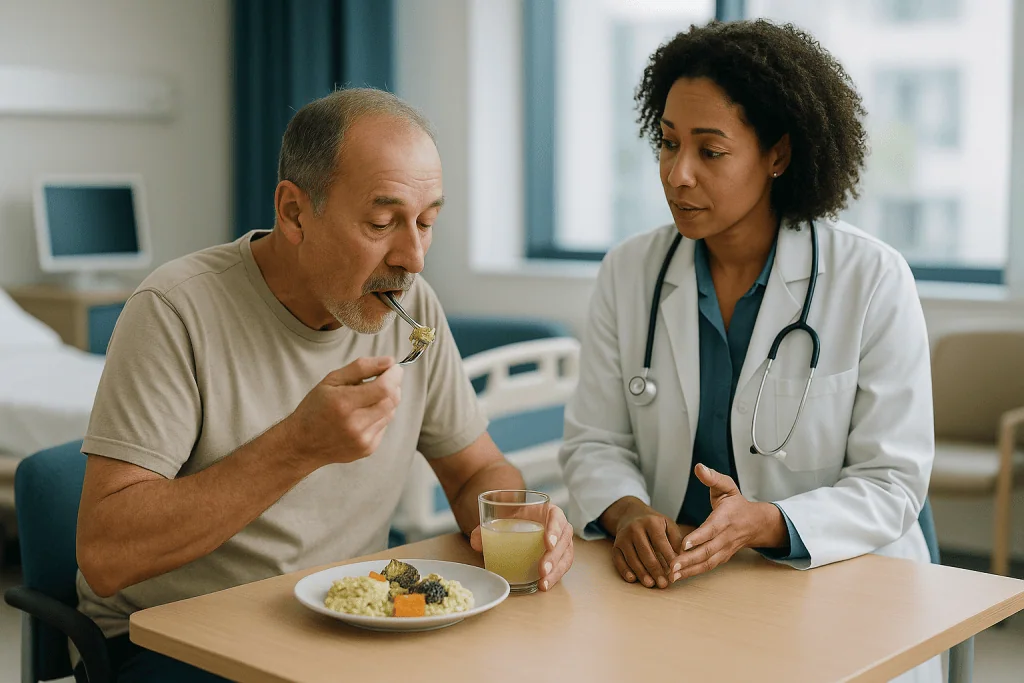
Think of the difference between pouring a bucket of water onto a garden bed and running a drip line. The soil can only absorb so much at once; the rest runs off. The small intestine works the same way. It digests and absorbs well when contents arrive gradually. Flood it with a large meal and three things tend to happen: uncomfortable early fullness, cramping and diarrhea from the fluid shift of dumping, and, an hour or two later, a wobbly, sweaty low-blood-sugar episode from the insulin surge that follows rapid sugar absorption.
Small meals keep each delivery within what the intestine can handle. The NHS describes this as eating smaller amounts more often and chewing thoroughly, and notes that the body typically needs time, often months, to adjust to the new arrangement.
Frequency also solves a calorie problem. When each sitting is limited to a few tablespoons in the early weeks, three meals cannot possibly supply enough energy and protein for a body that is healing a major abdominal wound and, in many cases, recovering from or preparing for chemotherapy. Spreading intake across the waking day is how people maintain weight without ever feeling stuffed.
Chewing does part of the stomach’s old grinding job. Food should be closer to paste than pieces by the time it is swallowed. Slowing down also gives the new, smaller signaling system a chance to register fullness before it becomes pain. Many dietitians suggest putting the fork down between bites and allowing 20 to 30 minutes per meal, a habit that feels artificial at first and second nature within weeks.
Who usually starts eating early, and who is asked to wait?
Not everyone follows the same path back to the table, and the differences reflect surgery type, how the operation went, and what else is happening in treatment.
Many surgical teams now encourage early oral intake, meaning sips of clear fluid within a day or two of surgery, as part of enhanced recovery programs that aim to get the gut working sooner. The idea is that the intestine recovers function faster when it has something to do. People who had a partial gastrectomy without complications, who are otherwise well nourished, and whose operation was uncomplicated are typically in this group.
Others are asked to wait. After a total gastrectomy, the new join between the esophagus and intestine, called an anastomosis, needs to heal without strain. Some teams request an imaging study in which the patient swallows a contrast liquid to check that the join is sealed before allowing food. If there is any concern about a leak, or if the bowel is slow to wake up after surgery, oral intake is delayed and nutrition is provided another way.
That other way is often a feeding tube placed during the operation into the small intestine (a jejunostomy), or nutrition delivered into a vein. These are bridges, not failures. People who were already underweight before surgery, who had significant weight loss from the cancer itself, or who need to start chemotherapy soon after the operation may use tube feeding for weeks alongside small oral meals to keep protein and calories steady.
Chemotherapy before surgery, called neoadjuvant treatment, and chemotherapy afterward both affect appetite, taste, and nausea, and the eating plan flexes around them. Someone whose taste buds have changed may need a completely different soft-food list than the standard sheet.
The decision about when to start, how fast to progress, and whether a tube stays in place always rests with the surgical team and the dietitian who see the specific anatomy and the specific recovery, as MedlinePlus outlines.
What do the first days and weeks of eating after gastrectomy look like?
The progression is staged, and the stages are about texture and volume rather than specific foods. Timelines below are typical ranges described by the NHS, not promises; individual teams set their own pace.
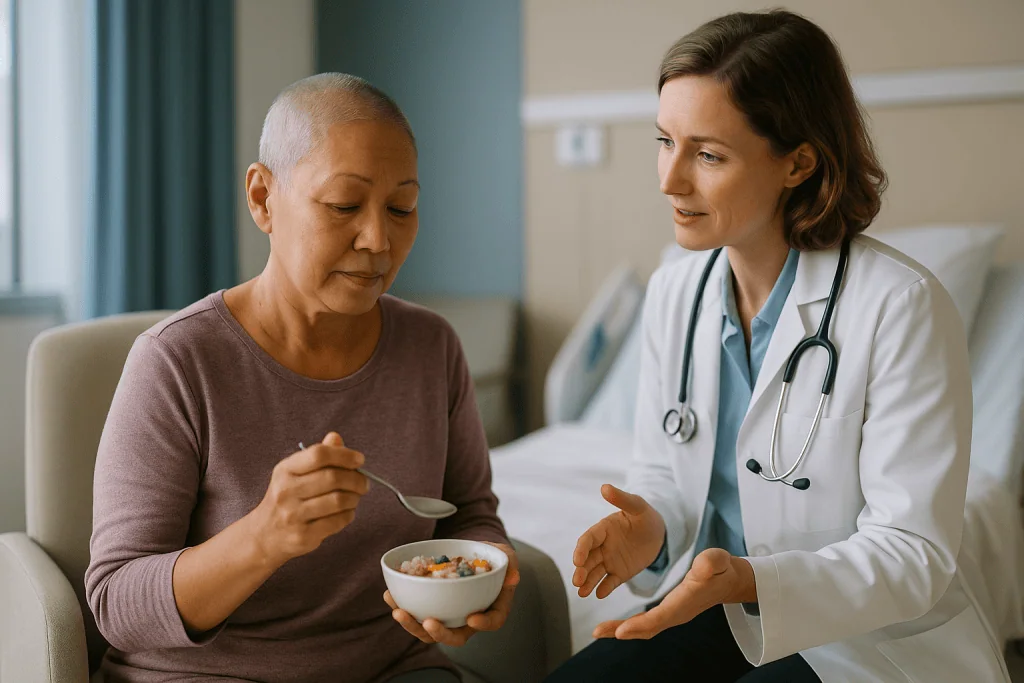
In hospital. A hospital stay after gastrectomy commonly runs one to two weeks. Eating begins with water, then clear fluids, then thin nourishing liquids such as strained soup or milk-based drinks. Volumes are tiny at first, measured in sips rather than cups. Nurses and dietitians watch for pain on swallowing, nausea, and how the abdomen feels.
First two to three weeks at home. Most people are on a soft or pureed diet: smooth yogurt, mashed potato with gravy, well-cooked flaked fish, scrambled egg, soft cooked cereals, blended stews. Portions are a few tablespoons, eaten six to eight times daily. This is the period when people learn their own fullness signal, which now arrives as pressure under the breastbone rather than the old comfortable stretch.
Weeks three to eight. Textures advance to soft solids that require chewing: tender meat cut small, soft fruit without skins, well-cooked vegetables, bread that is toasted rather than doughy. Portions grow slowly. Many people discover one or two foods that reliably cause dumping and simply set them aside for now.
Two to six months. Variety widens toward a normal, if smaller and more frequent, pattern of eating. Tolerance for fiber, raw vegetables, and mixed meals improves. Weight often stabilizes during this window.
Setbacks are normal. A food that was fine last week may cause cramping this week, often because of portion size or eating speed rather than the food itself. Keeping a simple notebook of what was eaten, how much, and how it felt is the most useful tool most people never think to use.
What is dumping syndrome, and what does a dumping syndrome diet involve?
Dumping syndrome is the name for a group of symptoms that occur when food, particularly sugar, moves too quickly from the stomach or esophagus into the small intestine. It is one of the most common reasons people struggle in the first months, and it is largely managed with eating changes rather than medicine.
There are two forms, and they feel different. Early dumping begins about 10 to 30 minutes after eating, according to Mayo Clinic. Concentrated contents in the intestine draw water in from the bloodstream, stretching the bowel and dropping circulating volume. People describe cramping, bloating, nausea, urgent diarrhea, a racing heart, flushing, and lightheadedness.
Late dumping arrives one to three hours after a meal. Rapidly absorbed sugar prompts the pancreas to release a large amount of insulin, which then overshoots, pulling blood sugar too low. Sweating, shakiness, confusion, hunger, and weakness follow. It is sometimes called reactive hypoglycemia.
The dumping syndrome diet targets both mechanisms at once. The core moves are:
- Small meals, eaten slowly, with thorough chewing.
- Protein and some fat at every sitting, because both slow the movement of food and blunt the sugar spike.
- Strict limits on simple sugars: sweetened drinks, juice, candy, desserts, and sugary cereals. Sugar-free does not mean symptom-free if sugar alcohols cause their own diarrhea.
- Complex carbohydrates in modest amounts, such as oats, whole grain bread, or potato, rather than white bread or sweets.
- Fluids separated from meals, covered in its own section below.
- Lying down for 15 to 30 minutes after eating if lightheadedness is a problem, which slows emptying and supports blood pressure, a measure Cleveland Clinic describes.
Symptoms often ease as the intestine adapts over months. When diet alone is not enough, medicines that slow gut transit or blunt hormone release exist, and whether one is appropriate is a decision for the treating team, not something to seek out independently.
Why protein comes first on every small plate
If the new eating rhythm has one organizing principle, it is this: protein before everything else, at every sitting.
The reasoning is partly about healing and partly about the physics of a small meal. A surgical wound through the abdominal wall and a fresh join in the digestive tract are built from protein. Muscle lost during illness is rebuilt from protein. Chemotherapy, when it follows surgery, increases the body’s demand further. At the same time, each meal is now small enough that whatever fills the first few bites determines what the body gets. If those bites are toast and jam, the protein simply does not fit.
Protein also earns its place by calming dumping. It leaves the intestine more slowly than sugar, stimulates less insulin, and makes a meal feel satisfying at a smaller volume. Pairing a carbohydrate with protein and a little fat, such as crackers with cheese or a small bowl of oats made with milk and a spoon of nut butter, is far better tolerated than the carbohydrate alone.
Practical sources in the soft-food phase include eggs, Greek-style yogurt, cottage cheese, smooth nut butters, flaked fish, minced or slow-cooked meat, tofu, lentil purees, and milk-based drinks. Powdered milk stirred into soups, mashed potato, or porridge is an old dietitian trick that adds protein without adding volume.
Tolerance varies. Some people find red meat sits heavily for months while poultry and fish are fine. Dairy occasionally becomes troublesome after gastrectomy because lactose reaches the intestine faster, and lactose-reduced products can help; this is worth testing rather than assuming.
How much protein a particular person needs is an individualized figure that depends on body size, wound healing, kidney function, and cancer treatment. It should come from the dietitian on the team rather than a general target, and it is reviewed as weight and activity change. The NHS emphasizes ongoing dietitian involvement precisely because these needs shift over the first year.
What to eat after stomach removal: easier and harder foods at a glance
Lists of forbidden foods are less helpful than an understanding of why certain foods cause trouble. Three properties predict difficulty: sugar concentration, texture that resists chewing, and volume of fluid or gas. The table below groups common foods by how they usually behave in the months after gastrectomy. Individual tolerance varies widely, and something in the right-hand column may be perfectly fine for one person and impossible for another.
| Food group | Usually easier | Often harder at first | Why |
|---|---|---|---|
| Protein | Eggs, flaked fish, poultry, tofu, yogurt, cottage cheese | Tough steak, dry chicken breast, chewy processed meats | Fibrous meat resists grinding without a stomach |
| Grains | Oats, toast, crackers, well-cooked rice or pasta | Fresh doughy bread, sugary cereals, pastries | Doughy bread balls up; sugar triggers dumping |
| Fruit | Banana, peeled soft fruit, stewed apple | Fruit juice, dried fruit, citrus with membranes | Juice and dried fruit are concentrated sugar |
| Vegetables | Well-cooked carrots, squash, spinach, mashed potato | Raw salad, corn, cabbage family, onion | Raw fiber is bulky; some produce gas |
| Dairy | Hard cheese, yogurt, lactose-reduced milk | Large glasses of milk, ice cream, milkshakes | Lactose plus sugar reaches intestine fast |
| Drinks | Water, diluted drinks between meals | Soda, sweet tea, alcohol, large volumes with food | Sugar and carbonation; fluid fills limited space |
A few foods deserve a specific note. Carbonated drinks introduce gas into a system with nowhere to store it, and many people find them uncomfortable long term. Alcohol is absorbed faster without a stomach, and its effect can be stronger and quicker than expected; this is a conversation to have with the treating team, especially during chemotherapy. Very hot or very cold foods sometimes provoke cramping early on.
The goal over months is to move foods from the right column to the left through gradual, small reintroductions rather than to accept permanent restriction. The Cleveland Clinic describes this kind of trial-and-adjust approach as the standard way dumping is managed.
Can you drink with meals after a gastrectomy?
Of all the new habits, separating drinks from food is the one people most often resist, and the one that most often turns a difficult meal into a comfortable one.
The logic is about space and speed. Without a stomach reservoir, the capacity available at any one moment is small. A glass of water taken with food fills that space with something that has no calories or protein, crowding out the meal. Fluid also washes food through faster, delivering concentrated contents to the intestine more quickly and provoking dumping. Both Mayo Clinic and Cleveland Clinic advise drinking liquids at least 30 minutes before or after meals rather than with them.
That does not mean drinking less overall. Dehydration is a real risk in the first months, particularly when diarrhea from dumping is frequent, and it shows up as headache, dark urine, dizziness on standing, and fatigue that gets blamed on surgery. The solution is sipping steadily through the day between meals, small amounts at a time, rather than drinking a glass at once.
What to drink matters as much as when. Plain water, weak tea, diluted squash, and broth are gentle. Sweetened drinks, fruit juice, and soda are the fastest route to late dumping because liquid sugar reaches the intestine with nothing to slow it. Milk and nourishing drinks sit in a middle category: they are useful as small meals in their own right, especially early on when solid food is hard, but they should be treated as food and timed accordingly rather than gulped alongside a plate.
Straws deserve a mention. Sipping through a straw draws air in with the fluid, and for some people that adds bloating. Drinking directly from a cup, slowly, is usually more comfortable.
A practical rhythm many people settle into: a small meal, then a pause, then a cup of fluid sipped over the following half hour, then another pause before the next small meal. The day becomes a gentle alternation of eating and drinking rather than the old combined event.
Vitamin B12 after gastrectomy, and the other nutrients that need watching
The eating plan handles calories and comfort. A separate plan handles the nutrients that the anatomy no longer allows the body to absorb properly, and this plan is lifelong.
Vitamin B12 is the clearest example. Dietary B12 can only be absorbed in the last part of the small intestine when it is bound to intrinsic factor, a protein made exclusively by the stomach lining. After a total gastrectomy there is no intrinsic factor, so B12 from food is largely wasted regardless of how much is eaten. The body holds a reserve, and the NIH Office of Dietary Supplements notes that deficiency can take years to appear, which is exactly why it is dangerous: by the time fatigue, tingling in the hands and feet, memory changes, or anemia develop, nerve damage may be underway. Replacement by injection or other routes is standard after total gastrectomy and often after partial gastrectomy; the form, timing, and monitoring are set by the treating team.
Iron depends on stomach acid to convert it into an absorbable form, and it is absorbed mainly in the duodenum, the first part of the small intestine, which some reconstructions bypass. Iron-deficiency anemia is common in the years after gastrectomy and is monitored with blood tests, per the NIH ODS.
Calcium and vitamin D share the duodenal absorption problem, and reduced dairy tolerance compounds it. Bone thinning over the long term is a recognized consequence, and bone density checks may be part of follow-up.
Folate, and fat-soluble vitamins such as A, E, and K can also run low when fat digestion is disrupted, particularly if the pancreas’s digestive enzymes now mix with food less effectively.
Supplements are not optional extras here; they are part of treatment. Which ones, in what form, and how often levels are checked are decisions that belong with the surgeon, oncologist, and dietitian, and they change over time. The only wrong move is assuming that eating well replaces the monitoring.
Weight loss after gastrectomy: what is typical and what is a warning
Almost everyone loses weight after a gastrectomy. The question is not whether but how much, how fast, and whether it stops.
Some loss is built into the anatomy. Portions are small, appetite signals are muted, and the hormones that once drove hunger are altered. Dumping makes people wary of eating. Chemotherapy, when it follows, adds nausea and taste change. The NHS lists weight loss as an expected consequence and one of the main reasons people stay under dietitian care for months.
The pattern to expect is a steady decline over the first two to three months that then flattens as portions grow and dumping settles. Weight typically stabilizes at a lower level than before, and for many people it does not return fully to the pre-illness figure. That new plateau is not a failure if energy is good, strength is returning, and blood tests are stable.
The pattern that worries clinicians is different: continued loss beyond the first few months, loss that accelerates rather than slows, or loss accompanied by weakness, breathlessness, swelling of the ankles, or hair thinning. These suggest that protein and calorie intake are falling short, that malabsorption is more severe than expected, or occasionally that something else is going on. A dietitian can often fix intake problems with fortified foods and a rearranged eating schedule; the team may also consider whether a tube feed or a review of pancreatic enzyme function is needed.
Weighing once a week at the same time of day, on the same scale, is more useful than daily weighing, which fluctuates with fluid. Writing the number down, along with a rough note of how many small meals were actually eaten, gives the team real data at follow-up.
Muscle matters more than the number on the scale. Gentle, progressive activity such as walking and, when cleared by the team, light resistance work helps direct the protein being eaten toward rebuilding strength rather than simply slowing decline.
Total versus partial gastrectomy: does the eating advice differ?
The broad principles are the same, but the intensity and the permanence of the changes differ, and it is worth knowing which category applies.
After a partial (subtotal) gastrectomy, a stomach remnant remains. It still stretches, still produces some acid, and still makes some intrinsic factor, though usually less than before. Portions can often grow larger over time than after total removal. Dumping still occurs because the pylorus is typically removed or bypassed, but it frequently eases more completely as the remnant adapts. B12 absorption may be reduced rather than abolished, so monitoring is essential, but the need for lifelong replacement is assessed rather than assumed, according to MedlinePlus.
After a total gastrectomy, there is no reservoir at all. Meals stay small permanently, though the small intestine does adapt and stretch somewhat over the first year, allowing portions to increase from a few tablespoons toward a small plate. Intrinsic factor is gone, so B12 replacement is lifelong without exception. Reflux of bile into the esophagus can be a problem because there is no acid barrier, and eating upright, avoiding lying flat within a couple of hours of eating, and keeping evening meals small are common strategies.
The reconstruction type also matters. Where the duodenum is bypassed, iron and calcium absorption are more affected. Where a small pouch is created from intestine to act as a reservoir, early fullness may be less severe. These are surgical details worth asking about because they explain individual differences that general leaflets cannot.
What does not differ is the daily architecture of eating: small, frequent, slow, protein-led, with fluids separated and sugar limited. People after partial gastrectomy sometimes assume the rules apply less to them and are surprised by dumping; people after total gastrectomy sometimes assume they will never eat a normal-looking meal again and are surprised, a year on, by how far they have come.
What people often get wrong about eating after gastrectomy
Some of the most common missteps come from good intentions and old habits. Here are the ones dietitians see most, with the evidence-based correction.
“I should eat as much as I can to get my strength back.” Volume is the enemy in the early months. A large meal causes pain, dumping, and often vomiting, and the fear that follows leads to eating less overall. Frequency, not size, builds intake.
“Sugar-free means safe.” Late dumping is driven by rapidly absorbed carbohydrate, and some sugar-free products contain sugar alcohols that cause their own osmotic diarrhea. Protein and fat alongside any carbohydrate matter more than the label.
“If I feel fine, my vitamin levels must be fine.” B12 stores can mask deficiency for years, as the NIH ODS describes, and nerve damage from prolonged deficiency is not always reversible. Blood tests, not symptoms, are the monitor.
“Diarrhea after eating means the food is bad for me.” Often it means the portion was too big, the meal was eaten too fast, or a drink was taken with it. Retesting a food in a smaller amount, chewed well and without fluid, frequently changes the verdict.
“Liquid meals are the easy answer.” Nourishing drinks are useful, but relying on them alone delays the chewing and texture adaptation that the intestine and the person both need. They also slide through quickly and can trigger dumping if sugary.
“Once I stop losing weight, I can go back to three meals.” The anatomy does not change back. Most people find a permanent pattern of five or six modest meals is simply how their body works now, even years later.
“Bloating means I am eating too much fiber.” Sometimes. Just as often it is swallowed air from straws, carbonated drinks, chewing gum, or eating quickly while talking.
The thread running through all of these: the body’s new rules are mechanical and predictable, and observation beats assumption.
Eating out, family meals, and the social side of a smaller stomach
Food is rarely just fuel. Birthdays, restaurants, holiday tables, and the simple ritual of sitting down with a partner at the end of the day all assume a shared portion size and a shared pace. When those change, the social side of eating can become harder than the physical side.
The first restaurant meal often goes better with a plan. Ordering a starter as the main course, asking for a takeout container at the start rather than the end, choosing something protein-led and unsauced with sugar, and treating the drink as something to sip afterward all reduce the chance of a bad experience. Many people find that saying plainly, “I’ve had stomach surgery and eat small amounts,” ends the well-meaning pressure to eat more far faster than any excuse.
At home, the challenge is often that everyone else eats three meals while the person after gastrectomy needs six. Some families shift to smaller, more frequent shared meals; others keep their pattern and simply make sure the small-meal foods are stocked and visible. Preparing protein-rich snacks in advance, such as boiled eggs, portioned cheese, small pots of yogurt, or leftover meat sliced thin, removes the friction of deciding what to eat when the moment arrives.
Fatigue from eating is real and underappreciated. Six meals a day, each eaten slowly, is a genuine time commitment, and the concentration required not to overeat is tiring in the early months. Building rest into the day, and letting others take over food preparation, is not weakness.
Mood matters too. Low mood and anxiety after cancer surgery are common, and appetite is one of the first things they affect. If eating becomes a source of dread, or if weight is falling because meals are being skipped from worry rather than physical symptoms, that is a legitimate topic for the treating team, who can involve psychological support. The NHS describes support services as a routine part of stomach cancer care rather than an add-on.
Questions to ask your care team about eating after gastrectomy
Follow-up appointments are short and the questions that matter most are easy to forget. These are the ones worth writing down beforehand.
- Exactly what was removed and how was my digestive tract reconnected? Is my duodenum still in the food pathway?
- Do I still have any stomach remnant, and does it make acid or intrinsic factor?
- Which vitamin and mineral levels will you check, how often, and who is responsible for arranging those tests long term?
- Will I need vitamin B12 replacement for life, and in what form?
- Am I at increased risk of bone thinning, and should I have a bone density scan at some point?
- What is a reasonable weight for me to aim for, and at what point would weight loss concern you?
- How many meals a day should I be aiming for right now, and roughly what portion size?
- Is there a dietitian I can contact between appointments if a food problem develops?
- What symptoms after eating should make me call the same day rather than wait for the next visit?
- Should I be tested for problems with pancreatic enzymes if I have greasy stools or ongoing weight loss?
- How will chemotherapy, if I am having it, change what and how I should eat, and who coordinates the two plans?
- Is alcohol safe for me, and if so, how does its effect differ now?
- Are there medicines for dumping if diet changes are not enough, and how would we decide whether I need one?
- When can I expect to be able to eat a wider variety of foods, and how will I know it is safe to try?
Bringing a food and symptom notebook to these appointments turns vague impressions into specifics the team can act on. A single week’s record showing meals, portions, timing of drinks, and any cramping, sweating, or diarrhea often reveals a pattern that neither the patient nor the clinician had spotted. The MedlinePlus gastrectomy overview lists long-term nutritional follow-up among the standard elements of care, so these are not unusual requests; they are the questions the team expects.
When to call your doctor: red-flag signs after gastrectomy
Most eating difficulties after gastrectomy are uncomfortable rather than dangerous, and they respond to adjustments in portion, pace, and food choice. A smaller number of signs point to something that needs prompt medical attention. Knowing the difference lets people manage confidently at home while acting quickly when it counts.
Call the surgical team or seek urgent care the same day for:
- Fever, chills, or a rapid heartbeat in the weeks after surgery, especially combined with new or worsening abdominal pain, which may indicate a leak at the surgical join or an infection.
- Vomiting that persists, vomiting blood, or vomit that looks like coffee grounds.
- Black, tarry stools or visible blood in stools, which can signal bleeding in the digestive tract.
- Inability to swallow liquids, or food consistently sticking and coming back up, which may mean the join has narrowed and needs assessment.
- Signs of dehydration that do not improve with sipping fluids: very dark urine, no urine for many hours, dizziness on standing, confusion.
- Severe or worsening abdominal pain, a swollen rigid abdomen, or pain with no bowel movements and no passing of gas.
- Episodes of shakiness, sweating, or confusion after meals that do not settle, or any faint or collapse.
- Redness, swelling, or discharge from the wound.
Contact the team within a few days, rather than waiting for the next scheduled visit, for weight that keeps falling after the first two to three months, persistent diarrhea or greasy pale stools, new tingling or numbness in the hands or feet, unusual breathlessness or fatigue that could indicate anemia, or a pattern of dumping that makes it impossible to eat enough despite dietary changes. These are described as reasons to seek review by the NHS and Mayo Clinic.
A general rule: if a symptom is new, severe, or steadily getting worse, it deserves a call. The team would far rather hear about a false alarm than miss a real one, and the decision about what needs investigating always sits with them.
Frequently asked questions
How many meals a day should I eat after a gastrectomy?
Most people are advised to eat six to eight small meals spread across the waking day rather than three large ones. Each sitting is limited by the small capacity of the reconstructed digestive tract, so frequency is how total calories and protein are reached. The exact number and portion size change over the first year and should be set by the surgical team and dietitian who know the specific operation performed.
What is a dumping syndrome diet after stomach surgery?
A dumping syndrome diet limits simple sugars, keeps meals small, includes protein and some fat at every sitting, and separates drinks from food by about 30 minutes. Sugary drinks, juice, candy, and desserts are the most common triggers because liquid or concentrated sugar reaches the intestine too quickly. Many people also find lying down briefly after eating helps early symptoms. Symptoms frequently ease as the intestine adapts over months.
Why do I need vitamin B12 after gastrectomy?
The stomach lining makes intrinsic factor, a protein required to absorb vitamin B12 in the small intestine. After a total gastrectomy that protein is gone, so B12 from food passes through unabsorbed. After a partial gastrectomy production is reduced. Because the body holds a reserve, deficiency can take years to show and may damage nerves before symptoms appear, so replacement and regular blood monitoring are standard parts of long-term care.
Is weight loss after gastrectomy normal, and when should I worry?
Some weight loss is expected and usually continues for the first two to three months before leveling off at a new, lower plateau. What concerns clinicians is loss that continues or speeds up after that period, or loss accompanied by weakness, swelling, breathlessness, or greasy stools. These suggest intake or absorption problems that a dietitian and surgical team should assess, sometimes with blood tests or a review of pancreatic enzyme function.
What can I eat after stomach removal in the first weeks?
The first weeks at home usually involve soft or pureed foods: scrambled egg, smooth yogurt, cottage cheese, mashed potato with gravy, flaked fish, well-cooked porridge, and blended soups or stews. Portions are a few tablespoons, eaten slowly and often. Textures advance to soft solids over the following weeks as tolerance builds. The team sets the pace, and a food and symptom diary helps identify which items cause trouble.
Can I drink water with meals after a gastrectomy?
It is generally advised not to. Fluid taken with food fills the small available space and pushes contents into the intestine faster, both of which worsen fullness and dumping. Drinking at least 30 minutes before or after meals is the common recommendation. Staying hydrated still matters, so the pattern becomes steady sipping between meals throughout the day rather than large glasses alongside the plate.
Why do I feel shaky and sweaty an hour or two after eating?
This pattern is typical of late dumping syndrome. Sugar absorbed rapidly from the intestine prompts a large insulin release that overshoots, dropping blood sugar one to three hours after the meal. Limiting sweets and sugary drinks, pairing carbohydrate with protein and fat, and eating smaller portions usually reduce episodes. Frequent or severe episodes, or any faint, should be reported to the treating team promptly.
Will I ever eat normal-sized meals again after a total gastrectomy?
The small intestine adapts and stretches somewhat over the first year, so portions grow from a few tablespoons toward a small plate, but most people with a total gastrectomy continue to eat smaller, more frequent meals permanently. After a partial gastrectomy, the remaining stomach allows larger portions over time. Variety usually returns close to normal; it is the size and timing of meals that stay different.
Does eating after gastrectomy change during chemotherapy?
Often, yes. Chemotherapy can cause nausea, altered taste, mouth soreness, and appetite loss, which makes the already small meals harder to finish. The dietitian may adjust textures, suggest colder or blander foods, and increase reliance on nourishing drinks temporarily. Maintaining protein intake remains the priority to support healing and treatment tolerance. Coordination between the oncology and surgical teams ensures the two plans work together.
Which foods most commonly cause problems after stomach surgery?
Sugary drinks and juices, candy, pastries, dried fruit, doughy fresh bread, tough or dry meat, raw salad, carbonated drinks, and large amounts of milk or ice cream are the most frequently reported triggers. The common factors are concentrated sugar, texture that resists chewing, and gas or fluid volume. Tolerance is individual and improves over time, so many of these can be gradually reintroduced in small amounts.
References
This article is for general information only and is not a substitute for professional medical advice. Please consult a qualified doctor about your individual situation.

More from the Blog

How Long to Plan for a Stem Cell Transplant Abroad Before Flying Home
Most people should plan to remain near their transplant center for weeks to months after a stem cell transplant, not days. Patient guidance from…
What Debulking Surgery for Ovarian Cancer Removes and Why Completeness Matters
Debulking surgery for ovarian cancer, also called cytoreductive surgery, removes the ovaries, fallopian tubes, uterus, omentum and every visible tumor deposit a surgeon can…
Robotic Partial Nephrectomy Recovery: Early Walking, Lifting Limits and the First Six Weeks
Robotic partial nephrectomy recovery usually means walking within hours of surgery, a hospital stay of one to three days, and light activity within one…
Life After Vulvar Cancer Treatment: Intimacy, Body Image and Emotional Support
Life after vulvar cancer treatment usually involves a slow physical recovery, changes in how the genital area looks and feels, and an emotional adjustment…
Chemotherapy Before or After Breast Cancer Surgery? How Oncologists Choose the Order
Chemotherapy can be given before breast cancer surgery (neoadjuvant) or after it (adjuvant), and pooled data from randomized trials show the order does not…

Questions to Ask the Transplant Team Before a Bone Marrow Transplant
Before a bone marrow transplant, ask the team which type is planned (your own cells or a donor's) and why it is recommended over…