Quick answer
Stomach cancer is a malignant tumor that starts in the stomach lining and is treated according to its stage, location, and the patient’s overall condition. At Acibadem in Turkey, diagnosis typically involves endoscopy, biopsy, and imaging, while treatment may include surgery, chemotherapy, targeted or immunotherapy, and coordinated supportive care through a multidisciplinary team.
What is stomach cancer?
Stomach cancer, also called gastric cancer, is a disease in which abnormal cells grow uncontrollably in the lining of the stomach. The stomach is the muscular organ in the upper abdomen that receives food from the esophagus (the tube that connects the mouth to the stomach) and begins the process of digestion. When cells in the stomach wall develop changes in their DNA, they can start to multiply in a disordered way, form a tumor, and, over time, invade deeper layers of the stomach or spread to other parts of the body.
Understanding what is stomach cancer starts with knowing that most cases are adenocarcinomas, meaning they begin in the gland cells of the innermost lining of the stomach. Less common types include lymphomas (cancers of immune system cells), gastrointestinal stromal tumors (tumors that start in special nerve-related cells of the stomach wall), and neuroendocrine tumors (tumors that begin in hormone-producing cells). The general term stomach cancer usually refers to adenocarcinoma unless otherwise specified.
Stomach cancer can affect adults of any age, but it is more common in older people, and it occurs somewhat more often in men than in women. Its frequency varies considerably between world regions, partly because of differences in diet, infection rates, and screening practices. In some countries, routine screening detects the disease at an early, more treatable stage; in others, it is often found later, after symptoms appear.
Symptoms of stomach cancer
One of the challenges with stomach cancer is that early disease often causes few or no symptoms, or symptoms that are vague and easy to attribute to common digestive complaints. Because of this, stomach cancer symptoms frequently overlap with harmless conditions such as gastritis (inflammation of the stomach lining) or acid reflux. Only a doctor can determine the cause of these symptoms.
Common possible symptoms include:
- Indigestion or persistent heartburn that does not improve with usual measures
- Feeling full quickly after eating only a small amount of food (early satiety)
- Pain or discomfort in the upper abdomen, often vague or gnawing
- Nausea or vomiting, sometimes with blood in more advanced cases
- Loss of appetite
- Unintentional weight loss
- Difficulty swallowing, especially if the tumor is near the junction with the esophagus
- Fatigue or weakness, which may be related to anemia (a shortage of red blood cells)
- Black, tarry stools, which can indicate bleeding in the stomach
Symptoms often differ by stage. In early-stage disease, a person may notice only mild indigestion, bloating, or subtle changes in appetite, or nothing at all. As the tumor grows, symptoms tend to become more persistent and severe: weight loss, ongoing vomiting, visible or hidden bleeding, and a swollen abdomen caused by fluid buildup (ascites) may develop. If the cancer spreads to other organs, additional symptoms can appear depending on the site of spread, such as jaundice (yellowing of the skin and eyes) with liver involvement.
The type and location of the tumor also influence symptoms. Tumors near the top of the stomach may cause swallowing difficulties earlier, while tumors near the outlet of the stomach may cause vomiting because food cannot pass easily into the intestine. A less common form called diffuse-type gastric cancer can thicken the stomach wall broadly rather than forming a distinct lump, which sometimes leads to early fullness and weight loss without an obvious mass.
Causes and risk factors
Stomach cancer causes are not fully understood in every individual case, but researchers have identified several factors that increase the likelihood of developing the disease. Having one or more risk factors does not mean a person will develop stomach cancer, and some people develop it without any known risk factors.
- Helicobacter pylori infection: This common stomach bacterium is one of the most important known risk factors. Long-term infection can cause chronic inflammation and changes in the stomach lining that, in some people, progress toward cancer over many years.
- Age and sex: Risk increases with age, and men are affected more often than women.
- Diet: Diets high in salted, smoked, or pickled foods and low in fresh fruits and vegetables have been associated with higher risk.
- Smoking: Tobacco use raises the risk of stomach cancer, particularly cancers of the upper part of the stomach.
- Chronic stomach conditions: Long-standing gastritis, pernicious anemia (a condition affecting vitamin B12 absorption), and intestinal metaplasia (a change in the type of cells lining the stomach) can increase risk.
- Previous stomach surgery: People who have had part of the stomach removed for other reasons may have a somewhat increased risk many years later.
- Family history and genetics: Having close relatives with stomach cancer increases risk. Rare inherited syndromes, such as hereditary diffuse gastric cancer linked to changes in the CDH1 gene, and conditions like Lynch syndrome, also raise risk.
- Obesity and alcohol: Excess body weight and heavy alcohol use have been linked to increased risk in some studies.
- Epstein-Barr virus: A small proportion of stomach cancers are associated with this common virus, although the relationship is still being studied.
Some risk factors, such as smoking, diet, and H. pylori infection, can be addressed. Treating H. pylori with antibiotics, stopping smoking, and eating a balanced diet may lower risk, although no measure can eliminate it entirely.
Diagnosis of stomach cancer
Stomach cancer diagnosis usually begins when a person reports persistent digestive symptoms, unexplained weight loss, or anemia, or when an abnormality is found during testing for another reason. Doctors use a combination of the following steps to confirm the diagnosis and determine how far the disease has progressed.
- Medical history and physical examination: The doctor asks about symptoms, risk factors, medications, and family history, and examines the abdomen for tenderness, masses, or fluid.
- Upper endoscopy (gastroscopy): This is the key test. A thin, flexible tube with a camera is passed through the mouth into the stomach so the doctor can directly inspect the lining and take small tissue samples (biopsies) from any suspicious areas.
- Biopsy and pathology: A pathologist (a doctor who examines tissue under a microscope) confirms whether cancer cells are present and identifies the type. Additional laboratory tests on the tissue, such as testing for the HER2 protein or other molecular markers, may guide treatment choices.
- Imaging tests: Computed tomography (CT) scans of the chest, abdomen, and pelvis help show the size of the tumor and whether it has spread to lymph nodes or other organs. In some cases, doctors may use positron emission tomography (PET) scans or magnetic resonance imaging (MRI).
- Endoscopic ultrasound: A special endoscope with an ultrasound probe can measure how deeply the tumor has grown into the stomach wall and assess nearby lymph nodes, which is important for staging.
- Laparoscopy: In selected cases, surgeons perform a minor keyhole procedure to look inside the abdomen for small deposits of cancer that scans may miss, especially before planning major surgery.
- Blood tests: These check for anemia, assess organ function, and sometimes measure tumor markers, although no blood test alone can diagnose stomach cancer.
Based on these results, doctors assign a stage, usually using the TNM system, which describes the depth of the tumor (T), lymph node involvement (N), and distant spread (metastasis, M). Staging is essential because it strongly influences which treatments are appropriate.
Treatment options for stomach cancer
Stomach cancer treatment depends on the stage of the disease, the tumor’s location and type, the person’s overall health, and their preferences. Care is usually planned by a multidisciplinary team that may include surgeons, medical oncologists (doctors who treat cancer with medicines), radiation oncologists, gastroenterologists, pathologists, and dietitians. In hospital groups such as Acibadem, systemic cancer therapy for this condition is coordinated through the medical oncology department, working alongside surgical and endoscopy teams. A general overview of how this condition is managed is also available on the stomach cancer treatment page.
Endoscopic procedures
Very early cancers that are confined to the most superficial layer of the stomach lining can sometimes be removed through an endoscope, without open surgery. Techniques include endoscopic mucosal resection and endoscopic submucosal dissection, in which the abnormal tissue is carefully lifted and cut away. These options are suitable only for carefully selected early tumors.
Surgery
Surgery is the main potentially curative treatment for stomach cancer that has not spread to distant organs. Depending on the tumor’s location and extent, the surgeon may remove part of the stomach (subtotal or partial gastrectomy) or the entire stomach (total gastrectomy), along with nearby lymph nodes. After a total gastrectomy, the esophagus is connected directly to the small intestine, and patients adapt to eating smaller, more frequent meals. In some situations, surgery may also be used to relieve symptoms, such as a blockage, even when a cure is not possible.
Chemotherapy
Chemotherapy uses medicines that kill or slow the growth of cancer cells. It may be given before surgery to shrink the tumor (neoadjuvant therapy), after surgery to reduce the chance of the cancer returning (adjuvant therapy), or as the main treatment when the cancer has spread. Chemotherapy is often given in combination regimens and in cycles, with rest periods between treatments.
Targeted therapy and immunotherapy
Some stomach cancers produce specific proteins that can be attacked with targeted drugs. For example, tumors that overexpress the HER2 protein may respond to HER2-targeted medicines. Immunotherapy drugs, which help the body’s immune system recognize and attack cancer cells, may be an option for certain patients, often based on molecular test results from the biopsy. Your oncologist may recommend testing the tumor tissue to see whether these treatments are appropriate.
Radiation therapy
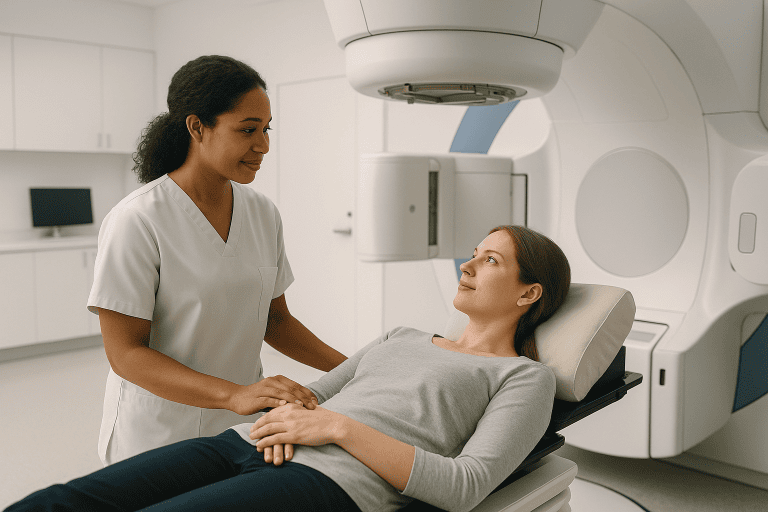
Radiation therapy uses focused high-energy beams to destroy cancer cells. It may be combined with chemotherapy in some treatment plans, or used to relieve symptoms such as pain or bleeding in advanced disease.
Supportive and palliative care
Palliative care focuses on relieving symptoms and improving quality of life at any stage of illness, not only at the end of life. It can include pain management, nutritional support, procedures to keep the stomach or intestine open (such as stents), and psychological support. For some people with slow-growing tumors or significant other health problems, doctors may recommend a period of careful monitoring, sometimes called watchful waiting, rather than immediate aggressive treatment, weighing potential benefits against risks. This decision is always individualized and made together with the care team.
Living with stomach cancer and outlook
The outlook for stomach cancer varies widely and depends mainly on the stage at diagnosis, the tumor type, and how well it responds to treatment. In general, cancers found at an early stage, before they have grown deeply into the stomach wall or spread to lymph nodes, have a considerably better outlook than cancers found later. Because early disease often causes few symptoms, many stomach cancers are diagnosed at a more advanced stage, which makes treatment more challenging. No doctor can promise a specific outcome for an individual, and statistics describe groups of patients rather than any one person.
Life after stomach surgery involves adjustments. People who have had part or all of the stomach removed usually need to eat smaller, more frequent meals, chew food thoroughly, and sometimes take vitamin B12 supplements, because the stomach normally helps absorb this vitamin. Some patients experience dumping syndrome, a group of symptoms such as cramping, nausea, or dizziness after eating, which can often be managed with dietary changes. A dietitian can help build a suitable eating plan.
Follow-up care typically includes regular visits, blood tests, and imaging or endoscopy at intervals set by the care team, so that any recurrence or complication can be detected and addressed early. Emotional support matters as well: anxiety, low mood, and fatigue are common during and after cancer treatment, and counseling or support groups can help many patients and families cope.
Frequently asked questions
What is stomach cancer in simple terms?
Stomach cancer is a disease in which cells in the lining of the stomach grow abnormally and form a tumor. Over time, these cells can invade deeper layers of the stomach and spread to lymph nodes or other organs. Most cases begin in the gland cells of the inner stomach lining and are called adenocarcinomas.
Can stomach cancer be cured?
In many cases, stomach cancer that is found at an early stage can be treated with the goal of cure, usually through surgery, sometimes combined with chemotherapy or other treatments. When the cancer is more advanced, treatment often focuses on controlling the disease and relieving symptoms rather than curing it. Outcomes vary from person to person, and your medical team can explain what is realistic in your situation.
How serious is stomach cancer?
Stomach cancer is a serious diagnosis, and its seriousness depends largely on the stage at which it is found. Early-stage tumors confined to the stomach lining generally have a much better outlook than tumors that have spread. Because early symptoms are often mild or absent, timely evaluation of persistent digestive complaints is important.
What are the first warning signs of stomach cancer?
Early stomach cancer symptoms are often subtle and may include persistent indigestion, mild upper abdominal discomfort, feeling full quickly, loss of appetite, or unexplained tiredness. These symptoms are far more often caused by benign conditions, but if they persist for more than a few weeks or are accompanied by weight loss or bleeding, they should be checked by a doctor.
How is stomach cancer diagnosed?
Stomach cancer diagnosis is confirmed by an upper endoscopy, in which a camera is passed into the stomach and small tissue samples are taken. A pathologist examines the samples to confirm cancer. Scans such as CT, and sometimes endoscopic ultrasound or laparoscopy, are then used to determine the stage of the disease and plan treatment.
How long is recovery after stomach cancer surgery?
Recovery varies with the type of operation and the person’s overall health. Hospital stays after gastrectomy typically last from several days to a couple of weeks, and full recovery, including adjusting to new eating patterns, often takes several months. Your surgical team will give guidance tailored to your operation and progress.
Can stomach cancer be prevented?
There is no certain way to prevent stomach cancer, but risk can often be reduced. Treating Helicobacter pylori infection when it is found, not smoking, limiting alcohol, keeping a healthy weight, and eating a diet rich in fruits and vegetables while limiting heavily salted and smoked foods may all lower risk. People with a strong family history may benefit from discussing genetic counseling and surveillance with their doctor.
When to see a doctor
Many digestive symptoms have harmless causes, but some warning signs need prompt medical attention. See a doctor without delay if you experience any of the following:
- Vomiting blood, or vomit that looks like coffee grounds
- Black, tarry, or bloody stools
- Unintentional weight loss without an obvious explanation
- Difficulty or pain when swallowing
- Persistent vomiting or inability to keep food down
- Indigestion, heartburn, or upper abdominal pain that lasts more than a few weeks or keeps returning
- Feeling full very quickly at meals, especially if this is new for you
- New or worsening fatigue, paleness, or breathlessness that could suggest anemia
- A noticeable lump or swelling in the upper abdomen, or increasing abdominal bloating
These symptoms do not necessarily mean you have stomach cancer, but they should always be evaluated by a healthcare professional. If you are over 50, have a family history of stomach cancer, or have a known condition affecting the stomach lining, it is especially important not to ignore persistent digestive symptoms. Early evaluation gives doctors the best chance to identify the cause and, if cancer is found, to treat it at the earliest possible stage.
Medically reviewed by the Acıbadem International Medical Board September 3, 2026
See our medical review board →
Update history
- PublishedJune 14, 2026
- Medical review approvedSeptember 3, 2026
- Last content updateSeptember 2, 2026