

Fat Grafting Recovery: Protecting the Grafted Area While the Donor Site Heals
Key Takeaways
- Grafted fat has no blood supply on arrival and depends on new capillaries growing toward it in the first weeks, which is why pressure, heat and nicotine are restricted.
- The NHS describes a typical return to work about two weeks after liposuction and to exercise about four weeks, with the final result taking up to six months to appear.
- The fullness seen in the first week is swelling plus fat that will not all survive; the stable result is judged at several months, not days.
- Compression garments support the liposuction donor site but must never press on a grafted area, and the two sites need opposite handling.
- Gentle, frequent walking from the first day lowers clot risk without loading the graft, while lying completely still raises the risk of deep vein thrombosis.
- Grafted fat responds to weight change like any other fat, so surgeons usually ask for a stable weight before surgery and steady eating afterward.
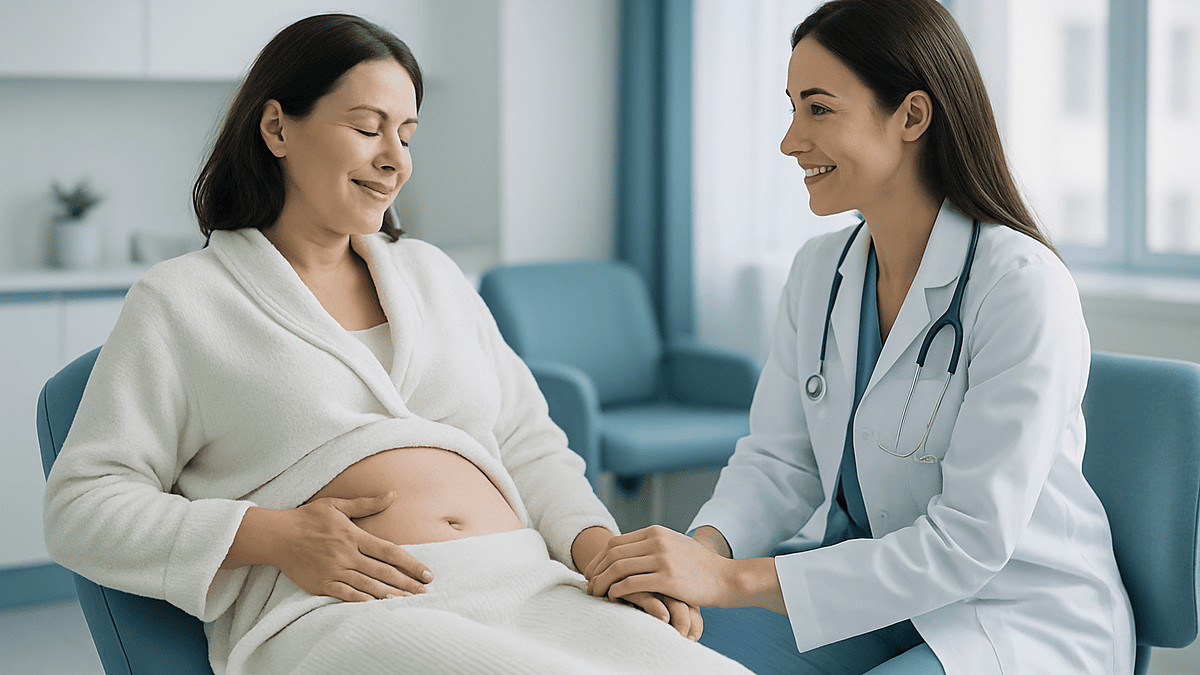
Fat grafting recovery runs on two tracks at once: the grafted area needs protection from pressure, heat and movement while transplanted fat cells form a new blood supply, and the liposuction donor site needs compression, gentle walking and time for bruising and swelling to settle. Most people return to desk work within about two weeks, with final contours judged at several months, though timelines vary and your surgical team sets the plan.
The instructions arrive on two sheets of paper. One says to keep the compression garment snug and walk a little every hour. The other says not to lie on the treated area, not to let anything press against it, and to skip the sauna. The person reading them is home from surgery, sore in two places, and wondering how to follow both at the same time. That is the everyday puzzle of fat grafting recovery: one part of the body is being asked to heal from harvesting, while another is being asked to accept a delicate transplant.
Fat grafting, sometimes called fat transfer, moves a person’s own fat from one place to another. It is used in the face, breasts, buttocks, hands and in reconstruction after cancer surgery. Because the procedure has a donor side and a recipient side, the aftercare is genuinely different from ordinary liposuction or ordinary filler.
This explainer walks through what actually happens to grafted fat, what the evidence says about timelines, and which habits protect the result. Every decision still sits with your treating team.
What fat grafting involves, and why recovery has two fronts
Fat grafting begins with liposuction. Liposuction is a procedure that removes fat through small incisions using a thin hollow tube called a cannula. A surgeon picks a donor site with spare fat, often the abdomen, flanks or thighs, and harvests tissue under local or general anesthesia. The harvested material is then processed to separate intact fat cells from blood, oil and the fluid injected during harvesting. Finally, the purified fat is placed into the recipient area in many small threads or droplets using fine cannulas.
That final step explains almost everything about the recovery rules. Grafted fat has no blood supply of its own when it arrives. For the first days it survives by soaking up nutrients from surrounding tissue, a process surgeons call imbibition, which simply means absorbing fluid from nearby cells. New capillaries then grow toward each droplet. Cells that sit too far from a blood vessel, or that are squeezed, jostled or starved of oxygen, do not survive. The body absorbs them, which is why a portion of grafted volume is expected to fade in the first months, as patient guidance from the Cleveland Clinic and Mayo Clinic notes.
Meanwhile the donor site is a wound of a different character. Liposuction leaves a layer of disrupted tissue under intact skin, with tunnels where fat used to be. Fluid collects, bruising spreads, and the skin needs to settle back onto the tissue beneath. Compression, movement and drainage are the priorities there.
So recovery asks for opposite behaviors in two places: firm, steady support on one side and a light touch on the other. Understanding why makes the instructions easier to follow, and easier to ask about when something is unclear.
How long does it take to heal from fat grafting?
The honest answer is that healing happens in layers, and each layer runs on a different clock. Discomfort peaks in the first two to three days. Bruising is usually most visible in the first week and fades over the following weeks. Swelling lasts longer than most people expect, particularly in the face and buttocks. The NHS notes that after liposuction, people commonly return to work after about two weeks and return to exercise after about four weeks, while the final result may take up to six months to show as swelling resolves. Mayo Clinic guidance describes swelling that subsides within a few weeks and a contour that continues to settle over several months.
For the grafted area, add one more timeline: graft take. Graft take is the proportion of transplanted fat that survives and stays. It is largely decided within the first few weeks, when blood vessels either reach the fat cells or do not. What remains at roughly three months is close to what will remain long term, though small changes can continue as swelling leaves and scar tissue softens. Cleveland Clinic patient information suggests judging the final outcome at around six months.
A practical way to think about it:
- Days 1–3: soreness, tightness, early swelling; short walks only.
- Week 1–2: bruising peaks then fades; many people return to light work.
- Weeks 3–6: swelling steadily improves; graded return to activity as your team allows.
- Months 3–6: contours settle; the remaining graft is largely stable.
These ranges are typical, not promises. People who have larger-volume grafting, multiple donor sites, or combined procedures such as a facelift tend to sit at the longer end. Your surgeon’s own follow-up schedule is the timeline that matters.
Why the first days matter most for grafted fat
Picture a freshly planted seedling. Water it too hard and the roots wash out; step on it and it is gone. Grafted fat in its first week is similar. Each tiny parcel of transplanted cells is waiting for capillaries to arrive, and the distance those new vessels have to travel is measured in fractions of a millimeter. Anything that widens that gap or cuts oxygen delivery reduces the number of cells that survive.
Three things threaten the graft in this window. The first is mechanical pressure. Sitting directly on a grafted buttock, sleeping face-down after facial grafting, or wearing a tight underwire over a grafted breast compresses the tissue, flattens the delicate new vessels and can physically shift fat. The second is heat and swelling. Saunas, hot baths and heavy exertion increase blood flow and swelling in a way that can strain fragile tissue, and swelling itself raises pressure inside the graft. The third is reduced oxygen. Nicotine constricts blood vessels, and carbon monoxide from smoke lowers the oxygen carried by blood. Both are well documented to impair wound healing in general surgical guidance, and surgeons apply the same logic to fat grafts.
What helps is unglamorous: keeping the area still, cool and unloaded; sleeping in the position your team suggests; eating regularly rather than restricting, because fat cells recovering from transplant need energy; and staying well hydrated. Some surgeons ask patients to avoid vigorous facial expressions or chewing tough foods after facial grafting for a few days for the same reason.
The evidence on exactly how much each factor changes graft survival is limited and mostly comes from small studies and laboratory work. What is consistent across published guidance is the direction of the effect: less pressure, less heat, more oxygen, better take. That is the principle behind every rule on the recipient-side instruction sheet.
Protecting the grafted area: pressure, position and sleep
The single most useful habit after fat grafting is learning where your body weight goes when you are not thinking about it. People do not usually damage a graft on purpose; they roll over in sleep, sink into a car seat, or lean an elbow on a grafted hand. Planning for those moments protects the result more reliably than any product.
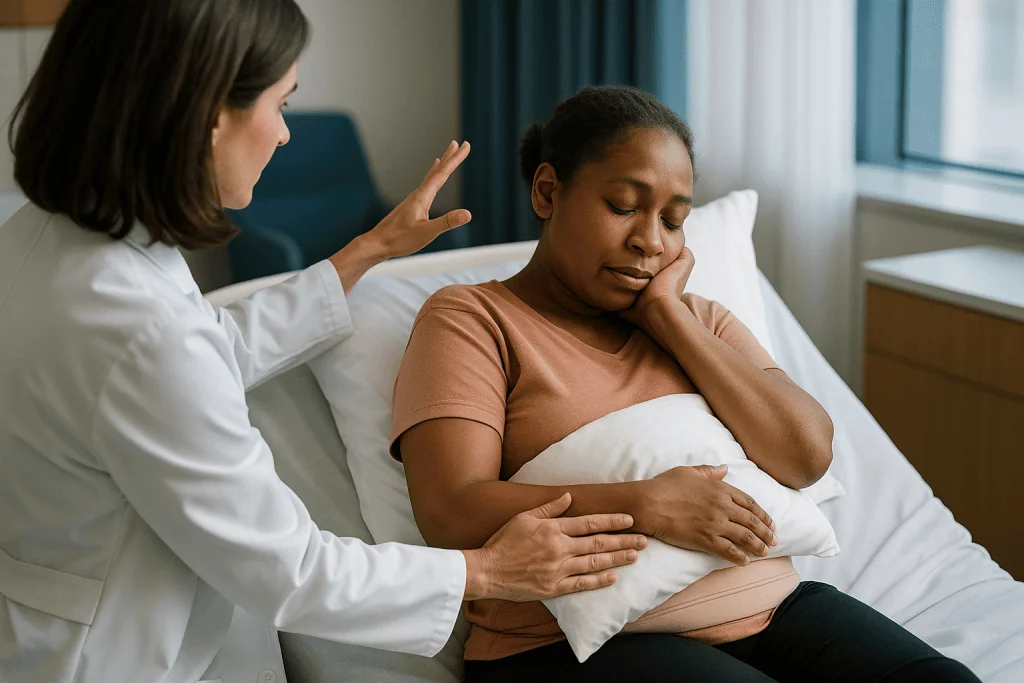
After buttock grafting, surgeons commonly ask patients to avoid sitting directly on the area for a period they specify, often using a cushion that shifts weight to the thighs when sitting is unavoidable, and to sleep on the stomach or side. After breast grafting, the usual advice is a soft, supportive bra without underwire and no pressure from bags or seatbelt straps across the grafted tissue. After facial grafting, sleeping on the back with the head elevated on two or three pillows reduces swelling, and the face should not be pressed into a pillow. Hand grafting calls for light use and no gripping heavy objects for a while.
Massage deserves a specific mention because it is a real point of confusion. Lymphatic drainage massage is sometimes recommended for liposuction donor sites to move fluid along. The grafted area is different: rubbing, kneading or shaping it in the early weeks can displace fat and disrupt new vessels. Unless your surgeon explicitly tells you otherwise, the recipient area is a no-touch zone.
Cold packs are another gray area. A cool compress wrapped in cloth may ease early facial swelling, but direct ice on grafted tissue can restrict the blood flow the graft depends on. Follow the specific instruction you were given rather than a general rule from the internet.
Lastly, clothing. Anything with seams, elastic or straps that cross the graft should be set aside for now. Loose, soft fabrics are the friend of a healing graft.
Caring for the liposuction donor site
The donor site tends to hurt more than people expect, precisely because it is the part they were not thinking about. Harvesting fat leaves a sore, bruised region that feels tight and tender, a bit like a deep muscle bruise after a fall. MedlinePlus and Mayo Clinic both describe swelling, bruising, numbness and soreness as expected after liposuction, along with some leakage of pinkish fluid from the small incisions in the first day or two.
Compression is the mainstay of donor-site care. A compression garment is an elastic sleeve, vest or shorts that applies firm, even pressure. It limits swelling, reduces fluid pockets and encourages the loosened skin to settle against the tissue below. The NHS advises that a support garment or bandages are usually worn for a few weeks after liposuction; the exact duration, and whether it is worn day and night, comes from your surgical team. A garment that is too tight, that creases into the skin or that presses on a grafted area is worth reporting rather than enduring.
Small incisions usually need little more than keeping them clean and dry, changing any absorbent pads as instructed, and watching for spreading redness. Some surgeons leave incisions unstitched to allow fluid to drain in the first day; others close them. Either approach is standard.
Bruising migrates. It often tracks downward with gravity, so a flank harvest can produce a purple patch on the hip or thigh days later. That is normal spread of blood under the skin, not new injury. Numbness or odd tingling over the donor site is also common and, per Mayo Clinic guidance, usually improves over weeks to months, though it can occasionally persist.
Gentle walking helps the donor site as much as it helps the rest of the body. It moves fluid, reduces stiffness and lowers clot risk. What the donor site does not need is heavy lifting, twisting or high-impact exercise until your team clears it.
How long does it take for skin to reattach after liposuction?
People ask this in different words: why does the skin feel loose, why does it ripple when I move, when will it lie flat again. The mechanism is straightforward. Liposuction creates a network of tunnels between the skin and the deeper tissue. In the first weeks, those tunnels fill with fluid and inflammatory cells, then gradually with scar tissue that knits the layers back together. Compression holds the skin against that healing surface so it reattaches smoothly rather than over a pocket of fluid.
There is no single moment when skin snaps back into place. Firmness under the skin, sometimes described as woodiness or lumpiness, is common in the first one to two months and softens as scar tissue matures. The NHS notes that the final result of liposuction may not be visible for up to six months, and Mayo Clinic guidance describes the treated area continuing to look leaner as swelling subsides over several months. Skin quality shapes the outcome: skin with good elasticity contracts more fully, while skin that has been stretched by pregnancy, significant weight change or age may retract less, which is one reason surgeons assess skin tone before agreeing to harvest from a particular site.
A seroma is a pocket of clear fluid that collects under the skin when the layers do not close together. It feels like a soft, sometimes sloshing swelling. Mayo Clinic lists seromas among recognized liposuction complications. Small ones often resolve on their own with compression; larger ones may need to be drained with a needle by the surgical team. Reporting a new, enlarging soft swelling early is better than waiting.
Lymphatic drainage massage of the donor site is offered in some practices to move fluid and reduce firmness. Evidence for its effect on final contour is limited, and it should never extend to a grafted area. Ask your team whether they recommend it, and if so, when to start.
What to avoid after fat grafting
Some restrictions after fat grafting are about comfort. The ones below are about preserving the graft and preventing complications, which is why surgeons tend to be firm about them.
Nicotine in any form ranks first. Cigarettes, vaping, patches and pouches all deliver nicotine, which narrows blood vessels and reduces the oxygen reaching healing tissue. Smoking also raises the risk of wound infection and poor healing after surgery in general, a point made consistently by the NHS and Mayo Clinic in their surgical guidance. Most surgeons ask people to stop for a period before and after surgery; the length is their call. If you are struggling to stop, say so, because support is available and pretending is riskier than asking.
Pressure on the graft comes second, covered in detail above. Third is heat: saunas, steam rooms, hot tubs and sunbathing in the early weeks increase swelling and can stress fragile tissue. Fourth is vigorous exercise. The NHS suggests about four weeks before returning to exercise after liposuction; grafting often lengthens that, and the return is usually graded from walking to light cardio to resistance work.
Rapid weight loss is a quieter threat. Grafted fat behaves like the fat it came from. If a person loses a significant amount of weight after surgery, the graft shrinks along with the rest. Crash dieting in the recovery period also deprives healing tissue of the energy it needs. Steady, adequate eating is the goal.
Other items on most lists: soaking incisions in baths or pools until they are sealed; alcohol in the first days, which can worsen swelling and interact with prescribed medicines; and starting or stopping any medicine or supplement without checking with the prescribing clinician, since some affect bleeding or bruising. When in doubt about an activity, the question to ask is simple: does this press, heat, jostle or starve the graft?
Walking, clots and getting moving safely
Resting completely feels sensible after surgery. It is also one of the more hazardous things a person can do. Immobility after any operation raises the risk of deep vein thrombosis, a blood clot that forms in a deep vein, usually in the leg. If part of a clot breaks away and travels to the lungs, it causes a pulmonary embolism, which can be life-threatening. The NHS and CDC both list recent surgery and prolonged sitting or lying down as recognized risk factors.
Fat grafting carries a particular tension here. Someone who has had buttock grafting is told not to sit; the temptation is to lie still for days. The safer pattern is short, frequent walks around the home from the first day, as your team advises, with lying down in the recommended position between them. Standing and walking load the thighs and calves, not the graft, and keep blood moving through the legs.
Calf exercises while lying down, such as pointing and flexing the feet, help when walking is not possible. Drinking enough fluid matters too, because dehydration thickens blood. Some surgeons prescribe medicines that reduce clotting for higher-risk patients; how they work and how long they are used is a decision for the prescribing clinician based on individual risk.
Long car or plane journeys in the early recovery period combine two risk factors, sitting and immobility, and after buttock grafting they add pressure on the graft. Surgeons commonly ask people to delay long travel and, when it is unavoidable, to stand and walk regularly, keep hydrated and use any positioning aids they recommend. The NHS advises seeking urgent help for a swollen, painful, warm or discolored leg, and emergency help for sudden breathlessness or chest pain.
Movement, in other words, is not the enemy of the graft. Pressure and strain are. Gentle walking sits on the right side of that line.
Fat grafting recovery week by week
No two recoveries are identical, and combined procedures shift everything later. The table below summarizes what patient guidance from the NHS, Mayo Clinic and Cleveland Clinic describes as typical after liposuction and fat transfer, with the two sites side by side. Treat it as orientation, not a schedule; your team’s instructions override it.
| Phase | Grafted area | Donor site | Typical guidance |
|---|---|---|---|
| Days 1–3 | Swollen, may look overfilled; tender | Sore, bruised; fluid may leak from incisions | Short frequent walks; no pressure on graft; compression garment on donor site as instructed |
| Days 4–7 | Swelling near its peak, especially face | Bruising spreads and darkens | Keep incisions clean and dry; sleep in recommended position |
| Weeks 2–3 | Swelling easing; early volume loss as some fat is reabsorbed | Bruising fading to yellow; firmness under skin | Many return to desk work; light daily activity |
| Weeks 4–6 | Shape becoming clearer; graft take largely decided | Skin settling; lumpiness softening | Graded return to exercise if cleared; garment schedule often reduced |
| Months 3–6 | Remaining volume largely stable | Contour settling; numbness usually improving | Follow-up review; final result assessed around six months |
Two patterns in this table surprise people. The first is that the grafted area looks fullest in the first week and then loses volume. That early fullness is swelling plus fat that will not survive, and its departure is expected rather than a sign of failure. The second is that the donor site can feel worse in week two than week one, as bruising declares itself and firmness sets in, even though healing is progressing.
Follow-up visits usually cluster in the first two weeks, then spread out. Bring questions to those appointments; small concerns caught early are easier to manage.
Who is usually a candidate, and who is asked to wait
Fat grafting is offered to adults who want to restore or add volume using their own tissue, in settings that range from facial rejuvenation and breast or buttock enhancement to reconstruction after breast cancer surgery, correction of contour deformities and improvement of scars. Cleveland Clinic and Mayo Clinic guidance describes candidates as people in generally good health, at a stable weight, with realistic expectations and enough donor fat to harvest. That last point rules out some very lean individuals.
Stable weight matters for two reasons. The donor site needs enough fat to work with, and the graft needs a predictable environment afterward. Someone planning significant weight loss is often asked to reach and hold a target first, because grafted fat shrinks and grows with the rest of the body.
Several groups are commonly asked to wait or to consider other options:
- People who smoke or use nicotine, until they have stopped for the period their surgeon specifies, because nicotine impairs healing and graft survival.
- People with uncontrolled diabetes, active infection, or bleeding disorders, until those are managed with their medical team.
- People who are pregnant, breastfeeding, or planning pregnancy soon, since body composition will change.
- People with poor skin elasticity at the proposed donor site, where liposuction could leave loose skin.
- People whose expectations do not match what a graft can realistically deliver in one session, since some volume loss is expected and touch-ups are sometimes discussed.
For breast grafting, surgeons also consider breast cancer screening. Grafted fat can form small cysts or calcifications that appear on mammograms; radiologists can usually distinguish them, but a baseline mammogram and a clear record of the procedure are often recommended. Anyone with a personal or strong family history of breast cancer should raise it in consultation.
Being asked to wait is not a rejection. It usually reflects an assessment that the odds of a smooth recovery and a lasting result are better once something changes.
Risks, complications and alternatives in plain language
Fat grafting uses a person’s own tissue, which removes the risk of allergic reaction to a foreign material. It does not remove surgical risk. Mayo Clinic and MedlinePlus list the recognized complications of liposuction: bleeding, infection, fluid pockets called seromas, contour irregularities such as dents or waviness, numbness that is usually temporary but can persist, skin discoloration, and rarely fat embolism, where fat enters the bloodstream and lodges in the lungs. Damage to deeper structures is rare but recognized.
The graft itself adds a few possibilities. Some fat cells die and form oil cysts, which are small fluid-filled pockets, or firm lumps called fat necrosis; these are usually harmless but can be felt and may need imaging to distinguish from other lumps, particularly in the breast. Asymmetry can result if one side takes better than the other. Over- or under-correction occurs because the amount of graft that survives varies from person to person and cannot be predicted precisely.
Buttock fat grafting has a specific safety issue. Fat injected into or beneath the buttock muscle can enter large veins and travel to the lungs; this has caused deaths and led surgical societies to recommend injecting only into the fat layer above the muscle. Asking a surgeon about their technique on this point is reasonable and expected.
Alternatives depend on the goal. For facial volume, injectable fillers made of hyaluronic acid, a gel that attracts water, offer a temporary, non-surgical option. For breast or buttock volume, implants provide a predictable amount that does not shrink, with their own long-term considerations. For reconstruction, tissue flaps and implants are established routes. Doing nothing is also a legitimate choice.
Which option fits depends on anatomy, health, goals and tolerance for a second session. That conversation belongs with the treating team, who can weigh the trade-offs against your individual situation.
What people often get wrong about fat grafting recovery
Myths around this procedure spread fast because the early appearance is so misleading. Here are the corrections that matter most.
The first myth is that the fullness seen in the first week is the result. It is not. The early volume is swelling plus fat that has not yet been tested by the healing process. Some of it will be reabsorbed, as Cleveland Clinic and Mayo Clinic guidance both note, and the true outcome appears over months. Comparing week-one photographs with month-six photographs, and calling the difference failure, misreads the biology.
The second is that eating more fat helps the graft. Grafted cells need adequate calories and protein like any healing tissue, but there is no evidence that a high-fat diet feeds the graft specifically. Steady, balanced eating and avoiding crash dieting is the reasonable position.
The third is that massage helps everything heal. Lymphatic massage may be suggested for the donor site. On the grafted area it can displace fat and damage new vessels. The two sites need opposite handling.
The fourth is that a little nicotine is fine once the incisions have closed. Nicotine constricts vessels regardless of whether the skin is intact, and the graft depends on those vessels for weeks.
The fifth is that lying still is the safest recovery. Immobility raises clot risk. Walking, done gently and often, is part of the treatment.
The sixth is that grafted fat is permanent in the sense of being unchangeable. Fat that survives is long-lasting, but it responds to weight change and aging like any other fat. A large weight loss will shrink it; a gain will enlarge it, sometimes unevenly.
The last is that a longer or more intense compression garment schedule always produces a better result. Compression supports the donor site, but excessive pressure, or any pressure on the graft, does harm. The right amount is the amount your surgeon specifies.
Questions to ask your care team
A consultation is short and surgery is stressful. Writing questions down beforehand, and bringing someone to listen, helps. The following are the questions that tend to change how a recovery goes, phrased so you can use them directly.
- Where exactly will you place the fat, and for buttock grafting, will it be placed only above the muscle?
- How much of the graft do you typically expect to remain, based on your own patients, and how will we judge whether a second session is worth discussing?
- Which positions are safe for sleeping and sitting, for how long, and what should I use if I must sit?
- How long should I wear the compression garment, day and night or day only, and how do I know if it is too tight?
- What is your specific instruction on nicotine, before and after, including vaping and patches?
- When can I shower, bathe, swim, drive and return to work?
- When do you clear walking, light cardio and resistance training?
- Do you recommend lymphatic massage for the donor site, and when should it start?
- What will the donor site look like at two weeks and two months, and what would make you want to see me sooner?
- For breast grafting, should I have a mammogram before surgery, and how will future screening be handled?
- Which medicines and supplements should I pause or continue, and who do I call about that?
- Who do I contact at night or on a weekend if something worries me, and what number do I use?
Notice that several of these ask for the surgeon’s own experience rather than a general statistic. Published ranges for graft retention are wide, and the most relevant number is the one a specific surgeon sees with a specific technique. A team that answers these questions plainly, including the uncomfortable ones about complications and repeat procedures, is giving you what you need to plan the weeks ahead.
When to call your doctor
Most of what people feel after fat grafting is expected: soreness, tightness, bruising that spreads and changes color, numb patches, small amounts of pinkish fluid from incisions in the first day or two. Knowing what is not expected lets you act quickly without worrying over every ache.
Contact your surgical team the same day if you notice any of the following:
- Spreading redness, warmth or increasing pain around an incision, or fluid that becomes cloudy, thick or foul-smelling, which can indicate infection.
- A fever, chills or feeling generally unwell.
- A new, enlarging soft swelling at the donor site that feels like it contains fluid, which may be a seroma needing assessment.
- One area of the graft or donor site that becomes markedly harder, hotter or more painful than the surrounding tissue.
- Skin over any treated area that turns dusky, purple-black or very pale and cold, which can signal poor blood supply.
- Bleeding that soaks through dressings and does not slow with gentle pressure.
- Pain that is getting worse rather than better after the first few days, or pain not eased by the medicines you were prescribed.
Call emergency services immediately, do not wait for the clinic, if you develop sudden shortness of breath, chest pain, coughing up blood, a racing heartbeat, fainting or confusion. These can indicate a pulmonary embolism from a blood clot or, rarely after fat grafting, a fat embolism, and both need urgent treatment. A swollen, painful, warm or discolored calf or thigh should also be assessed urgently, as the NHS advises, because it may be a deep vein thrombosis.
Trust the instinct that something is off. Surgical teams would far rather hear about a false alarm than learn about a real problem a day late. Keep the contact number they gave you somewhere you can find it in the dark.
Frequently asked questions
How long does it take to heal from fat grafting?
Soreness settles over the first week, bruising fades over two to three weeks, and swelling improves over one to two months, with the final result usually judged at around six months according to NHS and Cleveland Clinic guidance. Graft survival is largely decided in the first few weeks. Larger volumes or combined procedures tend to extend these ranges, and your surgical team gives the timeline that applies to you.
What is a typical fat transfer recovery time before returning to work?
Many people return to desk-based work about two weeks after liposuction, the NHS notes, and fat grafting often follows a similar pattern for the donor side. The grafted area may need longer protection, especially if the job involves sitting on a grafted buttock or heavy physical work. Ask your surgeon for a return-to-work date based on your role and the areas treated.
What to avoid after fat grafting?
Avoid nicotine in any form, direct pressure on the grafted area, heat such as saunas and hot tubs, vigorous exercise until cleared, massage of the graft, rapid weight loss, and soaking incisions before they seal. Each of these either compresses the graft, increases swelling or reduces the oxygen it needs. Do not start or stop any medicine or supplement without checking with the prescribing clinician.
How long does it take for skin to reattach after liposuction?
Skin settles back onto the underlying tissue gradually as fluid clears and scar tissue knits the layers together, with firmness under the skin common for one to two months and the final contour taking up to six months per NHS guidance. Compression garments help the skin reattach smoothly. A soft, enlarging swelling may be a seroma and should be reported to your team.
What should I do to recover quickly after liposuction on the donor side?
Wear the compression garment as instructed, walk gently and often, keep incisions clean and dry, stay hydrated, eat regular balanced meals and avoid nicotine. Report a tight or creasing garment rather than enduring it. There is no shortcut that speeds biology, but these habits reduce swelling, fluid pockets and clot risk, which is what allows recovery to proceed without setbacks.
How does liposuction donor site healing differ from the grafted area?
The donor site is a bruised, fluid-filled zone under intact skin that benefits from firm, even compression and movement. The grafted area contains fragile transplanted cells waiting for a blood supply and must not be compressed, heated or massaged. In practice this means one part of the body wears a snug garment while another is kept free of any pressure, and instructions for each should be followed separately.
What does good fat transfer aftercare look like for the face?
Sleep on your back with the head raised on pillows, avoid pressing the face into anything, skip vigorous chewing and strong facial expressions for the first days as your team advises, and use only cool compresses wrapped in cloth if permitted. Facial swelling often peaks around day three to five and then improves. Expect the early fullness to reduce as swelling and non-surviving fat resolve.
Why does the grafted area look smaller after a few weeks?
Some transplanted fat cells do not connect to a blood supply and are reabsorbed by the body, and early swelling also drains away, so volume decreases from the first-week peak. Cleveland Clinic and Mayo Clinic guidance describe this partial reabsorption as expected. The amount that remains at roughly three months is close to the long-term result, and surgeons sometimes discuss a second session if more volume is wanted.
Can I sit after buttock fat grafting?
Surgeons typically ask people to avoid sitting directly on the grafted area for a period they specify, using a cushion that shifts weight onto the thighs when sitting is unavoidable, and to sleep on the stomach or side. Direct pressure can flatten new blood vessels and shift fat. Walking is encouraged because it loads the legs rather than the graft and lowers clot risk.
Is fat grafting permanent?
Fat that survives the first few months is long-lasting, but it behaves like the fat it came from and changes with weight gain, weight loss and aging. A large weight loss will shrink the graft, sometimes unevenly. Stable weight before and after surgery gives the most predictable result, which is why surgeons commonly ask people planning major weight change to wait.
References
This article is for general information only and is not a substitute for professional medical advice. Please consult a qualified doctor about your individual situation.

More from the Blog
Inner vs Outer Thigh Lift: Which Incision Pattern Suits Which Kind of Loose Skin
An inner (medial) thigh lift removes loose skin along the inside of the thigh through an incision hidden in the groin crease, sometimes extended…
How Lipedema Is Diagnosed: The Exam, Imaging and Staging That Shape a Treatment Plan
Lipedema is diagnosed clinically. A clinician takes a detailed history of when the fat pattern began, examines the limbs for symmetrical, tender, easily bruised…
HD Liposculpture Results: Why Definition Takes Months to Appear and How Weight Changes It
HD liposculpture results usually take months to fully appear because swelling, bruising and early healing tissue hide the thin, sculpted fat layer that creates…

Preparing for Vaginoplasty: The Pelvic Exam, Blood Work and Habits to Pause Beforehand
Preparing for vaginoplasty usually involves a pelvic and genital examination, routine blood tests such as a blood count, kidney and liver measures, blood sugar…
Is Tumescent Liposuction Right for You? Small Areas, Stable Weight and Honest Limits
Tumescent liposuction is usually considered for adults at or near a stable, healthy weight who have a few well-defined fat pockets that have not…
Is Classic Liposuction Right for You? Skin Elasticity, Stable Weight and Realistic Areas
A typical classic liposuction candidate is an adult at or near a stable weight for several months, with localized fat pockets that resist diet…