

Gastric Sleeve Results Over the Years: What Realistic Long-Term Expectations Look Like

Key Takeaways
- Mayo Clinic describes losing 60 percent or more of excess weight within two years of a sleeve gastrectomy as possible, with the lowest weight usually reached in the second year.
- The removed part of the stomach produces much of the hunger hormone ghrelin, which is why appetite drops sharply early and can partially return later.
- Weight regain after the second year is a recognized part of the natural history, and Mayo Clinic notes it is possible after any type of weight-loss surgery.
- Reflux disease can appear or worsen years after a sleeve and is one of the main reasons some sleeves are later converted to gastric bypass.
- The NHS advises lifelong vitamin and mineral supplements and lifelong follow-up because deficiencies in B12, iron, vitamin D, folate and calcium develop silently.
- The NHS recommends avoiding pregnancy for the first 12 to 18 months after weight-loss surgery, when weight and nutrition are changing fastest.
Gastric sleeve results long term typically show the largest weight loss in the first one to two years, with a partial regain for many people afterwards. Mainstream sources describe losing 60 percent or more of excess weight within two years, but the durability of that loss depends on lifelong follow-up, nutrition habits, physical activity and managing reflux or vitamin issues that can appear years later.
The photo that usually gets shared is the one taken eighteen months after surgery. Fewer people share the one taken at year six, when the jeans fit a little differently and the appointment reminders have thinned out. Someone considering a sleeve gastrectomy today is really asking about that second photo: not whether the operation works at the start, but what gastric sleeve results long term honestly look like once the early momentum settles.
It is a fair question, and the evidence has a fairly clear answer, if a less tidy one than a testimonial. A sleeve changes the stomach permanently, but appetite, habits, hormones and life keep changing too. Weight tends to fall steeply, level off, then drift upward for a proportion of people. Some conditions improve dramatically; a few new problems, reflux chief among them, can surface years down the road.
This explainer walks through that arc year by year, separates what studies show from what forums promise, and leaves every clinical decision where it belongs: with the treating team.
What do gastric sleeve results long term actually measure?
Before comparing numbers, it helps to know which number is being quoted, because two people can describe the same outcome very differently. Surgeons and researchers use two main yardsticks. Excess weight loss is the share of the weight above a healthy target that a person has lost; total weight loss is the share of the starting body weight lost. A person who begins at 300 pounds with a target of 170 has 130 pounds of “excess” weight. Losing 78 pounds would be 60 percent excess weight loss but only 26 percent total weight loss. Same result, two very different-sounding figures.
Mainstream sources use both. Mayo Clinic describes that it is possible to lose 60 percent or more of excess weight within two years of a sleeve gastrectomy. The National Institute of Diabetes and Digestive and Kidney Diseases frames bariatric outcomes as roughly 15 to 30 percent of starting weight, depending on the procedure. Read side by side, those statements agree; they are simply measuring from different ends of the ruler.
“Long term” also needs defining. In surgical research it usually means five years or more after the operation, which is the point where most short-term studies have stopped following people and where the honest picture gets harder to find. Averages from those studies hide a wide spread: some people keep nearly all of their loss, others regain a substantial portion, and most land somewhere between.
One more distinction matters for expectations. Weight is only one outcome. Blood sugar control, blood pressure, sleep apnea, joint pain and mobility are tracked separately, and they do not always move in lockstep with the scale. A person can regain some weight and still have far better diabetes control than before surgery. Keeping that in mind makes the later years easier to judge fairly.
How the gastric sleeve works, and why its effect changes over time
A sleeve gastrectomy is an operation that removes roughly the outer three quarters of the stomach, leaving a narrow tube, or sleeve, about the size and shape of a banana. It is performed through several small incisions using a camera and long instruments, a technique called laparoscopy. The removed portion is taken out of the body, which is why the procedure cannot be reversed, a point Mayo Clinic makes plainly.
Two mechanisms drive the early results. The first is mechanical: a smaller stomach holds less, so a modest portion produces a sense of fullness. The second is hormonal, and it is the part people tend to underestimate. The removed portion of the stomach produces much of the body’s ghrelin, a hormone that signals hunger. After surgery, ghrelin levels fall, and many people describe the strange experience of simply not thinking about food for months. Gut hormones released after eating also shift, which is part of why blood sugar often improves before much weight has come off.
Neither mechanism is fixed forever. The sleeve can stretch modestly with time, particularly when large volumes are eaten regularly. Hormonal appetite signals partially recover in some people, and the brain adapts to the new normal. Habits that were held at bay by a lack of hunger, such as grazing, drinking calories or eating for stress, can return once hunger does.
Understanding this is not a reason for pessimism; it is the reason follow-up programs exist. The operation delivers a powerful biological head start, typically lasting one to two years according to Mayo Clinic’s description of the weight-loss window. What happens after that window depends heavily on what was built during it.
Who a gastric sleeve is usually for, and who is usually asked to wait
Eligibility is set by guidelines rather than by wish, and the treating team applies them case by case. Mayo Clinic describes sleeve gastrectomy as an option generally considered when body mass index is 40 or higher, or 35 to 39.9 with a serious weight-related health problem such as type 2 diabetes, high blood pressure or severe sleep apnea. Body mass index, or BMI, is a screening calculation that compares weight with height; it is a starting point for conversation, not a verdict on anyone’s health.
Most programs also look for something harder to measure: readiness. Surgery is offered to people who have usually tried structured, supervised approaches to weight and health first, who understand that the operation is one part of a lifelong plan, and who can commit to follow-up visits, supplements and dietary changes. The NHS notes that regular follow-up continues for the rest of a person’s life after weight-loss surgery.
Some people are asked to wait rather than being turned down. Common reasons include an active, untreated eating disorder, current heavy alcohol or substance use, an unstable mental health condition, uncontrolled medical problems that make anesthesia riskier, or pregnancy and plans to conceive soon. Waiting is not a judgment; it reflects evidence that outcomes are better when these issues are addressed first. A psychological assessment, dietitian sessions and medical optimization are standard parts of that preparation.
There are also situations where a different operation may be advised. Severe existing reflux disease, for instance, often steers teams toward gastric bypass rather than a sleeve, because a sleeve can worsen reflux. Only the surgical team, with the full history in front of them, can weigh those trade-offs.
How much weight loss can you expect after a gastric sleeve?
The honest answer comes in ranges, and any single number offered as a promise should raise an eyebrow. Mayo Clinic states that losing 60 percent or more of excess weight within two years is possible after sleeve gastrectomy, and its wording, “possible,” is deliberate. The NIDDK gives the broader bariatric picture as about 15 to 30 percent of starting body weight, depending on the type of surgery.
Translating those ranges into everyday terms: a person starting at 280 pounds might see the scale settle somewhere in the low 200s at the two-year mark, though the spread around that figure is wide. Starting weight, age, sex, metabolic health, medications and how closely the aftercare plan is followed all influence where an individual lands.
The pace is front-loaded. Loss is fastest in the first three to six months, when appetite is lowest and the diet is most restricted. It slows through the second half of the first year and commonly plateaus between one and two years, matching the window Mayo Clinic describes. Plateaus along the way are normal and are not a sign that the operation has failed.
Several factors are consistently linked with keeping more weight off in the long run:
- Attending scheduled follow-up appointments, including the years when everything feels fine.
- Protein-forward meals eaten slowly, with liquids kept separate from solids.
- Regular physical activity that preserves muscle as weight falls.
- Limiting liquid calories, alcohol and high-sugar snack foods, which slide easily through a sleeve.
- Early help for emotional eating, sleep problems or depression.
None of these guarantee an outcome. They shift the odds, which is the most any evidence-based explainer can honestly claim.
Gastric sleeve results over the years: a realistic timeline
The pattern below is drawn from how mainstream sources describe recovery and weight change after sleeve gastrectomy. Every phase is a typical range, not a schedule anyone is expected to hit.
| Phase | What commonly happens | What matters most |
|---|---|---|
| Weeks 1–6 | Staged return from liquids to purees to soft, then regular textures; rapid early loss; fatigue is common. | Hydration, protein, wound care, walking. |
| Months 2–12 | Steepest loss; hunger low; hair shedding and gallstone symptoms can appear; medications may need adjustment. | Supplements, follow-up bloodwork, strength activity. |
| Years 1–2 | Loss slows and usually plateaus; lowest weight often reached; excess skin becomes noticeable. | Building durable habits while appetite is still muted. |
| Years 2–5 | Some regain for a proportion of people; reflux may emerge or worsen; nutrient deficiencies can develop quietly. | Continued annual checks, early action on regain. |
| Beyond 5 years | Wide spread of outcomes; many keep a large share of loss; a minority discuss revision surgery. | Lifelong vitamins and monitoring, as the NHS advises. |
A few points deserve emphasis. Mayo Clinic notes that not losing enough weight, or regaining weight, is possible after any weight-loss operation, so a regain phase is a recognized part of the natural history rather than a personal failing. The NHS is equally clear that lifelong vitamin and mineral supplements and lifelong follow-up are expected, not optional extras.
The later rows of the table are where research thins out and where clinics differ most in how well they keep in touch with patients. That gap is worth asking about directly before surgery: what does the program’s follow-up look like at year three, and at year seven?
What the first days and weeks after gastric sleeve surgery usually look like
The long-term story begins with an unglamorous few weeks, and knowing what is normal makes them easier. Cleveland Clinic describes most people going home within a day or two of laparoscopic sleeve gastrectomy. Pain is usually managed with medicines chosen by the surgical team, and walking begins the same day to reduce the risk of blood clots in the legs, which the NHS lists among the risks of weight-loss surgery.
Eating follows a staged pattern. Mayo Clinic describes a typical progression: sugar-free, noncarbonated liquids for about the first seven days, then pureed foods for roughly three weeks, then regular foods about four weeks after surgery. Programs vary in the exact steps, and the dietitian’s written plan always overrides a general description like this one. Sipping slowly and stopping at the first sign of fullness are skills that take practice; the new stomach gives little warning before it objects.
Fatigue is common in the early months because calorie intake is very low. Hair shedding, usually starting around month three and settling within a year, is a frequent and temporary consequence of rapid weight loss and lower protein intake. Constipation, food intolerances and a changed sense of taste are also often reported.
Medication needs can shift quickly. Blood pressure and diabetes medicines in particular may need adjustment as weight falls, sometimes within weeks. Any change is a decision for the prescribing clinician; stopping or altering a medicine without that conversation can be dangerous, especially for blood sugar and blood pressure.
The NHS advises against pregnancy for the first 12 to 18 months after weight-loss surgery, when weight is changing fastest and nutrition is hardest to keep steady. Contraception plans are therefore part of the standard early conversation, not an afterthought.
Gastric sleeve 5 years later: what the evidence really shows
Five years is the marker most researchers treat as the threshold for durable results, and it is also where confident claims deserve the most scrutiny. Mainstream patient sources are cautious here for good reason. Mayo Clinic acknowledges that regaining weight is possible after any weight-loss surgery; the NIDDK gives outcome ranges rather than a single durable figure. Neither offers a headline percentage for year five, and this article will not invent one.
What the broader literature consistently describes, without numbers attached here, is a three-part pattern. First, the lowest weight is usually reached in the second year. Second, a gradual upward drift follows for a meaningful proportion of people, generally modest compared with the total lost. Third, the spread widens with time: the gap between people who maintain nearly all their loss and those who regain a substantial share grows year by year.
Two things shape which group someone ends up in. Follow-up attendance is one of the strongest predictors; people who drop out of care after the first year are consistently harder to help when regain begins. The second is the return of old patterns, particularly liquid calories and grazing, once hunger signals partially recover.
Health improvements often prove more durable than the scale suggests. Better blood sugar control, lower blood pressure and easier breathing at night frequently persist even with some regain, because they respond to relative weight change and to hormonal shifts as much as to absolute pounds.
The takeaway for someone standing at year zero: plan for year five now. Ask how the program measures long-term outcomes, how regain is handled when it appears, and what the pathway looks like if reflux or nutritional problems develop later. Programs that answer those questions specifically are usually the ones tracking the data.
Why gastric sleeve weight regain happens, and what can be done
Regain after a sleeve is neither rare nor mysterious, and framing it as a failure of willpower misreads the biology. Several forces converge in the years after surgery.
The first is anatomical. The sleeve is a tube of stomach tissue, and tissue stretches. Regularly eating past fullness, drinking carbonated beverages or consuming large volumes can gradually increase its capacity. The second is hormonal: ghrelin and other appetite signals, sharply suppressed early on, partially recover in many people, and the body’s tendency to defend a higher weight, sometimes called metabolic adaptation, remains in play.
The third is behavioral, and it is the most modifiable. Foods that slide easily through a small stomach, such as crackers, chips, sweetened coffee drinks, ice cream and alcohol, deliver many calories with little fullness. Grazing throughout the day, skipping protein, eating quickly and returning to eating for comfort all chip away at the deficit the sleeve created. Life events, from a new job to bereavement, are common triggers.
Medications, sleep problems, thyroid issues and depression can also contribute and deserve a medical review rather than assumption.
When regain appears, the evidence-based response begins with a return to the team, not with a crash diet. Options typically discussed include:
- Renewed dietitian support and structured meal planning.
- Behavioral or psychological therapy for emotional eating.
- Medicines that act on appetite and blood sugar, including the class that mimics gut hormones; these work by slowing stomach emptying and reducing hunger signals, and whether they are appropriate is a decision for the prescribing clinician.
- Revision surgery, most often conversion to gastric bypass, considered when regain is significant or reflux is severe.
Acting early, while regain is measured in a few pounds rather than many, gives every one of these approaches a better footing.
Gastric sleeve long term side effects: reflux, nutrition and gallstones
The complications people worry about before surgery, such as bleeding or a leak along the staple line where the stomach was divided, belong mostly to the first weeks. The problems that shape long-term life are quieter and slower.
Reflux tops the list. Mayo Clinic names gastroesophageal reflux disease, the backwash of stomach acid into the food pipe, among the longer-term risks of sleeve gastrectomy. The narrow, high-pressure tube left behind can push acid upward, and reflux can appear for the first time years after the operation. Persistent heartburn, regurgitation, a chronic cough or trouble swallowing should always be reported, because untreated reflux can damage the lining of the food pipe over time. Management ranges from lifestyle changes to acid-reducing medicines to, in stubborn cases, conversion to bypass.
Nutrition is the second theme. Although a sleeve does not bypass the intestine, the reduced stomach makes less acid and holds less food, so absorption of vitamin B12, iron, folate, vitamin D and calcium can fall. Cleveland Clinic and the NHS both describe deficiencies as a recognized consequence and the reason for lifelong supplements and periodic blood tests. Deficiencies develop silently; fatigue, hair loss, tingling or bone thinning may be the first clues years later.
Gallstones are common during rapid weight loss, as the NHS notes among weight-loss surgery risks. Pain in the upper right abdomen after fatty meals is the classic signal and warrants assessment.
Other long-term issues include excess skin, which can cause rashes and affect body image; changes in alcohol tolerance, with faster and stronger effects from smaller amounts; and, less commonly, strictures or narrowing of the sleeve. None of these are reasons to dismiss surgery; all of them are reasons follow-up never truly ends.
What happens to diabetes, blood pressure and sleep apnea after a sleeve?
For many people the point of surgery was never the number on the scale but the medications on the counter. Here the long-term evidence is encouraging, provided it is read carefully.
Type 2 diabetes often improves quickly, sometimes within days, before substantial weight has come off. Mayo Clinic and the NIDDK both list improvement in type 2 diabetes among the health changes associated with weight-loss surgery. The mechanism involves the hormonal shifts described earlier: changes in gut hormones and reduced calorie intake improve how the body handles insulin. Blood sugar medicines frequently need reducing under the prescribing clinician’s supervision, and low blood sugar can become a risk if doses are not reviewed. Improvement is not permanent for everyone; diabetes can return years later, particularly alongside weight regain or with longer-standing disease before surgery.
High blood pressure typically eases as weight falls, again often requiring medication adjustments. The effect tends to track with maintained weight loss, so it can partially reverse if weight drifts up.
Obstructive sleep apnea, in which the airway narrows repeatedly during sleep, frequently improves as weight around the neck and abdomen decreases. Many people are re-tested and some are able to stop using breathing devices, though that decision belongs to the sleep specialist. Snoring returning years later is a reasonable reason to ask for reassessment.
Joint pain, fatty liver, fertility problems linked to polycystic ovary syndrome and mobility all commonly improve as well. The honest caveat runs through every one of these: benefits are largest when weight loss is maintained and follow-up continues. Surgery changes the trajectory; it does not remove the need to keep steering.
Sleeve vs bypass: how the long-term pictures differ
Nearly everyone weighing a sleeve also asks about gastric bypass, and the comparison is genuinely useful for setting expectations. A Roux-en-Y gastric bypass creates a small stomach pouch and reroutes the small intestine so food skips the rest of the stomach and the first part of the intestine. The NIDDK and NHS describe both as standard procedures with different trade-offs.
In broad, guideline-level terms, bypass tends to produce somewhat greater average weight loss and stronger effects on type 2 diabetes and reflux, at the cost of more complex anatomy, a higher risk of nutritional deficiencies, and the possibility of dumping syndrome, in which sugary foods rush into the intestine and cause sweating, cramps and faintness. A sleeve is technically simpler, keeps the intestine intact, and carries a lower risk of certain deficiencies, but it can create or worsen reflux and cannot be reversed. Neither is universally better; the better choice depends on the person.
- Existing reflux disease often favors bypass.
- Prior abdominal surgery or conditions needing regular anti-inflammatory medicines may favor a sleeve.
- Very high starting weight or long-standing diabetes sometimes tilts toward bypass.
- Preference for a simpler operation with fewer long-term absorption issues tilts toward a sleeve.
Long-term, the two paths sometimes converge: a sleeve can be converted to a bypass if reflux becomes severe or regain is substantial. That option is one reason surgeons sometimes describe the sleeve as a first step rather than a final answer, though for many people it remains the only operation they ever need.
The comparison is a conversation for the surgical consultation, with the full medical history on the table. No article, and no forum, can replace it.
What people often get wrong about gastric sleeve results
Myths around this operation tend to run in two directions, either oversold or dismissed, and both distort expectations.
“The surgery does the work for you.” It does a great deal of biological work, particularly in the first two years, but the evidence on regain shows that habits built during that window largely determine what happens afterward. The operation is a tool, not an autopilot.
“If I regain weight, the surgery failed.” Some regain is part of the recognized natural history, as Mayo Clinic acknowledges. A person who has kept off most of their loss and whose diabetes remains well controlled has a durable result, even if the scale has crept up.
“You can’t get heartburn from a sleeve.” Reflux is one of the best-documented long-term issues after this operation, and it can appear years later in people who never had it before.
“You only need vitamins for the first year.” The NHS describes supplements and follow-up as lifelong. Deficiencies most often surface after people have stopped taking them.
“Everyone loses about the same amount.” Averages hide enormous individual variation. Two people with identical starting weights can have very different trajectories for reasons that include genetics, medications, sleep and mental health.
“Regain means the only fix is another operation.” Revision is one option among several; dietary support, behavioral therapy and appetite-regulating medicines are usually explored first, all under the treating team’s guidance.
“The sleeve can be reversed if I don’t like it.” The removed stomach is gone. The sleeve can be converted to another procedure but not undone.
Correcting these ideas before surgery does more for long-term expectations than any single dietary rule.
Questions to ask your care team before and after surgery
The most useful consultation questions focus on the years after the first one, because that is where programs and outcomes diverge most. Bringing a written list is entirely normal.
Before surgery, consider asking:
- How do you measure long-term results, and what does your own follow-up data show at three and five years?
- Given my history, particularly any reflux, diabetes or previous abdominal surgery, why a sleeve rather than a bypass or another option?
- What does follow-up look like in years two through five, and how do I stay in the program if I move or change insurance?
- Which blood tests will I need, how often, and who reviews them?
- How will my current medicines be reviewed as my weight changes, and who makes those decisions?
- What is your pathway if I regain weight or develop reflux later?
- What psychological and dietitian support is included, and for how long?
- What are the specific risks in my case, including the risk of a staple-line leak, bleeding, clots or the need for further surgery?
After surgery, the questions shift:
- Are my vitamin and mineral levels where they should be, and do I need any changes to my supplements?
- Is this heartburn or swallowing difficulty something that needs investigation?
- My weight has started to rise; what does that pattern suggest, and what are my options?
- Am I safe to try for a pregnancy, and what extra monitoring would I need?
- How has my diabetes, blood pressure or sleep apnea changed, and does anything need retesting?
Good teams welcome these questions. Vague answers about long-term outcomes, or reassurance without numbers, are themselves informative.
When to call your doctor after gastric sleeve surgery
Most problems after a sleeve are minor and manageable, but a few signs need prompt attention, whether they appear in the first week or in the fifth year. The NHS and MedlinePlus list the serious early complications as bleeding, infection, blood clots and a leak from the staple line; later concerns center on reflux, obstruction, gallstones and nutritional deficiency.
Seek urgent or emergency care for:
- Fever, a racing heart, worsening abdominal pain or shoulder-tip pain in the days after surgery, which can signal a leak or infection.
- Vomiting blood, black or tarry stools, or dizziness and fainting, which can indicate bleeding.
- Sudden chest pain, shortness of breath, or a painful, swollen calf, which can point to a blood clot.
- Inability to keep down liquids for more than a day, or complete inability to swallow.
- Severe pain in the upper right abdomen, especially with fever or yellowing of the skin or eyes.
Contact the care team promptly, without waiting for the next scheduled visit, for:
- Persistent heartburn, regurgitation, a chronic cough or food sticking, since reflux and narrowing can develop late.
- Ongoing fatigue, numbness or tingling, hair loss beyond the first year, or unexplained bruising, which may reflect vitamin or mineral deficiency.
- Steady weight regain, a return of high blood sugar readings, or symptoms of low blood sugar such as shakiness and sweating.
- Low mood, anxiety, changes in alcohol use, or a return of disordered eating patterns.
- Pregnancy, planned or unexpected, at any point after surgery.
Follow-up appointments are also the right place to raise anything that simply feels different. The treating team knows the individual history, has the test results, and is the only party in a position to decide what any symptom means and what to do about it.
Frequently asked questions
How much weight loss is typical after a gastric sleeve?
Mayo Clinic describes that it is possible to lose 60 percent or more of excess weight within two years of a sleeve gastrectomy, while the NIDDK frames bariatric outcomes broadly as about 15 to 30 percent of starting weight depending on the procedure. Individual results vary widely with starting weight, health conditions, medications and follow-up, so any single figure should be treated as an average, not a promise.
What do gastric sleeve results look like 5 years later?
Five years on, most people who maintained follow-up keep a substantial share of their loss, though a gradual partial regain after the second year is common and the spread between individuals widens with time. Mainstream sources do not give a single durable percentage, and honest programs track their own data. Health improvements in blood sugar, blood pressure and sleep often persist even with modest regain.
Why does gastric sleeve weight regain happen?
Regain reflects several forces: the sleeve can stretch modestly, appetite hormones partially recover, and eating patterns such as grazing, liquid calories and comfort eating can return once hunger does. Medications, poor sleep, thyroid problems and depression can also contribute. Mayo Clinic notes regain is possible after any weight-loss surgery, and early contact with the care team gives dietary, behavioral, medical and surgical options the best footing.
What are the most common gastric sleeve long term side effects?
Reflux disease is the most talked-about late problem; Mayo Clinic lists it among longer-term risks, and it can appear years after surgery. Nutritional deficiencies in vitamin B12, iron, folate, vitamin D and calcium develop quietly, which is why the NHS advises lifelong supplements and blood tests. Gallstones during rapid loss, excess skin, changed alcohol tolerance and occasional narrowing of the sleeve are also recognized.
Can a gastric sleeve be reversed if results disappoint?
No. The portion of stomach removed during sleeve gastrectomy is gone, so the operation cannot be undone, as Mayo Clinic explains. It can, however, be converted to a different procedure, most often a gastric bypass, when reflux is severe or weight regain is substantial. Whether revision is appropriate depends on the individual situation and is a decision for the surgical team.
How long does recovery take after gastric sleeve surgery?
Cleveland Clinic describes most people going home within a day or two after laparoscopic sleeve gastrectomy. Mayo Clinic outlines a staged diet of liquids for about the first seven days, pureed foods for roughly three weeks, then regular foods around four weeks after surgery, though programs vary. Fatigue is common for several months while calorie intake is low, and the surgical team sets the return-to-activity plan.
Does type 2 diabetes come back after a gastric sleeve?
It can. Type 2 diabetes often improves quickly after surgery through hormonal changes and reduced intake, and both Mayo Clinic and the NIDDK list diabetes improvement among the benefits of weight-loss surgery. Improvement is not guaranteed to last, particularly with significant weight regain or long-standing diabetes before surgery. Blood sugar medicines should only be adjusted by the prescribing clinician, and ongoing monitoring is essential.
Is it safe to get pregnant after a gastric sleeve?
The NHS advises avoiding pregnancy for the first 12 to 18 months after weight-loss surgery, when weight is falling fastest and nutrition is hardest to keep stable. After that window, many people go on to healthy pregnancies with extra monitoring of vitamins, minerals and fetal growth. Planning should involve the bariatric team and an obstetric provider together, and contraception is part of the early post-surgery conversation.
Can you drink alcohol after a gastric sleeve?
Alcohol is absorbed faster and hits harder after a sleeve because the smaller stomach empties quickly and there is less tissue to begin breaking it down. It also delivers calories with no fullness, which contributes to regain, and changes in alcohol use are a recognized concern after bariatric surgery. Most programs advise avoiding alcohol in the early months and using great caution afterward; individual guidance comes from the care team.
Do gastric sleeve results differ from gastric bypass long term?
In broad, guideline-level terms, bypass tends to produce somewhat greater average weight loss and stronger effects on diabetes and reflux, with higher risks of nutritional deficiency and dumping syndrome. A sleeve is simpler, keeps the intestine intact and carries fewer absorption problems, but can worsen reflux and is not reversible. The NIDDK and NHS describe both as standard options; the right choice depends on individual history.
References
- NHS: Weight loss surgery, Afterwards
- NHS: Weight loss surgery, Risks
- NIH NIDDK: Types of Weight-loss Surgery
- Cleveland Clinic: Gastric Sleeve Surgery (Sleeve Gastrectomy)
This article is for general information only and is not a substitute for professional medical advice. Please consult a qualified doctor about your individual situation.

More from the Blog

Robotic vs Laparoscopic Bariatric Surgery: How Surgeons Decide Which Approach Fits You
Robotic and laparoscopic bariatric surgery are both minimally invasive; the difference is how the surgeon controls the instruments, not what is done to the…
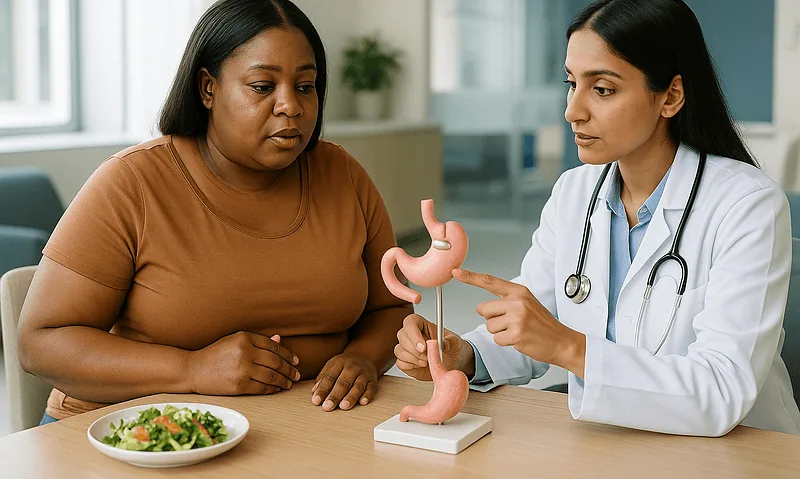
Gastric Band vs Gastric Sleeve: Reversible Device or Lasting Reshaping, Compared Honestly
An adjustable gastric band is a removable silicone ring fitted around the upper stomach and tightened through a port under the skin; a gastric…
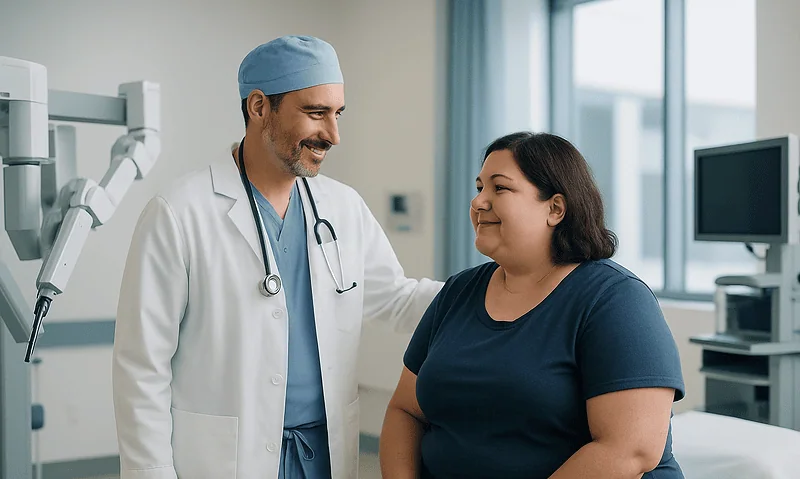
Robotic Bariatric Surgery: What the Robotic Arms Change Inside the Operating Room
Robotic bariatric surgery uses a surgeon-controlled console and wristed instruments to perform standard weight-loss operations, such as sleeve gastrectomy or gastric bypass, through small…

Gastric Balloon vs Gastric Sleeve: Temporary Device or Surgery, and How Doctors Compare Them
A gastric balloon is a temporary, saline-filled device placed in the stomach through the mouth and usually removed after about six months, while a…

Preparing for an Obesity Clinic Appointment: Weight History, Medicines and Questions to Bring
To prepare for an obesity clinic appointment, bring a written weight history (your weight at key life stages, past attempts, what helped and what…

Does Metabolic Syndrome Change After Menopause? What Doctors Watch in Midlife Women
Yes. After menopause, the pattern of metabolic syndrome shifts even when weight stays steady: fat moves toward the waist, LDL cholesterol and triglycerides tend…