

Genetic Counseling Before Prenatal Genetic Diagnosis: What the Session Covers and Why

Key Takeaways
- A genetic counselor is a specialist who estimates chance and explains options without recommending a decision; the choice stays with you.
- Screening tests such as the combined test and cell-free DNA (NIPT) give a probability, while CVS and amniocentesis examine fetal cells directly and give a diagnosis.
- The NHS offers further testing when the screening chance is 1 in 150 or higher, a result that still means most flagged pregnancies are unaffected.
- CVS is done at 11–14 weeks and amniocentesis from 15 weeks; the NHS quotes a miscarriage risk of up to 1 in 100, with newer estimates lower.
- Cell-free DNA screening is reliable only from about 10 weeks and targets a short list of chromosome conditions, not single-gene disorders or structural problems.
- A rapid result after CVS or amniocentesis typically takes about three working days, and the full chromosome analysis can take two to three weeks.
Genetic counseling before prenatal testing is a conversation with a trained specialist that reviews your family and pregnancy history, explains the difference between screening tests (which estimate chance) and diagnostic tests (which give an answer), outlines what each test can and cannot detect, and helps you decide which, if any, to have. It is non-directive: the choice always remains yours, made with your care team.
The appointment letter said forty-five minutes. She had assumed it would be a formality, a signature on a consent form before a blood draw at ten weeks. Instead she found herself answering questions about a great-uncle who “never quite developed properly,” a cousin’s stillbirth nobody discussed at Thanksgiving, and whether her partner’s family came from a particular region of the world. By the end she understood something she had not walked in knowing: the test she thought was a yes-or-no answer was actually a probability estimate, and a different test could give the certainty she wanted, at a small cost she would need to weigh.
That is what genetic counseling before prenatal testing is for. It is less a gatekeeping step than a translation service, turning the alphabet soup of NIPT, CVS, cfDNA and karyotype into decisions a person can actually make.
This explainer walks through what the session covers, who is usually offered one, what the tests it prepares you for can and cannot tell you, and the questions worth bringing along.
Why would a pregnant woman need genetic counseling?
The honest answer is that most people who sit down with a genetic counselor in pregnancy are not there because something is wrong. They are there because a choice is coming, and the choice is more layered than it looks from the outside.
A genetic counselor is a health professional with graduate training in medical genetics and in the psychology of helping people make decisions under uncertainty. Their job, as MedlinePlus describes it, is to explain how inherited conditions and chromosome differences work, estimate the chance that a pregnancy is affected, and lay out the testing options without steering you toward any one of them.
Referral usually happens for one of a handful of reasons. A screening test has come back showing a higher chance of a chromosome condition. A parent is known to carry a gene change for a condition such as cystic fibrosis or sickle cell disease. There is a relative with a diagnosed genetic condition, an intellectual disability of unknown cause, or repeated pregnancy losses. An ultrasound has picked up a finding that sometimes accompanies a chromosome difference. Or, increasingly, a person simply wants to understand what a blood test at ten weeks would and would not tell them before they agree to it.
Age comes up often. The chance of a chromosome condition such as Down syndrome rises gradually as the egg-providing parent gets older, but there is no cliff edge, and professional bodies have moved away from using age alone as the trigger for offering diagnostic testing. What matters more is that every pregnant person be given clear information about screening, and that those with a specific reason for concern get the chance to talk it through in depth.
The session exists, in other words, because informed consent for genetic testing is genuinely hard to achieve in a seven-minute prenatal visit.
What to expect at a prenatal genetic counseling appointment
Plan for somewhere between thirty and sixty minutes, sometimes in person, often by video or phone. The counselor will begin with history, and the questions will reach further back than you might expect.
You will be asked about your own health, previous pregnancies and their outcomes, and any medicines or exposures early in this pregnancy. Then comes the family tree, typically three generations on both sides: siblings, parents, grandparents, aunts, uncles, cousins. The counselor is listening for patterns, such as several relatives with early heart disease, a child who died young for reasons nobody could explain, learning difficulties clustering on one side, or ancestry from populations where certain recessive conditions are more common. Ancestry is asked about neutrally and for one reason only: some gene changes are simply more frequent in some groups, which affects which carrier tests are informative.
Bring what you know, and do not worry about what you do not. Vague memories (“my aunt had a baby with something wrong with the heart”) are still useful data. Photographs, old letters or a relative’s diagnosis, if you can get it, are a bonus, not a requirement.
After history, the counselor explains the conditions relevant to your situation in plain terms, then walks through the tests: what each looks for, when in pregnancy it is done, how long results take, and how accurate it is. You will hear the phrase “screening is not diagnostic” more than once, and for good reason.
You leave with either a decision or, just as legitimately, a plan to think it over. Nothing is signed under pressure, and the counselor should never tell you what you ought to do. If you feel you are being nudged, say so.
How the session actually works: from your history to a testing plan
Underneath the conversation, the counselor is running a fairly disciplined process, and it helps to see the mechanics.
The first step is drawing a pedigree, a standardized diagram of your family with squares for males, circles for females and shading for anyone affected by a condition. Plotting it makes inheritance patterns visible. A condition appearing in every generation on one side suggests a dominant pattern, where one changed copy of a gene is enough to cause it. A condition appearing only in siblings or cousins, with healthy parents, suggests a recessive pattern, where a child is affected only if both parents happen to pass on a changed copy. A condition affecting mainly boys through their mothers’ side points toward X-linked inheritance.
The second step is risk assessment. This combines the pedigree with your age, any screening results, ultrasound findings and, where relevant, population carrier frequencies. The output is not a verdict but a chance, expressed as a fraction (“about 1 in 250”) or a percentage, alongside an honest statement of how confident that estimate is.
The third step is matching that chance to the available tests. A very low background chance and no specific concern usually means routine screening is the proportionate option. A known carrier couple, or a strongly suggestive family history, may make a targeted diagnostic test the more informative choice, because a general screen would not look for the specific gene involved.
The final step is the one people remember: values clarification. The counselor asks what you would do with each possible result. Some people want information to prepare; some want it to make decisions about the pregnancy; some realize they would not act on it and prefer not to know. All three are legitimate, and the right test follows from the answer.
Screening versus diagnosis: the distinction the whole session hinges on
If you absorb one idea from genetic counseling before prenatal testing, make it this one. A screening test tells you how likely something is. A diagnostic test tells you whether it is there.
Screening in pregnancy uses information that is indirectly related to the fetus. The combined test, offered by the NHS between 10 and 14 weeks, pairs an ultrasound measurement of fluid at the back of the fetal neck with two proteins in the pregnant person’s blood, then folds in age to produce a chance figure. Cell-free DNA screening, often called NIPT, analyzes small fragments of placental DNA circulating in the pregnant person’s blood. The placenta and fetus usually share the same chromosomes, so the test is very good at estimating chance for the common trisomies, but “usually” is the operative word.
A screening result is therefore sorted into “lower chance” or “higher chance,” never “positive” or “negative” in the diagnostic sense. A higher-chance result means the chance is above a set threshold, which in the NHS pathway is 1 in 150. Many pregnancies flagged this way turn out to be unaffected.
Diagnostic testing looks directly at fetal cells. Chorionic villus sampling (CVS) takes a small sample of placental tissue; amniocentesis draws a small volume of the fluid surrounding the fetus, which contains fetal skin and bladder cells. The chromosomes in those cells can then be counted and examined, giving an answer rather than an estimate.
The trade-off is that both diagnostic tests involve a needle entering the uterus and carry a small chance of miscarriage, which is why they are offered rather than routine. Counseling exists so that people understand they are choosing between certainty with a small physical risk and reassurance with a residual uncertainty, and so that they can choose deliberately.
Genetic counseling before prenatal testing: the tests it prepares you for
Because the session is only as useful as your grasp of the menu, here is the menu, with timing and detection scope drawn from NHS and Mayo Clinic guidance. Weeks refer to weeks of pregnancy.
| Test | Type | Usual timing | What it examines | Main limitation |
|---|---|---|---|---|
| Combined test (ultrasound plus blood) | Screening | 10–14 weeks | Chance of trisomy 21, 18 and 13 | Gives a probability, not an answer |
| Quadruple blood test | Screening | 14–20 weeks | Chance of trisomy 21 only | Less accurate than the combined test |
| Cell-free DNA screening (NIPT) | Screening | From about 10 weeks | Chance of common trisomies; some panels add sex chromosomes and selected conditions | Analyzes placental DNA; higher-chance results need confirmation |
| Chorionic villus sampling (CVS) | Diagnostic | 11–14 weeks | Fetal chromosomes and targeted gene tests | Small miscarriage risk; rare placental-only findings |
| Amniocentesis | Diagnostic | From 15 weeks | Fetal chromosomes, targeted gene tests, some infections | Small miscarriage risk; later in pregnancy |
| Detailed anomaly ultrasound | Screening (structural) | 18–21 weeks | Physical development of organs and skeleton | Cannot see chromosomes or genes |
Two things stand out. First, the screening tests all target a short list of chromosome conditions; they are not a general health check of the fetus, and a lower-chance result says nothing about the thousands of single-gene conditions that exist. Second, the diagnostic tests have windows. CVS is available earlier, amniocentesis later, and that timing shapes decisions in ways the counselor will help you map out.
Which parts of this table apply to you depends on your history and on what you want to know. That is precisely the conversation the appointment is for.
Who needs genetic counseling in pregnancy, and who is usually asked to wait
Formal counseling is not offered to everyone, and that is not a rationing decision so much as a proportionality one. Routine screening comes with standardized information from midwives and obstetric teams, and for many people that is enough.
People commonly referred for a dedicated session include those with a higher-chance screening result, a known carrier status in either parent, a previous child or pregnancy with a chromosome or genetic condition, a family history suggesting an inherited disorder, an ultrasound finding that raises the possibility of a syndrome, or exposure early in pregnancy to a medicine or infection known to affect development. Couples who are blood relatives are also usually offered counseling, because shared ancestry raises the chance that both carry the same recessive gene change.
Some people are, in effect, asked to wait, or are directed to a different pathway first. A person under 10 weeks who wants cell-free DNA screening will typically be told the test is unreliable before that point because there is too little placental DNA in the blood. Someone with no specific concern and a lower-chance screen may be told a diagnostic test is available but not recommended, since the small procedural risk would outweigh the low chance of finding anything. A person whose main question is about their own future health, rather than the pregnancy, may be referred to a general or adult genetics service instead.
None of this means you cannot ask. Non-directive counseling includes the right to request a test the team would not have suggested, and to be told frankly why they hesitate. The decision remains with you and your treating team, and a good counselor will document that discussion rather than simply decline.
Is it worth doing genetic testing before pregnancy?
Preconception carrier screening is the version of this conversation that happens before there is a pregnancy at all, and it changes the emotional temperature considerably.
A carrier is someone who has one changed copy of a gene for a recessive condition and one working copy. Carriers are almost always healthy themselves. The relevance to pregnancy is that if both partners carry a change in the same gene, each child has a 1 in 4 chance of inheriting both changed copies and being affected. MedlinePlus lists cystic fibrosis, sickle cell disease, thalassemia, Tay-Sachs disease and spinal muscular atrophy among conditions commonly included in carrier panels.
Testing beforehand has practical advantages. If both partners turn out to be carriers, options widen: they can plan early diagnostic testing in a future pregnancy, consider in-vitro fertilization with embryo testing, use donor gametes, adopt, or accept the chance and prepare. Those conversations are calmer without a due date approaching.
The case for it is not universal, though. A negative carrier screen reduces but does not eliminate the chance of a recessive condition, because panels test for common gene changes rather than every possible one, and many conditions arise from new changes not present in either parent. Panels also vary widely in what they include. Some people find that learning they carry a change for a condition that will never affect them causes anxiety out of proportion to its meaning.
A reasonable summary: preconception testing is most clearly useful when there is a family history, when a partner is a known carrier, or when ancestry raises the frequency of a particular condition. For others it is an option worth understanding rather than an obligation, and a counselor can help you decide which panel, if any, fits your situation.
Why do people opt out of NIPT?
Cell-free DNA screening is highly accurate for the conditions it targets, low-effort and free of physical risk to the pregnancy. Yet a meaningful number of people decline it, and their reasons are worth hearing because they often surface in counseling.
The most common reason is that the information would not change anything. Some people know they would continue the pregnancy regardless of a result and feel that a probability figure would add worry rather than value. A counselor will not argue with this; some do point out that early knowledge can help with birth planning, choice of delivery setting and lining up specialist support, which is a different kind of usefulness.
Others decline because they have grasped, correctly, that the test screens for a narrow set of conditions. If your worry is about a specific inherited disorder in your family, standard cell-free DNA screening will not address it, and a targeted test may be the more logical route.
A third group is uneasy about the pathway a higher-chance result opens. They understand that confirmation requires CVS or amniocentesis and would rather not be placed in the position of weighing an invasive test. Choosing not to start down that road is a coherent decision.
Some have concerns about how their genetic data is stored or shared by testing laboratories, a question a counselor can help you put to the lab directly. Others have had a previous false-positive experience and do not wish to repeat it. And some simply find that a detailed anomaly ultrasound at 18–21 weeks gives them the level of reassurance they want.
What good counseling adds is not persuasion but the assurance that whichever way you decide, you understood what you were deciding.
Understanding a higher-chance screening result without panic
The phone call arrives, and the words “higher chance” land like a diagnosis. They are not one, and the arithmetic explains why.
The NHS threshold for offering further testing is a chance of 1 in 150 or higher. Read that fraction the other way: a result of exactly 1 in 150 means that in 150 pregnancies with this result, one is expected to be affected and 149 are not. Even a result of 1 in 10 means nine pregnancies in ten are unaffected. Screening is designed to cast a wide net so that few affected pregnancies are missed, and the price of that sensitivity is that many unaffected pregnancies are flagged.
Cell-free DNA screening tightens the net considerably, which is why the NHS offers it as a second-line screen after a higher-chance combined test. Because it looks at placental DNA directly, a lower-chance cfDNA result after a higher-chance combined result is strongly reassuring for the conditions tested. A higher-chance cfDNA result is more concerning than a higher-chance combined result, but it is still not a diagnosis. The placenta occasionally carries a chromosome difference that the fetus does not, a situation called confined placental mosaicism, and rare technical factors can also produce a result that diagnostic testing does not confirm.
This is where the counseling session earns its place. The counselor will translate the figure into plain odds, explain which specific condition has been flagged, and set out the three options that Mayo Clinic and the NHS describe: further screening with cfDNA, diagnostic testing with CVS or amniocentesis, or no further testing. Each is reasonable. The counselor’s role is to make sure you know what each would tell you, and by when, so that the choice reflects your values rather than the shock of the call.
CVS and amniocentesis explained, including the risks people worry about most
Diagnostic testing is where the abstract talk of chance becomes a needle, so it deserves a plain account.
Chorionic villus sampling is done between 11 and 14 weeks. Under continuous ultrasound guidance, a clinician takes a tiny sample of chorionic villi, the finger-like projections of placental tissue that share the fetus’s genetic makeup. The sample is taken either through the abdomen with a fine needle or through the cervix with a thin tube; the route depends on where the placenta sits. The NHS describes the procedure itself as taking about ten minutes and as uncomfortable rather than painful for most people.
Amniocentesis is done from 15 weeks onward. A fine needle passes through the abdominal wall into the amniotic sac, again under ultrasound, and withdraws a small volume of fluid containing fetal cells. The body replaces the fluid within hours.
The risk people ask about first is miscarriage. The NHS quotes a chance of up to 1 in 100 for both procedures when done at the recommended time. Mayo Clinic, drawing on more recent studies, describes the added risk of second-trimester amniocentesis as lower than that, in the range of a fraction of one percent. The honest reading is that the risk is small, real, and somewhat uncertain at the margins, and that it is lower in experienced hands. Other uncommon complications include infection, leakage of fluid, and cramping or spotting that usually settles.
Rarely, CVS returns a result that reflects the placenta rather than the fetus, in which case an amniocentesis may be suggested for clarification. Rhesus-negative people are offered an anti-D injection afterward to prevent sensitization; the timing and need for this sit with your care team.
Neither test is compulsory at any stage. Counseling is where you decide whether certainty is worth this particular small risk to you.
What the following days and weeks usually look like
The timeline depends heavily on which path you take, so here is how it typically unfolds, with durations taken from NHS and Mayo Clinic guidance rather than promises.
After a genetic counseling session alone, the next step may simply be routine screening at your booking appointment. Combined screening happens at 10–14 weeks, and results are usually communicated within two weeks; a lower-chance result often arrives by letter, while a higher-chance result is phoned through so the options can be discussed promptly.
If you have cell-free DNA screening, the blood sample is taken from about 10 weeks and results generally take around two weeks to return. A small proportion of samples fail to yield a result, usually because the fraction of placental DNA in the blood was too low; the lab may request a repeat sample, which is not itself a sign of a problem.
After CVS or amniocentesis, most people are advised to rest for the remainder of the day and avoid strenuous activity for a day or two. Mild cramping and a little spotting are common in the first 24 to 48 hours. A rapid result for the common trisomies, using a technique that counts specific chromosomes, is typically available within about three working days. The full chromosome analysis, and any targeted gene tests, can take up to two to three weeks depending on what was requested.
Results are usually given by the counselor or a member of the obstetric team, ideally in a scheduled conversation rather than a surprise call. A normal result closes that question. An abnormal result opens a second counseling session, where the meaning of the finding, the range of how the condition can present, and every option available are discussed at whatever pace you need. Nobody should be asked to decide anything in that first conversation.
What people often get wrong
Some misconceptions come up in nearly every counseling session, and correcting them is half the value of the appointment.
“NIPT tests for everything.” It does not. Standard cell-free DNA screening targets trisomy 21, 18 and 13, and often the sex chromosomes. Expanded panels exist, but their accuracy for rarer findings is lower, and none screens for the thousands of single-gene conditions or for structural problems visible only on ultrasound.
“A higher-chance result means my baby has the condition.” A screening result is a probability. Depending on the test and the condition, a substantial share of higher-chance results are not confirmed on diagnostic testing.
“A lower-chance result guarantees a healthy baby.” It lowers the chance of the specific conditions screened. It says nothing about conditions not tested and does not replace the anomaly scan.
“Amniocentesis is dangerous.” It carries a small, real risk of miscarriage, which the NHS puts at up to 1 in 100 and more recent estimates place lower. That is not negligible, but it is far from the picture many people carry from older accounts.
“Genetic counseling is only for people with problems.” Much of it is for people who simply want to understand their options before consenting.
“The counselor will tell me what to do.” Genetic counseling is explicitly non-directive. If you feel steered, that is a departure from the standard.
“Only the mother’s age matters.” Age affects the chance of chromosome conditions, but family history, carrier status and ultrasound findings often matter more, and some conditions are unrelated to age altogether.
“If I opt out of screening, I can’t change my mind.” Windows close, but options usually remain. Later screening, ultrasound and, if wanted, amniocentesis are all available well into the second trimester.
Your rights in the room: non-directive counseling, consent and privacy
Genetic counseling grew up alongside a hard-won principle: the person carrying the pregnancy decides, and the professional’s job is to inform, not to steer. Knowing that principle helps you recognize good practice and speak up when something falls short.
You have the right to decline any test at any stage, including after a higher-chance result. You have the right to accept screening and decline diagnostic testing, or to request diagnostic testing when the team would not have suggested it, and to receive a frank explanation of their reasoning either way. You can bring a partner, a friend or an interpreter, and you can ask for written information to take home.
Consent for genetic testing has particular features. Because results can carry implications for relatives, the counselor may discuss whether and how you might share findings with family members who could be affected, always leaving that choice to you. Some tests can reveal information you did not ask for, such as a chromosome variant of uncertain significance or an unexpected finding about biological parentage; part of consent is deciding in advance what you want reported.
Privacy is a live question, especially for cell-free DNA screening performed by commercial laboratories. You are entitled to ask how your sample and data are stored, whether they are used for research, whether they can be shared with third parties, and how to request deletion. A counselor cannot answer for a lab, but can help you get the answer.
If you feel rushed, judged or pressured, say so, ask for a pause, or request a second appointment. A hospital patient advocacy service can help if the conversation does not resolve it. The standard of care is a conversation in which you feel informed and unhurried, and it is fair to hold the service to it.
Questions to ask your care team
People often leave counseling wishing they had asked something, so here is a starting list. Take it in, cross out what does not apply, and add your own.
- Based on my history, what is my estimated chance of the condition you are concerned about, and how confident is that estimate?
- Which specific conditions does the test you are suggesting screen for, and which common ones does it not cover?
- Is this test screening or diagnostic? If screening, what would a higher-chance result lead to next?
- How often does this test give a higher-chance result that turns out to be unaffected in someone with my background?
- How long will results take, and how will they be communicated to me?
- If I have CVS or amniocentesis here, what is your team’s own miscarriage rate, and how many of these procedures does the operator perform each year?
- What happens if the test fails to give a result?
- Could this test reveal information I did not ask for, and can I choose in advance what is reported?
- If a condition is found, who would I speak to about what life with that condition is actually like, including families and support organizations?
- What are my options if I decide to do nothing further at this point, and until what week do those options remain open?
- How is my genetic data stored, and who can access it?
- Should my partner or other relatives be offered testing based on what we learn?
A useful habit: ask the counselor to write down the chance figures and test names, or write them yourself and read them back. Numbers heard once under stress are easily transposed, and “1 in 150” and “1 in 15” are very different pieces of news.
When to call your doctor
Genetic counseling itself carries no physical risk, but the tests it leads to sometimes do, and knowing which symptoms need a same-day call keeps a small risk from becoming a larger one.
After CVS or amniocentesis, contact your maternity unit or the number you were given without waiting for morning if you notice any of the following, which the NHS and Mayo Clinic list as warning signs:
- Vaginal bleeding beyond light spotting, or bleeding that increases rather than settles.
- A gush or persistent trickle of clear fluid from the vagina, which may indicate leaking amniotic fluid.
- Cramping or abdominal pain that is severe, worsening or not relieved by rest.
- A temperature of 38 °C (100.4 °F) or higher, chills, or feeling generally unwell, which can point to infection.
- Redness, swelling or discharge at the needle site.
- If you are far enough along to feel movements, a noticeable reduction in fetal movement.
Mild cramping and light spotting in the first day or two are common and usually harmless, but you should never feel you have to judge the line yourself; the team would rather hear from you unnecessarily than not at all.
Outside the procedural setting, call your midwife or obstetric team if you have not received a screening result within the expected window, if you are given a result you do not understand, or if the emotional weight of waiting is affecting your sleep, appetite or ability to function. Anxiety during the testing pathway is common and is something the team can help with, including a further counseling conversation or a referral for psychological support.
Emergency symptoms in pregnancy that are unrelated to testing, such as heavy bleeding, severe headache with visual changes, or sudden severe abdominal pain, always warrant emergency care regardless of any planned or recent test. Every decision about further testing, treatment or timing remains with you and your treating team.
Frequently asked questions
What happens at a prenatal genetic counseling appointment?
You spend thirty to sixty minutes with a genetic counselor reviewing your medical history and a three-generation family history, then discussing which conditions are relevant to you and which tests could address them. The counselor explains the difference between screening and diagnostic tests, their timing, accuracy and limits, and asks what you would do with each possible result. You leave with a plan or with time to think; nothing is decided under pressure.
Is genetic testing before pregnancy worth it?
It is most clearly useful when there is a family history of an inherited condition, a partner known to be a carrier, or ancestry associated with a higher frequency of specific recessive disorders. Carrier screening identifies couples where each child has a 1 in 4 chance of a condition, allowing calmer planning before a pregnancy exists. For people without these factors, it is a reasonable option rather than a necessity, and panels vary in scope.
Why do some people choose to opt out of NIPT?
Common reasons include knowing the result would not change their decisions, understanding that the test covers only a short list of chromosome conditions, wishing to avoid the possibility of being offered an invasive test afterward, concerns about how genetic data is stored, or preferring to rely on the detailed anomaly ultrasound. Declining is a legitimate choice, and counseling aims to ensure it is an informed one rather than to change it.
Who needs genetic counseling in pregnancy?
Formal counseling is usually offered to people with a higher-chance screening result, a known carrier status, a previous child or pregnancy with a genetic condition, a suggestive family history, an ultrasound finding linked to a syndrome, early exposure to a medicine or infection known to affect development, or a partner who is a blood relative. Anyone can request a session to understand their options before consenting to testing.
Does a higher-chance screening result mean my baby has Down syndrome?
No. A higher-chance result means the estimated probability is above a threshold, which in the NHS pathway is 1 in 150. At that level, one pregnancy in 150 with the result is expected to be affected. Only a diagnostic test such as CVS or amniocentesis can confirm or rule out a chromosome condition. Cell-free DNA screening can narrow the estimate considerably but is still a screening test.
How accurate is cell-free DNA (NIPT) screening?
It is highly accurate for the conditions it targets, especially trisomy 21, because it analyzes placental DNA circulating in the pregnant person’s blood. It is still a screening test: the placenta and fetus occasionally differ, and rare technical factors can produce results that diagnostic testing does not confirm. Accuracy for rarer conditions on expanded panels is lower. A higher-chance result should always be discussed with a counselor before any decision.
What is the difference between CVS and amniocentesis?
Both are diagnostic tests that examine fetal chromosomes, but they differ in timing and sample. CVS takes a small piece of placental tissue between 11 and 14 weeks, allowing earlier answers. Amniocentesis draws fluid containing fetal cells from 15 weeks onward. Both carry a small miscarriage risk, which the NHS quotes as up to 1 in 100. CVS rarely reflects a placental-only chromosome difference, in which case amniocentesis may be suggested.
How long do prenatal genetic test results take?
Combined screening and cell-free DNA results typically return within about two weeks. After CVS or amniocentesis, a rapid result for the common trisomies is usually available within about three working days, while the full chromosome analysis and any targeted gene tests can take up to two to three weeks. Timelines vary by laboratory and by what was requested, so ask your team for the expected window at the time of the test.
Can I refuse prenatal genetic testing after seeing a genetic counselor?
Yes. Genetic counseling is non-directive and every test in pregnancy is optional, including after a higher-chance screening result. You may accept screening but decline diagnostic testing, or decline all of it. Windows for specific tests close as pregnancy progresses, but ultrasound and, if wanted, amniocentesis remain available well into the second trimester. Your decision should be documented and respected by the team.
Will genetic counseling tell me what to do about my pregnancy?
No. The counselor’s role is to provide accurate information about conditions, chances and tests, to help you clarify your own values, and to support whatever decision you reach. If a condition is diagnosed, you should be offered a further session covering the range of how it can present, connections to families and support organizations, and every available option, at your own pace. If you feel steered, say so.
References
- MedlinePlus: Genetic Counseling
- MedlinePlus: Prenatal Testing
- NHS: Amniocentesis
- NHS: Chorionic villus sampling
This article is for general information only and is not a substitute for professional medical advice. Please consult a qualified doctor about your individual situation.

More from the Blog

How Is Open vs Fetoscopic Fetal Surgery Chosen and What Does It Mean for Recovery?
Open fetal surgery and fetoscopic surgery are two ways of operating on a baby before birth. Open surgery works through an incision in the…
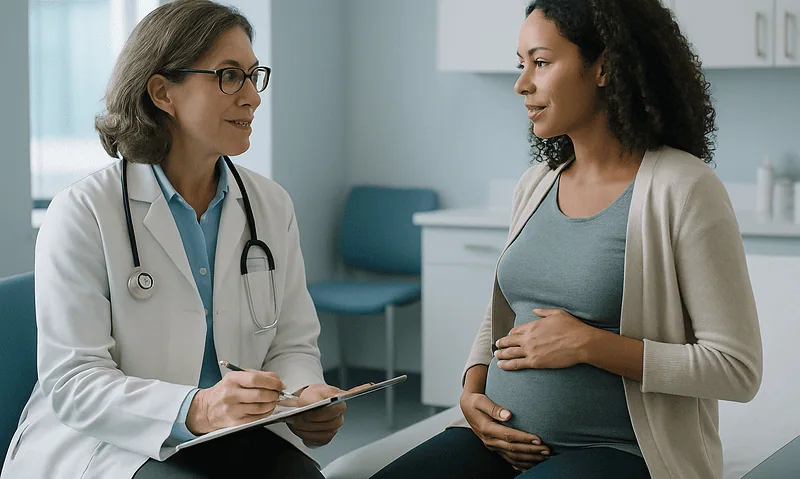
Protein in Urine and Kidney Function Tests in Pregnancy Nephropathy: What Each Result Guides
Protein in urine pregnancy tests start with a dipstick at routine visits; a positive result is usually rechecked with a protein-to-creatinine ratio or a…

How Soon Can You Stand After an Epidural Delivery? Leg Sensation, Help and the Puncture Site
Most people can stand after an epidural delivery once full feeling and strength have returned to both legs, which commonly takes a few hours…
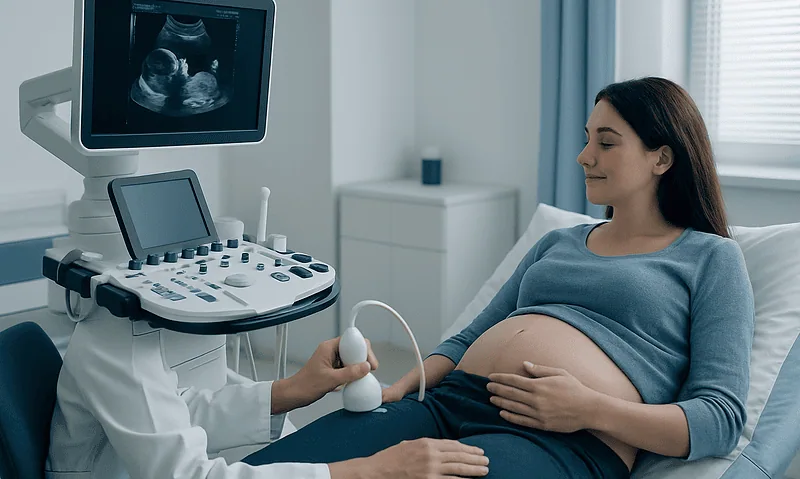
Which Prenatal Genetic Diagnosis Test Comes When? CVS vs Amniocentesis Timing and Sampling
Chorionic villus sampling (CVS) is usually offered earlier, from about 11 to 14 weeks of pregnancy, and samples placental tissue. Amniocentesis is usually offered…

After Fetal Surgery: Contraction Monitoring, Rest and the Weekly Checks Until Delivery
Recovery after fetal surgery means resting the uterus, not just the mother. For open procedures, expect a hospital stay of several days, medicines that…

Does Amniocentesis Hurt? What the Needle Feels Like and Whether Local Anesthetic Is Used
Amniocentesis is usually described as uncomfortable rather than painful. Most people feel a brief sting as a thin needle passes through the skin, then…