

Getting Ready for a Beard Transplant: Skin Checks, Mapping the Beard Line and What to Pause
Key Takeaways
- Surgeons usually ask you to stop shaving for several weeks before the consultation because existing growth reveals the direction and coarseness that guide graft placement.
- Active acne, folliculitis, seborrheic dermatitis or unsettled alopecia areata in the beard area is a common reason to postpone rather than a refusal.
- Donor hair from the back of the scalp is finite and does not regrow, so grafts used for the beard are unavailable for later scalp thinning.
- MedlinePlus advises stopping smoking at least four weeks before surgery and for four weeks after, because nicotine narrows the small vessels that feed new grafts.
- Transplanted beard hairs normally shed within about two to four weeks and regrow over the following months, according to the NHS.
- Anticoagulants, antiplatelets and blood-thinning supplements are reviewed before surgery, but any pause is decided solely by the prescribing clinician.
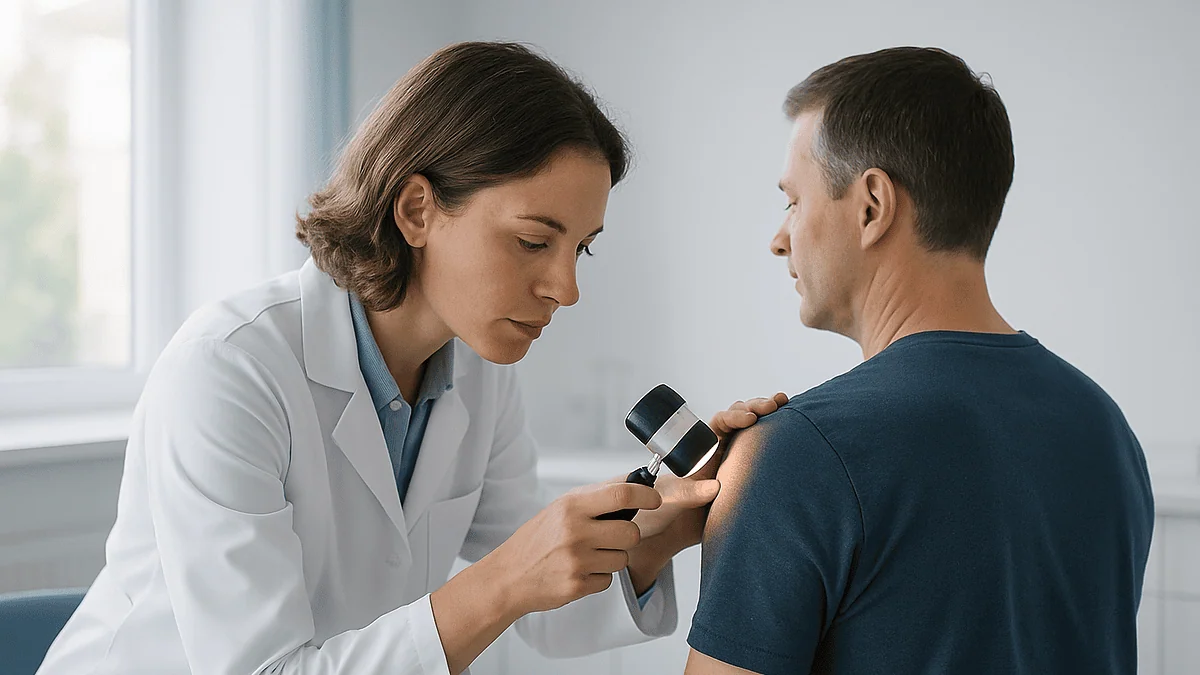
Beard transplant preparation usually spans several weeks and has three parts: a skin check of the face and donor scalp for active acne, folliculitis, patchy autoimmune hair loss or a keloid tendency; mapping the beard line so grafts follow natural angle and density; and pausing habits that slow healing, such as smoking and alcohol. Any change to prescribed medicines is decided only by the prescribing clinician and surgical team.
He has not let the patchy bits show in nearly a decade. Every morning the razor went straight to the two bare islands on his cheeks and the thin strip under his lower lip, because a clean jaw looked more deliberate than a beard that stopped and started. Then the surgical coordinator asked him to stop shaving for a few weeks before his consultation, and he found himself studying his own face like a map he had never read properly.
That instruction is the first, quiet lesson of beard transplant preparation: the surgeon needs to see what your face does on its own before deciding what to add. The weeks before the procedure are less about the chair and more about the skin, the donor hair at the back of the head, the medicines already in your bathroom cabinet and the habits that decide how well a graft settles.
This explainer walks through what a careful team checks, why they check it, and which decisions stay firmly with them.
What beard transplant preparation actually involves
Most people picture preparation as a checklist handed over the day before. In practice it is a sequence that begins at the first consultation and ends when the last graft is placed. The order matters, because each step depends on the one before it.
First comes eligibility. A surgeon decides whether the goal is realistic for your skin, your donor hair and your general health. Second is assessment of the face itself: the skin condition, the existing pattern of growth and the edge where beard should meet cheek. Third is assessment of the donor area, almost always the back and sides of the scalp, where hair is genetically resistant to the hormonal thinning that affects the crown. Fourth is medical housekeeping: a history, a medication review and sometimes blood tests. Only then does the practical countdown begin, with instructions about smoking, alcohol, sun exposure, grooming and what to do on the morning of surgery.
A beard transplant is a minor surgical procedure done under local anesthetic, usually as a day case, and MedlinePlus describes scalp hair transplant sessions lasting several hours depending on how many grafts are moved. The same broad timings apply when the destination is the face. That length is one reason preparation is taken seriously: you are asking small units of living tissue to survive a move and then thrive in new skin, and the environment they land in is shaped by choices made weeks earlier.
None of this is a test you pass or fail. It is closer to soil preparation before planting. The surgeon’s job is to judge the ground; yours is to arrive with the honest history and the habits that give the grafts their fairest chance.
How does a beard transplant work?
A graft is a tiny plug of skin containing one to four hairs and their roots; surgeons call this natural cluster a follicular unit. A beard transplant moves these units from an area of dense, stable growth to the sparse areas of the face, where they keep the growth characteristics of the place they came from.
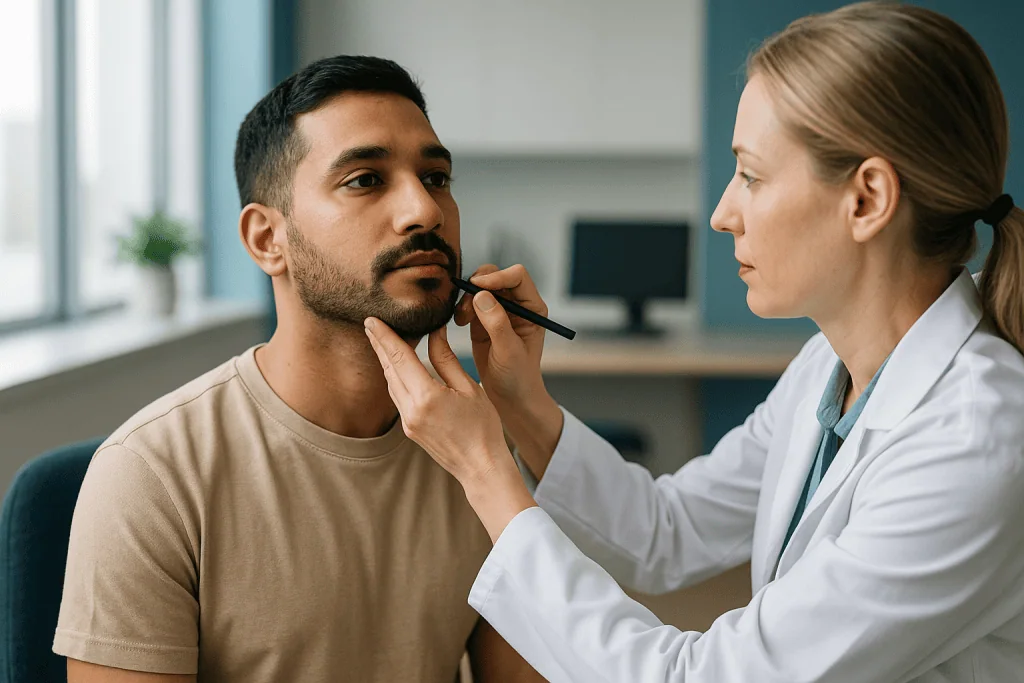
Two harvesting methods exist. Follicular unit excision, usually shortened to FUE, removes grafts one at a time through small circular punches, leaving scattered dot scars that are typically hard to see once hair regrows. Follicular unit transplantation, or FUT, removes a narrow strip of scalp, which is divided into grafts under magnification and leaves a single linear scar. Cleveland Clinic and the NHS describe both approaches as standard for scalp work, and either can supply grafts for the face. Many surgeons favor FUE for beards because the number of grafts is often modest and the donor hair can be selected individually for thickness.
Once harvested, the grafts are kept in a chilled solution while the surgeon makes small recipient incisions in the beard area. Each incision sets the angle and direction the new hair will grow, which is why mapping is discussed at such length later in this article. Grafts are then placed one by one, a process that demands patience rather than speed.
The transplanted hairs almost always shed within a few weeks. MedlinePlus and the NHS both describe this as expected, with new growth appearing over the following months as the roots wake up. Understanding that cycle before surgery spares a lot of anxiety afterward.
Who is a good beard transplant candidate, and who is usually asked to wait
The typical candidate has sparse or patchy facial hair for a reason that is stable: genetics, a scar from an injury or earlier surgery, a cleft lip repair, or hair loss related to gender-affirming care. The common thread is that the cause is not going to spread or change once grafts are placed.
Candidacy also depends on the donor. The back and sides of the scalp must hold enough dense, healthy hair to spare some without leaving visible thinning. A man who is already losing scalp hair aggressively may be asked to prioritize what remains there, or to accept a smaller facial goal.
Several groups are usually asked to wait rather than refused outright. People with active acne, an infected follicle or an inflamed rash in the recipient area are asked to treat the skin first, because placing grafts into inflamed tissue raises infection risk. Anyone with patchy hair loss from alopecia areata, an autoimmune condition where the body’s defenses attack hair roots, is often asked to wait until the disease has been quiet for a sustained period, since new grafts can be attacked too. Mayo Clinic notes that surgical hair replacement is generally not offered for hair loss caused by active scarring or autoimmune processes.
Poorly controlled diabetes, a bleeding disorder, current smoking and unrealistic expectations round out the list. Teenagers and people in the middle of significant weight or hormonal change may be told that the pattern is still settling. The word is almost always “not yet” rather than “never”, and a good team explains exactly what would need to change.
The skin check: what a surgeon looks for on your face
Facial skin is busier than scalp skin. It carries more oil glands, is shaved daily, sits in the sun and is touched constantly. Before anyone books a date, the surgeon or a dermatology colleague examines it closely, often under magnification.
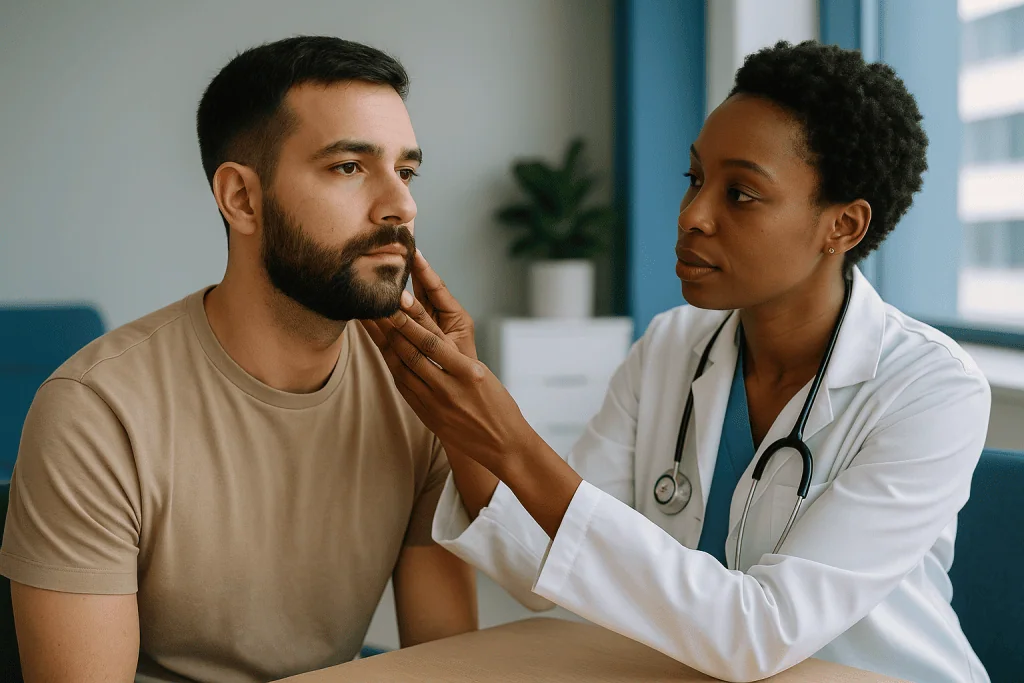
They are looking for a handful of things. Active acne or pustules signal bacteria and inflammation the grafts do not need. Folliculitis, meaning infected or inflamed hair follicles that look like small red bumps or whiteheads, is treated first; MedlinePlus lists it as a common cause of tender bumps in shaved areas. Pseudofolliculitis barbae, the medical name for razor bumps caused by curly hairs curling back into the skin, matters because the same curl can affect transplanted hair, and the team may adjust angle and density to account for it.
Seborrheic dermatitis, the flaky red rash that favors oily areas around the nose and beard, is another reason to pause and treat. Psoriasis plaques in the recipient zone can flare where skin is injured, a phenomenon dermatologists call the Koebner response, so their location is noted.
The examiner also asks about scars. Someone whose earlobe piercing or chickenpox mark grew into a raised, rubbery lump may have a tendency to keloids, which Mayo Clinic describes as scars that grow beyond the original wound and are more common in people with darker skin and on the cheeks and jaw. Hundreds of tiny incisions in a keloid-prone jawline deserve an honest conversation and sometimes a small test area first.
Finally, the surgeon studies your existing hair: its color, curl, thickness and where the natural edges fall. That information feeds directly into the map.
Checking the donor area before a beard transplant
Every transplanted beard hair used to be a scalp hair. The donor examination decides whether there is enough to spare and whether it will look right on the face.
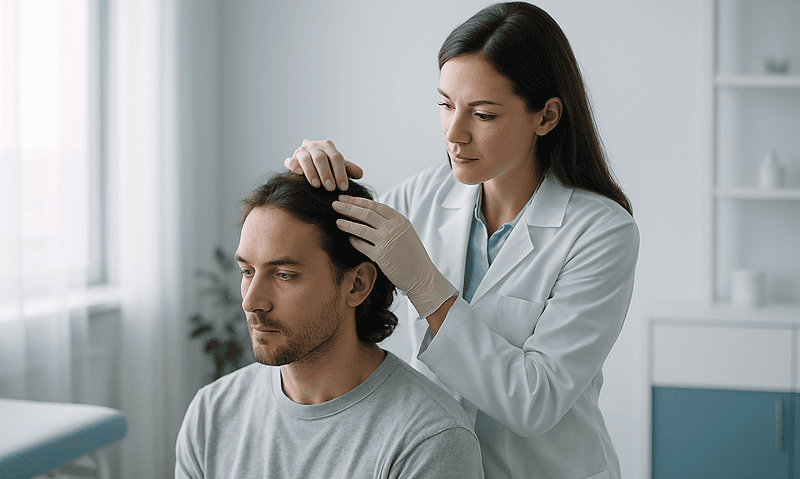
Density comes first. The surgeon parts the hair at the back and sides and estimates how many follicular units sit in each square centimeter, sometimes with a handheld camera that magnifies the skin. A rough rule in hair surgery is that a donor zone tolerates removal of a portion of its units before thinning becomes visible; the exact fraction depends on hair color against skin tone, curl and how the person wears their hair. Someone with a close crop shows harvesting more easily than someone with longer hair.
Caliber, the thickness of each individual hair, is the second question. Natural beard hair is generally coarser than scalp hair, so surgeons look for the thickest donor hairs, often from the lower back of the head, to blend with what is already on the face. Fine hair placed among thick beard hair can look wispy even when the count is generous.
The team also asks about scalp hair loss. If the crown or hairline is receding, the same donor supply may be wanted there later, and taking a large amount for the beard now is a trade-off worth naming out loud. Cleveland Clinic notes that donor hair is finite and does not regrow once removed.
Any scalp skin disease, prior scars from earlier procedures or a history of poor healing in that area is recorded. Occasionally a surgeon will use chest or body hair when scalp supply is limited, but that hair behaves differently and is usually reserved for filling rather than defining the beard edge.
Mapping the beard line: angle, direction and density
Mapping is the step most people underestimate, and it is where an experienced eye earns its keep. Facial hair does not grow uniformly. It sweeps downward on the cheeks, points forward and slightly outward on the chin, angles toward the lip line on the mustache, and lies almost flat along the neck. A graft placed against the grain announces itself every morning in the mirror.
On the consultation day, and again immediately before surgery, the surgeon draws the proposed beard on your skin with a marker while you sit upright and neutral. You watch in a mirror and comment. The cheek line is the most consequential decision: set it too high and the beard looks pasted on; too low and the effect is patchy. Most surgeons trace the natural border that a full beard would follow, often a gentle curve from the sideburn toward the corner of the mouth, rather than inventing a new one.
Density is planned in zones. The chin and mustache carry the most hairs per square centimeter in a natural beard; the cheeks carry fewer and taper toward the edge. A surgeon plans a feathered border, with single-hair grafts at the very edge and two- or three-hair units behind them, so nothing ends in a hard line.
Direction is set by the angle of each recipient incision, made with a fine blade or needle, usually at a low angle so the hair lies close to the skin. Grafts that stand up perpendicular look wiry and unnatural.
Bring photographs of the beard shape you have in mind, but expect the surgeon to translate the picture into what your face, your donor supply and your hair type can realistically support.
What to pause before a beard transplant: medicines and supplements
This is the section with the most rules attached, so the ground rule comes first: no prescribed medicine is stopped, reduced or started because of a beard transplant unless the clinician who prescribed it and the surgical team agree. The article can explain why certain classes come up; it cannot tell you what to do with yours.
Bleeding is the main concern. Hundreds of small incisions on the face and scalp ooze more when the blood clots slowly, and excess bleeding lifts grafts out of their beds and blurs the surgeon’s view. Anticoagulants and antiplatelet drugs, the classes that thin the blood to prevent strokes and heart attacks, are reviewed in detail. For many people on these medicines the safest answer is to continue and accept a slightly longer procedure, because the reason they were prescribed outweighs a cosmetic goal. That judgment belongs to the prescribing physician, ideally with a written plan shared before the day.
Nonsteroidal anti-inflammatory drugs, the over-the-counter pain relievers that also reduce platelet stickiness, and aspirin are commonly discussed for the same reason. So are supplements with mild blood-thinning effects: fish oil, vitamin E, ginkgo, garlic and ginger in concentrated form, and high-dose turmeric. The NIH Office of Dietary Supplements notes that several herbal products can affect bleeding and interact with surgery, which is why surgeons ask for a complete list rather than only prescriptions.
Topical minoxidil, a solution some people already use on thinning beard areas, is often paused briefly because it can irritate skin and increase surface bleeding; your surgeon will say when. Isotretinoin, the oral acne medicine, raises separate healing questions and is always disclosed. Bring every bottle, including vitamins, to the consultation and let the team sort them.
Smoking, alcohol and the healing skin
If preparation had a single non-negotiable, it would be nicotine. Smoking narrows the smallest blood vessels and reduces the oxygen carried in the blood, and a fresh graft depends on oxygen diffusing from surrounding tissue for the first days before new vessels reach it. Carbon monoxide from smoke competes with oxygen; nicotine itself clamps down the vessels regardless of whether it arrives in a cigarette, a vape or a patch.
MedlinePlus, drawing on surgical guidance, advises stopping smoking at least four weeks before an operation and staying smoke-free for at least four weeks afterward, and notes that people who smoke have higher rates of wound infection, slow healing and poor scarring than people who do not. Those figures come from general surgery, but the biology is identical for a face full of tiny wounds.
Surgeons differ on how strictly they enforce this, and some decline to operate on current smokers. If quitting entirely feels impossible, say so at the consultation rather than on the morning of surgery. Nicotine replacement is not a loophole for graft survival, because the vessel-narrowing effect persists, but it may be part of a quit plan agreed with your doctor.
Alcohol is a smaller but real factor. It dilates surface vessels, which increases bleeding during the procedure and bruising afterward, and heavy drinking impairs immune function and hydration. Most teams ask for abstinence for several days before surgery and until the grafts are anchored. Cannabis and other recreational drugs are disclosed too, because they interact with local anesthetic and sedatives and can raise heart rate on the day.
Caffeine is rarely banned outright, but a large dose on an empty stomach makes hands shake and hearts race in a long chair session. A normal morning cup is usually fine; check with your team.
The two weeks before: a beard transplant preparation timeline
Once the medical decisions are made, the practical countdown is fairly consistent across teams. The table below summarizes what is commonly asked and why; your own instructions replace anything here that differs.
| Timing | Commonly asked | Reason |
|---|---|---|
| 4-6 weeks before | Stop smoking and nicotine; grow the beard out untrimmed | Vessel health for grafts; surgeon sees natural pattern |
| 2 weeks before | Medication and supplement plan confirmed in writing; avoid sunburn on face and scalp | Bleeding control; inflamed skin heals poorly |
| 1 week before | No alcohol; no hair dye on scalp; treat any flare of acne or rash as advised | Bruising, skin irritation, infection risk |
| 2-3 days before | Avoid heavy exercise; gather loose clothing, button-front shirt, pillows | Blood pressure at surgery; comfort afterward |
| Night before | Wash hair and face with plain products; sleep; follow fasting or light-meal instruction | Clean field; steady blood sugar |
| Morning of | Light breakfast unless told otherwise; no styling products; take approved medicines | Prevent faintness during local anesthetic |
Two items deserve a word. Leaving the beard untrimmed feels counterintuitive when the point is to look tidier, but even a few millimeters of growth shows the surgeon direction and density that a shaved face hides; some will trim it themselves on the day. Sun protection matters because a sunburned scalp or cheek is already inflamed, and the NHS advises protecting healing skin from sun for a period after any cosmetic procedure.
Arrange a ride home. Local anesthetic alone does not impair driving, but many teams add a mild sedative for a session lasting most of a day, and you should not be behind a wheel afterward. Plan a quiet few days with the head elevated and nothing scheduled that requires a helmet, a hat or a face that looks presentable.
Beard transplant recovery time: what the following days and weeks usually look like
Recovery has a shape that repeats for almost everyone, and knowing it in advance is half of good preparation.
The first three days are about protecting the grafts. They sit in their beds held only by clotted blood and early tissue fluid, so the face is not touched, washed roughly or slept on. Small crusts form around each graft; the scalp donor area may be covered with a light dressing. Swelling can travel downward with gravity, and Cleveland Clinic lists puffiness around the eyes and cheeks as a common, temporary effect of scalp transplants that resolves within days. Mild soreness is usual and is managed with whatever your team prescribes.
By about a week, gentle washing removes the crusts, and both the NHS and MedlinePlus describe most people returning to desk work within a few days once visible redness settles. Strenuous exercise, swimming, saunas and anything that makes the face sweat heavily are typically restricted for a period your surgeon specifies, because sweat and friction disturb grafts and raise infection risk.
Between roughly two and four weeks, the transplanted hairs fall out. This shedding, described by the NHS as a normal part of the process, alarms people who were not warned. The root remains alive beneath the skin and enters a resting phase.
New growth begins over the following months, fine at first and thickening as more follicles cycle back into activity. The NHS gives a broad guide of several months before growth is noticeable, with the final appearance taking longer. Shaving the new beard is usually cleared once the surgeon is satisfied the roots are secure, often a few weeks in, and trimming with scissors is generally allowed sooner.
Beard transplant side effects and risks in plain language
Cosmetic surgery is still surgery, and a good preparation conversation names the risks without dressing them up or down. Most are minor and short-lived; a few are worth planning around.
Common, expected effects include swelling, bruising, small crusts, itching as the skin heals, and temporary numbness where local anesthetic and small nerve branches were disturbed. Cleveland Clinic lists all of these for hair transplant procedures and notes that numbness usually resolves over weeks to months. Folliculitis in the recipient area, where a new hair struggles to break through skin and the follicle becomes inflamed, is fairly common in the early growth phase and usually settles with warm compresses and the surgeon’s advice.
Less common risks include infection, which shows up as spreading redness, heat, pus or fever rather than the mild pinkness of normal healing; bleeding that does not stop with gentle pressure; and shock loss, the temporary shedding of existing hairs near the surgical field because of local trauma. Scarring at the donor site is unavoidable but usually small, whether dots from FUE or a line from FUT, and heals less predictably in people prone to keloids.
Cosmetic risks are the ones that preparation most directly influences. Poorly chosen angles produce hair that grows against the grain; an overambitious cheek line looks drawn on; inadequate density leaves patches. These outcomes are not medical complications, but they are the reason mapping and honest expectation-setting take up so much of the consultation.
Rare risks include allergic reaction to local anesthetic, fainting during the procedure and, in people with underlying heart or clotting conditions, complications related to those conditions. Your full medical history is the safeguard here, which is why the team asks about seemingly unrelated matters.
What people often get wrong about preparing for a beard transplant
“I’ll shave clean so the surgeon has a blank canvas.” The opposite is more useful. Existing growth tells the surgeon where hair already sits, which way it leans and how coarse it is. Most teams ask for several weeks of growth before the consultation and will trim what they need on the day.
“The beard I see on the day is the beard I get.” The freshly placed grafts look like a dense shadow of tiny stubble, and then they shed. The real result emerges over months, as MedlinePlus and the NHS both describe. Judging the outcome in week three is like judging a garden the week after planting.
“Stopping my blood thinner for a few days is no big deal.” Anticoagulants are prescribed to prevent events that can be life-altering. Any pause is a medical decision by the prescribing clinician, weighed against the cosmetic goal, and it is often not made at all.
“Switching to a vape covers the smoking rule.” Nicotine from any source narrows the small vessels that feed a new graft. The point of the pause is nicotine-free weeks, not smoke-free ones.
“More grafts always means a better beard.” Natural beards vary in density by zone, and donor hair is finite. Overfilling the cheeks can look heavier than a natural beard ever does and spends hair that might be wanted on the scalp later.
“A bit of acne doesn’t matter.” Active inflammation in the recipient skin raises infection risk and can compromise grafts. Surgeons routinely defer until it is controlled.
“Hats and hoods will hide everything.” Pressure and friction on fresh grafts is exactly what the first week’s rules are designed to avoid. Plan for a visible, slightly crusted face rather than concealment.
Questions to ask your care team
A consultation goes better when you arrive with questions written down. These are the ones that tend to change decisions, grouped by stage.
About eligibility and skin:
- Is there anything on my face or scalp you want treated or settled before surgery, and how will we know it is ready?
- Given my skin type and any history of raised scars, what is my risk of poor scarring at the donor or recipient sites?
- If my hair is very curly, how will you adjust angle and density to reduce ingrown hairs?
About the donor area and the plan:
- Roughly how many grafts do you propose, from where, and what does that leave for scalp use if I thin later?
- Which harvesting method do you recommend for me, and why?
- Can we draw the beard line together and photograph it so I can consider it at home before committing?
About medicines and habits:
- Which of my medicines and supplements need a written plan, and will you coordinate that with my prescribing doctor?
- What is your policy on nicotine, and how long before and after surgery does it apply?
About the day and afterward:
- Will I have sedation as well as local anesthetic, and who should come with me?
- What does normal healing look like at day three, day seven and week four, and what would make you want to see me sooner?
- Who do I contact out of hours, and how quickly can I expect a reply?
Ask also how the team documents the plan. A written summary of the mapping, the graft numbers and the medication instructions protects everyone, and a team that offers one without prompting is telling you something about how it works.
When to call your doctor
Most of what you see in the first two weeks is ordinary healing: pinkness, small crusts, mild swelling that drifts toward the eyes and settles, some itch. Certain signs are not ordinary and should prompt a same-day call to the surgical team or, out of hours, an urgent care service.
Call promptly if you notice spreading redness, warmth or firm swelling around the grafts or donor site, especially if it is getting worse after day three rather than better; pus or cloudy discharge; a fever or chills; or pain that escalates instead of easing. These point toward infection, which Cleveland Clinic and MedlinePlus list as a recognized complication that responds better to early treatment.
Bleeding that soaks a dressing or does not stop after ten minutes of gentle, steady pressure with clean gauze needs a call, as does a dressing that has slipped and exposed a raw donor strip. Numbness is expected; new weakness in the face, a drooping corner of the mouth or difficulty closing an eye is not, and should be assessed the same day.
Seek emergency care immediately for signs of an allergic reaction to anesthetic or any medicine given afterward, including swelling of the lips or tongue, wheezing, difficulty breathing, widespread hives or feeling faint. If you were asked to pause a heart or blood-clotting medicine and develop chest pain, sudden breathlessness, one-sided weakness, slurred speech or a swollen painful calf, treat it as an emergency and tell responders about the pause.
In the weeks that follow, call if patches of grafts appear to have fallen out with their roots attached, if new bumps become persistently painful, or if healing stalls. Your treating team decides what needs to be seen; the safest habit is to ask rather than wait.
Frequently asked questions
How long does beard transplant preparation take from consultation to surgery?
Typically four to eight weeks, though it varies with the team and your health. The window allows several weeks of beard growth for assessment, treatment of any skin problem, a smoking pause of at least four weeks as MedlinePlus advises for surgery generally, and time for your prescribing doctor to write a medication plan if one is needed.
How does a beard transplant work if my scalp hair is thinner than beard hair?
Surgeons select the coarsest available follicular units, usually from the lower back of the head, and place finer single hairs only at the feathered edge. Transplanted hair keeps its original texture, so matching caliber during donor assessment matters more than the total number of grafts moved.
Who is a good beard transplant candidate?
Someone with stable patchiness from genetics, scarring or hormonal history, healthy facial skin, adequate donor density at the back of the scalp, no active autoimmune hair loss, well-controlled medical conditions and realistic expectations. Current smokers and people with active acne or rashes are usually asked to address those first.
Do I need blood tests before a beard transplant?
Many teams request basic tests such as a blood count and clotting screen, and some screen for blood-borne infections for staff safety. Requirements depend on your history, age and medicines. People with diabetes may be asked for a recent glucose control result, since poorly controlled sugars slow wound healing.
Should I stop my blood thinner before a beard transplant?
Never on your own. Anticoagulants and antiplatelet medicines are prescribed to prevent clots, strokes or heart attacks, and the decision to continue, pause or bridge them belongs to the prescribing clinician in discussion with the surgeon. Many people proceed while continuing them, accepting slightly more bleeding during the procedure.
What is the beard transplant recovery time before I can go back to work?
The NHS and MedlinePlus describe most people returning to desk-based work within a few days of a hair transplant, once swelling and visible crusting ease. Physical jobs, helmets and heavy sweating usually wait longer, on a schedule your surgeon sets. Shedding of the new hairs around weeks two to four is expected.
What are the most common beard transplant side effects?
Swelling, bruising that can drift toward the eyes, crusting, itching and temporary numbness are the usual early effects, according to Cleveland Clinic’s description of hair transplant procedures. Folliculitis as new hairs emerge is common and usually mild. Infection, significant bleeding and poor scarring are less common and are the reasons red-flag signs are explained before you leave.
Why do surgeons ask me to grow my beard before the consultation?
Because a shaved face hides the information they need. Even short growth shows where hair already exists, how coarse and curly it is, which way it leans, and where the natural edges fall. Mapping the beard line against that pattern produces a result that blends rather than one that looks drawn on.
Can I have a beard transplant if I get keloid scars?
It depends on your history and the surgeon’s judgment. Mayo Clinic describes keloids as scars that grow beyond the wound and notes they are more common on the jaw and cheeks and in people with darker skin. A surgeon may suggest a small test area, conservative planning or referral to a dermatologist before committing to a full session.
Will the beard look final right after surgery?
No. The placed grafts look like dense stubble for a couple of weeks, then most hairs shed while the roots rest. New growth appears over the following months and thickens gradually; the NHS describes noticeable regrowth taking several months. Judging the result before then is premature, and your surgeon will schedule reviews at set intervals.
References
This article is for general information only and is not a substitute for professional medical advice. Please consult a qualified doctor about your individual situation.

More from the Blog
Which Female Hair Transplant Side Effects Are Normal? Redness, Scabbing and Swelling Explained
After a female hair transplant, mild redness, pinpoint scabs over each graft, tightness and swelling that drifts toward the forehead are expected in the…
What Female Hair Transplant Results Look Like Month by Month: From Shedding to Settled Density
A female hair transplant results timeline typically unfolds in stages: swelling and crusting in the first week, shedding of most grafted hairs between roughly…
Types of Hair Transplant: FUE, DHI, Sapphire and FUT: Which Fits Whom
The main types of hair transplant are FUT (a strip of scalp is removed and divided into grafts), FUE (follicles are extracted one by…
Beard Transplant Complications Explained: Ingrown Hairs, Pimples and Misdirected Growth
Beard transplant complications are usually minor and local: ingrown hairs, pimple-like folliculitis around new grafts, temporary swelling or numbness, small scars, and hairs that…
Hair Transplant Eligibility: The Checklist Surgeons Run Before Saying Yes
Hair transplant eligibility rests on five things surgeons weigh together: a confirmed diagnosis of pattern (androgenetic) hair loss, loss that has largely stabilized, a…
The Shedding Phase: The Scary-but-Normal Weeks After a Transplant
Yes, shedding after a hair transplant is normal and expected. Most transplanted hair shafts fall out between roughly two and eight weeks after surgery…