

Getting Ready for a Planned Cesarean Delivery: Fasting Rules, Blood Tests and the Night Before

Key Takeaways
- Unless there is a medical reason to deliver earlier, a planned cesarean is usually scheduled from the 39th week because the baby's lungs continue maturing until then, according to the NHS.
- Typical anesthesia guidance allows solid food until about six hours before surgery and clear fluids until about two hours before; fasting longer than instructed adds dehydration without extra safety.
- The two routine pre-operative blood tests are a full blood count, which checks hemoglobin and platelets, and a blood group and antibody screen that lets the laboratory match blood quickly if ever needed.
- Do not shave the surgical area yourself in the days before surgery; razor nicks raise wound infection risk, and staff use clippers on the day if hair removal is needed.
- The operation itself usually takes about 40 to 50 minutes, with the baby delivered in the early part and most of the time spent closing the uterus and abdomen.
- Average hospital stay after a cesarean is around three to four days in the UK and most women take about six weeks to recover fully, per the NHS.
Planned cesarean preparation usually involves a pre-operative visit with blood tests (commonly a blood count and a blood group and antibody screen), a review of your medicines, and written fasting times. Many anesthesia services ask for no solid food for about six hours and only clear fluids until about two hours before surgery. The night before, shower, pack, rest, and do not shave the surgical area. Your own team's instructions take priority.
The date is circled on the calendar by the fridge, and the question that used to feel abstract has become very specific: what, exactly, do you do with the next 48 hours? One woman, 38 weeks and tired of being asked how she feels about not laboring, told her midwife she was less worried about the operation than about getting the small things wrong. Could she have tea in the morning? Would the blood test hurt the baby? Should she shave?
Those are the right questions. Good planned c section preparation is mostly a set of small, well-understood steps, each with a reason behind it. Fasting protects your airway during anesthesia. The blood tests tell the team your hemoglobin and blood group before anyone makes an incision. The night before is about rest and logistics, not heroics.
This explainer walks through each step, what the evidence actually says about timings, and which signs mean you should pick up the phone rather than wait for your appointment.
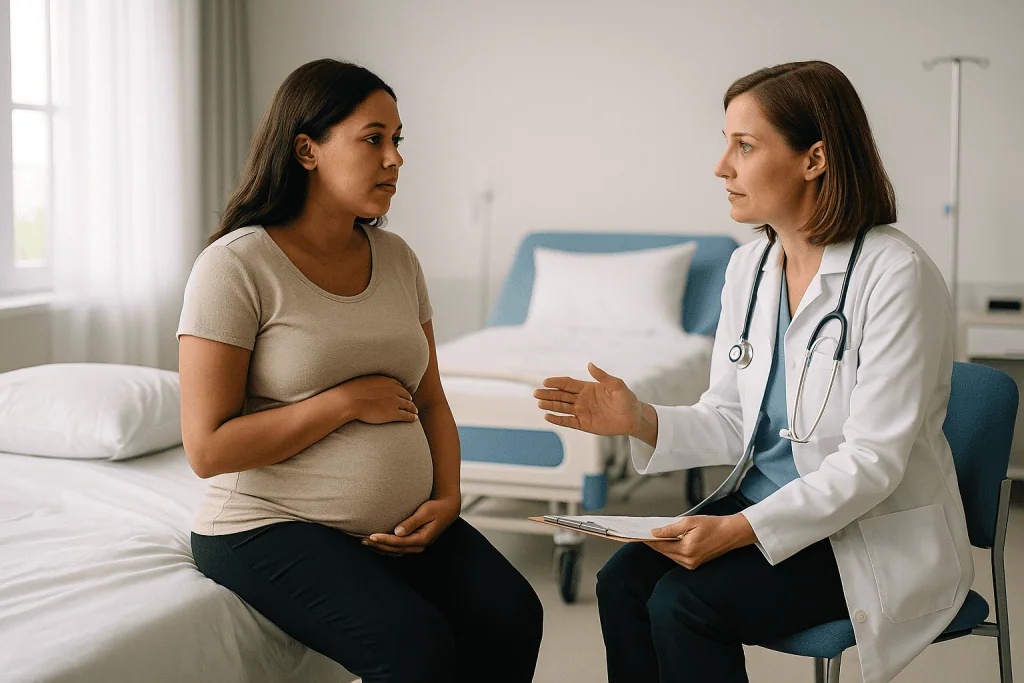
What happens at the pre-operative appointment before a planned cesarean?
Most hospitals book a dedicated pre-operative visit a few days to a week before the surgery date. It is less dramatic than it sounds. A midwife or nurse goes through your history, a clinician or anesthetist talks about the anesthetic, and a phlebotomist takes blood. You leave with a sheet of instructions, and that sheet matters more than anything you read online, including this article.
The appointment typically covers four things. First, consent: the surgeon or a member of the team explains why a cesarean is being recommended, the main risks, and the alternatives, and you sign a form that confirms you understood. Second, the anesthetic plan. The large majority of planned cesareans in high-income countries are done under a spinal or epidural anesthetic, meaning you are awake but numb from roughly the chest down; general anesthesia, where you are asleep, is reserved for specific situations, according to the NHS.
Third, your medical and medication history, including over-the-counter products, supplements, allergies and any previous reactions to anesthesia. Fourth, the practical instructions: when to stop eating and drinking, what time to arrive, where to go, and what to bring.
Some units also measure your blood pressure, check the baby’s heartbeat and position, and confirm the placenta’s location on a recent scan. If you have a condition such as diabetes, high blood pressure or a clotting disorder, expect a longer conversation and sometimes extra tests, because those conditions change how the day is organized. Write your questions down beforehand; it is easy to forget them once the form-filling starts.
Who is a planned cesarean usually for, and who is usually asked to wait?
A planned, or elective, cesarean is one booked in advance rather than decided during labor. The NHS lists common medical reasons: a baby lying bottom-first (breech) or sideways, a placenta covering the cervix (placenta previa), certain infections that could pass to the baby during a vaginal birth, twins or triplets in some positions, and some conditions in the mother such as severe pre-eclampsia. A previous cesarean is a reason some women are offered another, although many can also be offered a trial of vaginal birth after a cesarean, and that choice is made with the obstetric team.
Timing is the part people underestimate. Unless there is a medical reason to deliver earlier, a planned cesarean is usually scheduled from the 39th week of pregnancy, according to the NHS. The reason is the baby’s lungs and brain, which continue maturing through the final weeks. Babies born by cesarean before 39 weeks have a higher chance of breathing problems and admission to a neonatal unit than those born at or after 39 weeks. This is why a woman who is medically well and simply ready to be done is usually asked to wait, even when the waiting is exhausting.
The flip side is that if labor starts or your waters break before the date, the plan may change on the spot. Many units will then carry out the cesarean as an unplanned but not emergency procedure. Others, depending on the reason for the cesarean, may discuss a vaginal birth. Ask at the pre-op visit what you should do if labor starts early, and keep the maternity unit’s phone number somewhere obvious.
Cesarean birth is common. It accounts for about 32 percent of births in the United States, according to the CDC’s National Center for Health Statistics, and roughly one in four in the United Kingdom, per the NHS.
Fasting before a C-section: how long can you eat and drink?
This is the single most-asked question, and it has a frustrating two-part answer: there is a typical pattern, and then there is what your own hospital tells you.
The typical pattern, reflected in Mayo Clinic’s guidance on general anesthesia and in modern anesthesia practice generally, is a cut-off of around six hours before the operation for solid food and milk-based drinks, and around two hours for clear fluids. Clear fluids mean water, diluted squash or cordial without pulp, and black tea or coffee without milk. Anything you cannot see through, including milk, juice with bits, soup and chewing gum, counts as food for fasting purposes.
In practice this means that for a morning operating list, many women are told to finish a light meal by midnight and to stop clear fluids at a set early-morning time, often about two hours before the list begins. For an afternoon list, an early light breakfast is often allowed. The exact clock times come from the anesthetist, because they depend on when your slot is and on your medical history. People with diabetes, significant reflux, or slower stomach emptying for any reason may be given longer fasting times.
Two points are worth stressing. Fasting longer than instructed is not safer; it can leave you dehydrated, headachy and more likely to feel faint when the spinal takes effect. Some units actively encourage sipping clear fluids up until the cut-off for exactly that reason. And lying about a sneaked snack is genuinely dangerous: the anesthetist needs an honest answer, and the worst outcome of honesty is usually a delayed start rather than a cancelled operation.
Why fasting matters so much: what an empty stomach protects
The rule exists because of a specific mechanism, not tradition. When you are awake, a set of reflexes closes off your windpipe whenever you swallow or feel sick. Anesthesia dampens those reflexes. If stomach contents come back up into the throat while the reflexes are dulled, they can slip into the lungs. This is called aspiration, meaning food, fluid or acid entering the airway. Acidic stomach contents inflame the lung tissue, and solid particles can block airways. It is uncommon, but it is one of the most serious complications of anesthesia, which is why every anesthetic department treats fasting as non-negotiable.

Pregnancy stacks the odds slightly. The enlarged uterus pushes upward on the stomach, and pregnancy hormones relax the valve between the stomach and the gullet, which is why heartburn is so common in the third trimester. Gastric emptying itself is roughly normal in late pregnancy but slows markedly once labor begins or once opioid pain medicines are given. A planned cesarean, done before labor, is therefore a safer starting point than an emergency one, but the team still plans for the worst case.
That is also why most units give an antacid medicine before a cesarean, even when a spinal is planned. Two classes are used: medicines that reduce acid production in the stomach, and a quick-acting alkaline liquid that neutralizes acid already present. The aim is not comfort; it is to make any fluid that might reach the lungs less damaging. Your anesthetist decides whether, which and when, usually based on local protocol and your history. If you are already prescribed something for reflux, say so at the pre-op visit, because it may change the plan.
What blood tests are done before a C-section, and why?
The pre-operative blood tests are routine, and most women need only two tubes. They do not affect the baby, and the results are usually back within a day.
The first is a full blood count. It measures hemoglobin, the oxygen-carrying protein in red blood cells, and the number of platelets, the cell fragments that start clots. Hemoglobin matters because a cesarean involves more blood loss than an uncomplicated vaginal birth, and starting with iron-deficiency anemia leaves less reserve. If your hemoglobin is low at the pre-op visit, the team may discuss iron, by mouth or in some cases intravenously, with the decision resting with your obstetrician. The platelet count matters for the anesthetist, because a spinal or epidural needle passes close to the spinal cord and a low count raises the risk of bleeding there; below certain thresholds, a different anesthetic plan is chosen.
The second is a blood group and antibody screen, often called a group and save. The laboratory records your ABO group and Rh status and checks for antibodies that could react with donated blood. Nothing is set aside, but if transfusion were ever needed, matched units could be prepared quickly. Women with known risk factors for heavy bleeding, such as placenta previa, previous cesareans with a low-lying placenta, or known antibodies, may instead have blood cross-matched and physically reserved.
Depending on your history, other tests are sometimes added: kidney and liver tests if you have high blood pressure or pre-eclampsia, a glucose check if you have diabetes, or clotting tests if you take blood-thinning medicine. If you have had the standard antenatal screening for infections earlier in pregnancy, it is not usually repeated, as MedlinePlus notes in its overview of cesarean delivery.
Medicines, supplements and skin: the conversation to have before the day
Bring every box, bottle and sachet to the pre-op visit, or at least a photograph of each label. The team needs the full list, and the decisions about what to continue, pause or adjust belong to them, not to a leaflet.
Some patterns are predictable. Medicines for blood pressure, thyroid conditions, epilepsy and asthma are usually continued, often with a sip of water on the morning of surgery, because stopping them is riskier than a mouthful of fluid. Blood-thinning injections, which many pregnant women with clotting risk take, are typically timed around the spinal anesthetic; the anesthetist will give you exact instructions about the last dose before and the first after. Aspirin prescribed for pre-eclampsia prevention is handled case by case. Insulin and other diabetes medicines need a specific plan for the fasting period, because fasting without adjustment can cause low blood sugar. In every one of these cases, do not change anything on your own.
Supplements deserve a mention because people forget them. Prenatal vitamins are usually fine to continue, but some herbal products affect bleeding or interact with anesthetic drugs, and the anesthetist will want to know about fish oil, high-dose vitamin E, ginkgo, garlic capsules and similar products. The NIH Office of Dietary Supplements is a reliable place to read about individual ingredients, but the practical question of whether to stop is for your team.
Skin preparation is simpler than most people expect. Mayo Clinic advises against shaving the pubic or abdominal area yourself in the days before surgery, because tiny nicks become doorways for bacteria and raise wound infection risk. If hair needs removing, staff do it with clippers on the day. A normal shower with your usual soap is the standard advice unless your unit gives you an antiseptic wash and tells you how to use it.
The night before a C-section: what to do and what to skip
The evening before is logistics, not preparation in any medical sense, and treating it that way keeps it calm. Eat a normal, moderate dinner within the fasting window you were given. Heavy, fatty or very spicy food is worth avoiding for the plain reason that reflux at midnight is miserable when you cannot take anything for it and have an early alarm.
Shower in the evening or the morning, whichever your instructions say. Wash your hair if that helps you feel human, because washing it afterward with a fresh wound and a newborn is awkward. Remove nail polish and gel from at least one or two fingers if asked; the oxygen monitor clip reads through the nail bed and dark polish can interfere. Take off jewelry, including body piercings, and leave valuables at home. Contact lens wearers should pack glasses.
Lay out your clothes for the morning, loose and front-opening, and put your hospital bag and the baby’s car seat by the door. Confirm who is driving, confirm childcare for other children, and confirm the arrival time and the entrance. Set two alarms. Charge your phone.
Then stop. Many women describe this night as the strangest of the pregnancy, knowing the exact hour their life changes. Sleep may be thin, and that is fine; a spinal anesthetic does not require you to be rested, only fasted and present. Gentle, familiar things help: a warm bath, a film you have seen before, a short walk. Alcohol is already off the table in pregnancy, and nicotine in any form should be avoided because it impairs wound healing. If anxiety is severe rather than ordinary, tell the team in the morning. Anesthetists are used to it and have ways to make the theater feel less clinical.
What to pack in a C-section hospital bag
A hospital stay after a planned cesarean is typically around three to four days in the United Kingdom, according to the NHS, and often two to three days in the United States, per Mayo Clinic. Pack for that length, and pack with the incision in mind, because the wound sits low on the abdomen exactly where waistbands fall.
For you, think in layers of comfort. High-waisted, soft underwear that sits above the wound line, several pairs. Loose nightwear or dresses that open at the front for feeding and for examinations. Slip-on footwear, because bending to tie laces is one of the first movements you will avoid. A long phone charging cable, since the bed is rarely near a socket. Lip balm, because theater air and fasting dry the mouth. Your own pillow if the unit allows it; pressing a pillow against the wound when you cough or laugh is genuinely useful, and the NHS recovery guidance mentions supporting the wound in this way.
Toiletries should be simple: toothbrush, unscented wipes, a hairbrush, maternity pads in a generous quantity. Vaginal bleeding after a cesarean is lighter than many expect but still happens, because it comes from the uterus rather than the route of birth.
For the baby: a few sleepsuits and vests, a hat, nappies, cotton wool or wipes, a blanket, and the car seat fitted in advance. Formula if you plan to use it, prepared according to your unit’s policy.
Paperwork matters more than people think. Your maternity notes, your medication list, your birth preferences, your insurance or identification documents, and the pre-op instruction sheet. Keep a small bag for the car with snacks and a drink for after the operation, because once you are allowed to eat you will be very hungry.
What actually happens on the morning of a planned cesarean
You arrive, usually early, and are shown to a bay or room. A midwife checks your blood pressure, temperature and pulse, listens to the baby, and confirms when you last ate and drank. You change into a gown and compression stockings, which squeeze the calves to reduce the risk of blood clots. A small plastic tube, a cannula, is placed in a vein on the back of your hand or forearm for fluids and medicines. You will probably be given the antacid medicine described earlier. Then there may be a wait, because operating lists run in an order decided by medical need, and the order can change.
In the anesthetic room or theater, the anesthetist puts in the spinal or epidural while you sit or curl on your side. It feels like pressure and a brief sting from local anesthetic, and within minutes your legs grow warm and heavy. A urinary catheter, a soft tube into the bladder, is inserted once you are numb, because you will not feel the need to pass urine for several hours. A screen goes up at chest height. Your birth partner, in scrubs, usually sits by your head.
The surgeon makes a horizontal cut just above the bikini line, typically 10 to 20 centimeters long, according to the NHS, then opens the uterus. The baby is lifted out within the first part of the operation; many women describe a tugging or rummaging sensation but not pain. The cord is clamped, often after a short delay, and in most units the baby comes straight to your chest if all is well. Closing the uterus and abdomen takes longer than the delivery, and the whole operation usually lasts about 40 to 50 minutes, per the NHS.
Planned C-section preparation at a glance
The steps below summarize the typical sequence from the pre-operative visit to the morning of surgery. Every timing is a common pattern drawn from the NHS and Mayo Clinic guidance cited in this article, and every one of them yields to the written instructions your own team gives you.
| When | What usually happens | Why it matters |
|---|---|---|
| About a week before | Pre-operative visit: consent, anesthetic discussion, medication review, blood tests | Hemoglobin and platelets guide the anesthetic; blood group allows rapid matching if transfusion is ever needed |
| Days before | Follow team instructions on regular medicines; no self-shaving of the surgical area | Nicks from razors raise wound infection risk; some medicines need timing around the spinal |
| Night before | Light dinner within the fasting window, shower, pack, remove nail polish and jewelry | Reflux is harder to manage overnight; polish can interfere with oxygen monitoring |
| About 6 hours before | Last solid food and milk-based drinks (typical anesthesia guidance) | Reduces the volume of stomach contents that could be aspirated |
| About 2 hours before | Last clear fluids (typical anesthesia guidance) | Clear fluids leave the stomach quickly; stopping earlier adds dehydration without benefit |
| On arrival | Observations, stockings, cannula, antacid, final checks | Clot prevention and airway protection start before the anesthetic |
| In theater | Spinal or epidural, catheter, operation of about 40–50 minutes | Regional anesthesia keeps you awake for the birth and avoids most airway risk |
Two patterns stand out from the table. Almost every step is about one of two risks, aspiration or bleeding and clots, and almost every step is something the team does for you rather than something you must get right alone. The parts that genuinely rest with you are the fasting times, honesty about medicines and food, and not reaching for a razor.
What the first days and weeks after a planned cesarean usually look like
The first few hours are spent in a recovery area while the spinal wears off, which takes a few hours, with your legs tingling back to life in the meantime. Once you can wiggle your toes and your observations are stable, you move to the postnatal ward. Pain relief is a combination of medicines given by different routes and chosen by the anesthetic team; the usual approach pairs regular simple painkillers with stronger medicines available when needed, and the prescribing team adjusts the plan as the days pass.
Most units get you out of bed within about 12 to 24 hours, and the catheter is usually removed once you are mobile, typically within the first day, according to the NHS recovery guidance. Walking early feels counterintuitive but it is one of the strongest protections against blood clots, along with the stockings and, for many women, a course of blood-thinning injections whose length is decided by your team. Eating and drinking generally resume the same day.
The NHS puts the average hospital stay at around three to four days, and says most women take about six weeks to recover fully, although individual recovery varies and people with complications take longer. The wound dressing is typically removed after a day or so; the skin usually heals within a couple of weeks, leaving a scar that fades over months. Vaginal bleeding, called lochia, lasts a few weeks and gradually lightens.
Practical limits follow from the wound. Lifting anything heavier than the baby, driving, sex and strenuous exercise are commonly deferred for around six weeks, with driving in particular requiring that you can brake sharply without pain and that your insurer has no objection. A postnatal check with your doctor or midwife is usually arranged within the first six to eight weeks.
What people often get wrong about planned C-section preparation
The first myth is that fasting longer is safer. It is not. Clear fluids leave the stomach within about two hours, and arriving parched and lightheaded makes the drop in blood pressure that often follows a spinal anesthetic harder to manage. Follow the times you were given, and sip water up to the cut-off if your instructions allow it.
The second is that shaving yourself the night before is helpful or expected. Both Mayo Clinic and standard surgical guidance say the opposite: razor nicks give skin bacteria an entry point, and if hair removal is needed the team uses clippers immediately before surgery.
Third, that a planned cesarean means no vaginal bleeding afterward. The bleeding comes from the place where the placenta separated inside the uterus, so it happens regardless of how the baby came out.
Fourth, that you will be asleep. Most planned cesareans use a spinal or epidural, which leaves you awake, numb and able to hold your baby within minutes. General anesthesia is used for particular medical reasons, not as a default or on request alone, and that discussion sits with the anesthetist.
Fifth, that a planned cesarean is the easy option with no recovery. It is major abdominal surgery. The NHS lists risks including wound infection, bleeding, blood clots, injury to nearby organs, and effects on future pregnancies such as a higher chance of placenta previa. These are uncommon, and for many women the benefits clearly outweigh them, but a realistic picture prepares you better than a rosy one.
Finally, that you cannot change the plan. If your circumstances or wishes change, or if labor starts early, you can and should talk to your team. The date on the calendar is a plan, not a contract.
Questions to ask your care team before a planned cesarean
A pre-operative appointment is short and the team will cover the essentials, but it is your appointment too. Writing questions down beforehand, and bringing someone to listen, means you walk out with answers instead of a vague sense that something was mentioned.
- What exactly are my fasting times for food and for clear fluids, and may I sip water up to the cut-off?
- Which of my regular medicines and supplements should I take on the morning of surgery, and which should I pause?
- What were my hemoglobin and platelet results, and does anything need to be done about them before the day?
- What anesthetic are you planning, and what happens if the spinal does not work fully?
- What should I do if my waters break or contractions start before the date?
- Can my birth partner be with me in theater, and can we have skin-to-skin contact and delayed cord clamping if the baby is well?
- Will I be given blood-thinning medicine or stockings afterward, and for how long?
- What pain relief plan do you use, and is it compatible with breastfeeding?
- How long do you expect me to stay, and what needs to happen before I go home?
- What wound care do you want me to do, and when will the dressing come off?
- Who do I call, at any hour, if something worries me after discharge?
Two more are worth asking if they apply to you. If this is a repeat cesarean, ask what the team found about scar tissue or placenta position and whether that changes the plan. If you have a condition such as diabetes or a clotting disorder, ask who is coordinating that aspect of your care on the day. The answers are specific to you, which is exactly why no article can give them.
When to call your doctor: red-flag signs before and after a planned cesarean
Preparation includes knowing what should not wait for the scheduled date. Before the operation, contact your maternity unit straight away, at any hour, if you notice regular painful contractions, your waters breaking, any vaginal bleeding, a marked reduction or change in the baby’s movements, a severe headache with visual disturbance or sudden swelling of the face and hands, which can signal pre-eclampsia, or constant abdominal pain. Call too if you develop a fever, vomiting that stops you keeping fluids down, or a cold or chest infection in the days before surgery, because the anesthetist may want to reassess the plan. None of these mean the cesarean is off; they mean the team needs to see you sooner.
After the operation, the NHS recovery guidance and Mayo Clinic highlight signs that need prompt medical attention. Seek urgent help for heavy vaginal bleeding that soaks a pad in an hour or passes large clots, chest pain or breathlessness, a painful, swollen or red calf, severe or worsening abdominal pain, or feeling faint. Those symptoms can point to hemorrhage or a blood clot in the leg or lung, both of which are treatable and both of which get worse with delay.
Call your doctor or midwife the same day for a fever, a wound that becomes increasingly red, hot, swollen or leaks fluid or pus, a wound that opens, foul-smelling vaginal discharge, pain or burning when passing urine, or a headache that is worse when you sit or stand up and better lying flat, which can follow a spinal anesthetic. Tell someone, too, if you feel persistently low, anxious or unable to cope; postnatal mental health is part of recovery, not separate from it.
Every decision about what these signs mean and what happens next belongs to the team looking after you. Your job is simply to make the call.
Frequently asked questions
How long is fasting before a C-section?
Many anesthesia services ask for no solid food or milk-based drinks for about six hours before a planned cesarean and no clear fluids for about two hours before, in line with Mayo Clinic’s guidance on anesthesia. Your hospital sets the exact clock times based on your operating slot and medical history, and those written instructions override any general range. Longer fasting is not safer.
Can I drink water the morning of a planned C-section?
Often yes, up to the clear-fluid cut-off your team gives you, which is commonly about two hours before surgery. Water, and black tea or coffee without milk, count as clear fluids. Milk, juice with pulp and chewing gum do not. Some units actively encourage sipping water until the cut-off to reduce dehydration and faintness when the spinal takes effect. Check your instruction sheet.
What blood tests before a C-section are routine?
The two standard tests are a full blood count and a blood group and antibody screen. The blood count measures hemoglobin, to check for anemia before expected surgical blood loss, and platelets, which the anesthetist needs to know before placing a spinal or epidural. The group and screen records your blood type so matched blood could be prepared quickly if needed. Extra tests are added for conditions such as pre-eclampsia or diabetes.
What should I do the night before a C-section?
Eat a light dinner within your fasting window, shower, remove nail polish and jewelry, pack your bag and the car seat, confirm transport and childcare, and set two alarms. Do not shave the surgical area. Then rest as best you can; a spinal anesthetic does not require you to have slept well, only to have fasted correctly and arrived on time.
What goes in a C-section hospital bag?
Pack for about two to four nights: high-waisted soft underwear that sits above the wound, front-opening nightwear, slip-on shoes, maternity pads, a long charging cable, lip balm and simple toiletries. For the baby, sleepsuits, vests, a hat, nappies and a fitted car seat. Bring your maternity notes, medication list and the pre-op instruction sheet. A pillow to brace the wound when coughing is surprisingly useful.
Should I shave before a planned cesarean?
No. Mayo Clinic specifically advises against shaving the pubic or abdominal area yourself in the days before surgery, because small cuts from razors let skin bacteria in and raise the risk of wound infection. If hair needs to be removed for the incision, staff do it with electric clippers immediately before the operation, which is the method associated with the lowest infection risk.
Will I be awake during a planned C-section?
Usually yes. Most planned cesareans are performed under a spinal or epidural anesthetic, which numbs you from roughly the chest down while you stay awake, so you can see and hold your baby within minutes of birth, according to the NHS. General anesthesia, where you are asleep, is used for specific medical reasons decided by the anesthetist, for example certain clotting problems or when a spinal cannot be placed.
How long does a planned C-section take?
The whole operation usually takes about 40 to 50 minutes, according to the NHS. The baby is delivered during the early part of that time; the remainder is spent delivering the placenta and closing the uterus and the layers of the abdominal wall. Add to that the time for the anesthetic to be placed and take effect beforehand, and a few hours in recovery afterward while the numbness wears off.
Should I stop my regular medicines before a C-section?
Not on your own. Bring a full list of prescribed medicines, over-the-counter products and supplements to the pre-operative visit, and let the team decide what to continue, pause or retime. Medicines for blood pressure, thyroid and epilepsy are often continued; blood thinners, insulin and aspirin are usually timed or adjusted around the surgery. Stopping something without advice can be more dangerous than the operation itself.
What happens if I go into labor before my planned C-section date?
Call your maternity unit straight away if contractions start or your waters break before the date. Depending on the reason for the cesarean and how far labor has progressed, the team will usually carry out the cesarean sooner, as an unplanned rather than emergency procedure, or in some cases discuss continuing toward a vaginal birth. Ask at your pre-operative visit what the plan would be for you.
References
- NHS: Caesarean section, what happens
- NHS: Caesarean section, recovery
- MedlinePlus: Cesarean Delivery
- CDC National Center for Health Statistics: Births, method of delivery
This article is for general information only and is not a substitute for professional medical advice. Please consult a qualified doctor about your individual situation.

More from the Blog

Fasting and Timing for Gestational Diabetes Screening: How to Prepare for the Glucose Test
Preparation depends on which glucose test you are having. The one-hour screening test usually needs no fasting; you eat normally, drink the glucose solution…

Who Needs Closer Pregnancy Monitoring? Twins, Diabetes, Blood Pressure and Other Reasons
Closer pregnancy monitoring is usually offered when a pregnancy carries a higher chance of complications for the mother, the baby, or both. Common reasons…

How Does the Glucose Tolerance Test Work? Gestational Diabetes Screening Explained Plainly
The glucose tolerance test in pregnancy measures how quickly your body clears sugar from the blood after a measured glucose drink. You usually fast…

Flying After Amniocentesis: How Long International Patients Wait Before Traveling Home
No major guideline sets a fixed number of days for flying after amniocentesis. Standard aftercare is to rest for the remainder of the procedure…

When Diet Alone Is Not Enough: How Gestational Diabetes Treatment Steps Up Under Supervision
Insulin is usually needed for gestational diabetes when blood sugar readings stay above the targets your care team sets despite one to two weeks…

Getting Ready for a Planned Cesarean Delivery: Fasting Rules, Blood Tests and the Night Before
Preparing for a planned cesarean usually means a pre-operative appointment with blood tests to check for anemia and record your blood group, a consent…