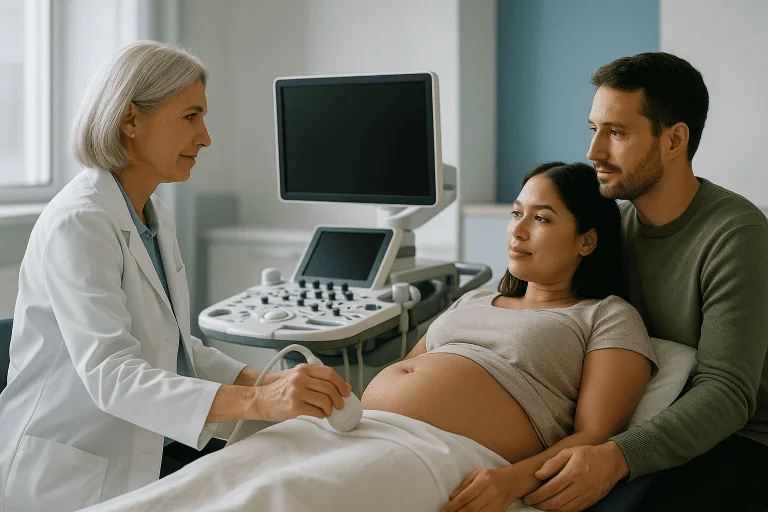
Placenta Previa
Placenta previa is a pregnancy condition where the placenta covers the cervix. Learn symptoms, diagnosis, treatment and when to seek care.

Quick answer
Placenta previa is a pregnancy condition in which the placenta lies low in the uterus and partly or completely covers the cervix, which can cause painless vaginal bleeding and affect delivery planning. At Acibadem in Turkey, it is evaluated with obstetric examination and ultrasound, and care focuses on close maternal-fetal monitoring, managing bleeding risk, and choosing the safest timing and…
What is placenta previa?
Placenta previa is a pregnancy condition in which the placenta: the organ that develops in the uterus (womb) to deliver oxygen and nutrients to the baby, sits unusually low in the uterus and covers all or part of the cervix. The cervix is the opening at the bottom of the uterus through which the baby normally passes during a vaginal birth. When the placenta covers this opening, it can block the baby’s path and cause bleeding, especially in the second half of pregnancy.
To answer the common question “what is placenta previa” in the simplest terms: it means the placenta is in the wrong position, lying at the bottom of the uterus over the cervix instead of higher up on the uterine wall. Doctors often describe the condition by how much of the cervix is covered:
- Complete (total) placenta previa: the placenta covers the entire cervical opening.
- Partial placenta previa: the placenta covers part of the cervical opening.
- Marginal placenta previa: the edge of the placenta reaches the edge of the cervix but does not cover it.
- Low-lying placenta: the placenta sits close to the cervix (typically within about two centimeters) but does not touch or cover it. This is often grouped with placenta previa in early scans because it can behave similarly.
Placenta previa affects a small percentage of pregnancies. It is more often found on ultrasound scans in mid-pregnancy, and in many of those early cases the placenta appears to “move” away from the cervix as the uterus grows. The placenta does not actually travel; rather, the lower part of the uterus stretches during pregnancy, which can carry the placental edge farther from the cervix. When the placenta still covers the cervix in the third trimester, doctors plan the birth carefully, usually by cesarean section (surgical delivery through the abdomen), because a vaginal birth could cause serious bleeding.
Symptoms of placenta previa
The most characteristic of all placenta previa symptoms is painless, bright red vaginal bleeding in the second half of pregnancy, most often after 20 weeks. The bleeding happens because the lower part of the uterus and the cervix change shape as pregnancy advances, which can disturb the placental attachment where it lies over the cervix.
Common features of bleeding related to placenta previa include:
- Painless bleeding: unlike some other causes of bleeding in pregnancy, placenta previa bleeding often occurs without abdominal pain or cramping.
- Bright red blood: the blood is typically fresh-looking rather than dark or old.
- Sudden onset: bleeding may start without warning, sometimes at rest or after intercourse.
- Episodes that stop and return: a first bleed often stops on its own, but bleeding frequently recurs, and later episodes can be heavier.
- Contractions in some cases: some women feel tightening of the uterus (contractions) along with the bleeding, though pain is not the typical pattern.
Symptoms can differ depending on the type and timing. A complete previa is more likely to cause earlier and heavier bleeding, while a marginal or low-lying placenta may cause little or no bleeding until late pregnancy or labor, and some women with placenta previa have no symptoms at all. In those cases, the condition is discovered only on a routine ultrasound scan. This is one reason routine prenatal imaging is important: a silent previa still needs a carefully planned delivery.
It is worth emphasizing that any vaginal bleeding in pregnancy, painless or painful, light or heavy, should be evaluated promptly by a healthcare professional. Only an examination and imaging can determine the cause.
Causes and risk factors
The exact placenta previa causes are not fully understood. The placenta implants wherever the fertilized egg attaches to the uterine lining, and in most pregnancies this happens higher in the uterus. In placenta previa, implantation occurs low in the uterus, near or over the cervix. Doctors believe that changes or scarring in the uterine lining may make low implantation more likely, but in many cases no single cause can be identified, and having placenta previa is not the result of anything a woman did or failed to do.
Several factors are known to increase the chance of placenta previa:
- Previous cesarean delivery: scarring in the uterus from a prior cesarean section raises the risk, and the risk tends to increase with the number of previous cesareans.
- Previous uterine surgery or procedures: operations on the uterus, such as removal of fibroids (noncancerous growths) or dilation and curettage (a procedure to remove tissue from the uterus), can leave scarring.
- Previous placenta previa: having had the condition in an earlier pregnancy increases the likelihood of it happening again.
- Multiple pregnancies (higher parity): women who have given birth several times before are at somewhat higher risk.
- Carrying twins or more: a larger placenta, or more than one placenta, has more chance of extending over the cervix.
- Maternal age of 35 or older: risk rises modestly with age.
- Smoking during pregnancy: smoking is associated with placental problems, including previa.
- Assisted reproduction: pregnancies conceived through in vitro fertilization (IVF) appear to carry a somewhat higher risk.
Having one or more risk factors does not mean placenta previa will occur, and many women who develop it have no identifiable risk factor at all.
Diagnosis
Placenta previa diagnosis is made with imaging, not with symptoms alone. The key steps doctors typically use are:
- Abdominal ultrasound: a standard scan over the belly, often performed as part of routine mid-pregnancy screening (usually between 18 and 22 weeks). Many cases are first noticed at this scan, sometimes before any bleeding has occurred.
- Transvaginal ultrasound: a scan performed with a slim probe placed gently in the vagina. This is considered the most accurate way to measure the exact distance between the placental edge and the cervix. When performed carefully by trained staff, it is regarded as safe even when a previa is suspected, because the probe does not need to touch the cervix.
- Follow-up scans: because a low-lying placenta found in mid-pregnancy often moves away from the cervix as the uterus grows, doctors usually repeat the ultrasound later in pregnancy, commonly around 32 weeks, and again around 36 weeks if needed, to confirm whether the previa persists and to plan the delivery.
- Magnetic resonance imaging (MRI) in selected cases: MRI is not needed to diagnose placenta previa itself, but doctors may use it when they suspect a related condition called placenta accreta spectrum, in which the placenta grows too deeply into the wall of the uterus. This is more likely when a previa occurs over a previous cesarean scar.
One point about examinations is important for patients to understand: when placenta previa is suspected, doctors avoid routine digital vaginal examinations (examining the cervix with the fingers), because touching or disturbing the placenta over the cervix could trigger heavy bleeding. Imaging is done first to establish where the placenta lies. In specialized centers, including the obstetrics and maternal-fetal medicine departments of hospital groups such as Acibadem, this stepwise imaging approach is standard practice for confirming the diagnosis and classifying the type of previa.
Alongside imaging, doctors assess the overall situation: how much bleeding has occurred, the mother’s blood count and blood type, the baby’s heart rate and growth, and how far along the pregnancy is. All of these details shape the treatment plan.
Treatment options
There is no medication or procedure that can move the placenta. Placenta previa treatment therefore focuses on two goals: preventing and managing bleeding, and timing the birth safely. The plan depends on how far along the pregnancy is, whether bleeding has occurred, how heavy it is, and how the mother and baby are doing.
Watchful waiting (expectant management)
When there is little or no bleeding, doctors often recommend careful monitoring rather than immediate intervention. This usually involves regular ultrasound scans, checks on the baby’s growth and well-being, and clear instructions about warning signs. Your doctor may advise you to avoid sexual intercourse, tampons, douching, and strenuous physical activity, since these can provoke bleeding. Strict bed rest is no longer routinely recommended in all cases, but activity restrictions are commonly individualized. Women with a persistent previa are often advised to stay within reasonable reach of a hospital that can perform an urgent cesarean delivery.
Hospital care for bleeding episodes
If bleeding occurs, evaluation in a hospital is usually needed. Depending on the amount of bleeding and the stage of pregnancy, care may include admission for observation, monitoring of the baby’s heart rate, intravenous fluids, and blood transfusion if blood loss is significant. Some women with repeated bleeding episodes remain in the hospital until delivery so that help is immediately available; others may be monitored at home between visits if bleeding has stopped and circumstances allow.
Medications
Medicines do not treat the previa itself, but they support a safer outcome:
- Corticosteroids: if early delivery looks likely, an injection of steroid medication may be given to help the baby’s lungs mature more quickly.
- Medicines to calm contractions (tocolytics): in selected situations, doctors may use short-term medication to reduce uterine contractions and gain time for steroids to work.
- Rh immunoglobulin: women with Rh-negative blood who bleed during pregnancy are usually given this injection to prevent immune problems in the current or future pregnancies.
- Iron supplements: often recommended to treat or prevent anemia (low red blood cell count) caused by blood loss.
Planned cesarean delivery
When the placenta still covers or lies very close to the cervix near the end of pregnancy, cesarean section is the standard and safest way to deliver the baby. Attempting vaginal birth through a placenta that blocks the cervix would cause severe bleeding. Doctors usually plan the cesarean before labor begins, commonly in the late-preterm to early-term window, often around 36 to 37 weeks for an uncomplicated previa, balancing the baby’s maturity against the risk of a sudden heavy bleed. If heavy bleeding occurs earlier and cannot be controlled, an emergency cesarean may be necessary regardless of gestational age.
If the placental edge lies a safe distance from the cervix on late-pregnancy scans (a resolved low-lying placenta), a vaginal birth may still be possible; this is decided case by case.
Managing severe bleeding at delivery
Placenta previa increases the risk of heavy bleeding at delivery, so surgical teams prepare in advance: blood products are made available, and experienced obstetric and anesthesia staff are involved. If the placenta has grown abnormally deeply into the uterine wall (placenta accreta spectrum), more extensive surgery may be needed, and in severe cases a hysterectomy (removal of the uterus) may be required to stop life-threatening bleeding. Doctors discuss these possibilities in advance whenever risk factors are identified, so that the delivery can take place in a center equipped for complex obstetric surgery. Within some hospital networks, such as Acibadem, deliveries complicated by previa are managed by multidisciplinary teams that include obstetricians, anesthesiologists, and neonatal specialists.
Living with placenta previa and outlook
Being told you have placenta previa can be worrying, but the outlook in modern obstetric care is generally reassuring when the condition is known about and delivery is planned. A few honest points help put it in perspective:
- Many early previas resolve. A low-lying placenta seen at the mid-pregnancy scan often no longer covers the cervix by the third trimester as the uterus grows.
- Most pregnancies with persistent previa end well when the condition is diagnosed before labor and a cesarean delivery is planned in an appropriately equipped hospital. Serious complications are possible, mainly heavy bleeding for the mother and preterm birth for the baby, which is exactly why close monitoring matters.
- Prematurity is the main risk to the baby. If bleeding forces an early delivery, the baby may need care in a neonatal unit. Corticosteroid treatment before birth can reduce breathing problems in preterm infants.
- Day-to-day life usually involves precautions, not confinement: avoiding intercourse and strenuous exertion, attending all scheduled scans, keeping a bag packed, arranging transport to the hospital, and telling your care team immediately about any bleeding.
- Emotional strain is common. Uncertainty, activity limits, and hospital stays can be stressful. Support from family, your care team, and, where helpful, a counselor is a reasonable part of managing the condition.
After delivery, most women recover as they would from any cesarean birth, although recovery may take longer if there was significant blood loss or additional surgery. Placenta previa can recur in a future pregnancy, so it is worth mentioning your history at the first prenatal visit of any later pregnancy so that early scans can check the placental position.
Frequently asked questions
What is placenta previa in simple terms?
Placenta previa means the placenta, the organ that nourishes the baby during pregnancy, is attached low in the uterus and covers all or part of the cervix, the opening through which the baby would pass during a vaginal birth. Because the placenta blocks or lies near this opening, it can bleed in later pregnancy, and doctors usually plan a cesarean delivery when it persists to the end of pregnancy.
Can placenta previa go away on its own?
In many cases, yes, especially when it is found early. A placenta that appears low or over the cervix at the mid-pregnancy scan often ends up a safe distance from the cervix later on, because the lower part of the uterus stretches as the pregnancy grows. Complete previas found later in pregnancy are less likely to resolve. Follow-up ultrasounds are the only way to know, which is why repeat scans in the third trimester are standard.
How serious is placenta previa?
It ranges from a finding that resolves on its own to a condition that can cause serious bleeding for the mother and premature birth for the baby. The seriousness depends on how much of the cervix is covered, whether bleeding occurs, and how early in pregnancy it happens. With modern diagnosis and a planned cesarean delivery in a well-equipped hospital, outcomes are good in most cases, but it is a condition that always requires close medical supervision.
What are the first placenta previa symptoms I might notice?
The classic first sign is sudden, painless, bright red vaginal bleeding in the second half of pregnancy. The bleeding may be light or heavy and often stops on its own before returning later. However, some women have no symptoms at all, and the condition is found only on a routine ultrasound. Any bleeding in pregnancy should be reported to a doctor promptly, whatever the suspected cause.
Is there a placenta previa treatment that moves the placenta?
No. There is no medicine, exercise, position, or procedure that can reposition the placenta. Treatment instead focuses on monitoring, limiting activities that could provoke bleeding, managing any bleeding episodes in the hospital, supporting the baby’s lung development if early delivery seems likely, and planning a cesarean birth at the safest possible time.
Can I have a normal vaginal delivery with placenta previa?
If the placenta still covers the cervix or lies very close to it near the end of pregnancy, a vaginal birth is not considered safe, and a cesarean section is recommended. If late-pregnancy scans show the placental edge has moved a safe distance away from the cervix, your doctor may consider a vaginal birth. The decision is individualized and based on the final ultrasound measurements and your overall situation.
Will placenta previa happen again in my next pregnancy?
Having had placenta previa once increases the chance of it occurring in a future pregnancy, although most women who had it do not develop it again. Prior cesarean deliveries also add to the risk. If you become pregnant again, tell your care team about your history early so that ultrasound scans can check the placental position from the start.
When to see a doctor
If you are pregnant and have been told you have placenta previa or a low-lying placenta, or even if you have not, certain symptoms need urgent medical attention. Go to a hospital emergency department or seek emergency care immediately if you experience:
- Any vaginal bleeding in pregnancy, even if it is light, painless, or stops on its own;
- Heavy bleedingsoaking a pad, passing clots, or bleeding that does not slow down;
- Bleeding with abdominal pain, cramping, or regular contractions;
- Dizziness, fainting, rapid heartbeat, or pale, clammy skin, which can signal significant blood loss;
- A sudden gush of fluid from the vagina, which may mean the waters have broken;
- A noticeable decrease in the baby’s movements.
Even between emergencies, contact your prenatal care team promptly about any new spotting, unusual discharge, or concerns about your activity restrictions. With placenta previa, early reporting of symptoms gives your doctors the best chance to protect both you and your baby, and no episode of bleeding in pregnancy should ever be dismissed as too small to mention.
Medically reviewed by the Acıbadem International Medical Board September 2, 2026
See our medical review board →
Update history
- PublishedJune 8, 2026
- Medical review approvedSeptember 2, 2026
- Last content updateSeptember 2, 2026