

Gum Disease and Heart Disease: What the Link Really Is

Key Takeaways
- Observational studies consistently find that people with periodontitis have about 1.2 to 1.5 times the rate of coronary events, a real but modest association compared with smoking or diabetes.
- The American Heart Association's 2012 scientific statement concluded that gum disease is independently associated with atherosclerotic disease but has not been shown to cause it, and that position still stands.
- No randomized trial has demonstrated that treating gum disease prevents heart attacks or strokes, although treatment does lower C-reactive protein and improve artery lining function for months.
- Smoking, diabetes, age and socioeconomic factors drive both conditions, and adjusting for them shrinks the gum-heart association by roughly a third without eliminating it.
- CDC data estimate that about 47 percent of US adults over 30 and roughly 70 percent over 65 have some periodontitis, so the condition is common enough to matter on its own terms.
- In people with type 2 diabetes, periodontal treatment improves HbA1c by about 0.3 to 0.4 percentage points in pooled trials, the clearest proven systemic benefit of gum care so far.
Gum disease and heart disease are linked, but the evidence shows association rather than proof of cause. People with periodontitis have roughly 20 to 50 percent higher rates of heart attack and stroke in observational studies, partly because they share risk factors such as smoking, diabetes and age. Randomized trials have not yet shown that treating gum disease prevents cardiovascular events, though good gum care remains worthwhile for its own sake.
A patient recently brought her dental hygienist a screenshot. A short video, viewed millions of times, claimed that bleeding gums “leak bacteria straight into your arteries” and that a particular mouth rinse could “prevent a heart attack.” She wanted to know whether she should be scared or skeptical. As of September 2026, that same question is driving a sharp rise in searches for gum disease and heart disease, fueled by viral clips, fresh coverage of long-running population studies, and a steady drip of headlines that treat a statistical link as a settled fact.
The truth sits in a more interesting place than either the alarmists or the dismissers suggest. Dentists and cardiologists have studied this connection for more than three decades, and they largely agree on what is known, what is plausible, and what remains unproven. This piece lays that out plainly, grades the evidence, and explains what it means for the person brushing at the sink tonight.
What changed recently in the gum disease and heart disease conversation
Nothing about the underlying biology changed this year. What changed is attention. Short-form videos compressing a nuanced association into a frightening sentence have pushed the topic back into the mainstream, and that has prompted clinicians to restate what the evidence has said for some time.
The anchor document remains the American Heart Association scientific statement published in Circulation in April 2012. After reviewing hundreds of studies, the authors concluded that periodontal disease is associated with atherosclerotic vascular disease independently of known confounders, but that the evidence does not support a causal relationship, and that there is no proof that treating gum disease prevents heart disease or changes its course. That wording has not been overturned.
Two later developments nudged the field forward. In 2020, a joint consensus from European periodontology and world cardiology organizations reaffirmed the independent association and recommended that cardiologists ask about gum health and that dentists ask about cardiovascular risk. In 2021, the European cardiovascular prevention guideline listed periodontitis among conditions that may modify a person’s risk estimate, a cautious recognition rather than a call to treat the heart through the mouth.
Meanwhile, the scale of the problem became clearer. CDC surveillance estimates that roughly 47 percent of US adults aged 30 and older have some form of periodontitis, rising to about 70 percent after age 65. Those numbers matter because a condition that common does not need to be a direct cause of heart disease to deserve attention. The recent surge in interest, then, is less a scientific turning point than a reminder: the question is old, the honest answer is nuanced, and the viral version leaves out the nuance.
What is gum disease, and how is periodontitis different from gingivitis?
Gum disease is an umbrella term for inflammation of the tissues that hold your teeth in place. It begins with plaque, the sticky film of bacteria that forms on teeth within hours of brushing. When plaque is not removed, the bacteria irritate the gum margin and the body responds with inflammation.
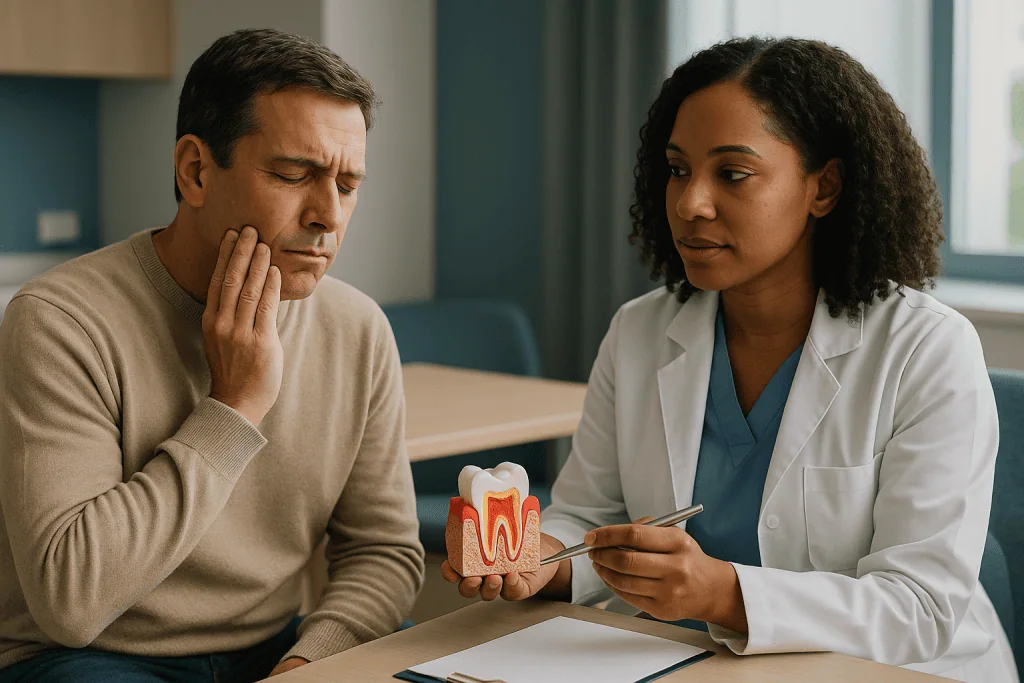
Gingivitis is the early, reversible stage: gums look red and puffy and bleed when brushed or flossed, but the bone and ligament beneath them are intact. Most adults experience it at some point. It typically settles within a couple of weeks of thorough cleaning at home and a professional scale.
Periodontitis is the advanced stage, in which chronic inflammation destroys the connective fibers and bone that anchor the teeth. The gum pulls away from the tooth, forming pockets that trap more bacteria. Dentists measure these pockets with a thin probe; a healthy sulcus is 1–3 millimeters deep, while pockets of 4 millimeters or more signal disease. Lost bone does not grow back on its own, which is why periodontitis is managed rather than reversed.
The distinction matters for the heart conversation. Almost all of the research on cardiovascular risk concerns periodontitis, not gingivitis. A week of bleeding gums after you forget to floss is not what the studies are measuring. Years of untreated pockets, chronic bleeding, loose teeth and a persistent low-grade inflammatory burden are. Keeping the two apart stops a common and fixable problem from being mistaken for a cardiac warning sign.
What are the symptoms of gum disease most people miss?
Periodontitis is often painless until it is advanced, which is one reason so many people are surprised by the diagnosis. The signs tend to be quiet and easy to rationalize.
- Gums that bleed during brushing or flossing, or that leave pink on the pillow or in an apple core. Healthy gums do not bleed with normal cleaning.
- Gums that look dusky red or purplish rather than pale pink, and feel soft or spongy.
- Persistent bad breath or a bad taste that returns soon after brushing, caused by bacterial byproducts in the pockets.
- Gum recession, which makes teeth look longer, and new sensitivity to cold on exposed root surfaces.
- Pus between the teeth and gums, a sign of active infection.
- Teeth that feel loose, drift apart, or no longer meet the way they used to when you bite.
Smokers deserve a special note. Nicotine narrows the small blood vessels in the gums, so smokers often bleed less even when their disease is more severe. The absence of bleeding is falsely reassuring in that group, and the pockets can be deep by the time anything feels wrong.
None of these symptoms tells you anything direct about your heart. They tell you that your gums need professional assessment, which is reason enough to act. The next sections explain why the heart entered the picture at all.
How did researchers first connect gum disease and heart disease?
The modern story begins in Finland in the late 1980s, when a research team noticed that patients admitted with heart attacks had noticeably worse dental health than matched controls. That observation prompted a cascade of epidemiological studies through the 1990s and 2000s, and the pattern held across countries, age groups and study designs: people with periodontitis had more coronary disease, more strokes and more peripheral artery disease than people with healthy gums.

The effect size was modest but consistent. Pooled analyses from this period generally found that people with periodontitis had about 1.2 to 1.5 times the rate of coronary events compared with those without, after adjustment for age and sex. That is a far smaller relationship than, say, smoking and lung cancer, where risk rises more than tenfold, but it is in the same territory as several accepted cardiovascular risk factors.
At the same time, laboratory scientists found something striking. DNA from oral bacteria, including Porphyromonas gingivalis, one of the main organisms in periodontal pockets, turned up inside atherosclerotic plaques removed from human arteries. Atherosclerosis is the process in which cholesterol, immune cells and debris build up inside artery walls, eventually narrowing them or rupturing to trigger a clot. Finding gum bacteria in those plaques suggested a possible physical route from mouth to artery.
Together, the population data and the laboratory findings made a compelling hypothesis. Whether that hypothesis describes a true cause or a shared background is the question the rest of this article takes seriously.
What the evidence actually says: grading the strength of the link
Medical evidence comes in tiers, and this topic spans all of them. Laying them out is the only honest way to answer the question.
Observational data: strong and consistent. Dozens of cohort and case-control studies show that people with periodontitis experience more heart attacks and strokes. Several large cohorts followed participants for a decade or more and found the association persisted after adjusting for smoking, diabetes, blood pressure, cholesterol and socioeconomic status. This is good-quality evidence of association. It cannot, by design, prove that gum disease causes heart disease, because unmeasured factors could drive both.
Mechanistic and laboratory evidence: plausible but indirect. Oral bacteria in arterial plaques, raised inflammatory markers in people with periodontitis, and animal models in which infecting mice with periodontal pathogens accelerates atherosclerosis all support a biological pathway. These findings explain how a link could work. They do not show how much it matters in a living human.
Randomized trials of treatment: limited and inconclusive. This is the crucial gap. Trials have shown that intensive periodontal therapy lowers blood levels of C-reactive protein (a marker of body-wide inflammation) and modestly improves endothelial function, the ability of artery linings to relax. No adequately sized trial has shown that treating gum disease reduces heart attacks, strokes or cardiovascular deaths. The one large US trial that attempted a related question, in patients with prior cardiovascular events, was stopped early and could not answer it.
The AHA’s 2012 statement summarized this as an independent association without proven causation, and that grading still stands. In plain language: the link is real, the mechanism is believable, and the payoff from treatment for the heart specifically remains unproven.
Can gum disease cause a heart attack? Three proposed mechanisms
Scientists have put forward three overlapping ways that periodontitis might contribute to cardiovascular disease. Each has supporting data; none is proven to cause events in people.
Direct bacterial spread. Inflamed gum pockets are ulcerated on the inside, and the total wound surface in severe periodontitis has been estimated at roughly the size of a palm. Chewing, brushing and dental procedures push bacteria across that surface into the bloodstream, a phenomenon called bacteremia (bacteria circulating in the blood). Most episodes are brief and cleared quickly. The hypothesis is that repeated exposure allows some organisms to lodge in artery walls and provoke local inflammation.
Systemic inflammation. Periodontitis keeps the immune system on a low simmer. People with the condition have higher circulating levels of C-reactive protein, interleukin-6 and fibrinogen, the same molecules implicated in the growth and rupture of arterial plaques. Inflammation is now recognized as a central driver of atherosclerosis, so a chronic inflammatory source anywhere in the body is biologically relevant.
Molecular mimicry and immune cross-reaction. Some bacterial proteins resemble human proteins, and antibodies raised against gum bacteria may also react with tissue in artery walls. This is the most speculative of the three.
To the question in the heading, the honest answer is that gum disease has not been shown to cause heart attacks. It is associated with them, and there are credible ways it could contribute. The size of any true causal effect, if one exists, is probably small relative to blood pressure, cholesterol and smoking, which is exactly why those remain the priorities in cardiovascular prevention.
Why shared risk factors complicate the picture
Here is the problem that keeps epidemiologists cautious. Nearly everything that damages gums also damages arteries, and the overlap is almost uncanny.
Smoking is the single strongest modifiable risk factor for periodontitis, roughly doubling to tripling the odds, and it is also a leading cause of coronary disease. Diabetes impairs the body’s response to infection and accelerates gum breakdown while simultaneously injuring blood vessels. Age raises the risk of both. Lower income and limited access to care track with both. Poor diet, high stress, heavy alcohol use and obesity sit in both columns too.
Statisticians call this confounding: a third factor that drives two conditions, making them appear to cause one another. Good studies adjust for known confounders, and the association between gum disease and heart disease does shrink after adjustment, often by a third or more. Importantly, it does not vanish. That residual link is why the AHA used the word “independent.”
Yet residual confounding is hard to rule out. Smoking intensity, for instance, is notoriously difficult to measure precisely, and “former smoker” covers a vast range of exposure. A person who smoked for 30 years and quit last month looks the same on a questionnaire as one who quit at 25. Diabetes severity, diet quality and genetic tendencies toward inflammation are similarly blunt in most datasets.
None of this means the connection is an illusion. It means the most defensible interpretation is that gum disease and heart disease are two expressions of a shared vulnerability, with possibly some direct contribution layered on top. Treating gums well is sensible regardless; expecting it to substitute for blood pressure control is not.
Periodontitis and cardiovascular disease: how the numbers compare
Context turns a frightening statistic into a useful one. The table below places the gum disease association alongside established cardiovascular risk factors, using approximate relative risks drawn from the mainstream literature. A relative risk of 1.3 means 30 percent higher than the comparison group; it says nothing about how high the starting risk was.
| Factor | Approximate relative risk of coronary events | Strength of causal evidence |
|---|---|---|
| Current smoking | About 2 to 3 times | Established cause; quitting lowers risk |
| Diabetes | About 2 times | Established cause; glucose control helps |
| High blood pressure | About 1.5 to 2 times per major increment | Established cause; treatment reduces events in trials |
| High LDL cholesterol | About 1.5 to 2 times at high levels | Established cause; lowering reduces events in trials |
| Periodontitis | About 1.2 to 1.5 times | Independent association; causation and treatment benefit unproven |
Two things stand out. First, the periodontitis association is real but sits at the lower end of the scale. Second, and more important, the right-hand column separates it from the others. For smoking, diabetes, blood pressure and cholesterol, randomized trials have demonstrated that changing the factor changes the outcome. For gum disease, that final proof is missing.
This is why clinicians describe periodontitis as a potential “risk modifier” or marker rather than a target for preventing heart attacks. If your dentist finds significant gum disease, it is reasonable to treat it as a prompt to review your overall cardiovascular profile with your physician. It is not, on current evidence, a reason to assume a heart problem exists or to replace proven measures with mouth care.
How do you know if your teeth are affecting your heart?
You cannot, at least not directly, and no test currently answers that question. There is no blood marker, scan or dental measurement that isolates the contribution of your gums to your arteries. Anyone claiming otherwise is selling certainty the science does not have.
What you can know is whether you have periodontitis and whether you have cardiovascular risk. Those are two separate assessments, each with its own professional.
A dentist or hygienist diagnoses gum disease by probing pocket depths around every tooth, checking for bleeding on probing, assessing gum recession and tooth mobility, and taking X-rays to look at bone levels. The result is often expressed as a stage from I to IV, describing severity, and a grade from A to C, describing how fast it is likely to progress. Smokers and people with diabetes are graded as faster-progressing by default.
A physician assesses heart risk using blood pressure, cholesterol and glucose measurements, family history, smoking status and age, often combined into a 10-year risk estimate. Symptoms such as chest pressure, breathlessness on exertion or palpitations prompt further testing.
Where the two meet is in conversation. If your dentist diagnoses moderate or severe periodontitis, it is reasonable to mention that at your next medical visit, especially if you have not had blood pressure or cholesterol checked recently. If you have known heart disease or diabetes, telling your dentist allows them to plan care with that in mind. Think of significant gum disease as one more line on the risk sheet, not as a verdict about your heart.
Does treating gum disease help your heart? What the trials show
This is the question that matters most for a patient weighing a treatment plan, and it deserves a precise answer.
Periodontal treatment usually begins with scaling and root planing, a deep cleaning that removes hardened deposits from below the gum line and smooths the root surfaces so the gum can reattach. Severe cases may need surgery to reduce pocket depth or regenerate lost bone. These treatments reliably improve gum health: pockets shrink, bleeding falls and tooth loss slows.
Randomized trials have also measured what happens elsewhere in the body. Intensive treatment lowers C-reactive protein for several months, improves flow-mediated dilation (a measure of how well arteries relax), and in people with type 2 diabetes modestly improves long-term glucose control, by roughly 0.3 to 0.4 percentage points of HbA1c in pooled analyses. Those are genuine systemic effects, and they are the strongest argument that the mouth is not a sealed compartment.
What the trials have not shown is a reduction in heart attacks, strokes or deaths. The studies that measured those outcomes were too small or too short, or were stopped early. Absence of evidence is not evidence of absence, but it does mean nobody can honestly promise a cardiac payoff from a deep cleaning.
So the answer is: treating gum disease helps your gums, your teeth and your inflammatory markers, and may help blood sugar if you have diabetes. Whether it protects your heart is unknown. Fortunately, you do not need that answer to justify the treatment. Keeping your teeth into old age, eating comfortably and avoiding chronic infection are reasons enough, and any heart benefit would be a bonus rather than the goal.
Common myths about gum disease and heart disease, corrected
The viral version of this topic contains several claims worth dismantling one by one.
Myth: bleeding gums mean you are heading for a heart attack. Occasional bleeding usually signals gingivitis, which is common and reversible. The cardiovascular research concerns chronic periodontitis, a different stage. Bleeding is a reason to clean better and see a dentist, not a cardiac emergency.
Myth: a specific mouthwash can prevent strokes. No rinse has been shown in a randomized trial to reduce cardiovascular events. Antiseptic rinses can reduce plaque and gingivitis as an adjunct to brushing. Some evidence suggests prolonged use of certain antiseptic rinses may alter the mouth bacteria that help the body produce nitric oxide, a molecule involved in blood pressure regulation, so even the mechanism cuts both ways. Use rinses as your dentist advises, not as heart medicine.
Myth: if you treat your gums you can skip your cholesterol medication. Nothing in the evidence supports this. Never stop or change a prescribed medicine based on dental treatment; that decision belongs to the prescribing clinician.
Myth: dental cleanings are dangerous for heart patients because they release bacteria. The opposite is closer to the truth. Daily chewing and brushing in a mouth with periodontitis release far more cumulative bacteria than an occasional professional cleaning in a well-maintained mouth. Guidelines now reserve antibiotic cover before dental work for a small group with specific heart conditions, a decision made by the cardiologist.
Myth: the link is fully proven and doctors are hiding it. Cardiologists and dentists publish openly on this, including the limitations. The careful wording is not a cover-up; it is what scientific honesty looks like.
What is the life expectancy of someone with periodontal disease?
People searching this phrase deserve a straight answer, so here it is: no one can give you a life expectancy figure for periodontitis, and any website that does is inventing it.
What the research shows is a statistical pattern, not an individual prognosis. Large observational studies, including analyses of US national health survey data, have found that adults with severe periodontitis have higher all-cause mortality over follow-up than adults with healthy gums, with the increase concentrated in cardiovascular deaths. The size of that excess varies widely between studies, and it shrinks substantially once smoking, diabetes and socioeconomic factors are accounted for. Tooth loss, a downstream marker of severe disease, shows a similar pattern.
Interpreting this requires the same caution as the heart data. Severe gum disease clusters with the things that shorten life: smoking, uncontrolled diabetes, poor nutrition, limited healthcare access. It may contribute something on its own through chronic inflammation, but the research cannot separate that contribution cleanly, let alone translate it into years for one person.
The more useful framing is this. Periodontitis is a treatable, manageable condition. People who receive treatment and maintain it keep more teeth, chew more comfortably and carry a lower inflammatory burden than people who do not. The factors that travel with gum disease, especially smoking and diabetes, are also the ones with the largest proven effect on longevity, and they are the ones worth addressing first.
If a diagnosis of periodontitis has made you think about your long-term health, that is a reasonable response. Channel it into a dental treatment plan and a general health check rather than into a number nobody can honestly provide.
How can I improve my periodontitis? Evidence-based steps that work
Periodontitis responds well to consistent care, and the evidence for the basics is solid. The goal is to keep bacterial load low enough that the body’s inflammation settles and the disease stops progressing.
Professional treatment comes first. Scaling and root planing, sometimes over several visits, removes the deposits that home care cannot reach. After that, most people with periodontitis need maintenance cleanings every three to four months rather than the standard six, because pockets recolonize quickly. Severe or persistent pockets may need referral to a periodontist, a dentist specializing in gum disease.
Home care does the daily work. Brush twice a day for two minutes with a fluoride toothpaste, angling the bristles toward the gum line. Powered brushes with oscillating heads reduce plaque and gingivitis slightly more than manual brushing in systematic reviews, though technique matters more than the tool. Clean between teeth every day; interdental brushes outperform floss for most adults with gum disease because they fit the widened spaces and reach into shallow pockets.
Quitting smoking is the single most effective change beyond cleaning. Former smokers’ gums respond to treatment nearly as well as never-smokers’ within a few years of quitting, while current smokers heal more slowly and lose teeth faster.
If you have diabetes, better glucose control improves gum healing, and treating the gums may in turn help glucose, a two-way relationship supported by randomized trials. Your physician manages the diabetes side; your dentist manages the gums; both should know what the other is doing.
Adjuncts such as antiseptic rinses or locally placed antimicrobials have a role in specific situations, decided by your dentist. None replaces mechanical cleaning, and none is a shortcut.
When to see a doctor: red flags for your gums and your heart
Two sets of warning signs matter here, and they call for different professionals.
See a dentist promptly if you notice:
- Gums that bleed regularly during brushing or flossing, or bleed on their own.
- Persistent bad breath or a foul taste that cleaning does not fix.
- Gums that have pulled back from the teeth, or teeth that look longer.
- Pus around the gum line, or a swelling on the gum that comes and goes.
- Teeth that feel loose, have shifted, or no longer meet properly when you bite.
- A gum abscess with facial swelling or fever, which needs same-day attention.
Seek emergency care immediately if you experience:
- Chest pressure, tightness or pain, especially spreading to the arm, jaw, neck or back.
- Sudden breathlessness, cold sweat, nausea or lightheadedness alongside chest discomfort.
- Sudden weakness or numbness of the face, arm or leg, confusion, trouble speaking, loss of vision or loss of balance, which are signs of stroke.
Jaw pain deserves a specific mention. Toothache from an infected tooth is usually localized, worse with biting or temperature, and constant. Jaw or tooth pain that comes on with exertion, eases with rest and is accompanied by chest discomfort or breathlessness can be a presentation of heart disease, particularly in women and people with diabetes. When in doubt, the heart takes priority: call emergency services.
For people with known heart conditions, tell your dentist about your diagnosis and every medicine you take, including blood thinners. Do not stop or adjust any prescribed medicine before dental work on your own; your cardiologist or prescribing physician makes that call and will coordinate with your dentist if needed. Whether you need antibiotic cover before dental procedures is also a decision for your cardiologist, based on your specific heart condition.
Frequently asked questions
Can gum disease cause a heart attack?
Gum disease has not been proven to cause heart attacks. Observational studies show people with periodontitis have more coronary events, and laboratory work offers plausible mechanisms involving bacteria and inflammation, but randomized evidence of causation is missing. Shared risk factors such as smoking and diabetes explain part of the link. Treating your gums is sensible; expecting it to prevent a heart attack is not supported.
What are the symptoms of gum disease?
Early signs are red, swollen gums that bleed when you brush or floss. As periodontitis develops, you may notice persistent bad breath, receding gums that make teeth look longer, sensitivity to cold on exposed roots, pus at the gum line and teeth that loosen or shift. Pain is often absent until late, and smokers may bleed less despite worse disease, so regular dental checks matter.
How do you know if your teeth are affecting your heart?
There is no test that isolates the effect of your gums on your heart. What you can do is get two separate assessments: a dental examination that measures gum pocket depth and bone loss, and a medical review of blood pressure, cholesterol, glucose and family history. A diagnosis of moderate or severe periodontitis is a reasonable prompt to check your overall cardiovascular risk with your physician.
Does treating gum disease help your heart?
Treatment helps your gums and lowers inflammatory markers such as C-reactive protein, and it improves how well artery linings relax for several months. It has not been shown to reduce heart attacks, strokes or deaths, because trials measuring those outcomes have been too small or stopped early. The decision to treat should rest on dental benefit, with any heart effect regarded as unproven.
What is the life expectancy of someone with periodontal disease?
No life expectancy figure exists for periodontitis, and none can honestly be given for an individual. Observational studies link severe gum disease to higher all-cause and cardiovascular mortality, but the excess shrinks substantially after accounting for smoking, diabetes and socioeconomic factors. Periodontitis is manageable with treatment and maintenance, and the factors that travel with it have the largest proven effect on longevity.
How can I improve my periodontitis?
Start with professional scaling and root planing, then maintenance cleanings every three to four months. At home, brush twice daily for two minutes with fluoride toothpaste and clean between teeth every day, using interdental brushes where spaces allow. Quitting smoking is the most effective change beyond cleaning. If you have diabetes, better glucose control helps gums heal, and your dentist and physician should coordinate.
Is periodontitis and cardiovascular disease a two-way relationship?
The best-documented two-way relationship is between periodontitis and diabetes, where each worsens the other and treating one modestly helps the other in randomized trials. For cardiovascular disease, the evidence runs mainly one way, with gum disease associated with later heart events. Some heart medicines can affect the gums, and reduced ability to perform oral care after a stroke can worsen gum health.
Is it safe to have dental cleanings if I have heart disease?
For most people with heart disease, routine dental care is safe and recommended, because untreated gum infection releases more bacteria over time than a professional cleaning does. Tell your dentist your diagnosis and all medicines, including blood thinners. Whether you need antibiotics before procedures depends on your specific heart condition and is decided by your cardiologist, not by you or your dentist alone.
Can bleeding gums be a sign of a heart problem?
Bleeding gums almost always signal gingivitis or periodontitis, not a heart problem. Occasional bleeding after missed flossing is common and reversible with better cleaning. Persistent bleeding over weeks should be assessed by a dentist. Bleeding gums alone do not indicate heart disease; chest pressure, breathlessness on exertion or sudden weakness are the signs that need urgent medical attention.
Does mouthwash protect against heart disease or stroke?
No mouthwash has been shown in a randomized trial to prevent heart attacks or strokes. Antiseptic rinses can reduce plaque and gingivitis when used alongside brushing and interdental cleaning. Some research suggests long-term use of certain antiseptic rinses may disrupt mouth bacteria that help regulate nitric oxide and blood pressure. Use rinses as your dentist advises, not as cardiovascular protection.
References
This article is for general information only and is not a substitute for professional medical advice. Please consult a qualified doctor about your individual situation.

More from the Blog

Dental Probiotics: Can Bacteria Fight Cavities and Bad Breath?
Dental probiotics are live bacterial strains, usually Streptococcus salivarius or Lactobacillus reuteri, sold as lozenges or chewables to shift the mouth's microbial balance. Small…

Myopia Control in Children: Atropine Drops, Special Lenses and Outdoor Time: What Works
Myopia control means slowing how fast a child's nearsightedness worsens, not reversing it. Randomized trials show that low-concentration atropine eye drops, specially designed defocus…

Ear Pressure and Popping: Eustachian Tube Problems Explained
Ear pressure and popping usually come from the Eustachian tube, the narrow channel that equalizes air between the middle ear and the back of…

Dental Anxiety: Why It Is Common and the Options From Sedation to CBT
Dental anxiety is common because the mouth is a sensitive, personal space and dental care combines needles, noise, loss of control and past bad…

ICL Surgery: The Implantable Lens Alternative to LASIK
ICL surgery places a thin, flexible implantable collamer lens inside the eye, between the iris and the natural lens, to correct nearsightedness and astigmatism…

Charcoal Toothpaste: The Whitening Claim vs the Enamel Risk
Charcoal toothpaste can lift some surface stains because activated charcoal is abrasive, but reviews in dental journals have found no good evidence that it…