

Hair Porosity: The Test That Explains Why Products Work on Her, Not You
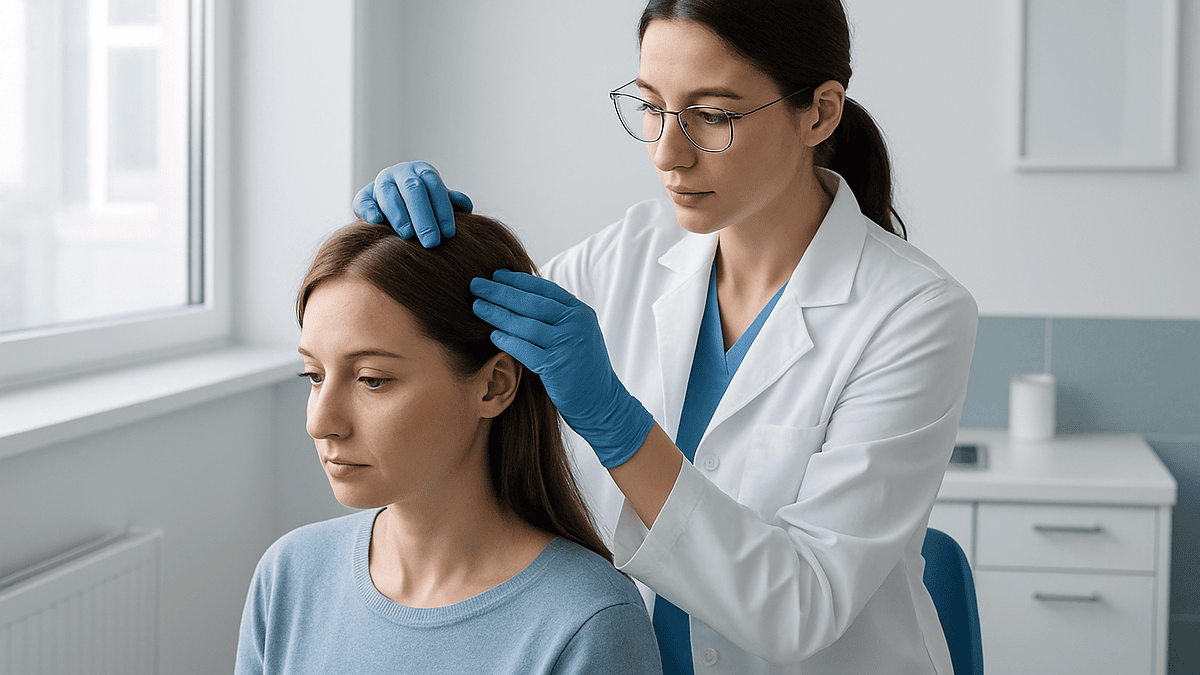
Key Takeaways
- The hair cuticle is made of 5–10 overlapping layers of dead cells, so porosity damage can be smoothed and coated but never biologically healed, only grown out and trimmed off.
- The float test is confounded by sebum, product residue, and water surface tension; how fast your hair saturates in the shower and how long it takes to dry are far more reliable clues.
- Healthy hair absorbs roughly 30 percent of its own weight in water, while highly porous hair takes on even more and loses it faster, which is why porous hair wets and dries so quickly.
- In published research, a blow dryer held about six inches away and kept moving damaged hair less than close-up high heat, and stressed the fiber less than prolonged air-drying.
- Bleaching permanently strips the hair's outer lipid layer (18-MEA), which is why lightened lengths stay more porous until they are cut, no matter what products are applied.
- Neither high nor low porosity is better, low porosity hair mainly battles buildup and slow drying, while high porosity hair needs leave-in conditioning, sealing, and lower heat.
Hair porosity describes how easily your hair's outer cuticle layer lets moisture in and out. Low porosity hair has tightly sealed cuticles and absorbs water slowly; high porosity hair, often the result of heat, coloring, or sun exposure, soaks up water quickly but loses it just as fast. The popular float test is unreliable, so judging by how quickly hair saturates and dries gives a truer picture.
Two friends buy the same deep conditioner. One rinses it out and gets soft, glossy curls that last three days. The other gets limp strands and a greasy-looking crown by dinnertime. Same bottle, same instructions, wildly different hair.
The internet has an answer for this, and for once it’s partly right: porosity. It’s the reason a rich cream can be a miracle on one head and a mistake on another, and why “it worked for her” is the least useful product review in existence. The trouble is that most of what circulates about porosity, especially the famous glass-of-water test, is more folklore than science.
So let’s take porosity seriously, but honestly: what the structure of a hair strand actually does, which home tests hold up, which don’t, and how to use the answer without buying a single thing you don’t need.
What is hair porosity, really?
Every strand of hair is wrapped in a cuticle: five to ten overlapping layers of flattened, dead cells arranged like shingles on a roof. When those shingles lie flat and tight, water, conditioners, and dyes have a hard time getting past them. When they’re lifted, chipped, or missing, the strand becomes a sponge, quick to absorb, quick to leak.
That’s porosity in a sentence: the ease with which moisture moves in and out of the hair shaft. It exists on a spectrum, not in three tidy boxes, and it can differ along a single strand. The hair nearest your scalp may be months old and nearly pristine, while the ends of shoulder-length hair have survived two or three years of washing, brushing, sun, and heat.
Two things set your porosity. The first is genetics: the cuticle you’re born producing, which varies by individual and often by hair texture. The second is everything you’ve done to the hair since it emerged: bleach, flat irons, chlorine, tight ponytails, rough towels. The first you can’t change. The second is where all the practical decisions live.
Why it matters is simple mechanics. A product formulated to penetrate the shaft behaves differently depending on whether the door is cracked open or bolted shut. Porosity doesn’t tell you everything about your hair, but it explains a surprising amount of the “works on her, not me” mystery.
The float test: why the internet's favorite hair porosity test falls short
You’ve probably seen the instructions: drop a clean strand into a glass of water; if it floats, you have low porosity, and if it sinks, high. It’s satisfyingly visual, costs nothing, and takes two minutes. It’s also a poor measurement.
Here’s the problem. Whether a hair floats depends on more than porosity. Surface tension can hold almost any strand on top of the water for a while. Natural sebum and residue from conditioners, oils, and styling products coat the strand and repel water regardless of what the cuticle underneath looks like. Even “clean” hair straight from a wash usually carries deposited ingredients: that’s what conditioners are designed to leave behind. And a single strand is a sample size of one from a head carrying roughly 100,000 hairs of varying age and condition.
Hair scientists don’t dunk strands in glasses. Published research on hair damage relies on methods like electron microscopy, dye-uptake measurements, and controlled water-absorption testing, none of which you can replicate over the bathroom sink. There is no peer-reviewed validation of the float test as a diagnostic tool.
None of this means porosity is fake. It means the shortcut is. If the float test told you that you have low porosity hair, but your hair drinks up leave-in conditioner and dries in twenty minutes, believe your hair, not the glass.
How to know your hair porosity: home checks that actually tell you something
The most informative porosity “test” is one you’ve already run hundreds of times: washing your hair. You just haven’t been reading the results.
Pay attention to three moments. First, saturation: in the shower, does water bead up and roll off before your hair finally wets through, or does your hair go from dry to soaked almost instantly? Slow saturation points toward low porosity; instant sponging suggests high. Second, drying time: hair that takes hours to air-dry, sometimes still damp at bedtime, is holding water behind a tight cuticle. Hair that’s bone-dry in under an hour is letting moisture escape freely. Third, product behavior: if rich creams sit on your hair like a film and lightweight sprays do more, you’re likely on the low end; if your hair absorbs heavy products and still feels thirsty, you’re likely higher.
Some people also run a fingertip along a dry strand from end to root. Rough or bumpy can indicate a lifted cuticle; smooth suggests a flatter one. Treat this as a supporting clue, not a verdict, fingertips aren’t microscopes.
One more honest note: check different zones. Roots, mid-lengths, and ends often behave like three different heads of hair, especially if you color or heat-style. Most people with long or chemically treated hair have low-to-medium porosity near the scalp and higher porosity at the ends, which is why one-size routines disappoint.
Signs of low porosity hair
Low porosity hair is often described as “stubborn,” which is unfair. It’s actually hair with an intact, tightly layered cuticle, structurally, it’s doing its job extremely well. The friction comes from routines designed for hair that absorbs things easily.
The telltale signs cluster around resistance. Water beads on the surface in the shower and takes noticeably long to soak in. Air-drying is a half-day project. Products seem to accumulate rather than absorb: oils sit on top and leave a greasy sheen, thick butters and creams weigh the hair down, and a residue builds up over a week that makes hair feel coated, stiff, or dull. Hair color and chemical treatments may take longer to process because the same barrier that blocks water also slows dye molecules.
People with low porosity hair often report that:
- Deep conditioners feel like they “did nothing” unless applied to warm, damp hair
- Hair looks its best a day or two after washing, once natural oils distribute
- Clarifying washes produce a dramatic, almost brand-new-hair effect
That last point is a clue worth acting on. Because so little penetrates, everything that doesn’t rinse away lingers on the surface. Buildup, not dryness, is usually the real complaint hiding behind “my hair hates everything.” If your hair matches this picture, the fix is rarely a richer product. It’s usually a lighter one, applied to hair that’s warm and wet enough to accept it.
What are signs of high porosity hair?
High porosity hair announces itself in the shower: it’s soaked the instant water touches it. Then it dries fast, often visibly, sometimes within the hour, because the same gaps that let water rush in let it rush right back out.
Between washes, the signs are about escape and friction. Frizz appears quickly, especially in humid weather, because lifted cuticle edges grab moisture from the air and swell unevenly. Strands tangle and snag on each other since rough surfaces don’t slide. Hair may feel dry within hours of conditioning, look dull rather than reflective (a smooth cuticle is what creates shine), and break or split at the ends. Healthy hair can absorb roughly 30 percent of its own weight in water; damaged, porous hair takes on even more, and that repeated swelling and shrinking stresses the fiber further.
Color behavior is another giveaway. High porosity hair grabs dye fast, sometimes darker than intended, and then fades just as fast, because pigment leaks out through the same open cuticle.
It’s worth separating two versions of this picture. Some hair is naturally more porous, particularly tightly curled hair, where the cuticle lifts slightly at every twist and turn of the strand. Other hair became porous through bleach, heat, or sun. The care strategies overlap, but the second kind tends to be concentrated at the ends, which is why your last four inches may need a completely different routine than your roots.
Is it better to have high or low porosity hair?
Neither, and the question itself is a bit of a trap. Porosity isn’t a grade; it’s a description. The useful question is whether your porosity is your hair’s natural state or the residue of damage.
Low porosity is usually the mark of an intact cuticle, in structural terms, healthy hair. Its frustrations (slow drying, product buildup, stubborn color processing) are inconveniences, not injuries. Naturally higher porosity, common in curly and coily textures, is simply a different architecture; the strand’s twists prevent the cuticle from lying perfectly flat, and with sensible care that hair thrives.
The version worth taking seriously is acquired high porosity: the kind created by bleaching, daily high-heat styling, or years of sun and chlorine. Chemically lightened hair loses part of its outer lipid layer and cuticle material permanently; those strands will remain more porous until they’re cut. That’s not a moral failing, and it doesn’t doom your hair. It just means those lengths need more conditioning, gentler handling, and lower heat than the newer growth above them.
So resist the urge to rank yourself. A person with low porosity hair drowning it in heavy butters will have worse hair days than someone with bleached, porous lengths who conditions well and trims regularly. Porosity determines the strategy, not the outcome. Matching the routine to the hair, not chasing a different porosity, is the entire game.
What raises hair porosity: heat, bleach, sun, and friction
Hair is dead tissue from the moment it leaves the follicle, which means damage is cumulative and one-directional. Everything that lifts or chips the cuticle raises porosity, and the hair can’t undo it.
The big four are worth knowing in detail:
- Chemical processing. Bleach and permanent color use alkaline formulas that deliberately swell the hair and lift the cuticle so molecules can get inside. Bleaching also strips the strand’s outermost lipid coating (a fatty layer called 18-MEA), leaving hair permanently more water-loving and rough. Relaxers and perms break and re-form the hair’s internal bonds, with similar surface costs.
- Heat. Many flat irons and curling wands run at 350–450°F (about 175–230°C), temperatures at which hair proteins begin to change structure, especially on damp hair, where trapped water can turn to steam inside the strand.
- Sunlight. UV radiation degrades both the proteins and the protective lipids of the cuticle. Chlorinated pools and mineral-heavy hard water compound the effect.
- Mechanical friction. Aggressive towel-rubbing, brushing hair while it’s wet and swollen, tight elastics, and even cotton pillowcases sand down cuticle edges one wash at a time.
There’s also plain arithmetic. If your hair is twelve inches long, the ends are two to three years old. No strand survives a thousand days of handling untouched, which is why porosity almost always rises from root to tip, on everyone.
Can you improve your hair porosity? What the evidence actually shows
Here is the sentence the beauty aisle would rather not print: cuticle cells are dead, and dead cells don’t heal. Once cuticle layers are chipped away or the outer lipid coat is stripped, no product regenerates them. The only true reset is new growth from the follicle, and scissors for what’s already damaged.
What products can do is meaningful, just temporary. Conditioners deposit ingredients that smooth lifted cuticle edges, reduce friction, and slow water loss, hair genuinely behaves less porous while the coating lasts, which is typically until it washes or wears away. Some conditioning agents and “bond-building” technologies show measurable effects on strength and combing ease in lab studies; framing those effects as maintenance rather than repair is the honest reading of the evidence. Think of it like waxing a scratched car: the scratch is still there, but the surface sheds water and shines again.
Prevention, by contrast, changes the trajectory for real. In one often-cited study, hair dried with a blow dryer held about six inches (15 cm) away and kept in continuous motion showed less surface damage than hair dried close-up on high heat, and less internal swelling stress than prolonged air-drying, because hair is at its weakest while fully waterlogged.
So the truthful answer to “how do I improve my hair porosity” has three parts: protect the new hair coming in, condition the porous lengths so they behave better, and trim the worst of it on a schedule. Nothing sold in a bottle rewrites the past.
Caring for low porosity hair without the buildup
If your hair resists absorbing things, the winning strategy is less product, more access. Fighting a sealed cuticle with heavier formulas mostly manufactures buildup.
Start with heat and water: the gentle kind. Warmth causes the cuticle to lift slightly, so conditioner applied in a warm shower, to fully wet hair, penetrates better than the same product slapped onto cool, half-damp strands. Some people use a steamy bathroom or a warm towel wrapped over conditioned hair for a few minutes; the mechanism is plausible and the cost is zero.
Choose texture over richness. Lightweight, liquid-based leave-ins and milks tend to outperform thick butters and heavy oils, which sit on the surface of low porosity hair like a raincoat, blocking the very moisture you’re trying to add. If a product leaves your hair coated or limp, that’s data, not failure.
Then manage the residue. Because so little absorbs, everything accumulates. A periodic clarifying wash, for many people every few weeks, strips the film and restores bounce and shine. If your hair feels dramatically better after clarifying, you’ve confirmed the diagnosis.
Finally, adjust expectations on drying. Low porosity hair holding water for hours isn’t a flaw; it’s physics. Blot with a soft towel or cotton T-shirt rather than rubbing, and if you use a dryer, keep it on moderate heat, at a distance, and moving. Patience beats a scorching blast every time.
Caring for high porosity hair: slow the leak, stop the friction
High porosity hair loses moisture the way a cracked mug loses coffee, so the routine has two jobs: refill often and slow the leak.
Conditioning is non-negotiable, not optional. Condition at every wash, focus on mid-lengths and ends, and add a leave-in conditioner afterward, porous hair benefits from the sustained film that leave-ins provide. Many people then apply a small amount of oil or cream over the leave-in to slow evaporation; on porous hair, unlike low porosity hair, this sealing layer earns its keep.
Reduce every source of new damage, because porous hair compounds it. Keep heat tools on lower settings and use them less often. Detangle gently, starting from the ends, ideally with conditioner still in the hair providing slip, wet, porous hair snaps easily. Swap rough towel-drying for blotting, and consider a smoother pillowcase to cut nighttime friction. Outdoors, a hat does more for sun-exposed lengths than any product.
Be measured about protein. Porous hair often responds well to occasional protein-containing conditioners, which temporarily patch rough spots, but overdoing it can leave hair stiff and brittle. Alternate with straightforward moisture-focused conditioning and let how your hair feels guide the ratio.
And keep a standing appointment with scissors. The most porous inches of your hair are the oldest ones, and no treatment restores them. Regular trims, even small ones, quietly remove the worst offenders before they split upward.
Low, medium, high: a side-by-side hair porosity guide
Most heads of hair sit somewhere between the extremes, and many carry two porosities at once, lower at the roots, higher at the ends. Use this table as a map, then check which column your hair actually matches wash to wash. Real behavior beats any label.
| What you notice | Low porosity | Medium porosity | High porosity |
|---|---|---|---|
| Getting wet in the shower | Water beads; slow to saturate | Wets through in a normal rhythm | Soaks instantly |
| Air-drying time | Very long, hours | Moderate | Fast, often under an hour |
| How products behave | Sit on top; buildup is the enemy | Absorb predictably | Disappear; hair feels thirsty again soon |
| Frizz and tangling | Minimal to moderate | Occasional | Frequent; strands snag on each other |
| Hair color behavior | Slow to take | Predictable processing | Grabs fast, fades fast |
| Care priority | Lightweight products, warmth, periodic clarifying | Consistency and heat protection | Leave-ins, sealing, low heat, regular trims |
A note on the middle column: medium porosity hair is the quiet majority. If your hair takes color predictably, dries in a reasonable window, and doesn’t fight most products, you likely live here, and your best move is protecting that status rather than optimizing it. The people most in need of a porosity-informed routine are those at the edges, or those whose ends have drifted into the right-hand column while their roots stayed left.
Why her holy-grail product does nothing for you
Now the title’s promise. When the same product performs differently on two people, porosity is usually the first suspect: a formula designed to penetrate finds an open door on her porous strands and a locked one on your sealed cuticle, or a rich sealing cream that rescues her bleached ends simply smothers your untouched ones.
But porosity is one variable among several, and honesty requires naming the others. Strand diameter matters: fine hair is overwhelmed by amounts that coarse hair barely notices. Density, how many hairs per square inch, changes how far a dollop spreads. Curl pattern affects how oils travel from scalp to ends; sebum slides easily down straight hair and struggles to navigate coils, which is partly why tightly curled hair tends to run drier. Even your water plays a role: hard, mineral-rich water leaves deposits that alter how products rinse and how hair feels, so the identical shampoo genuinely performs differently in different zip codes.
The practical upshot is liberating. A product review is a report about the reviewer’s hair, not yours. “Hydrating” means little without knowing whether the hair being hydrated could absorb anything in the first place. When you evaluate a recommendation, translate it: What’s her porosity, texture, and routine? How does that compare to mine?
Once you know your own hair’s behavior, how fast it wets, dries, and drinks, you can predict most product outcomes before spending a dime. That’s the entire value of this concept, and it costs nothing.
Hair porosity myths worth retiring
Porosity attracts folklore the way wet hair attracts frizz. A few claims deserve a respectful burial.
“The float test tells you your type.” Covered above, but worth repeating: buoyancy reflects coatings, oils, and surface tension at least as much as cuticle structure. Observation over multiple washes beats one strand in one glass.
“Cold water seals the cuticle shut.” A cool rinse feels pleasant and may modestly smooth the surface and boost shine, but the cuticle isn’t a valve that snaps closed on command. Evidence for a dramatic sealing effect is thin; treat the cold rinse as optional, not essential.
“Acidic rinses permanently fix porosity.” There is real science adjacent to this one, published research suggests that products with a pH closer to hair’s naturally acidic surface (around 5.5) cause less swelling and friction than highly alkaline ones. But the effect is about ongoing product choice, not a one-time vinegar miracle that rewrites your cuticle.
“Oils repair porous hair.” Certain oils can penetrate the shaft and reduce how much water hair absorbs and loses, genuinely useful for porous hair. Reducing swelling, though, is not rebuilding cuticle. The scratch analogy holds: protection, not resurrection.
“Your porosity is your identity.” It’s a snapshot, not a horoscope. It varies along each strand, shifts with what you do to your hair, and resets with every inch of new growth. Hold the label loosely.
When to see a doctor about hair changes
Porosity is a cosmetic conversation, until it isn’t. Most rough, porous, slow-to-cooperate hair traces back to styling history and genetics. But hair is also an early messenger for the rest of the body, and some changes deserve a medical appointment rather than a new conditioner.
Make that appointment if you notice any of the following:
- A sudden change in your hair’s texture, strength, or behavior without any change in your routine, hair that abruptly becomes brittle, limp, or coarse can accompany thyroid conditions and other hormonal shifts
- Shedding well beyond the normal range (losing up to around 100 hairs a day is typical), hair coming out in clumps, or a widening part and visible scalp
- Bald patches, broken hairs concentrated in one area, or hair loss accompanied by scalp redness, scaling, itching, or pain
- Brittle hair alongside fatigue, brittle nails, feeling unusually cold, or changes in weight: a combination that can point to nutritional deficiencies such as low iron, or to thyroid problems
- Hair changes following a new medication, major illness, surgery, or significant weight loss
A primary care clinician or dermatologist can check the treatable causes, often with simple blood work, and many of them respond well when caught early. The honest boundary of this article is this: everything above helps you work with the hair you have. If the hair itself is changing on its own, that’s a health question, and health questions deserve a professional, not a product aisle.
Frequently asked questions
Is it better to have high or low porosity hair?
Neither is better: they are descriptions, not grades. Low porosity usually reflects an intact, healthy cuticle, though it comes with slow drying and product buildup. Naturally higher porosity, common in curly textures, is simply a different structure. The only version worth minimizing is porosity acquired through bleach, heat, or sun damage. Matching your routine to your porosity matters far more than which category you land in.
How do I know my hair porosity without the float test?
Watch your hair over several washes instead of testing one strand. If water beads up before soaking in and your hair takes hours to air-dry, you likely have low porosity. If it saturates instantly, dries fast, frizzes easily, and feels thirsty soon after conditioning, that points to high porosity. Check roots and ends separately: they often differ, especially on long or color-treated hair.
Does the hair porosity float test actually work?
No: it has never been validated scientifically. Whether a strand floats depends on water surface tension, natural oils, and residue from conditioners and styling products, not just cuticle condition. A coated strand can float even if it is highly porous underneath. Hair researchers measure porosity with microscopy and controlled absorption testing. At home, saturation speed and drying time over multiple washes are much more trustworthy indicators.
What are signs of high porosity hair?
High porosity hair soaks up water instantly, air-dries quickly, frizzes in humidity, tangles easily, and often looks dull because a rough cuticle reflects light poorly. It may feel dry again within hours of conditioning, and hair color tends to grab fast and fade fast. These signs typically concentrate at the ends, the oldest, most-handled hair, especially on bleached, heat-styled, or sun-exposed lengths.
How do I improve my hair porosity?
You can manage it, but not truly reverse it, because cuticle cells are dead and cannot regrow. Conditioners and leave-ins temporarily smooth lifted cuticles and slow moisture loss, which makes hair behave less porous until the coating washes away. The lasting strategy is prevention: lower heat, gentler handling, sun protection, and less frequent chemical processing, plus regular trims so damaged lengths are gradually replaced by healthier new growth.
Can hair porosity change over time?
Yes, in one direction per strand. Each hair becomes more porous as it ages and accumulates wear from washing, brushing, heat, sun, and chemical treatments, which is why ends are almost always more porous than roots. Your overall porosity can improve over months, though, as damaged lengths are trimmed away and replaced by new growth that has been treated more gently from day one.
Is curly hair always high porosity?
No, though curls tilt the odds. Every bend in a curly or coily strand slightly lifts the cuticle, and scalp oils travel down twisted strands less efficiently, so textured hair often runs drier and somewhat more porous. But plenty of curly hair is low porosity, famously slow to saturate and prone to product buildup. Judge by your hair’s actual behavior in water, not by curl pattern alone.
Does low porosity hair need protein?
Usually not much. Protein-containing conditioners work by temporarily patching gaps in a damaged cuticle, and low porosity hair, by definition, has few gaps, so protein tends to sit on the surface and can leave hair feeling stiff or straw-like. Most low porosity hair does better with lightweight, moisture-focused products applied to warm, wet hair, plus periodic clarifying to remove buildup. If hair feels rigid after a product, scale back.
Why does hair color fade faster on high porosity hair?
Because the same openings that let dye in let it back out. A lifted, gappy cuticle allows pigment molecules to penetrate quickly during coloring, porous hair often processes darker or faster than expected, and then to leach out with every wash. Cooler water, less frequent washing, sun protection, and conditioning that smooths the cuticle surface all slow the leak, but porous lengths will always release color faster than intact ones.
Should I wash low porosity hair with hot water?
Warm, not hot. Warm water and a steamy shower gently encourage the tightly sealed cuticle to lift slightly, helping water and conditioner penetrate, one of the few free advantages available to low porosity hair. Genuinely hot water, though, can irritate the scalp and strip its protective oils. Apply conditioner while hair is warm and fully wet, give it a few minutes, and rinse thoroughly to prevent the buildup this hair type is prone to.
References
- MedlinePlus: Hair Problems
- NIH / PubMed Central: Hair Cosmetics: An Overview (International Journal of Trichology)
- NIH / PubMed Central: The Shampoo pH Can Affect the Hair: Myth or Reality?
- NIH / PubMed Central: Hair Shaft Damage from Heat and Drying Time of Hair Dryer (Annals of Dermatology)
This article is for general information only and is not a substitute for professional medical advice. Please consult a qualified doctor about your individual situation.

More from the Blog
How Narrowband UVB Phototherapy Works for Vitiligo: Sessions, Timing and Care Between Visits
Narrowband UVB phototherapy for vitiligo exposes depigmented patches to a narrow band of ultraviolet B light, usually two to three times a week in…

Living With Chronic Hives: Heat, Cold, Pressure and the Everyday Triggers Worth Tracking
Living with chronic hives means managing welts that recur for six weeks or longer, often without a single clear cause. Heat, cold, pressure, friction,…

Questions to Ask at Your Eczema Consultation: Treatment Steps, Maintenance and When to Return
At an eczema consultation, the most useful questions cover four areas: what type of eczema you have and what may be driving it, which…
Double Cleansing and Oil Cleansing: Who Benefits and Who Is Over-Washing
Double cleansing means washing the face twice in a row: first with an oil or balm that dissolves sunscreen, makeup and sebum, then with…

Puffy Eyes and Eye Bags: Fluid, Fat or Skin? How the Cause Decides the Fix
Puffy eyes come from one of three things: fluid pooling in the thin eyelid tissue, orbital fat pushing forward as the tissue holding it…
How to Exfoliate: The Right Way for Your Skin Type
To exfoliate safely, match the method to your skin type: a soft washcloth or gentle chemical exfoliant for dry or sensitive skin, and an…