

Hair Transplant Costs in Istanbul: What City-Level Pricing Looks Like

Key Takeaways
- Istanbul prices by all-inclusive package rather than per graft, so a 3,000-graft and a 4,200-graft case often cost exactly the same.
- Our guide range for a maximum-graft FUE package is EUR 2,600-5,850, typically a quarter to a half of comparable US pricing even before adding American facility fees.
- The donor zone is a finite bank: follicles moved from the back of the scalp never regrow there, which is why a surgeon who talks your graft count down is a better sign than one who talks it up.
- Transplanted follicles generally resist pattern loss for decades, but surrounding native hair keeps thinning, hairline design should be planned for age 55, not age 30.
- DHI and Sapphire FUE carry premiums of several hundred to a few thousand euros over standard FUE, but high-quality evidence that either reliably improves final results is thin.
- Sudden shedding, patchy circular spots, or scalp redness and scarring point to non-surgical causes of hair loss that a dermatologist should assess before any transplant is booked.
In Istanbul, most hair transplants are sold as fixed, all-inclusive packages rather than per graft. Our guide range for a standard maximum-graft FUE package is EUR 2,600-5,850; DHI typically runs EUR 3,000-5,850 and Sapphire FUE EUR 3,000-7,800. Comparable procedures usually cost GBP 3,000-10,000 in the UK and USD 8,000-15,000 in the US. Your exact price depends on a clinical assessment and a personalised plan.
Walk through the arrivals hall at Istanbul Airport on any weekday morning and you’ll spot them: men in loose caps or white headbands, three days post-op, waiting for the same shuttle vans that brought them in. The city performs hair transplants at a scale no other place on earth matches, and the pricing culture that grew up around that volume is unlike anything patients from London or Chicago have seen before.
That culture confuses people. A friend forwards a WhatsApp quote for less than a used laptop; a forum thread insists anything under a certain figure is dangerous; a clinic’s website promises “maximum grafts” without ever defining the number. Somewhere between the bargain and the warning sits the actual market.
This guide maps that middle ground: what Istanbul packages genuinely contain, how graft counts translate into money, and where the honest red flags are, grounded in published market data and mainstream medical evidence, not sales copy.
How much does a hair transplant cost in Istanbul in 2026?
The short version: far less than Western Europe or North America, but with more variation inside the city than most first-time researchers expect. Istanbul’s market for a standard follicular unit extraction (FUE) package runs roughly EUR 2,000-4,500 across the broader Turkish market; our guide range for international patients is EUR 2,600-5,850. That figure typically buys the procedure itself, hotel nights, airport transfers, medications, and a first wash and check before you fly home.
Compare that with the UK, where a similar case commonly costs GBP 3,000-10,000 for the surgery alone, no hotel, no transfers, or the US, where USD 8,000-15,000 is typical. The gap is real, and it isn’t primarily about quality. It’s about labor costs, currency, clinic volume, and a fiercely competitive local market, which we’ll unpack below.
One caveat matters more than any number on this page: no legitimate clinic can give you a final price from a phone photo. Hair density, donor-area quality, the pattern of your loss, and your scalp characteristics all shape the plan. A published range tells you whether a quote is inside the normal market. Only an in-person assessment tells you what your case costs, which is why every reputable provider issues a fixed quote after consultation, not before.
Treat any clinic that names a final figure before examining your scalp with the same suspicion you’d apply to a builder quoting a renovation from a satellite photo.
Istanbul hair transplant prices at a glance: the full comparison table
Here is how city-level pricing stacks up across the main hair restoration procedures, set against what patients typically pay at home. All figures are ranges drawn from published market data.
| Procedure | Turkey market average | Our guide range | UK typical | US typical |
|---|---|---|---|---|
| FUE package (max grafts, all-inclusive) | EUR 2,000-4,500 | EUR 2,600-5,850 | GBP 3,000-10,000 | USD 8,000-15,000 |
| DHI package | EUR 2,300-4,500 | EUR 3,000-5,850 | GBP 4,000-10,000 | USD 6,000-12,000 |
| Sapphire FUE premium package | EUR 2,300-6,000 | EUR 3,000-7,800 | GBP 4,000-10,000 | USD 8,000-15,000 |
| Beard transplant | EUR 2,000-4,000 | EUR 2,600-5,200 | GBP 3,000-7,000 | USD 5,000-12,000 |
| Eyebrow transplant | EUR 1,000-2,500 | EUR 1,300-3,250 | GBP 2,500-7,000 | USD 4,000-10,000 |
| Unshaven / female hair transplant | EUR 2,500-5,000 | EUR 3,250-6,500 | GBP 4,000-9,000 | USD 8,000-20,000 |
| Afro-textured hair transplant | EUR 2,300-4,500 | EUR 3,000-5,850 | GBP 3,000-8,000 | USD 6,000-12,000 |
| Scalp micropigmentation (3 sessions, full course) | EUR 550-1,400 | EUR 700-1,800 | GBP 800-3,500 | USD 2,000-4,500 |
| PRP for hair (per session) | EUR 100-300 | EUR 130-400 | GBP 150-600 | USD 400-1,500 |
Prices last reviewed: August 2026. These are guide ranges for international patients, based on published market data – not a quote. Your exact price depends on your clinical assessment; you will receive a personalised treatment plan and fixed quote after consultation.
Why do Istanbul clinics price by package instead of per graft?
In the US and UK, per-graft pricing is standard: multiply the graft count by a unit price, add facility fees, arrive at a bill. Istanbul flipped that model. The dominant offer here is a flat package covering “maximum grafts”, the highest number your donor area can safely supply in a single session, plus the logistics of a medical trip.
The economics behind this are straightforward. High-volume clinics run multiple procedures daily, which lets them absorb variation between cases: a 3,200-graft patient and a 4,100-graft patient often pay the same package price. For the patient, this removes an ugly incentive that per-graft pricing creates: the temptation to inflate graft counts to inflate the bill.
But the package model has its own weak point: the phrase “maximum grafts” only means something if the surgeon respects your donor area’s real limits. Follicles moved from the back and sides of the scalp do not grow back where they came from; the donor zone is a finite bank, as sources like Cleveland Clinic describe in explaining how transplantation relocates rather than creates hair. A clinic that over-harvests to justify a premium package can leave visible thinning behind the ears that no future surgery fixes.
So when comparing packages, ask two questions rather than one. Not just “how much?” but “how many grafts do you estimate for my case, and how did you arrive at that number?” A specific, examination-based answer is worth more than any discount.
How much do 3,000 hair grafts cost in Istanbul?
This is one of the most searched questions in the category, and Istanbul’s answer is refreshingly simple: for most clinics, a 3,000-graft case falls squarely inside the standard all-inclusive package, so you pay the package price: our guide range of EUR 2,600-5,850 for FUE, or EUR 3,000-5,850 if you choose DHI.
Run the arithmetic and the contrast with home-country pricing becomes vivid. A UK clinic charging per graft at typical rates would bill somewhere in the GBP 3,000-10,000 window for the same count; a US clinic, USD 8,000-15,000. In per-graft terms, Istanbul’s package model often works out to a fraction of Western unit costs, sometimes a quarter.
Three thousand grafts, for context, is a substantial session. Each graft is a follicular unit containing one to four hairs, so 3,000 grafts can mean 6,000-9,000 individual hairs, enough to address a receded hairline and meaningful crown thinning in many patterns of male-pattern loss. According to MedlinePlus, larger sessions take a full surgical day, typically four to eight hours under local anesthesia.
What should make you pause is a quote that changes dramatically once you arrive. The reputable pattern is a graft estimate from photos, confirmed or adjusted at the in-person exam, then a fixed price before anyone touches your scalp. A clinic that quotes 3,000 grafts online and “discovers” you need 4,500 at the door, with a price hike to match, is running a negotiation, not a consultation.
How much does a 5,000-graft transplant cost, and is 5,000 grafts realistic?
Plenty of Istanbul advertising leans on the 5,000-graft figure, and the pricing answer is the same as before: mega-sessions are generally covered by the maximum-graft package, so the guide range of EUR 2,600-5,850 for FUE (EUR 3,000-7,800 for Sapphire FUE) still applies. You rarely pay per graft here, even at the top end.
The medical answer deserves more caution than the marketing suggests. Whether 5,000 grafts in one session is wise depends entirely on your donor density. The safe donor zone: the horseshoe of hair at the back and sides that resists the hormonal process driving pattern baldness, holds a finite number of movable follicular units. Harvest too aggressively and the donor area itself starts to look moth-eaten, a result that scalp micropigmentation can camouflage but surgery cannot reverse.
Some patients genuinely have the density for very large sessions. Many do not, and a responsible surgeon will say so, sometimes proposing two smaller sessions a year apart instead. That honesty costs the clinic revenue in the short term, which is exactly why it’s a useful signal.
A practical rule: be more impressed by a clinic that talks you down from a graft number than one that talks you up. The evidence-based goal is natural density that survives decades of continued native hair loss, not a headline number on an invoice. If two clinics examine the same photos and one estimates 3,500 grafts while another promises 5,500, the discrepancy itself is your most important data point.
FUE vs DHI vs Sapphire FUE: does the technique change the price?
Yes, modestly, and the price ladder in Istanbul follows the tools and labor involved rather than any proven difference in final outcome.
Standard FUE extracts follicular units individually with a micro-punch, then implants them into pre-made incisions. It is the workhorse of the city and the baseline price: guide range EUR 2,600-5,850. DHI (direct hair implantation) uses a pen-shaped implanter that places each graft without a separate incision step; it is slower and more labor-intensive per graft, which pushes the guide range to EUR 3,000-5,850. Sapphire FUE swaps steel blades for sapphire-tipped ones when opening recipient sites, marketed as producing finer channels; premium packages run EUR 3,000-7,800.
Here is the honest part most price lists skip: high-quality comparative evidence that one technique reliably beats the others on graft survival or naturalness is thin. Mainstream sources such as Cleveland Clinic describe FUE and strip harvesting (FUT) as the two established approaches; DHI and Sapphire are refinements of FUE’s implantation and incision steps. Surgeon skill, team experience, and how quickly grafts get from scalp to scalp matter more than the trademark on the tool.
That reframes the buying decision. Paying a premium for DHI can make sense for unshaven cases or precise hairline work, where the implanter’s control helps. Paying a premium purely because “sapphire” sounds better than “steel” makes less sense. Ask the clinic what the technique changes for your specific caseand if the answer is a brochure paragraph rather than a clinical reason, the baseline package may serve you just as well.
Why is Istanbul so much cheaper than London or New York?
The instinctive worry, cheap must mean cutting corners, misreads what actually drives the gap. Four structural factors do most of the work.
Labor and operating costs. Surgeon fees, technician wages, rent, and facility overheads in Turkey are a fraction of those in the UK or US. The same hour of skilled clinical work simply costs less to deliver.
Currency. Clinics price in euros or dollars while paying most costs in lira, a spread that has widened for years and keeps international pricing competitive.
Volume. Istanbul performs an extraordinary share of the world’s hair transplants. High case volume spreads fixed costs thin and, at good clinics, builds deep team experience, since technicians may handle more cases in a year than some Western clinics see in five.
Competition. Hundreds of providers compete in one city, compressing margins in a way that a clinic with a local monopoly in a mid-sized American town never faces.
None of this guarantees quality, and that’s the point worth sitting with. The same forces that let excellent hospitals offer EUR 3,500 packages also let underqualified operations offer EUR 1,500 ones. Turkish health authorities license and inspect facilities, but the market’s floor and ceiling are far apart. The CDC’s medical tourism guidance urges travelers to verify facility accreditation and practitioner credentials precisely because price alone carries no information about either. Low cost is a feature of the market, not a verdict on any individual clinic, in either direction.
What actually drives your quote up or down?
Two patients can walk into the same Istanbul clinic and leave with quotes a thousand euros apart. The variables behind that spread are worth knowing before you compare offers.
- Graft estimate and loss pattern. Extensive crown-plus-hairline work costs more than a hairline touch-up, even under package pricing, because it may require the premium tier or a planned second session.
- Technique. As above: DHI and Sapphire FUE carry premiums over standard FUE.
- Who performs the work. Packages where the surgeon performs or directly supervises extraction and implantation cost more than technician-led models. This is arguably the most consequential line item on any quote.
- Hair characteristics. Afro-textured hair, with its curved follicles, demands slower extraction and specific experience; unshaven procedures take longer per graft. Both sit in their own price bands (guide ranges EUR 3,000-5,850 and EUR 3,250-6,500 respectively).
- Hotel tier and stay length. Packages bundle two to four nights; a five-star upgrade or extra nights move the total.
- Aftercare depth. Some packages include PRP sessions, extended remote follow-up, or a documented touch-up policy; others end at the first wash.
When you line up quotes, normalize them: same graft estimate, same technique, same level of surgeon involvement, same nights and aftercare. A EUR 2,900 offer and a EUR 4,600 offer often describe different products, not different prices for the same one. The cheaper quote isn’t automatically worse, but you can’t know until the contents match.
Beard, eyebrow, and women's transplants: how Istanbul prices the specialist cases
Hairline restoration dominates the headlines, but Istanbul’s market has matured into specialist niches, each with its own pricing logic.
Beard transplants (guide range EUR 2,600-5,200) fill patchy cheeks or rebuild density after scarring. Grafts usually come from the scalp, and because facial placement is unforgiving, every follicle sits in plain view at conversation distance, angle and direction control matter more than raw numbers. Sessions of 1,500-3,000 grafts are common.
Eyebrow transplants (guide range EUR 1,300-3,250) are the smallest procedures by graft count, often just 200-400 grafts per brow, yet among the most technically exacting. Scalp hair keeps growing at scalp speed after relocation, so patients trim their new brows regularly: a detail worth knowing before you commit.
Unshaven and women’s transplants (guide range EUR 3,250-6,500) cost more because working between existing long hair slows every step. For women, the pricing premium is secondary to a bigger clinical issue: female hair loss is more often diffuse and more often driven by underlying conditions, thyroid disease, iron deficiency, hormonal shifts, that surgery cannot address. The NHS and Mayo Clinic both note that identifying the cause of hair loss comes before choosing any treatment. A reputable clinic will ask a woman about medical workup before quoting; one that quotes first is skipping the step that determines whether surgery can work at all.
Across all three niches, the pattern holds: the smaller and more visible the canvas, the more the surgeon’s aesthetic judgment, not the package tier, determines what you get for the money.
What does "all-inclusive" actually include, and what doesn't it?
The phrase does heavy lifting in Istanbul marketing, and its contents vary enough that two “all-inclusive” packages can differ by hundreds of euros in real-world value.
Typically included: the procedure at maximum grafts, pre-op blood tests, local anesthesia, two to four hotel nights, airport and clinic transfers (usually VIP van rather than taxi), post-op medications and care products, the first wash and bandage removal, and a translator. Many packages add a PRP session and a remote follow-up schedule with photo check-ins at set intervals.
Typically not included, and worth budgeting separately:
- Flights. Obvious, yet routinely forgotten in cost comparisons.
- Extra hotel nights if you want more recovery time before flying, many surgeons suggest not rushing the return leg.
- A companion’s costs, since packages usually cover one traveler.
- A second session, if your loss pattern needs staged work, potentially a whole second package a year later.
- Ongoing medical therapy at home. Doctors commonly discuss prescription options to slow further native hair loss; those are a separate, continuing conversation with a clinician in your own country.
- Revision or touch-up work, unless the contract explicitly guarantees it under defined conditions.
Ask for the inclusions in writing before paying a deposit, and ask specifically what happens if your graft estimate changes after the in-person exam. The strength of a package lies less in its length of bullet points than in how precisely each bullet is defined.
Is a rock-bottom price a red flag?
Sometimes, but the more useful skill is knowing which low prices signal trouble, because Istanbul’s legitimate market floor sits low enough that a fair price can look alarming to American eyes.
A package near EUR 2,600 from a licensed hospital facility with a named, verifiable surgeon can be entirely sound; that’s simply where the competitive market sits. Concern is warranted when a low price travels with other signals:
- No named surgeon. If nobody will tell you who holds medical responsibility for your operation, price is the least of your problems.
- Technician-only surgery. Trained technicians legitimately assist, but extraction and site creation are medical acts. Ask directly who does what.
- Unlimited-graft promises. Donor supply is finite; “unlimited” is anatomically meaningless and commercially manipulative.
- Same-day discounts and countdown timers. Surgical decisions made under sales pressure are the ones patients regret.
- No written aftercare or complication plan. The CDC’s medical tourism guidance highlights continuity of care as a core risk area for treatment abroad, infections and poor growth declare themselves weeks after you’ve flown home.
- Reviews that only exist on the clinic’s own channels.
Flip the logic, too: a high price is not a quality certificate. Some of Istanbul’s priciest packages spend the premium on hotel stars and airport lounges rather than surgical time. Judge the clinical offer, who operates, how graft numbers are decided, what happens if something goes wrong, and let price confirm the picture rather than paint it.
Is it worth getting a hair transplant in Turkey?
For a well-selected patient at a well-vetted clinic, the value equation is genuinely strong: established techniques, experienced high-volume teams, and total costs, flights and hotel included, that often land below the surgical fee alone at home. Hair transplantation itself is a legitimate, decades-old procedure; MedlinePlus describes it as a generally safe operation under local anesthesia when performed by qualified practitioners.
Honesty requires the other column of the ledger. Traveling for surgery adds specific risks that domestic patients don’t carry. If a complication arises, infection, poor graft survival, an unnatural hairline, your surgeon is 3,000 kilometers away, and revision means another trip or an awkward search for a local doctor willing to manage someone else’s work. The CDC’s medical tourism page also flags practical hazards: flying too soon after procedures, gaps in record transfer, and variable regulation across facilities.
There’s a quieter risk, too: the volume model that makes Istanbul affordable can, at its worst, make patients feel processed. Ten-minute consultations, assembly-line scheduling, and graft counts decided by sales staff rather than surgeons exist in this market alongside excellent care.
So “is it worth it?” resolves into a more answerable question: have you verified enough to make it worth it? That means confirming facility licensing, identifying the operating surgeon, seeing healed results at twelve months (not just day-ten photos), and getting aftercare terms in writing. Patients who do that homework tend to be the ones whose Istanbul story ends with a good hairline rather than a cautionary forum post.
What happens 10 years after a hair transplant?
This question deserves more airtime than it gets, because the ten-year picture, not the twelve-month photo, is what you’re actually buying.
The good news is mechanistic and durable. Transplanted follicles come from the occipital donor zone, where hair is largely resistant to the hormonal signaling that drives male-pattern baldness. Moved to the front of the scalp, those follicles generally keep that resistance; this donor-dominance principle is the entire basis of the procedure, and it’s why well-planned transplants still look good decades on. Cleveland Clinic notes transplanted hair typically continues growing for the long term.
The complicating news: your native hair doesn’t sign the same contract. Pattern loss is progressive, so the untransplanted hair behind and around your grafts may keep thinning through your forties and fifties. Ten years out, a poorly planned transplant can leave an island of dense frontal hair floating ahead of a receded field: the telltale look of surgery that ignored the future.
Two decisions at year zero shape year ten. First, hairline design: a conservative, age-appropriate line leaves donor reserves for later sessions and looks plausible at 55, not just 30. Second, managing ongoing loss: many clinicians discuss prescription options for slowing native thinning, a conversation to have with a doctor at home rather than a sales desk abroad.
When you review clinic portfolios, ask specifically for results five or more years old. A clinic proud of its decade-old work is telling you something its price list can’t.
When should you see a doctor about hair loss before booking anything?
Not all hair loss is pattern baldness, and a transplant aimed at the wrong diagnosis wastes money at best. Before you compare Istanbul packages, certain situations call for a medical consultation at home first:
- Sudden or rapid shedding. Hair coming out in handfuls over weeks suggests telogen effluvium or another acute process, often triggered by illness, surgery, severe stress, or nutritional gaps, which frequently reverses on its own and is not a surgical problem.
- Patchy, circular bald spots. These can indicate alopecia areata, an autoimmune condition. Transplanting into active autoimmune loss commonly fails, since the immune process can attack the new grafts too.
- Redness, scaling, itching, pain, or scarring on the scalp. Scarring (cicatricial) alopecias destroy follicles and require diagnosis and control before any surgery is considered.
- Hair loss with other symptomsfatigue, weight change, menstrual irregularity, which may point to thyroid disease, iron deficiency, or hormonal conditions. The NHS specifically advises seeing a GP when hair loss is sudden, distressing, or accompanied by other symptoms.
- You’re under 25 with early recession. Young patients have the most future loss ahead and the most to lose from an aggressive hairline placed too low, too soon. Many experienced surgeons counsel waiting and stabilizing first.
A dermatologist can usually distinguish these patterns through examination, history, and simple blood tests, per Mayo Clinic’s overview of hair loss diagnosis. Ten minutes of medical clarity at home is the cheapest line item in the entire journey, and the one most often skipped.
How to budget the whole trip, not just the package
The package price is the anchor, but the real cost of an Istanbul transplant is the trip total. Building an honest budget means adding four layers on top of the guide ranges above.
Travel. Return flights from Western Europe are often modest; from North America, they can add meaningfully to the total, sometimes 10-20 percent of the package price. Book flexible tickets if you can: surgeons occasionally recommend an extra recovery day, and the CDC’s guidance on medical travel notes that flying too soon after procedures carries its own risks.
Time. Most itineraries run three to four days: arrival and consultation, surgery day, first wash and check, departure. Factor lost workdays, and plan for the visible phase, scabbing settles over roughly ten days, and shaved areas take weeks to blend.
Aftercare at home. Some patients add PRP sessions (guide range EUR 130-400 per session in Turkey; considerably more at home) or, for donor-area camouflage or added density illusion, scalp micropigmentation (guide range EUR 700-1,800 for a full three-session course). Neither is mandatory; both belong in the “possible extras” column rather than the surprise column.
The contingency line. Sensible budgeters reserve something for the unplanned: an extra hotel night, a follow-up telehealth consult, or, in the minority of extensive-loss cases, a second session a year later at full package price.
Even with every layer added, the totals usually remain well under UK and US equivalents. The point of budgeting honestly isn’t to talk yourself out of the trip; it’s to make sure the number you commit to is the number you actually pay.
Frequently asked questions
How much does a 5,000-graft hair transplant cost in Istanbul?
Usually the same as the standard maximum-graft package, since Istanbul clinics price by session rather than per graft: our guide range is EUR 2,600-5,850 for FUE and EUR 3,000-7,800 for Sapphire FUE. The more important question is whether your donor area can safely supply 5,000 grafts in one session, many people cannot, and over-harvesting causes permanent visible thinning at the back of the scalp. A trustworthy surgeon confirms the number at examination, not in a chat message.
How much do 3,000 hair grafts cost?
In Istanbul, a 3,000-graft case fits inside the standard all-inclusive package, so our guide range of EUR 2,600-5,850 applies, typically including hotel, transfers, and initial aftercare. The same graft count billed per graft in the UK commonly reaches GBP 3,000-10,000 for surgery alone, and USD 8,000-15,000 in the US. Three thousand grafts can carry 6,000-9,000 individual hairs, enough for a hairline plus meaningful crown coverage in many cases.
Is it worth getting a hair transplant in Turkey?
For well-selected patients at properly vetted clinics, the value is genuinely strong: established techniques, experienced high-volume teams, and total trip costs usually below the surgery-only fee at home. The trade-off is distance, if a complication or disappointing result emerges months later, your surgeon is abroad. It becomes worth it when you verify facility licensing, identify the operating surgeon, review healed twelve-month results, and get aftercare and revision terms in writing before paying anything.
What happens 10 years after a hair transplant?
Transplanted follicles generally keep growing, because donor-zone hair largely resists the hormonal process behind pattern baldness: the principle the whole procedure rests on. The variable is your native hair, which can continue thinning around the grafts, sometimes leaving an isolated frontal patch if the original design ignored future loss. Conservative hairline planning, donor reserves left for later sessions, and a medical strategy for ongoing thinning are what make results age well.
What does a hair transplant in Istanbul cost per graft?
Most Istanbul clinics don’t quote per graft at all: they sell flat packages at a maximum-graft cap. If you divide the guide range of EUR 2,600-5,850 by a typical large session of 3,000-4,500 grafts, the implied unit cost is roughly EUR 0.60-1.90 per graft, a fraction of typical UK and US per-graft rates. Treat that math as a comparison tool only; the package price is what you actually pay.
How many days do I need to stay in Istanbul for a hair transplant?
Plan for three to four days: arrival and in-person consultation, the surgery day itself (typically four to eight hours under local anesthesia), and a first-wash and check appointment before flying home. Most packages include hotel nights matching this schedule. Booking a flexible return ticket is sensible, surgeons occasionally recommend an extra recovery day, and health authorities advise against flying too soon after procedures.
Does the package price include the hotel and transfers?
Almost always, yes: that’s the core of Istanbul’s all-inclusive model. Typical packages bundle two to four hotel nights, airport and clinic transfers, pre-op tests, medications, post-op care products, the first wash, and a translator. What packages usually exclude: your flights, a companion’s costs, extra recovery nights, and any second session. Get the exact inclusions in writing before paying a deposit, since ‘all-inclusive’ varies more between clinics than the phrase suggests.
Is DHI more expensive than FUE in Istanbul?
Slightly. Our guide range for DHI packages is EUR 3,000-5,850 versus EUR 2,600-5,850 for standard FUE, reflecting the slower, more labor-intensive implanter-pen technique. Whether the premium buys better results is less clear, robust comparative evidence is limited, and surgeon skill matters more than the tool. DHI’s practical advantages show mainly in unshaven procedures and fine hairline work, where the implanter’s placement control is genuinely useful.
Can women get hair transplants in Istanbul, and what do they cost?
Yes, unshaven and women’s procedures carry a guide range of EUR 3,250-6,500, higher than standard packages because working between existing long hair slows every step. The bigger consideration is diagnostic: female hair loss is more often diffuse and more often linked to thyroid conditions, iron deficiency, or hormonal changes that surgery cannot fix. A medical workup at home should come before any quote, and a reputable clinic will ask about it.
Should I get PRP or scalp micropigmentation with my transplant?
Neither is mandatory, and the evidence for PRP is mixed, some studies suggest modest benefit for hair thickness, but results vary and mainstream sources describe it as promising rather than proven. In Turkey, PRP runs EUR 130-400 per session (guide range) and is sometimes bundled into packages anyway. Scalp micropigmentation (guide range EUR 700-1,800 for a full course) is a cosmetic tattooing technique useful for donor-area camouflage or a denser look, decided after healing rather than before.
References
This article is for general information only and is not a substitute for professional medical advice. Please consult a qualified doctor about your individual situation.

More from the Blog

What to Ask Before an Unshaven (U-FUE) Hair Transplant: Trimming, Graft Limits and Sessions
Before an unshaven FUE hair transplant, ask exactly how your donor hair will be trimmed (fully unshaven, a partial shave or a hidden window),…

Female Hairline Transplants: Lowering and Reshaping, Planned for Women
A female hairline transplant relocates a woman's own hair follicles, usually from the back of the scalp, to lower a naturally high hairline or…
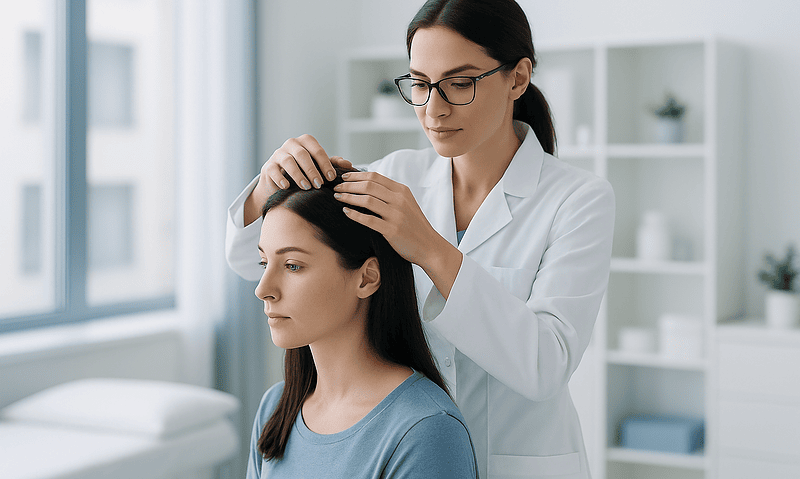
Who Is a Good Candidate for DHI Hair Transplant? Hairline Refinement and Small-Area Density
A good DHI hair transplant candidate usually has stable pattern hair loss, a healthy donor area at the back and sides of the scalp,…

Hair Operations After 60: How Age, Scalp Laxity and Health Conditions Change the Plan
People over 60 can often have hair transplant surgery, because age alone is not the deciding factor. Surgeons weigh scalp laxity, how much stable…

Hair Transplant Cost: Turkey vs USA vs UK: the Honest Comparison Table
A hair transplant in Turkey typically costs a fraction of the same procedure in the USA or UK. Our guide range for an all-inclusive…

Which Female Hair Transplant Side Effects Are Normal? Redness, Scabbing and Swelling Explained
After a female hair transplant, a tight or achy scalp, pinkness, small scabs around each graft, mild forehead swelling and temporary shedding of the…