

Helping a Child Through Chickenpox: Cool Baths, Trimmed Nails and Easing the Itch Safely

Key Takeaways
- Chickenpox is contagious from one to two days before the rash until every spot has crusted, which usually takes about five to seven days (CDC, NHS).
- A typical case produces 250 to 500 blisters arriving in waves, so a calm morning followed by a miserable evening usually means a new crop, not a failed remedy (CDC).
- Cool or lukewarm baths with colloidal oatmeal or baking soda, short filed nails, soft mittens at night and loose cotton clothing are the comfort measures most consistently backed by CDC, NHS and Mayo Clinic guidance.
- Aspirin must never be given to a child with chickenpox because of Reye's syndrome, and the NHS advises against ibuprofen unless a doctor specifically recommends it.
- Bacterial infection of scratched spots is the most common complication in children, and infected or picked blisters are the main cause of permanent scars (CDC, NHS).
- Antiviral medicine is reserved for higher-risk groups and works best when started within about 24 hours of the rash, which is why babies, teenagers and immunocompromised children need an early phone call (CDC).
To stop a child scratching chickenpox, cool the skin and blunt the tools: short lukewarm or cool baths with colloidal oatmeal or baking soda, nails trimmed short and filed, soft mittens or socks on hands at night, loose cotton clothing, and calamine or a cool compress on the worst spots. A clinician may suggest an oral antihistamine. Avoid aspirin entirely, and ask before using ibuprofen.
It is 2 a.m. and the sound carries down the hall: that dry, rhythmic rasp of small fingernails on skin. You have already said “don’t scratch” eleven times today, in every voice you own. Your six-year-old has a fever, roughly forty new spots since dinner, and a look of real betrayal, because the itch is not a choice. It is a nerve signal, and nobody has told the nerves to stop.
Chickenpox is still a common childhood illness in many parts of the world, and even in countries with routine vaccination it has not vanished. What has changed is how much we understand about why the rash itches, which comfort measures are grounded in evidence, and which family traditions quietly make things worse.
This guide is about the practical middle of the illness: the days when the spots are at their angriest and a parent needs a plan. It covers how to stop a child scratching chickenpox without harsh tricks, what the virus is doing underneath the skin, and the handful of warning signs that should always prompt a call to your child’s doctor.
How to stop a child scratching chickenpox: what matters most
Start with a reframe. You cannot command the itch away, but you can lower it and you can make scratching less damaging when it happens anyway. Those are two separate jobs, and the most effective home plans do both at once.
Lowering the itch means cooling and calming the skin. Heat makes the signal louder, so the strategy leans on cool water, light clothing and a room that is not stuffy. The Centers for Disease Control and Prevention (CDC) lists cool baths with baking soda or colloidal oatmeal and calamine lotion among the comfort measures that help, and the NHS adds loose clothes and plenty of fluids. None of these are glamorous. They work because they are physical: cooler skin, less friction, a soothing film over the spots.
Making scratching less damaging means attending to fingernails. Short, filed nails do far less harm than ragged ones, and a child who rubs through a cotton sock or a soft mitten at night will rarely break a blister. This is why the CDC specifically advises keeping fingernails trimmed short.
The third piece is pacing. Chickenpox arrives in waves of new spots for several days, so the itch is not one battle but a short campaign. Expect the worst 24 to 72 hours to coincide with the biggest crop, then a gradual easing as blisters crust.
What this guide will not do is suggest doses or hand you a medicine shopping list. Where a clinician might consider an oral antihistamine or, for certain children, an antiviral, you will find the mechanism and the typical timing here, and the decision left exactly where it belongs: with the person who can examine your child.
What is varicella zoster, and what is actually happening in the skin?
Varicella zoster virus is a member of the herpesvirus family, and it causes two different illnesses in one lifetime: chickenpox (varicella) when a person first catches it, and shingles (herpes zoster) if it reactivates years later from the nerve roots where it has been lying dormant. MedlinePlus and the CDC both describe this two-act pattern.
The first act begins quietly. After exposure, the virus multiplies for 10 to 21 days before symptoms show, a period the CDC and Mayo Clinic both give as the typical incubation window. A day or two of fever, tiredness, headache and poor appetite often precede the rash, especially in children old enough to describe how they feel.
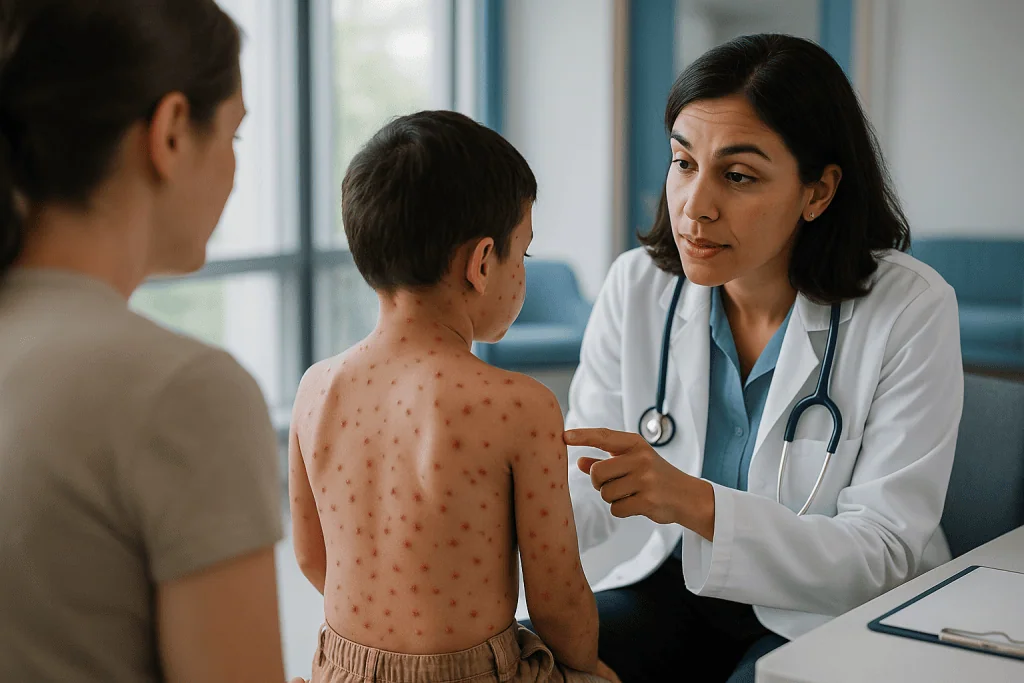
Then the skin becomes the stage. Virus particles travel through the bloodstream to the skin and infect the cells of the epidermis, the outer layer. The immune response to those infected cells produces the classic sequence: a small pink bump, then a thin-walled blister filled with clear fluid, then a cloudy blister, then a crust. The CDC notes that a typical case produces somewhere between 250 and 500 itchy blisters, appearing in crops so that bumps, blisters and scabs sit side by side at any moment.
Why does it itch rather than hurt? Inflammatory chemicals released around each lesion, including histamine and other messengers, stimulate the fine nerve endings that carry itch. Warmth increases blood flow and amplifies that signal, which is why a child who seemed settled at bath time can become frantic under a heavy duvet.
Understanding this changes the parenting goal. The spots are the body clearing the virus; you are not trying to make them vanish faster. You are trying to keep the nerves quieter and the skin intact while the immune system finishes its work.
How long does chickenpox itch last?
Most families want a number, and the honest answer is a range with a shape. The whole illness, from the first spot to the last crust, usually runs about 4 to 7 days according to the CDC, and Mayo Clinic gives the rash itself a span of roughly 5 to 10 days. The itch tracks the blister phase inside that window.
The pattern tends to look like this. New spots keep appearing for several days; the NHS describes the spots as arriving in waves. The itch is typically strongest while blisters are fresh and tense, so days two through four after the rash begins are often the hardest. Once a blister crusts, that individual spot usually stops itching much, although drying scabs can feel tight or prickly.
Because spots appear in crops, a child’s experience can feel inconsistent: calm one morning, miserable that evening when a new wave surfaces on the trunk. Parents sometimes read that as a treatment failing, when it is simply the next batch arriving.
Crusting usually completes around five days after the spots first appear, which is the point the NHS uses for its return-to-school advice, and the CDC notes it often takes about a week for all blisters to scab over. After that the itch is mostly gone, and the remaining job is letting scabs fall off on their own.
Two things stretch the timeline. A secondary bacterial infection of a scratched spot adds soreness, redness and sometimes a new wave of inflammation around that one site. And heat, whether from fever, a warm bedroom or vigorous play, keeps the itch signal louder for longer than it needs to be. Neither changes the virus; both change how long your child feels wretched.
Cool baths and an oatmeal bath for chickenpox: how to do them well
A bath is the single most reliable itch tool in the house, and the details matter more than people expect.
Temperature first. The water should feel cool to lukewarm, never hot, because warmth dilates skin blood vessels and intensifies itch. Children often resist cool water at the start, so begin tepid and let it drift cooler as they relax. Ten to fifteen minutes is plenty; long soaks over-soften crusts.
What to add. Both the CDC and Mayo Clinic mention colloidal oatmeal, which is oatmeal ground so finely that it disperses through the water and leaves a thin, soothing film on the skin. Uncooked oatmeal tied in a sock or muslin cloth and swished through the bath does a rougher version of the same thing. Baking soda is the other traditional addition the CDC lists. The evidence for both is largely experiential and mechanistic rather than from large trials, and it is fair to say so: they soothe, they are safe for intact skin, and they are not antiviral.
What to leave out. Bubble bath, scented products and anything with alcohol or strong fragrance can sting open spots. Skip the washcloth scrub.
Drying is where many families undo the good work. Rubbing with a towel tears blisters and spreads fluid. Pat gently, or wrap the child loosely and let the air do most of it. Apply calamine or another clinician-approved soothing lotion while the skin is still slightly damp, then dress in loose cotton.
How often. Several short baths a day are reasonable during the worst of the itch, including one shortly before bed to lower skin temperature when the night-time scratching tends to peak. If your child has eczema or any skin condition, mention it to your clinician, since their usual emollient routine may need adjusting during the illness.
Trimmed nails, mittens and the 2 a.m. problem
Most of the real skin damage in chickenpox happens while everyone is asleep. A dozing child scratches with no self-control and no witness, so the night plan deserves as much thought as the day plan.
Nails are the obvious starting point, and the CDC’s advice to keep them trimmed short is worth taking literally. Cut them straight across, then file the edges, because a freshly clipped nail can be sharper than an untrimmed one. Repeat every couple of days during the illness; small nails grow quickly, and a scab catches on surprisingly little.
Hands next. Soft cotton mittens, or a pair of clean socks slipped over the hands and loosely secured at the wrist with the top of the sock folded down, give a scratching hand something blunt to scratch with. Many children tolerate this better if it is presented as a night-time ritual rather than a punishment. Babies and toddlers generally accept scratch mittens without argument.
Bedding and clothing. Light cotton pajamas with no tight seams, a single sheet rather than a heavy duvet, and a cool room all reduce the heat that drives itch. Long sleeves and legs add a thin barrier between nails and skin without trapping warmth if the fabric is light.
Hand hygiene. Fingernails collect bacteria, and a scratched blister is an open door. Washing hands before bed and after any scratching session lowers the chance that a broken spot becomes an infected one; the CDC links scratching with bacterial skin infections for exactly this reason.
The last ingredient is gentler than it sounds. Rubbing or pressing a spot with a flat palm, or tapping the skin around it, gives some itch relief without breaking anything. Teaching a child to “press, don’t scratch” is a small skill that pays off at 2 a.m.
What to put on the spots: lotions, compresses and what the evidence shows
The shelf of soothing products is long and the evidence base is short, so it helps to sort by mechanism.
Calamine lotion is the classic, and it appears in both NHS and CDC guidance. Its zinc oxide and iron oxide mixture dries to a chalky film that cools as it evaporates and reduces friction between skin and fabric. It is a comfort measure, not an active treatment; it does nothing to the virus and the evidence for it is traditional rather than trial-based. Keep it away from the eyes and off mucous membranes, and do not layer it thickly over broken or weeping spots.
Cool compresses deliver the same cooling effect faster. A clean cloth wrung out in cool water, held gently against a particularly furious cluster for a few minutes, can settle a bedtime meltdown quickly. Change the cloth between uses.
Plain, fragrance-free moisturizers help once spots have crusted and the skin feels tight and dry. During the blister phase, heavy ointments can trap heat and are generally best avoided unless a clinician has recommended one.
Products to be cautious about include anything containing a topical anesthetic or topical antihistamine, which some pediatric guidance discourages on widespread or broken skin because absorption and sensitization are a concern. Ask before using them. Essential oils, vinegar rinses and home remedies shared online have no supporting evidence in chickenpox and can sting or irritate.
Antibiotic creams and ointments are not for routine use on every spot. If one lesion looks infected, that is a reason to contact your child’s clinician, who can decide whether a topical or oral antibiotic is appropriate, rather than a reason to self-treat.
A simple rule of thumb: on the skin, favor cool, plain and thin. The lotion is doing a physical job, and more is rarely better.
Medicines for itch and fever: what a clinician may consider
Medicine has a modest role in uncomplicated chickenpox, and the most important decisions are about what not to give.
Aspirin and any product containing salicylates must never be given to a child or teenager with chickenpox. The CDC and Mayo Clinic both link this combination to Reye’s syndrome, a rare but life-threatening condition that causes swelling of the brain and liver. Read labels carefully; salicylates turn up in some combination cold remedies and in certain stomach preparations.
Ibuprofen is a second caution. The NHS advises against using ibuprofen in chickenpox unless a doctor has specifically recommended it, because of a possible association with serious skin and soft-tissue infections. Mayo Clinic notes the same concern. If your child needs something for fever or discomfort, ask your clinician which option is appropriate; acetaminophen (paracetamol) is the agent most commonly discussed, and the right amount for your child’s age and weight is a conversation for the prescriber or pharmacist, not a blog.
Oral antihistamines are sometimes suggested for itch. They work by blocking histamine, one of the chemical messengers that triggers the itch nerves, and some older types also cause drowsiness, which can be either a benefit at night or a problem in a small child. Whether one is suitable, and which, depends on your child’s age and any other conditions, so leave that choice to the clinician.
Antiviral medicines such as acyclovir interfere with the virus’s ability to copy its genetic material. They are not routinely used in otherwise healthy young children with mild chickenpox. The CDC describes them as an option for people at higher risk of complications, and notes they are most useful when started early, generally within 24 hours of the rash appearing. That timing is why a prompt phone call matters for a child with asthma on steroids, a weakened immune system, or other risk factors.
Why scratching matters: skin infection and chickenpox scratching scars
Parents often assume the reason to stop scratching is cosmetic. Scarring is real, but the more urgent reason is infection.
Each chickenpox blister is a tiny pocket of fluid under a thin roof of skin. When a fingernail tears that roof, two things happen. The protective barrier is gone, and bacteria that live harmlessly on the skin and under the nails, chiefly Staphylococcus aureus and group A Streptococcus, gain entry. The CDC lists bacterial infection of the skin and soft tissues as the most common complication of chickenpox in children, and in a small number of cases those infections spread deeper, causing cellulitis, abscesses or, rarely, invasive streptococcal disease.
An infected spot usually declares itself. It becomes noticeably redder than its neighbors, the redness spreads outward, the area feels warm and tender, and the fluid may turn yellow or green. A fresh fever a few days into the illness, or a child who seemed to be improving and then worsens, is another signal. Any of these warrants a call to the clinician rather than a wait-and-see approach.
Scarring is the slower consequence. A blister that crusts and falls off on its own schedule usually leaves a pale mark that fades over months. A blister that is scratched open, especially one that then becomes infected, is far more likely to leave a pitted, permanent scar. The NHS and Mayo Clinic both link scarring to scratching for this reason.
Protecting the face is the priority most parents choose. A soft mitten at night and a cool compress during the day do more for the forehead and cheeks than any after-the-fact scar treatment. Once scabs have fallen off, keeping new pink skin out of strong sun for a few months can reduce how dark the marks become; sunscreen and shade are the practical tools, not special creams.
Who is usually cared for at home, and who needs the doctor involved early
Chickenpox in an otherwise healthy child between about one and twelve years of age is usually a home-managed illness. The NHS and Mayo Clinic both describe routine care as rest, fluids, comfort measures and keeping the child away from others until the spots have crusted. For these children, a clinic visit is often unnecessary and may expose vulnerable people in a waiting room, which is why many services ask families to phone first.
Some children are different, and knowing which category your child falls into is the most useful thing you can establish on day one. The CDC lists the groups at higher risk of serious complications:
- Babies under one year, and especially newborns whose mothers never had chickenpox or the vaccine.
- Adolescents and adults, who tend to have more severe illness and a higher risk of pneumonia.
- Pregnant people who have never had chickenpox or been vaccinated.
- Anyone with a weakened immune system, including children on chemotherapy, long-term steroid medicines, or treatment for inflammatory conditions, and children with HIV.
- Children with significant chronic skin conditions or lung disease.
For these children, early contact with the clinician matters because antiviral treatment, if it is chosen, works best within the first day of the rash. The care team may also want to monitor more closely or, in some cases, arrange specific preventive treatment for an exposed but not yet ill high-risk child.
Who is usually asked to wait? Families of healthy children with a typical rash and no red flags are generally asked to manage at home and call back if things change. That is not dismissal; it reflects what the evidence shows about the natural course of the illness. The “when to call your doctor” section later in this article sets out exactly which changes should end the waiting.
Chickenpox itch relief for kids: comparing the common approaches
Most of the tools for chickenpox itch relief for kids are low-cost, low-risk and modestly effective. The table sets them side by side so you can see what each one is actually doing, what the evidence looks like, and where the caveats sit. It is a summary of mainstream guidance from the CDC, NHS and Mayo Clinic rather than a ranking.
| Approach | How it helps | Evidence base | Cautions |
|---|---|---|---|
| Cool or lukewarm bath | Lowers skin temperature, reduces itch signaling | Guideline-recommended; mechanism well understood | Keep water cool, pat dry, avoid long soaks |
| Colloidal oatmeal or baking soda in bath | Soothing film, mild anti-irritant effect | Listed by CDC and Mayo Clinic; mostly experiential | Not antiviral; avoid scented additives |
| Calamine lotion | Cools by evaporation, reduces friction | Traditional, listed by NHS and CDC | Avoid eyes and broken skin; thin layers only |
| Cool compress | Rapid local cooling | Mechanism-based, widely advised | Clean cloth each time |
| Trimmed nails, mittens, socks on hands | Limits skin damage from scratching | CDC-recommended | Re-trim every few days |
| Loose cotton clothing, cool room | Reduces heat and friction | NHS-recommended | Avoid wool and synthetics |
| Oral antihistamine | Blocks histamine at itch nerves | Mentioned by Mayo Clinic and CDC as an option | Clinician decides suitability and type |
| Antiviral medicine | Slows viral replication | CDC: higher-risk groups, best within 24 hours of rash | Not routine for healthy young children |
Two patterns stand out. The physical measures at the top of the table carry almost no risk and can be repeated as often as needed, which is why they form the backbone of home care. The medicines at the bottom carry decisions that depend on your child’s age, weight and health history, and those decisions sit with the prescriber.
What the following days usually look like
Illness timelines vary from child to child, but chickenpox has a recognizable rhythm that the CDC, NHS and Mayo Clinic describe consistently. Knowing it in advance makes the hard days feel less alarming.
Before the rash, usually one to two days, many children have a fever, feel tired and go off their food. Younger children may simply be grizzly. Nobody knows it is chickenpox yet, although the child is already contagious; the CDC notes infectiousness begins one to two days before the rash.
Days one to two of the rash bring the first crop, often on the chest, back and face, sometimes beginning in the scalp. Spots move quickly from bump to blister. Itch starts to build. This is the point to begin the bath routine, trim nails and prepare the night-time mittens.
Days two to four are typically the peak. New waves keep arriving while earlier spots crust, so the skin shows every stage at once. Fever may persist. Sleep is disturbed. This is when the comfort plan earns its keep and when a fresh fever or a spreading red patch around one spot should prompt a call.
Days four to seven usually bring relief. New spots stop appearing, the NHS notes that crusting is generally complete around five days after the rash begins, and the itch fades as blisters dry. Energy returns in fits and starts.
The second week is about healing. Scabs loosen and fall off on their own; pulling them off early is the main cause of scarring. Pale or pink marks remain and fade over the following weeks to months.
Return to school or daycare follows the crust rule. The NHS advises waiting until every spot has crusted over, and the CDC uses the same milestone, because a child with dry scabs and no new blisters is no longer shedding virus from the skin.
Keeping the rest of the household safe while your child is contagious
Chickenpox spreads with remarkable efficiency. The virus travels through the air in respiratory droplets and in the fluid from blisters, and the CDC estimates that up to 90% of susceptible close contacts of a case will catch it. That number changes how you think about the week.
The contagious window runs from one to two days before the rash until every lesion has crusted. For practical purposes, assume your child has been infectious since before anyone noticed and plan around the people who matter most.
Pregnant household members who have never had chickenpox or the vaccine need to know today, because chickenpox in pregnancy carries risks to both the pregnant person and the baby, and there are time-sensitive preventive options a maternity team can discuss. The same urgency applies to newborns, to anyone having chemotherapy or taking medicines that suppress the immune system, and to older relatives who are unsure whether they ever had it.
Siblings who are not immune will very likely catch it. If they are old enough and healthy enough for vaccination, the CDC notes that the varicella vaccine given soon after exposure can prevent or soften the illness; this is a conversation for your clinician rather than a decision to delay.
Inside the house, the useful measures are ordinary: a separate towel for the ill child, regular hand washing, covering coughs, and keeping the child away from visitors until crusted. There is no need for disinfecting marathons; the virus does not survive long on surfaces.
Out of the house, keep the child home from school, nursery, swimming and play dates until all spots have crusted over. Avoid places where vulnerable people gather, which includes clinics and pharmacies. If you need medical advice, phone first so the practice can arrange a safe way to see your child.
What people often get wrong about chickenpox
Family wisdom about chickenpox is sincere, widely shared and sometimes wrong. A few corrections, each grounded in mainstream guidance.
“It’s better to get it over with, so arrange a pox party.” Deliberate exposure was once common. The CDC advises strongly against it, because chickenpox is unpredictable: most children have a mild illness, but some develop pneumonia, bacterial skin infections or, rarely, brain inflammation, and there is no way to tell in advance which child that will be. Vaccination provides immunity without the illness.
“Hot baths draw out the spots.” Heat increases itch and does nothing for the rash. Cool or lukewarm is the evidence-based choice.
“Any painkiller is fine as long as it’s for children.” Aspirin is dangerous in chickenpox because of Reye’s syndrome, and the NHS advises against ibuprofen unless a doctor recommends it. Read labels and ask.
“If the spots are crusting, the child is still contagious until the scabs fall off.” Once every lesion has crusted and no new blisters are forming, the child is no longer considered infectious, according to both the CDC and NHS. Scabs falling off is a healing milestone, not a contagion one.
“You can only get chickenpox once.” Second infections are uncommon but possible, and the same virus can return later in life as shingles. A child with chickenpox cannot catch shingles, but an adult with shingles can give chickenpox to a non-immune child through contact with the blisters.
“Vaccinated children can’t get it.” The CDC describes two doses as about 90% effective. Breakthrough cases happen, are usually mild with fewer spots, and are still contagious.
“Scars come from the virus.” They come overwhelmingly from scratching and infection, which is why nails and mittens matter more than any scar cream.
Questions to ask your care team
A phone call or video consultation goes better with a short list. These questions cover the decisions that genuinely depend on your child’s circumstances rather than on general advice.
- Does my child fall into a higher-risk group for complications, given their age, medicines or other conditions, and does that change how we manage this?
- Which medicine, if any, is appropriate for fever or discomfort, and what is the right amount for my child’s age and weight?
- Is an oral antihistamine suitable for my child’s itch, and if so, which type and at what time of day?
- Is antiviral treatment something you would consider for this child, and what is the window for starting it?
- Are there any skin products you would specifically recommend or advise against, given my child’s eczema or other skin conditions?
- What signs would make you want to see my child in person, and how should I contact you outside normal hours?
- Someone in our household is pregnant, has a newborn, or is immunocompromised. What should they do today?
- Should my other children be vaccinated now, and will that help if they have already been exposed?
- When can my child return to school or nursery, and does the school need a note?
- Is there anything about my child’s recent health history, including recent steroid courses or missed vaccines, that I should flag?
Write down the answers. Chickenpox weeks are sleep-deprived, and the advice you receive on day one is easy to misremember by day three. If a second clinician becomes involved, having the first conversation on paper saves time and avoids contradictory instructions.
One last question worth asking yourself rather than the team: what is your threshold for calling back? Decide it in daylight. The next section gives the clinical red flags; your own threshold can reasonably be lower than that, and most practices would rather hear from an anxious parent early than a frightened one late.
When to call your doctor
Most children with chickenpox recover at home without needing a clinician to see them. A minority develop complications, and the signs below should prompt a call the same day, or emergency care if your child seems seriously unwell. This list draws on CDC, NHS and Mayo Clinic guidance.
- A spot that becomes very red, hot, swollen or painful, or redness that spreads outward from a lesion, or fluid that turns yellow or green: possible bacterial skin infection.
- A fever that returns after it had settled, or a fever that is high or persists beyond a few days.
- Difficulty breathing, fast breathing, a persistent cough or chest pain: possible pneumonia.
- A stiff neck, severe headache, unusual sleepiness, confusion, difficulty walking, repeated vomiting or a seizure: possible involvement of the nervous system.
- A child who is hard to wake, limp, or not responding normally.
- Signs of dehydration: very few wet diapers or trips to the toilet, dry mouth, no tears, sunken eyes.
- Spots in or near the eyes, or any change in vision.
- Bleeding into the skin, or spots that look bruise-like or dark.
- A rash that is unusually widespread or severe, or an illness that seems to be getting worse rather than better after the first few days.
Call promptly, regardless of symptoms, if the child is under one year old, is a teenager, has a weakened immune system or takes medicines that suppress it, or has significant eczema or a chronic lung condition. The same applies if a pregnant person, a newborn or an immunocompromised person in the household has been exposed; preventive options exist but are time-sensitive.
When you call, say “chickenpox” at the start of the conversation so the practice can arrange a safe way to assess your child without exposing others in a waiting room. Every treatment decision, from whether an antiviral is appropriate to whether an infected spot needs an antibiotic, belongs to the clinician who examines your child.
Frequently asked questions
How do I treat itching from chickenpox at home?
Cool the skin and protect it. Give short cool or lukewarm baths, with colloidal oatmeal or baking soda if you have them, pat dry, and apply calamine lotion or a cool compress to the worst clusters. Keep nails short and filed, use soft mittens or socks on hands at night, dress your child in loose cotton and keep the room cool. Ask your clinician before using any oral antihistamine or other medicine.
What is varicella zoster, and is it the same as shingles?
Varicella zoster is the virus that causes chickenpox. After the illness it stays dormant in nerve roots and can reactivate decades later as shingles, a painful rash along one nerve. Chickenpox and shingles are two stages of the same virus. A child with chickenpox cannot catch shingles, but a non-immune child can catch chickenpox from contact with an adult’s shingles blisters.
What stops chickenpox itching fast when a child is frantic?
The fastest relief is usually physical cooling: a cool compress held gently on the worst spots, or a short cool bath followed by calamine applied to damp skin. Pressing or tapping around a spot with a flat hand gives some relief without breaking blisters. If nights are unmanageable, ask your clinician whether an oral antihistamine is appropriate for your child’s age; do not use aspirin, and ask before using ibuprofen.
How long does chickenpox itch last in children?
The itch tracks the blister phase, which is usually strongest for the first two to four days of the rash while new crops keep appearing. The CDC puts the whole illness at about four to seven days, and the NHS notes spots generally crust over around five days after they first appear. Once a spot has crusted it usually stops itching, though drying scabs can feel tight.
Does an oatmeal bath for chickenpox really help?
Colloidal oatmeal is listed by the CDC and Mayo Clinic as a soothing bath additive. It works by leaving a thin, calming film on the skin and by making cool water more comfortable to sit in; the supporting evidence is experiential and mechanistic rather than from large trials. It does not affect the virus or shorten the illness, but it is safe on intact skin and most children tolerate it well.
Will chickenpox scratching cause scars?
Scratching is the main cause of chickenpox scars. A blister that crusts and falls off on its own usually leaves a pale mark that fades over months, while a blister that is scratched open or becomes infected is far more likely to leave a permanent pit. Short nails, night-time mittens and leaving scabs to fall off naturally do more to prevent scarring than any cream applied afterward.
What are the symptoms of chickenpox in adults, and why are they worse?
Adults get the same itchy blister rash, often with more spots, a higher fever and a longer, more exhausting illness than children. Mayo Clinic and the CDC note adults face a higher risk of complications, particularly pneumonia, so an adult with a new chickenpox rash should contact a clinician promptly; antiviral treatment is more often considered for adults and works best when started early.
Can I give my child ibuprofen for chickenpox fever?
Ask your clinician first. The NHS advises against using ibuprofen in chickenpox unless a doctor has specifically recommended it, because of a possible link with serious skin infections. Aspirin must never be given to a child with chickenpox because of Reye’s syndrome. Your clinician or pharmacist can advise which fever medicine is suitable and the correct amount for your child’s age and weight.
When can my child go back to school after chickenpox?
Once every spot has crusted over and no new blisters are appearing. The NHS and CDC both use this milestone, because a child with dry scabs is no longer shedding virus from the skin. Crusting usually completes around five days after the rash begins. Scabs do not need to have fallen off, and your school may have its own policy, so check with them as well.
Does the chickenpox vaccine still matter if my child has already been exposed?
Possibly, and quickly. The CDC notes that varicella vaccination given soon after exposure can prevent the illness or make it milder in an unvaccinated, non-immune child, and two doses are about 90% effective at preventing chickenpox overall. Whether it is appropriate depends on age and health, so contact your clinician the same day you learn about the exposure.
References
This article is for general information only and is not a substitute for professional medical advice. Please consult a qualified doctor about your individual situation.
Add us as a Preferred Source to see more of our trusted health content across Google Search, AI Overviews and Discover.

More from the Blog

When Can Someone With Whooping Cough Return to School or Work? Isolation Guidance Explained
Someone with whooping cough is usually asked to stay home from school or work until they have completed about five full days of an…

Fitting Pediatric Physical Therapy Into Family Life: Bath Time, Bedtime and Play Routines
Pediatric physical therapy home exercises work best when they are folded into routines a child already has: tummy time during a diaper change, reaching…

Kawasaki Disease Treatment in Hospital: What the IVIG Infusion Day Involves for Your Child
Kawasaki disease treatment in hospital usually centers on a single intravenous immunoglobulin (IVIG) infusion run slowly through a drip over roughly 10 to 12…

Stages of a Cold in Babies: The Usual Timeline, Day by Day, and When to Call the Doctor
The stages of a cold in babies usually follow a set pattern: a stuffy, sneezy start over the first two days, the worst congestion…

Are Chickenpox Parties a Bad Idea? Deliberate Exposure Myths Pediatricians Correct
Chickenpox parties are not recommended by pediatric and public health bodies. Deliberately exposing a child to varicella risks a full infection with possible complications…

Speech, Occupational or Physical Therapy for Developmental Delay: How the Plan Is Matched
Speech therapy, occupational therapy and physical therapy are matched to the specific area where a child's development is behind, not to the label of…