

Hip Thrusts: Why the Glute Exercise Matters for Knees, Backs and Running
Key Takeaways
- A 2023 randomized trial using MRI found hip thrusts and back squats grew the gluteus maximus by similar amounts over nine weeks, with squats adding quadriceps growth that thrusts did not.
- Randomized trials in people with patellofemoral pain show that adding hip strengthening to knee exercises reduces pain more than knee exercises alone, usually starting with bridges rather than heavy thrusts.
- Strength training improves running economy by roughly two to eight percent in trained runners over eight to twelve weeks, and the hip thrust loads the glutes in the near-full-extension position used late in each stride.
- The 8-8-8 rule, eight full reps, eight partials and an eight-second hold, is an untested rep scheme that works only because it accumulates hard volume, not because of any unique effect.
- Frequency studies show that two or three hip thrust sessions a week with forty-eight hours between them match or beat daily heavy training, because muscle grows during recovery.
- Women tear the anterior cruciate ligament at two to eight times the rate of men in the same sports, and prevention programs that strengthen the hips and hamstrings reduce that risk.
A hip thrust is a strength exercise in which you rest your upper back on a bench and drive your hips upward against a weight, mainly working the gluteus maximus. Randomized trials show it builds glute size and strength about as well as squats, and observational and clinical data link stronger hips to less knee pain, better running economy and easier daily movement, though it is not a treatment for any diagnosed condition.
The bench at the far end of the weight room used to be where people stretched. Now there is a queue for it, a barbell padded with a foam sleeve, and a phone propped against a water bottle recording every rep. As of March 2026 the hip thrust is one of the most searched exercises on the internet, pushed along by a viral “8-8-8 rule,” by clips promising it will fix sore knees and aching backs, and by a run of published trials that finally put numbers on what it does and does not do.
That mix of hype and real science is exactly why the exercise deserves a calm explanation. The gluteus maximus is the largest muscle in the human body, and for most desk-bound adults it is also the least used. An exercise that loads it directly, without stacking weight on the spine, is worth understanding properly.
What follows is the honest version: which claims rest on randomized trials, which rest on gym folklore, and how to decide whether the hip thrust belongs in your week.
What is a hip thrust, and why is the hip thrust trending right now?
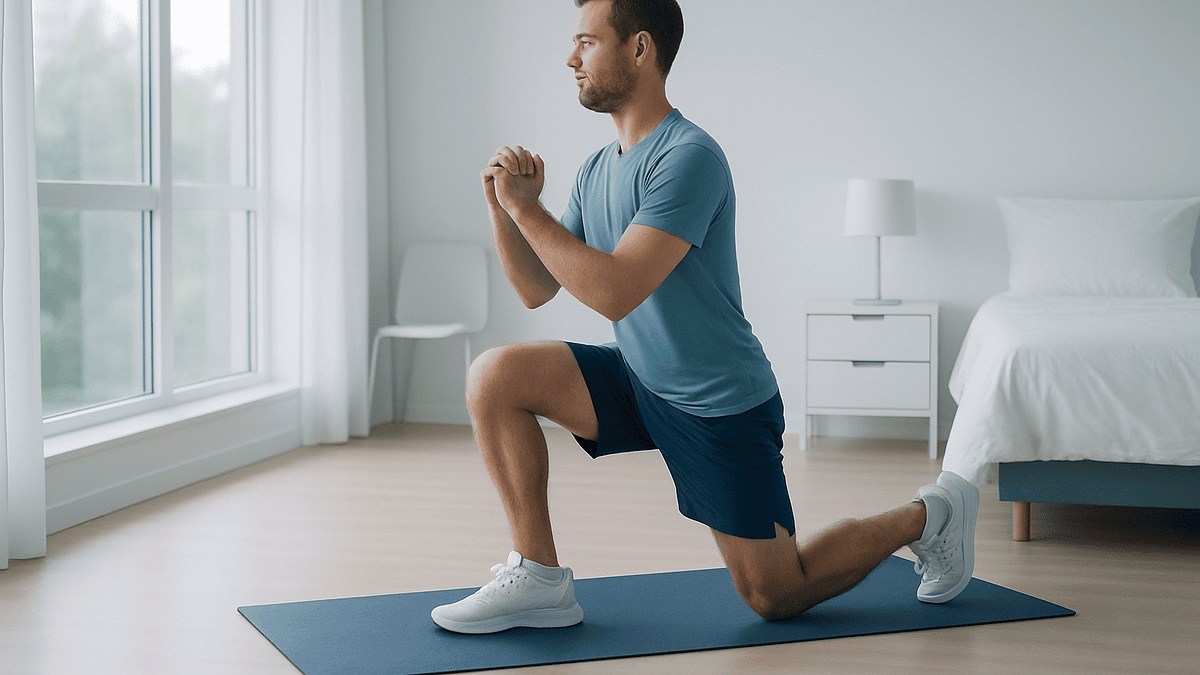
Picture sitting on the floor with your shoulder blades against a sturdy bench, knees bent, feet flat. You drive through your heels until your torso and thighs form a straight line, squeeze your buttocks at the top, then lower under control. Add a barbell, a dumbbell or a resistance band across the crease of your hips and you have a hip thrust. The movement is pure hip extension, which simply means straightening the hip joint by pulling the thigh backward behind the body.
The muscle doing most of that work is the gluteus maximus. Two smaller partners, gluteus medius and gluteus minimus, sit on the side of the pelvis and keep it level when you stand on one leg. The hamstrings at the back of the thigh assist, and the deep abdominal muscles brace the spine so the pelvis does not tip.
The exercise has existed in strength coaching for roughly two decades, but three things converged to send it up the search charts. Short-form video made the movement instantly recognizable. A catchy “8-8-8” rep scheme gave people a formula to try. And a wave of posts claimed the hip thrust could relieve knee pain, protect the lower back and make runners faster, claims that range from reasonably supported to plainly exaggerated.
There is a quieter reason, too. Public health guidance from the CDC asks adults to do muscle-strengthening work on at least two days a week, covering all major muscle groups. Most people manage a few push-ups and maybe a plank. The hips, the largest muscle group of all, tend to be skipped. The hip thrust fills that gap with a movement most beginners can learn in a single session, which is a large part of why it has stuck around after the trend cycle moved on.
What changed recently: the trials behind the trend
For years the argument for hip thrusts rested on electromyography, or EMG, a technique that measures electrical activity in a muscle through surface sensors. A widely cited 2015 laboratory study found higher peak gluteus maximus activation during barbell hip thrusts than during back squats at matched loads. That finding launched a thousand gym posters, but EMG only tells you a muscle is switched on. It does not tell you whether the muscle grows or the person gets stronger.
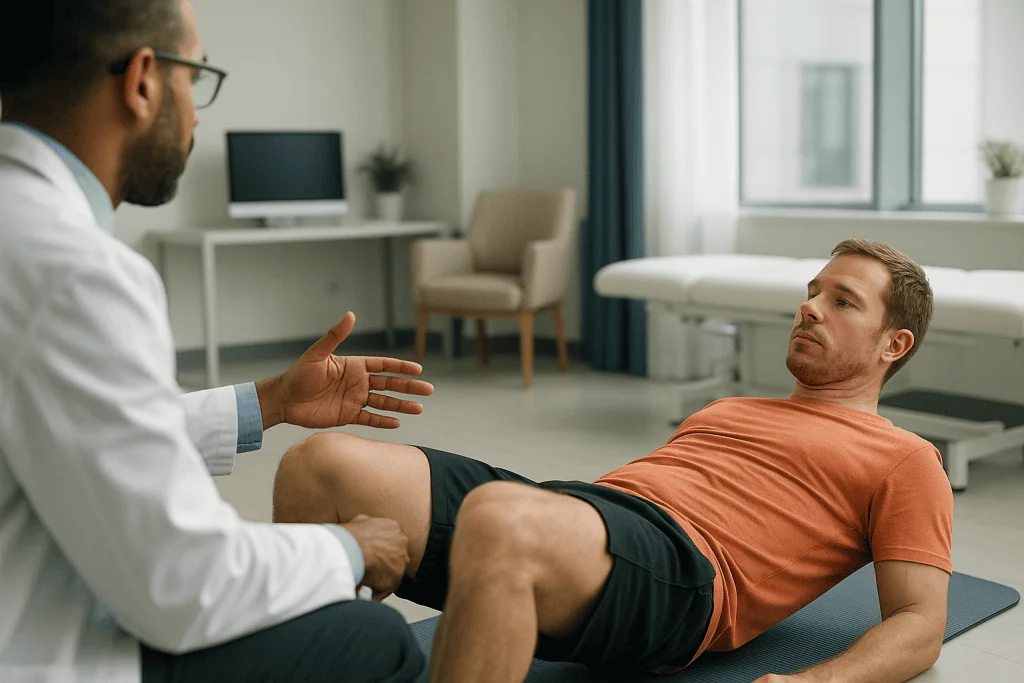
The better evidence arrived later. A 2020 randomized trial in trained women compared twelve weeks of back squats against twelve weeks of hip thrusts. The squat group gained more thigh and gluteal muscle thickness on ultrasound and improved their squat more; the thrust group improved their thrust more. A 2023 randomized trial in young adults, using more precise MRI-based muscle measurement, found that squats and hip thrusts produced similar growth of the gluteus maximus over nine weeks, while squats added quadriceps growth that hip thrusts did not. Strength transferred in both directions, and neither exercise was clearly superior for the glutes.
Those two studies together reshaped expert opinion. The hip thrust moved from “the best glute builder” to “a glute builder as good as the squat, with a different loading pattern.” That is a smaller claim, but a far sturdier one.
Guidance from public bodies has not changed to name any single exercise, and it is unlikely to. The current US physical activity guidelines, summarized on the CDC website, still ask for muscle-strengthening activity of moderate or greater intensity on two or more days per week, without prescribing which lifts. What has changed is that the hip thrust now has randomized-trial data behind it, something few exercises that go viral can say.
What are hip thrusts good for? Hip thrust muscles worked and hip thrust benefits
The direct answer: hip thrusts build the muscles that extend the hip, chiefly the gluteus maximus, with meaningful help from the hamstrings and the smaller gluteal muscles. Because the hip is the most powerful joint in the body, stronger hip extension shows up in everyday tasks that have nothing to do with the gym. Standing from a low chair, climbing stairs two at a time, carrying groceries up a hill and catching yourself after a stumble all depend on the same movement pattern.
The mechanics explain why the hip thrust loads the glutes so well. At the top of the movement, with hips fully extended and knees bent to roughly ninety degrees, the gluteus maximus is at its strongest working length and the load sits directly above the hip joint. In a squat, by contrast, the hardest point is at the bottom, where the glutes are stretched and the quadriceps take a large share. Both are useful; they simply challenge the muscle at opposite ends of its range.
The benefits people can reasonably expect, based on strength-training research summarized by the Mayo Clinic and Harvard Health, are these:
- Greater glute and hamstring strength within six to twelve weeks of consistent training.
- Visible increases in gluteal muscle size when volume and protein intake are adequate.
- Better hip stability, which reduces inward collapse of the knee during squatting, landing and running.
- Improved sprint and jump performance in athletes, though effects are modest and vary between studies.
- Preservation of muscle mass and functional strength with ageing, a benefit shared by all progressive resistance training.
What hip thrusts are not good for is equally clear. They do little for the quadriceps, they do not train the trunk the way a loaded carry does, and they are not a substitute for the cardio that your heart needs. Think of them as one important tool, not the whole toolbox.
Hip thrust vs glute bridge vs squat: how do they compare?
Readers often ask whether they need the barbell version at all, or whether the floor-based glute bridge is enough. A glute bridge is the same movement performed with your upper back on the floor rather than a bench, which shortens the range of motion. The table below sets the main options side by side.
| Exercise | Main muscles | Range of hip motion | Load on the spine | Best suited to |
|---|---|---|---|---|
| Hip thrust (bench) | Gluteus maximus, hamstrings | Large, from deep flexion to full extension | Low; weight rests on the pelvis | Building glute strength and size with heavy loads |
| Glute bridge (floor) | Gluteus maximus, hamstrings | Small, roughly the top third | Very low | Beginners, warm-ups, rehabilitation, home training |
| Back squat | Quadriceps, gluteus maximus, adductors | Large | Higher; bar sits on the upper back | Whole lower body strength, quadriceps growth |
| Romanian deadlift | Hamstrings, gluteus maximus, spinal erectors | Moderate, hinge pattern | Moderate; bar held in hands | Hamstring strength, posterior chain balance |
| Single-leg hip thrust | Gluteus maximus, gluteus medius | Large | Low | Fixing left-right imbalances, runners |
The pattern is straightforward. The hip thrust and glute bridge are the same exercise at two intensities; the bridge is where most people should start, and the thrust is where they progress when body weight stops being challenging. The squat and the Romanian deadlift train the glutes too, but they share the work with other muscles and ask more of the spine, which is why people with cranky backs often tolerate thrusts better.
For general fitness, the evidence supports picking one hip-dominant and one knee-dominant exercise rather than crowning a winner. A hip thrust paired with a squat variation covers the whole lower body in two movements, which is about as efficient as strength training gets.
Why hip thrusts matter for knees
The knee is a hinge caught between two more mobile joints, the hip above and the ankle below. When the muscles around the hip are weak, the thigh bone tends to drift inward and rotate during walking, squatting and landing. The kneecap then tracks slightly off center in its groove, and the tissue behind it becomes irritated. Clinicians call the result patellofemoral pain syndrome, better known as runner’s knee, and Johns Hopkins Medicine lists weak hip and thigh muscles among its recognized contributors.
This is where the hip thrust earns its reputation, with an important caveat. Randomized trials in people with patellofemoral pain consistently show that programs combining hip strengthening with knee strengthening reduce pain more than knee exercises alone. Those programs, however, typically use side-lying leg raises, clamshells, banded walks and bridges rather than heavy barbell thrusts. The hip thrust is a logical progression from the bridge once pain has settled, not the first step during a flare.
The mechanism is mostly about control rather than raw force. Stronger gluteus maximus and gluteus medius muscles keep the pelvis level and the thigh aligned over the foot, so the knee absorbs load through its thickest cartilage instead of its edges. Single-leg versions of the thrust may be especially useful here because they expose the side that dips.
Hip thrusts are also gentler on the knee than many alternatives. The shin stays roughly vertical and the knee bends to about ninety degrees, so compressive force behind the kneecap is lower than in a deep squat or lunge. People who cannot yet squat comfortably can often thrust without complaint, which keeps them training while the knee recovers.
None of this means the exercise treats knee arthritis or a torn meniscus. MedlinePlus is clear that persistent knee pain, swelling or locking needs assessment before any exercise program is chosen. Strong hips lower the odds of a common type of knee pain; they do not repair a damaged joint.
Why hip thrusts matter for backs
Most people with a tired, achy lower back do not have a structural problem. The NHS notes that the majority of back pain is non-specific, meaning no single injured tissue can be identified, and that staying active is one of the best-supported ways to manage it. The question is which activity. Heavy squats and deadlifts load the spine directly, which is fine for a healthy back and daunting for a sore one. The hip thrust sidesteps much of that compression by placing the weight on the pelvis while the spine stays neutral against the bench.
There is a second, more interesting reason. The glutes and the lower back are partners in every bend and lift. When the glutes are weak or slow to fire, the small muscles alongside the spine and the hamstrings pick up the work, and they are far less suited to it. Physical therapists describe this as poor hip extension strategy. Teaching the glutes to produce force at full hip extension, which is precisely what the top of a hip thrust demands, gives the back a stronger teammate.
The evidence here is mostly observational and clinical rather than from large randomized trials of hip thrusts specifically. Studies of general strengthening programs for chronic low back pain show moderate reductions in pain and disability, and programs that include hip and trunk work tend to perform at least as well as those that do not. That supports including the exercise; it does not prove that the hip thrust outperforms other choices.
Form matters more for the back than for any other body region. The most common error is arching the lower back at the top to push the hips higher. Instead, the ribs stay down, the chin stays tucked and the movement stops when hips and shoulders are level. Done that way, the exercise is one of the more back-friendly ways to load the lower body heavily.
What hip thrusts do for running
Running is a series of single-leg hops, roughly 160 to 180 of them per minute, and each one is powered largely by hip extension. Elite sprinters have some of the largest gluteus maximus muscles ever measured relative to body size. Distance runners rely less on peak power and more on how little energy each stride costs, a quantity called running economy, which means the oxygen used to hold a given pace.
Strength training improves running economy. That conclusion comes from several systematic reviews of randomized trials in trained runners, with typical improvements of two to eight percent after eight to twelve weeks of heavy or explosive lower-body work. The trials used a range of exercises, most often squats and plyometrics, and only a few included hip thrusts specifically, so the honest statement is that hip thrusts are one reasonable way to deliver a training stimulus that is known to help.
Where the hip thrust may offer something particular is in the position it strengthens. Late in each stride, as the foot leaves the ground, the hip is nearly fully extended and the glute is working hard at short length. That is the top of a hip thrust. Squats train the opposite end of the range. A small number of studies suggest exercises that load the hip in extension transfer well to sprint acceleration, though results are mixed and sample sizes are small.
Runners also benefit from the stability side. Weak side glutes let the pelvis drop on the swing side with every step, a pattern linked in observational studies to iliotibial band pain and runner’s knee. Single-leg hip thrusts and banded versions target that weakness directly.
A practical caution: adding heavy leg work leaves legs heavy. Most coaches schedule strength sessions on easy days and keep the rep count moderate during a race build. Two sessions a week is enough to see the economy benefits reported in trials.
How to do hip thrusts with good form as a beginner
Set a sturdy bench against a wall or rack so it cannot slide. Sit on the floor with the bench behind you and position it so its edge meets the bottom of your shoulder blades. Bend your knees and place your feet flat, roughly hip-width apart, close enough that your shins are vertical at the top of the movement. If your knees end up far ahead of your ankles, walk your feet out; if your heels lift, bring them in.
Before adding any weight, learn the motion with body weight alone. Tuck your chin slightly, look toward your knees and gently pull your ribs down toward your hips. Drive through your whole foot and lift your hips until your thighs and torso form one straight line. Pause for a second, squeeze your buttocks and lower with control until your hips are a few centimeters off the floor. Your gaze should travel with your torso; if you keep staring at the ceiling, your neck and lower back will arch.
Mayo Clinic’s guidance on weight-training technique applies here: control beats momentum, breathe steadily rather than holding your breath through every rep, and stop a set when form slips rather than when you are exhausted.
Once fifteen smooth body-weight repetitions feel easy, add load in this order:
- A resistance band above the knees, which also teaches you to keep knees pressed slightly outward.
- A dumbbell or weight plate held across the hip crease.
- A padded barbell, rolled over the legs and positioned in the same spot.
Progress by adding small amounts of weight or one or two repetitions per week, not both at once. Soreness in the glutes and hamstrings the next day is expected early on; sharp pain in the lower back or the front of the hip is a signal to lower the load and check the setup.
What is the 8-8-8 rule for hip thrusts?
The 8-8-8 rule is a rep scheme that spread through fitness videos rather than through research. In its most common form, one set consists of eight full-range repetitions, followed immediately by eight partial repetitions performed only in the top half of the movement, followed by an eight-second squeeze held at full hip extension. Some versions swap the hold for eight small pulses. The whole thing lasts perhaps forty-five seconds and produces a memorable burn.
Does it work? In the narrow sense, yes. Any scheme that takes a muscle close to failure with adequate weight will stimulate growth, and combining full reps, partials and an isometric hold is a legitimate way to accumulate that effort in one set. Partial repetitions and extended holds have been studied in laboratory settings and can add to muscle activation and training volume when tacked onto a set of full repetitions.
What the 8-8-8 rule is not is special. No randomized trial has compared it with an ordinary set of ten to twelve repetitions taken to a similar level of effort, and the underlying principle of strength training, that total challenging volume drives adaptation, predicts the two would come out much the same. The evidence grade here is expert opinion and physiological reasoning, not trial data.
Two cautions are worth spelling out. Because the scheme is exhausting, it should be performed with a lighter load than a standard set, or form degrades during the partials and the back starts to arch. And it is a poor choice for someone in their first weeks of training, whose priority is learning a clean movement rather than chasing fatigue.
Used once or twice a week as a finishing set after heavier work, it is harmless and enjoyable. Treated as a magic formula, it promises more than the science can deliver.
What happens if I do hip thrusts every day?
Muscle does not grow during exercise. It grows in the twenty-four to seventy-two hours afterward, when the body repairs the microscopic damage that lifting causes and builds the fibers back slightly larger and stronger. Train the same muscle hard every day and you keep interrupting that repair. In the short term you feel persistently sore and your weights stall; over weeks, tendons around the hip and knee become irritated and motivation drops.
Research on training frequency, summarized in strength-training guidance from Harvard Health and Mayo Clinic, points to a clear pattern. When total weekly volume is matched, spreading it over two or three sessions produces similar gains to spreading it over five or six. Frequency itself is not the driver; the number of hard sets you can recover from is. For most people that means hip thrusts two or three times a week, with at least a day between sessions.
Daily light work is a different story. A set or two of body-weight glute bridges each morning, used as a warm-up or as a gentle antidote to sitting, does not carry the same recovery cost and can help people who struggle to feel their glutes working. The distinction is intensity. Heavy loading needs rest days; light activation does not.
Signs that you are doing too much include soreness that never fully clears, pain at the front of the hip or the sit bones, a drop in the weight you can handle and disturbed sleep or irritability. Those are the body’s ordinary signals of under-recovery, and they respond to a lighter week.
The honest summary: nothing dramatic happens if you thrust every day for a fortnight, but you will not build more muscle than someone training twice a week with proper rest, and you will accumulate more wear. Strength is built in the recovery, not the repetition count.
Why do so many women hip thrust, and should men do them too?
Walk through any gym and the bench with the padded barbell is used more often by women. Search data reflects the same pattern, which is why “why do girls hip thrust” is a genuine query. The straightforward answer is that the exercise became visible through fitness communities that emphasized gluteal shape, and it delivers on that goal about as well as any exercise can. Wanting a stronger, fuller backside is a perfectly reasonable training aim and needs no justification.
There are physiological reasons the exercise suits many women particularly well. On average women have a wider pelvis relative to femur length, which increases the inward angle at the knee, and observational studies show that women tear the anterior cruciate ligament of the knee at two to eight times the rate of men in the same sports. Hip strength is one of the modifiable factors in that risk. Trials of injury-prevention programs that include hip and hamstring strengthening reduce ACL injuries in female athletes, so the hip thrust fits comfortably into a knee-protective routine.
Women also tend to start strength training with relatively stronger quadriceps than hamstrings and glutes, a pattern linked to knee pain and to that inward-knee collapse described earlier. Hip-dominant exercises rebalance it.
None of this makes the movement a women’s exercise. Men lose gluteal muscle with age just as women do, sit just as long, and suffer the same runner’s knee and lower back complaints. Sprinters, rugby players and older men working to preserve independence all benefit from loaded hip extension. The 2023 trial that found similar glute growth from squats and thrusts enrolled both sexes and reported no meaningful difference in response.
The only sex-specific advice worth giving is about the bar itself: a thick pad matters for everyone, because the front of the pelvis is bony regardless of who owns it.
Hip thrust variations and alternatives for home, travel and sore joints
A barbell and a bench are convenient, not compulsory. The hip thrust pattern survives translation into almost any setting, and choosing the right version often solves a problem that seems like a reason to skip the exercise.
- Floor glute bridge: the entry point. Shorter range, no equipment, easily done daily as activation.
- Banded hip thrust: a looped band above the knees adds work for the side glutes and teaches knee alignment. A long band anchored under the feet and across the hips adds load without a bar.
- Single-leg hip thrust: one foot on the floor, the other knee drawn toward the chest. Halves the load on the working side and exposes imbalances; a favorite of running coaches.
- Feet-elevated bridge: heels on a low step or a second bench. Increases range and hamstring involvement for people without a barbell.
- Dumbbell or kettlebell thrust: a weight held across the hip crease. Enough load for most beginners for several months.
- Machine hip thrust: now common in gyms; removes setup fuss and suits people who struggle to position a bar.
- B-stance thrust: one foot flat, the other on its heel slightly forward. A halfway house between two-leg and single-leg work.
For people who cannot get down to the floor comfortably, a standing cable or band pull-through trains the same hip extension pattern upright, and a hip hinge with a light kettlebell offers a further alternative.
Pick variations by what you are trying to fix. Knee that collapses inward: add the band. Pelvis that drops on one side when running: go single-leg. Back that aches after squats: swap one squat session for a thrust session and see how it feels over a month. The muscle does not know what the equipment is called; it only knows how hard it has to work.
What the evidence actually says about hip thrusts, graded
A sensible way to read exercise research is to sort claims by the quality of evidence behind them. Here is the hip thrust literature laid out that way.
Strong evidence, from randomized trials. Progressive resistance training of any kind increases muscle strength and size, improves function in older adults and modestly improves markers of metabolic health. This is the base on which all hip thrust claims rest, and it is about as settled as exercise science gets. Within that, two randomized trials from 2020 and 2023 show that hip thrusts build gluteus maximus size and strength, with the more precise 2023 study finding growth equivalent to back squats.
Moderate evidence, from randomized trials of related programs. Hip-strengthening programs reduce pain in patellofemoral pain syndrome and lower ACL injury rates in female athletes; strength training improves running economy. Hip thrusts were rarely the specific exercise tested, so the transfer to this movement is inferred rather than demonstrated.
Weaker evidence, from laboratory and observational studies. EMG data show high glute activation during thrusts. Observational work links weak hips to knee and back pain. Small studies suggest thrusts transfer to sprint acceleration. These findings are consistent and plausible but cannot prove cause and effect.
Expert opinion only. Specific rep schemes such as 8-8-8, the idea that thrusts are uniquely back-safe, and most claims about posture or “glute amnesia” fall here. Reasonable coaches believe them; no trial has tested them.
The overall picture is favorable and unglamorous. The hip thrust is a well-supported way to strengthen the largest muscle in the body, with plausible knock-on benefits for knees, backs and running that mostly rest on evidence for hip strength in general rather than for this exercise in particular. That is a solid reason to do it, and a poor reason to believe it is irreplaceable.
Common myths about hip thrusts, corrected
Myth: hip thrusts are the single best glute exercise. The 2023 randomized trial found squats and thrusts grew the gluteus maximus by similar amounts. The thrust is excellent, and so is its main rival.
Myth: they will fix your knee pain. Hip strengthening is a well-supported part of managing patellofemoral pain, usually starting with lighter exercises. It reduces one common cause of knee pain; it does nothing for a torn cartilage, arthritis or a ligament injury, all of which need a diagnosis first.
Myth: they are completely safe for a bad back. They load the spine less than squats, which is a genuine advantage. Arching hard at the top, however, can aggravate the same structures that hurt. Back-friendly depends on execution, not on the exercise name.
Myth: women need them, men do not. Both sexes lose gluteal muscle with age and both get runner’s knee. The trial data show no meaningful sex difference in response.
Myth: the 8-8-8 rule unlocks faster growth. It is one way to reach a hard set. Total challenging volume, not the arrangement of the reps, drives adaptation.
Myth: doing them every day speeds results. Muscle grows between sessions. Two or three hard sessions a week with recovery between them match or beat daily training in frequency studies.
Myth: you can spot-reduce fat from your hips with thrusts. Resistance training builds muscle under the fat; it does not preferentially burn the fat above the working muscle. Body composition changes come from overall energy balance and total activity.
Myth: a heavier bar always means better glutes. Beyond the point where you can hold a full-range, controlled rep, extra weight mostly shortens the range and shifts strain to the lower back. Load should grow only as fast as form allows.
Hip thrust mistakes and how to program them safely
Most hip thrust problems come from four setup errors. The bench is too high, so the shoulders hang and the neck strains; it should meet the lower edge of the shoulder blades. The feet are too far forward, turning the movement into a hamstring exercise and often triggering cramps behind the thigh. The gaze is fixed on the ceiling, pulling the head back and the ribs up until the lower back arches. And the load is heavy enough that the hips no longer reach full extension, which removes the part of the movement that makes it worthwhile.
Fixing them takes minutes. Check bench height with body weight, film one set from the side to see whether shins stay vertical, keep the chin tucked and the eyes on the knees, and only add weight when every repetition reaches a straight line from shoulder to knee.
Programming can be simple. A reasonable framework, consistent with Mayo Clinic strength-training guidance and the CDC’s two-days-a-week minimum, looks like this:
- Two sessions a week, at least forty-eight hours apart.
- Two to four working sets per session, in the range of six to fifteen repetitions depending on your goal.
- Finish each set with one to three repetitions still in reserve rather than at absolute failure.
- Increase load or repetitions a little most weeks; take a lighter week every four to eight.
- Pair with one knee-dominant exercise, such as a goblet squat or split squat, to cover the quadriceps.
People new to lifting, those over sixty-five, and anyone returning after an injury, surgery or pregnancy do best starting with body-weight bridges and progressing over several weeks. Pregnancy and the months after childbirth deserve individual advice, because pelvic floor and abdominal recovery vary widely.
A final habit worth building: warm up the hips before loading them. Two minutes of easy bridges, a few banded side steps and one light set of the exercise itself prepare the tissue and sharpen technique far better than stretching alone.
When to see a doctor about hip, knee or back pain before hip thrusting
Ordinary muscle soreness that peaks a day or two after training and fades within three or four days is normal, especially in the first weeks. The situations below are different and warrant assessment by a clinician before you continue.
Seek urgent medical care if you develop back pain together with new numbness around the groin or inner thighs, difficulty controlling your bladder or bowels, or weakness in both legs; these can signal pressure on the nerves at the base of the spine. Seek urgent care also for a knee that swells rapidly within hours of an injury, will not straighten, or gives way, and for calf pain with swelling and warmth after heavy training, which needs a blood clot excluded.
Book a routine appointment if pain lasts longer than two to three weeks despite rest and lighter training, if it wakes you at night, if it is accompanied by fever or unexplained weight loss, if you notice clicking, catching or locking in the hip or knee, or if you have osteoporosis, a previous spinal fracture, a hip replacement or a heart condition and have not discussed weight training with your care team.
The NHS and MedlinePlus both stress that most back and knee pain settles with activity and time, and that most people can and should keep moving. A physical therapist can watch you perform the exercise, identify why it hurts and modify it, which is nearly always more useful than abandoning it.
If you are taking any prescribed medicine, including blood thinners, blood pressure treatment or corticosteroids, or if you have a long-term condition such as diabetes, arthritis or a heart problem, decisions about the intensity and type of strength training belong with your treating clinician. This article describes what the evidence shows about an exercise; it cannot tell you whether that exercise is right for your body this month. Your doctor or physical therapist can, and asking them is a sign of taking training seriously rather than a sign of weakness.
Frequently asked questions
What are hip thrusts good for?
Hip thrusts strengthen the gluteus maximus and hamstrings, the muscles that straighten the hip. Randomized trials show they increase glute size and strength as effectively as squats, and stronger hips are linked in clinical studies to less patellofemoral knee pain, better pelvic control during running and easier everyday tasks like climbing stairs and standing from a chair. They do little for the quadriceps, so most programs pair them with a squat variation.
What is the 8-8-8 rule for hip thrusts?
The 8-8-8 rule is a viral set structure: eight full-range repetitions, then eight partial repetitions in the top half of the movement, then an eight-second squeeze at full hip extension. It works by pushing a set close to failure, which any well-loaded set does. No trial has compared it with ordinary sets, so its supposed advantage rests on opinion. Use a lighter weight than usual and keep it as an occasional finisher.
Why do girls hip thrust?
Many women hip thrust because the exercise builds gluteal muscle efficiently and became popular through fitness communities focused on that goal, which is a legitimate reason. There are also physiological benefits: women have higher rates of ACL injury and patellofemoral pain, both linked to hip weakness, and hip-strengthening programs reduce those risks in trials. Men gain the same strength, knee and back benefits, and trial data show no meaningful sex difference in response.
What happens if I do hip thrusts every day?
Daily heavy hip thrusts interrupt the twenty-four to seventy-two hours of repair in which muscle actually grows, so you end up sore, stalled and at higher risk of hip and hamstring tendon irritation. Studies of training frequency show that two or three sessions a week produce the same gains as daily training when total volume is matched. Light body-weight bridges every day as a warm-up are fine; heavy loading needs rest days.
Hip thrust vs glute bridge: which one should I do?
Start with the glute bridge and progress to the hip thrust when body weight stops being challenging. The bridge is the same movement performed with your back on the floor, so the range of motion is shorter and the load is lighter, which suits beginners, warm-ups and rehabilitation. The bench-based thrust allows a much larger range and heavier weight, which is what drives further strength and size once the basics are solid.
How do I do hip thrusts at home without a barbell?
Use a sturdy sofa edge or low step for your upper back, place your feet so your shins are vertical at the top, and drive your hips up until your torso and thighs form a straight line. Add difficulty with a resistance band above the knees, a heavy book bag or dumbbell across your hips, or by working one leg at a time. Single-leg versions are demanding enough to keep most people progressing for months.
Which muscles do hip thrusts work?
The gluteus maximus does most of the work, with the hamstrings assisting hip extension and the gluteus medius and minimus stabilizing the pelvis, especially in banded or single-leg versions. The quadriceps contribute a little at the bottom of the movement, and the deep abdominal muscles brace the spine throughout. Electromyography studies show gluteus maximus activation at the top of a hip thrust equals or exceeds that seen in heavy squats.
Can hip thrusts help with lower back pain?
They may help as part of a general strengthening program, which moderate-quality evidence shows reduces pain and disability in non-specific chronic low back pain. Hip thrusts load the pelvis rather than the spine and train the glutes to share the work of bending and lifting with the back muscles. The benefit depends on form: arching the lower back at the top can aggravate symptoms. Persistent, night-time or nerve-related back pain needs medical assessment first.
How many hip thrusts should a beginner do?
A sensible start is two sessions a week of two or three sets of ten to fifteen body-weight repetitions, stopping each set with a couple of reps still in reserve. Once fifteen controlled repetitions feel easy, add a band, a dumbbell or a padded bar and drop to sets of eight to twelve. Increase load or repetitions gradually rather than both at once, and take a lighter week every month or two.
Are hip thrusts safe for the knees?
For most people, yes, and often more comfortable than squats or lunges because the shin stays near vertical and the knee bends to about ninety degrees, keeping compressive force behind the kneecap relatively low. Hip strengthening is also part of standard management for patellofemoral pain. A knee that swells, locks, gives way or hurts sharply during the movement should be assessed by a clinician before you continue.
References
- CDC – Adult Activity: An Overview (Physical Activity Guidelines for Americans)
- MedlinePlus – Knee pain
- NHS – Back pain
This article is for general information only and is not a substitute for professional medical advice. Please consult a qualified doctor about your individual situation.

More from the Blog
Best Exercises for the Lymphatic System: Movement as Your Second Heart
The best exercises for the lymphatic system are rhythmic, whole-body movements: brisk walking, swimming or water walking, cycling, gentle rebounding, and slowly progressive strength…

Jump Rope: The Cardio, Bone and Coordination Benefits, and the Joint Question
Jump rope is a vigorous whole-body cardio exercise that raises heart rate within a minute, loads bone through hundreds of small landings, and trains…

Compression Boots: What Pneumatic Recovery Devices Do, and What Trials Show
Compression boots are inflatable leg sleeves that squeeze the limbs in a rhythmic pattern, a technique called intermittent pneumatic compression. Small randomized trials in…

Dynamic Stretching: Why Warm-Ups Changed and What to Do Now
Dynamic stretching means moving joints and muscles through their range of motion, leg swings, walking lunges, arm circles, instead of holding a stretch in…
Dead Bug and Bird Dog: The Two Core Exercises Physiotherapists Prescribe Most
The dead bug exercise is a floor-based core drill: you lie on your back, arms and knees raised, and slowly lower the opposite arm…

Reformer Pilates vs Mat Pilates vs Yoga: What Each Builds and Who It Suits
Reformer Pilates uses a sliding carriage and adjustable springs to add resistance and support to Pilates movements, so it tends to build more measurable…