

How Acute Lymphocytic Leukemia Treatment Runs in Phases, From Induction to Maintenance

Key Takeaways
- Complete remission in ALL is defined by the National Cancer Institute as fewer than 5 percent blasts in the bone marrow, a laboratory threshold that sensitive MRD tests can look beneath.
- Induction typically lasts about four weeks and is largely spent in hospital because white cell counts fall to near zero before recovering.
- Consolidation deliberately switches to different drug mechanisms so that cells resistant to the induction combination meet an unfamiliar attack.
- Chemotherapy is injected into the spinal fluid because the blood-brain barrier shields the nervous system from most drugs given through a vein.
- Maintenance runs for about two years because some leukemia cells rest quietly for months and are only vulnerable when they begin dividing again.
- There is no diet that treats ALL, but strict food-safety habits during low-count periods reduce the risk of dangerous foodborne infection.
Acute lymphoblastic leukemia is treated in sequential phases rather than one course. Induction, usually about four weeks, aims to clear leukemia cells from the blood and bone marrow. Consolidation (also called intensification) then targets cells too scarce to see, often with treatment directed at the brain and spinal fluid. Maintenance follows with gentler, mostly oral therapy. The full pathway typically spans two to three years, adjusted by the treating team.
The whiteboard in the room is what people remember. A nurse draws three boxes in a row, labels them, and says the last one is where you spend most of your time. Someone who walked in expecting “six rounds of chemo and done” is looking at a calendar that stretches past the next two birthdays. That first conversation, more than the diagnosis itself, is where many patients and parents feel the floor tilt.
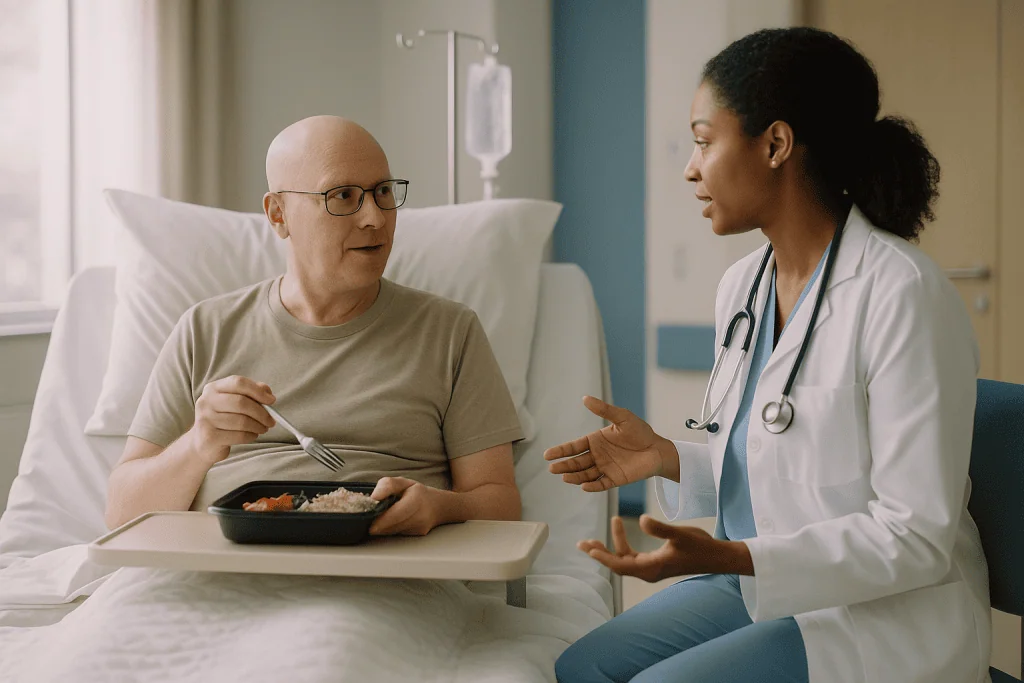
It helps to know that the length is the point. The acute lymphoblastic leukemia treatment phases exist because this disease has two faces: a fast, visible one that fills the marrow with immature white cells, and a hidden one that can survive an initial assault in tiny numbers. Each phase is designed for one of those faces.
What follows is a walk through those boxes on the whiteboard, from the first weeks in hospital to the last maintenance appointment, with the evidence for why each step exists and the questions worth asking along the way.
What are the acute lymphoblastic leukemia treatment phases, in plain language?
Acute lymphoblastic leukemia (ALL) is a cancer of the bone marrow in which immature white blood cells, called lymphoblasts or blasts, multiply faster than the marrow can make normal cells. “Lymphocytic” and “lymphoblastic” are two names for the same disease. Because the blasts crowd out red cells, platelets and mature white cells, symptoms tend to arrive quickly, which is why treatment usually starts within days of diagnosis.
Treatment is organized into three named stretches, and most guideline summaries, including the National Cancer Institute’s patient guides and the NHS, describe them the same way:
- Induction is the opening push. Its job is to bring blast counts down far enough that the marrow can start producing normal cells again. Much of it happens in hospital.
- Consolidation, sometimes called intensification, is the follow-through. Drugs and schedules change so that leukemia cells which tolerated the first combination meet something different.
- Maintenance is the long tail: lower-intensity therapy, mostly taken at home, designed to keep any lingering cells from regrouping.
Threaded through all three is treatment aimed at the central nervous system, the brain and spinal cord, because leukemia cells can hide in the fluid there where many chemotherapy drugs struggle to reach.
Two features distinguish ALL from most other cancers. One is speed at the start: there is rarely a “watch and wait” period. The other is duration at the end: maintenance runs for years, not weeks. The NHS describes maintenance alone as lasting about two years, and Mayo Clinic puts the whole course at two to three years. Those numbers are typical ranges from the sources cited, not a fixed schedule; the treating team sets the actual plan.
Why is ALL treated in phases instead of one big course?
The honest answer is that a single hard course does not finish the job. Induction can drive visible disease below the detection limit of a microscope within weeks, yet decades of trial experience showed that stopping there led to relapse in a large share of patients. The phased design grew directly out of that observation.
Think of the blast population as a very large crowd rather than a single target. A person with untreated ALL may carry a trillion leukemia cells. The first drugs remove the vast majority, but the ones that remain are, by definition, the ones least sensitive to those drugs. Consolidation introduces different agents with different mechanisms, some interfering with cell division, some starving cells of an amino acid they cannot make for themselves, some damaging DNA directly, so that resistance to one approach does not protect a cell from the next.
Maintenance addresses a separate biological reality: some leukemia cells sit quietly in a resting state for months. Chemotherapy works best on cells that are actively dividing, so a resting cell can wait out an intensive block. A low, steady level of oral treatment over a long period is designed to catch those cells whenever they wake and start to divide.
There is a fourth reason, and it is about the patient rather than the disease. Bone marrow, gut lining and hair follicles are also fast-dividing tissues, and they take the same punishment. Splitting treatment into blocks with recovery gaps lets normal marrow recover between hits, which is what makes the next block survivable. The rhythm of the acute lymphoblastic leukemia treatment phases, intense then gentler then intense again, is as much about protecting healthy tissue as about attacking leukemia.
Induction chemotherapy for ALL: what happens in the first four weeks
Induction usually begins within a day or two of diagnosis, typically after a bone marrow biopsy and a lumbar puncture have confirmed the subtype and checked the spinal fluid. The National Cancer Institute describes the induction phase as lasting about four weeks in children, and adult protocols follow a broadly similar length, though the exact duration is set by the treating team.
The drugs used are chosen for speed and for working through different mechanisms at once. A typical combination includes a corticosteroid (a synthetic version of a hormone the body already makes, which triggers lymphoblasts to self-destruct), a vinca alkaloid (a plant-derived drug that jams the internal scaffolding cells need to divide), and an asparaginase (an enzyme that removes an amino acid leukemia cells cannot produce for themselves). Many regimens add an anthracycline, which damages the DNA of dividing cells. Which agents appear, and in what sequence, depends on age, subtype and other factors, and is entirely a prescribing decision.
The first days can feel paradoxically worse than before treatment. As blasts break down in large numbers they release their contents into the blood, a situation called tumor lysis syndrome, which the team monitors with frequent blood tests and prevents with intravenous fluids and medicines that clear uric acid. Blood counts fall further before they recover, so transfusions of red cells and platelets are routine, not a sign that something has gone wrong.
Much of induction is spent in hospital, partly for the treatment itself and partly because the white cell count drops to almost nothing, leaving the body without its usual defense against infection. Fever during this window is treated as an emergency until proven otherwise. Toward the end of induction, a repeat bone marrow test tells the team whether the phase has done its work.
What does "remission" actually mean after induction?
Remission is one of the most misunderstood words in cancer care, and in ALL it has a precise, technical meaning. The National Cancer Institute defines complete remission as a bone marrow sample in which fewer than 5 percent of cells are blasts, alongside a return of normal blood counts and no leukemia detectable in the spinal fluid. It is a laboratory threshold, not a declaration that the disease has gone.
That distinction matters because a microscope has limits. A pathologist looking at a marrow slide can reliably spot leukemia when it makes up a few percent of cells. Below that, blasts become indistinguishable from the normal immature cells a recovering marrow produces. A patient in complete remission may still carry a large absolute number of leukemia cells scattered through the body.
To see further, teams use tests for measurable residual disease, often shortened to MRD. Flow cytometry identifies leukemia cells by the pattern of proteins on their surface; molecular tests find the genetic fingerprint of the original leukemia clone. Both are dramatically more sensitive than a slide and can detect disease at levels a microscope would call clear.
MRD has become one of the most important pieces of information in the whole pathway. A patient whose MRD is undetectable at the end of induction is generally considered to have responded well and may continue on the planned track. A patient with persistent MRD may be offered a more intensive consolidation, a different class of treatment, or a discussion about stem cell transplant. In other words, the result of this test frequently rewrites the next box on the whiteboard, which is why the team may wait for it before confirming what comes next.
Consolidation and intensification: hunting what the microscope cannot see
Once remission is confirmed, treatment does not ease off. In many protocols the weeks after induction are the most intensive of the entire course, which surprises people who assumed “remission” meant they were nearly finished.
Consolidation, also called intensification or post-remission therapy, runs for several months. The NHS describes it as a series of cycles that may be given partly in hospital and partly as an outpatient, with breaks for the marrow to recover between blocks. Its purpose is to attack the residual population identified by MRD testing, using drugs and schedules that differ from induction. High-dose antimetabolites, which mimic the building blocks of DNA and sabotage its copying, feature prominently; so do agents that cross into the spinal fluid.
Some protocols include a “delayed intensification” or “re-induction” block that essentially repeats a version of induction a few months later. The logic is straightforward: cells that survived the first round have had time to start dividing again, which makes them vulnerable to the same mechanisms a second time.
Side effects during consolidation often feel different from induction. Steroid effects on mood, appetite and sleep may be less prominent, while nausea, mouth soreness and low counts from intensive blocks come and go in waves tied to the treatment calendar. Many patients describe learning their own pattern: a rough week, then a recovering week, then clinic to check counts before the next block.
For patients whose leukemia carries certain genetic features, or whose MRD stays detectable, consolidation is where the pathway may branch toward a stem cell transplant or toward immunotherapy. Those options belong to the treating team, who weigh the biology of the disease against the risks of each route for the individual in front of them.
Why does ALL treatment involve lumbar punctures?
Few parts of the pathway generate as many questions as the repeated lumbar punctures. A lumbar puncture, sometimes called a spinal tap, is a procedure in which a thin needle is placed between two bones of the lower back to reach the fluid that bathes the spinal cord and brain. In ALL it does two jobs: it samples that fluid to check for leukemia cells, and it delivers chemotherapy directly into it.
The reason is anatomical. The brain and spinal cord are protected by the blood-brain barrier, a tightly sealed lining of blood vessels that keeps many substances, including most chemotherapy drugs, out of the nervous system. Leukemia cells can slip past that barrier and settle in the spinal fluid, where they are shielded from drugs circulating in the blood. Before this was understood, relapse in the central nervous system was one of the commonest ways ALL returned after apparently successful treatment.
Injecting chemotherapy into the spinal fluid, known as intrathecal therapy, bypasses the barrier entirely. The National Cancer Institute describes this central nervous system-directed treatment as a standard component of every phase, beginning in induction and continuing through maintenance. The number of procedures is set by the protocol and by whether leukemia was found in the fluid at diagnosis.
Children are usually sedated for the procedure; adults are typically awake with local anesthetic and may feel pressure rather than sharp pain. A headache that worsens on sitting up is the most common after-effect, and lying flat for a period afterward is often advised. Radiation to the brain, once routine, is now reserved for specific higher-risk situations because intrathecal chemotherapy has largely replaced it, sparing most patients its long-term effects.
Maintenance therapy for leukemia: the long, quieter stretch
Maintenance is where the calendar stretches. The NHS describes this final phase as lasting about two years, and it is the reason a full course of ALL treatment reaches two to three years in Mayo Clinic’s summary. For children it can mean starting kindergarten or changing schools while still on treatment; for adults it can mean returning to work with a tablet schedule folded into daily life.
The intensity is deliberately lower. Most maintenance regimens are built around oral antimetabolites, drugs that resemble the building blocks of DNA and disrupt cell division when incorporated. Commonly a daily tablet is paired with a weekly one, with periodic “pulses” of a steroid and an intravenous vinca alkaloid, and continued intrathecal treatment at intervals. Every element of the schedule is set and adjusted by the prescribing clinician based on blood counts, and it is never something to alter without that conversation.
Quieter does not mean effortless. Counts still drop, so regular blood tests continue, and the team may pause or adjust treatment if white cells fall too low. Infections remain a risk because immunity is suppressed throughout, and some routine vaccinations are deferred. Fatigue tends to be the most persistent complaint. Steroid pulses can bring a few days of altered mood, appetite and sleep each cycle.
There is also a psychological shape to this phase. Many people report that the end of intensive treatment, when visits thin out and hair grows back, is oddly harder than induction. The structure that carried them disappears, while the disease is still officially being treated. Naming that experience early, and asking whether psychological support is available, can make the long tail easier to live through.
Who follows the standard pathway, and whose plan is changed?
Unlike some cancers, ALL has no group of patients who are asked to wait and observe. The disease moves too quickly for that. The relevant question is not whether to treat but which version of the pathway fits, and here the answer is genuinely individual.
The three-phase structure described above is the backbone for most children and many younger adults. Within it, protocols are stratified by risk, meaning the intensity of consolidation and the length of maintenance vary with factors such as age at diagnosis, white cell count at presentation, the genetic changes found in the leukemia cells, and how quickly MRD becomes undetectable.
Several groups usually receive a modified plan:
- Philadelphia chromosome-positive ALL, in which two genes fuse to create an overactive growth signal, is typically treated with a tyrosine kinase inhibitor, an oral drug class that blocks that signal, alongside chemotherapy.
- Older adults may be offered less intensive chemotherapy backbones, because the intensive regimens designed for children carry higher toxicity with age. Immunotherapies that recruit the patient’s own T cells against leukemia cells are increasingly part of these plans.
- High-risk disease or persistent MRD may lead to a recommendation for allogeneic stem cell transplant, in which the patient’s marrow is replaced with a donor’s after intensive treatment. It carries substantial risks and is reserved for situations where the expected benefit justifies them.
- Relapsed disease after standard treatment typically moves to different agents, including antibody-based and cell-based immunotherapies, before any transplant.
Pregnancy, significant heart or liver disease, and certain infections also change what can be given and when. None of these decisions rest on a single test result. They emerge from the whole picture, and the treating team is the only party positioned to see it.
What is the treatment timeline for acute lymphoblastic leukemia?
People ask for a timeline because they need to plan a life around it, and the honest version has both fixed and moving parts. The table below draws typical ranges from the National Cancer Institute, the NHS and Mayo Clinic. Every figure is a common pattern, not a promise, and protocols vary between countries, age groups and risk categories.
| Phase | Typical duration | Main aim | Where care usually happens |
|---|---|---|---|
| Induction | About 4 weeks | Reduce blasts to below 5% of marrow cells; restore normal counts | Largely inpatient |
| Consolidation / intensification | Several months | Target residual disease with different drug mechanisms; protect the nervous system | Mixed inpatient and outpatient cycles |
| Maintenance | About 2 years | Suppress resting leukemia cells with low-intensity, mostly oral therapy | Home, with regular clinic visits |
| Whole course | Roughly 2 to 3 years | Complete the planned pathway; transition to follow-up | Progressively less hospital-based |
A few notes make the table more useful. The four-week induction figure comes from pediatric guidance; adult regimens are often similar but may be longer or split into two blocks. Consolidation length is the most variable element, because it expands for higher-risk disease and contracts for lower-risk. Stem cell transplant, where used, replaces much of consolidation and maintenance with a different timeline centered on the transplant itself and the months of recovery after it.
Delays happen, and they are built into the design. Low counts, infections and organ effects routinely push a block back by days or weeks. Teams expect this and adjust; a delay is rarely a sign the plan is failing.
What do the weeks after diagnosis usually look like day to day?
The first week is the steepest learning curve. A central venous line, a soft tube placed in a large vein near the heart, is usually inserted early so that drugs, fluids and blood products can be given without repeated needles. Blood tests happen daily, sometimes more. Fluids run continuously during the first days to protect the kidneys as blasts break down. Someone from the team, a nurse specialist or pharmacist, will typically walk through the protocol and its expected side effects, and it is reasonable to ask for that conversation to be repeated once the shock has settled.
Weeks two and three of induction are often the lowest point for blood counts. Platelet transfusions prevent bleeding; red cell transfusions ease breathlessness and fatigue. Mouth soreness, nausea and changes in taste are common and are managed with specific supportive medicines. Steroids can bring a ravenous appetite, disturbed sleep and swings in mood that families find as hard as any physical symptom; knowing they are drug effects with an end date helps.
Toward the end of induction, hair loss usually begins, counts start to recover, and the repeat marrow test is scheduled. Discharge often follows soon after, with a calendar of consolidation dates and strict instructions about fever.
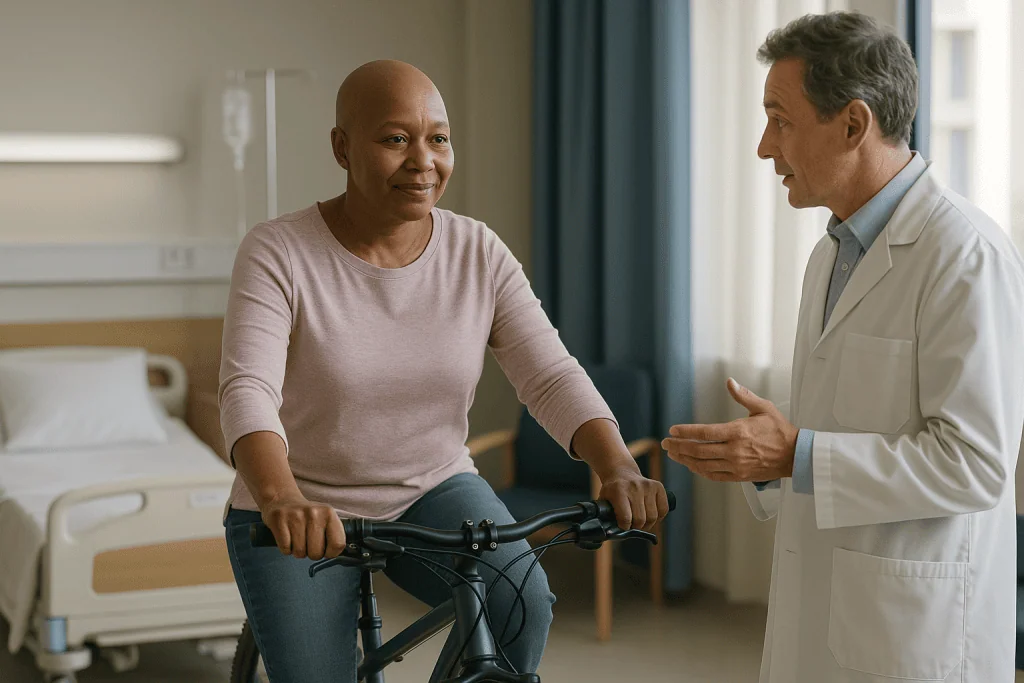
Life at home during consolidation runs to the rhythm of counts. Most people learn to anticipate the low-count window after each block and plan quiet days, then feel stronger before the next cycle. Infection precautions, careful food handling, avoiding crowds during the lowest counts, prompt attention to any fever, become habit. Fatigue accumulates; many patients describe needing far more rest than they expected, and clinicians generally encourage gentle activity rather than bed rest where counts allow.
What is the recommended diet during leukemia treatment?
There is no special anti-leukemia diet, and any source that promises one has drifted away from the evidence. What the evidence does support is practical: keep weight and muscle stable through treatment, and reduce the risk of foodborne infection while the immune system is suppressed.
The infection piece comes first because it can be dangerous. When neutrophils, the white cells that fight bacteria, are very low, a food poisoning episode that a healthy person would shrug off can become a serious illness. Standard food-safety guidance from the National Cancer Institute and NHS applies with extra care: cook meat, poultry, eggs and seafood thoroughly; avoid unpasteurized milk, cheese and juice; wash fruit and vegetables well or peel them; skip raw sprouts, undercooked eggs and buffet food that has sat out; and keep leftovers refrigerated and reheated until steaming. Your team may give a more specific list during the lowest-count periods, and their advice overrides anything general.
The nutrition piece is about tolerating treatment. Steroid phases often bring intense hunger and cravings for salty or sweet foods; this is temporary, and restrictive dieting during treatment is generally discouraged. Nausea phases call for small, frequent, bland meals and cold foods that carry less smell. Mouth soreness favors soft, non-acidic foods. Weight loss and falling muscle mass are red flags for the team, because they are linked to worse tolerance of chemotherapy, so a dietitian referral is worth requesting early rather than late.
Supplements deserve caution. High-dose antioxidant supplements and some herbal products can interact with chemotherapy or affect how the liver processes it. The safest rule is to tell the treating team about every product, including vitamins, before taking it.
Can you fully recover from acute lymphoblastic leukemia?
Many people do finish the planned pathway, come off treatment, and return to school, work and ordinary life. Outcomes vary widely with age, the genetics of the leukemia, and how quickly it responds, and the figures that describe them belong in a conversation with the treating team, who can place an individual’s situation against the right comparison group. Population statistics quoted out of context tend to frighten or falsely reassure.
What can be said in general is that the end of maintenance is not the end of care. Follow-up appointments continue for years, initially with regular blood counts, then less often. The risk of relapse is highest in the first years after treatment and falls over time, which is why the intensity of monitoring tapers.
The word “survivor” causes some confusion. In cancer care it is commonly used from the day of diagnosis onward, for anyone living with or after the disease, rather than as a status earned at a finish line. Survivorship care refers to the long-term follow-up that addresses late effects of treatment.
Those late effects are real and worth knowing about. Depending on the drugs and doses received, they can include effects on heart function from anthracyclines, bone health from steroids, fertility, growth and learning in children treated young, and a small increased risk of second cancers. Most people experience few or none of these, but the follow-up plan exists to catch them early. The National Cancer Institute’s guidance places the design of that plan, including which tests and how often, with the treating team, who know exactly what a patient received.
Recovery, in other words, is real and common, and it is also a process that extends well past the last tablet.
What people often get wrong about ALL treatment phases
Some myths sit so comfortably in everyday conversation that they need correcting directly.
“Remission means it’s gone.” Remission is a laboratory threshold, fewer than 5 percent blasts in the marrow by the National Cancer Institute’s definition. Sensitive MRD tests routinely find leukemia in patients who meet it. That is exactly why consolidation and maintenance exist.
“Maintenance is optional because the hard part is over.” The two-year maintenance phase was not added as an afterthought; shortening or skipping it in older trials led to more relapses. The tablets look modest, but their steady presence is what suppresses resting cells. Any change to the schedule is a decision for the prescribing clinician.
“A delay in treatment means it is failing.” Blocks are pushed back for low counts and infections all the time. Protocols anticipate this. A delay is a safety adjustment, not a verdict.
“Children’s and adults’ treatment is the same.” The structure is shared, but intensity, drug choices and the role of transplant differ substantially. Adolescents and young adults are increasingly treated on pediatric-style protocols; older adults often receive gentler backbones combined with immunotherapy.
“Transplant is the strongest treatment, so everyone should have it.” Allogeneic transplant carries significant risks of its own and is reserved for situations where the biology of the disease makes those risks worthwhile. For many patients, standard chemotherapy is the better-evidenced route.
“Diet or supplements can replace a phase.” No dietary approach has been shown to treat ALL. Good nutrition supports tolerance of chemotherapy; it does not substitute for it.
“Hair loss is the worst side effect.” For most patients it is the most visible one. Fatigue, infection risk and the mood effects of steroids usually matter more day to day.
Questions to ask your care team
The pace of the first weeks leaves little room for reflection, and questions surface later, often at home at night. Writing them down and bringing them to the next visit is entirely normal; teams expect it. These are the ones that tend to matter most, grouped by moment.
At diagnosis and the start of induction:
- Which subtype of ALL is this, and did the genetic tests show anything that changes the plan?
- What is the risk group, and what does that mean for how long and how intensive treatment will be?
- How long is the hospital stay expected to be, and what would extend it?
- Who do I call, at any hour, if there is a fever or something feels wrong?
At the end of induction:
- What did the bone marrow and MRD tests show, and how does that shape consolidation?
- Is a stem cell transplant or immunotherapy being considered, and why or why not?
- Should fertility preservation be discussed before the next phase?
During consolidation and maintenance:
- What pattern of low counts should I expect after each block, and how should I plan around it?
- Which vaccinations are safe now, and which need to wait?
- Can I go to school or work, and are there specific exposures to avoid?
- Is there psychological support for me and my family, and how do we access it?
Toward the end of treatment:
- What will follow-up look like in the first year, and how will it change over time?
- Which late effects apply to the specific drugs I received, and what monitoring is planned for them?
- What signs should prompt me to call between scheduled visits?
Asking for a written summary of the treatment received is also worthwhile; it becomes the reference document for every future clinician.
When to call your doctor
Throughout every phase of ALL treatment, the immune system is suppressed, and the body’s warning signals are muted. Problems that would be minor in a healthy person can escalate within hours. Every treatment center provides an emergency number for exactly this reason, and using it is never an overreaction.
Call immediately, at any hour, for any of the following:
- A temperature at or above the threshold your team has given you, or shaking chills even without a measured fever. Fever during low counts is treated as a medical emergency until infection is excluded.
- Feeling suddenly very unwell, confused, drowsy or faint, or breathing that is fast or difficult.
- Bleeding that does not stop, blood in urine or stool, black stools, or a sudden spread of small red or purple spots on the skin.
- A severe or worsening headache, new weakness or numbness, seizures, or changes in vision or speech.
- Redness, swelling, pain or discharge around the central line, or a line that will not flush.
- Persistent vomiting or diarrhea that prevents keeping down fluids or oral medicines.
- Pain, swelling or warmth in one leg, or chest pain with breathlessness, which can signal a blood clot.
- Severe abdominal pain, particularly after asparaginase-containing treatment.
- Any new rash, especially with a fever, or contact with someone who has chickenpox, shingles or measles.
Contact the team during working hours, rather than waiting for the next appointment, for mouth sores that make eating difficult, unexplained weight loss, a persistent cough, low mood that is not lifting, or any new symptom that worries you. Never stop, skip or double an oral maintenance medicine on your own; if a dose is missed or vomited, ask the team what to do.
The threshold for calling is low by design. Teams would rather hear about ten things that turn out to be nothing than miss the one that is not.
Frequently asked questions
What is the treatment timeline for acute lymphoblastic leukemia?
Most pathways run about two to three years in total. Induction lasts roughly four weeks, consolidation several months, and maintenance about two years, based on National Cancer Institute, NHS and Mayo Clinic summaries. Higher-risk disease usually means longer or more intensive consolidation, and a stem cell transplant replaces much of the later timeline with its own. The treating team sets the actual schedule.
What does induction chemotherapy for ALL involve?
Induction combines several drugs with different mechanisms, typically a corticosteroid, a vinca alkaloid, an asparaginase and often an anthracycline, given over about four weeks, largely in hospital. Its goal is to bring blast counts below 5 percent of marrow cells and restore normal blood production. Transfusions, intravenous fluids and infection precautions are routine parts of the phase.
Why does maintenance therapy for leukemia last two years?
Some leukemia cells enter a resting state and survive intensive treatment because chemotherapy mainly kills dividing cells. A long period of low-intensity oral therapy is designed to catch those cells whenever they reactivate. Earlier trials that shortened maintenance saw more relapses, which is why guideline pathways keep it at about two years.
Is remission the same as being free of leukemia?
No. Remission means blasts make up fewer than 5 percent of bone marrow cells and blood counts have recovered. Tests for measurable residual disease can detect leukemia at far lower levels, and many patients in remission still have detectable disease. That is why consolidation and maintenance continue after remission is confirmed.
What is the recommended diet during leukemia treatment?
There is no diet that treats leukemia. The evidence-based priorities are maintaining weight and muscle, and following strict food-safety practices when white cell counts are low: thoroughly cooked meat and eggs, pasteurized dairy, well-washed produce, and no raw sprouts or buffet food. Tell the team about any supplements, since some interact with chemotherapy.
Why are so many lumbar punctures needed?
Leukemia cells can hide in the fluid around the brain and spinal cord, where the blood-brain barrier keeps most chemotherapy out. Injecting drugs directly into that fluid during a lumbar puncture reaches them. The procedure also samples the fluid to check for leukemia. It is a standard part of every phase in guideline pathways.
Can you fully recover from acute lymphoblastic leukemia?
Many people complete the planned pathway and return to ordinary life. Outcomes vary with age, the leukemia’s genetics and how quickly it responds, so individual figures should come from the treating team. Follow-up continues for years after treatment to monitor for relapse and for late effects of the drugs received.
What are leukemia survivors?
In cancer care, “survivor” is commonly used for anyone living with or after a leukemia diagnosis, starting from the day of diagnosis rather than after a finish line. Survivorship care refers to long-term follow-up that monitors for relapse and for late effects such as heart, bone, fertility or learning changes linked to specific treatments.
Do adults and children follow the same ALL treatment phases?
The three-phase structure is shared, but the details differ. Children generally receive more intensive regimens that they tolerate well. Adolescents and young adults are increasingly treated on pediatric-style protocols. Older adults often receive gentler chemotherapy combined with targeted or immune-based treatments, and stem cell transplant plays a different role across age groups.
Does a delay in a treatment block mean something is wrong?
Usually not. Blocks are commonly postponed when blood counts have not recovered or when an infection needs treating first. Protocols anticipate these pauses, and teams adjust schedules routinely. A delay is a safety measure rather than a sign the treatment is failing, though the team will explain the reason in each case.
References
This article is for general information only and is not a substitute for professional medical advice. Please consult a qualified doctor about your individual situation.

More from the Blog

When Targeted Therapy Stops Working: Resistance, Repeat Biopsies and the Next Options
When targeted therapy stops working, it usually means the cancer has found a way around the drug, a process called acquired resistance. The care…
Why Cystoscopy Surveillance Continues for Years After Bladder Cancer Treatment
Cystoscopy surveillance after bladder cancer continues for years because the disease has one of the highest recurrence rates of any solid tumor, and new…

Radiation Precautions After Radioiodine Treatment: Distance, Sleeping Alone and Hygiene
Radiation precautions after radioactive iodine usually mean keeping extra distance from other people, sleeping alone, and taking care with urine, saliva and sweat for…

What Sarcoma Follow-Up Involves: Scheduled Imaging, Wound Review and Function Checks
Sarcoma follow-up combines scheduled imaging, wound checks and function assessments. Guideline consensus suggests chest imaging by CT or X-ray, plus MRI or ultrasound of…

Flying Home After Radioiodine Treatment: Airport Detectors, Timing and What to Carry
Flying after radioactive iodine treatment is usually possible once your treating team confirms your radiation level has fallen enough for close contact with other…
After Colon Cancer Surgery: How Bowel Function Returns and What the First Weeks Feel Like
After colon cancer surgery, the bowel usually pauses for a day or two, then gas and loose, frequent stools return over the following days.…