

How Can Parents Extend Sensory Integration Therapy Between Sessions? A Playful Home Program

Key Takeaways
- Sensory integration therapy is defined by a trained therapist adjusting play in real time, so a home program works best as a translation of the therapist's current goals rather than a copied activity list.
- The American Academy of Pediatrics found the evidence for sensory integration therapy limited and inconsistent and advised families to set specific goals and a defined trial period, then judge progress against them.
- Proprioceptive input from heavy work such as carrying, pushing, and crawling is the most commonly used calming tool and hides easily inside household chores.
- Vestibular play carries the most risk of overstimulation, so slow rhythmic movement comes first and nausea, pallor, or a glazed look are signals to stop.
- A sensory diet is a schedule of sensory experiences placed around the day's hardest transitions, never a punishment, reward, or list of mandatory tasks.
- Sensory seeking on its own does not indicate autism or ADHD; those diagnoses rest on broader patterns of social communication, attention, and behavior assessed by a clinician.
Parents can extend sensory integration therapy between sessions by turning the occupational therapist's individual plan into short bursts of everyday play: heavy-work movement, safe swinging or spinning, textured and messy play, and calmer routines around meals and bedtime. The home program should follow the therapist's specific goals, be reviewed regularly, and never replace clinical assessment, because evidence for sensory integration therapy remains limited and mixed.
The session ends at 4:40 on a Tuesday. Your seven-year-old has spent forty minutes crawling through a fabric tunnel, hanging from a trapeze bar, and pressing his whole body into a pile of cushions while the occupational therapist coached, watched, and adjusted. He walks out looser, chattier, easier. By Thursday the shoes-and-socks battle is back, and the next appointment is nine days away.
That gap is where most of a child’s week actually lives. A sensory integration home program is simply the therapist’s plan carried into the kitchen, the backyard, and the bath, in doses small enough to fit between homework and dinner. It is not a substitute for the clinic, and it is not a set of magic exercises.
What follows is an honest guide to doing this well: what the therapy is trying to change, where the evidence is strong and where it is thin, which kinds of play tend to help, and how to know when what you are seeing calls for a phone call rather than another round of cushion-crashing.
What is a sensory integration home program, and how does it actually work?
Sensory integration is the brain’s job of taking in information from the body and the world, sorting it, and producing a useful response. Catch a ball, tolerate a shirt tag, sit upright through a story: each depends on that sorting happening smoothly. When it does not, a child may overreact to ordinary input, underreact to it, or crave far more than peers seem to need.
Sensory integration therapy, developed by occupational therapist A. Jean Ayres, uses play-based movement and touch experiences, graded to a child’s tolerance, to give the nervous system repeated practice at organizing input. The therapist sets up a challenge that is just hard enough, watches the child’s response, and adjusts in real time. That responsiveness is the core of the method, and it is why a home program cannot simply copy the clinic.
A sensory integration home program takes the therapist’s current goals and translates them into everyday activities a parent can run for a few minutes at a time. If the clinic goal is better body awareness, home might mean carrying grocery bags in from the car. If the goal is tolerating light touch, home might mean a weekly paint-with-fingers session at the kitchen table, always on the child’s terms.
The mechanism, put plainly, is repetition in a safe context. Neural pathways that process movement, touch, and body position strengthen with use, and a child who practices in many settings has more chances to generalize what they learn. The Cleveland Clinic describes sensory processing difficulties as involving all eight senses, including the lesser-known ones: proprioception, vestibular sense, and interoception. A good home plan touches several of these, not just the obvious five, and it always follows the therapist’s lead on what to emphasize and what to leave alone.
Does sensory integration therapy have good evidence? An honest look
Here is the part many home-activity articles skip. The evidence for sensory integration therapy is limited and mixed, and families deserve to know that before they build a weekly routine around it.
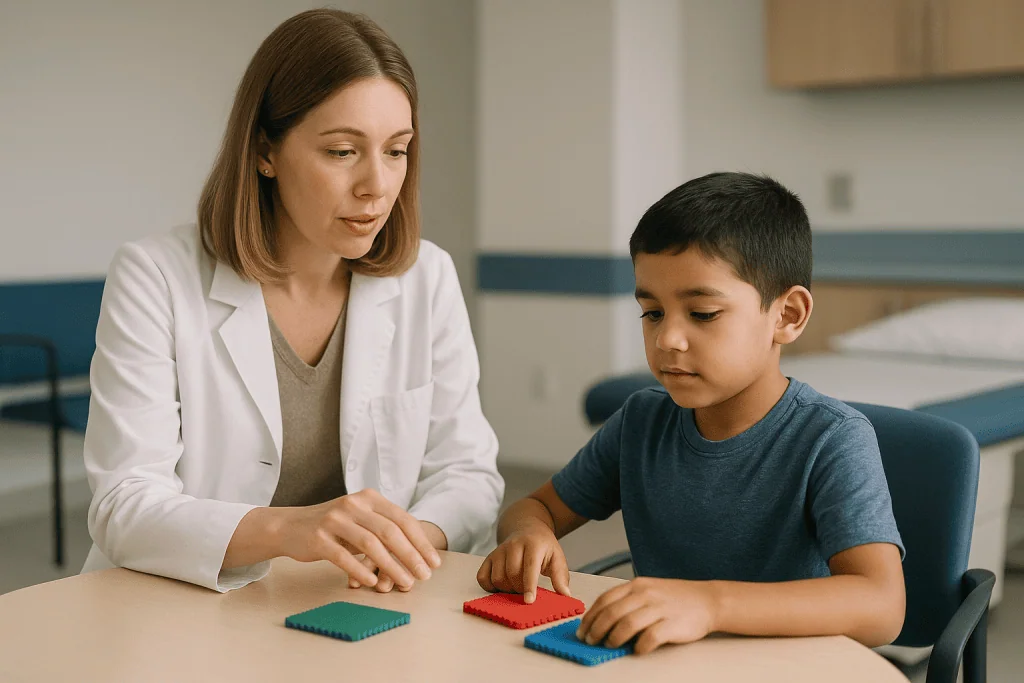
The American Academy of Pediatrics reviewed the research in a policy statement published in Pediatrics and concluded that the evidence base was small and inconsistent, that sensory processing disorder is not a recognized standalone diagnosis, and that pediatricians should help families understand these limits. The same statement offered practical advice that applies directly to home programs: agree on specific, measurable goals with the therapist, set a defined trial period, and judge the therapy by whether those goals move.
Since then, some small randomized trials of manualized Ayres Sensory Integration in autistic children have reported gains on individualized goal measures, while other reviews have found little effect on broader outcomes such as core autism features or academic skills. Reasonable clinicians read the same studies and reach different conclusions. What they largely agree on is that the therapy is low risk when delivered by a trained occupational therapist, that it should sit alongside, not instead of, established supports such as speech therapy, behavioral therapy, or school accommodations, and that gains, where they occur, tend to be in the specific functional goals that were targeted rather than in a global transformation.
For parents, this points to a mindset rather than a verdict. Treat the home program as a structured experiment with your therapist. Write down two or three concrete goals, note what you observe over the agreed trial, and bring that record to each review. If nothing shifts, that is useful information, and the treating team can decide together with you whether to adjust, continue, or redirect effort toward approaches with a stronger track record for your child’s particular needs.
Who is a sensory integration home program usually for, and who is asked to wait?
Home programs are typically offered to children who are already under the care of an occupational therapist and whose sensory differences interfere with daily life: getting dressed, eating a reasonable range of foods, managing a classroom, sleeping, or playing with other children. Many of these children have an autism diagnosis, an ADHD diagnosis, developmental coordination disorder, or a history of prematurity, and some have no formal diagnosis at all. The common thread is a functional problem the therapist has assessed, not a label.
Age matters less than people assume. Toddlers, school-age children, and teenagers can all be part of a home plan, though the activities change dramatically. A three-year-old’s heavy work might be pushing a laundry basket; a thirteen-year-old’s might be a structured gym routine that nobody at school would call therapy.
Some children are usually asked to wait, or to do something else first. A child with an unexplained loss of previously acquired skills, a sudden change in behavior, seizures, persistent vomiting, or new weakness needs a medical evaluation before anyone plans swings and crash pads. Movement-based sensory play is generally paused or modified for children with uncontrolled epilepsy, certain heart conditions, shunts, recent surgery, or joint instability, and the therapist will coordinate with the pediatrician on what is safe. Vestibular activities in particular can provoke nausea, dizziness, or, rarely, seizures in susceptible children, which is why they should be introduced under supervision and only added to the home list once the therapist has seen how the child responds.
A parent who has not yet seen a therapist, and who is reading this because a child seems more sensitive or more restless than peers, is in a different position. General sensory-rich play is healthy for any child. A targeted program, however, should follow an assessment, so the first step is a conversation with the pediatrician or family doctor about a referral.
What a sensory diet for kids actually means, and what it does not
The phrase confuses almost everyone. A sensory diet for kids has nothing to do with food. It is an occupational therapy term for a planned schedule of sensory experiences spread through the day, in the same way a nutritional diet spreads meals. The therapist chooses the type, timing, and intensity based on what tends to help a specific child settle or engage.

A sensory diet is not a list of things a child must do, and it is not a discipline tool. Sending a child to jump on a trampoline as punishment for wiggling defeats the purpose. The aim is to offer input before a demanding moment, so the child arrives regulated rather than being corrected afterward. A few minutes of pushing against a wall before homework, a swing before dinner, a firm-pressure back rub before bed: these are the shape of it.
Timing is where home programs succeed or stall. Therapists often build the schedule around transitions, because transitions are where children most often lose regulation: waking up, leaving the house, arriving at school, coming home, sitting for a meal, winding down. If you map your child’s hardest fifteen minutes of the day, you have usually found where the sensory diet should go.
Intensity is the other lever, and it is individual. The same spinning that organizes one child leaves another wired for an hour. Your therapist will tell you which inputs are generally calming for your child (often slow, rhythmic, predictable, and heavy) and which are alerting (fast, unpredictable, light, or novel). Write those down. A sensory diet that is not adjusted as the child changes stops working, so expect the plan to be rewritten at every review rather than laminated and followed forever.
Sensory integration activities at home: the eight senses in ordinary play
Most families already own everything they need. The table below groups sensory integration activities at home by the sense they feed, with everyday examples and a note on what to watch. Use it as a menu, not a checklist, and let your therapist mark which rows matter for your child right now.
| Sense | What it tells the brain | Everyday home play | Watch for |
|---|---|---|---|
| Proprioception | Where the body is and how hard it is working | Carrying groceries, wheelbarrow walks, pushing furniture, animal crawls | Fatigue, joint pain, overexcitement |
| Vestibular | Head position, balance, speed | Swinging, rolling down grass, slow spinning, rocking chair | Nausea, pallor, glassy eyes, unusual sleepiness |
| Tactile | Touch, texture, pressure, temperature | Water play, dough, dry rice bins, finger painting, sandbox | Distress, withdrawal, rubbing the skin |
| Auditory | Sound, rhythm, loudness | Clapping games, quiet-time playlists, listening walks | Covering ears, escalating agitation |
| Visual | Light, color, movement | Bubbles, flashlight tag, sorting by color | Squinting, overstimulation in bright rooms |
| Oral | Taste, texture, jaw effort | Crunchy snacks, drinking through a straw, blowing bubbles | Gagging, refusal, choking risk with small items |
| Olfactory | Smell | Smelling herbs while cooking, scented dough | Headache, nausea |
| Interoception | Hunger, thirst, bladder, heartbeat | Naming body feelings after running, regular meal and bathroom check-ins | Toileting accidents, missed hunger cues |
Two principles run through every row. First, the child chooses. Sensory play that is imposed tends to backfire, and a child who can say stop learns something more valuable than tolerance. Second, aim for a mix across the day rather than an hour of one thing. Movement-based play can also count toward the World Health Organization’s recommendation of at least sixty minutes of moderate-to-vigorous physical activity a day for children and adolescents aged five to seventeen, which is a reminder that much of a good home program is simply active childhood, deliberately arranged.
Proprioceptive activities for children: why heavy work so often calms
Ask an occupational therapist which sense they lean on most for regulation, and many will say proprioception. Proprioception is the sense of your own body in space, fed by receptors in muscles and joints that fire when you push, pull, lift, or squeeze. It is the reason you can touch your nose with your eyes closed. It also appears to be organizing for many children, meaning heavy, effortful movement tends to bring a scattered or overwhelmed child back toward the middle.
Proprioceptive activities for children are the easiest part of a home program because they hide inside chores. Carrying a full laundry basket up the stairs, pushing a loaded wagon, helping move the couch to vacuum, kneading bread dough, and raking leaves all deliver resistance through the joints. Games work too: wheelbarrow walks across the living room, bear crawls to the bathroom, animal walks down the hallway, tug-of-war with a towel, wall push-ups, or a homemade obstacle course that ends in a jump onto a pile of sofa cushions.
Deep pressure belongs in the same family. Some children settle with a firm hug, a tight roll-up in a blanket like a burrito, or being pressed gently under a cushion while a parent counts. Weighted products are widely marketed for this purpose, and the honest position is that evidence for them is limited and they carry safety considerations, particularly for young children and around sleep. Ask your therapist before buying anything, and never use weighted items unsupervised or at night without specific clinical guidance.
Watch the response rather than the clock. A child who becomes giggly and frantic after heavy work has had enough or needs slower input; a child who softens, makes more eye contact, or sighs has probably found the right dose. Plan heavy work before the hardest transitions of the day, and repeat what works.
Vestibular, tactile and auditory play: sensory processing disorder home activities without a shopping list
The vestibular system, housed in the inner ear, tells the brain about head movement and balance. It is powerful, which is why it earns the most caution. Slow, rhythmic movement such as a porch swing, a rocking chair, or gentle back-and-forth on a blanket held by two adults tends to calm. Fast spinning, sudden stops, and upside-down play alert, sometimes for hours. Start with the slow end. Stop at the first sign of nausea, pale skin, sweating, or a glazed look, and tell your therapist if a child seeks spinning without ever appearing dizzy, because that pattern is worth their attention.
Tactile play is where most sensory processing disorder home activities begin, often around a kitchen sink. Water with cups and funnels, a shoebox of dry rice or beans with buried toys, homemade dough, shaving foam on a tray, a garden hose, mud: the point is variety and choice. For a child who avoids textures, keep tools between the hand and the mess at first (a spoon, a paintbrush, a toy car) and let the child close the gap. For a child who craves touch, offer plenty of legitimate outlets so the craving does not land on siblings.
Auditory play is quieter but no less useful. Clapping rhythms back and forth, listening walks where you name every sound, a predictable song that signals the end of bath time, or a soft playlist during homework can all help a child organize sound rather than be flooded by it. Children who cover their ears in noisy places may benefit from a planned quiet corner at home and, if the therapist agrees, from headphones in specific settings such as assemblies, while still being exposed to ordinary household noise so the tolerance can grow.
None of this requires a purchase. It requires ten minutes and a willingness to clean up.
How much, how often, and what the first weeks of a home program usually look like
Parents often ask for a number of minutes. Therapists rarely give one, and for a good reason: the right amount depends on the child, the goal, and the day. What they do tend to prescribe is frequency and placement. Several brief episodes spread across the day generally beat one long block, because regulation is something a child needs at 7:30 a.m. and 5:45 p.m., not for forty minutes on Saturday.
The first week is usually about observation. Pick two of the therapist’s suggested activities, run them before the day’s hardest transition, and notice what happens in the following half hour. Keep a simple log: what you did, for roughly how long, and what you saw. Many therapists ask for exactly this, because it lets them adjust the plan with real information rather than recollection.
Weeks two through four are usually about routine. The activity becomes part of the transition itself: the wheelbarrow walk to the bathroom is just how you get to the bathroom now. Children often begin to request the input that helps them, which is one of the quietest and most meaningful signs of progress.
By the first formal review, expect changes to the plan rather than confirmation of it. The American Academy of Pediatrics advised that families and therapists agree on a defined trial period and specific goals, then judge progress against those goals. If the shoes-and-socks battle has gone from daily to twice a week, say so. If nothing has moved, say that too. Regression during illness, school changes, or a poor night’s sleep is normal and does not mean the program has failed; it means the child is human. Steady, unglamorous consistency, adjusted at each review, is what a good home program looks like from the inside.
Reading your child's signals during play: over-aroused, under-aroused, or just right
Every parent doing a home program becomes, in effect, an assistant observer. The skill the therapist most wants you to build is noticing where your child’s arousal sits and adjusting the play to match. Arousal here means the nervous system’s level of alertness, and children can drift too high or too low within minutes.
A child drifting high often looks like this: faster speech or squealing, a flushed face, movements that get bigger and less controlled, laughter that tips into shrieking, difficulty stopping when asked. This is the moment to switch from alerting input to organizing input. Slow the swing, move from spinning to pushing, lower your own voice, offer a heavy task with a clear end, or simply pause.
A child drifting low looks different: slumping, yawning, staring, slow to respond, leaning on furniture or people. Alerting input can help here: a brisk walk, bouncing, a crunchy snack, cool water on the hands, or a change of room and light. The aim is not to make the child loud but to bring them back to a state where they can engage.
Just right is quieter than either. The child is focused, flexible, able to follow a two-step instruction, able to stop and restart. Most therapists would rather you end a play session in this zone than push on for another five minutes and lose it.
Two cautions. These signals are guides for adjusting play, not a diagnostic tool, and a pattern of persistent, extreme, or worsening responses should go to your therapist and doctor rather than be managed at home. Second, your own state matters. Children borrow regulation from adults. A parent who is rushed and tense during a calming activity often finds the activity does not calm; slowing your own breathing and voice is, in practice, part of the program.
Making the house itself part of the program: small environmental changes that carry weight
Activities get the attention, but the environment does a lot of the work when nobody is running an activity. A home that offers predictable sensory input, and honest escape from it, reduces the number of times a child tips into overload in the first place.
Start with a retreat. Every child in a sensory program benefits from one small space that is theirs and low-stimulation: a corner with cushions, a pop-up tent, a closet with the door propped open, a spot under the stairs. The rule is that going there is never a punishment and never requires permission. Children who learn to seek their retreat before a meltdown have acquired a skill that will outlast any therapy plan.
Next, look at light and sound. Overhead fluorescent-style lighting, a television running in the background, and a kitchen fan can each be tolerable alone and overwhelming together. Lamps instead of ceiling lights in the evening, the television off during meals, and a predictable quiet window before bed cost nothing and help many children, sensory differences or not.
Clothing and textures deserve a pass through the house too. Removing tags, choosing seamless socks, letting a child wear what they can tolerate rather than what looks best for the photo, keeping a familiar soft blanket available, and giving a heads-up before hair washing or nail trimming are all reasonable accommodations rather than indulgences.
Finally, movement should be allowed indoors. A child who needs to move will move; the choice is between a wobble cushion, a doorway pull-up bar sized for children, a mini trampoline in the hallway, or the sofa arm. Building legitimate movement into the house reduces conflict and gives the home program somewhere to live when the weather is bad.
What people often get wrong about sensory integration at home
The first mistake is treating the internet’s activity lists as the therapy. Sensory integration therapy is defined by a trained therapist reading a child and adjusting moment to moment. A list of twenty activities is a resource, not a program. Without the therapist’s individual goals, parents often deliver the wrong kind of input at the wrong time and conclude the whole approach is useless.
The second is overdoing it. More is not better. A child who is spun until giddy, or scheduled into sensory play every waking hour, is not being regulated; they are being overstimulated with good intentions. Short, placed, and repeated beats long and constant.
The third is expecting sensory play to fix everything. Sleep problems, picky eating, aggression, and school refusal each have many possible causes, some of them medical, and a sensory lens is one of several. If a problem is not improving, the treating team may need to look at sleep hygiene, anxiety, language, learning, or a physical cause rather than adding another swing.
The fourth is using sensory activities as rewards or punishments. When the trampoline becomes a prize for good behavior, the child who most needs it on a hard day loses access precisely when it would help.
The fifth is buying before asking. Weighted vests and blankets, compression clothing, chewable jewelry, and brushing protocols are all sold to parents with confident claims. Evidence for most of these is limited, some carry safety considerations, and a few should only be used under direct therapist instruction. Ask first.
The last mistake is assuming a sensory difference means a diagnosis, or that a diagnosis means a sensory difference. Neither follows automatically, which is the subject of the next section.
Does sensory seeking mean ADHD or autism?
Not on its own. Sensory seeking describes a child who craves more input than peers: spinning, crashing, touching everything, mouthing objects past the usual age, loving loud noise or tight squeezes. It is common in autistic children and in children with ADHD, and unusual responses to sensory input are listed among the possible features of autism by the CDC and the NHS. Yet sensory seeking also appears in typically developing children, especially preschoolers, and in children with anxiety, developmental coordination disorder, or simply a high need for movement.
The distinction clinicians draw is about pattern and impact. Autism is diagnosed on differences in social communication together with restricted or repetitive behaviors, of which sensory differences are one possible strand. ADHD, as described by the National Institute of Mental Health, is diagnosed on persistent inattention and/or hyperactivity and impulsivity across settings. A child can meet criteria for either, both, or neither and still have a sensory profile worth supporting.
What this means for parents is practical. Sensory seeking that is intense, that persists well past the toddler years, that interferes with learning or safety, or that comes alongside differences in language, play, social interaction, or attention is worth raising with the pediatrician, who can arrange a developmental evaluation. Sensory seeking in a child who is otherwise developing on track, communicating well, and managing school may simply be temperament, and a rich diet of ordinary active play is the reasonable response.
Either way, the home program does not change much. The activities in this article are safe for children with or without a diagnosis. What changes with a diagnosis is the wider plan: school supports, speech or behavioral therapies where indicated, and a clearer set of goals for the occupational therapist to work toward. The label informs the team; it does not replace the child in front of you.
Questions to ask your care team before you start a sensory integration home program
The most useful home programs come out of a specific conversation with the occupational therapist, and often the pediatrician too. Arrive with questions, and write down the answers.
- What are the two or three functional goals we are working toward right now, and how will we know if they are improving?
- How long is our agreed trial period before we review whether this approach is helping?
- Which inputs are usually calming for my child, and which are alerting? Are there any I should avoid entirely?
- Are there medical reasons, such as seizures, heart conditions, joint laxity, or a shunt, that limit movement-based play for my child?
- How should I introduce vestibular activities, and what signs mean stop?
- What should I record between sessions, and how do you want to receive it?
- Are there any products you specifically recommend or advise against, and why?
- How do we coordinate this plan with school, and can you share written goals with the teacher?
- What other supports, such as speech, psychology, or behavioral therapy, should sit alongside this, and who is coordinating them?
- If we are not seeing change by the review, what would you consider next?
Bring one more question for the pediatrician specifically: is there anything about my child’s development, sleep, growth, hearing, or vision that we should check before attributing behaviors to sensory processing? Hearing and vision problems, sleep disorders, constipation, and anxiety can all masquerade as sensory difficulties, and a careful medical review protects against building an elaborate sensory plan around a problem that needed a different answer.
Every one of these decisions sits with the treating team. Your job is to bring observations, ask plainly, and carry the plan into the ordinary hours of the week.
When to call your doctor
Most of what happens in a home program is play, and most days will pass without incident. Certain things are not sensory and should not be managed with a swing or a squeeze. Call your child’s doctor promptly, or seek urgent care, if you notice any of the following.
- Loss of skills your child previously had, such as words, toileting, or motor abilities, at any age.
- A sudden, marked change in behavior, mood, or alertness that does not have an obvious explanation.
- Fainting, a seizure, or an episode of staring and unresponsiveness during or after movement play.
- Persistent vomiting, severe headache, or a new unsteadiness when walking.
- Any head injury during play followed by drowsiness, confusion, repeated vomiting, or unequal pupils.
- Self-injury, such as head-banging or biting that leaves marks, or aggression that puts others at risk.
- Choking or breathing difficulty, particularly with oral or chewing activities.
- Refusal of food or drink leading to weight loss, or eating non-food items.
- Signs of pain your child cannot describe, including limping, guarding a limb, or waking crying.
Beyond emergencies, book a routine appointment if your child is not meeting developmental milestones for their age, if sensory behaviors are intensifying rather than settling over months of therapy, or if sleep, school attendance, or family life are being seriously affected. The CDC’s developmental milestone resources describe the skills most children show at each age and are a reasonable starting point for that conversation, though they are a guide, not a test.
Tell your occupational therapist about any of the above as well, so the plan can be paused or adjusted. A home program is only ever one part of a child’s care, and the team that knows your child is the right place for every decision about what comes next.
Frequently asked questions
What can I do at home to help sensory processing disorder?
Follow your occupational therapist’s goals with short bursts of everyday play placed before the day’s hardest transitions. Heavy work such as carrying groceries or wheelbarrow walks, slow swinging, textured play at the sink, and a quiet retreat space are the usual starting points. Keep a brief log of what you tried and how your child responded, and bring it to each review so the plan can be adjusted rather than repeated unchanged.
What are some sensory integration activities at home that need no equipment?
Wheelbarrow walks, animal crawls, pushing a loaded laundry basket, tug-of-war with a towel, rolling down a grassy slope, water play with kitchen cups, a dry rice bin with buried toys, kneading dough, clapping rhythm games, and blowing bubbles all feed different senses using what most homes already contain. Let the child choose, keep sessions brief, and stop at the first sign of distress or overexcitement.
Does sensory seeking mean ADHD or autism?
Not by itself. Sensory seeking is common in autistic children and children with ADHD, but it also occurs in typically developing preschoolers and in children with anxiety or a high need for movement. Autism and ADHD are diagnosed on broader patterns of social communication, attention, and behavior. If seeking is intense, persistent, or paired with differences in language, play, or attention, ask your pediatrician about a developmental evaluation.
What is a sensory diet for kids?
It is an occupational therapy term for a planned schedule of sensory experiences spread across the day, not a food plan. The therapist selects the type, timing, and intensity of input that tends to help a specific child settle or engage, usually placed before difficult transitions such as leaving for school, mealtimes, and bedtime. It should be reviewed and rewritten regularly as the child changes.
How much does sensory integration therapy cost?
This article does not give cost or price information, because fees vary widely by setting, insurance arrangement, and country and are best discussed directly with the therapy provider and your insurer. What is worth asking about in the same conversation is how many sessions the therapist proposes for the initial trial, what goals will be measured, and how home practice can extend the value of each session.
Which proprioceptive activities for children are safest to start with?
Chores and games that load the joints gently are the usual starting point: carrying a backpack of books, pushing a wagon, helping move light furniture, wall push-ups, bear crawls, and jumping onto sofa cushions. Firm hugs or a blanket roll-up can add deep pressure. Avoid weighted products until your therapist has advised on them, and stop if your child becomes frantic, complains of joint pain, or tires quickly.
How long before a sensory integration home program shows results?
There is no reliable number. The American Academy of Pediatrics recommended agreeing a defined trial period and specific goals with the therapist, then judging progress against those goals at review. Some families notice easier transitions within weeks; others see little change. Regression during illness or school changes is normal. If goals are not moving by the agreed review, the treating team can adjust or consider other approaches.
Can sensory activities make my child more hyper?
Yes, particularly fast spinning, bouncing, and unpredictable input, which are alerting rather than calming for many children. If your child becomes louder, faster, and harder to stop after an activity, switch to slow, rhythmic, heavy input such as pushing, carrying, or gentle rocking, lower your own voice, and end the session. Tell your therapist what you saw so the plan can be rebalanced.
Are weighted blankets and vests proven for sensory processing difficulties?
The evidence is limited, and weighted products carry safety considerations, especially for young children and around sleep. Some therapists use them for specific purposes under supervision; others do not. Ask your occupational therapist before buying, follow their instructions on fit and duration if they do recommend one, and never leave a young child unsupervised with a weighted item or use one overnight without specific clinical guidance.
What sensory processing disorder home activities help with getting dressed?
Therapists often suggest heavy work just before dressing, such as a short obstacle course or wall push-ups, followed by firm pressure to the arms and legs. Practical accommodations matter as much: seamless socks, tagless shirts, letting the child choose fabrics, and dressing in a calm, predictable order. Progress is usually gradual, and any persistent, extreme distress should be discussed with the therapist and pediatrician.
References
- CDC: Developmental Milestones (Learn the Signs. Act Early.)
- NHS: Signs of autism in children
- NIMH: Attention-Deficit/Hyperactivity Disorder
- WHO: Physical activity fact sheet
This article is for general information only and is not a substitute for professional medical advice. Please consult a qualified doctor about your individual situation.

More from the Blog

Bronchiolitis Warning Signs: Fast Breathing, Blue Lips and Feeding Drops Needing Urgent Care
Take a child with bronchiolitis to hospital, or call emergency services, if breathing becomes fast or labored with the chest sucking in, there are…

Baby Poop Colors and Textures: What Is Normal
Normal baby poop varies widely: sticky greenish-black meconium in the first days, then mustard-yellow and seedy stools in breastfed babies or tan, pasty stools…

What Does Growing Up With Pediatric Chronic Kidney Disease Involve? Nutrition, School and Play
Growing up with pediatric chronic kidney disease usually involves regular clinic visits, close tracking of growth and blood pressure, a dietitian-guided eating plan that…

Pediatric Chronic Kidney Disease Stage by Stage: How Care Changes as Kidney Function Falls
Pediatric chronic kidney disease stages describe how much filtering ability a child's kidneys still have, measured as estimated glomerular filtration rate (eGFR). Stages 1…

After ROP Treatment: Eye Redness, Swelling and the Follow-Up Retinal Examinations Ahead
After ROP treatment, most premature babies have puffy eyelids, red or bloodshot eyes and light sensitivity for a short period while the surface heals;…

What to Do During a Febrile Seizure: Side Position, Timing and When to Call Emergency Services
During a febrile seizure, stay calm, note the time it starts, and move your child onto their side on a soft, flat surface away…