

How Classic Liposuction Is Performed: Small Incisions, Thin Cannulas and Suction Explained
Key Takeaways
- Classic liposuction removes fat through incisions a few millimeters long using a blunt hollow cannula thinner than a drinking straw, attached to a vacuum.
- The tumescent fluid infused first contains a local anesthetic and a vessel-constricting medicine, which is why modern liposuction involves far less bleeding than early versions.
- Laser, ultrasound and power-assisted devices change how fat is loosened but still rely on a cannula and suction; the Mayo Clinic classes them as variants of the same operation.
- A liter of fat weighs a little under a kilogram, so even a substantial contouring treatment changes the scale by only a few pounds.
- The NHS advises roughly one to two weeks off work, no strenuous exercise for four to six weeks, and up to six months before the final shape is visible.
- Removed fat cells do not regenerate, but remaining cells anywhere in the body enlarge with weight gain, which is why stable weight preserves the result.
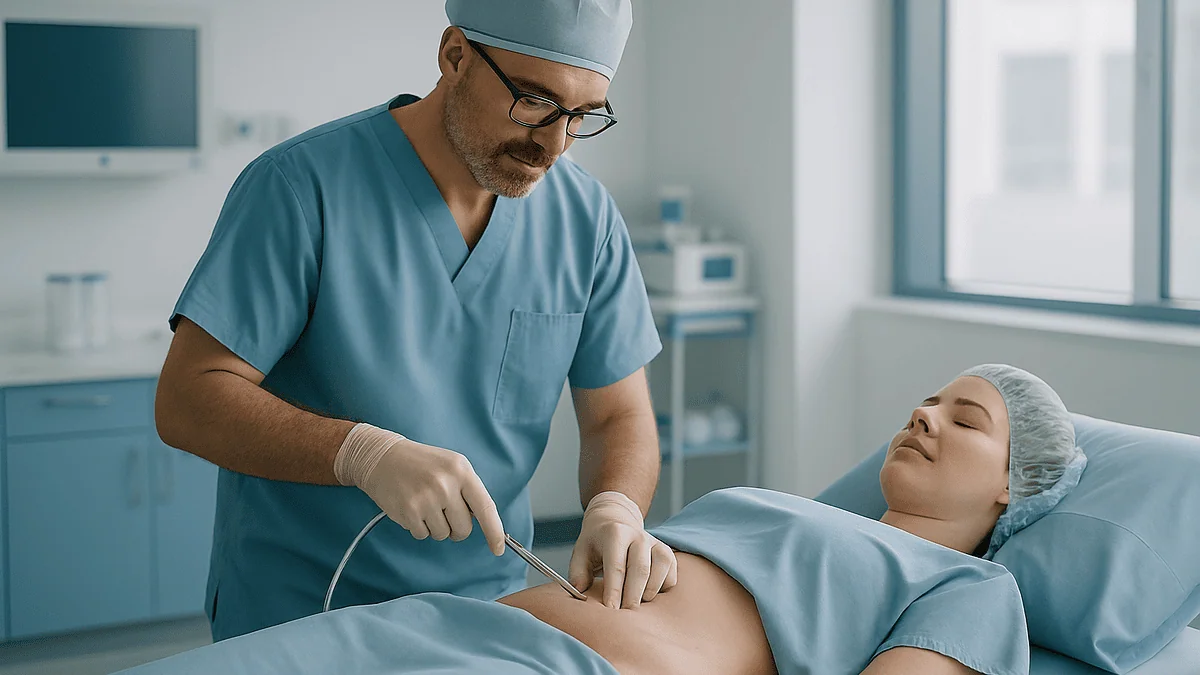
Classic liposuction, also called suction-assisted liposuction, removes fat through a few incisions roughly the size of a pencil eraser. The surgeon first infuses a diluted saline solution containing a local anesthetic and a blood-vessel-constricting medicine, then passes a thin hollow tube called a cannula back and forth under the skin while a vacuum draws out loosened fat. It reshapes contours; it is not a weight-loss treatment.
The consultation room is quiet except for the crinkle of paper on the exam table. A woman in her forties, fit enough to run a 10K, presses two fingers against the pocket of fat above her hip that has ignored every plank and every sensible dinner. She has read the forums. She has watched the videos with the dramatic music. What she still cannot picture is the actual sequence: what goes in, what comes out, and how a body is reshaped through openings small enough to hide in a crease.
That gap is worth closing before anyone signs a consent form. When people ask how is classic liposuction performed, they are usually asking a more personal question: what will happen to me, in order, and what is left out of the brochure?
This explainer walks through the procedure the way a surgeon would describe it to a colleague, minus the jargon. It covers the fluid, the incisions, the cannula, the suction, and the honest gray areas where evidence is thinner than the marketing suggests.
How is classic liposuction performed, step by step?
Strip away the branding and classic liposuction has five moves, performed in the same order in almost every operating room. The steps below describe suction-assisted liposuction, the original technique that newer variants still build on.
Marking. Before any medicine is given, the surgeon draws on the skin with the person standing, because fat shifts when you lie down. The lines map where fat sits thickest, where it thins out, and where the surgeon must stop to avoid a dent.
Anesthesia. Depending on the area and the volume, the person is either fully asleep, sedated, or awake with only the treatment zone numbed. The section on anesthesia below explains how that choice is made.
Infiltration. Through a tiny opening, the surgeon pumps in a large volume of dilute salt water mixed with a local anesthetic and a medicine that narrows blood vessels. This is the tumescent step, from the Latin for swollen, and it turns soft fat into a firm, blanched, easier-to-work layer.
Suction. A cannula, a thin hollow metal tube with side openings near its tip, is inserted through the incision and connected to a vacuum. The surgeon moves it in overlapping tunnels through the fat layer, feeling the thickness with the free hand while the machine draws out fat and fluid.
Closing and compression. The openings are either stitched or left partly open to drain. A snug compression garment goes on before the person leaves the room.
The Mayo Clinic notes that the whole session may last from under an hour to several hours, depending on how many areas are treated and how much fat is removed. Most of that time is the suction step, done slowly and deliberately, because contour depends on patience rather than power.
What is tumescent fluid and why does it go in first?
Ask a body-contouring surgeon which single innovation made modern liposuction safer and most will point to the fluid, not the tube. The tumescent technique, developed in the 1980s, changed a bloody procedure into one that can often be done with minimal blood loss.

The solution is mostly sterile saline. Into it goes a local anesthetic, which numbs the nerve endings in the fat layer and the skin above it, and a vasoconstrictor, a medicine that temporarily tightens small blood vessels. The Cleveland Clinic describes this combination as the standard preparation for the fat before suction begins.
Three things happen once the fluid is in. The fat compartment swells, sometimes to two or three times its usual thickness, which lifts the skin away from muscle and gives the cannula room to travel without scraping either. The narrowed vessels bleed far less when the cannula passes, so the material that comes out is mostly fat and fluid rather than blood. And the anesthetic in the fluid provides pain control that outlasts the operation itself, which is part of why the first evening is often more uncomfortable from tightness than from sharp pain.
The surgeon waits after infiltration, typically for the vasoconstrictor to take full effect and the tissue to blanch, before touching the suction. Rushing this step is one of the classic causes of excess bruising.
The fluid has limits, and the Mayo Clinic lists local anesthetic toxicity among the recognized risks of liposuction. That is why the total volume infused is calculated against body weight by the anesthesia and surgical team and why large treatments are sometimes staged across separate sessions. The numbers are the team’s responsibility; the reader’s job is to make sure the team is asking them.
Why are the incisions so small, and where do surgeons hide them?
People often expect a scar proportional to the fat removed. Liposuction breaks that rule. The openings only need to admit a cannula, and a standard cannula is thinner than a drinking straw, so each incision is a few millimeters long, according to Johns Hopkins Medicine.
Placement follows two principles. First, put the opening where it can be hidden: inside the navel, within the bikini line, in the crease beneath a buttock, at the back of the knee, in the armpit, or along the underwire line of the chest. Second, put it where the cannula can reach the whole marked zone from more than one direction. Crisscrossing tunnels from two or three access points smooth the result; a single-direction approach leaves ridges that show once swelling settles.
A typical abdomen and flanks treatment might use three to five small openings, one near the navel and one or two on each side near the hips. Thighs are usually approached from the groin crease and the buttock fold. Arms are reached from the elbow and the back of the armpit.
Some surgeons close every opening with a single fine stitch. Others leave the lowest ones open for a day or two so the leftover tumescent fluid, tinged pink, can drain into absorbent pads rather than pooling under the skin. Both approaches are standard; neither is a sign of carelessness, though drainage does mean an untidy first night.
Scars generally fade to pale marks over months, though pigmentation changes at the incision sites are possible, particularly in people whose skin darkens easily after injury. The NHS lists this among the expected effects rather than the complications.
What does the cannula actually do under the skin?
The cannula is where the surgeon’s skill lives. It is a blunt-tipped, hollow steel rod, usually between the diameter of a cocktail stick and a pencil, with one or more openings cut into the side near the end. Blunt matters: the tip pushes fat cells apart rather than cutting through vessels and nerves.

Connected to a vacuum pump or, in smaller cases, a large syringe, the cannula is advanced and withdrawn in long, steady strokes, fanning out from the incision like the spokes of a wheel. Each pass loosens a thin ribbon of fat, which is drawn through the side openings into clear tubing and on to a collection canister. The surgeon watches that canister: yellow means fat, pink means fluid, red means it is time to move on.
Depth is controlled by feel. The free hand rests flat on the skin, pinching the fold and sensing the tube move beneath it. The aim is to leave a uniform blanket of fat under the skin, usually described as a layer thick enough to pinch, because skin that has been suctioned too thin looks wavy and can adhere to the muscle beneath. Contour irregularities of exactly this kind are listed by the Mayo Clinic as one of the most common unsatisfying outcomes.
Fat is removed in tunnels, not in a single scoop, and the fine septa of connective tissue that ran through the fat remain, along with the small vessels and nerves inside them. Over the following weeks the skin settles down onto this honeycomb and the tunnels collapse and scar internally. That internal contraction is why final shape takes months and why compression matters in the meantime.
Traditional liposuction vs laser lipo and other assisted methods: how do they compare?
Nearly every clinic website pits a trademarked device against ‘traditional’ liposuction, and the traditional method usually loses the comparison written by the device’s marketers. A more honest picture: every assisted method still ends with a cannula and a vacuum. What changes is how the fat is loosened first.
| Method | How fat is loosened | What the evidence supports |
|---|---|---|
| Suction-assisted (classic) | Mechanical motion of the cannula by hand | The reference standard; most long-term outcome data |
| Power-assisted | Cannula vibrates rapidly, reducing surgeon effort | May speed removal in dense areas; contour results comparable |
| Ultrasound-assisted | Sound energy emulsifies fat before suction | Useful in fibrous zones; adds a small burn risk |
| Laser-assisted | Laser fiber heats and liquefies fat | Marketed for skin tightening; evidence for meaningful tightening is limited |
| Water-assisted | Pressurized fluid jet dislodges fat | Less tumescent volume needed; outcome data still modest |
The Mayo Clinic describes suction-assisted, ultrasound-assisted, laser-assisted and power-assisted liposuction as variants of the same operation rather than separate treatments, and it does not rank them by result. The NHS makes the same point more bluntly: the outcome depends chiefly on the surgeon’s judgment and technique.
Where energy devices genuinely help is in fibrous tissue such as the upper back or the male chest, where classic cannulas must work harder. Where they are oversold is skin tightening. Heat can cause some contraction, but people with loose skin usually need a lift, not a hotter cannula, and a candid surgeon will say so.
Is classic liposuction done awake or under general anesthesia?
Both, and the choice says less about the surgeon’s confidence than about the size of the job. The Cleveland Clinic explains that small areas can be treated with local anesthesia alone, often supplemented with oral or intravenous sedation, while larger or multiple areas are usually done under general anesthesia.
Awake liposuction relies on the tumescent fluid for pain control. The person feels pressure and the odd pull, hears the pump, and may be asked to shift position so the surgeon can check symmetry standing up mid-procedure. Advantages include avoiding the nausea and grogginess that can follow general anesthesia and being able to go home soon afterward. The trade-off is a ceiling: the safe total of local anesthetic limits how much tissue can be treated in one sitting.
General anesthesia, delivered and monitored by an anesthesiologist, allows longer operations and more areas. It also introduces its own recognized risks, which the anesthesia team reviews in a separate consent conversation. When a large volume of fat is planned, the Mayo Clinic notes that the procedure may be performed in a hospital setting rather than an office, and the NHS advises that some people stay overnight.
One safety point deserves plain language. A procedure done under general anesthesia should take place in a facility with resuscitation equipment and staff trained to use it. Ask where the operation will happen and who will be monitoring you. The answer should be a named professional whose sole job during your surgery is watching your breathing and circulation.
Whichever route is chosen, the plan is a joint decision among the surgeon, the anesthesia provider and the person on the table, weighed against medical history rather than convenience.
Who is liposuction usually for, and who is usually asked to wait?
Liposuction is a contouring procedure for stubborn, localized fat in someone whose weight is otherwise stable. That sentence excludes more people than it includes, and a careful surgeon will say so at the first visit.
The typical candidate, as described by the Mayo Clinic, is within roughly 30 percent of their ideal weight, has firm and elastic skin, does not smoke, and has fat deposits that have not responded to diet and exercise. Good skin elasticity is the quiet requirement: when fat is removed, the skin above must shrink to fit. Skin that has been stretched by pregnancy, major weight change or age often does not, and suctioning under it can leave a deflated, rippled look.
People commonly asked to wait or to consider something else include:
- Anyone still losing or gaining weight, since results are drawn on a moving target.
- Smokers, until they have stopped, because nicotine impairs skin blood supply and healing.
- People with poorly controlled diabetes, heart disease or bleeding disorders, whose surgical risk is higher.
- Those taking blood thinners, until the prescribing clinician has reviewed the plan.
- Anyone expecting liposuction to treat obesity, cellulite or loose skin, none of which it does.
Two red flags for the person rather than the surgeon: a decision driven by someone else’s opinion, and an expectation that a body change will fix a mood or a relationship. The NHS encourages people to discuss their motivations openly and to seek a second opinion when uncertain. Reputable surgeons decline to operate on people they judge unlikely to benefit; that refusal is a form of care.
The final call on candidacy belongs to the treating team, informed by examination, history and an honest conversation about goals.
How much fat does liposuction remove, and how many pounds is that?
The most searched question about liposuction has the least satisfying honest answer: less than most people hope, and it is not measured in pounds anyway.
Surgeons think in milliliters of aspirate, the mixture of fat, tumescent fluid and a little blood that collects in the canister. Only part of that is fat. Fat is lighter than water, so a liter of pure fat weighs a little under a kilogram, roughly two pounds. Even a generous removal of several liters across multiple areas therefore translates into a modest change on the bathroom scale, and MedlinePlus is explicit that liposuction is not a treatment for obesity or a substitute for weight loss.
Why not simply take more? Because the risks rise with volume. Large fluid shifts strain the heart and kidneys, more tissue is injured, and the chance of a fat embolism, in which loosened fat enters a vein and travels to the lungs, increases. The Mayo Clinic lists kidney and heart problems and fat embolism among the serious complications, and MedlinePlus notes that removing large amounts of fat raises the likelihood of complications and may require a hospital stay. Surgical societies set limits on the volume that can be safely removed in an outpatient setting, and responsible surgeons stage large treatments over separate operations rather than pushing those limits.
What liposuction changes is silhouette, not mass. A hip roll that made trousers pull, a fullness under the chin, a bulge on the outer thigh: these can shift noticeably with a relatively small volume, because the fat was concentrated in one visible place. That is the honest pitch. Anyone promising a specific number of pounds is selling a scale reading the procedure cannot deliver.
Is liposuction painful, and which body parts hurt most?
During the operation, no. The tumescent anesthetic, sedation or general anesthesia handles that. The pain that people describe is the pain of the following days, and it is real, though usually well controlled.
Most people compare the first week to a deep, whole-area bruise: the sensation of having done far too many sit-ups combined with tight, swollen skin that aches when touched. The Cleveland Clinic describes the discomfort as typically manageable with medicines prescribed by the surgical team, and the sharpest phase is generally over within the first several days, with soreness fading over the following weeks.
As for which body part hurts most, the evidence is thinner than the internet suggests. No large trial has ranked treatment sites by pain score. Surgeons and patients consistently report that fibrous areas, where fat is laced with tough connective tissue, tend to be more tender afterward: the upper back, the flanks, the male chest and the outer thighs are often mentioned. The inner thighs and the abdomen are frequently described as sore mainly because they move with every step and every breath. Treat these as patterns from clinical experience rather than established fact.
Several factors matter more than the location:
- How much tissue was treated and how aggressively.
- Whether the surgeon left a smooth fat layer or worked close to the skin.
- How consistently the compression garment is worn in the first weeks.
- Individual pain tolerance, which varies as widely as any other trait.
Pain that is sharp, one-sided, worsening after the third day, or accompanied by fever or spreading redness is a different matter, and the section on when to call your doctor covers it. Ordinary post-liposuction soreness is dull, symmetric and slowly improving.
Liposuction recovery timeline: what do the first days and weeks look like?
Recovery from liposuction runs on two clocks. The fast one governs when you can move, work and exercise. The slow one governs when you can finally judge the result. Confusing the two causes most of the disappointment in the first month.
The first 48 hours. Expect pink fluid leaking from the incisions, especially if they were left open to drain, along with swelling and the start of bruising. The compression garment stays on. Walking to the bathroom and around the house is encouraged; it lowers the risk of blood clots in the legs.
Days 3 to 7. Bruising peaks and begins to turn yellow-green. Soreness is at its most noticeable. The NHS advises that most people need about one to two weeks away from work, less for a desk job with a small treatment area, more for physical work or several areas.
Weeks 2 to 6. Swelling recedes unevenly, so one side may look better than the other for a while. Numbness or tingling over the treated skin is common and usually resolves over weeks to months, as the Mayo Clinic notes. Compression continues; the NHS describes wearing the garment for several weeks. Strenuous exercise is generally held for four to six weeks, according to NHS guidance, though gentle activity resumes much sooner.
Months 2 to 6. The internal tunnels contract and the skin settles. Firm or lumpy patches soften. The NHS states that it can take up to six months for the area to settle fully, so photographs at six weeks are a progress report, not a verdict.
These ranges describe typical experience, not a schedule your body has agreed to. Your surgical team will adjust them to the areas treated, your health and how your tissue responds.
What are the real risks of classic liposuction?
Liposuction is common, and common is often mistaken for trivial. It is surgery, and the risk conversation deserves as much attention as the result conversation.
The Mayo Clinic groups complications into those that affect appearance and those that affect health. The appearance group is more frequent: contour irregularities such as dents, bumps or waviness; asymmetry; skin that looks loose or rippled; and changes in skin color at the treated area or the incision sites. Fluid can collect under the skin in a pocket called a seroma, which may need to be drained with a needle. Nerve irritation can leave patches of numbness or, less often, persistent altered sensation.
The health group is less common but more serious. Infection at the incisions or deeper in the tissue. A hematoma, a collection of blood under the skin. Puncture of an internal organ if the cannula passes too deep, a rare event that requires emergency repair. A fat embolism, when loosened fat enters the bloodstream and lodges in the lungs. Blood clots in the leg veins that can travel to the lungs. Fluid imbalance that stresses the heart and kidneys. Toxicity from the local anesthetic in the tumescent fluid. The NHS lists these as well and adds the general risks of any anesthesia.
Frequency figures vary widely between studies and settings, and this article does not quote a single percentage because none would apply to a given person. What is well established is that risk rises with the volume removed, the number of areas treated in one session, the length of the operation, and the presence of other health conditions.
Alternatives exist and are worth discussing: no treatment, continued lifestyle change, non-surgical fat reduction devices whose results are smaller and less predictable, or, when loose skin is the real problem, an excisional procedure such as an abdominoplasty. The treating team should lay these out without steering.
What happens 10 years after liposuction? Do the results last?
The long-term story is a matter of biology rather than opinion, and it cuts both ways.
Adults have a roughly fixed number of fat cells. Weight gain enlarges those cells; it does not create many new ones. Liposuction physically removes a portion of the cells from the treated area, and the Cleveland Clinic notes that those cells do not grow back. In that narrow sense, the result is permanent: the treated area will always have fewer fat cells than it did.
The catch is what the remaining cells do. If weight rises over the following decade, the leftover cells in the treated area swell, and the untreated areas, which kept their full complement, swell more. People sometimes describe fat ‘moving’ to a new place after liposuction. It has not moved. The body has stored surplus energy wherever it still has the most capacity, which is now somewhere other than the treated zone. Stable weight keeps the contour; a substantial gain redraws it, and MedlinePlus is clear that the procedure does not prevent future weight gain.
Aging adds its own layer. Skin loses elasticity in the second half of life regardless of any surgery, so an area contoured at 35 may look different at 45 for reasons unrelated to the fat beneath it. Pregnancy, menopause and some medicines shift fat distribution as well.
A decade on, most people who have kept a steady weight retain a shape closer to the post-surgery contour than to the pre-surgery one, though it will have aged along with the rest of them. That is the honest long view. It is neither the permanent transformation of the advertisements nor the futile exercise skeptics describe.
What people often get wrong about how classic liposuction is performed
Several ideas circulate so widely that they are treated as facts. Each collapses on inspection.
‘It is a weight-loss operation.’ It is a shape operation. The NHS and MedlinePlus both state plainly that liposuction is not for treating obesity, and the pounds removed are modest.
‘The fat is sucked out in one go, like draining a tank.’ Fat is removed in hundreds of narrow tunnels, leaving a supporting mesh of tissue and a deliberate layer under the skin. That mesh is why the skin can settle smoothly and why final shape takes months.
‘Newer devices make classic liposuction obsolete.’ Laser, ultrasound and power assistance change how fat is loosened; they still rely on a cannula and suction to remove it. The Mayo Clinic describes them as variations of the same operation, not replacements.
‘Laser liposuction tightens loose skin.’ Heat causes some contraction, but the evidence for meaningful, lasting tightening is limited. Loose skin is a skin problem, and skin problems are treated by removing skin.
‘You see the result when the bandages come off.’ What you see is swelling. The NHS notes settling can take up to six months.
‘It treats cellulite.’ Cellulite arises from bands tethering skin to the deeper layer. Liposuction removes the fat between them and can make dimpling more visible, not less.
‘Fat comes back somewhere else.’ Removed cells stay gone. Weight gain enlarges the cells that remain, wherever they are.
‘Small incisions mean minor surgery.’ The openings are small; the area disturbed beneath them is not. Fat embolism, organ puncture and fluid imbalance are rare but real, which is why setting, monitoring and volume limits matter.
Questions to ask your care team before liposuction
A good consultation should feel like an interview in both directions. Write these down and bring them; a surgeon comfortable with their practice will welcome each one.
- Which technique do you plan to use for my areas, and why that one rather than another?
- Roughly how much aspirate do you expect to remove, and does that keep me within outpatient safety limits or would you stage the treatment?
- Will I be awake, sedated or under general anesthesia, and who will be monitoring me throughout?
- Where will the operation take place, and what emergency equipment and staffing are on site?
- Where exactly will the incisions be, and will they be stitched or left to drain?
- Looking at my skin, do you expect it to retract well, or is there a chance I will need a skin-removal procedure later?
- What contour irregularities or asymmetries are possible in my case, and how are they managed if they occur?
- How long will I wear the compression garment, and when may I return to work, driving and exercise?
- Which of my current medicines or supplements should be reviewed before surgery, and with whom?
- What is your plan for follow-up visits in the first weeks and again at six months?
- What would make you decline to operate on me, and does anything in my history give you pause?
Notice what is not on the list: any question about being the best, the newest or the most advanced. Those words describe marketing, not outcomes. The NHS advises checking a surgeon’s registration and specialty training, asking how often they perform the specific procedure, and being wary of any pressure to decide quickly. A reasonable team expects you to go home, think, and perhaps seek a second opinion before booking.
When to call your doctor after liposuction
Ordinary recovery is uncomfortable but predictable: swelling, bruising, tightness, leaking pink fluid in the first day or two, and soreness that improves week by week. A different pattern needs a phone call, and the surgical team would far rather hear from you about a false alarm than learn about a real problem late.
Call the surgical team the same day if you notice any of the following, drawn from the warning signs described by the Mayo Clinic and the NHS:
- Fever, chills or a general feeling of being unwell.
- Redness spreading outward from an incision, warmth, or thick, cloudy or foul-smelling discharge.
- Pain that is increasing rather than easing after the first few days, or pain concentrated in one spot.
- A swelling that is growing quickly, feels tense, or is much larger on one side than the other.
- Skin over the treated area turning dusky, dark or blistering.
- Persistent vomiting, dizziness, fainting or passing very little urine.
Seek emergency care immediately, by calling your local emergency number, for:
- Shortness of breath, chest pain, a racing heartbeat or coughing up blood, which can signal a clot or fat embolism in the lungs.
- Pain, swelling or warmth in one calf, which can indicate a clot in a leg vein.
- Severe abdominal pain, a rigid abdomen or bleeding that soaks through dressings.
- Confusion, slurred speech, seizures or a ringing in the ears in the hours after the procedure, which can indicate a reaction to the local anesthetic.
Keep the after-hours contact number for your surgical team somewhere visible before you go home, and make sure the person driving you knows where it is. Every decision about your recovery, including whether a symptom is worrying, rests with the clinicians who know your case; this list exists to help you reach them in time.
Frequently asked questions
What body part is most painful to liposuction?
No large study has ranked treatment areas by pain, so any answer is based on clinical experience rather than trial data. Surgeons and patients most often describe fibrous zones, such as the upper back, flanks, male chest and outer thighs, as more tender afterward, and the abdomen and inner thighs as sore mainly because they move with every step. Volume removed and surgical technique usually matter more than location.
What happens 10 years after liposuction?
Treated areas keep fewer fat cells permanently, because removed cells do not grow back. If weight stays stable, the contour generally persists, though skin ages and loosens over time regardless of surgery. If weight rises substantially, the remaining fat cells enlarge, and untreated areas, which kept all their cells, may grow more noticeably. The procedure does not prevent future weight gain.
How many lbs does lipo remove?
Usually only a few. Surgeons measure the removed material in milliliters of aspirate, a mix of fat, tumescent fluid and a little blood, and fat weighs a little under a kilogram per liter. Safety limits on volume, set to reduce the risk of fluid imbalance and fat embolism, keep the total modest. Liposuction changes silhouette in targeted areas; MedlinePlus notes it is not a treatment for obesity.
What do people wish they knew before liposuction?
Most often that the result takes months to appear, not days. Swelling and firmness can hide the contour for weeks, and the NHS says full settling may take up to six months. People also report underestimating how tiring the first week is, how much the compression garment matters, and how important stable weight afterward is. Many wish they had asked more about skin elasticity and whether loose skin would remain.
Is liposuction painful during the procedure?
Not in the way people fear. The tumescent fluid numbs the treated tissue, and depending on the plan you will be under local anesthesia with sedation or fully asleep under general anesthesia. Awake patients typically describe pressure and pulling rather than pain. The discomfort people talk about occurs in the days afterward and resembles a deep, whole-area bruise that eases over one to two weeks.
How long does a classic liposuction procedure take?
Anywhere from under an hour for a single small area to several hours for multiple large areas, according to the Mayo Clinic. Most of the time is spent on the slow, methodical suction phase, since even contour depends on patience. Infiltrating the tumescent fluid and waiting for it to take effect also adds time before the cannula is ever connected to suction.
How long is the liposuction recovery timeline before results show?
Movement and daily life return quickly, but the shape lags. The NHS suggests about one to two weeks off work, gentle walking from the first day, and avoiding strenuous exercise for four to six weeks. Swelling recedes unevenly over the first two months, and the NHS notes the area can take up to six months to settle. Photographs before that point are progress reports, not final results.
How does traditional liposuction differ from laser lipo?
Both remove fat with a cannula and suction. Laser-assisted liposuction adds a fiber that heats and liquefies fat before the suction step, and it is marketed for skin tightening. The Mayo Clinic describes it as a variation of the same operation, not a separate treatment, and the evidence for meaningful skin tightening is limited. Surgeon skill influences the contour more than the energy source does.
Does liposuction leave visible scars?
The incisions are only a few millimeters long and are placed in creases and folds such as the navel, groin, bikini line or armpit, so they are usually hard to spot once healed. Marks typically fade to pale dots over months. Some people, particularly those whose skin darkens after injury, may notice pigmentation changes at the sites, which the NHS lists among expected effects rather than complications.
Can liposuction treat cellulite or loose skin?
No. Cellulite results from fibrous bands tethering the skin to deeper tissue, and removing fat between them can make dimpling more visible. Loose skin is a skin problem: liposuction removes what lies beneath it and relies on the skin to shrink, which stretched or aged skin often cannot do. People with significant laxity are usually advised to consider an excisional procedure or no surgery at all.
References
This article is for general information only and is not a substitute for professional medical advice. Please consult a qualified doctor about your individual situation.

More from the Blog

What Are the Risks of Lipedema Surgery? Clots, Seroma and Honest Expectations
Lipedema surgery, usually a specialized form of liposuction, carries the general risks of any liposuction: bleeding, infection, blood clots, fluid collections called seromas, prolonged…

Fat Transfer vs Implants for Breast Augmentation: Volume, Feel and Long-Term Follow-Up
Fat transfer uses your own liposuctioned fat to add a modest, natural-feeling amount of breast volume, but part of the graft is reabsorbed and…

Pectoral Augmentation With Implants or Fat Grafting? Feel, Longevity and Recovery Compared
Pectoral implants are solid silicone shapes placed under the chest muscle to add firm, defined volume that does not shrink over time, while fat…

Tummy Tuck Recovery Time: A Week-by-Week Plan From Drains to Full Activity
Most people need about two weeks off desk work after a tummy tuck, with drains typically removed within one to two weeks. Light walking…

Aesthetic Genital Surgery Recovery: Hygiene, Swelling and the Activities to Pause for Weeks
Aesthetic genital surgery recovery usually means several days of marked swelling and bruising, a week or two away from work, and around six weeks…

Stage 2 Faja: When to Switch Compression Garments and Why the Stages Exist
Most surgeons move patients from a stage 1 to a stage 2 faja roughly two to four weeks after liposuction or a tummy tuck,…