

How Family Can Support Someone Through Melanoma Treatment: Appointments, Skin Checks, Morale
Key Takeaways
- Nearly all melanoma treatment begins with surgery to remove the tumor with a margin of healthy skin, and for early-stage disease that surgery may be the whole treatment, followed by years of surveillance.
- Immune checkpoint inhibitors work by releasing a brake on the immune system, which is why their side effects are inflammatory, often subtle, and need same-day reporting rather than a wait for the next visit.
- People who have had melanoma carry a higher risk of another, so monthly home skin checks using the ABCDE pattern, with a family member covering the back and scalp, add real value between clinic visits.
- The CDC advises broad-spectrum SPF 30 or higher reapplied every two hours, shade, long sleeves and a hat; targeted therapy can increase sun sensitivity, making this a household habit rather than a lecture.
- Population survival statistics found online predate current treatments and cannot describe an individual; the oncologist's estimate for this patient, with current therapy, is the only useful forecast.
- Palliative care is specialist symptom control offered alongside active treatment, not a sign of giving up, and asking about it early tends to improve comfort for people with advanced melanoma.
Family can support someone through melanoma treatment by acting as a second set of ears at appointments, helping with regular skin and scar checks between visits, tracking side effects of surgery, immunotherapy or targeted therapy, and protecting morale with honest, practical company rather than forced cheer. Keep notes, learn the red-flag symptoms, and let the treating team guide every medical decision.
The pathology letter arrives on a Tuesday, and by Wednesday the kitchen table is covered in printouts nobody fully understands. Your sister keeps saying she is fine. She is not fine, and neither are you. Somewhere between the word “melanoma” and the first oncology appointment, the whole family has become an unpaid care team with no training and a lot of feelings.
Supporting someone through melanoma treatment is less about grand gestures than about a hundred small, well-timed ones: the ride to the surgical consult, the photo of a healing scar sent to the nurse line, the Thursday night when you simply sit on the sofa and do not ask how they are feeling. Done well, that support measurably lightens the load. Done badly, it can crowd the patient out of their own illness.
This guide walks through what melanoma treatment actually involves, what the first weeks tend to look like, and how to help at appointments, with skin checks and with morale, while leaving every medical decision where it belongs, with the treating team.
What supporting someone through melanoma treatment actually involves
Most people picture support as emotional: hugs, pep talks, a casserole on the doorstep. Those matter. But families who cope best tend to divide the work into three practical lanes, and the lanes rarely overlap neatly with who loves the patient most.
The first lane is logistics. Melanoma care runs through several clinics: dermatology, surgery, medical oncology, sometimes radiation oncology and a plastic or reconstructive surgeon. Someone has to keep the calendar, hold the folder of pathology reports and know which phone number reaches which nurse. The second lane is observation. Melanoma is a cancer you can often see, which means family members with eyes on the patient’s skin and scars become a genuine part of surveillance. The third lane is morale, which is not the same as cheerfulness. It means protecting the person’s sense of being a whole adult rather than a diagnosis.
A useful early conversation is to ask the patient what they want each person to do. Some want a partner in every consultation; others want privacy there and help at home instead. The National Cancer Institute’s guidance for families stresses that the person with cancer sets the terms of involvement, and that caregivers who assume rather than ask often create friction nobody intended.
Write the answers down. Decide who keeps notes, who drives, who handles the group chat so the patient is not fielding forty “any news?” texts after every scan. That single act of coordination, boring as it sounds, is what most patients later describe as the help that counted.
How melanoma treatment works: what actually happens
Melanoma is a cancer that starts in melanocytes, the pigment-producing cells of the skin, and it is treated according to how deep it has grown and whether it has spread. Understanding the sequence helps a family stop bracing for the wrong thing.
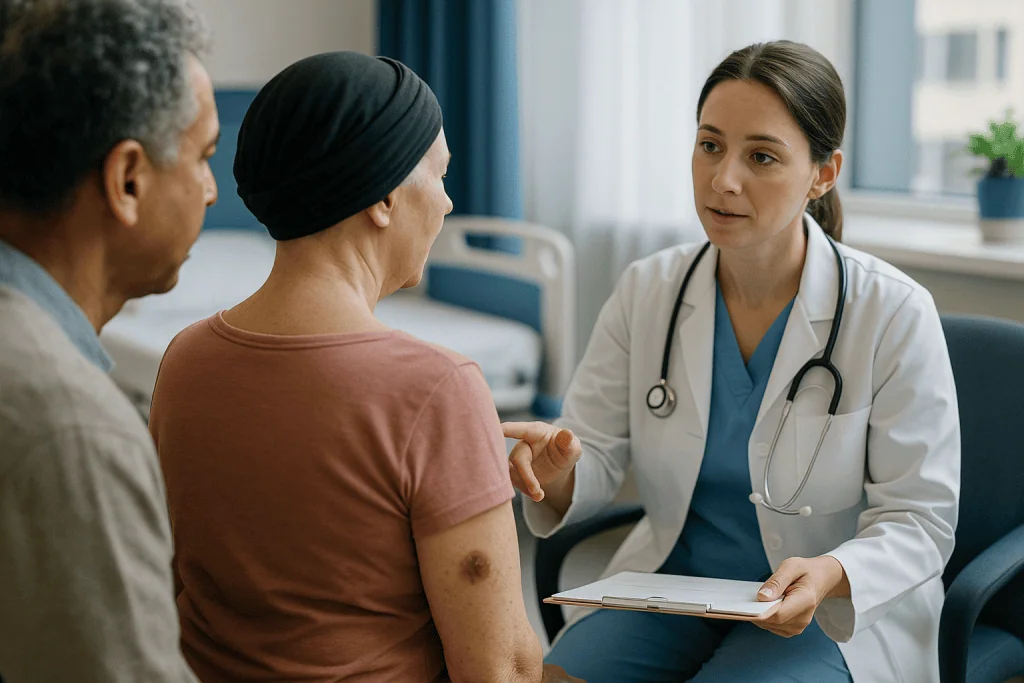
Nearly everyone begins with surgery. After the initial biopsy confirms melanoma, a surgeon performs a wide local excision: removing the scar from the biopsy together with a margin of healthy-looking skin, so that microscopic cancer at the edges is taken too. For thicker melanomas, the team may recommend a sentinel lymph node biopsy, a procedure that identifies and removes the first lymph node the tumor would drain into, then examines it for cancer cells. MedlinePlus and the NHS describe this as the main way of learning whether melanoma has begun to travel.
If the melanoma is confined to the skin, surgery may be the entire treatment, followed by surveillance. If lymph nodes are involved or the cancer has spread further, drug treatment usually enters the picture. Two classes dominate. Immunotherapy, specifically immune checkpoint inhibitors, works by releasing a molecular brake that normally stops T cells from attacking, which lets the immune system recognize melanoma cells. Targeted therapy is used when the tumor carries a specific mutation, most commonly in a gene called BRAF; these drugs block the faulty signaling pathway that drives growth. Radiation therapy is used in selected situations, such as treating specific sites of spread or symptoms.
Which route a particular person takes depends on stage, the tumor’s genetic profile, overall health and the patient’s own priorities. That is the oncology team’s call, and families help most by understanding the map rather than trying to redraw it.
Who melanoma treatment is usually for, and who is asked to wait and watch
A surprising amount of melanoma care involves not doing something yet, and families often find waiting harder than the patient does.
Early-stage melanoma, including melanoma in situ (cancer cells confined to the top layer of skin) and thin invasive tumors, is usually treated with surgery alone. The Cleveland Clinic and NCI both note that drug treatment is generally reserved for melanoma that has reached lymph nodes or spread elsewhere, or for high-risk tumors where the team judges that adjuvant therapy, meaning treatment given after surgery to lower the chance of return, is worthwhile. For many people with early disease, the plan after excision is a schedule of follow-up visits and skin checks, not infusions.
Waiting also shows up inside treatment. A sentinel node result takes time to process. Genetic testing of the tumor for BRAF and other mutations, which guides whether targeted therapy is an option, adds days to the timeline. Scans need radiologist reports. Each gap feels like neglect to an anxious family, yet most of it is the deliberate pace of getting the diagnosis right before committing to a treatment with real side effects.
Some patients are asked to pause for other reasons: an infection that needs to clear before surgery, blood tests that need to settle before the next immunotherapy cycle, or an autoimmune condition that makes checkpoint inhibitors riskier and requires a specialist conversation. Immunotherapy stimulates the whole immune system, so a history of conditions such as inflammatory bowel disease or autoimmune thyroid disease matters to the prescribing oncologist.
Your job in those stretches is to help the patient tolerate uncertainty: keep the calendar visible, know when results are expected, and resist filling silence with search-engine speculation.
Melanoma treatment: what to expect in the first days and weeks
The opening weeks follow a recognizable rhythm, even though every case differs in the details.
Right after the biopsy result, there is usually a consultation with a dermatologist or surgeon to discuss the pathology report, which will list the tumor’s thickness in millimeters, whether the surface is ulcerated, and how many dividing cells were seen. These details drive staging. The NHS and NCI describe melanoma staging from 0 to 4, with higher numbers indicating deeper growth or spread; the team may not assign a final stage until after surgery and any node biopsy.
Wide local excision is often a day procedure under local or general anesthesia, depending on size and site. Expect stitches, a dressing, instructions about keeping the wound dry, and activity limits for a week or two if the site is somewhere that stretches, such as the back or calf. Pain is usually modest and managed with what the surgical team advises. A sentinel node biopsy adds a second small incision near the armpit, groin or neck and sometimes a temporary drain.
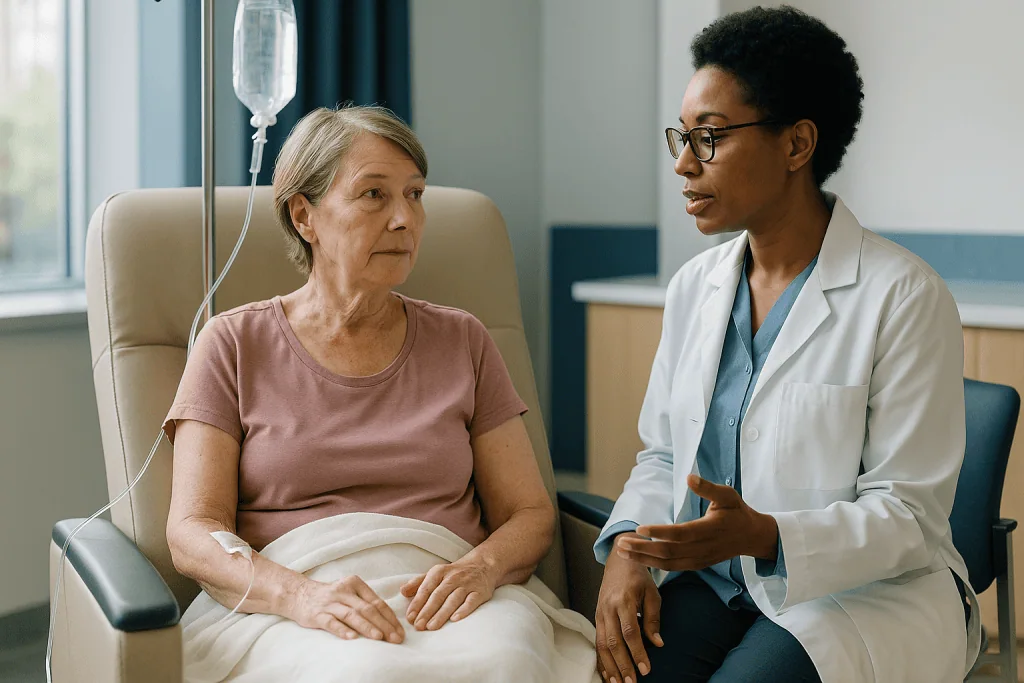
If drug treatment follows, immunotherapy is given as an intravenous infusion in cycles spaced weeks apart, and targeted therapy is taken orally at home. Both continue for months, with blood tests before cycles. According to the NCI, immune-related side effects can appear at any point and occasionally after treatment stops, which is why the team will ask the patient to report new symptoms promptly rather than wait for the next visit.
For families, the practical shape of this period is: several appointments in the first month, a surgical recovery that is more tedious than dramatic, and then either a long tail of surveillance or a new routine of infusion days and side-effect watching.
How to support a melanoma patient at appointments
People remember a fraction of what is said in an oncology consultation, and the fraction shrinks when the news is frightening. A second person in the room is the single highest-yield form of support, provided they behave like a scribe rather than a co-patient.
Before the visit, sit down together and write three to five questions in the order of importance to the patient, not to you. Bring the folder: the biopsy report, any scan reports, a list of current medicines and supplements, and a running log of symptoms with dates. Oncologists make better decisions with that log than with “she’s been more tired, I think, since maybe last week.”
During the visit, take notes, ask the clinician to spell unfamiliar words, and request a copy of anything written down. If something is unclear, a good phrase is “Can you say that again in plain language so we can both repeat it back?” Avoid answering questions directed at the patient; the clinician needs to hear their account of fatigue, pain or mood, not your translation of it. If you have a worry the patient would rather not raise, ask privately beforehand whether you may mention it.
After the visit, review the notes in the car or at home, confirm the next steps and who is responsible for each, and write the dates into the shared calendar. Patient portals are useful here: many teams post results and letters, and a family member with authorized access can keep the folder current without the patient having to log in on a hard day.
One more thing worth saying plainly: be on time, and be rested. A caregiver who arrives frazzled and sleep-deprived becomes one more thing the patient feels responsible for.
Skin checks after melanoma: how family can be the extra pair of eyes
Anyone who has had melanoma carries a higher chance of developing another, and the treated site can, uncommonly, show signs of recurrence. That is why structured follow-up continues for years. The NHS describes regular check-ups after melanoma treatment, with the frequency and duration set by the stage, and recommends that patients check their own skin between visits. Family members who can see the back, scalp and backs of the legs make those self-checks far more reliable.
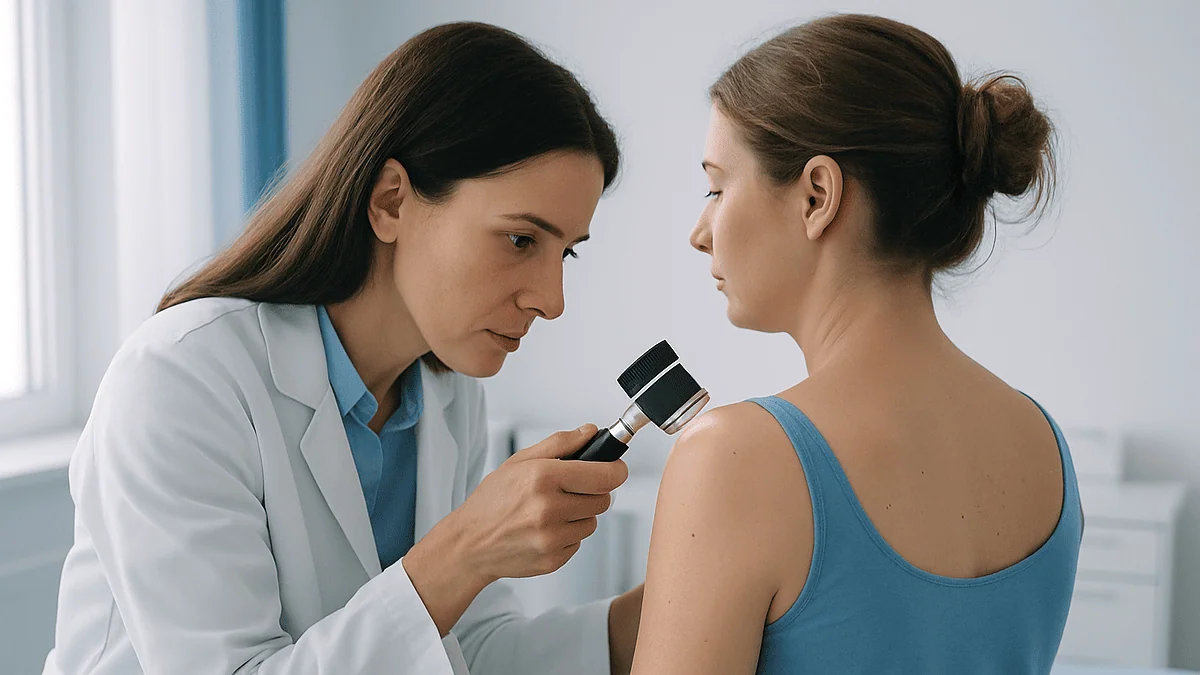
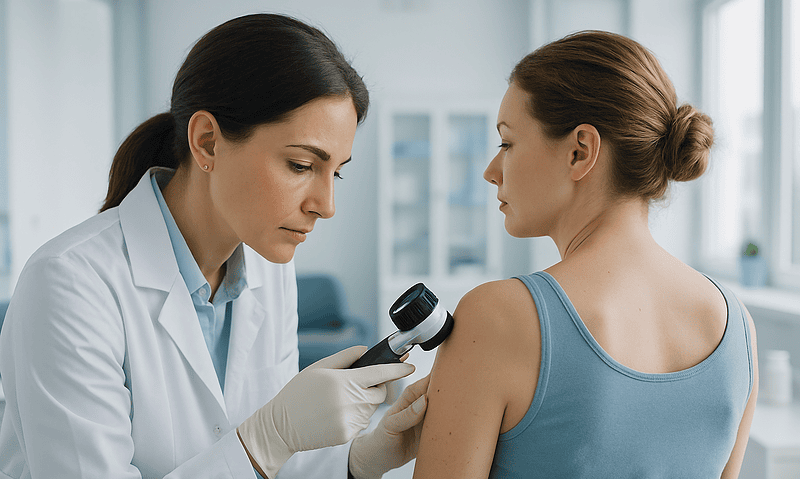
Learn the ABCDE pattern that the Mayo Clinic uses for suspicious moles: Asymmetry (one half unlike the other), Border irregularity, Color variation within one spot, Diameter larger than about 6 millimeters (roughly a pencil eraser), and Evolution, meaning any change in size, shape, color or sensation. Evolution matters most. A mole that is new, growing or itching deserves a call even if it fails the other letters.
Check the scar too. Teams typically ask patients to watch for new lumps in or under the scar, firmness along its length, or swelling in the lymph node regions nearest the site, such as the armpit for an arm or upper back melanoma, the groin for a leg melanoma, and the neck for the scalp or face.
Practical method: once a month, in good light, same order every time, head to toe. Take photographs on a phone with a ruler or coin for scale, dated, so change can be compared rather than guessed. Do not diagnose; document. The Mayo Clinic and NHS are clear that only a clinician can determine whether a spot needs biopsy, and they would rather see ten harmless moles than miss one that matters.
Treatment types at a glance: what each asks of the family
Different treatments place different demands on the household. The table below summarizes typical patterns described by MedlinePlus, the NHS and the NCI; the specifics for any individual come from their own team.
| Treatment | What it involves | What families usually notice | Most useful family role |
|---|---|---|---|
| Wide local excision | Surgical removal of the biopsy site with a margin of healthy skin | Stitches, dressings, activity limits for the site, scarring | Wound care help, transport, lifting and chores for a week or two |
| Sentinel lymph node biopsy | Removal of the first draining lymph node for examination | Second incision, sometimes a drain, wait for pathology | Tolerating the results wait; watching for swelling or infection |
| Immunotherapy (checkpoint inhibitors) | Intravenous infusions in cycles, continuing for months | Fatigue, rash, loose stools, thyroid changes, occasional lung or liver inflammation | Symptom log, prompt reporting of new symptoms, infusion-day company |
| Targeted therapy (for BRAF-mutant tumors) | Oral tablets at home, daily, for months | Fever, rash, joint aches, sun sensitivity | Routine support, sun protection, reminding the patient to report fevers |
| Radiation therapy | Short daily sessions over days or weeks to a specific site | Skin irritation at the site, tiredness | Daily transport, skin-care supplies as directed by the team |
| Surveillance only | Scheduled visits and self-checks, no active treatment | Scan anxiety, feeling “forgotten” | Monthly skin check partner, calendar keeper |
Two patterns are worth underlining. Immunotherapy side effects are inflammatory rather than toxic in the chemotherapy sense, which means symptoms can be subtle and easy to dismiss. And targeted therapy, because it is taken at home, hides its burden; a patient managing daily tablets and daily side effects alone can look fine on the outside. Both are reasons the family’s observation lane matters more than it would with many other cancers.
Keeping morale up without toxic positivity
The phrase “stay positive” has done real harm in cancer households. It implies that worry is a failure, which leaves patients performing cheer for their relatives instead of being honest about fear or exhaustion. Morale is better served by something quieter: presence, usefulness and normality.
Presence means showing up without an agenda. Watch the game. Walk the dog together. Let silences happen. Many patients report that the most restful company during treatment was the person who did not ask a single question about melanoma.
Usefulness means doing specific things rather than offering vaguely. “Let me know if you need anything” transfers the work of asking onto the patient. “I’m doing your grocery run Thursday, text me the list” does not. The NCI’s caregiver materials make this point repeatedly: concrete offers get accepted, open-ended ones get politely declined.
Normality means protecting the roles the person had before. If they were the family cook, let them cook when they can. If they ran the finances, do not quietly take the spreadsheet away. Identity is part of morale, and illness erodes it fast enough without help.
Watch for the line between low mood and depression. Persistent hopelessness, loss of interest in things the person once enjoyed, sleep that will not come or will not stop, or any mention of not wanting to go on should be shared with the care team, who can involve psycho-oncology or counseling services. Peer support groups, in person or online, help many people with melanoma specifically because other patients understand scan anxiety and sun-avoidance in a way even loving relatives cannot. Offer to find one; do not insist on it.
Melanoma caregiver tips for life at home between visits
The days between appointments are where most support happens, and where it is easiest to get wrong by either hovering or vanishing.
Build a symptom log. A simple notebook or phone note with date, symptom, severity and anything that changed works better than memory. For immunotherapy, the NCI advises reporting new diarrhea, skin rash, cough or breathlessness, headaches, unusual tiredness, or changes in vision promptly, because these can signal immune-related inflammation of the gut, skin, lungs, pituitary or thyroid that is far easier to manage early. For targeted therapy, fevers and rashes are the common calls. Do not decide for yourselves whether a symptom is “bad enough”; that is what the nurse line exists for.
Handle sun protection as a household habit, not a lecture. The CDC recommends broad-spectrum sunscreen with SPF 30 or higher, reapplied every two hours and after swimming or sweating, plus shade in the middle of the day, long sleeves and a wide-brimmed hat. Buy the hat. Reapply with them. Targeted therapy in particular can make skin unusually sun-sensitive, and nobody wants a sunburn over a healing scar.
Keep nutrition ordinary. Unless the team has said otherwise, there is no melanoma diet; the goal is enough calories and protein to heal a wound and tolerate treatment, with easy, small meals on low-appetite days.
Protect sleep and movement. Gentle daily walking, as the surgeon allows, helps fatigue and mood and lowers the risk of blood clots after surgery. Guard the patient’s rest as fiercely as you guard their appointments, including from well-meaning visitors.
Finally, ask before helping with anything intimate: wound care, dressings, bathing. Dignity is part of care.
Supporting someone through advanced or metastatic melanoma
When melanoma has spread to distant organs, which clinicians call stage 4 or metastatic disease, the family’s role shifts from short-term logistics to sustained accompaniment through a longer and less predictable course.
Treatment at this stage is usually systemic: immunotherapy, targeted therapy, or combinations, with radiation or surgery for specific sites. The NCI explains that responses vary widely between individuals, that some people have long periods of controlled disease, and that treatment plans are adjusted as scans and symptoms change. Families often ask for a forecast. The honest answer is that the oncologist can describe what is typical for a given stage and tumor profile, but cannot promise any individual’s path, and good clinicians will say so.
Searches for “the end stages of metastatic melanoma” usually come from frightened relatives trying to prepare. What can be said generally is that advanced melanoma can affect the brain, lungs, liver and bones, and that symptoms depend on where it is: headaches or confusion, breathlessness, pain, or profound fatigue. Palliative care, which is specialist symptom management offered alongside active treatment and not only at the end of life, improves comfort and is worth asking about early. Involving it is not giving up; it is adding a team whose entire expertise is quality of life.
Practical support here includes helping with advance care planning conversations while the patient is well enough to lead them, coordinating a wider circle of helpers so no single caregiver burns out, and being willing to talk about fears when the patient raises them rather than changing the subject. People with advanced cancer frequently say the loneliest part is relatives who cannot bear to hear what they need to say.
Can melanoma be present for years? Honest answers to the questions families search at midnight
The search history of a melanoma household is a map of its fears. A few of the most common questions deserve straight, evidence-based answers.
Can melanoma be present for years? Sometimes. The Mayo Clinic notes that melanomas can develop in existing moles or appear as new growths, and that some grow slowly over a long period while others change quickly. Lentigo maligna, a type on sun-damaged skin of older adults, can spread across the surface for years before invading. Melanoma can also recur long after apparently successful treatment, which is why the NHS schedules follow-up over years rather than months. Guilt about “not noticing sooner” is common and usually unfair; many melanomas are not obvious until they change.
I was diagnosed with melanoma; what are the next steps? Typically: a consultation to review the pathology, a wide local excision, a sentinel node biopsy if the tumor is thick enough, possibly scans and tumor genetic testing, then a staging discussion that sets the plan. Most of that happens over several weeks, and the order can vary.
What is the survival rate for stage 3C melanoma by age? Published figures exist, but they are population averages from people treated years ago, often before current immunotherapy and targeted therapy were standard, and they do not account for an individual’s health, tumor biology or response. A number from a search engine will frighten without informing. Ask the oncologist what the outlook looks like for this person, with current treatment, and ask how confident they are in that estimate. That conversation will be more accurate and more humane than any statistic.
Looking after the caregiver so the support lasts
Caregivers tend to treat their own exhaustion as evidence of devotion. It is not. It is the leading reason family support collapses halfway through a course of treatment that may run for a year or more.
The NCI’s guidance for cancer caregivers names the pattern plainly: caregivers commonly report fatigue, disrupted sleep, anxiety, strained finances and withdrawal from their own friends, and these effects tend to accumulate rather than resolve on their own. Treat them as predictable risks to manage, not personal failings to hide.
Share the load deliberately. Make a list of recurring tasks (driving, meals, pharmacy pick-ups, the children’s school run, the symptom log) and assign them across more than one person. Relatives who live far away can take the phone-tree job, research insurance questions, or order groceries online. If a workplace offers caregiver leave or flexible hours, ask early rather than after a crisis.
Keep one thing in your week that has nothing to do with melanoma: a run, a choir, a standing coffee with a friend who is allowed to talk about anything else. It is not selfish. It is the maintenance that lets you keep showing up.
Know the signs that you need help yourself: persistent irritability with the patient, dread before every visit, sleeping badly for weeks, drinking more than usual, or feeling numb. Primary care physicians, hospital social workers and caregiver support groups exist precisely for this, and most oncology teams can point you to them. Asking is not a distraction from the patient’s care; it is part of it.
What people often get wrong about supporting a melanoma patient
Good intentions produce some reliable mistakes. Here are the ones clinicians and patients mention most, and what the evidence says instead.
“It’s just skin cancer.” Melanoma is a skin cancer, but it behaves differently from the far more common basal cell and squamous cell cancers because it can spread to lymph nodes and distant organs. Minimizing it leaves the patient isolated with a fear nobody will acknowledge.
“Sunscreen is pointless now.” The opposite. The CDC and NHS both emphasize that people who have had melanoma are at higher risk of another, and that protecting skin from ultraviolet light remains one of the few modifiable factors. Sun protection after diagnosis is prevention, not a reproach.
“A special diet or supplement will boost the immune system.” There is no diet shown to treat melanoma. Some supplements can interact with treatment or affect liver tests that oncologists rely on; the NIH Office of Dietary Supplements advises telling the care team about everything taken. The team, not a forum, decides what is safe alongside immunotherapy.
“Immunotherapy has no real side effects.” It has fewer of the classic chemotherapy effects such as hair loss, which is where the myth comes from, but immune-related inflammation can be serious and the NCI stresses early reporting.
“If the scans are clear, it’s over.” Surveillance continues for years because recurrence is possible. Scan anxiety before each check is normal and often lasts longer than the family expects.
“They need me there for everything.” Some patients want solitude for scan results or infusion days. Ask. Autonomy is part of recovery.
Questions to ask your care team
A family that arrives with good questions gets better answers and fewer sleepless nights. Decide together which of these the patient wants asked, and who will write down the replies.
- What stage is this melanoma, and what did the thickness, ulceration and node results mean for the plan?
- Has the tumor been tested for BRAF or other mutations, and does the result change the treatment options?
- Is treatment after surgery being recommended, and if so, what is it expected to achieve for this particular situation?
- Which side effects should we report the same day, which can wait for the next visit, and what number do we call out of hours?
- How often will follow-up visits and scans happen, and for how long?
- What should we look for during monthly skin and scar checks at home?
- Are there activity, wound-care or sun-exposure instructions for the first weeks after surgery?
- Can current medicines and supplements continue, or should any be reviewed by the prescribing clinician?
- Is a referral to counseling, psycho-oncology or a peer support group available?
- Is palliative or supportive care involved, and if not, when would it be appropriate to introduce it?
- If the family has questions the patient would rather not hear, is there a way to raise them separately?
- What is the single most important thing we can do at home to help this treatment go well?
Keep the list in the folder and add to it between visits; the question that felt urgent at 2 a.m. is easy to forget by the time the consultation starts. Ask the team which contact route they prefer for non-urgent questions, often a portal message or a nurse line, so that worries do not pile up until the next appointment.
When to call your doctor: red-flag signs during melanoma treatment
Most of what families notice between visits is minor. A few things are not, and the care team would rather hear about a false alarm than learn about a real one late. Treat the following as reasons to call the oncology or surgical team the same day, or emergency services if the person is severely unwell.
- After surgery: spreading redness, warmth, pus or a foul smell at the wound, a fever, the wound opening, or heavy bleeding that soaking a dressing does not stop.
- Calf pain, swelling or warmth in one leg, or sudden breathlessness or chest pain, which can signal a blood clot after surgery or during reduced activity.
- During immunotherapy: new or worsening diarrhea, especially with blood or cramping; a new cough, breathlessness or chest discomfort; severe or widespread rash or blistering; yellowing of the skin or eyes; severe headache, dizziness or vision changes; marked confusion or unusual drowsiness; extreme thirst or passing large amounts of urine.
- During targeted therapy: a fever, chills or shaking, a severe rash, or new eye pain or visual changes.
- At any time: a new seizure, sudden weakness or numbness on one side, severe or persistent headache, unexplained bone pain, or a new lump in the scar or nearby lymph node areas.
- Any thoughts of self-harm, or hopelessness that will not lift; mental health crises are medical emergencies too.
According to the NCI, immune-related side effects can be managed far more effectively when reported early, and some can emerge after treatment has finished, so these rules apply beyond the last infusion. Keep the after-hours number on the fridge and in two phones. Describe what you see, when it started and how it has changed; let the clinician decide what it means.
Frequently asked questions
What are the first steps after a melanoma diagnosis?
The usual sequence is a consultation to review the biopsy report, a wide local excision to remove the site with a margin of healthy skin, and, for thicker tumors, a sentinel lymph node biopsy. Scans and genetic testing of the tumor may follow. The team then assigns a stage and recommends either surveillance or further treatment such as immunotherapy or targeted therapy.
Can melanoma be present for years before it is found?
Yes, in some cases. The Mayo Clinic notes that melanomas vary widely in growth rate; some, such as lentigo maligna on sun-damaged skin, can spread slowly across the surface for years, while others change within months. Melanoma can also return long after treatment, which is why follow-up continues for years. Not noticing sooner is rarely anyone’s fault.
How to support a melanoma patient at oncology appointments?
Go as a scribe, not a co-patient. Prepare the patient’s questions in advance, bring the folder of reports and a dated symptom log, take notes, ask for unfamiliar words to be spelled, and let the patient answer questions about their own symptoms. Afterwards, review the notes together, confirm next steps and update the shared calendar.
What should skin checks after melanoma look for?
Use the ABCDE pattern: asymmetry, irregular borders, uneven color, a diameter larger than about 6 millimeters, and above all evolution, meaning any change in size, shape, color or sensation. Also check the scar for new lumps or firmness and the nearest lymph node areas for swelling. Photograph and document; the clinician decides what needs a biopsy.
What side effects of melanoma immunotherapy should family watch for?
Checkpoint inhibitors can cause immune-related inflammation anywhere, so watch for new diarrhea, rash, cough or breathlessness, severe headache, vision changes, yellowing skin, unusual fatigue or confusion. The NCI advises reporting these promptly because early management is far more effective, and symptoms can occasionally begin after treatment ends. Never decide at home whether a symptom is serious enough.
What is the survival rate for stage 3C melanoma by age?
Published population figures exist, but they are averages from people treated years ago, often before modern immunotherapy and targeted therapy, and they ignore an individual’s health, tumor biology and treatment response. They frighten more than they inform. Ask the oncologist what the outlook looks like for this specific person with current treatment, and how confident they are in that estimate.
What are the end stages of metastatic melanoma like?
Advanced melanoma can involve the brain, lungs, liver or bones, so symptoms depend on location and may include headaches or confusion, breathlessness, pain and deep fatigue. Treatment often continues alongside palliative care, which focuses on comfort and quality of life. Families help most by supporting advance care planning early and being willing to hear what the patient needs to say.
Melanoma treatment: what to expect in terms of timeline?
Expect several appointments in the first month, a surgical recovery of a week or two that is more tedious than dramatic, and a wait for pathology and genetic test results. If drug treatment follows, immunotherapy infusions or daily targeted-therapy tablets typically run for months. Surveillance visits then continue for years, with the schedule set by stage and the treating team.
Are there melanoma caregiver tips for avoiding burnout?
List recurring tasks and divide them across several people, including distant relatives who can handle phone trees and online orders. Keep one weekly activity unrelated to cancer. Watch for your own warning signs: persistent irritability, dread before visits, weeks of poor sleep or drinking more. Hospital social workers, primary care clinicians and caregiver groups exist for exactly this, and asking helps the patient too.
Does sun protection still matter after melanoma treatment?
More than ever. People who have had melanoma are at higher risk of another, and ultraviolet exposure is one of the few modifiable factors. The CDC recommends broad-spectrum SPF 30 or higher, reapplied every two hours and after swimming or sweating, plus shade, long sleeves and a wide-brimmed hat. Some targeted therapies also increase sun sensitivity.
References
This article is for general information only and is not a substitute for professional medical advice. Please consult a qualified doctor about your individual situation.
Add us as a Preferred Source to see more of our trusted health content across Google Search, AI Overviews and Discover.

More from the Blog
What CA-125 and Imaging Can and Cannot Tell You Before Ovarian Cancer Treatment
A CA-125 blood test measures a protein that is often, but not always, raised by ovarian cancer; it also rises with endometriosis, fibroids, menstruation…
Stage 4 Gallbladder Cancer: Life Expectancy, What Treatment Can Offer and What Shapes the Outlook
Most people with stage 4 gallbladder cancer are treated with chemotherapy, often combined with immunotherapy, rather than surgery. In the trials that set today's…
Questions to Ask Before a Mastectomy: Reconstruction Timing, Lymph Nodes and Follow-Up
Before a mastectomy, ask your surgical team which type of mastectomy is planned and why, how the lymph nodes will be checked, whether reconstruction…
Tailbone Pain and Cancer: When It Can Be a Symptom and the Far More Common Causes
Tailbone pain is rarely caused by cancer. Most cases follow a fall, long hours of sitting, childbirth or pelvic floor strain, and they settle…
Why Does Mohs Surgery Take a Whole Day? Skin Cancer Removed Layer by Layer While You Wait
Mohs surgery takes most of a day because the skin cancer is removed in thin layers, and each layer is frozen, sliced, stained and…

Immunotherapy With an Autoimmune Condition or Transplant History: What the Team Weighs
People with an autoimmune condition or a transplant history can sometimes receive cancer immunotherapy, but it is a case-by-case decision. The treating team weighs…