

How Gum Disease and Diabetes Affect Each Other: Oral Health and Systemic Diseases Explained

Key Takeaways
- Periodontitis is a recognized complication of diabetes, and the CDC reports that adults 45 and older with poorly controlled diabetes were nearly three times as likely to have the severe form.
- The link runs both ways: high blood sugar impairs gum defenses and healing, while the inflammation of periodontitis increases insulin resistance and nudges A1C upward.
- A Cochrane systematic review found that treating periodontitis lowered A1C by an average of about 0.43 percentage points at three to four months, a modest but real effect.
- About one in five cases of total tooth loss is linked to diabetes, according to the CDC, and the bone loss that leads there is usually painless until late.
- Gum disease is associated with a higher risk of developing type 2 diabetes, but shared risk factors mean it has not been shown to cause it.
- Scaling and root planing is done under local anesthetic, followed by a re-evaluation of pocket depths and long-term maintenance visits at intervals set by the dental team.
Gum disease and diabetes affect each other in both directions. High blood sugar weakens the gums' defenses and feeds bacteria, so periodontitis develops more often and progresses faster. In turn, the chronic inflammation of infected gums makes the body less responsive to insulin, nudging A1C upward. Treating periodontitis is associated with modest improvements in blood sugar, which is why dental and diabetes care work best together.
The appointment was for a filling. Instead, the hygienist spent most of it measuring pockets around each tooth with a thin probe and reading numbers to an assistant, fours, fives, a six near the back. Then a question that seemed to come from nowhere: “When was your last A1C?”
That question is not a change of subject. For a person living with type 2 diabetes, or one who has been told their blood sugar is creeping up, the state of the gums is part of the same story. Dentists have noticed for decades that gum disease and diabetes travel together, and researchers now have a reasonably clear picture of why the traffic runs in both directions.
This explainer walks through the mechanism, what treatment for periodontitis involves, what the strongest evidence says about its effect on blood sugar, and which warning signs deserve a phone call rather than a wait-and-see. It leaves every decision where it belongs: with the dental and medical team who know your history.
What is gum disease, and why does it matter more when you have diabetes?
Gum disease is an infection of the tissues that hold teeth in place, driven by bacteria living in plaque, the sticky film that forms on teeth every day. It comes in two stages. Gingivitis is the early, reversible stage, in which gums are red, puffy, and bleed easily but the bone underneath is untouched. Periodontitis is the advanced stage, in which the infection spreads below the gumline, the body’s own inflammatory response destroys the ligament and bone around the teeth, and pockets open between tooth and gum where bacteria settle in for the long term.
It is common. The CDC reports that nearly half of adults aged 30 and older show signs of periodontal disease, rising to about seven in ten among adults 65 and older, and that around 9 percent of adults have the severe form. Most of those people have no idea, because periodontitis rarely hurts until it is far along.
Diabetes changes the odds. The CDC describes gum disease as more common and more severe in people with diabetes, and notes that adults 45 and older with poorly controlled diabetes were nearly three times as likely to have severe periodontitis as those without diabetes. Dentistry has long counted periodontitis among the recognized complications of diabetes, alongside the better-known effects on eyes, kidneys, nerves, and blood vessels.
What makes this pairing worth a full explainer is not simply that one condition raises the risk of the other. It is that each one, once present, makes the other harder to control. Understanding that loop is the first step toward interrupting it.
How gum disease and diabetes affect each other: the two-way street
Think of the relationship as a loop rather than a line. On one side, elevated blood sugar sets the stage for periodontitis by weakening the gums’ ability to resist infection and repair damage. On the other, periodontitis keeps the body in a low-grade inflammatory state that interferes with how insulin works, so blood sugar drifts higher. Higher blood sugar then worsens the gum infection, and the cycle turns again.
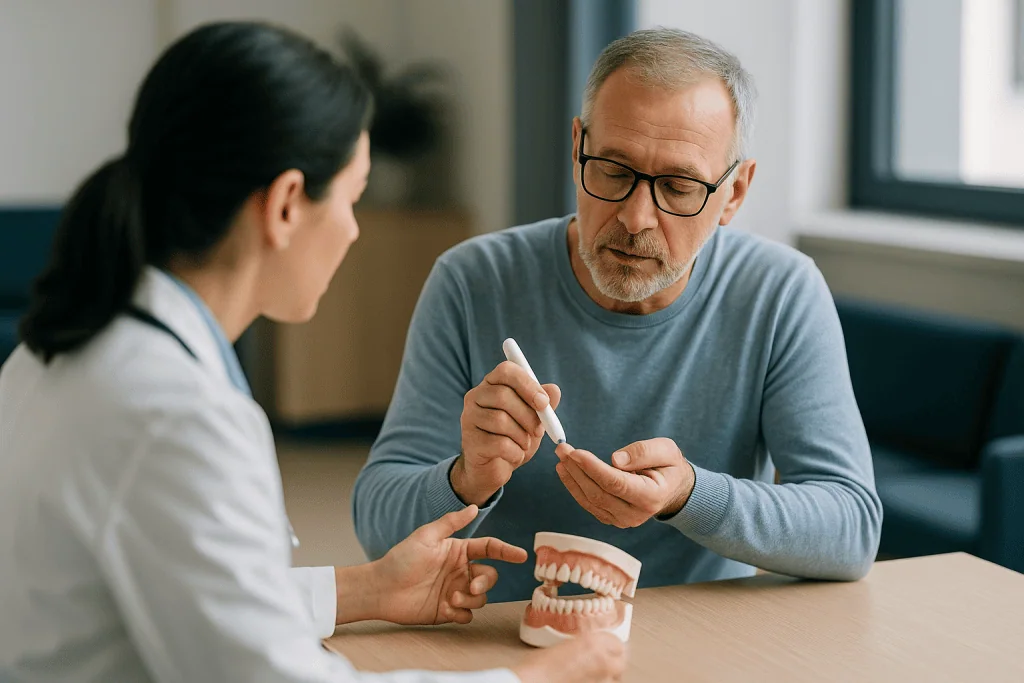
The first direction was recognized first, mostly through observation. Dentists saw that patients with diabetes, especially those whose glucose ran high, developed deeper pockets, lost more bone, healed more slowly after procedures, and were more prone to gum abscesses, which are pockets of pus inside the gum tissue. The National Institute of Dental and Craniofacial Research, part of the NIH, summarizes this plainly: people with diabetes are more likely to develop serious gum disease, and the risk climbs when blood sugar is not well managed.
The second direction took longer to establish, because it required showing that the mouth could influence metabolism rather than just reflect it. Two lines of evidence did that. Population studies found that people with periodontitis were more likely to have worsening glycemic control over time, even after adjusting for weight, age, and smoking. Then clinical trials showed something more persuasive: when periodontitis is treated, average A1C, the three-month measure of blood sugar, tends to fall a little. The size of that fall is discussed later in this article, with the numbers from the most rigorous review available.
Neither side of the loop is a verdict. A person with diabetes can keep healthy gums, and a person with gum disease may never develop diabetes. The point is that the two conditions are worth managing together rather than in separate rooms.
What actually happens in the gum when blood sugar runs high
Several things go wrong at once, which is why the effect on gums is so consistent.
Start with the immune system. Neutrophils are the white blood cells that arrive first at any bacterial infection, and in a high-glucose environment they move more slowly, engulf bacteria less effectively, and, oddly, release more of the tissue-damaging chemicals they carry. The result is a defense that is weaker against the bacteria and harsher on the surrounding gum.
Next, the tissue itself. When glucose stays high for months, it bonds to proteins throughout the body, forming compounds called advanced glycation end products, or AGEs. Collagen, the scaffolding protein of gums and the ligament that anchors teeth, is a favorite target. Glycated collagen is stiffer, breaks down abnormally, and is replaced more slowly. AGEs also lock onto receptors on immune cells and trigger a stronger inflammatory signal, so the gum reacts to the same plaque with more swelling and more bone loss than it otherwise would.
Then blood flow. Diabetes thickens the walls of small blood vessels, including those feeding the gums. Less oxygen and fewer nutrients reach the tissue, and waste products clear more slowly. Healing after a deep cleaning or an extraction takes longer for the same reason it does on the feet.
Saliva completes the picture. Many people with diabetes have a drier mouth, whether from the condition itself, from medicines, or from dehydration when glucose is high. Saliva normally rinses away food debris, buffers acids, and carries antibacterial proteins; less of it means more plaque, more decay, and a friendlier home for the bacteria that drive periodontitis. Glucose levels in saliva and in the fluid within gum pockets also rise with blood sugar, giving those bacteria more to feed on.
Periodontitis and blood sugar: how an inflamed mouth raises A1C
The surprising half of the loop is that a problem in the mouth can shift a whole-body number like A1C. To see how, it helps to picture the size of the infection. In moderate to severe periodontitis, the inflamed surface area lining all the gum pockets, added together, is roughly the size of a palm. That is a wound of meaningful size, open to bacteria, and it never closes on its own.

A wound like that keeps the immune system busy around the clock. Immune cells in the gums release signaling proteins called cytokines, including interleukin-6 and tumor necrosis factor alpha, and these circulate through the bloodstream. The liver responds by producing C-reactive protein, a general marker of inflammation that is measurably higher in people with untreated periodontitis. The same cytokines interfere with insulin signaling inside muscle, fat, and liver cells. The cells become less responsive to insulin, glucose stays in the blood longer, and the pancreas has to work harder to compensate. This is insulin resistance, the core problem in type 2 diabetes, and periodontitis feeds it.
Bacteria and their fragments also cross into the bloodstream from bleeding gums, particularly during chewing and brushing. Small amounts pass through every day. Each episode is brief, but the cumulative exposure adds to the inflammatory load.
None of this means gum disease is the main driver of anyone’s diabetes. Body weight, physical activity, genetics, and other factors matter far more. Periodontitis is better understood as one more weight on the scale, and unlike some of the others, it is a weight that a dental team can lift. That is the idea the treatment trials set out to test.
Can gum disease cause diabetes? What the evidence actually shows
The honest answer is that periodontitis is associated with a higher chance of developing type 2 diabetes, but it has not been proven to cause it. The distinction matters, so it is worth being precise.
The association is real and has been seen repeatedly. In long-running population studies, people with periodontitis at the start were more likely to be diagnosed with diabetes over the following years than people with healthy gums, and the deeper the pockets, the higher the risk. Some studies also link periodontitis to prediabetes, the stage at which blood sugar is elevated but not yet in the diabetes range.
The catch is that the two conditions share causes. Smoking, excess weight, older age, poor sleep, and limited access to care all raise the risk of both gum disease and diabetes. Researchers try to adjust for these, and the link usually survives the adjustment, but no observational study can fully rule out a hidden shared cause. It is also possible that early, undiagnosed diabetes was already damaging the gums before anyone measured blood sugar, which would reverse the arrow.
Proving causation would require a trial in which people without diabetes were randomly assigned to periodontal treatment or none and followed for years to see who developed the disease. That trial has not been done at scale, and it may never be, for practical and ethical reasons.
So the reasonable position, and the one mainstream sources such as the CDC take, is that gum disease is a risk marker and a plausible contributor, not a confirmed cause. For an individual, bleeding gums are not a diabetes diagnosis. They are, at most, one more reason to have blood sugar checked if it has been a while.
Diabetes and tooth loss: what the numbers say
Tooth loss is the end point that people fear most, and the fear is not unfounded. Periodontitis is the leading cause of tooth loss in adults, and diabetes accelerates it. The CDC estimates that about one in five cases of total tooth loss is linked to diabetes.
The path from a healthy mouth to a lost tooth is usually slow and quiet. Bone around the tooth is eroded a fraction of a millimeter at a time. Nothing hurts. Eventually the tooth begins to feel loose, or shifts so that the bite feels different, or an abscess flares and the tooth cannot be saved. By the time a tooth is mobile, much of the supporting bone is already gone, and bone that is lost to periodontitis does not grow back on its own.
Diabetes shortens this timeline in the ways described earlier: weaker immune defense, brittle collagen, poorer blood supply, and slower healing. It also complicates the choices that follow tooth loss. Dental implants, which are titanium posts placed in the jaw to anchor replacement teeth, rely on bone healing tightly around the post. Elevated blood sugar can impair that healing, so implant candidacy is assessed with a person’s glycemic control in mind. That is a conversation for the dental team, not a rule that excludes anyone.
The more useful message is about the front end of the timeline. Because bone loss is silent, the only reliable way to catch it early is a periodontal examination, in which the dentist or hygienist measures pocket depth around each tooth and reviews X-rays for bone level. The CDC advises people with diabetes to see a dentist at least once a year and to tell the dental team about their diagnosis. For many, the dental team will suggest more frequent visits.
Diabetes gum disease treatment: what deep cleaning involves
Treatment for periodontitis is the same whether or not a person has diabetes; what differs is the attention paid to healing and to coordination with the medical team. The foundation is a procedure called scaling and root planing, sometimes described as a deep cleaning.
Scaling removes plaque and hardened deposits, called calculus or tartar, from the tooth surfaces above and below the gumline, using hand instruments and ultrasonic tips that vibrate to break deposits loose. Root planing smooths the root surfaces so bacteria have a harder time reattaching and the gum can heal snugly against the tooth. The work is done under local anesthetic, usually one quarter or one half of the mouth per visit, according to Mayo Clinic’s description of the procedure.
After the initial treatment comes a re-evaluation, typically a few weeks later, in which the pockets are measured again. Shallower pockets and less bleeding indicate the gum is responding. Deeper pockets that persist may need further treatment. Options include repeating scaling in those areas, placing an antimicrobial agent directly into a pocket, or surgical approaches such as flap surgery, in which the gum is lifted to clean the root thoroughly and then stitched back, and bone or tissue grafting to rebuild lost support where feasible. Whether any of these steps is appropriate depends on the individual case and is the periodontist’s call.
The final and most important phase is maintenance. Periodontitis is managed, not eliminated, and the bacteria return within weeks if not disrupted. Maintenance visits involve cleaning below the gumline and remeasuring pockets at intervals set by the dental team. For people with diabetes, this phase doubles as a check on how the mouth and blood sugar are influencing each other over time.
Who is usually offered periodontal treatment, and who is asked to wait
Anyone with a diagnosis of periodontitis is a candidate for the nonsurgical first phase, scaling and root planing, and diabetes is a reason to move sooner rather than later, not a reason to hold back. The NHS notes that treatment is effective at any stage, though earlier treatment preserves more bone.
People commonly offered prompt treatment include those with measurable pocketing and bone loss on X-ray, those with bleeding on probing across many sites, those with recurring gum abscesses, and those whose diabetes team has flagged unexplained difficulty controlling blood sugar. The dental and medical teams may communicate directly in these situations, with the patient’s consent, so that timing suits both.
Being asked to wait is less common and usually temporary. A dentist may defer elective periodontal surgery, as opposed to basic cleaning, when blood sugar is very high and unstable, because healing is less predictable and infection risk is greater; the medical team may be asked to help stabilize glucose first. A person with a very recent cardiovascular event, or one taking blood-thinning medicines that require coordination, may have a procedure rescheduled or planned with the prescribing clinician. Certain medicines used for bone conditions call for a specific risk conversation before surgery in the jaw. Active pregnancy is not a reason to avoid gum treatment, and routine cleaning is encouraged, but elective surgery is often timed around it.
Waiting never means doing nothing. Careful daily plaque removal and basic professional cleaning continue regardless. Anyone told to postpone should ask what specifically needs to change, how it will be measured, and when the plan will be revisited. Those are reasonable questions, and the answers should be concrete.
Does treating gum disease improve blood sugar? The Cochrane numbers
This is the question that turns a dental issue into a diabetes issue, and the best available answer comes from a Cochrane systematic review published in the Cochrane Database of Systematic Reviews, which pooled randomized trials comparing periodontal treatment with no treatment or delayed treatment in people with diabetes.
The review found that periodontal treatment lowered A1C by an average of 0.43 percentage points at three to four months after treatment, a finding the authors rated as moderate-certainty evidence. Smaller effects persisted at six months, around 0.30 points, and at twelve months, around 0.50 points, though the certainty of the longer-term estimates was lower because fewer trials followed people that far.
| Time after periodontal treatment | Average change in A1C (percentage points) | Certainty of evidence |
|---|---|---|
| 3 to 4 months | About 0.43 lower | Moderate |
| 6 months | About 0.30 lower | Low |
| 12 months | About 0.50 lower | Low |
How big is that? A change of 0.4 to 0.5 points is in the same neighborhood as adding some oral glucose-lowering medicines, though the comparison is loose because trials differ. It is not a substitute for diet, activity, or prescribed treatment, and no one should adjust a medicine on the strength of a dental appointment. It is, however, a meaningful contribution from a procedure that is needed anyway for the sake of the teeth.
Two cautions. The trials mostly measured people with type 2 diabetes, so the evidence for type 1 is thinner. And the averages hide variation: some people see a clear improvement, others little change. The review did not find that treatment was harmful, and the dental benefit stands on its own.
What the days and weeks after periodontal treatment usually look like
The first evening after scaling and root planing, the numbness wears off and the treated area often feels tender and slightly swollen. Teeth may be sensitive to cold for a while, because root surfaces that were covered by calculus are now exposed. Gums may bleed a little when brushed. Mayo Clinic describes these effects as expected and temporary, generally easing over several days. The dental team will explain how to clean the area gently in the meantime and what to use for discomfort; that guidance, not a general article, is the one to follow.
Over the first week or two, the swelling settles and the gum tissue begins to tighten against the tooth. People sometimes notice that their gums look a bit lower than before, or that small gaps appear between teeth near the gumline. This is not a complication. Inflamed gum tissue is puffy, and as the inflammation resolves, the tissue shrinks to its true size, revealing space that the infection had been filling.
For people with diabetes, the healing window is where blood sugar matters most. Higher glucose slows tissue repair and raises the chance of infection at the treated sites. It is sensible to keep monitoring as usual, eat regularly even if chewing is briefly uncomfortable, and let the diabetes team know about the procedure if it has not already been discussed. Soft foods for a day or two are usually enough to keep meals manageable.
The re-evaluation visit, typically a few weeks after treatment, is where the response is measured. If pocket depths have decreased and bleeding has dropped, the plan moves to maintenance. If not, the team discusses next steps. Around three months after treatment is also when an A1C would first reflect any metabolic benefit, which is a reasonable point to compare notes with the prescriber.
Everyday habits that change the odds for gums and glucose alike
Professional treatment resets the mouth, but daily care decides whether it stays reset. The tools are ordinary, and the details matter more than the products.
Brushing twice a day with a fluoride toothpaste, angling the bristles toward the gumline so they sweep just under its edge, removes the plaque that starts the whole process. Cleaning between the teeth once a day, with floss, interdental brushes, or another device the dental team suggests, reaches the surfaces a toothbrush cannot. This is where most gum disease begins and where most people skip. Neither step requires strength; scrubbing hard wears away gum and enamel without removing more plaque. The NHS and Mayo Clinic both describe this basic routine as the foundation of prevention.
Smoking deserves its own sentence. It is among the strongest risk factors for periodontitis, it masks bleeding by constricting gum blood vessels so the disease looks milder than it is, and it impairs healing after treatment. Stopping improves gum outcomes at any age, and support for quitting is available through primary care.
Dry mouth is a specific concern with diabetes. Sipping water through the day, chewing sugar-free gum to stimulate saliva, and limiting alcohol and caffeine can help; persistent dryness is worth raising with both the dentist and the prescriber, because some medicines contribute and alternatives may exist. That review belongs to the prescribing clinician.
Finally, the habits that lower blood sugar, whether regular meals, movement after eating, sleep, or adherence to prescribed treatment, also protect the gums, because every point of A1C that comes down means less glucose bathing the tissue and fewer of the glycation products that stiffen it. The two routines are not in competition. They are the same routine seen from two angles.
What people often get wrong about gum disease and diabetes
The first myth is that bleeding gums are normal, or a sign of brushing too hard. Healthy gums do not bleed with ordinary brushing and flossing. Bleeding is the body’s signal that plaque has been sitting long enough to inflame the tissue. For someone with diabetes, it is also an early, visible clue that the loop described in this article may be turning.
The second is that gum disease is only about teeth. It is a chronic bacterial infection with a measurable footprint in the bloodstream, and Harvard Health and others have described its association with cardiovascular disease as well as diabetes. The link with heart disease remains an association rather than proven cause, and the same is true of the reported links with adverse pregnancy outcomes, but the mouth is not sealed off from the body.
The third is the reverse: that fixing the gums will fix the diabetes. The Cochrane figures show a modest average improvement in A1C, welcome and worth having, but nowhere near enough to replace medical treatment. Anyone who reads a dramatic testimonial should weigh it against the trial averages.
The fourth is that if nothing hurts, nothing is wrong. Periodontitis is usually painless until late, which is precisely why it causes so much tooth loss. Pain is not the metric; pocket depth and bone level are.
The fifth is that people with diabetes should avoid dental work because they heal poorly. Healing is slower, and that argues for coordination and sensible timing, not avoidance. Untreated infection in the mouth is a far greater threat to glucose control than a well-planned cleaning.
The last is that dental care and diabetes care are separate departments. The evidence says the opposite, and the best outcomes come when the two teams know what the other is seeing.
Questions to ask your care team about gum disease and diabetes
A good appointment, whether dental or medical, leaves you with a clearer picture than you arrived with. These questions tend to produce useful answers.
For the dental team: How deep are my gum pockets, and how do they compare with my last visit? Is there bone loss on my X-rays, and where? Which stage of gum disease do I have, and what does that mean for the next step? Do you recommend scaling and root planing, and how many visits would that involve? What should I expect in the days afterward, and what would be a sign that something is not healing as it should? How often should I return for maintenance, given my diabetes? Are there specific areas I am missing when I clean at home, and which interdental tool fits my spacing best? Would it help for you to send a summary to my diabetes clinician?
For the diabetes team: Does my current glycemic control affect the timing or safety of gum treatment? Could any of my medicines be contributing to dry mouth, and is that worth reviewing? When would an A1C best reflect any effect from periodontal treatment? Is there anything about my kidney, cardiovascular, or medication history that my dentist should know before a procedure? If I need periodontal surgery, is there anything you would want stabilized first?
For either: Who should I call if a gum abscess flares, or if my blood sugar becomes hard to control after a procedure? Is my situation one where the two of you should be in direct contact?
Write the answers down. Pocket depths, in particular, are worth tracking across visits, because a number that is steady or falling is the clearest evidence that the plan is working.
When to call your doctor
Most gum disease is slow, and most of its care is routine. A few situations are different and warrant a same-day call to the dental office, the diabetes clinician, or, in some cases, urgent medical care.
Call the dental team promptly for a swollen, painful lump on the gum or a bad taste that suggests pus, since a gum abscess in a person with diabetes can spread and can push blood sugar sharply upward; for a tooth that suddenly feels loose or changes position; for bleeding after a procedure that does not slow with gentle pressure; or for pain or swelling that gets worse rather than better in the days after treatment.
Seek urgent medical attention for swelling of the face or neck that is spreading, difficulty swallowing or breathing, or fever alongside a dental infection. These can signal an infection moving beyond the mouth and are treated as emergencies.
Contact the diabetes team if blood sugar readings climb unexpectedly and stay high, especially with a mouth infection present, or if you develop symptoms of very high glucose such as intense thirst, frequent urination, or unusual drowsiness. Infection anywhere in the body can destabilize diabetes, and the mouth is a common and overlooked source.
Also worth a call, though less urgently: gums that bleed every time you brush, persistent bad breath that does not respond to cleaning, receding gums, or a dry mouth that has become constant. None of these is an emergency, and none is a diagnosis. Each is a reason for an examination, and each is easier to address early. Whatever the finding, the treating team decides the next step, and the decision should be made with your full medical picture in front of them.
Frequently asked questions
Can gum disease cause diabetes?
Gum disease is associated with a higher risk of type 2 diabetes, but it has not been proven to cause it. Population studies show people with periodontitis are more likely to develop diabetes later, yet both conditions share risk factors such as smoking and excess weight, so a hidden common cause cannot be ruled out. Bleeding gums are a reason to check blood sugar, not a diagnosis.
How does periodontitis raise blood sugar?
Periodontitis keeps the immune system active around the clock, releasing inflammatory proteins such as interleukin-6 and tumor necrosis factor alpha into the bloodstream. These interfere with insulin signaling in muscle, fat, and liver cells, making them less responsive to insulin. Glucose then stays in the blood longer, and A1C drifts upward. The effect is modest compared with weight or activity, but measurable.
Does treating gum disease lower A1C?
On average, yes, by a small amount. A Cochrane systematic review found that periodontal treatment lowered A1C by roughly 0.43 percentage points at three to four months, with smaller or less certain effects at six and twelve months. Individual results vary, and the improvement is not a substitute for prescribed diabetes treatment, which should never be changed without the prescribing clinician.
Why does diabetes increase the risk of tooth loss?
High blood sugar weakens white blood cells, stiffens collagen in the gums, narrows the small vessels that feed them, and often reduces saliva. Together these let periodontitis destroy supporting bone faster and heal more slowly. The CDC estimates that about one in five cases of total tooth loss is linked to diabetes. Regular periodontal examinations catch bone loss before teeth become loose.
What does diabetes gum disease treatment involve?
The first phase is scaling and root planing, a deep cleaning under local anesthetic that removes plaque and calculus from below the gumline and smooths root surfaces. A re-evaluation a few weeks later measures the response. Persistent deep pockets may need repeat cleaning, locally placed antimicrobials, or surgery. Long-term maintenance visits follow. The approach is the same with diabetes, with extra attention to healing.
Is it safe to have dental treatment with diabetes?
Routine dental care, including deep cleaning, is generally appropriate and encouraged for people with diabetes, because untreated infection threatens glucose control more than a well-planned procedure. Healing may be slower, so the dental team may coordinate timing with the diabetes clinician, particularly for elective surgery when blood sugar is very high or unstable. Decisions about timing rest with the treating teams.
How often should someone with diabetes see a dentist?
The CDC advises people with diabetes to see a dentist at least once a year and to tell the dental team about their diagnosis. Many people, especially those with existing periodontitis, are asked to return more often for maintenance cleaning and pocket measurements. The right interval depends on gum status, glycemic control, and other risk factors, and the dental team sets it.
Are bleeding gums and diabetes connected?
Bleeding when brushing or flossing is a sign of gum inflammation from plaque, and diabetes makes that inflammation more likely and more intense. Healthy gums do not bleed with ordinary cleaning. Bleeding is not itself a sign of diabetes, but for someone who has it, it is an early, visible clue that gum disease may be developing and worth an examination.
Does dry mouth from diabetes make gum disease worse?
Yes. Saliva rinses away debris, buffers acids, and carries antibacterial proteins, so less of it allows plaque to build and bacteria to thrive. High glucose, dehydration, and some medicines all reduce saliva. Sipping water and sugar-free gum can help; persistent dryness is worth raising with both the dentist and the prescriber, who can review whether a medicine is contributing.
Will my gums grow back after periodontal treatment?
Gum tissue that was swollen shrinks to its true size as inflammation resolves, so gums may look lower after treatment and small gaps may appear between teeth. That is expected, not a complication. Bone lost to periodontitis does not regrow on its own, though grafting can rebuild some support in selected cases. The periodontist can explain what is realistic for a given site.
References
This article is for general information only and is not a substitute for professional medical advice. Please consult a qualified doctor about your individual situation.

More from the Blog

What Tooth Decay Looks and Feels Like: Early Signs, Stages and When to See a Dentist
Early tooth decay often looks like a dull, chalky white patch on the enamel, usually near the gumline or between teeth, and typically causes…

Eating After a Tooth Extraction: Soft Foods, Straws to Avoid and Getting Back to Normal
After a tooth extraction, most people are asked to stick to cool, soft foods such as yogurt, applesauce or smooth soup for the first…

Questions to Ask Your Surgeon and Orthodontist Before Orthognathic Surgery
Before orthognathic (corrective jaw) surgery, ask your surgeon which jaw or jaws will be moved and why, what the alternatives are, how surgery and…

How Clear Aligner Treatment Unfolds: From Scan to Attachments to Your First Trays
Clear aligner treatment usually unfolds in stages: an orthodontic examination and digital scan of the teeth, a computer-planned sequence of movements the clinician reviews…

How a Jaw Cyst Is Diagnosed: Panoramic X-Ray, CT Imaging and Pathology Review
A jaw cyst is usually diagnosed in three steps. A panoramic dental X-ray first reveals a dark, fluid-filled space in the bone, often by…

Gummy Smile Results: How the Gum Line Settles and What a Balanced Smile Realistically Means
Gummy smile results depend on the cause and the method used. Gum reshaping produces a new gum line that is visible at once but…