

How Is Inflammatory Bowel Disease Treated? Medicines, Nutrition and Surgery Together

Key Takeaways
- The goal of modern IBD treatment is healing of the bowel lining, confirmed by tests, not just relief of symptoms.
- Corticosteroids are a short-term bridge; needing two courses in a year usually signals that maintenance treatment should change.
- Thiopurine immunomodulators typically take two to three months to work, which is why they are often paired with a faster-acting bridge.
- Exclusive liquid nutrition, taken for around eight weeks, is an established way to induce remission in children with Crohn's disease.
- Aminosalicylates help ulcerative colitis but have little proven benefit in Crohn's disease, one reason the two conditions are treated differently.
- Stopping smoking is the single lifestyle change with the strongest evidence for reducing flares and relapse in Crohn's disease.
Inflammatory bowel disease is treated by calming the overactive immune response in the gut and then keeping it calm. Clinicians combine medicines (aminosalicylates, short steroid courses, immunomodulators, biologics and small-molecule drugs) with nutritional support and, for some people, surgery. The plan is individual, depends on whether it is Crohn's disease or ulcerative colitis, and is adjusted over time by the treating team.
The waiting room chair is uncomfortable, and so is the question you have been rehearsing since the colonoscopy report came back: what happens now? The word inflammatory bowel disease, or IBD, is still new in your mouth. Someone at work mentioned injections. A cousin swears by a diet. A forum thread you should not have opened was full of surgery stories.
Here is the honest shape of it. IBD treatment options are broader than at any point in the history of the condition, and the strategy behind them has changed too. Doctors no longer wait for symptoms to become unbearable before acting; the aim now is to settle inflammation early, confirm the bowel lining has actually healed, and hold that ground for years.
This article walks through medicines, nutrition and surgery as a set of tools used together rather than in competition, so that the conversation with your gastroenterologist feels less like an exam and more like planning.
What are the IBD treatment options today?
Inflammatory bowel disease is an umbrella term for two long-term conditions, Crohn’s disease and ulcerative colitis, in which the immune system attacks the lining of the digestive tract. Treatment therefore has one central job: quiet that immune attack, then keep it quiet. Every tool in the kit serves that goal in a different way.
Broadly, the IBD treatment options fall into four groups. The first is medicines, which range from anti-inflammatory tablets that act on the bowel surface to targeted injections that block specific immune signals. The second is nutrition, which in children can be a treatment in its own right and in adults supports healing and prevents deficiencies. The third is surgery, used when a section of bowel is too damaged to respond or when a complication such as a blockage develops. The fourth, easy to overlook, is monitoring: blood tests, stool markers and scopes that tell the team whether a treatment is truly working rather than merely masking symptoms.
The Centers for Disease Control and Prevention estimates that about 3.1 million adults in the United States, roughly 1.3 percent, have been diagnosed with IBD. That is a large community, and it means treatment pathways are well trodden and guided by mature evidence.
What has shifted most is philosophy. The older approach, sometimes called step-up therapy, began with the mildest medicine and escalated only when it failed. Many specialists now prefer to match treatment intensity to the disease from the start, and to define success not by how a person feels on a good day but by whether the bowel lining has healed on camera. That distinction, between feeling better and being better, runs through everything that follows.
How does IBD treatment actually work in the gut?
Picture the bowel lining as a well-guarded border. In a healthy gut, immune cells inspect food and bacteria, wave most of it through and mount a brief, tidy response to genuine threats. In IBD, that response never fully stands down. Immune cells keep releasing chemical messengers, called cytokines, which summon more cells, which release more messengers. The result is a lining that is swollen, ulcerated and leaky, and symptoms that follow: diarrhea, abdominal pain, bleeding, fatigue and weight loss.

Each medicine class interrupts that loop at a different point. Aminosalicylates act mainly on the surface of the colon, dampening local inflammation. Corticosteroids suppress the immune response broadly and quickly, which is why they are used for short bursts during flares and not as maintenance. Immunomodulators such as thiopurines slow the production of the immune cells doing the damage. Biologics are laboratory-made antibodies that grab a single messenger, for example tumor necrosis factor, or block the sticky molecules immune cells use to enter gut tissue. Small-molecule drugs go one layer deeper, switching off signaling inside the cell.
Nutrition works on the same border from the other side. A damaged lining absorbs poorly, so protein, iron, vitamin D and vitamin B12 can run low; replacing them helps tissue repair. Exclusive liquid nutrition, used mainly in children with Crohn’s disease, appears to change the gut environment enough to let inflammation subside, although the exact mechanism is still debated.
Surgery removes tissue that has passed the point of healing, or repairs complications such as narrowings and fistulas (abnormal tunnels between the bowel and another organ or the skin). It does not switch off the immune tendency, which is why medicines often continue afterward, particularly in Crohn’s disease.
Crohn's disease vs ulcerative colitis: why the plan differs
Two people can sit in the same clinic with the same diagnosis of IBD and leave with quite different plans. The reason is anatomy.
Ulcerative colitis stays in the large bowel, starts at the rectum and spreads upward in a continuous stretch, and affects only the innermost lining. Because it is confined to the colon, surface-acting medicines such as aminosalicylates, given by mouth or as suppositories and enemas, can reach it directly. And because the colon is the whole battlefield, removing the colon removes the disease from the bowel, although people still need follow-up and may have other IBD-related effects.
Crohn’s disease can appear anywhere from mouth to anus, most often in the last part of the small bowel and the start of the colon. It skips healthy patches, and it burrows through the full thickness of the wall. That depth explains its particular complications: strictures (scarred narrowings), fistulas and abscesses. Aminosalicylates have little proven benefit in Crohn’s; NHS guidance leans toward steroids for flares and immunomodulators or biologics for maintenance. Surgery in Crohn’s is about removing or repairing the worst segment while keeping as much bowel as possible, since disease can return elsewhere.
There are shared threads. Smoking worsens Crohn’s disease and increases relapse risk, so stopping is one of the most evidence-backed steps a person can take; the NHS lists it plainly among treatment measures. Both conditions raise the long-term risk of bowel cancer when inflammation involves a large area of colon for many years, so both require planned colonoscopy surveillance, which Mayo Clinic describes as starting roughly eight to ten years after diagnosis and repeating at intervals the specialist sets.
Which medicines are used for inflammatory bowel disease first?
Three older medicine groups still carry a great deal of the everyday work of IBD care, especially in ulcerative colitis.
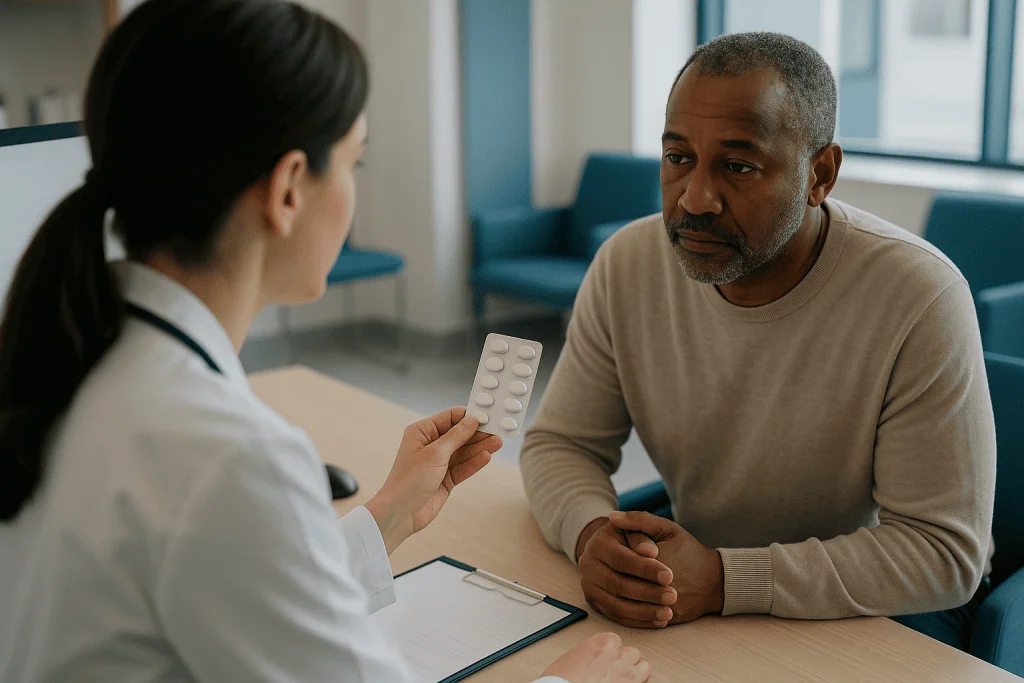
Aminosalicylates, often shortened to 5-ASAs, are anti-inflammatory compounds that act on the lining of the colon. They can be taken by mouth or delivered directly to the lower bowel as suppositories or enemas, which sounds unglamorous but puts the medicine exactly where inflammation sits in many people with colitis. They are used both to settle mild to moderate flares and, taken continuously, to keep remission. The NHS notes that they generally have fewer side effects than the other groups, though headache, nausea and rash occur.
Corticosteroids are powerful, fast and deliberately temporary. They suppress the immune response across the body, which brings relief within days to a couple of weeks for many people but also brings the familiar list of steroid effects: mood change, sleep disruption, weight gain, raised blood sugar, and, with repeated or prolonged courses, thinning bones and cataracts. For that reason guidelines treat steroids as a bridge, not a destination. Needing a second course within a year is usually a signal to the team that maintenance treatment should change.
Immunomodulators, chiefly thiopurines such as azathioprine and, less often, methotrexate, reduce the production of the immune cells driving inflammation. They are slow. The NHS advises that thiopurines can take two to three months to take full effect, so they are typically started alongside a steroid course or a biologic rather than alone in a flare. Regular blood tests are needed to watch the bone marrow and liver.
How these are combined, and in what order, is a decision for the prescribing clinician, weighing disease extent, previous responses and other health conditions.
What are biologics for IBD, and what are small-molecule drugs?
If the older medicines are sandbags against a flood, biologics are engineers closing a specific floodgate. A biologic is a protein, usually an antibody, made in living cells and designed to bind one target in the immune cascade. Because they are proteins, they cannot survive digestion and are given by injection under the skin or by intravenous infusion.
Several targets are in use. Anti-TNF agents, such as infliximab and adalimumab, block tumor necrosis factor, a messenger that drives much of the inflammation in both Crohn’s and colitis. Vedolizumab blocks a molecule on the surface of immune cells that lets them home in on the gut, which makes its action relatively gut-selective. Ustekinumab and newer agents block the interleukin pathways that coordinate the immune response. According to NHS guidance, maintenance infusions of infliximab are typically given about every eight weeks, with other agents on their own schedules set by the prescriber.
Small-molecule drugs are a different chemical animal. They are small enough to be swallowed as tablets and work inside immune cells, for example by inhibiting Janus kinase enzymes that relay signals from cytokines, or by holding certain white cells in the lymph nodes so they cannot reach the bowel. Their convenience is real; so is the need for careful screening, since some carry cardiovascular and clotting considerations that the prescriber will discuss.
All of these medicines lower immune defenses to some degree. Before starting, teams check for latent tuberculosis and hepatitis, review vaccinations and discuss infection risk. Mayo Clinic lists these agents for people with moderate to severe disease who have not responded well to, or cannot tolerate, other treatments, and increasingly as an earlier choice when disease features suggest a difficult course. Which agent, and when, remains an individual clinical judgment.
Who is IBD treatment for, and who is usually asked to wait?
Everyone with a confirmed diagnosis of IBD is a candidate for treatment, because untreated inflammation damages tissue even on quiet days. The real question is which treatment, and how urgently.
People with active symptoms and visible inflammation on scope or imaging are treated promptly, and the intensity is matched to severity and risk. Features that push teams toward earlier advanced therapy include extensive disease, deep ulcers, involvement around the anus, a young age at diagnosis, and a need for steroids soon after diagnosis. People who have already needed two steroid courses in a year are generally moved on to a steroid-sparing plan rather than asked to wait.
Some people are asked to pause or step through preliminaries first. A person about to start a biologic or small-molecule drug will wait for infection screening and, where needed, vaccinations to be completed. Someone with an active infection, including a gut infection such as Clostridioides difficile, is treated for that first, because immunosuppression could worsen it. A person whose symptoms are present but whose tests show no active inflammation may have irritable bowel syndrome overlapping with settled IBD, and escalating immune-suppressing treatment would not help; the team will look for other causes.
Surgery follows the same logic. Emergency operations happen without waiting when there is a perforation, uncontrolled bleeding or a severe flare that fails intensive medical treatment. Planned surgery, by contrast, is often deliberately delayed so that nutrition can be improved, steroids tapered and anemia corrected, all of which reduce complications.
Pregnancy deserves a note. Most IBD medicines are continued through pregnancy because active disease poses a greater risk to the pregnancy than the treatment does, but this is planned with the obstetric and gastroenterology teams together, never changed alone.
IBD treatment options at a glance
A table cannot capture the judgment behind an individual plan, but it can show how the pieces relate. Timelines below are typical ranges drawn from NHS and Mayo Clinic patient guidance and vary from person to person.
| Option | How it acts | Typical role | Typical time to notice effect | Main considerations |
|---|---|---|---|---|
| Aminosalicylates | Reduce inflammation at the colon surface | Mild to moderate ulcerative colitis; maintenance | Days to a few weeks | Generally well tolerated; limited role in Crohn’s |
| Corticosteroids | Broad, rapid immune suppression | Short courses for flares only | Days to about two weeks | Bone, mood, sugar and infection effects with repeated use |
| Immunomodulators | Slow production of inflammatory immune cells | Steroid-sparing maintenance | Two to three months | Regular blood monitoring needed |
| Biologics | Block a specific immune messenger or cell-trafficking molecule | Moderate to severe disease; maintenance | Weeks, with full effect over several months | Injection or infusion; infection screening first |
| Small-molecule drugs | Interrupt signaling inside immune cells | Moderate to severe disease, mainly colitis | Weeks | Oral; cardiovascular and clotting screening |
| Exclusive enteral nutrition | Liquid-only diet that alters gut environment | Inducing remission in children with Crohn’s | Course of about eight weeks (NHS) | Adherence is demanding; dietitian-led |
| Surgery | Removes or repairs damaged bowel | Complications or medically refractory disease | Immediate structural change; recovery over weeks | Does not remove immune tendency in Crohn’s |
Two patterns stand out. Fast options tend to be either temporary or invasive; durable options tend to be slow to start. That is why teams so often run a quick-acting bridge and a slow-acting maintenance treatment at the same time, and why patience during the first months, frustrating as it is, is built into the design.
Can an IBD diet plan treat inflammatory bowel disease?
Food is where hope and confusion collide for most people with IBD. Two things are true at once. No single diet has been shown to treat the underlying inflammation of IBD in adults, and nutrition is still a genuine part of treatment.
The strongest evidence sits in children. The NHS describes a liquid-only diet, known as exclusive enteral nutrition, as an option for inducing remission in children and young people with Crohn’s disease, typically taken for around eight weeks, with normal food reintroduced gradually afterward. It avoids the growth effects of steroids, which matters enormously at that age. Adults can use it too, though sticking to a purely liquid diet for two months is hard, and results in adults are less consistent.
For most adults, the dietitian’s job is different: keep you nourished while inflammation is settled by other means, and help you find your own trigger patterns. During a flare, a temporary low-fiber approach often eases cramping and frequency, since roughage is harder to move through an inflamed, sometimes narrowed bowel. Between flares, the aim is the opposite: as varied and unrestricted a diet as you can tolerate, because long restriction leads to deficiencies and to a fraught relationship with eating.
Specific popular plans, including the specific carbohydrate diet, the Crohn’s disease exclusion diet and Mediterranean-style eating, have small trials suggesting symptom benefit for some people. Mainstream guidance from Mayo Clinic and the NHS presents them as things that may help alongside medicine rather than as replacements for it.
Watch the quiet deficiencies. Iron, vitamin B12, vitamin D, folate, zinc and calcium commonly run low, especially after small-bowel surgery or during long steroid use. Correcting them is part of treatment, and a blood test tells the team what to correct.
When is surgery for Crohn's disease or ulcerative colitis needed?
Surgery in IBD is neither a failure nor a last resort in the dramatic sense; it is one of the tools, chosen when medicine cannot repair what has already been damaged or when a complication demands it. The NHS notes that many people with Crohn’s disease will need an operation at some stage, and that surgery is also an option in ulcerative colitis when medicines do not control symptoms or a serious complication develops.
In Crohn’s disease, the most common operation is a resection: the surgeon removes the diseased segment, often the junction between small and large bowel, and joins the healthy ends. Strictureplasty widens a narrowed section without removing it, preserving length. Abscesses may be drained and fistulas laid open or repaired. Because Crohn’s can return at or near the join, medical treatment usually continues afterward and a colonoscopy is often planned within the first year to look for early recurrence.
In ulcerative colitis, the definitive operation is removal of the entire colon and rectum. Waste then leaves the body either through an ileostomy, an opening on the abdomen fitted with a bag, or through an internal pouch fashioned from the small bowel and connected to the anus, sometimes called a J-pouch. The pouch avoids a permanent bag but carries its own issues, including more frequent bowel movements and a risk of pouch inflammation.
Emergency surgery is reserved for perforation, severe bleeding, toxic dilatation of the colon or a severe flare that does not respond to intensive hospital treatment within days. Planned surgery allows time to improve nutrition, reduce steroids and discuss stoma care, all of which matter for recovery. Whether and when to operate is a shared decision between gastroenterologist, colorectal surgeon and patient, and reasonable people weigh the trade-offs differently.
What do the first weeks of IBD treatment usually look like?
The first stretch after diagnosis has a rhythm, even if it does not feel like one from the inside.
Week one is often about the bridge. If you are in a flare, a steroid course may begin, and many people notice less urgency and pain within days to two weeks. Blood tests are drawn to check inflammation markers, iron and vitamin levels and, if immunomodulators or biologics are planned, hepatitis and tuberculosis screening. A stool sample rules out infection. If the plan includes a biologic, this is when vaccination gaps are addressed.
Weeks two to eight are the settling phase. The maintenance medicine starts, whether an aminosalicylate, an immunomodulator or an advanced therapy, and the steroid is tapered gradually rather than stopped abruptly, because a sudden stop can trigger both a flare and adrenal problems. The NHS timeline of two to three months for thiopurines to work explains why symptoms can wobble during this window without meaning the plan has failed. Biologics often show effect within the first several weeks, with full benefit judged later.
Around three to four months, the team looks for objective evidence, not just your report of feeling better. A stool test for fecal calprotectin, a protein that leaks from inflamed bowel, is a common non-invasive check. Some teams repeat a scope or use imaging. If markers remain high, the plan is adjusted; if they are normal, the interval to the next review lengthens.
Through all of it, you will be asked to notice patterns: what days are worse, how sleep and stress track with symptoms, whether new joint pain, eye redness or skin changes appear. Those observations are data for your team, and they shape the next decision.
Natural remedies for IBD: is there a way to fix it without medicine?
Type the question into a search bar and the internet will offer you turmeric, probiotics, aloe, fasting protocols and a dozen elimination diets, some with fervent testimonials. The honest answer is quieter than any of them.
Nothing available over a counter or in a kitchen has been shown to induce and maintain remission of IBD on its own. Stopping prescribed treatment in favor of a natural approach carries a specific risk: inflammation can continue silently while symptoms are partly masked, and the damage that accumulates, from strictures to a rising cancer risk, is not undone later. The NIH Office of Dietary Supplements also notes that supplements are not tested for safety and effectiveness the way medicines are, and several interact with IBD drugs.
That said, some natural measures have real, if modest, evidence and sit comfortably alongside medical care. Curcumin, the active compound in turmeric, has small trials suggesting added benefit when combined with aminosalicylates in mild colitis, though not as a stand-alone treatment. Certain probiotic preparations show some benefit for pouch inflammation after surgery and possibly mild colitis; evidence in Crohn’s disease is largely negative. Regular physical activity, adequate sleep and structured stress management do not treat inflammation directly but are associated with fewer symptom flares and better quality of life, and they protect bone and mood during steroid courses.
Stopping smoking is the natural intervention with the strongest evidence in Crohn’s disease, and it is free. Vitamin D repletion when levels are low is another.
The best framing is not natural versus medical but tested versus untested. Bring anything you are taking or considering to your appointment, including herbal teas and powders, so the team can check interactions and, where the evidence supports it, fit it into the plan.
What people often get wrong about IBD treatment
Myths about IBD tend to be sticky because each contains a grain of something real. Correcting them changes decisions.
Feeling well means the disease is inactive. Not reliably. Bowel inflammation can smolder with few symptoms, which is why teams check stool markers and repeat scopes even when you feel fine. Symptom relief is the start of the goal, not the whole of it.
IBD is caused by diet or stress, so fixing those fixes the disease. IBD arises from an interplay of genetic susceptibility, immune regulation and environment; no diet or stressful event causes it. Stress and certain foods can worsen symptoms in someone who already has IBD, which is a different claim.
Steroids are the treatment. Steroids are a rescue, deliberately short. Repeated courses signal that the maintenance plan needs strengthening, not that steroids should continue.
Biologics are a last resort you should postpone as long as possible. Guidance has moved the other way for people with high-risk features, because early control appears to prevent irreversible damage. Whether that applies to you is an individual conversation, but delay is not automatically the cautious choice.
Surgery means the treatment failed. Surgery is a treatment. For some people with colitis it ends bowel disease; for many with Crohn’s it removes a complication that no medicine could repair.
IBD and IBS are the same thing. Irritable bowel syndrome does not involve visible inflammation or tissue damage, and its treatments are different. The two can coexist, which is one reason symptoms sometimes persist when inflammation is controlled.
Once in remission, medicine can be stopped. Stopping maintenance treatment raises relapse risk substantially. Any change should be a planned decision with the prescriber, with monitoring in place.
Questions to ask your care team about IBD treatment
A specialist appointment moves quickly. Arriving with a short list changes the balance of the room, and it helps the team tailor the plan to what matters to you. Write your answers down or ask for the after-visit summary.
- Is my disease Crohn’s or ulcerative colitis, how much of the bowel is involved, and how severe does the inflammation look?
- What is the goal of this treatment: settling symptoms, healing the bowel lining, or both, and how will we measure it?
- How long should I expect before this medicine starts working, and what should I do if I feel worse in the meantime?
- What monitoring blood tests or stool tests will I need, and how often?
- If I need steroids, what is the plan to come off them, and what would trigger a change in my maintenance treatment?
- What infections or vaccinations should we address before I start this therapy?
- Are there features of my disease that make earlier advanced therapy sensible, or is a stepwise approach reasonable in my case?
- Should I see a dietitian, and are there deficiencies I should be tested for now?
- How would surgery fit into my long-term picture, and what signs would make you refer me to a colorectal surgeon?
- When should my colonoscopy surveillance for cancer risk begin, and at what interval?
- Who do I contact between appointments if symptoms change, and how quickly can I expect a response?
- I am planning a pregnancy, travel or a change of job; how does that affect the plan?
Notice that none of these questions asks the team to guarantee an outcome. They ask instead for the plan, the measure of progress and the fallback, which are the things a team can honestly provide. If a proposed treatment worries you, saying so is useful information, not an obstacle.
When to call your doctor
Most of the adjustments in IBD care happen calmly at planned reviews. A small number of situations should not wait for the next appointment, and knowing them beforehand removes the guesswork on a bad night.
Seek urgent care, by calling your IBD team or emergency services, if you have severe or steadily worsening abdominal pain, especially with a swollen or rigid abdomen; large amounts of blood in your stool or passing blood with clots; a high fever or shaking chills, particularly while taking a biologic, small-molecule drug or immunomodulator; repeated vomiting or an inability to keep fluids down; signs of dehydration such as dizziness on standing, very dark urine or passing little urine; sudden severe pain and swelling near the anus, which can indicate an abscess; or a new, painful, red or swollen leg or sudden shortness of breath, since IBD and some of its treatments raise the risk of blood clots.
Contact your team within a day or two, rather than waiting for a routine visit, if bowel frequency or urgency rises noticeably over several days, if you need to wake at night to open your bowels, if you are losing weight without trying, if you develop new eye pain or redness, painful joint swelling or unusual skin sores, or if you have any reaction after an injection or infusion.
Do not stop or change a prescribed medicine on your own, even if you suspect it is causing a problem; call and ask. Missed doses of some maintenance therapies can prompt both a flare and, for biologics, antibodies that make the drug less useful later. Your team would far rather hear from you early. Every decision about what to do next belongs with them, and the earlier they have the information, the more options remain open.
Frequently asked questions
What is the most effective treatment for IBD?
There is no single most effective treatment; the best option depends on whether you have Crohn’s disease or ulcerative colitis, where and how severely the bowel is inflamed, and how you have responded before. For mild colitis, aminosalicylates often suffice. For moderate to severe disease, biologics or small-molecule drugs are commonly used to achieve and maintain remission. Your gastroenterologist weighs these factors and adjusts the plan based on objective tests.
What are the common symptoms of inflammatory bowel disease?
People with IBD commonly experience persistent diarrhea, abdominal pain and cramping, blood in the stool, urgency, fatigue and unintended weight loss, sometimes with fever, joint pain or mouth ulcers. Symptoms come in flares and quieter periods. These features overlap with infections and other bowel conditions, so they cannot be used to self-diagnose; a doctor confirms IBD with blood and stool tests, imaging and endoscopy.
What is the average life expectancy for someone with inflammatory bowel disease?
Mainstream sources such as Cleveland Clinic describe IBD as a long-term condition that most people live with for decades; it is not usually life-threatening when monitored and treated. Risks that can shorten life, including severe complications, blood clots and bowel cancer, are reduced by controlling inflammation and attending planned colonoscopy surveillance. Individual outlook varies, and your own team can discuss what your disease pattern means for you.
How to fix IBD naturally?
No natural remedy has been shown to control the underlying inflammation of IBD on its own, and stopping prescribed treatment for one risks silent damage. Measures with supporting evidence alongside medical care include quitting smoking in Crohn’s disease, correcting low vitamin D and iron, regular exercise, good sleep and stress management, and, in some mild colitis cases, curcumin or specific probiotics under supervision. Discuss anything you take with your team.
How long do biologics for IBD take to work?
Many people notice improvement within the first several weeks of a biologic, with the full effect judged over a few months, according to NHS and Mayo Clinic guidance. Treatment usually begins with closer-spaced starting doses and then moves to a regular maintenance schedule set by the prescriber. If there is little response by the agreed review point, the team may check drug levels, adjust the schedule or switch to a different target.
Is IBD treatment lifelong?
For most people, yes, in the sense that IBD is a chronic condition and stopping maintenance medicine raises the risk of relapse. Treatment intensity, however, changes over time; some people remain stable on a single well-tolerated medicine for years, while others need adjustments. Any plan to reduce or stop treatment should be made with your gastroenterologist, with monitoring in place to catch early inflammation.
Can a special ibd diet plan replace medication?
In adults, no diet has been shown to replace medication for controlling IBD inflammation. Exclusive liquid nutrition is an established treatment for inducing remission in children with Crohn’s disease, and dietary approaches such as low-fiber eating during flares or Mediterranean-style eating between flares can ease symptoms and support nutrition. A registered dietitian familiar with IBD can help you use food as a partner to medical treatment rather than a substitute.
Does stress cause IBD flares?
Stress does not cause IBD, but many people find that periods of high stress coincide with worse symptoms, and there is a plausible gut-brain pathway for this. Stress management, adequate sleep and physical activity are associated with better quality of life and fewer symptom episodes. They do not replace anti-inflammatory treatment; if symptoms rise during a stressful period, your team may still want to check for active inflammation.
What happens after surgery for Crohn's disease?
After a Crohn’s resection, most people spend several days in hospital and recover over the following weeks, with diet gradually reintroduced. Because Crohn’s can recur near the surgical join, medical treatment usually continues or restarts, and a colonoscopy is often planned within the first year to look for early signs of return. Your surgeon and gastroenterologist coordinate this follow-up and adjust the plan based on what they find.
Do I still need colonoscopies if my IBD is controlled?
Yes. Long-standing inflammation of a large part of the colon raises bowel cancer risk, so people with extensive colitis or Crohn’s affecting the colon are offered surveillance colonoscopy. Mayo Clinic describes this typically starting around eight to ten years after diagnosis, with the interval afterward set by your specialist based on findings. Scopes also confirm that the bowel lining has healed, which is the real measure of treatment success.
References
- NHS: Crohn's disease, treatment
- NHS: Ulcerative colitis, treatment
- Cleveland Clinic: Inflammatory bowel disease (overview)
- CDC: About inflammatory bowel disease
This article is for general information only and is not a substitute for professional medical advice. Please consult a qualified doctor about your individual situation.

More from the Blog
What Happens During an ERCP: From Sedation to Clearing a Blocked Bile Duct
During an ERCP you are sedated, a flexible endoscope is passed through the mouth to the top of the small intestine, and a thin…

Resistant Starch: Why Cooled Rice and Potatoes Feed Your Gut Bacteria
Resistant starch is a form of starch that escapes digestion in the small intestine and is fermented by bacteria in the colon, producing short-chain…
What Happens During Band Ligation for Esophageal Varices: The Procedure Explained
Band ligation for esophageal varices is an endoscopic procedure in which a doctor passes a thin flexible camera down the throat, suctions a swollen…

Gallstones in Pregnancy, Diabetes or Older Age: How the Treatment Plan Is Adapted
Gallstones during pregnancy treatment usually starts with pain control, a short period of rest from fatty meals, and close monitoring, because most stones settle…
Leaky Gut: What Intestinal Permeability Really Is and What Is Marketing
Leaky gut describes increased intestinal permeability, a measurable loosening of the gut lining that lets more molecules pass into the bloodstream. Researchers see it…

How Liver Disease Is Treated: From Fatty Liver to Cirrhosis, Care Planned Stage by Stage
Liver disease is treated according to its cause and stage. Early fatty liver is managed mainly with gradual weight loss, alcohol avoidance and control…