

How Long Do Dental Crystals Last? Wear, Loosening and How Removal Is Done
Key Takeaways
- Tooth gems are semi-permanent, and dentists writing for Cleveland Clinic describe a working life of months to a few years, a range drawn from experience rather than any controlled trial.
- The bond relies on etching enamel to create a microscopic honeycomb, filling it with a bonding agent and light-curing a composite resin; no drilling is involved.
- Composite dental bonding typically lasts around three to ten years according to Cleveland Clinic, and a gem's smaller footprint means it usually sits below that range.
- The main documented risk is plaque collecting at the gem's edge, which can leave a permanent white spot lesion on the enamel once the crystal is removed.
- Removal is a short dental procedure in which the crystal is lifted with an instrument and leftover resin is shaved down with a fine finishing bur, then polished.
- Household adhesives such as nail glue or superglue are not tested for the mouth, can burn gum tissue and produce gems that fail early and unpredictably.
Tooth gems are not permanent. Mainstream dental sources describe them as semi-permanent, usually staying in place for several months to a few years before they loosen or are taken off, depending on where they sit, how hard the bite is and how the tooth is cleaned. No controlled trial has measured exact lifespans. Removal is a short dental procedure: the crystal is lifted and the leftover adhesive is polished away.
She had been running her tongue over it all morning without noticing. A small glass crystal on the corner of a front tooth, placed the previous spring, had started to feel like a grain of sand that moved when she pressed it. Not painful. Just loose. Standing at the bathroom mirror she found herself asking a question she hadn’t thought about when it went on: how long do tooth gems last, and what happens when they stop lasting?
It is a fair question, and the honest answer is more textured than the reassuring “years” people hear at the chair. A tooth gem is a tiny piece of glass, crystal or metal glued to the outer surface of a tooth with the same kind of resin dentists use for white fillings. That resin is strong. It is also fighting a bite that closes hundreds of times a day, a toothbrush, acidic drinks and a tongue that never stops exploring.
This article walks through what the bond is made of, why it weakens, what a dentist actually does to take a gem off, and how to tell an ordinary wobble from a problem that needs a visit.
How long do tooth gems last? The honest answer
Ask five people who fit tooth gems and you may hear five numbers. The reason is simple: nobody has run a controlled study that follows hundreds of gems for years and records when each one comes off. What exists instead is experience, manufacturer claims and the general dental literature on how resin bonds to enamel.
Dentists writing for Cleveland Clinic describe tooth gems as temporary or semi-permanent additions that usually stay on for months to a few years, depending on how they are placed and looked after. That range is wide on purpose. A gem on a flat, upper front tooth that never meets an opposing tooth when the jaw closes has an easier life than one placed near the biting edge of a lower tooth, where every apple and every sandwich crust pushes against it.
The more useful comparison comes from dental bonding, the procedure in which a dentist sculpts tooth-colored composite resin onto a chipped or discolored tooth. Composite resin is a plastic mixed with fine glass particles that hardens under a blue light. Cleveland Clinic notes that dental bonding typically lasts around three to ten years before it needs repair or replacement. A tooth gem uses a closely related resin, but with a much smaller contact area and a hard, non-flexible object sitting on top of it. Smaller footprint, more leverage, shorter life. It would be surprising if a gem outlasted a well-placed bonded filling.
So when someone asks how long tooth gems last, the evidence-based reply is a range, not a promise: months for many, a year or two for some, longer for a few who happen to have the right bite and careful habits. Anyone who guarantees a number is speaking from hope rather than data.
How a tooth gem is attached: what actually happens on the enamel
The whole procedure hinges on a trick chemists borrowed from nature. Enamel, the hard outer shell of a tooth, is mostly mineral crystals packed together like tiny prisms. On its own it is glassy and smooth, and glue slides off it. The first step therefore changes the surface.

A dentist or trained applicator isolates the tooth so it stays dry, then applies a weak acid gel for a short time. This is called etching. The acid dissolves the very outermost layer of mineral and leaves behind a microscopic honeycomb of pits, invisible to the eye but rough enough to grip. The tooth is rinsed and dried; a properly etched spot looks frosty white.
Next comes a bonding agent, a thin liquid resin that flows into those pits and, once hardened with a curing light, forms a plastic anchor woven into the enamel surface. A curing light is simply a bright blue lamp whose wavelength triggers the resin to set in seconds. On top of that layer goes a small bead of composite resin, the gem is pressed into it, excess is wiped away and the light is used again.
The final step matters more than people expect. Any resin left standing proud around the edge of the crystal creates a ledge where plaque, the sticky bacterial film that forms on teeth, can hide. A careful applicator smooths and polishes that margin until a fingernail cannot catch on it.
Notice what does not happen. The tooth is not drilled. No hole is made. The bond lives on the surface, which is exactly why it can be removed and exactly why it can also let go on its own.
Why tooth gems loosen: the science of a failing bond
A gem does not usually fall off because the glue was weak on day one. It fails because a strong bond is attacked from several directions at once, and eventually one of them wins.
Mechanical stress is the obvious culprit. Every time the teeth meet, a gem near the biting edge takes a shearing force, a sideways push rather than a straight press. Resin resists compression well and shear less well. Biting a fingernail, opening a package with the front teeth or grinding at night concentrates that stress on a footprint a few millimeters across.
Chemistry does the quieter work. The mouth is not a neutral place. Sugary and acidic drinks lower the pH around the tooth for minutes at a time, and the resin edge, thinner than the gem itself, is the first thing to erode. NHS guidance on tooth decay describes how repeated acid attacks soften enamel; the same environment slowly weakens the resin margin, which is why a gem sometimes feels rough at its border months before it moves.
Moisture at the moment of placement is the third factor, and the one entirely out of the wearer’s control. Bonding agents need a dry etched surface. A breath of humid air or a trace of saliva during those few seconds leaves a patch that never fully bonded. That gem may look perfect for weeks and then lift with no warning.
Thermal cycling adds a final nudge. Hot coffee followed by iced water makes the tooth, the resin and the crystal expand and contract at slightly different rates. Over hundreds of cycles, tiny gaps open at the interface.
Put those together and the realistic picture emerges: a gem’s life is determined less by the product than by where it sits, how the person bites and how carefully the surface was dried on the day.
Do tooth gems damage teeth? What the evidence actually shows
The honest position is that the harm is indirect and largely preventable, but real when care slips. There is no large trial comparing gem wearers with non-wearers, so the risks described below come from clinical experience and from what dentistry knows about bonded objects in general.

The etching step removes a microscopic layer of enamel. On its own this is the same step used for orthodontic brackets and white fillings and is considered acceptable when done properly. Enamel does not grow back, so the etched area is permanently altered, though usually invisible once polished.
The more common problem is what accumulates around the gem. Cleveland Clinic dentists point out that a crystal creates a new ledge for plaque and food debris. If the margin is not brushed thoroughly, the acid produced by bacteria sits against the enamel for longer than it otherwise would. The early sign is a chalky white patch called a white spot lesion, which is enamel that has lost mineral but not yet formed a cavity. Once the gem comes off, that patch may remain as a permanent mark exactly where the crystal used to sparkle.
Gum irritation is a related concern when a gem is placed close to the gumline. Plaque along the gum causes gingivitis, the early reversible stage of gum inflammation, which shows as redness or bleeding on brushing.
Metal gems carry an extra consideration: some alloys contain nickel, a common cause of contact allergy. Glass crystals and higher-purity gold avoid that particular issue, though no material is guaranteed for every mouth.
Chipping is rarer than people fear. A small gem on the smooth face of a tooth seldom cracks enamel. Damage is more likely from someone trying to pry a stubborn gem off at home, which is covered later.
Who tooth gems are usually for, and who is usually asked to wait
Tooth gems are a cosmetic choice with no medical purpose, so the question is not who needs one but who can carry one safely. Most dentists frame it around three things: a healthy mouth, a mature tooth and a bite that leaves the gem alone.
A good candidate has enamel with no cavities, fillings or cracks on the chosen tooth, gums that do not bleed on brushing, and a routine that already includes twice-daily cleaning with fluoride toothpaste. The gem goes on a natural tooth, not a crown, veneer or existing filling, because resin bonds to enamel very differently than to porcelain or old composite.
Several groups are commonly asked to hold off or reconsider:
- Children and younger teenagers. Newly erupted permanent teeth continue to mature their surface mineral for a period after they appear, and most dentists prefer not to etch enamel that is still hardening. Many applicators set an adult-only policy for this reason.
- Anyone with active tooth decay, untreated gum disease or frequent white spot lesions. Adding a plaque trap to a mouth already struggling with acid attack is the wrong order of operations. The NHS and Mayo Clinic both emphasize treating decay and its causes first.
- People who grind or clench, or whose bite brings the lower teeth against the spot where the gem would sit. The gem will not last and may leave a rough patch when it goes.
- Those with a known nickel allergy, unless the material is confirmed nickel-free.
- Anyone about to start orthodontic treatment, since brackets and aligners need the same tooth surface.
None of these are absolute bans handed down by a guideline. They are the judgment calls a dentist makes after looking in the mouth, and the decision belongs with that clinician and the person in the chair, not with a checklist.
Glass crystals, gold and DIY kits: how the options compare
Three broad approaches exist, and they differ far more in risk than in appearance. The table below summarizes what is known and, just as importantly, what is not.
| Option | How it is attached | Typical longevity | Main considerations |
|---|---|---|---|
| Glass or lead-free crystal, professionally bonded | Enamel etch, bonding agent, composite resin, light-cured | Months to a few years (Cleveland Clinic; no trial data) | Flat back bonds well; plaque at margin if not polished; can chip if struck |
| Gold or other metal charm, professionally bonded | Same resin technique, sometimes with a metal backing | Similar range; heavier pieces may lever off sooner | Nickel content matters for allergy; edges must be smoothed |
| Home kit with non-dental adhesive | Nail glue, superglue or unidentified adhesive on unetched enamel | Days to weeks; unpredictable | Adhesives not tested for the mouth; chemical burns to gum; swallowing or inhaling a loose gem; removal can damage enamel |
The middle column deserves a caution. Those longevity ranges describe what dentists commonly observe and quote; they are not results from a study that tracked outcomes. The composite bonding literature, where Cleveland Clinic cites a working life of roughly three to ten years for a bonded filling, is the closest evidence-based anchor, and a gem generally sits below that because of its small footprint.
The bottom row is where the real difference lies. Dental resin is designed to be biocompatible and to bond to etched enamel. Household adhesives are neither. Cleveland Clinic specifically warns against gluing objects to teeth at home because the adhesive can irritate soft tissue and the gem tends to fail early, often while the wearer is asleep or eating. A tiny crystal in the airway is a genuine emergency, not a cosmetic mishap.
If a comparison is needed, it is not between brands of crystal. It is between a bond built on the same chemistry as a filling and a bond built on whatever was in the drawer.
The first days and weeks after a tooth gem goes on
The resin is fully hard the moment the curing light switches off, so there is no drying period in the way there is with a glued household object. Even so, the first stretch of wear has its own rhythm.
The first hours are about the tongue. Almost everyone reports running it across the gem constantly. That is normal and does not loosen anything; the tongue cannot generate meaningful shear force. Some applicators suggest avoiding very hard or sticky foods for the rest of the day, more as a habit-forming step than a chemical necessity.
Within the first week, the mouth adapts. Speech is rarely affected by a small crystal, though a larger charm near the biting edge may catch on the lower lip briefly until the lip learns the new shape. Mild gum tenderness right next to the gem can happen if any resin was left touching the gumline; if it persists beyond a few days, the margin probably needs smoothing.
Around the two-to-four-week mark, the real test begins: cleaning. Plaque forms continuously, and the NHS recommends brushing for two minutes twice a day with fluoride toothpaste, including last thing at night. A gem does not change that advice, but it does add a target. The bristles need to sweep around the edge of the crystal from above and below, not skate over the top.
Most gems that fail because of a placement flaw, such as a damp spot during etching, do so in the first weeks. A gem that survives that window and is kept clean has usually settled into the months-to-years range that dentists describe. Beyond that, the timeline stops being about the procedure and starts being about the person’s bite and habits.
Can you brush teeth with tooth gems? Daily care that protects the enamel
Yes, and skipping it is the fastest way to turn a harmless accessory into a white spot. A bonded gem is designed to withstand normal brushing; what it cannot withstand is being ignored.
The technique is ordinary, with one adjustment. A soft or medium toothbrush, manual or electric, is angled toward the gumline and moved in small circles across every surface. NHS guidance on keeping teeth clean sets the baseline at two minutes, twice daily, with fluoride toothpaste and no rinsing with water afterward so the fluoride stays in contact with the enamel. The adjustment is deliberate attention to the border of the gem: a few extra seconds tracing its outline so bristles reach the tiny step between resin and tooth.
Flossing is unchanged. The gem sits on the front face of the tooth, not between teeth, so floss passes as usual. Interdental brushes, the small bottle-brush tools for cleaning between teeth, are also fine.
Toothpaste choice matters less than people think, though very abrasive whitening pastes can dull the surface of glass crystals over time and may roughen the resin edge. A standard fluoride paste is the evidence-backed choice for enamel regardless of the gem.
Two habits deserve a mention. Whitening treatments applied over a gem will not change the enamel underneath it; when the gem eventually comes off, a slightly darker circle may remain where the bleaching gel could not reach. And chewing on ice, pens or fingernails loads the gem with exactly the sideways force that resin dislikes.
The Mayo Clinic’s description of how cavities form, acid from bacteria dissolving mineral in a spot that stays dirty, is the reason for all of this. A gem is only a risk to the tooth when it becomes a place plaque can rest undisturbed. Keep the edge clean and the enamel under it stays as healthy as the rest of the tooth.
Tooth gem fell off: what to do and what not to do
Sooner or later it happens, often mid-meal, sometimes while brushing, occasionally at night. The immediate priority is safety rather than the gem.
If it comes off while eating, spit it out rather than swallow it if possible. A swallowed crystal is small and smooth and will almost always pass through without incident, but a piece that is inhaled rather than swallowed is different. Sudden coughing, wheezing or a feeling of something caught in the throat after a gem goes missing warrants urgent medical attention, because an object in the airway is an emergency.
Once the gem is accounted for, feel the tooth. In most cases a small nub of resin remains attached to the enamel, and the tongue finds it immediately. That residue is not harmful in the short term, but it is a rough surface that collects plaque and can irritate the lip. It should be smoothed or removed by a dentist rather than left indefinitely.
What not to do is more important than what to do:
- Do not try to reattach the gem with any household adhesive. Cleveland Clinic warns that such glues are not tested for the mouth and can burn gum tissue.
- Do not scrape, pick or file the leftover resin yourself. Fingernails, tweezers and emery boards can gouge enamel that etching has already made slightly more vulnerable at the surface.
- Do not assume the tooth beneath is fine. A quick look in good light may show a pale, chalky patch where the gem sat, which is early demineralization and worth a professional check.
Reapplication is possible, but only after the old resin is fully removed and the enamel is examined. The decision about whether the tooth is a good candidate a second time, or whether the site has already shown signs of wear, belongs to the dentist who looks at it.
How are tooth gems removed? Step by step
People are often surprised by how undramatic removal is. It is quicker than placement and, done by a dentist, involves no drilling into the tooth itself. It does involve specific instruments, which is the reason it is not a home job.
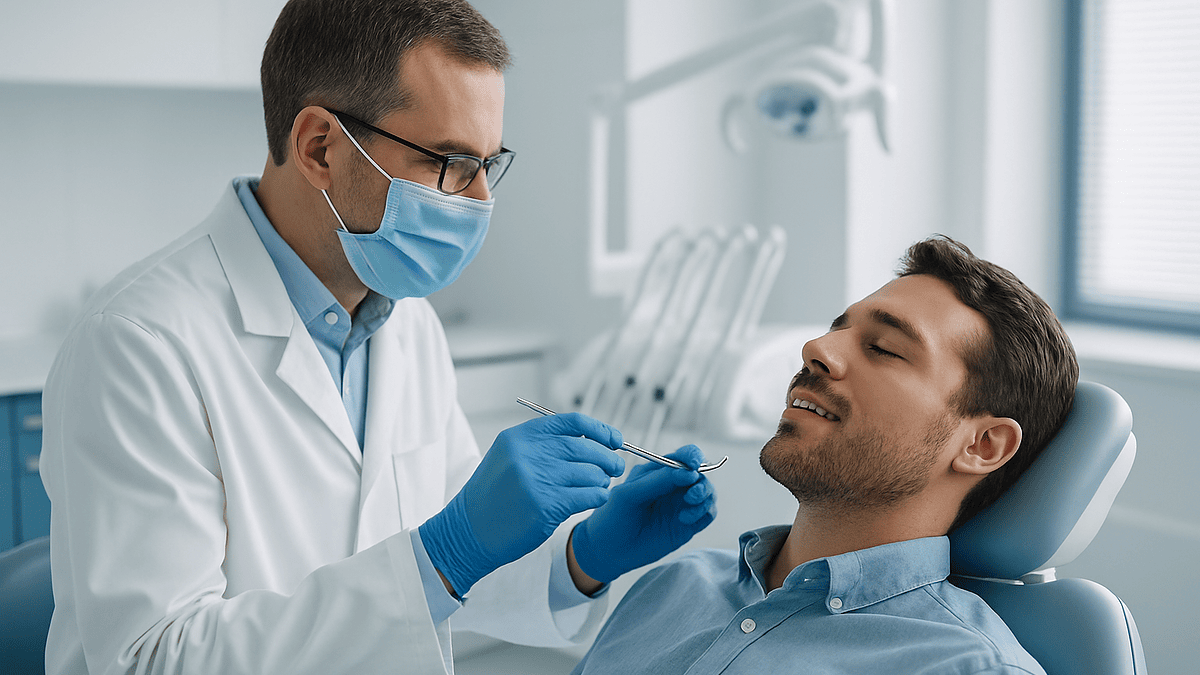
The dentist first examines the gem and the tooth, checking for any decay or white spot around the edge and noting how much resin sits beneath the crystal. Local anesthetic is not normally needed because only surface resin is being worked on; the tooth’s nerve is far from the action.
Removal begins by lifting the crystal. A flat-ended hand instrument or a pair of pliers designed for orthodontic brackets grips the gem and applies a controlled twist or peel. The bond between resin and gem is usually the weakest link, so the crystal often pops off cleanly, leaving a small dome of resin behind on the enamel.
That resin is the real task. A slow-speed handpiece fitted with a fine finishing bur, essentially a tiny rotating polisher, is used to shave the composite down in light passes. The dentist stops frequently, drying the tooth and looking at it under light, because cured composite and enamel can look similar when wet. The goal is to remove every trace of resin without touching the enamel beneath, which takes patience more than force.
Once the surface feels glassy to an explorer instrument, the area is polished with a rubber cup and a fine paste to restore the natural shine. Some dentists finish with a fluoride application to support remineralization of the etched surface, a decision that rests with the clinician.
The whole visit is typically short, though no guideline sets a fixed time, and it varies with how much resin was left and how neatly the gem was placed originally. A gem attached with a household adhesive is often harder to remove because the glue may have crept onto gum tissue or into surface irregularities.
What the enamel looks like after a tooth gem is removed
The etched footprint is permanent in the strictest sense; that microscopic layer of mineral does not regrow. In practical terms, though, a well-placed and well-cared-for gem usually leaves a tooth that looks and feels like its neighbors after polishing.
Three findings are possible when the crystal comes off, and each has a different meaning.
A smooth, uniformly colored surface is the ideal outcome. It means plaque was kept away from the margin, the resin was removed cleanly and the enamel remained mineralized underneath. Nothing further is required beyond ordinary care.
A slightly different shade in a circle where the gem sat is common when the rest of the tooth has been exposed to staining, whitening or simply years of tea and coffee while the covered patch was protected. Time and normal cleaning often even this out, and it is cosmetic rather than structural.
A chalky white patch is the finding that matters. This is a white spot lesion: enamel that has lost mineral because acid sat against it, most often at a poorly cleaned margin. NHS guidance on tooth decay describes this early stage as potentially reversible when fluoride and good cleaning are applied consistently, because minerals from saliva and toothpaste can be redeposited into the softened surface before a cavity forms. Whether that happens, and whether any additional treatment is needed, is a judgment for the dentist who sees the tooth.
Sensitivity to cold immediately after removal is occasionally reported and usually reflects the fresh polishing of a surface that had been covered. It is expected to settle. Sensitivity that persists or worsens, or sharp pain on biting, is not part of the normal picture and should be assessed, since it may indicate a crack or decay unrelated to the gem itself.
What people often get wrong about tooth gems
Most misunderstandings about tooth gems cluster around permanence and safety, in both directions. Some people believe they are harmless forever; others believe they ruin teeth on contact. The evidence sits between the two.
“It’s permanent.” It is not. Resin on enamel is a surface bond that will eventually give way to bite forces, acid and time. Dentists describe gems as semi-permanent, lasting months to a few years, and every one of them either falls off or is removed.
“It’s just glue, so I can do it at home.” The glue is the least of it. Etching, drying, bonding and polishing are what make a gem last and keep the margin clean. Skip them and the gem fails early, often at night, with a small hard object loose in the mouth.
“The tooth has to be drilled.” No hole is made. The only change to the tooth is the microscopic etching of the outer surface, the same step used before orthodontic brackets.
“Gems cause cavities.” Gems do not produce acid. Bacteria in undisturbed plaque do. A gem that is cleaned around thoroughly, twice a day, is not a decay risk in itself. A gem that becomes a plaque shelter is.
“Removal will take a chunk of enamel.” Professional removal targets the resin, not the tooth, and a careful operator stops at the enamel surface. The enamel losses dentists worry about come from home attempts with metal tools or from grinding away resin without stopping to check.
“Whitening will brighten the whole tooth.” Bleaching gel cannot reach enamel under a gem. The covered circle keeps its original shade, which may be noticeable after removal.
“A loose gem can wait.” A gem that moves is a gem that is about to become a swallowing or inhalation risk and is already letting plaque under its edge. It is worth a prompt visit rather than a shrug.
Questions to ask your care team before, during and after
A good conversation with a dentist or trained applicator turns a cosmetic impulse into an informed choice. These questions are the ones that tend to surface useful answers.
Before placement:
- Is this tooth healthy enough to etch, and have you checked it for early decay or cracks?
- Does my bite bring another tooth against this spot when I close or chew?
- What is the gem made of, and does it contain nickel?
- What adhesive system will you use, and is it a dental composite rather than a general-purpose glue?
- Are there reasons in my mouth, such as gum inflammation or planned orthodontics, that would make it better to wait?
Right after placement:
- Will you show me how to brush the edge of the gem so plaque does not collect there?
- Is the margin polished flush, or can I expect to feel a ledge with my tongue?
- What should I do if it feels loose, and how quickly should I come back?
When considering removal:
- Will you remove the resin with a finishing bur and polish, and will you check the enamel underneath?
- If there is a white spot where the gem sat, what are my options for supporting remineralization?
- Is the tooth suitable for another gem later, or would you advise against it?
Notice that none of these ask for a guarantee. Dentistry cannot promise how long a bond will hold or exactly how a tooth will look afterward, and a clinician who answers with ranges and caveats is being accurate rather than evasive. The final call on whether to place, keep or remove a gem sits with the person and the treating team, informed by what the examination shows rather than by what a website or a friend has said.
When to call your doctor or dentist
Most tooth gem stories end quietly: a small crystal wears out its welcome and a dentist polishes it away. A few signs mean the situation has moved beyond cosmetic and should prompt a call rather than a wait-and-see.
Seek urgent medical care, not a dental appointment, if a gem comes off and is followed by sudden coughing, wheezing, difficulty breathing or the sensation of something lodged in the throat. An inhaled object needs assessment in an emergency setting.
Contact a dentist promptly for any of the following:
- The gem moves, rocks or feels loose against the tongue, which means the bond is failing and plaque is getting beneath it.
- A chalky white or brown patch appears around the edge of the gem or on the tooth after it comes off.
- The gum next to the gem is red, swollen, bleeds when brushed or feels sore for more than a few days.
- Sharp pain on biting, or sensitivity to hot and cold that persists or worsens rather than settling.
- A rough piece of resin remains after a gem falls off and is catching on the lip or tongue.
- A rash, itching or ulceration on the lip or gum near a metal gem, which may suggest a contact allergy.
- Any gem was attached with a household adhesive, especially if there is burning, whitening or peeling of the gum.
MedlinePlus advice on adult dental care also applies in the background: regular check-ups let a dentist spot early demineralization or gum changes around a gem before they become visible or painful. Someone wearing a gem has a good reason not to let those visits lapse.
What happens next, whether the gem stays, comes off or is replaced, and whether the enamel needs any treatment, is a decision for the dentist who examines the tooth. This article can describe the pattern; only an examination can describe the tooth.
Frequently asked questions
How long do tooth gems last on average?
There is no clinically measured average. Dentists describe tooth gems as semi-permanent, commonly staying on for several months to a few years, with placement position, bite forces and cleaning habits shaping where in that range a particular gem falls. The closest evidence anchor is composite dental bonding, which Cleveland Clinic notes typically lasts around three to ten years, and a small gem usually does not match that.
Do tooth gems damage teeth permanently?
The etched surface is permanently altered at a microscopic level, but this is the same step used for orthodontic brackets and is generally considered acceptable when done properly. Lasting damage most often comes from plaque building up around a poorly cleaned gem, which can leave a white spot lesion, or from attempts to pry a gem off at home with hard tools.
How are tooth gems removed by a dentist?
A dentist lifts the crystal with a flat instrument or bracket pliers, then uses a slow-speed handpiece with a fine finishing bur to shave away the remaining resin in light passes, checking the enamel frequently. The tooth is then polished with a rubber cup and paste. Local anesthetic is not usually needed because only surface resin is worked on, not the tooth itself.
My tooth gem fell off. What should I do?
Make sure the gem was spat out rather than inhaled, and seek urgent care if there is coughing or breathing difficulty. Then book a dental visit to have any leftover resin smoothed off and the enamel checked for a white patch. Do not reattach it with household glue or scrape the residue yourself, since both can harm the gum or enamel.
Can you brush your teeth with tooth gems on?
Yes, and it is essential. A bonded gem withstands ordinary brushing. The NHS recommends two minutes twice a day with fluoride toothpaste, and gem wearers should spend a few extra seconds tracing the crystal’s edge so bristles reach the small step between resin and tooth. Flossing is unchanged because the gem sits on the front face, not between teeth.
Can a tooth gem be put back on after it falls off?
Often, but only after a dentist removes all the old resin and examines the enamel underneath. If the site shows a white spot lesion or the bite is clearly what knocked the gem off, the dentist may suggest a different tooth or advise against a second attempt. That decision rests with the clinician who sees the tooth.
Why did my tooth gem come off so quickly?
Early failure usually traces back to moisture on the enamel during etching or bonding, which leaves a patch that never fully attached, or to placement where an opposing tooth hits the gem when the jaw closes. Gems fitted with non-dental adhesives at home fail fastest of all because those glues are not designed to bond to etched enamel.
Are tooth gems safe for teenagers?
Most dentists and applicators ask younger teenagers to wait. Newly erupted permanent teeth continue to mature their surface mineral for a period after they appear, and etching enamel that is still hardening is generally avoided. Many services set an adult-only policy for this reason. A dentist can advise on an individual basis after examining the teeth.
Will teeth whitening work with a tooth gem in place?
Whitening gel cannot reach the enamel covered by the gem and its resin, so the surrounding tooth may lighten while the covered circle keeps its original shade. When the gem is later removed, that patch can appear slightly darker. Anyone planning whitening may prefer to do it before placement or after removal, a timing question worth raising with the dentist.
Does removing a tooth gem hurt?
Removal is generally not painful because the work is done on surface resin, well away from the tooth’s nerve, and local anesthetic is rarely required. Some people notice brief cold sensitivity afterward where the freshly polished enamel had been covered. Sensitivity that persists or sharp pain on biting is not expected and should be checked by the dentist.
References
- Cleveland Clinic: Dental Bonding
- NHS: How to keep your teeth clean
- NHS: Tooth decay
- MedlinePlus: Dental care – adult
This article is for general information only and is not a substitute for professional medical advice. Please consult a qualified doctor about your individual situation.

More from the Blog

Recovering From Oral and Maxillofacial Surgery: Swelling, Bruising and the Soft-Diet Weeks
Recovery after oral and maxillofacial surgery usually unfolds in stages: swelling peaks around the second or third day and eases over one to two…

Can Tooth Decay Be Reversed? What Remineralisation Can and Cannot Fix
Tooth decay can be reversed only in its earliest stage, when acid has pulled minerals out of the enamel but no hole has formed.…

Does TMJ Treatment Ever Mean Surgery? Why Conservative Care Comes First
Most people with TMJ disorders never need surgery. Major health bodies, including the NIH and the NHS, advise starting with reversible, conservative care such…

Before a Halitosis Assessment: Foods, Mouthwash and Habits to Pause So Testing Is Accurate
Before a halitosis appointment, most clinics ask you to skip strong-smelling foods such as garlic and onions, avoid mouthwash, mints, gum and breath sprays,…

Is a Dental Hygiene Cleaning Painful? Sensitivity, Heavy Tartar and Numbing Options
For most people, a routine teeth cleaning is not painful, though it can feel scratchy, cold, or briefly uncomfortable, especially where gums are inflamed…

How Bruxism Is Diagnosed: Tooth Wear Patterns, Jaw Checks and Sleep History
Bruxism is usually diagnosed by a dentist from three strands of evidence gathered together: the pattern of wear, chips or cracks on the teeth;…