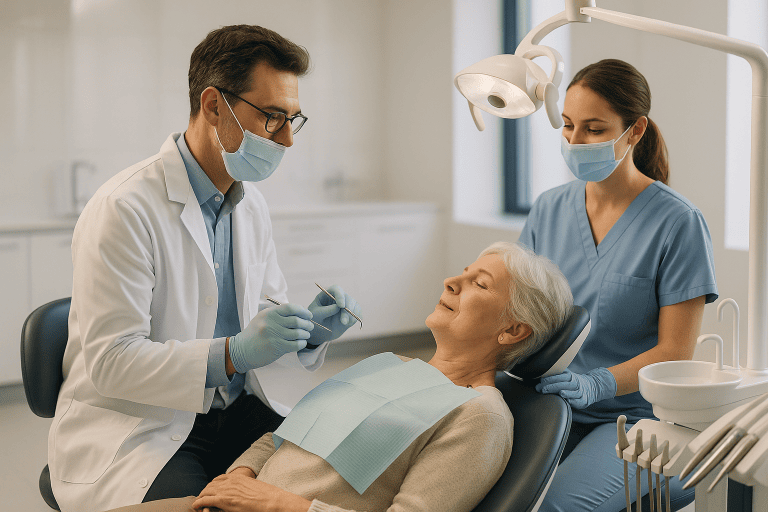
Dental Crystals
Dental crystals are small decorative gems bonded to the tooth surface to enhance the smile without drilling. The procedure is quick, painless, and typically reversible when performed by a dentist.
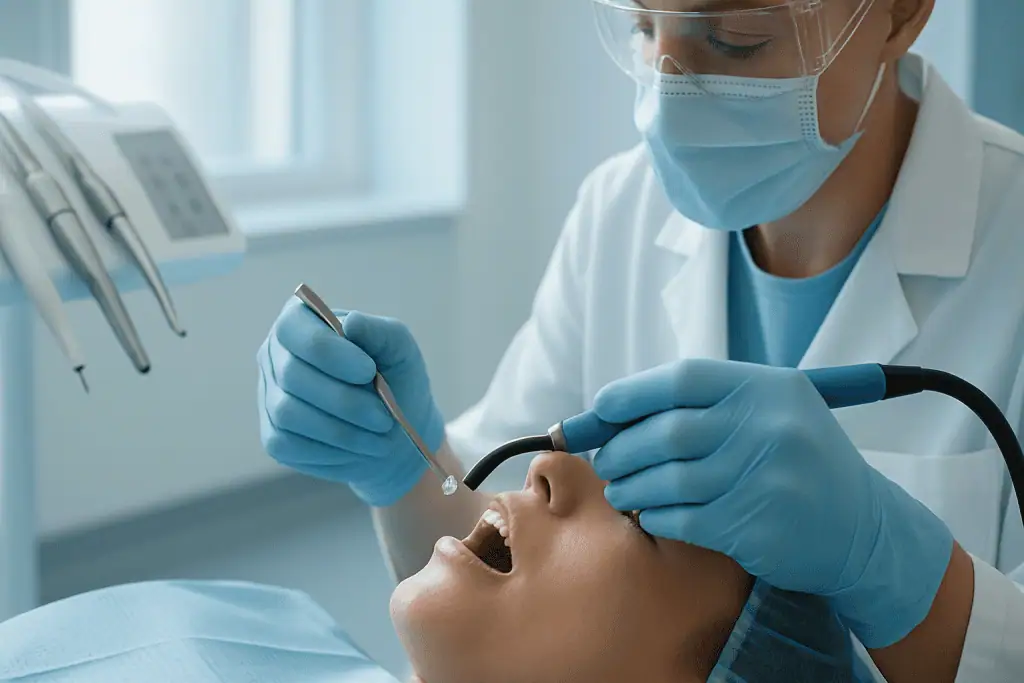
Quick answer
Dental crystals, also called tooth gems, are small decorative crystals bonded to the enamel of a front tooth with a dental adhesive. Placement takes a single short visit and involves no drilling, so anaesthesia is usually unnecessary. A dentist can later remove the crystal and polish the enamel. The tooth should be healthy, clean and free of decay before placement.
Dental Crystals: A Small Detail With a Visible Effect
Dental crystals, also called tooth gems or dental gems, are small decorative crystals bonded to the visible surface of a tooth to add a point of sparkle when you smile, speak or laugh. A dentist attaches the crystal to the enamel using a dental adhesive, usually without any drilling, and can remove it again later. The effect ranges from a faint glint that only appears when light catches the tooth to a clearly visible accent, depending on the size, colour and position you choose. Dental crystals are for people who want to personalise a healthy smile, not for people who need treatment.
For many people, a confident smile is not only about straight, healthy, well-coloured teeth. It is also about personal expression. A dental crystal sits somewhere between jewellery and dentistry: the decision is aesthetic, but the surface it sits on is living tissue. Enamel covers dentin, dentin protects the nerve, and the whole structure is supported by gums and bone. If you want to understand exactly what the crystal is bonded to, the page on dental anatomy explains how these layers work together. The practical point is simple: a decorative accessory should never be allowed to compromise the tooth underneath it.
If you are considering dental crystals, you probably have a short list of practical questions. Will it hurt? Will it damage the enamel? Can it be removed later? Will it affect eating, brushing or dental health? These are the right questions, and this page answers each of them plainly. The short version: professional placement is quick and minimally invasive, the enamel is not drilled, the crystal is removable, and the main ongoing responsibility is keeping the area clean.
One note on terminology before going further. The dental crystals described here are decorative tooth gems. They are not the same product as the “cleaning crystals” sold for soaking clear aligners and retainers: those are a dissolvable cleaning agent for removable appliances, not something applied to a tooth. If you arrived here looking for aligner cleaning products, this page will not answer that question; if you are interested in a tooth gem, read on.
The safest starting point for dental crystals is a professional examination. A dentist confirms that the selected tooth is healthy, the enamel is suitable for bonding, the gums are not inflamed and the crystal will not interfere with your bite. At Acibadem, dental crystal placement is treated as an elective cosmetic service within the broader work of the Dental & Oral Health units, which means oral health is assessed first and the decoration comes second.
What Are Dental Crystals?
Dental crystals are small decorative pieces, usually made from crystal glass or other ornamental materials suitable for the mouth: that are bonded onto the visible surface of a tooth. They are most often placed on an upper front tooth, typically a lateral incisor or canine, where they catch the light naturally without sitting in the path of heavy chewing forces. The design may be clear, coloured, metallic-looking or shaped, depending on your preference and the material selected.
The key difference between professionally placed dental crystals and non-professional tooth jewellery is not the stone. It is the method of application. A dentist bonds the crystal to the enamel using materials designed and tested for the oral environment. The tooth is cleaned, kept dry, prepared with a surface-conditioning agent, and the crystal is fixed with an adhesive that hardens under a curing light. Because nothing is cut and the nerve is never approached, anaesthesia is usually not needed at all.
Dental crystals are a cosmetic enhancement, not a medical treatment. Their purpose is to change the appearance of the smile, not to treat disease. That does not make the placement decision trivial. A dentist still has to exercise clinical judgment: a crystal placed too close to the gumline is harder to clean; a crystal on a tooth that strikes the opposing teeth during biting will loosen or irritate; a crystal bonded over weak enamel, an untreated cavity or an existing restoration may fail to hold or may hide a problem that needs attention.
What crystals are good for teeth?
The crystals suitable for teeth are purpose-made, flat-backed, lead-free stones designed to be used with dental adhesives. The flat base matters because it gives the adhesive a stable surface to grip; the lead-free composition matters because the stone will sit in your mouth for months. The brand names you may see advertised, Swarovski, Preciosa and similar, refer to the glass-crystal manufacturer, not to any dental standard. A well-known name tells you about optical quality and consistency; it does not tell you the stone was applied safely. Small gold or metallic shapes are also used as tooth jewellery, and the same rules apply: smooth edges, a flat base, an inert material and, above all, a dental-grade adhesive applied by someone trained to use it. Craft rhinestones, nail-art gems and hobby stones are not designed for the mouth and should not go anywhere near a tooth.
Are dental crystals reversible?
In most cases, yes. A dentist can detach the crystal with dental instruments, remove the remaining adhesive and polish the enamel. The tooth surface usually feels smooth again after removal, although the exact result depends on the condition of the enamel, how long the crystal was worn, the bonding material used and how well you cleaned around it during that time. This is one of the genuine advantages of dental crystals over more permanent cosmetic work: no tooth structure is removed to place them, so there is nothing to rebuild when you change your mind. Professional removal matters as much as professional placement: it is what keeps the enamel smooth and prevents leftover adhesive from staining or collecting plaque.
Why professional placement matters more than the crystal
Do-it-yourself kits and non-dental application methods are where tooth gems go wrong. Household glues, nail adhesives and craft materials are not formulated for the oral environment. They may contain substances unsuitable for the mouth, they may etch or stain enamel unpredictably, and a poorly bonded gem can detach and become a choking hazard. A DIY application also skips the single most valuable part of the process: the examination that confirms the tooth is actually healthy enough to decorate. A dental clinic provides a safer pathway not because the stone is different, but because the surface is assessed, the materials are appropriate and the position is chosen deliberately.
Who May Consider Dental Crystals?
Dental crystals may be considered by adults and, in some cases, older adolescents with appropriate parental consent, who want a decorative addition to the smile without reshaping or permanently altering a tooth. The best candidates share three things: healthy teeth and gums, good daily oral hygiene, and realistic expectations about how the crystal will look and how long it may stay in place.
Many people choose a dental crystal before a specific occasion: a celebration, a photo session, a wedding, a performance. Others treat it as an ongoing element of personal style, closer to jewellery or makeup than to dentistry. Either way, planning the size and position carefully pays off. A very small clear crystal can be elegant and almost private, visible only when the light hits it. A larger or more reflective design makes a bolder statement. Neither is wrong; they are simply different decisions, and the dentist can show you options before anything is bonded.
Before placement, the dentist examines your mouth. This normally includes a visual inspection, a gum assessment, an evaluation of how your teeth meet when you bite, and a discussion of your dental history. If there is tooth sensitivity, enamel cracking, active decay, gum inflammation, plaque accumulation or an existing restoration on the intended tooth, the dentist may recommend treating those issues first or choosing a different tooth. Dental X-rays are not routinely needed for a simple crystal placement, but they may be taken if the dentist suspects an underlying problem.
Some habits deserve honest discussion at this stage. If you grind or clench your teeth, the crystal will be exposed to repeated force and is more likely to detach. The same is true if you play contact sports, chew on pens or ice, bite your nails or open packaging with your teeth. None of these automatically rules out a dental crystal, but they change the conversation about placement and durability. People with a high decay risk, or difficulty keeping their teeth clean, should also think carefully, any object bonded to a tooth gives plaque an extra edge to cling to, and only meticulous dental hygiene keeps that from mattering.
Timing relative to other dental work is worth planning. If you intend to whiten your teeth, whiten first and place the crystal afterwards: the enamel under and around the gem will not lighten evenly if you do it the other way round. If the intended tooth carries a veneer or is restored with one of the materials used for dental crowns, the bonding behaviour differs from natural enamel, and the dentist will judge whether attachment is advisable at all. A dental crystal should never be placed in a way that compromises an existing restoration.
Do dentists approve of tooth gems?
Many dentists are willing to place tooth gems, and most take a pragmatic position: on a healthy, clean tooth, applied with dental-grade materials and maintained with good hygiene, a dental crystal is a low-impact cosmetic choice. What dentists consistently object to is self-application with non-dental adhesives, placement over unhealthy enamel, and gems positioned where they trap plaque or take bite force. Some professional voices remain cautious about tooth jewellery in general, because any bonded object creates an edge where plaque can accumulate: that caution is legitimate and worth hearing. The honest summary is this: dental crystals are not medically beneficial, they are not entirely without risk, and the difference between a harmless accessory and a dental problem is almost always the quality of the assessment, the materials and the aftercare.
Indications and Smile Goals Addressed by Dental Crystals
Dental crystals address aesthetic goals rather than medical conditions. The most common reason people choose them is smile personalisation: adding a small point of brightness or colour that appears during natural facial expression and disappears when the lips are at rest.
For some, the appeal is minimalism. A clear crystal on a lateral incisor or canine creates a subtle sparkle without changing the overall character of the smile. For others, the goal is more fashion-forward: a coloured gem, a metallic shape or a more prominent position. The dentist’s role is to match the stone and its placement to your tooth shape, smile line, lip movement and the overall look of your teeth, so the result reads as intentional rather than accidental.
Dental crystals also suit people who want a reversible alternative to permanent cosmetic changes. Unlike veneers, crowns or tooth reshaping, a crystal does not require any removal of tooth structure. It is worth being equally clear about what a crystal cannot do: it is not a substitute for treating discoloration, misalignment, cavities, chipped teeth or gum disease. It is an accessory for a healthy mouth, not a distraction from an unhealthy one.
There are situations where dental crystals should be postponed or avoided:
- untreated cavities or unstable restorations on or near the intended tooth
- visible plaque or calculus around the placement site
- active gum disease or bleeding gums
- significant enamel erosion or marked tooth sensitivity
- poor oral hygiene that is unlikely to improve before placement
- a bite pattern that would repeatedly strike the crystal
If you have allergies or sensitivities to dental materials, say so during the consultation, so suitable materials can be selected. In professional dental care, the indication is never simply “the patient wants a tooth gem.” The proper indication is a patient with a healthy mouth, a suitable tooth surface, a clear aesthetic preference and a realistic understanding of maintenance and removal. That combination is what keeps the procedure simple, safe and satisfying.
How Dental Crystal Placement Is Performed
Dental crystal placement is normally completed in a single visit. The appointment is brief, but it should never feel rushed: a careful dentist takes time to check oral health, discuss placement options, explain aftercare and confirm that you understand the semi-permanent nature of the result.
How are dental crystals applied?
Dental crystals are applied by cleaning and drying the tooth, conditioning a small patch of enamel, seating the crystal in dental adhesive and hardening the bond with a curing light: a sequence borrowed directly from adhesive dentistry. The full professional process runs like this:
- Step 1: Examination. The dentist confirms the tooth and gums are healthy and the enamel can take a bond.
- Step 2: Cleaning. The tooth surface is polished free of plaque and debris.
- Step 3: Isolation. The area is kept dry with cotton rolls and suction, because saliva ruins bonding.
- Step 4: Conditioning. A dental conditioning agent creates microscopic texture on a small area of enamel.
- Step 5: Adhesive. A small amount of dental adhesive or composite resin is applied to the prepared spot.
- Step 6: Seating the crystal. The stone is positioned precisely with dental instruments.
- Step 7: Curing. A curing light hardens the adhesive and fixes the crystal in place.
- Step 8: Finishing. Excess resin is smoothed, edges are polished and the bite is checked.
Every one of those steps exists for a reason, and every one of them is missing from a bathroom-mirror application. That, more than the stone itself, is the argument for having it done professionally.
Consultation and Smile Assessment
The process begins with a conversation. The dentist asks what look you want, subtle, bright, colourful, symmetrical, distinctive, and may show you different crystal sizes and designs against your teeth. Then comes the clinical part: an evaluation of enamel quality, tooth position, smile line and bite. The selected tooth should be easy to clean and unlikely to contact opposing teeth in a way that could dislodge the crystal. If you have concerns such as sensitivity, decay, bleeding gums or a loose filling, those are addressed first, not to delay the aesthetic goal, but because bonding to a clean, healthy surface is what makes the result last.
Preparation of the Tooth
Once the tooth and crystal are chosen, the surface is cleaned and polished. The area is then isolated to keep it dry, because moisture is the enemy of dental bonding. The enamel is prepared with a conditioning agent that creates a microscopic surface texture for the adhesive to grip: the same principle used when bonding orthodontic brackets or small restorations. The conditioning is controlled and limited strictly to the small area where the crystal will sit; the rest of the tooth is untouched.
Bonding the Crystal
A small amount of adhesive or composite resin is applied to the prepared spot, and the crystal is positioned with dental instruments. Position is everything here: even a tiny stone looks different depending on its angle, its distance from the gumline and its relationship to neighbouring teeth. Once you and the dentist are happy with the placement, the adhesive is hardened under a curing light. The materials and technique are close relatives of the bonding systems used for dental fillingswell-understood chemistry applied to a decorative purpose. After curing, the dentist checks that the crystal is secure, smooths any excess resin, and asks you to close and move your teeth gently to confirm the crystal does not interfere with your bite. If it does, the position is adjusted or a different tooth is recommended.
Technology Used During the Procedure
Dental crystal placement uses the familiar toolkit of modern adhesive dentistry: magnification for precise visualisation, professional polishing instruments, moisture-control tools, dental bonding systems, tooth-coloured composite materials and curing lights. None of this exists to make a small procedure feel grand; it exists to make a small procedure clean, controlled and predictable. Intraoral photography may be used to document placement or to help you compare positions before committing. When a crystal is part of a broader cosmetic visit, whitening, bonding, orthodontic refinement, digital smile assessment can help sequence the work so each step supports the next.
Typical Duration and Comfort
The active placement of a dental crystal is quick, and many appointments finish within a short visit. The exact duration depends on whether cleaning, examination, photography or other dental services happen at the same appointment. You stay awake throughout. Because the tooth is not drilled and the nerve is never approached, anaesthesia is rarely needed, and most patients describe the visit as uneventful. Expect the tooth to feel slightly different at first: a small raised point that your tongue will find repeatedly for a day or two. That sensation fades quickly as the tongue adapts.
Recovery and Immediate Aftercare
There is no medical downtime after dental crystal placement, and you can return to your day immediately. A few sensible precautions protect the fresh bond: avoid very hard, sticky or chewy foods for a short period, and resist the urge to test the crystal with your tongue or fingers, repeated prodding puts unnecessary force on the adhesive. Oral hygiene continues exactly as before. Brush gently but thoroughly around the crystal and floss normally between the teeth; an electric toothbrush is fine if your dentist agrees, but avoid scrubbing aggressively directly over the gem. Regular check-ups let the dentist confirm that plaque is not accumulating around the stone and the enamel underneath remains healthy. If the crystal loosens or falls off, do not reattach it with any household glue: a dentist can polish the surface and, if the enamel is suitable, reapply it properly.
How Long Do Teeth Crystals Last?
There is no fixed lifespan for teeth crystals. How long a dental crystal stays in place depends on bite forces, the quality of the bonding technique, the material used, your hygiene and your habits. Some crystals detach early; others remain in place far longer than their owners expected. Detachment does not necessarily mean anything was done wrong: the mouth is a moist, active environment that subjects every bonded surface to constant force from speaking, eating and cleaning. What you can control is the part that habit governs: not biting hard foods directly with the crystal-bearing tooth, not chewing ice or pens, and keeping the area clean so the bond margin stays sound. Think of a dental crystal as semi-permanent by design: secure enough for everyday life, removable by intention, and capable of detaching without warning.
What happens if a dental crystal falls off?
Usually very little happens to the tooth itself: the adhesive is designed to fail at the bond rather than pull enamel away. What often remains is a small patch of residual adhesive, which can feel rough to the tongue and can retain plaque if left in place. A dentist can polish the surface smooth in minutes and assess whether the enamel is suitable for reapplication. The one thing not to do is reattach the stone yourself with non-dental glue; that trades a minor inconvenience for a genuine risk to the enamel.
How are dental crystals removed?
A dentist removes a dental crystal by detaching the stone with dental instruments, clearing away the remaining adhesive and polishing the enamel: a process similar in principle to removing orthodontic brackets after braces. Anaesthesia is not normally required, because only the bonded surface is involved. Removal is deliberately gentle: the aim is a smooth, clean enamel surface with no residue left to stain or trap plaque. If you want a new crystal in a different position or colour afterwards, that conversation can happen at the same visit.
Why Acting Early Matters and the Risks of Delay
Because dental crystals are elective, “acting early” means something different here than it would for a disease. There is no medical harm in waiting to place a dental crystal, and if your mouth is not currently healthy, waiting is the correct choice. The important step to take early is not the placement itself but the professional evaluation before any tooth jewellery goes on.
Delay becomes a problem only when it pushes someone toward managing the process outside a dental setting. Non-professional placement tends to involve unsafe adhesives, poor positioning, rough edges and inadequate cleaning of the tooth before bonding. Those factors raise the risk of enamel irritation, plaque retention, gum inflammation, discoloration around the gem, and accidental swallowing or inhalation if the stone detaches. A gem repeatedly struck by the bite can also loosen quickly or rub the surrounding soft tissue raw.
The other argument for an early consultation is what it can uncover. You may not know that the tooth you have chosen carries early decay, thinning enamel or low-grade gum inflammation. Bonding a crystal over or near an unhealthy area makes cleaning harder and can delay treatment the tooth actually needs. A short examination prevents a small cosmetic choice from turning into a dental complication.
If you want a dental crystal for a specific event, plan backwards from the date. Whitening, professional cleaning, gum care or restorative work may need to be completed first, and each has its own sensible sequence. Bonding a crystal the day before a major occasion is sometimes possible, but allowing time for consultation, material selection and any preparatory dental work produces a calmer, better result, particularly if you are coordinating dental care with travel or other appointments.
Benefits of Dental Crystal Placement
When performed by a dentist on a suitable tooth, dental crystal placement offers a set of practical and aesthetic advantages worth weighing honestly.
| Benefit | What It Means for You |
|---|---|
| Minimally invasive cosmetic enhancement | The crystal is bonded to the enamel surface without drilling or reshaping the tooth. |
| Quick appointment | Placement is usually completed in a single visit, with little interruption to your day. |
| No anaesthesia in most cases | Because the deeper tooth structure is untouched, numbing is rarely required. |
| Personalised smile detail | Size, colour and location are selected to match your preferred level of visibility and style. |
| Often reversible | A dentist can usually remove the crystal and polish the tooth surface when you no longer want it. |
| Professional oral health screening | The appointment doubles as a check that the tooth and gums are healthy before anything is bonded. |
Recovery Timeline After Dental Crystal Placement
Most people return to normal activities immediately, but the first days matter for hygiene and for protecting the fresh bond. Here is what to expect.
| Time Period | What Patients Can Expect |
|---|---|
| Day 1 | The tooth feels slightly different to the tongue. Avoid very hard, sticky or chewy foods and resist touching the crystal repeatedly. |
| First Week | The crystal starts to feel familiar. Careful brushing around the area prevents plaque buildup. Any sharpness, looseness or irritation should be checked by a dentist. |
| First Month | Most patients have fully adapted to the feel of the crystal. Good hygiene and routine dental care protect the enamel and gums around it. |
| Longer Term | The crystal remains in place for a variable period depending on bite forces, hygiene, material quality and habits. Professional removal is recommended when you want it gone. |
What Influences a Good Result?
A good result with dental crystals depends on more than the sparkle of the gem. It depends on choosing the right patient, the right tooth, the right materials and the right technique, and then on what happens after you leave the chair. The single most important factor is the health of the tooth itself. Enamel that is clean, intact and free of decay gives the adhesive a proper surface to bond to. Healthy gums reduce the risk of irritation and make the area around the crystal far easier to keep clean.
Placement location is the second major factor. An upper front tooth usually keeps the crystal away from heavy chewing forces, but no two bites are alike. Deep bites, edge-to-edge bites and crowded tooth positions can bring the upper and lower teeth into contact exactly where a crystal wants to sit. If the opposing tooth strikes the gem with every closure, it will detach quickly or cause discomfort, which is why the bite check before and after bonding is not a formality.
Bonding technique matters just as much. The tooth must be properly cleaned, isolated from saliva, conditioned and cured. Too little adhesive weakens retention; too much creates a bulky margin that traps plaque and feels rough to the tongue. The dentist’s precision in seating and polishing the crystal affects both how it looks and how it feels.
Your own habits play a role you should not underestimate. Biting hard foods directly with the crystal-bearing tooth, chewing ice, using toothpicks aggressively, nail biting and clenching all shorten the life of the bond. Smoking and lax hygiene contribute to staining around the adhesive and to gum irritation at the margin. People who brush and floss consistently and keep their routine dental appointments are the ones whose crystals cause no trouble at all.
Keep expectations realistic. Dental crystals are not permanent restorations; they can and sometimes do detach without warning. If that happens, the tooth is examined and polished, and reapplication is usually possible if the enamel remains suitable. A detached gem is an inconvenience, not a failure, provided it was placed and maintained properly.
Finally, think about the smile as a whole. A crystal placed against stained teeth, inflamed gums or uneven restorations draws the eye to precisely the things you would rather it missed. In many cases a professional cleaning, or whitening completed before placement, creates a cleaner canvas and a more refined result. A dentist can sequence cosmetic steps so the finished look feels deliberate rather than improvised.
How Much Does a Tooth Gem Cost?
The cost of a tooth gem varies from clinic to clinic and depends on several factors, which is why no meaningful single figure exists for it. The main cost drivers are the type and quality of the crystal, the number of gems placed, whether preparatory work, professional cleaning, treatment of decay or gum inflammation, whitening, is needed before placement, and whether later visits for maintenance or removal are included in the plan. Because dental crystals are a purely cosmetic service, they typically fall outside dental insurance cover, and a specific quotation only makes sense after an examination has established what your tooth actually needs. Be wary of pricing that skips the examination entirely: the assessment is not an add-on to the service: it is the part that makes the service safe.
Dental Crystals at Acibadem
At Acibadem, dental crystal placement is offered as an elective cosmetic service within the Dental & Oral Health units, which means the decorative decision is always framed by a clinical one. The procedure is simple, but the evaluation is treated seriously: dentists assess the suitability of the tooth, discuss design and placement, and explain maintenance and removal before anything is bonded. If the examination finds untreated dental issues, the plan is adjusted so oral health comes first and the crystal follows.
Where the situation calls for it, care can be coordinated across dental disciplines, gum health before placement, restorative work on a neighbouring tooth, alignment questions, or broader aesthetic planning when the crystal is one element of a larger smile decision. Modern diagnostic tools, intraoral imaging, professional hygiene systems, adhesive dentistry materials and curing technologies support the work; their purpose is not to complicate a small procedure but to make a small aesthetic choice a responsible one.
Individual planning matters more for dental crystals than the size of the procedure suggests, because the ideal result is entirely subjective. Some patients want the gem nearly invisible until light catches it; others want a clear statement. The dentist advises on tooth selection, crystal size and position based on your smile line, tooth shape, lip movement, hygiene and bite, planning that makes the result look intentional and heads off avoidable problems. And because a dental crystal is never urgent, there is room for an unhurried decision: it may be right now, it may be better after another treatment, or it may not suit your enamel, gums or bite at all. All three are legitimate outcomes of a good consultation.
Making a Considered Decision
Dental crystals are a simple, reversible way to personalise a smile, when they are placed on a healthy tooth, with dental-grade materials, by someone qualified to judge both. The procedure is quick, involves no drilling and rarely needs anaesthesia, but it still deserves the same professional care as any work done on a tooth. A proper assessment before placement, accurate bonding, clear aftercare and professional removal when the time comes are what protect the enamel and gums while you enjoy the effect. If a tooth gem appeals to you, start with the examination rather than the stone: the crystal is the easy part, and a healthy tooth underneath it is the whole point.
Preparation
- A dentist examines the teeth and gums to confirm they are healthy enough for bonding. The selected tooth is cleaned and dried before the crystal is attached with dental adhesive. Patients should discuss crystal size, placement, and oral hygiene expectations beforehand.
Aftercare
- Avoid hard or sticky foods for the first 24 hours to protect the bond. Brush and floss normally but gently around the crystal, and attend routine dental check-ups. If the crystal loosens or causes irritation, contact the dental clinic rather than removing it yourself.
Frequently Asked Questions
What affects the cost of dental crystals?
The cost is influenced by the type of crystal, the complexity of the design, the dentist’s experience, the clinic setting, and whether cleaning, dental treatment, removal, or replacement is needed. Travel and language support can also affect the overall budget for international patients.
How can I get a personalised quote?
You can request a free consultation and share photos of your smile, your preferred design, and any dental concerns. A dentist can then confirm whether the tooth surface is suitable and provide a personalised treatment plan and quote.
Is a dental crystal usually included in a package?
Some clinics may offer a package that includes consultation, application, aftercare instructions, and international patient coordination. Other clinics may list each service separately, so it is important to ask what is included before booking.
Will insurance cover dental crystals?
Dental crystals are usually considered cosmetic, so they are commonly paid for privately. Coverage rules vary by policy and country, so patients should check directly with their insurer if they plan to claim any related costs.
Can the crystal be removed later?
In many cases, a dentist can remove the crystal and polish the tooth surface. Removal should be performed professionally, as home removal may damage enamel or irritate the gums.
Do I need other dental treatment before having a crystal applied?
A dentist may recommend cleaning or treatment for decay, gum inflammation, or enamel problems before applying a crystal. This protects oral health and may affect the final treatment plan and cost.
Medically reviewed by the Acıbadem International Medical Board August 30, 2026
See our medical review board →
Update history
- PublishedJune 8, 2026
- Medical review approvedAugust 30, 2026
- Last content updateAugust 30, 2026
References1
- Dental Health medlineplus.gov
Trusted care for international patients
From the Acibadem Blog
Caring for Dental Crystals: Brushing Around the Gem and Foods to Avoid on Day One
Tooth gem care comes down to protecting the resin bond and the enamel underneath it. On day one, skip hard, sticky, very hot and…
How Long Do Dental Crystals Last? Wear, Loosening and How Removal Is Done
Tooth gems are not permanent. Mainstream dental sources describe them as semi-permanent, usually staying in place for several months to a few years before…