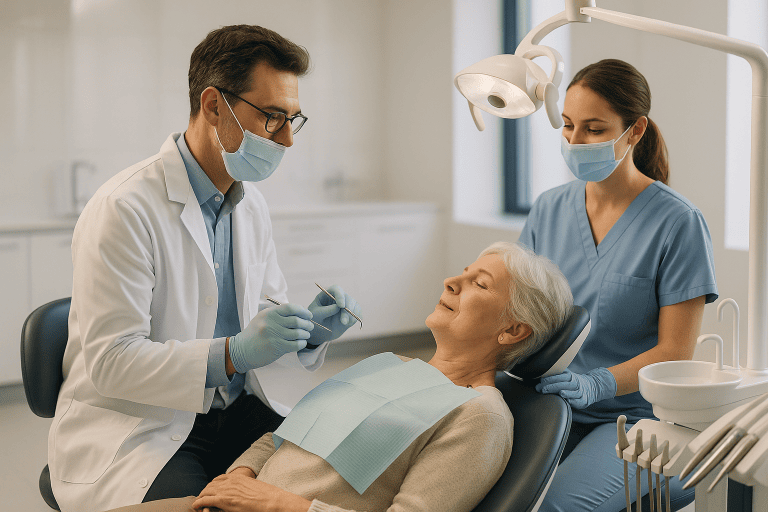
Tooth Decay Treatment
Tooth decay treatment removes damaged tooth tissue and restores structure with fillings, inlays, crowns, or root canal therapy when needed. Early care helps prevent pain, infection, and tooth loss.

Quick answer
Tooth decay is progressive damage to a tooth caused by acids from plaque bacteria. Treatment removes the decayed tissue and restores the tooth, with a filling for small cavities, an inlay, onlay or crown for larger damage, or root canal therapy when the nerve is involved. Very early decay, before a cavity has formed, can sometimes be arrested with fluoride and better plaque control.
What Is Tooth Decay?
Tooth decay is the progressive destruction of a tooth’s hard tissues by acid. Bacteria living in dental plaque feed on sugars from food and drink, produce acid as a by-product, and that acid dissolves the minerals that give enamel and dentine their strength. Left alone, the process hollows out a cavity, works its way towards the nerve of the tooth, and can end in infection around the root. Treatment removes the diseased tissue, stops the damage from advancing, and rebuilds the tooth so it can chew, bite and feel normal again.
Tooth decay is one of the most common dental conditions worldwide, but familiarity should not be mistaken for harmlessness. It is a disease process, not a cosmetic flaw, and it does not stop by itself once a hole has formed. It often begins quietly: a small dark spot, brief sensitivity to cold, food catching between two teeth, or a toothache that comes and goes. Many people only decide to act when discomfort starts to interfere with eating, sleep, work or confidence in smiling. By that point the decay is usually deeper than it was when it first became detectable.
Understanding the difference between healthy teeth and tooth decay at its earliest stage matters, because the earliest stage is the only one that can sometimes be managed without drilling. Once the surface of the tooth has broken down, restorative treatment is needed. The earlier that treatment happens, the simpler and more conservative it tends to be. Delayed treatment more often means root canal therapy, a crown, or in some cases removal of the tooth and planning for its replacement.
What is the main cause of tooth decay?
The main cause of tooth decay is acid produced by bacteria in dental plaque. Four elements have to come together: bacteria, fermentable sugars or carbohydrates, a susceptible tooth surface, and time. Each time you eat or drink something sugary, plaque bacteria produce acid for a period afterwards, and the tooth surface loses mineral. Saliva then works to neutralise the acid and return mineral to the enamel. When sugar exposures are frequent, constant snacking, sipping sweet or acidic drinks through the day, the tooth spends more time losing mineral than regaining it, and decay gains ground. This is why the frequency of sugar intake often matters more than the total amount. Decay is not simply a sign of poor brushing: tooth anatomy, saliva quality and quantity, diet pattern, dry mouth from medications or medical conditions, and the condition of existing dental work all influence risk.
Can you reverse tooth decay?
Only at the very beginning, and only under specific conditions. Before a cavity forms, decay exists as demineralisation, enamel that has lost mineral but whose surface is still intact, often visible as a chalky white spot. At this stage, fluoride, disciplined plaque removal and a reduction in sugar frequency can allow the enamel to take mineral back up, arresting the lesion and sometimes partially repairing it. Once the enamel surface has broken and a physical cavity exists, the tooth cannot regrow the lost structure. No mouthwash, toothpaste, diet or supplement rebuilds a cavity. From that point on, the honest answer is that the decayed tissue needs to be removed by a dentist and the tooth restored.
Tooth Decay and Cavity Formation: How Damage Progresses
Tooth decay and cavity formation follow a recognisable sequence, and the appropriate treatment depends on where in that sequence a tooth sits. The indication for treatment is not only the presence of a hole, but the biological activity of the disease and the structural risk to the tooth. It helps to understand each stage, because the same tooth can pass through all of them if nothing intervenes.
Early enamel demineralisation appears as white spots or dull, chalky patches on the enamel. If the surface remains intact, treatment usually focuses on fluoride, diet modification, improved plaque control and monitoring rather than drilling. The purpose is to strengthen the enamel and stop a cavity from forming at all. This is the one stage where watchful, active prevention is a legitimate treatment plan.
Small and moderate cavities mean the surface has broken down and softened, infected tissue sits inside the tooth. These cavities occur on chewing surfaces, between teeth, near the gumline or around older restorations. They require removal of the decayed tissue and placement of a filling that seals the tooth and restores its shape.
Large cavities remove enough tooth structure to weaken the whole tooth. A filling may not provide sufficient strength or coverage in these cases, and the remaining walls of the tooth can fracture under chewing pressure. An inlay, onlay or crown may be recommended to protect the cusps, restore the chewing surface and reduce fracture risk.
Decay near or into the pulpthe soft inner tissue that carries the tooth’s nerves and blood vessels, can cause irreversible inflammation or infection of that tissue. Symptoms may include lingering sensitivity after cold or heat, spontaneous or throbbing pain, and tenderness when biting. At this stage, root canal therapy is often the way to keep the tooth.
Dental abscess develops when infection spreads from the pulp into the surrounding bone or gum. It can produce swelling, a bad taste, pus, a gum boil near the tooth, or fever. Management depends on the tooth’s condition and may involve drainage in selected cases, antibiotics when medically indicated, root canal therapy, or extraction.
Root surface decay deserves separate mention. When gums recede, the softer root surface becomes exposed, and it decays more quickly than enamel because it contains less mineral. Root decay is more common in older adults and in people with dry mouth, and it typically needs restorative treatment combined with a preventive plan.
Recurrent decay forms around old fillings, crowns or bridges when bacteria enter through microscopic gaps or when plaque collects at restoration margins. Treatment usually means replacing the restoration and assessing whether the tooth now needs stronger protection than it had before.
What does a decayed tooth look like?
A decayed tooth can look like a chalky white patch, a brown or black spot, a visible pit or hole, or a grey shadow under apparently intact enamel. Between teeth, decay is often invisible to the eye and shows up only on an X-ray. Rough edges you can feel with your tongue, a filling with a dark line around it, or a tooth that suddenly chips while eating can all indicate decay underneath. Not every dark mark is a cavity, though: surface staining from coffee, tea or tobacco sits on the enamel rather than inside it, and it responds to cleaning or teeth whitening rather than to fillings. Distinguishing stain from decay reliably requires examination, not a mirror at home.
Symptoms and Who May Need Treatment
Cavities do not announce themselves reliably, which is why some people arrive with pain and others are diagnosed at a routine check before they have felt anything. Common symptoms include sensitivity to cold, heat, sweets or pressure; visible pits or dark areas; a bad taste or odour; rough edges on a tooth; food trapping between teeth; pain when biting; or a toothache that arrives without warning. In deeper decay, pain may become persistent, throbbing, or severe enough to disturb sleep. Swelling, fever, pus or a gum boil near a tooth are signs that infection has spread beyond the tooth itself.
Not all tooth decay causes pain. Enamel has no nerve supply, so early cavities are silent. Even fairly deep cavities can progress without obvious symptoms until the pulp becomes involved, at which point the treatment required is already more complex. The absence of pain is therefore never proof of the absence of decay, and a tooth that stops hurting after weeks of sensitivity has not necessarily healed; sometimes the nerve has died, and the infection is continuing quietly at the root.
Tooth decay affects children, teenagers, adults and older adults, and it occurs even in people who brush regularly. Risk rises with frequent snacking or sugary drinks, reduced saliva from medications or medical conditions, acid reflux, a history of previous cavities, orthodontic appliances, crowded teeth, older fillings or crowns with defective margins, and gum recession exposing root surfaces. Teeth that are difficult to clean are especially vulnerable: partially erupted wisdom teeth trap plaque under a flap of gum, and an impacted tooth pressing against its neighbour can create a stagnation area where decay starts on the neighbouring tooth’s root. People with limited dexterity, and patients who have postponed dental care for long periods, also present more often with established decay.
How is tooth decay diagnosed?
Tooth decay is diagnosed through a combination of clinical examination and imaging, because neither alone catches everything. The dentist inspects each tooth visually, probes gently, checks the bite and examines existing restorations. Dental X-rays reveal decay between teeth, under old fillings and near the pulp, locations the eye cannot reach. Magnification and digital cavity-detection tools are used in some clinics to identify early lesions. The examination also grades how deep the decay runs, because depth is what separates a simple filling from root canal therapy. In more complex situations, three-dimensional imaging may be considered to assess root anatomy or infection in the surrounding bone. A treatment recommendation then rests on the tooth’s condition, the symptoms, the X-ray findings, the patient’s overall dental health, and the realistic likelihood that a given restoration will last.
How Is Tooth Decay Treated?
Tooth decay treatment removes the damaged or infected tooth structure and restores the tooth with a material or restoration designed to protect it and allow normal chewing. The right option depends on how far the decay has progressed, which is why two patients with “a cavity” can leave with entirely different treatment plans, and why a proper diagnosis comes before any decision about materials or appointments.
How can I get rid of tooth decay?
You get rid of tooth decay by having the decayed tissue professionally removed and the tooth restored. There is no other route once a cavity exists. What you can do yourself is stop new decay from starting and stop early-stage demineralisation from progressing: brush twice daily with fluoride toothpaste, clean between your teeth, cut the frequency of sugar exposure, and attend check-ups so lesions are caught while they are still small. Those habits control the disease; the dentist repairs the damage it has already done.
Can you remove tooth decay yourself?
No. There is no safe or effective way to remove tooth decay at home. Decayed tissue is physically softened and infected; removing it requires anaesthesia, proper instruments, moisture control and the immediate placement of a sealed restoration, none of which is possible outside a dental setting. Attempting to scrape, pick or dissolve decay at home damages healthy structure, drives bacteria deeper, and delays real treatment while the cavity grows. Home care prevents decay and can arrest the earliest pre-cavity stage; it cannot excavate a cavity.
Can decaying teeth be restored?
Usually, yes, provided enough sound tooth structure remains. A tooth with a small or moderate cavity is restored with a filling. A heavily broken-down tooth may be rebuilt with an onlay or crown, sometimes after root canal therapy if the nerve is involved. Even teeth that look severely damaged can often be saved when the roots are sound and the remaining structure can support a restoration. The limit is reached when decay has destroyed the tooth below the gumline or split it beyond repair; at that point extraction with a planned replacement becomes the more predictable option. Whether a specific tooth is restorable is a judgement made from examination and X-rays, not from how the tooth looks in the mirror.
Fillings for small and moderate cavities
A direct filling is the standard treatment for small to moderate cavities. The dentist removes the decayed tissue, cleans and shapes the area, and places a restorative material, commonly a tooth-coloured composite resin bonded to the tooth. Fillings are usually completed in one visit and are designed to preserve as much natural tooth structure as possible while sealing the tooth against further bacterial entry.
Inlays, onlays and crowns for larger damage
Inlays, onlays and crowns are indicated when a cavity is large, sits in a high-pressure chewing area, or involves a significant portion of the tooth. These restorations are made outside the mouth to fit the prepared tooth precisely, and they provide greater strength and coverage than a filling can in these situations. Materials include ceramics, composite and zirconium, chosen according to the tooth’s position, the bite forces it carries, aesthetic requirements and how much natural structure remains.
Root canal therapy when the nerve is involved
Root canal therapy becomes necessary when decay reaches the pulp and the nerve tissue is irreversibly inflamed or infected. The dentist or endodontic specialist removes the affected pulp, cleans and disinfects the root canals, and seals them with a biocompatible filling material. The tooth is then restored, often with a crown or onlay, particularly for molars and premolars, which absorb heavy chewing forces and are prone to fracture after root canal treatment if left unprotected.
Extraction and replacement when a tooth cannot be saved
Extraction is reserved for teeth that cannot predictably be restored, typically where decay has destroyed the structure needed to anchor a restoration or infection has compromised the supporting bone. Removing a tooth is not the end of the plan: a missing tooth affects chewing, can allow neighbouring teeth to drift, and changes how force is distributed across the bite. Replacement options include implants, bridges and removable prostheses, and the timing of each matters; the practical sequence is explained in our guide to dental implants after tooth extraction.
Whichever option applies, the goal is never simply to “fill a hole”. A well-planned restoration seals the tooth against bacterial re-entry, restores its shape and its contact with neighbouring teeth, supports comfortable chewing, and protects what remains of the natural structure. Good treatment also addresses why the decay occurred in the first place, hygiene technique, diet pattern, dry mouth, plaque traps, ageing restorations, tooth alignment, or medical factors that raise cavity risk. Repairing the tooth without addressing the cause invites the same problem back.
How Tooth Decay Treatment Is Performed, Step by Step
Treatment begins with diagnosis and planning. The dentist examines the teeth, gums, bite and existing restorations, and uses digital X-rays to judge the depth of decay and its relationship to the pulp and bone. Photographs, intraoral scanning or magnified examination may be added to document the tooth and plan restorations accurately. Before anything is drilled, the dentist reviews your medical history, current medications, allergies, previous dental experiences and any anxiety about treatment. This step matters particularly for patients with heart conditions, diabetes, immune concerns, bleeding disorders, pregnancy, or anticoagulant use, situations where the treating team plans around the medical picture rather than around the tooth alone. When several teeth need work, care is staged by urgency, comfort and the type of restorations involved.
For a standard filling, the sequence is:
- The tooth is numbed with local anaesthetic and the area is isolated to keep it clean and dry.
- The softened, decayed tissue is removed with dental instruments, and the cavity is shaped so the restoration can bond or fit properly.
- Tooth-coloured composite is placed in layers, each hardened with a curing light.
- The dentist adjusts the bite, refines the shape and polishes the surface.
Many simple fillings are completed in a single appointment, with the visit length depending on the number and complexity of cavities. For inlays, onlays and crowns, the tooth is prepared and a digital or conventional impression is taken; the restoration is then fabricated to fit the tooth precisely. Depending on the clinical situation and the laboratory workflow, a temporary restoration may protect the tooth while the final one is made. At the fitting visit the dentist checks fit, bite, contact with neighbouring teeth, colour and comfort before bonding or cementing the restoration in place.
Root canal therapy follows its own sequence:
- The tooth is numbed and isolated, and a small opening is made to reach the pulp chamber.
- Infected or inflamed pulp tissue is removed, and the canals are cleaned, shaped and disinfected.
- The canals are sealed with a biocompatible filling material, in one visit or more, depending on the tooth and the extent of infection.
- The tooth receives a definitive restoration to prevent fracture and bacterial leakage, often a crown or onlay for back teeth.
Technology supports accuracy throughout. Digital radiography produces detailed images quickly and helps clinicians judge decay depth. Magnification and illumination improve the view of small defects, cracks and canal openings. Intraoral scanners can capture tooth shape without conventional impression material in selected cases, and modern ceramics allow restorations that balance strength, aesthetics and tooth preservation. In root canal work, electronic canal measurement, rotary instruments and irrigation systems support thorough cleaning of spaces that are fractions of a millimetre wide.
Whatever the procedure, the plan is built around realistic timing. Some treatments finish in one visit; others need laboratory work, healing time, or coordination between specialists. A clear written plan sets out how many appointments are involved, in what order they happen, and which signs after treatment are normal and which warrant a check.
What Happens If a Decayed Tooth Is Not Treated?
An untreated decayed tooth continues to break down, because decay does not heal on its own once a cavity has formed. A small cavity that could have been treated with a conservative filling expands into a defect that needs a crown. Decay that reaches the pulp turns a straightforward restoration into root canal therapy. Infection that spreads from the pulp into the bone produces an abscess, and while serious complications are uncommon, dental infections should not be underestimated, particularly in people with diabetes, immune conditions or heart valve disease. Swelling, fever, difficulty swallowing or rapidly worsening facial pain are signs that infection has moved beyond the tooth into the surrounding tissues, and dentists treat these situations as emergencies.
Untreated decay also narrows your future options. The more natural tooth structure that survives, the more conservative the repair can be. Losing the tooth altogether means losing some chewing efficiency, potentially affecting speech, facial support and the position of neighbouring teeth, and taking on the time and cost of a replacement, an implant, bridge or removable prosthesis, that treating the decay earlier would have avoided.
There is also the matter of timing you cannot control. Dental pain is unpredictable: a tooth that is mildly sensitive today can become acutely painful at the least convenient moment, during a busy week, a family occasion, or a period when arranging proper care is hardest. Addressing active decay before symptoms escalate removes that uncertainty. Acting early is not about urgency for its own sake; it is about keeping the treatment simple while it still can be.
Benefits of Tooth Decay Treatment
The benefits of treatment depend on the stage of decay and the type of restoration, but the aims are consistent: stop the disease, relieve the symptoms, and protect the function of the tooth for the long term.
| Benefit | What It Means for You |
|---|---|
| Stops progression of decay | Removing damaged tissue and sealing the tooth helps prevent the cavity from becoming larger or reaching the nerve. |
| Relieves pain and sensitivity | Treatment can reduce discomfort from cold, sweets, pressure, or infection, depending on the cause of symptoms. |
| Preserves natural teeth | Early and appropriate care may help avoid extraction and maintain normal chewing, speech, and appearance. |
| Restores strength and function | Fillings, inlays, onlays, and crowns rebuild damaged tooth structure so you can bite and chew more comfortably. |
| Improves oral health planning | A full assessment can identify other risks, such as dry mouth, recurrent decay, gum problems, or failing restorations. |
Recovery After Tooth Decay Treatment
Recovery is usually straightforward, but the timeline varies with the procedure: a filling, an indirect restoration and root canal therapy each settle at a different pace.
| Time Period | What Patients Can Expect |
|---|---|
| Day 1 | Numbness may last for a few hours. Avoid chewing on the treated side until sensation returns. Mild tenderness or sensitivity can occur. |
| First Week | Most patients resume normal eating gradually. Sensitivity often improves. If the bite feels high or painful, a small adjustment may be needed. |
| First Month | The tooth generally adapts to the new restoration. Deep cavities or root canal-treated teeth may need additional monitoring or final crown placement. |
| Longer Term | Good oral hygiene, regular dental visits, and attention to diet help protect the restoration and reduce the risk of new decay. |
Some detail behind the table is worth knowing. After a simple filling, numbness fades within a few hours and most patients return to normal activities the same day; temporary sensitivity to cold, pressure or chewing is more likely when the cavity was deep. After an inlay, onlay or crown, the tooth may feel slightly different until the bite settles: a sensation that usually resolves, though a genuinely high bite should be adjusted rather than tolerated. After root canal therapy, tenderness when biting can last several days, particularly if infection was present before treatment. Discomfort is managed with standard medications recommended by the treating dentist, and every patient should leave with clear instructions about eating, oral hygiene and which symptoms merit a follow-up check.
Factors That Influence Outcomes
The single biggest factor is the stage of decay at the time of treatment. Small cavities are more predictable to restore because more healthy structure remains around the repair. Deep cavities near the pulp are more complex: even after a careful filling, a nerve that has been irritated for months can stay sensitive or eventually need root canal therapy. Teeth with cracks, heavy wear, severe gum disease or extensive previous restorations require a more comprehensive plan, and an honest dentist will say so before starting rather than after.
The quality of the seal comes next. A restoration must keep bacteria and fluids out of the prepared tooth. Moisture control during placement, correct bonding technique, accurate shaping and careful finishing all determine how long a filling lasts. For inlays, onlays and crowns, the fit at the margins, the balance of the bite, the material choice and the quality of the laboratory work are the decisive variables.
Bite forces matter more than most patients expect. People who clench or grind their teeth put sustained stress on fillings, ceramic restorations and root canal-treated teeth. Where grinding is identified, the dentist may recommend a night guard, a bite adjustment, or a restoration designed to distribute pressure more evenly. Ignoring a grinding habit is one of the commoner reasons an otherwise well-made restoration fractures early.
Oral hygiene and diet remain central after treatment, because a restoration protects the repaired surface but not the rest of the tooth. Even the best filling can develop recurrent decay at its edges if plaque accumulates there. Brushing with fluoride toothpaste, cleaning between the teeth, limiting the frequency of sugar, and managing acidic drinks protect both natural enamel and dental work. Patients with dry mouth may need additional measures, saliva support, professional fluoride applications, or more frequent monitoring.
General health shapes outcomes too. Diabetes, immune conditions, reflux disease, eating disorders, certain medications, radiation therapy to the head and neck, and tobacco use all affect oral health and healing. A thoughtful plan takes these into account rather than treating each cavity in isolation, which is one reason a full assessment is worth more than a quick repair of the tooth that happens to hurt.
Finally, follow-up protects the investment. A finished restoration should feel comfortable when chewing and should let floss pass normally between the teeth. Persistent pain, swelling, a bite that feels high, or sensitivity that worsens rather than improves are all things a dentist should check; an early adjustment frequently prevents a larger problem later.
How Do We Prevent Tooth Decay?
Tooth decay is prevented by controlling the two things that drive it: plaque and the frequency of sugar exposure. Prevention is not complicated, but it has to be consistent, because the disease process restarts every time the conditions allow it. The habits that reliably reduce risk are:
- Brush twice daily with fluoride toothpaste, and spit rather than rinse afterwards so the fluoride stays in contact with the enamel longer.
- Clean between the teeth daily with floss or interdental brushes, decay between teeth is common precisely because a toothbrush cannot reach there.
- Reduce how often you have sugar, not just how much. Confining sweet foods and drinks to mealtimes gives saliva time to neutralise acid between exposures.
- Choose water over sweet or acidic drinks sipped through the day, which bathe the teeth in a near-continuous acid challenge.
- Manage dry mouthif your mouth is frequently dry, tell your dentist, because reduced saliva sharply raises decay risk and calls for extra protective measures.
- Consider fissure sealants for children, which protect the deep grooves of newly erupted back teeth where decay commonly starts.
- Attend regular check-ups, because early lesions found on examination or X-ray can be arrested or treated small: the cheapest and most conservative dentistry there is.
Prevention also means maintaining existing dental work. Old fillings and crowns with worn margins are common entry points for new decay, and replacing them at the right time is a preventive act, not just a repair.
Tooth Decay Care at Acibadem
Tooth decay may sound simple, but treatment decisions range from a small filling to root canal therapy, crown restoration, or a broader plan covering several teeth. At Acibadem, dental care is delivered within a hospital environment, which means diagnosis rests on clinical examination and imaging rather than assumption, sterilisation follows structured protocols, and dental treatment can be coordinated with other medical specialties when a patient’s health history requires it. That coordination is relevant for patients with complex medical conditions, multiple medications, significant dental anxiety, or situations where dental care forms part of a wider medical visit.
Treatment planning is personalised. Dentists assess the depth of decay, the remaining tooth structure, the condition of the gums, the bite, aesthetic goals and the available timeline. Where a case calls for it, care involves restorative dentists, endodontic specialists, oral and maxillofacial surgeons, periodontists or prosthodontists, with complex cases discussed between specialists so that the plan considers immediate needs alongside long-term oral health. Digital radiography, intraoral scanning and contemporary restorative materials support that planning, and in root canal treatment, enhanced visualisation and modern canal-cleaning methods support careful management of infected teeth.
Second opinions are a normal part of practice here: when a patient has been told elsewhere that a tooth needs extraction, root canal therapy or a crown, a fresh evaluation clarifies whether the tooth is restorable, what the alternatives are, and in what sequence care makes sense. A responsible plan also stays honest about time: it accounts for laboratory work, healing, bite adjustments, and the possibility that deeper decay found during treatment may change the approach once work begins.
Moving Forward With Care
Tooth decay is common, but its treatment should be precise, individualised and timely. Whether the answer for a particular tooth is a small filling, replacement of an old restoration, a crown, or root canal therapy, the decision follows from a careful evaluation of the tooth and of the factors that caused the decay in the first place. Early care prevents pain, infection and tooth loss while preserving the most natural structure, and a plan that explains its own reasoning, its materials, its recovery expectations and its follow-up arrangements is the mark of care worth having, wherever you receive it.
Preparation
- A dentist examines the tooth and may request dental X-rays to assess the depth of decay. Patients should share medical conditions, allergies, and medications before treatment. Eating instructions depend on whether local anesthesia or sedation is planned.
Aftercare
- Avoid chewing on the treated side until numbness wears off and follow any food restrictions given by the dentist. Mild sensitivity is common for a few days and usually improves. Maintain careful brushing, flossing, and regular dental check-ups to prevent new cavities.
Frequently Asked Questions
What affects the cost of tooth decay treatment?
The main factors are the depth of decay, whether the nerve is involved, the type of restoration required, material choice, diagnostic imaging, specialist involvement, and whether laboratory work is needed.
How can I get a personalised quote?
A dentist needs to review your symptoms, clinical photographs if available, and diagnostic images when appropriate. Acibadem International can arrange a free consultation to help prepare a personalised treatment plan and quote.
Is a filling always enough for tooth decay?
Not always. A small cavity may be treated with a filling, but deeper or larger decay may need an inlay, crown, root canal therapy, or extraction if the tooth cannot be saved.
Does root canal therapy cost more than a filling?
Root canal therapy is usually more complex than a filling because it involves treating the tooth canals and often requires a protective restoration afterward. The final cost depends on the tooth, complexity, and restoration plan.
What is typically included in an international dental treatment package?
Packages may include consultation, diagnostic assessment, treatment planning, the dental procedure, follow-up instructions, and patient coordination. Travel-related services may be arranged separately or included depending on the provider.
Is this information medical or financial advice?
No. This is general educational information. A dental specialist should assess your case, and a personalised quote should be requested before making treatment or travel decisions.
Medically reviewed by the Acıbadem International Medical Board September 1, 2026
See our medical review board →
Update history
- PublishedJune 8, 2026
- Medical review approvedSeptember 1, 2026
- Last content updateSeptember 8, 2026
References3
- Tooth decay nhs.uk
- Tooth Decay medlineplus.gov
- Cavities (Tooth Decay) my.clevelandclinic.org
Trusted care for international patients
From the Acibadem Blog

Tooth Decay Treatment Visit: Numbing, Removing Damaged Tissue and Restoring the Tooth
A cavity treatment procedure usually has three steps: the dentist numbs the area with a local anesthetic, removes the softened, decayed part of the…

Can Early Tooth Decay Be Treated Without a Filling? Fluoride, Sealants and Monitoring
Yes, in many cases. When decay is caught while it is still confined to the enamel and has not broken through the surface, dentists…

After Tooth Decay Treatment: Sensitivity, Chewing on the Numb Side and Daily Brushing
After cavity treatment care is mostly patience and protection. Avoid chewing on the numb side until feeling returns, usually within a few hours, keep…

Is Pain After Tooth Decay Treatment Normal? When Sensitivity Points to the Nerve
Some sensitivity after a cavity filling is common and usually fades over days to a few weeks as the tooth's nerve settles. Brief twinges…

Can Tooth Decay Be Reversed? What Remineralisation Can and Cannot Fix
Tooth decay can be reversed only in its earliest stage, when acid has pulled minerals out of the enamel but no hole has formed.…

How to Stop Tooth Decay (and the Myth of Removing It Yourself)
You cannot safely remove tooth decay yourself. Once decay has broken through the enamel and formed a cavity, only a dentist can clear the…